
A tattoo depicting a helicopter is a powerful symbol that holds a special niche in modern tattoo art, combining technical perfection, the dream of flight, and the rugged aesthetic of military service. Unlike airplanes, which are associated with linear movement and vast distances, a helicopter embodies maneuverability, the ability for vertical takeoff in the most challenging conditions, and absolute freedom of movement in space. For many wearers of such a tattoo, it’s not just a picture, but a manifesto of personal independence, readiness for rapid change, and the ability to control their lives even during moments of “turbulence.”
The Meaning of a Helicopter Tattoo: Your Ticket to Freedom and Strength

When we talk about the meaning of a helicopter tattoo, the first thing that comes to mind is freedom of movement. A helicopter is a unique machine that doesn’t need long runways. It can take off from a tiny patch of land, a skyscraper roof, or a ship’s deck. In the context of a tattoo, this symbolizes a person who is not dependent on external circumstances or “beaten paths.” You choose your own starting and finishing points, without waiting for favorable conditions.
The second key meaning is mobility and adaptability. In today’s world, the ability to react quickly to changes is valued above all else. A helicopter in flight can hover, move sideways or backward, making it an ideal metaphor for a flexible mind and a decisive character. If you get such an image, you emphasize your ability to find solutions to dead-end situations, literally rising above the problem.
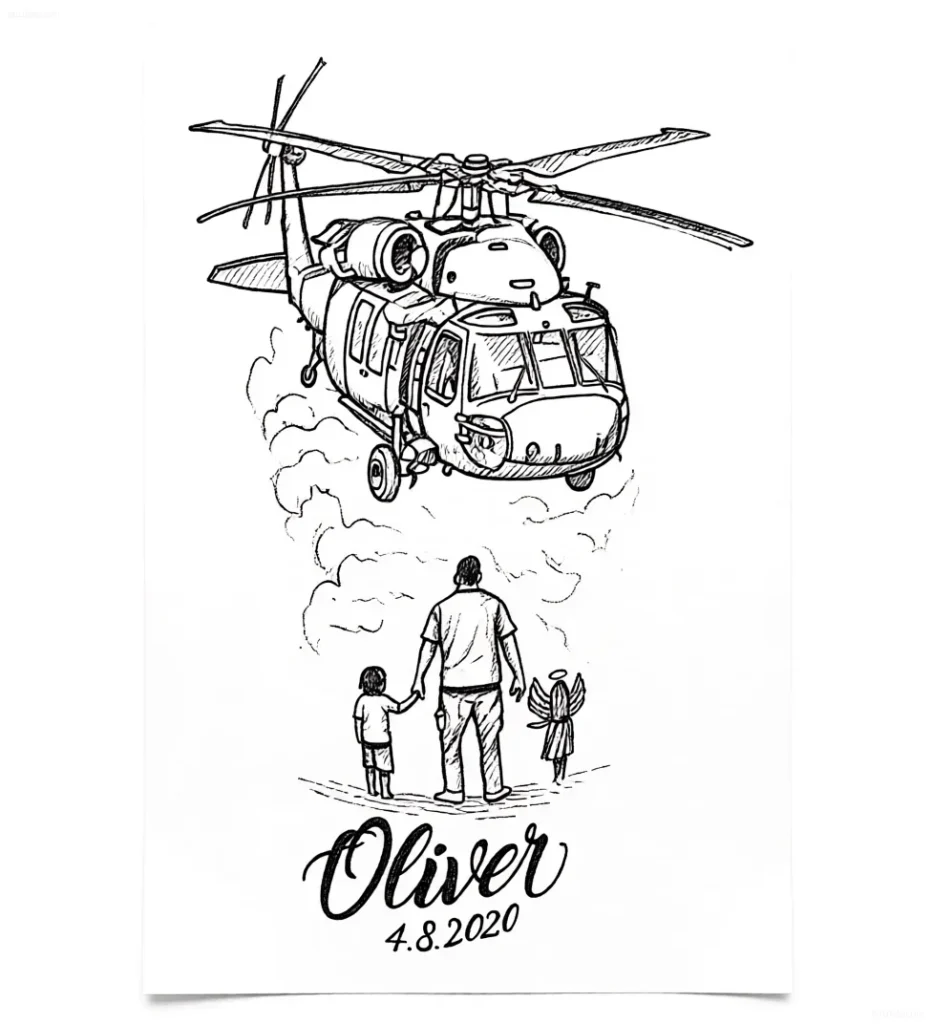
For a significant portion of the audience, a helicopter tattoo has a deep professional or military undertone. It’s a symbol of belonging to an elite group: Air Force pilots, search and rescue teams, or special forces units. In this case, the tattoo becomes a sign of brotherhood, remembrance of service, and loyalty to duty. It speaks of courage, as helicopter work is often associated with immense risk, whether it’s evacuating the wounded under fire or fighting forest fires in the mountains.
The History of the Helicopter in Art and Culture: From Dream to Reality

The history of the helicopter as an artistic image began long before the first working prototype appeared. Even the great Leonardo da Vinci in the 15th century created a drawing of an “aerial screw,” anticipating aviation development for centuries. In tattoo art, this image became popular in the second half of the 20th century, especially after major military conflicts like the Vietnam War or the Afghan War, where helicopters played a crucial role.
In cinema and literature, the helicopter often acts as a symbol of “deus ex machina” – salvation coming from the heavens. Recall the classic movie scenes where the sound of rotor blades signifies the approach of help. It is this cultural code – the helicopter as a savior – that formed the basis of many sketches. In tattoo culture of the 90s and 2000s, the image of a helicopter became associated with technological progress and the “industrial” aesthetic, attracting the attention of people passionate about engineering and mechanics.
Helicopter Symbolism in Tattoos: Deeper Than It Seems

To understand the full depth of the symbolism, it’s worth breaking down the image of a helicopter into details. Each part of this complex machine can carry its own meaning:
- Rotating Blades: A symbol of life’s cycles, endless movement, and creative energy. In some interpretations, it represents protection, creating an insurmountable barrier around the wearer.
- Cockpit: Embodies control over one’s destiny. Seeing the world from a bird’s-eye view means having a broad outlook and objectivity.
- Landing Gear or Skids: A symbol of connection to the ground. Despite flying, a helicopter is always ready to return to solid ground, indicating the wearer’s groundedness and rationality.

It’s interesting to consider the difference between civilian and military models in tattoos. Civilian helicopters (e.g., Robinson or Eurocopter) are often chosen by travelers, businessmen, and extreme sports enthusiasts. It symbolizes comfort, success, and a borderless view of the world. Military helicopters (the legendary Mi-24 “Crocodile,” Ka-52 “Alligator,” or the American Apache) are symbols of aggressive defense, strength, readiness for combat, and unyielding will. The choice of a specific model often indicates a person’s personal history, their preference for a particular engineering school, or actual combat experience.
Styles and Genres: How to Bring a Helicopter to Life on Your Body

The choice of style for a helicopter tattoo is crucial, as it determines the overall mood of the design. Let’s consider the most suitable options:
- Realism: The most popular style for this theme. The artist meticulously renders every rivet, glare on the cockpit glass, and metal texture. Such a tattoo looks like a photograph and requires a high level of professionalism. Realism is ideal for conveying the power of military machines.
- Graphic and Engraving: Uses clean lines, hatching, and black ink. A helicopter in a graphic style resembles a blueprint or an illustration from an old encyclopedia. This is the choice of aesthetes and those who appreciate conciseness and clarity of form.
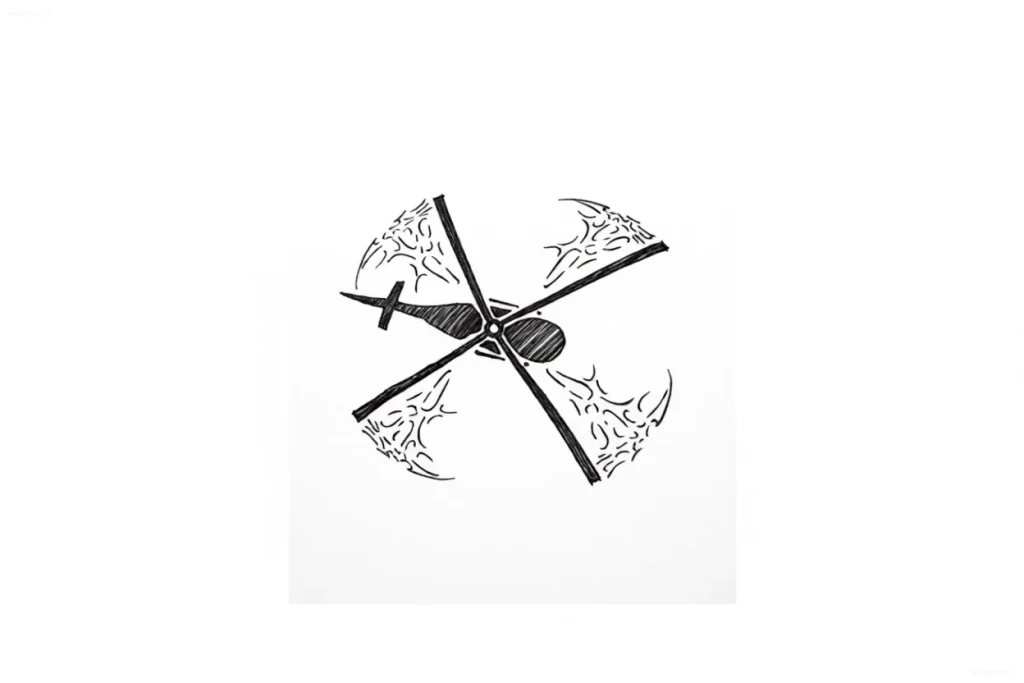
- Trash Polka: If you want to add dynamism and drama. The combination of a realistic helicopter image with chaotic strokes of red and black paint, typography, and abstract elements creates a sense of war chaos or rapid movement.
- Old School: A traditional style with bold outlines and a limited color palette. An old-school helicopter is often complemented by banners with inscriptions, roses, or clouds. This gives the tattoo a vintage, “aviator” charm.
- Minimalism: A thin silhouette of a helicopter, rendered with a single line. Ideal for small tattoos on the wrist or behind the ear, symbolizing the dream of flight in its most concise form.
The Ideal Location for a Helicopter Tattoo: Where Its Power Unfolds

The placement of the tattoo depends on the scale of the sketch and the meaning you imbue it with. A helicopter has an elongated shape, which dictates certain compositional rules:
| Placement Area | Features and Advantages | Recommended Style |
|---|---|---|
| Back (Shoulder Blades) | The vast space allows for creating an entire battle scene or a detailed portrait of the machine in flight. | Realism, Trash Polka |
| Chest | Symbolizes what is close to the heart. Helicopters are often placed here as a sign of remembrance of service. | Realism, Old School |
| Forearm | The most visible area. The vertical orientation of the forearm is ideal for depicting a helicopter from a side view or takeoff perspective. | Graphic, Minimalism |
| Shoulder | A classic location for men’s tattoos. Emphasizes the musculature and power of the image. | Realism, Traditional |
| Ribs | A painful but striking location. A helicopter receding into perspective can be placed here. | Graphic, Linework |
Tips for Future Helicopter Tattoo Owners: From Idea to Execution

If you’ve decided to adorn your body with a helicopter image, approach the process responsibly. Here are a few tips from the experts at tatufoto.com:
- Study the Subject Matter: If you’re choosing a specific model (e.g., Mi-8), make sure the sketch is accurate. Errors in the number of blades or the placement of landing gear will be jarring to knowledgeable viewers.
- Choose the Right Angle: A helicopter head-on looks aggressive and powerful, in profile – more elegant and technical. A three-quarter overhead view allows for showcasing the maximum number of details.
- Consider the Background: A helicopter in empty space can look unfinished. Add mountains, clouds, a sunset, or a city silhouette. This will create context and add depth.
- Find a “Tech” Artist: Not every tattoo artist can draw machinery well. Look for someone whose portfolio includes cars, airplanes, or biomechanics. Precision of lines and understanding of perspective are crucial here.
Remember that a tattoo is forever. Don’t rush your choice; discuss the possibility of a custom sketch with your artist so that your helicopter is unique and tells your specific story.
Frequently Asked Questions About Helicopter Tattoos

Question: Do women get helicopter tattoos?
Answer: Absolutely. Although this theme is traditionally considered masculine, women often choose minimalist helicopter designs as a symbol of their love for travel, the sky, or as a mark of their profession (e.g., flight attendants or female pilots).
Question: What does a helicopter tattoo mean in the criminal underworld?
Answer: Unlike some other symbols, the helicopter does not have a consistent negative meaning in the criminal world. It is most often simply an artistic depiction without hidden “prison” connotations.
Question: Can an old tattoo be covered up with a helicopter image?
Answer: Yes, due to its complex shape and the possibility of using dark colors (especially in realism or trash polka), a helicopter is excellent for cover-ups. The dense coloring of the machine’s body and a detailed background can conceal almost any old design.
Interesting Facts About Helicopters and Their Reflection in Tattoos

Did you know that the world’s largest helicopter, the Mi-26, is so enormous that a 1:1 scale image of it would hardly fit even on a giant’s back? In tattoos, it’s chosen by those who want to emphasize the scale of their goals and their incredible inner strength.
Another interesting fact is related to the “Black Hawk.” After the release of the film of the same name, this helicopter became one of the most requested sketches in tattoo parlors worldwide. It became a symbol not only of the American army but also of the idea that you never leave your own behind.

In Japan, helicopter tattoos are sometimes combined with images of dragons or phoenixes, creating an amazing symbiosis of modern technology and ancient mythology. This symbolizes the victory of human intellect and technology over the elements.
By choosing a helicopter tattoo, you are choosing the path of a strong, independent, and goal-oriented person. May your flight be long, and your “landing” always smooth. This image will become your loyal talisman, reminding you that for you, there are no unattainable heights.