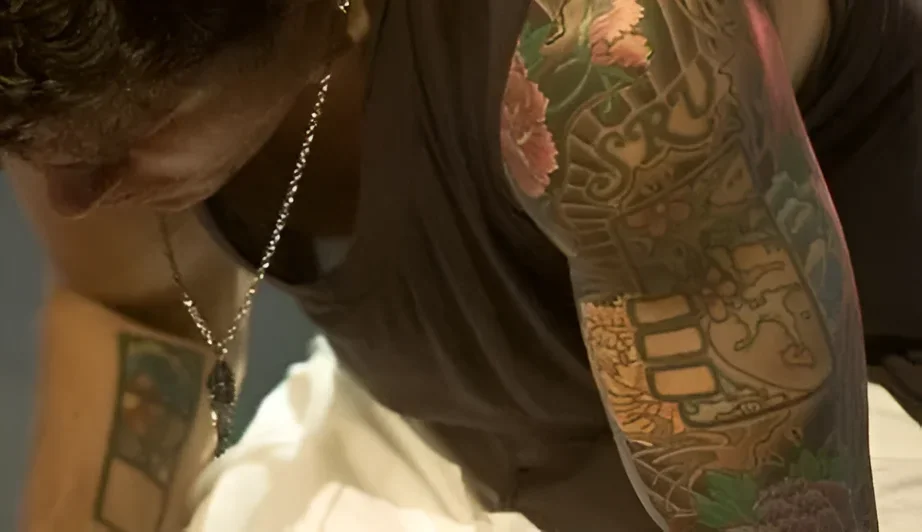
John Mayer is a name that most associate with masterful guitar playing, deep blues vocals, and a shower of Grammy awards. However, in the world of body art, Mayer is recognized as no less significant a figure than on the music scene. His body is not just a collection of random images, but a carefully crafted canvas reflecting his inner transformation, commitment to tradition, and search for identity. For tattoo experts and collectors, John is a benchmark for how a public figure can skillfully and aesthetically integrate complex art into their image, turning their skin into a visual biography.
Creative Path and Biography: Blues Roots and Passion for Art
John Clayton Mayer was born on October 16, 1977, in Bridgeport, Connecticut. His path to fame began with a passion for the guitar after watching the movie “Back to the Future,” but his real breakthrough came in the early 2000s with the release of the album Room for Squares. Over the years, his musical style evolved from light acoustic pop-rock to complex, technical blues, which surprisingly coincided with his immersion into the world of serious tattooing. Just as in music, where he draws inspiration from great masters like Stevie Ray Vaughan, in tattoo art, Mayer prefers classics and authenticity.
The Philosophy of Japanese Tattooing: The Irezumi Sleeve
The most prominent and discussed element of Mayer’s “gallery” is his left sleeve, done in the traditional Japanese style of Irezumi. This is not just a decorative element but the result of many years of work and deep respect for Eastern culture. To create this masterpiece, John turned to one of the most respected contemporary masters – Horimitsu, who is a follower of the legendary Horitoshi dynasty.
- Tebori Technique: A significant portion of the work was done by hand using bamboo sticks with needles. This traditional technique allows for unique color depth and smooth transitions that cannot be fully replicated by a modern tattoo machine.
- Symbolism of the Peony (Botan): At the center of the sleeve’s composition are images of peonies. In Japanese culture, this flower is called the “king of flowers.” It symbolizes prosperity, wealth, as well as courage and masculinity. The choice of the peony emphasizes the musician’s pursuit of inner strength and aesthetic perfection.
- The Element of Water: The background of waves and water currents ties all the elements together. Water in Irezumi represents purity, life, and the ability to adapt to any changes, which is highly resonant with the artist’s ever-changing career.
Iconic Tattoos and Their Hidden Meanings
In addition to the large-scale Japanese sleeve, Mayer’s body features other works, each carrying a specific message or memory of an important life stage. As a professional copywriter and researcher of tattoo culture, I highlight several key directions in his collection.
Personal Symbols and Text Tattoos
John often uses text as a way to solidify concepts important to him. On the back of his arms, just above his elbows, are the words “Home” and “Life.” These tattoos are visible to the audience when he plays the guitar, creating a kind of dialogue between the artist and the public. “Home” and “Life” are fundamental values that remind him of his roots and what he creates for, even when on endless world tours.
Tribute to Idols: The Initials SRV
On the musician’s left arm, the letters “SRV” can be seen. This is a direct reference to Stevie Ray Vaughan, the legendary bluesman who had a colossal influence on Mayer’s playing technique. For John, this tattoo is a kind of stamp of devotion to the genre and an acknowledgment that he is merely continuing a great tradition. This is an example of a “professional” tattoo that serves as an anchor of identity.
Collaboration with Scott Campbell
Mayer is also a client and close friend of Scott Campbell, one of the most sought-after tattoo artists in the world, known for his fine graphics and unique style. Campbell’s works on John’s body are characterized by a more modern and minimalist approach, creating an interesting contrast with the dense Japanese sleeve. This demonstrates Mayer’s broad views on art: from age-old traditions to New York avant-garde.
Technical Aspects and Aesthetics: How Tattoos Age with the Artist
From an expert’s perspective, it’s important to note the quality of execution of all of John’s works. We see excellent preservation of lines and color density even after decades. This is the result not only of the artists’ skill but also of proper care. Mayer often emphasizes that a tattoo is a responsibility. His example teaches fans not to rush: it’s better to spend years creating one high-quality sleeve by a world-renowned artist than to cover your body with mediocre drawings.
The Influence of Tattoo Culture on the Image of a Modern Musician
John Mayer played a key role in destigmatizing tattoos in pop music. In the early 2000s, he was perceived as a “clean-cut” guy with an acoustic guitar. The gradual appearance of complex, artistic tattoos on his body helped change the perception of the artist. He proved that tattoos can be intellectual, profound, and aesthetically flawless. Today, thousands of fans copy his style, and his sleeve has become a benchmark reference in tattoo parlors worldwide.
Tattoos as a Form of Meditation and Self-Discovery
For Mayer, the tattooing process is a form of meditation. In his interviews, he has mentioned that the pain during the session helps him “ground” himself and feel reality outside the spotlight and the noise of the crowd. It is a deeply intimate process that transforms physical pain into a spiritual experience. Each new line on his skin is a recorded emotion or realization.
Skin as a Chronicle of Life
In conclusion, it can be said that John Mayer is not just a “star with tattoos” but a true collector and patron of tattoo art. His journey reflects the evolution of the modern man: from simple desires to a deep understanding of traditions and meanings. His collection is a perfect balance between Eastern philosophy and Western individualism.
If you are considering your first tattoo or planning a large-scale project, John Mayer’s example can be a great source of inspiration. Remember that a tattoo is forever, and it should tell your personal story as beautifully and professionally as the skin of one of the best guitarists of our time does. We invite you to discuss John’s tattoos in the comments: which of his symbols do you find most significant? Stay tuned for updates to learn more about tattoo culture and its brightest representatives.