
A Kamikaze tattoo is one of the most powerful, emotionally charged, and philosophically profound themes in contemporary body art. By choosing such an image, a person declares not just a love for Japanese culture or World War II history, but their readiness to go to the end for their ideals, their fatal devotion to duty, and their absolute fearlessness in the face of inevitability. This symbol carries the energy of the “divine wind” capable of sweeping away any obstacles at the cost of one’s own life, making it a choice for individuals with an iron will and unwavering life principles. In this article, we will delve into what exactly is hidden behind the image of the legendary pilots, how to correctly interpret this symbol, and what artistic solutions will help to fully reveal its potential.
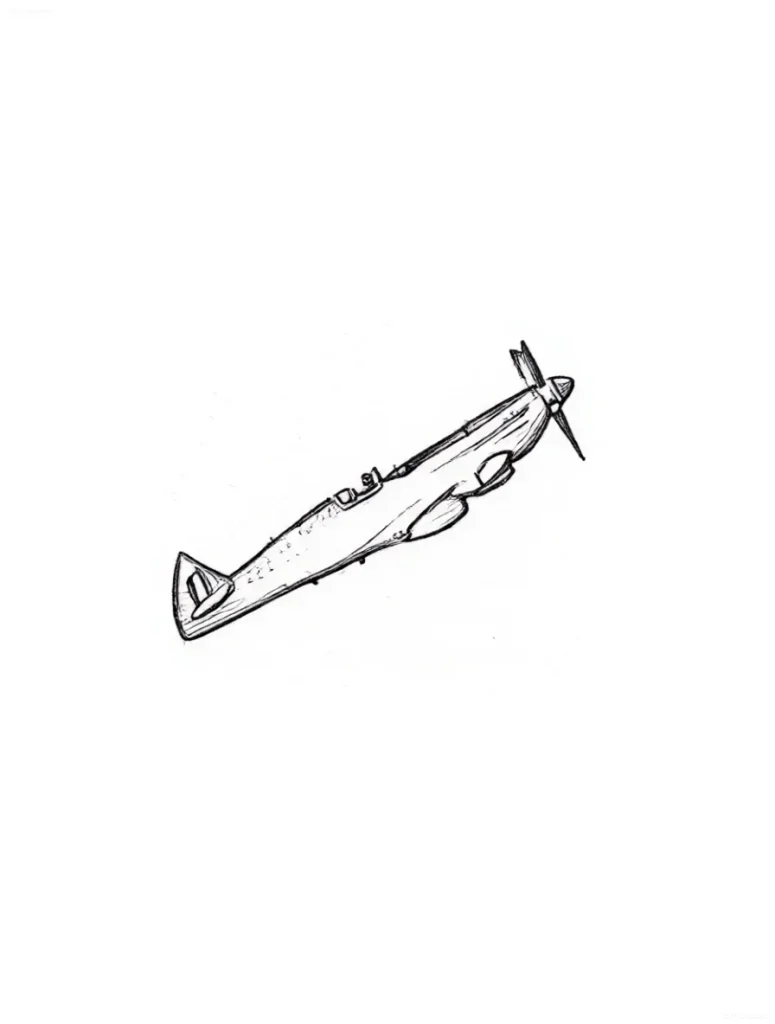
Before getting a Kamikaze tattoo, it’s important to realize that this symbol goes far beyond simple military themes. It is the quintessence of the Japanese worldview, where death in the name of a higher purpose is considered not a tragedy, but the highest manifestation of honor and dignity. For a modern wearer, such a tattoo often becomes a personal manifesto: “I am as devoted to my path as those who did not deviate from their course.” It is a symbol of radical honesty with oneself and the world, where there is no room for compromise or half-measures.
Kamikaze Tattoo: A Deep Symbol of Self-Sacrifice and Devotion

When you hear the word “Kamikaze,” the first association is usually Japanese suicide pilots. However, the meaning of the tattoo is much broader. Translated from Japanese, “Kamikaze” (神風) means “divine wind.” This concept symbolizes a force that protects the homeland and sacred sites at the most critical moment. In the context of a tattoo, this symbol is interpreted as inner strength, allowing a person to overcome the instinct of self-preservation for the sake of protecting what is dear to them: family, principles, or homeland.

The symbolism of self-sacrifice in this theme is devoid of any hint of martyrdom. On the contrary, it is full of the triumph of spirit over matter. A person choosing a Kamikaze tattoo emphasizes their readiness to “burn out” but complete the task. This can be related to professional activities requiring complete dedication, or to a personal philosophy of “live fast, die young,” or to a deep respect for the Bushido code. The main facets of its meaning are:
- Absolute Loyalty: Devotion to an idea or person that knows no bounds.
- Fatalism: Acceptance of one’s destiny and the absence of fear of the end.
- Concentration: The ability to focus all one’s resources on a single goal.
- Honor: Understanding that a dignified departure is more important than a inglorious existence.
Historical Context: Where the Kamikaze Symbol Comes From

To understand the depth of the tattoo, one must turn to history. The very concept of “divine wind” originated in the 13th century when typhoons twice destroyed the fleets of the Mongol Khan Kublai, who was attempting to conquer Japan. The Japanese believed that the gods (kami) sent the wind to save them. In a tattoo, this historical layer adds the meaning of divine protection and faith that higher powers will help in a hopeless situation.
The second, more famous layer, is the “Taiyō” units of World War II. These were volunteers who consciously went to their deaths, directing their planes at enemy ships. It is important to understand that in Japanese culture of that time, this was not considered suicide in the Western sense (as an act of despair). It was an act of supreme service. A Kamikaze tattoo often includes attributes of that era: white “hachimaki” headbands with a red sun, “Zero” aircraft, and blooming cherry blossoms. The cherry blossom is critically important here: its petals fall at the peak of beauty, just as young pilots gave their lives in their prime. This adds a touch of the tattoo’s aesthetic of the transience of life (mono no aware).
Key Meanings of the Kamikaze Tattoo: More Than Just a Picture

Analyzing the meaning of a Kamikaze tattoo, several key directions can be identified that will help you decide on the concept of the sketch:
- Fearlessness of Death: This is not bravado, but the deep calm of a person who has realized the finality of existence and stopped fearing it. Such a tattoo often becomes a talisman for those whose lives are associated with risk.
- Devotion to Duty (Giri): In Japanese culture, “giri” is a debt of honor that is higher than personal desires. A Kamikaze tattoo symbolizes a person for whom the word “must” is more important than “want.”
- Hero’s Loneliness: A pilot in a cockpit before an attack is a symbol of absolute loneliness at the moment of making the most important decision. This tattoo is for those who are used to relying only on themselves.
- Transformation and Rebirth: Death in one capacity for the birth of a legend or idea. It is a symbol of radical change, where the old “self” is sacrificed for a new path.

Below is a table that will help systematize the main meanings depending on the compositional elements:
| Tattoo Element | Symbolic Meaning |
|---|---|
| Airplane in a dive | Determination, no turning back, fatal choice |
| Kanji 神風 | Direct reference to “divine wind,” spiritual protection |
| Cherry blossoms | Brevity of life, beauty of the moment, noble death |
| Rising sun | Rebirth, patriotism, inexhaustible energy |
| Pilot’s face in goggles | Focus on the goal, the human factor in history |
Visualizing the Kamikaze Symbol: Popular Styles and Elements

The choice of style for a Kamikaze tattoo directly affects how its meaning is perceived. Since the theme is closely related to Japan, the traditional Japanese style (Irezumi) seems like a logical choice. It uses bright colors, clear outlines, and rich symbolism. In this execution, Kamikaze are often surrounded by waves (symbol of elements) or clouds, emphasizing the celestial nature of the “divine wind.”
However, realism is no less popular. Black and grey realism allows for conveying the drama of the moment: the shine of the aircraft’s metal, the texture of the hachimaki fabric, the determined gaze of the pilot. Realistic Kamikaze tattoos look like frames from historical chronicles, giving them documentary power and seriousness. It is also worth considering the graphic or new school style if you want to add more dynamics and modern artistic accents to the tattoo.
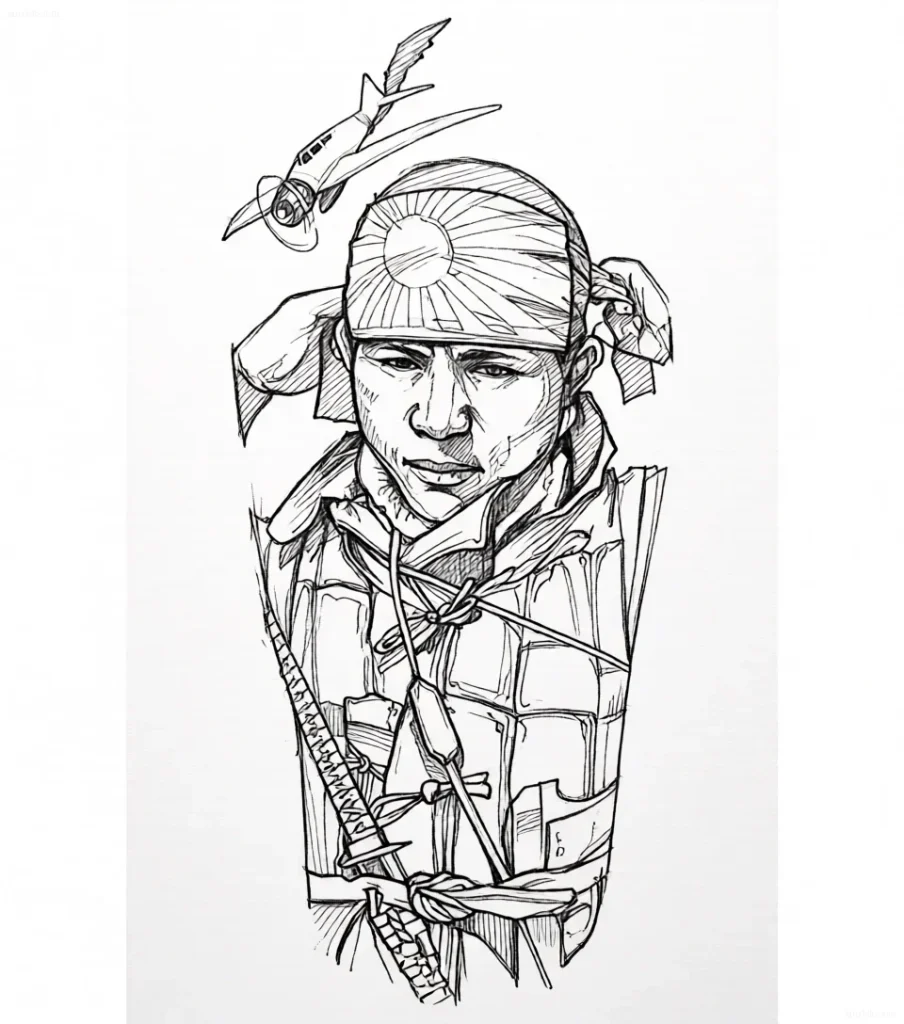
Key elements that often complement the image:
- Chrysanthemum: The imperial symbol of Japan, emphasizing the highest status of duty.
- Smoke and Fire: Symbols of destruction of the old and untamed energy.
- Sea: A reference to the location of major battles and the infinity of time.
- Birds (especially the hawk): A symbol of keen eyesight and swift attack.
Choosing a Location for a Kamikaze Tattoo: Where the Symbol Will Reveal Its Potential

A tattoo with such a deep meaning requires space. To convey the dynamics of flight or the detail of a pilot’s portrait, it is best to choose large areas of the body. The back is an ideal canvas for a large composition, where an entire aerial battle scene or a majestic aircraft against a sunset can be depicted. This location also symbolizes that a person carries their burden of responsibility and duty “on their shoulders.”
The forearm and sleeve are excellent choices for those who want the symbol to be visible. A tattoo on the arm emphasizes action, readiness for action here and now. The chest is a place for the most intimate symbols. Placed close to the heart, a Kamikaze tattoo will signify that the ideas of self-sacrifice and loyalty are the foundation of a person’s identity. The thigh is often used for more intimate or decorative options, where the focus is on the aesthetics of Japanese graphics.
Tips Before Getting a Kamikaze Tattoo: Preparation and Aftercare

Getting a Kamikaze tattoo is a serious step that requires not only moral but also physical preparation. Here are some practical tips from tatufoto.com experts:
- Study the Primary Sources: Look at historical photographs of aircraft (Mitsubishi A6M Zero) and pilot equipment. The more accurate the sketch, the more “truth” and power it will contain.
- Find a Master Expert in Japanese Themes: Even if you are getting a tattoo in a realistic style, the master should understand Japanese aesthetics to avoid mistakes in the placement of elements or the writing of hieroglyphs.

- Consider the Composition: Kamikaze is about movement. Ensure that the lines of the tattoo emphasize your body’s anatomy, creating a sense of flight or rapid descent.
- Prepare Your Skin: A few days before the session, moisturize the application area with cream, avoid tanning and alcohol. Clean and healthy skin is the key to quality healing.
- Meticulous Aftercare: After the session, strictly follow the master’s instructions. Use healing ointments and do not scratch the tattoo. Remember: the healing process is also a test of your discipline, in line with the tattoo’s theme.
Frequently Asked Questions About Kamikaze Tattoos

Isn’t a Kamikaze tattoo a symbol of suicidal tendencies?
Absolutely not. In the context of tattoo culture, Kamikaze is a symbol of living for a purpose, not a desire to die. It is a manifestation of the highest form of will and devotion, not despair. Wearers of such tattoos are usually very life-affirming and goal-oriented individuals.
Can the Kamikaze hieroglyphs be tattooed separately from the image?
Yes, the hieroglyphs 神風 (Kamikaze) are a self-sufficient symbol. They look very aesthetic in calligraphy style (sumi-e) and carry the same semantic load of divine protection and strength of spirit.

How are such tattoos perceived in Japan itself?
In Japan, the attitude towards the military theme of World War II is complex and ambiguous. However, as an artistic image and a symbol of historical devotion to duty, Kamikaze is respected in certain circles (e.g., among fans of traditional tattoos). For foreigners, it is more often perceived as a tribute to the Japanese spirit.
Is this tattoo suitable for women?
Absolutely. Although the image of a pilot is traditionally masculine, the meanings of devotion, inner strength, and readiness to defend one’s ideals are universal. Female versions are often complemented by more flowers (cherry blossoms, lotuses), which makes the tattoo more elegant without losing the power of its meaning.
Interesting Facts About the Kamikaze Symbol in Tattoos

- The word “Kamikaze” became globally known precisely thanks to American sailors who were struck by the fearlessness of the Japanese pilots.
- In classic Japanese tattoos, pilots are often depicted with a samurai sword – this emphasizes the continuity of generations and the connection with the ancient code of honor.
- Many professional racers and stunt performers choose Kamikaze tattoos as a symbol of their professional risk and concentration at the edge of possibility.
- There is a legend that pilots drank a cup of sake and wrote a farewell haiku poem before flying. Lines from these poems are sometimes used in tattoos.
- The image of the “Zero” aircraft in a tattoo is considered a symbol of technical perfection and the aesthetic of “deadly beauty.”

- The color of the hachimaki headband is almost always white – the color of purity and death in Japanese tradition, which adds a deep ritualistic undertone to the tattoo.
- Sometimes Kamikaze are depicted as ghosts or skeletons in flight uniforms, which refers to the theme of eternal service and the immortality of the hero’s soul.
- In modern pop culture, the Kamikaze tattoo is often associated with Eminem’s album “Kamikaze,” which added the meaning of “attacking opponents” and uncompromising creativity to the symbol.
- The “Rising Sun” symbol (Kyokujitsu-ki) against the background of Kamikaze can be perceived ambiguously in some Asian countries due to historical associations, so it is important to consider this when traveling.
- It is believed that a Kamikaze tattoo helps the owner make difficult decisions and not shy away from difficulties.
In conclusion, a Kamikaze tattoo is a powerful tool of self-expression for those who value honor above comfort, and duty above personal ambitions. It is a symbol of the “divine wind” that fills the sails of your life with determination and leads to your goal, no matter how distant or dangerous it may seem. By choosing this theme, you touch upon great history and eternal philosophy that will remind you of what is most important in any situation. May your tattoo become not just a decoration, but a true compass, pointing the way to true greatness of spirit.