
A tattoo depicting Vladimir Ilyich Lenin is not just a portrait of a political figure, but a deep cultural layer that has absorbed decades of history, ideological upheavals, and underground traditions. For some, this image is a symbol of unwavering faith in a bright future and devotion to socialist ideals; for others, it’s an ironic artistic gesture in the pop-art style; and for members of the criminal world of the past, it was a powerful sacred amulet. In modern tattoo culture, the portrait of the leader of the world proletariat is experiencing a peculiar renaissance, transforming from a strict canonical image into a complex object of artistic self-expression, where every detail can carry a hidden meaning.
Choosing such a subject for tattooing requires not only courage but also an understanding of the context. In this article, we will delve into how the meaning of a Lenin tattoo has changed over the century, why it was often tattooed on the chest in Soviet prisons, and which styles are considered most relevant today for creating a high-quality and aesthetic image.
Lenin Tattoo: A Historical Portrait and Its Multifaceted Meaning

The image of Lenin in tattoo art is unique in that it practically has no neutral interpretations. It is always a manifesto, a statement of one’s position or affiliation with a particular subculture. Historically, the portrait of Ilyich became the first “political” tattoo in the USSR that went beyond official posters and busts, moving onto people’s bodies. It is important to understand that the meaning of this image radically changed in different decades. If in the 1920s it was a sincere demonstration of loyalty to the new government, by the middle of the century, the tattoo had acquired dark legends and a specific subtext associated with the GULAG system.
Today, as ideological disputes have subsided, a Lenin tattoo is perceived as a powerful visual marker of “Soviet aesthetics.” It can be a tribute to great history, nostalgia for childhood or youth spent in the USSR, or a way to emphasize one’s left-wing political views. In any case, such a portrait requires high skill in execution, as the leader’s face is recognizable worldwide, and any mistake in anatomy or shading will turn a serious symbol into a caricature.
The History of Lenin’s Image in Art and Tattooing

Lenin’s path from a living person to a bronze monument and, finally, to a tattoo sketch is a fascinating evolution of visual code. In official Soviet art, there was a strict canon: Lenin had to look wise, decisive, and humane at the same time. These features also carried over into early tattoos. The first Lenin tattoos were done by ideological communists, sailors, and soldiers who wanted to emphasize their devotion to the revolution.
However, the most interesting part of the story begins in places of detention. In the 1930s-50s, a special cult of “leaders on the skin” formed among prisoners. Portraits of Lenin and Stalin became a mandatory attribute for a certain category of inmates. At that time, a tattoo was the only way for a person to assert their individuality in conditions of severe suppression. Paradoxically, the image of the person who created this system became a means of protection for the prisoner within that very system.
Main Meanings of Lenin Tattoos: Ideology, Amulet, Nostalgia

When analyzing the meaning of a Lenin tattoo, it is worth highlighting three key layers that determine the choice of this sketch by modern people:
- Ideological commitment: For those who share the ideas of Marxism-Leninism, such a tattoo is a symbol of the struggle for social justice, the rights of the working class, and faith in the possibility of building an alternative society. In this context, Lenin is often depicted in the classic pose on an armored car or with a characteristic hand gesture pointing the way.
- Prison amulet “against execution”: This is perhaps the most famous myth and, at the same time, a historical fact of Soviet tattoo culture. Among prisoners, there was a belief that an execution squad would not dare to shoot at an image of the leader. Therefore, a portrait of Lenin (often with Stalin) was tattooed on the left side of the chest, over the heart. It was believed that a soldier, seeing the face of Ilyich, would falter and not pull the trigger, fearing to commit sacrilege against the symbol of the state.
- Nostalgia and “Soviet Retro”: In recent years, a Lenin tattoo is often chosen by people far from politics and crime. For them, it is an element of “socialist realism” aesthetics, a way to preserve the memory of a bygone era. Such an image is often combined with elements of Soviet symbolism – a hammer and sickle, red flags, or architectural monuments of that time.
- Irony and postmodernism: In the “trash polka” or graphic style, Lenin can appear in unusual images – with headphones, tattoos on his face, or in the pop-art style (like Andy Warhol’s). This is a way to re-evaluate history through the prism of humor and the rejection of authority.
Styles of Lenin Tattoos: From Realism to Graphics

The choice of style is critically important for conveying the desired mood. Since Lenin is primarily a portrait, the execution technique is subject to increased requirements.
- Realism: The most popular and complex style. Black and Grey realism allows for conveying the depth of the gaze, skin texture, and Ilyich’s characteristic squint. A high-quality realistic portrait looks like a living photograph from an archive.
- Graphics and Linework: A modern interpretation. Lenin can be depicted with thin lines, hatching, or in a engraving style. This gives the tattoo the look of an illustration from an old book and makes it less visually “heavy.”
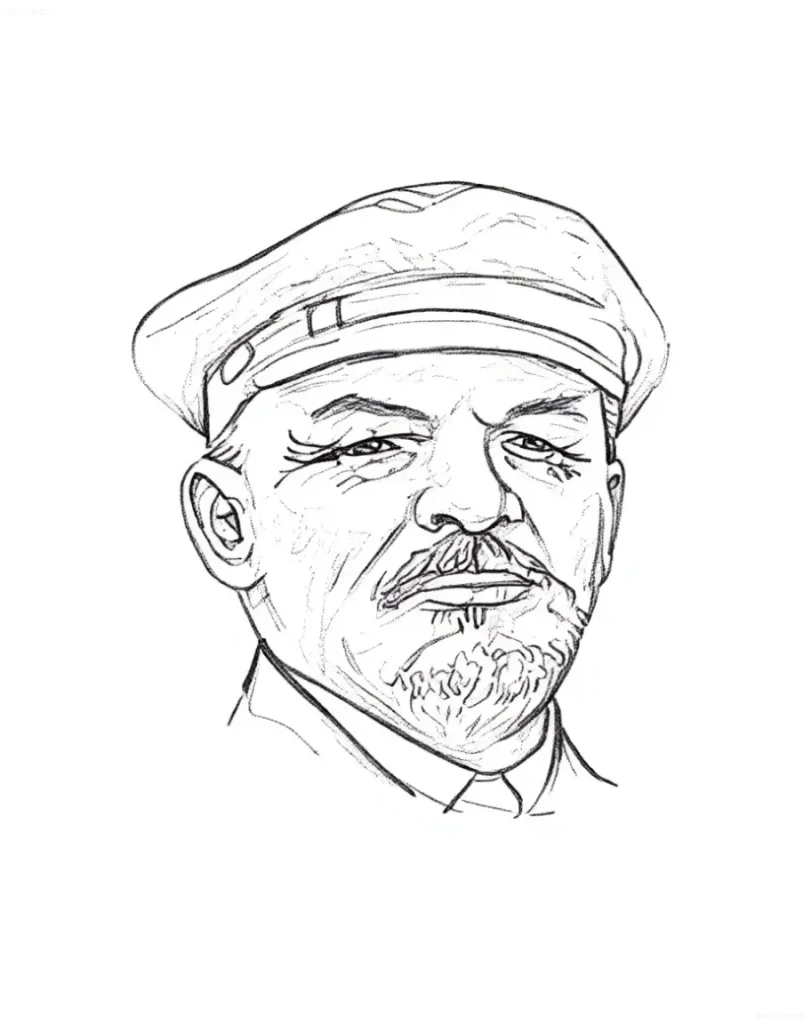
- Trash Polka: Ideal for those who want to emphasize a rebellious spirit or the tragedy of history. The combination of a realistic portrait with red paint strokes, abstract spots, and typographic fonts creates a dynamic and aggressive composition.
- Old School: A rare but interesting option. Lenin in the traditional style with bold outlines and a limited color palette looks unusual and reminiscent of classic sailor tattoos of the early 20th century.
Best Places for a Lenin Tattoo on the Body: Choice and Justification

The location of a Lenin tattoo is often dictated by its meaning and the size of the sketch. You can consider the following options:
| Body Part | Justification and Meaning |
|---|---|
| Chest (left side) | Classic “prison” placement. Symbolizes protection of the heart and loyalty to ideals (or a historical reference to an amulet). |
| Forearm | The most popular place for artistic portraits. Allows for detailed work on the face and easy display of the tattoo to others. |
| Shoulder | Well-suited for large, detailed works in realism. The anatomical shape of the shoulder favorably emphasizes the volume of the portrait. |
| Shoulder blade or back | Chosen for large-scale compositions where Lenin is part of a larger narrative (e.g., against the backdrop of revolutionary Petrograd). |
| Calf | Often used for graphic or ironic tattoos that do not carry a strict sacred meaning. |
How to Choose a Sketch and Artist for a Lenin Tattoo: Practical Advice

A portrait tattoo is the pinnacle of the art of body painting. If you decide to get a Lenin tattoo, remember: correcting a failed portrait is extremely difficult. Here are a few tips to help you achieve a worthy result:
- Look for a portrait artist: Not every artist who does flowers or ornaments well can handle a face. Study portfolios, specifically look for healed works in the realism style.
- Choose a high-quality source image: Don’t settle for the first picture you find online. Find high-resolution archival photos. Different periods of Lenin’s life have different images: from a young revolutionary with thick hair to the canonical image of his later years.

- Consider the details: What will surround the portrait? A laurel wreath will add pathos, barbed wire will reference the GULAG, and geometric shapes will add modernity.
- Size matters: Don’t try to create a detailed portrait the size of a coin. For the face to “live” and not turn into a blotch after a couple of years, it should be at least 10-12 centimeters in height.
Lenin Tattoo Aftercare: Preserving Brightness and Details

To ensure your “Ilyich” doesn’t fade and lose its expressiveness, it needs proper care, especially in the first few weeks after the session. Portraits are very sensitive to healing quality, as soft shadows and fine lines can “fall out” with improper care.
Firstly, strictly follow your artist’s recommendations. Use special healing ointments with panthenol and never scratch the tattoo. Secondly, protect the tattoo from the sun. Ultraviolet radiation is the main enemy of black pigment. If you plan to wear the tattoo in an exposed area (e.g., on your forearm), always use sunscreen with SPF 50+. This will help preserve the portrait’s contrast for years to come.
Frequently Asked Questions About Lenin Tattoos

Is a Lenin tattoo today considered a sign that a person has been to prison?
No, in the modern world, this belief is outdated. Today, a tattoo is primarily art. However, older people or those familiar with criminal history may still associate this subtext. Be prepared to be asked about the meaning of the “amulet.”
Can I get a Lenin tattoo if I’m not a communist?
Of course. In modern culture, it can simply be a tribute to a significant historical figure or an aesthetic choice. Many choose this image as a symbol of an era without necessarily sharing the leader’s political views.
Will there be problems with the law because of such a tattoo?
In Russia and most countries, an image of Lenin is not prohibited. He is a historical figure, not forbidden symbolism. However, some Eastern European countries have de-communization laws where public display of such symbols may raise questions from law enforcement agencies.
Interesting Facts About Leader Tattoos

- In the 1970s, there was a legend in the USSR that a Lenin tattoo on the chest provided “immunity” not only from execution but also from beatings by guards, as hitting the “face of the leader” was considered a political crime.
- Some tattoo sketch collectors claim that there were paired tattoos: Lenin on one chest and Stalin on the other. This was called “two leaders – one fate.”
- In Western tattoo culture, Lenin is often perceived as an icon of protest, alongside Che Guevara, and is tattooed by people who oppose the capitalist system.
In conclusion, a Lenin tattoo is a choice for a deep, thoughtful person who values history and is not afraid of ambiguous interpretations. Whether it’s a classic portrait in realism or a bold graphic interpretation, such an image will always attract attention and evoke interest. The main thing is to imbue it with your own meaning and entrust the work to a professional capable of conveying the full complexity of this historical image.