
A tattoo depicting a military warship is not just an impressive design on the body, but a powerful symbol carrying deep meaning, centuries of history, and the unwavering spirit of naval brotherhood. In the world of artistic tattooing, the image of a warship is traditionally associated with masculine energy, the protection of borders, and the readiness to face any storm head-on. It is the choice of people for whom honor, duty, and patriotism are not empty words, but a life credo. Whether it’s a majestic sailing battleship of past centuries or a modern missile cruiser made of high-strength steel, such a tattoo always declares the strong character of its owner and their connection to the water element.
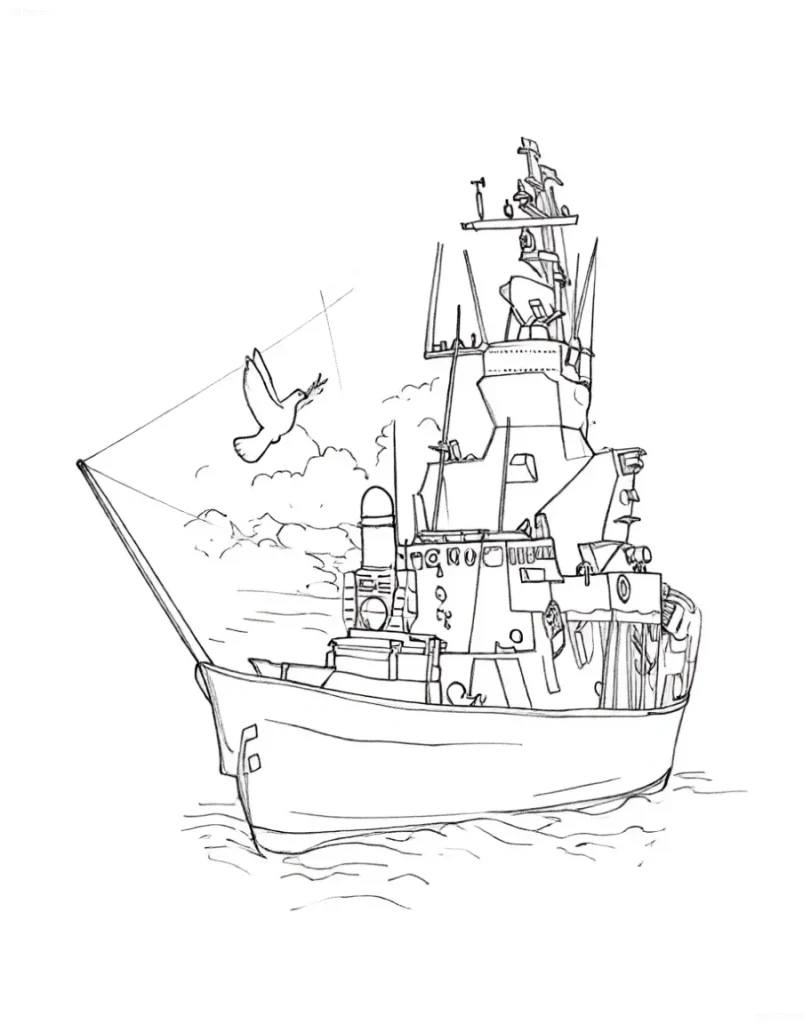
For many men, a warship tattoo becomes a way to commemorate years of service in the Navy. It’s a kind of distinguishing mark that remains with a veteran or active sailor for life, reminding them of the miles traveled, loyal comrades, and the harsh realities of life on deck. However, in modern tattoo art, this image has gone far beyond the purely professional sphere. Today, a warship is chosen by those who see in it a metaphor for inner strength, the ability to withstand life’s adversities, and the drive to always achieve their goals, despite storms and obstacles. In this article, we will delve into what lies behind the armor of these steel giants on the skin, and how to choose a sketch that will become your personal talisman.
The History of Naval Symbolism: From Ancient Triremes to Modern Frigates

The history of naval tattoos is a chronicle of seafaring itself. Even in ancient times, sailors would tattoo images of ships on their bodies, believing it would help them return home alive. Ancient Greek and Roman warriors might depict triremes on their shoulders as a symbol of their empires’ might. However, the true flourishing of naval tattooing occurred during the Age of Discovery and the subsequent centuries when the sailing fleet became the dominant force on the world stage.
In the 18th-19th centuries, a warship tattoo was the privilege of experienced sailors. It was believed that only those who had rounded Cape Horn—one of the most dangerous navigation points—had the right to wear an image of a fully rigged ship under sail. In those times, a ship on the body served as an amulet: sailors believed that the tattoo would “appease” the ocean and prevent the ship from sinking. Warships of that era, adorned with cannon ports, symbolized readiness for battle and the defense of their crown’s interests.

With the advent of the 20th century and the development of steam and then nuclear fleets, the aesthetics changed, but the essence remained the same. During World War I and World War II, tattoos depicting specific battleships, destroyers, or submarines became a widespread phenomenon among sailors. It was a form of identification: the tattoo could indicate which fleet or even which specific ship a person served on. Today, the historical context is complemented by modern tattooing techniques, turning a warship into a true work of art, combining the romance of the sea with the harsh aesthetics of military power.
Deep Meanings of a Military Warship Tattoo: Power, Resilience, and Loyalty

When we talk about the meaning of a military warship tattoo, it’s important to understand that it’s a multi-layered symbol. Each element of the design can add new shades of meaning. Let’s consider the main interpretations that are invested in this image:
- Power and Invincibility. A warship is a floating fortress. A tattoo of its image symbolizes a person’s inner strength, their ability to withstand colossal pressure and repel any enemies or circumstances. It’s a sign of an “armored” character.
- Protection and Security. A ship is designed to guard maritime borders. In the context of a tattoo, this can signify a man’s role as a protector of his family, his home, and his principles. A person with such a tattoo is essentially saying, “I am a shield for those dear to me.”

- Patriotism and Loyalty to Duty. For many, this is a direct indication of love for their homeland. The image of a warship under the national flag (e.g., the St. Andrew’s flag in Russia) emphasizes pride in one’s country and connection to its great history.
- Memory of Service. This is perhaps the most common reason for getting such a tattoo. A ship on the shoulder or chest is often accompanied by a unit number, ship name, or years of service. It’s a symbol of military brotherhood that is not forgotten over the years.
- Seeking a Path and Hope. Even a warship always has a destination. A tattoo can symbolize purposefulness, the search for one’s place in life, and hope for the successful completion of a “voyage,” no matter how difficult it may be.
The symbolism can change depending on the state of the sea around the ship. Calm waters emphasize confidence and control, while raging waves and storms symbolize struggle, overcoming difficult life trials, and victory over the elements (or oneself).
Styles of Military Warship Tattoos: From Realism to Graphics

The choice of style for such a tattoo is critically important, as it determines the overall mood of the composition. A warship is a technically complex object, so the artist must have a good sense of perspective and detail.
- Realism. This is the most popular style for depicting modern warships. The artist meticulously renders the texture of steel, antennas, gun turrets, reflections on the water, and foam at the bow. A realistic tattoo looks like a photograph on the skin and leaves an indelible impression with its monumentality.
- Old School. A classic of the genre. Traditional tattoos with sailing warships are characterized by bold outlines and bright colors. They are often complemented by banners with inscriptions, anchors, compass roses, or cannons. This style is ideal for those who want to emphasize the historical continuity of naval traditions.
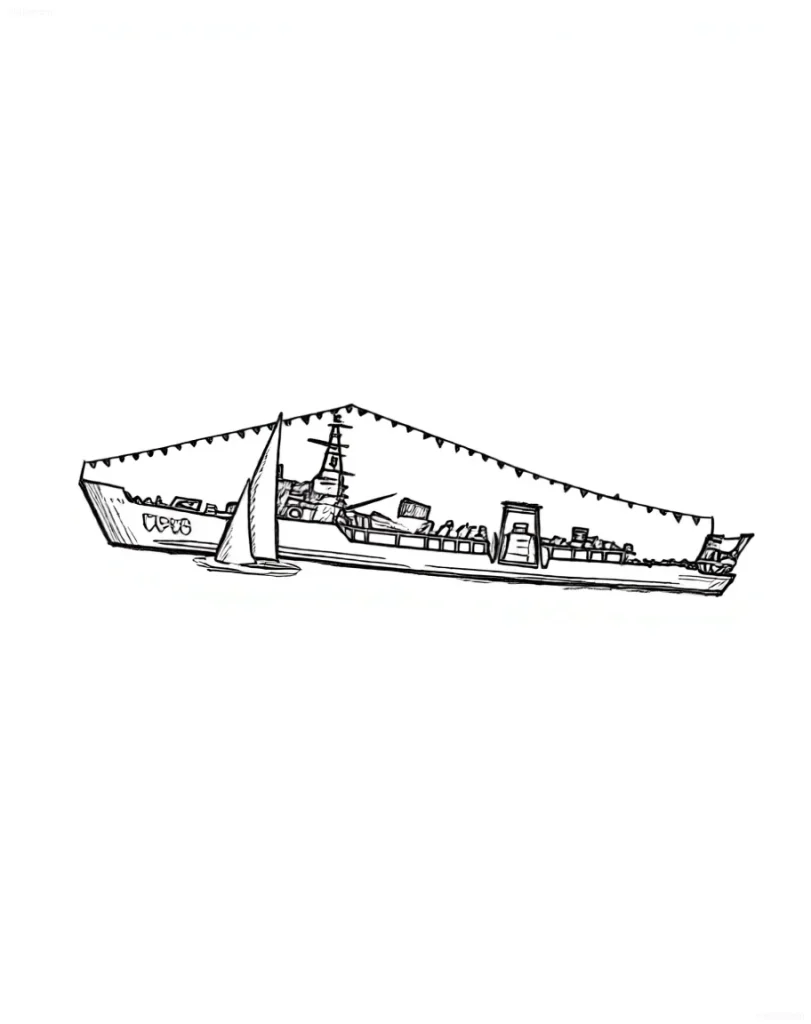
- Graphics and Engraving. In this style, the ship looks like an illustration from an old navigation textbook or a blueprint. The use of only black color and clear lines (hatching) gives the tattoo a sense of strictness and aristocracy.
- Trash Polka. For those who want to add dynamism and aggression. The combination of a realistic depiction of a warship with sharp strokes of red and black paint, typographic fonts, and abstract elements perfectly conveys the spirit of battle and the chaos of war.
- Neo-Traditional. A more modern and sometimes ironic take on the naval theme, using distorted proportions and very bright, neon colors, which makes the tattoo maximally noticeable.
Where to Place a Military Warship Tattoo: The Best Spots for a Naval Symbol

The choice of placement for a tattoo depends on the scale of the concept. A warship requires space to showcase all its grandeur and detail.
- Back. An ideal canvas for large-scale battle scenes. Here, you can place not just one ship, but an entire squadron in the midst of battle, with a detailed depiction of the sky and the ocean depths.
- Chest. A traditional place for sailors. A ship on the chest symbolizes what is close to the heart – loyalty to the fleet and home. Often, the image is placed so that the ship’s bow points forward, symbolizing movement towards a goal.
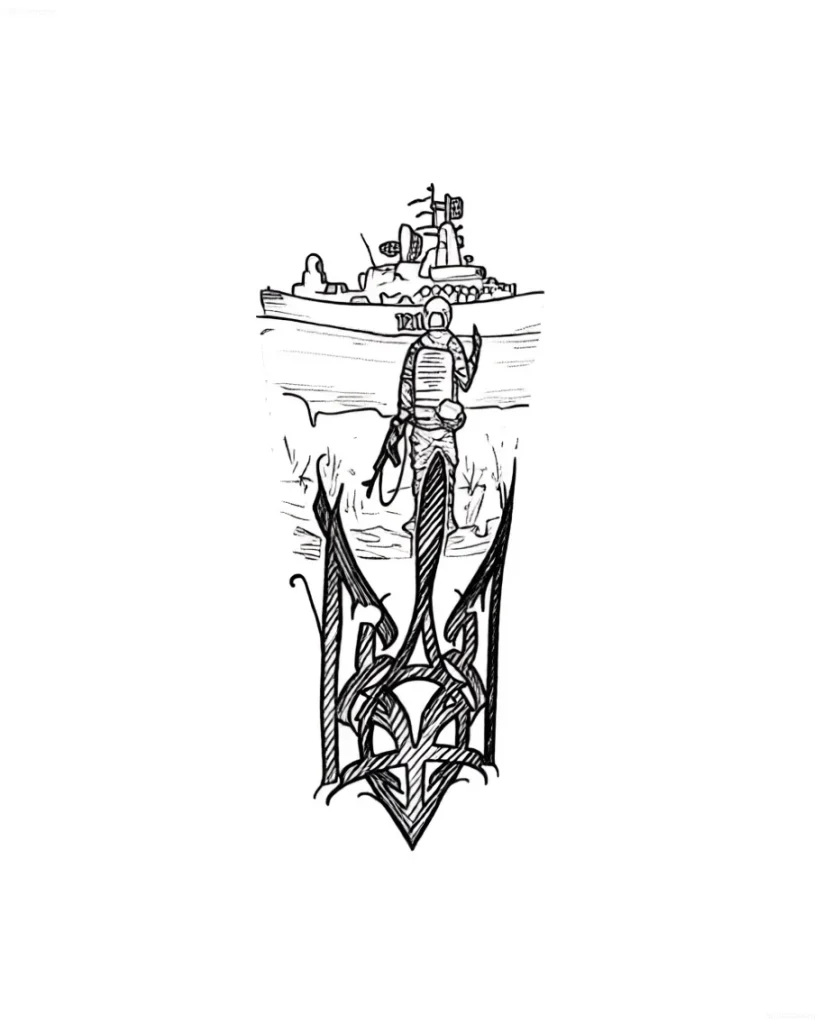
- Shoulder and forearm. The most popular places for medium-sized tattoos. A ship can wrap around the arm, creating a dynamic image. On the forearm, more elongated silhouettes of modern destroyers or cruisers are often placed.
- Side and ribs. Vertically oriented compositions look great here, such as a ship heading towards the viewer, or a vessel in a high wave. This area is considered quite painful, but the result is worth it.
- Shoulder blade. Well suited for concise depictions of a single specific vessel without excessive background.
Tips for Choosing and Caring for a Military Warship Tattoo: Your Naval Compass

To ensure your tattoo brings you joy for many years and doesn’t turn into a “blue smudge,” listen to the advice of professionals:
- Carefully Choose the Prototype. If you served, it’s best to use a real photo of your ship. If the tattoo is symbolic, study the types of vessels. A battleship symbolizes brute force, a frigate – maneuverability, an aircraft carrier – global influence.
- Don’t Skimp on Details. A warship “comes alive” in the details. Cannons, radars, rigging – all of this creates the right atmosphere. Choose an artist who specializes in technically complex work.
- Consider the Background. A ship in a void looks unfinished. Add a horizon line, seagulls, a setting sun, or storm clouds. This will create volume and depth.
- Follow Aftercare Instructions. Naval themes often involve many fine lines and shading. To prevent them from blurring, strictly follow the artist’s instructions in the first few weeks after getting the tattoo: use healing ointments, don’t scratch the tattoo, and avoid direct sunlight.
- Touch-ups. Over time, fine details can fade, especially if the tattoo is on an exposed area of the body. Be prepared for a touch-up in 5-7 years to restore the steel giant’s former clarity.
Frequently Asked Questions About Military Warship Tattoos

Is it okay to get a warship tattoo if I haven’t served in the Navy?
Absolutely. In today’s world, tattoos are a form of self-expression. If you are drawn to the aesthetics of naval power or imbue this image with personal meaning (protection, struggle, resilience), there are no restrictions. The main thing is to treat the symbolism respectfully, especially if you are using specific insignia.
What does a tattoo of a sinking warship mean?
This is a very powerful and dramatic symbol. It can signify a past catastrophe, the loss of something very important, or the readiness to go to the end, even if the situation seems hopeless (“I perish, but I do not surrender”). However, ships that are sailing are more often chosen as a symbol of life and movement.
What elements often complement a ship tattoo?
Most often, it’s a compass (seeking a path), an anchor (stability), a helm (controlling one’s destiny), nautical charts, or dolphins (good luck). Inscriptions in Latin or military branch mottos are also common.
Interesting Facts About Warships and Their Symbolic Meaning

Did you know that in the old days, sailors believed that a ship tattoo on the left shoulder helped to see better in the dark and protected against the “evil eye” of the ocean? Here are a few more interesting facts:
- Proper Names. Tattoos often use the names of legendary ships, such as “Varyag” or “Victory.” This adds historical weight to the tattoo and connects the owner to past feats.
- Symbolism of Sails. If a sailing ship is depicted in a tattoo, the number of sails filled with wind used to indicate the sailor’s rank and experience in long voyages.

- Color of Water. In professional Navy tattoos, the color of the water can indicate the region of service: cold gray tones for the Northern Fleet, bright blue for the Black Sea or Mediterranean.
- Figureheads. On ancient warships, figureheads (rostrums) were considered the soul of the ship. In a tattoo, depicting such a figurehead along with the ship enhances the meaning of protection and patronage from higher powers.
A military warship tattoo is the choice of a mature person ready to declare their strength and principles. It’s a monumental adornment that emphasizes masculinity and carries the spirit of adventure mixed with the strict discipline of military service. By choosing such a sketch, you are not just getting metal and waves on your skin, but an entire philosophy of overcoming circumstances and loyalty to your chosen course. May your ship always have seven feet under the keel, and may the tattoo become a lifelong source of pride!