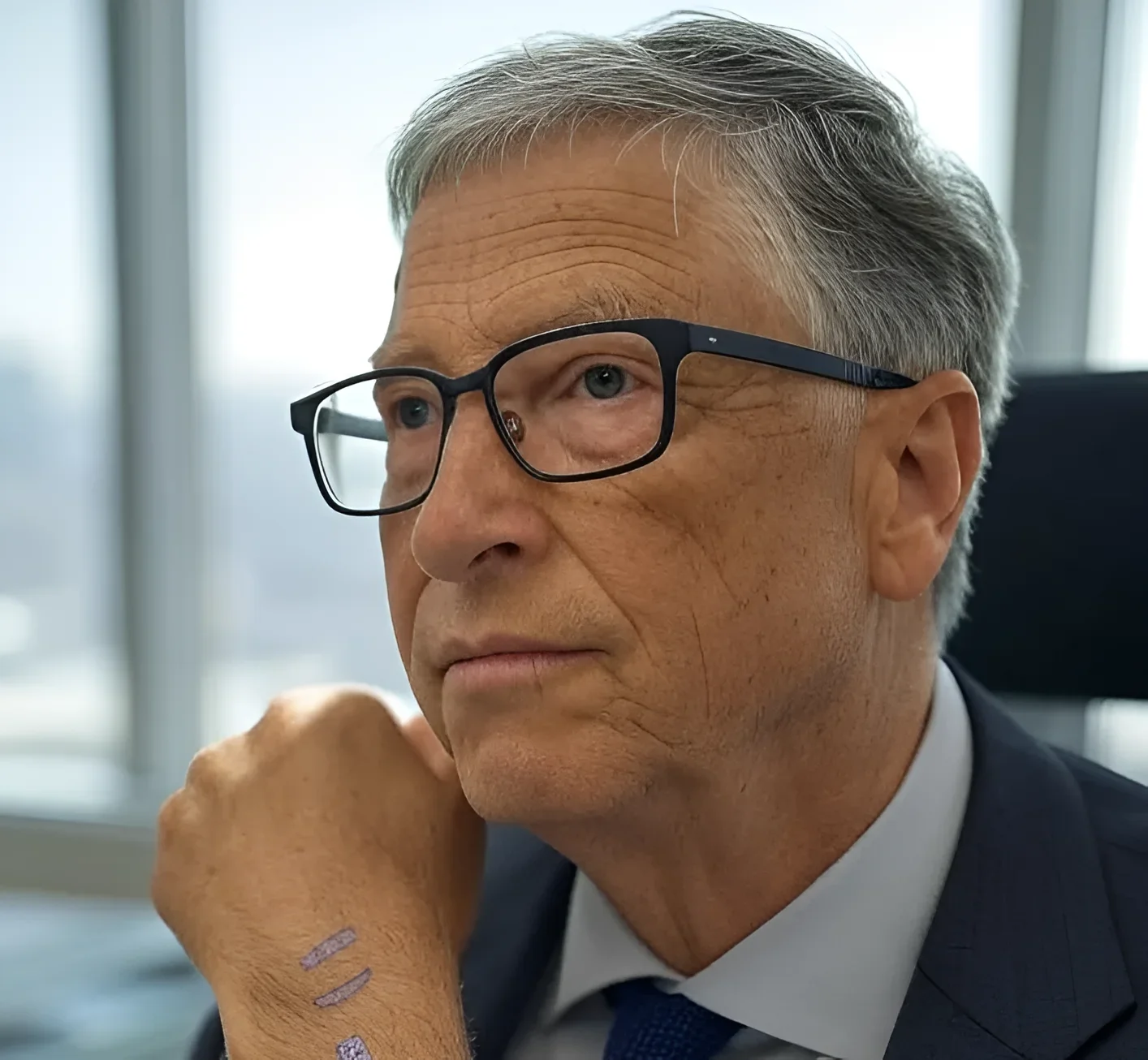
The world of high technology is holding its breath for a massive transformation: Bill Gates, one of the main ideologues of the digital age, has predicted the imminent death of smartphones. According to the Microsoft founder, the mobile devices we are accustomed to will be replaced by a more advanced and intimate technology – electronic tattoos. This futuristic forecast paints a picture of a future where the boundaries between the human body and the digital interface are finally blurred, turning the skin into a living processor and communication tool.
Digital Epidermis: How Tattoos Will Replace Gadgets
The concept of electronic tattoos goes far beyond the usual understanding of body art. It’s not just a drawing, but a complex biometric system consisting of flexible microchips, nanosensors, and conductive inks. The technology, actively developed by startups like Chaotic Moon (now part of Accenture), involves applying a thin interface to the skin capable of collecting, processing, and transmitting data in real-time. Unlike modern smartwatches or fitness trackers, such a tattoo becomes an organic extension of the body, requiring no recharging in the usual sense and causing no physical discomfort.
Analyzing Gates’ Predictions: Why They’re Worth Listening To
History shows that Bill Gates has a rare gift for foreseeing technological shifts. As early as 1995, he predicted the emergence of streaming services, social networks, and smart advertising algorithms with astonishing accuracy. Although some of his ideas, like Windows Phone, did not gain mass recognition, his vision of macro trends remains fundamental to the entire industry. Today, as biomedicine and nanotechnology develop exponentially, his bet on “body electronics” looks not like science fiction, but like a logical continuation of the evolution of wearable devices. Experts in the tattoo industry note that this could lead to the emergence of a completely new profession – a cyber-artist, combining the skills of an artist and a biotechnologist engineer.
Comparing Capabilities: Smartphone vs. Electronic Tattoo
To understand the scale of the upcoming changes, it’s worth looking at the functional differences between current market leaders and future technology:
| Characteristic | Smartphone (Current Stage) | Electronic Tattoo (Future) |
|---|---|---|
| Form Factor | External device, requires carrying in hands/pocket | Flexible interface integrated into the skin |
| Health Monitoring | Superficial (heart rate, steps) | Deep (blood composition, stress levels, 24/7 ECG) |
| Autonomy | Charging every 12-48 hours | Powered by body heat or kinetic energy |
| Interface | Touchscreen | Voice control, gestures, neural connection |
| Security | Passwords, biometrics (FaceID) | Unique biological identifier |
Biohacking and Aesthetics: A New Philosophy of Tattoo Culture
For the tattoo community, integrating electronics into ink is a challenge to traditional norms. If previously a tattoo served as a means of self-expression, status symbol, or subcultural affiliation, it now gains a utilitarian function. We are witnessing the birth of “functional biohacking,” where the aesthetic component is complemented by the ability for contactless payments, smart home control, or instant transmission of medical data to a doctor. This could radically change the market: instead of temporary decorations or classic old-school works, future clients may come to studios for an “upgrade” of their cognitive and physical capabilities.
Ethical Risks and Privacy Concerns
Of course, such deep penetration of technology into the human body raises many concerns. The main issue is data security. If a smartphone can be turned off or left at home, an electronic tattoo becomes an indelible transmitter that records every movement and change in the body’s state. Critics point to the risk of total control by corporations and governments. Tim Cook of Apple is still skeptical about the idea of completely replacing the iPhone with such devices, insisting that the smartphone will remain the central hub. However, visionaries like Elon Musk and Mark Zuckerberg are already investing billions in neural interfaces and augmented reality, which indirectly confirms the trend towards devices that are “always with you.”
When to Expect Changes?
Analysts believe that by 2030, electronic tattoos could reach a critical mass of users, provided that production costs decrease and durability issues are resolved (protection from sweat, skin regeneration, and mechanical damage). For the tattoo industry, this means a need for transformation: studios will have to implement sterile conditions close to operating rooms, and artists will have to study the basics of microelectronics. Ultimately, Bill Gates’ prediction is not just a forecast about gadgets; it’s a manifesto for a new era where humans and technology become one, and the art of tattooing gains a new, digital life.