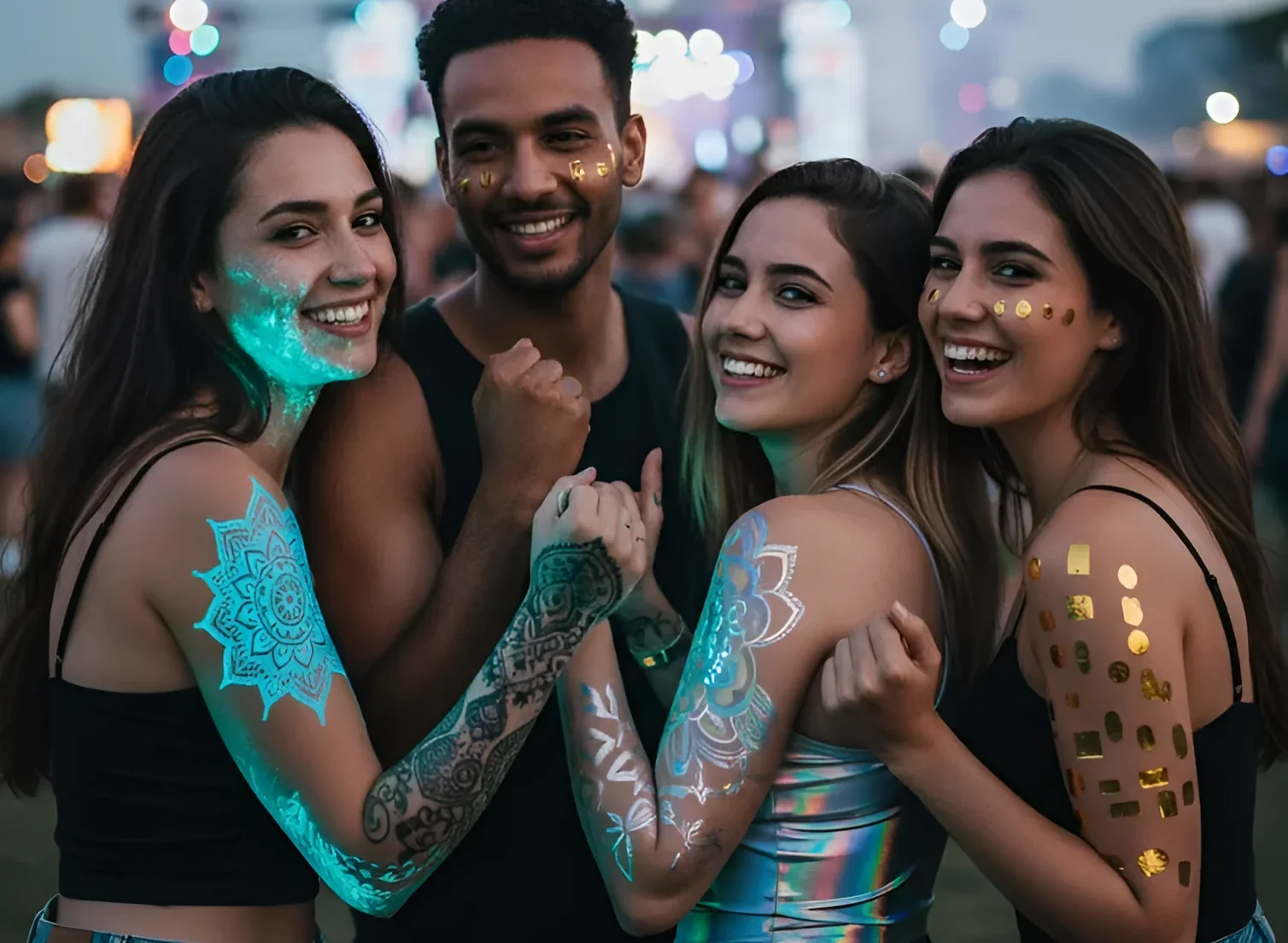
The global body art industry is undergoing a tectonic shift that forces a new look at the usual canons of tattoo culture. According to the latest analytical data, by 2026, the temporary tattoo segment will make an unexpected leap, taking a dominant position with a 56.17% share of the total global market. If temporary images were previously perceived exclusively as a short-term accessory for festivals or a children’s game, today they are becoming a full-fledged tool for self-expression, pushing aside classic permanent tattoos in the battle for skin and consumer attention.
Figures and Forecasts: The Financial Landscape of the Industry
The global tattoo market shows impressive resilience and dynamism. In 2025, its volume was estimated at 2.43 billion dollars, and by 2026, growth to 2.66 billion is expected. Experts predict that by 2034, the industry’s capitalization will reach an impressive 5.99 billion dollars with an average annual growth rate (CAGR) of 10.67%. The lion’s share of this success will be provided by the “non-permanent” body art sector, which attracts audiences with its flexibility and lack of long-term commitment.
Why Temporary Tattoos are Winning: Analysis of Success Factors
The dominance of the temporary segment is due to several key factors that resonate with the values of modern society. Firstly, it is the low barrier to entry and the complete absence of medical risks. Unlike a classic needle, temporary solutions are not associated with pain or the risk of infection, which opens doors for a huge audience: from teenagers to office workers who want to radically change their image for a vacation. Secondly, technological breakthroughs have elevated the aesthetics of such products to a fundamentally new level. UV-active pigments that glow in neon light, holographic geometric patterns, and textures that mimic natural henna make these designs a desirable fashion object.
Technologies and Styles: What Dictates Fashion in Studios
Special attention should be paid to the development of 3D patterns. This trend, actively supported by global celebrities and athletes, resonates with representatives of both sexes. Although the quality application of a 3D tattoo is a labor-intensive process and can cost from $200 per hour of work by an experienced master, the demand for such services in Europe and North America continues to grow. Simultaneously, the market for vegan inks and eco-friendly materials is developing, reflecting the global demand for conscious consumption and product safety.
Geography and Demographics: Who and Where is Driving Demand
Europe retains its status as the industry leader with a market share of 33.14% as of 2025. The main production capacities for permanent makeup (PMU) pigments are concentrated here, and tattooing has long been integrated into high fashion. The situation in other regions is as follows:
- USA: The market is heading towards $1.25 billion by 2032 due to the rapid opening of specialized studios and spa clinics.
- Asia (India, Thailand, Japan): High demand for spiritual and sacred symbols persists here – mandalas and texts of holy scriptures, which are often applied using traditional techniques.
- Brazil: Urban youth and a developed beach culture stimulate demand for both decorative and cosmetic tattoos.
The gender aspect is also interesting: women make up 55.57% of the entire audience. They are more likely to choose premium services, including cosmetic tattooing (lips, eyebrows, scalp) and symbolic works, for example, as part of social campaigns for breast cancer awareness.
New Horizons: From Oral Mucosa to Tooth Enamel
Classic pattern application on the skin (83.71% of the market) is complemented by exotic directions. Interest in tattoos on the oral mucosa and lips (lip blushing technique), as well as “tooth tattoos,” which are used in aesthetic dentistry to mask enamel defects, is growing. Even niche areas like nail tattoos or scalp hair simulation are finding their followers in major metropolises.
Expert View: Challenges and Opportunities for the Future
Despite optimistic forecasts, the industry faces safety challenges. The increase in allergic reactions to low-quality dyes in cheap temporary tattoo kits remains a deterrent. However, this also stimulates the development of the professional tattoo removal segment and medical spa centers, which are becoming an integral part of the business ecosystem. The transition from artisanal methods to licensed studios with high hygiene standards is the main vector of development for the current decade.
| Key Indicator | Projected Value (2026) |
|---|---|
| Share of the temporary segment | 56.17% |
| Total Market Volume (USD) | 2.66 billion |
| Share of female audience | 55.57% |
| Leading Region | Europe (33.14%) |
In conclusion, it can be noted that tattoo culture has definitively emerged from the shadows of marginality. Today, it is a high-tech and inclusive market, where a temporary solution is not just an alternative to a permanent design, but an independent and powerful driver of the entire beauty industry.