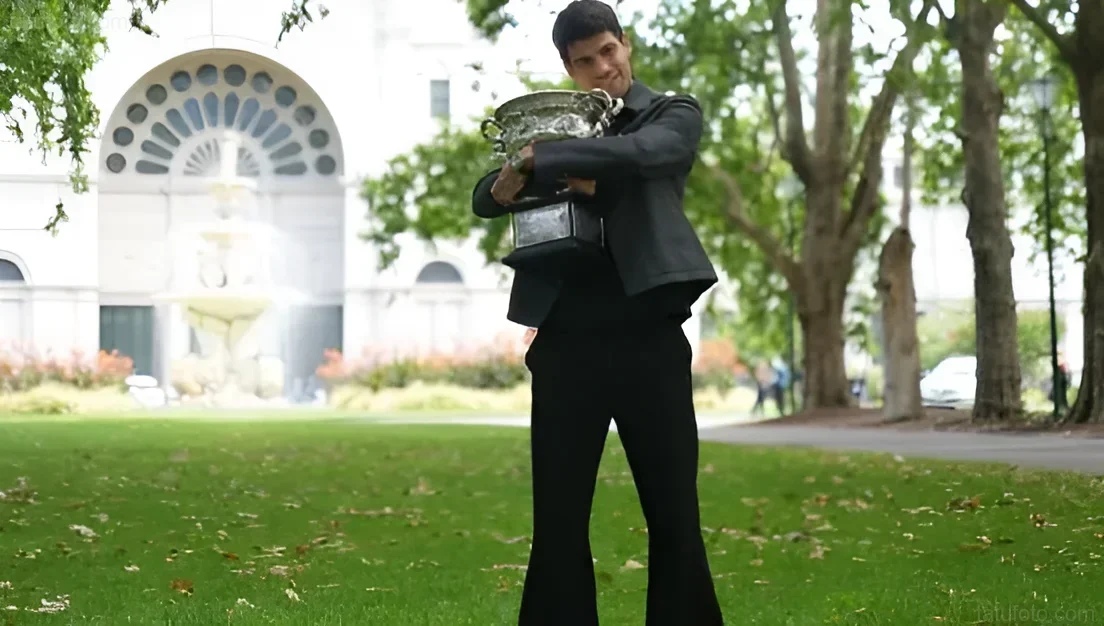
The young star of world tennis, Carlos Alcaraz, has once again made headlines, not only among sports experts but also among tattoo art enthusiasts. Following his spectacular victory in the final of the Australian Open 2026, the 22-year-old Spaniard officially confirmed his intention to adorn his body with a new drawing. This time, the choice fell on the image of a kangaroo – the symbol of Australia will serve as a permanent reminder of the moment Alcaraz definitively etched his name into the pantheon of modern greatest athletes, becoming the youngest male player to achieve a career Grand Slam.
The triumph over the legendary Novak Djokovic last Sunday marked a point of no return for Alcaraz. In a tense match that concluded with a score of 2-6, 6-2, 6-3, 7-5, the Spanish tennis player demonstrated not only phenomenal physical form but also an iron will. Immediately after the match, Carlos shared his plans for a new tattoo: “I already know for sure it will be a kangaroo. The only thing I haven’t decided on yet is the exact location. Most likely, it will be on my leg, but I’m still choosing between my right and left calf.” Such a commitment to the tradition of immortalizing key life milestones on his skin is becoming the athlete’s signature.
Expert View: A Tattoo as an Anchor for Success in Sports
In contemporary tattoo culture, Alcaraz’s choice appears logical and deeply symbolic. Top-tier professional athletes often use tattoos as “anchors” to solidify their achievements. For Alcaraz, this is not his first such experience – his body is already adorned with the famous abbreviation “CCC” (Corazón, Cabeza, Cojones – Heart, Head, Balls), a motto gifted to him by his grandfather. The choice of a kangaroo for the Australian trophy carries additional meaning: this animal is known for never backing down. For a tennis player whose style of play is built on aggressive attacks and constant forward movement, such a symbol is a perfect fit.
In terms of style, Alcaraz leans towards minimalism. A “small kangaroo” is a modern trend among athletes who prefer concise, graphic images over massive compositions. A calf tattoo is a classic location for tennis players, as their legs are their primary tools on the court. It’s a form of tribute to the part of the body that endured colossal strain on the path to the title.
Historical Context and the Path to Greatness
The victory in Melbourne on February 2, 2026, made Alcaraz only the ninth man in tennis history to complete a career Grand Slam. He surpassed titans like Don Budge, Rafael Nadal (who achieved this at 24), Roger Federer (almost at 28), and Novak Djokovic himself (at 29) in age. The list of legends he has joined also includes Fred Perry, Roy Emerson, Rod Laver, and Andre Agassi.
| Tennis Player | Age at Career Grand Slam | Number of AO Titles |
|---|---|---|
| Carlos Alcaraz | 22 years | 1 |
| Rafael Nadal | 24 years 3 months | 2 |
| Roger Federer | 27 years 10 months | 6 |
| Novak Djokovic | 29 years | 10 |
Despite the grandeur of the historical moment, the celebration was a family affair. According to Australian media reports, Alcaraz spent the night after the final in his hotel room, ordering pizza, beer, and champagne. On Monday, he appeared before the cameras at the Royal Exhibition Building in Melbourne. The champion’s image was decidedly relaxed: a black suit, loafers worn without socks, and a radiant smile next to the long-awaited trophy.
Psychology of a Champion and New Horizons
Alcaraz admitted that he was trembling with nerves before the final point against Djokovic. “I hate losing, and that’s my main motivation,” the tennis player stated. It is this thirst for victory that drives him to set new goals. The Spaniard plans to complete his collection of Masters 1000 trophies (he is missing wins in Canada, Shanghai, and Paris), as well as win the ATP Finals and the Davis Cup for his country.
The tennis calendar is brutal: tournaments follow one after another, and players often don’t have time to fully grasp the magnitude of their achievements. “This year, I’ve learned to appreciate every second of the moment I’m living in. Not just when I’m lifting trophies, but also during the game itself, during wins, and even during losses,” Carlos reflects. His future kangaroo tattoo will serve as that freeze-frame, allowing him, even decades later, to return to that hot Melbourne evening when he became the king of tennis. For tattoo culture, such stories are the best examples of how body art transforms into a living chronicle of human triumph and the will to win.