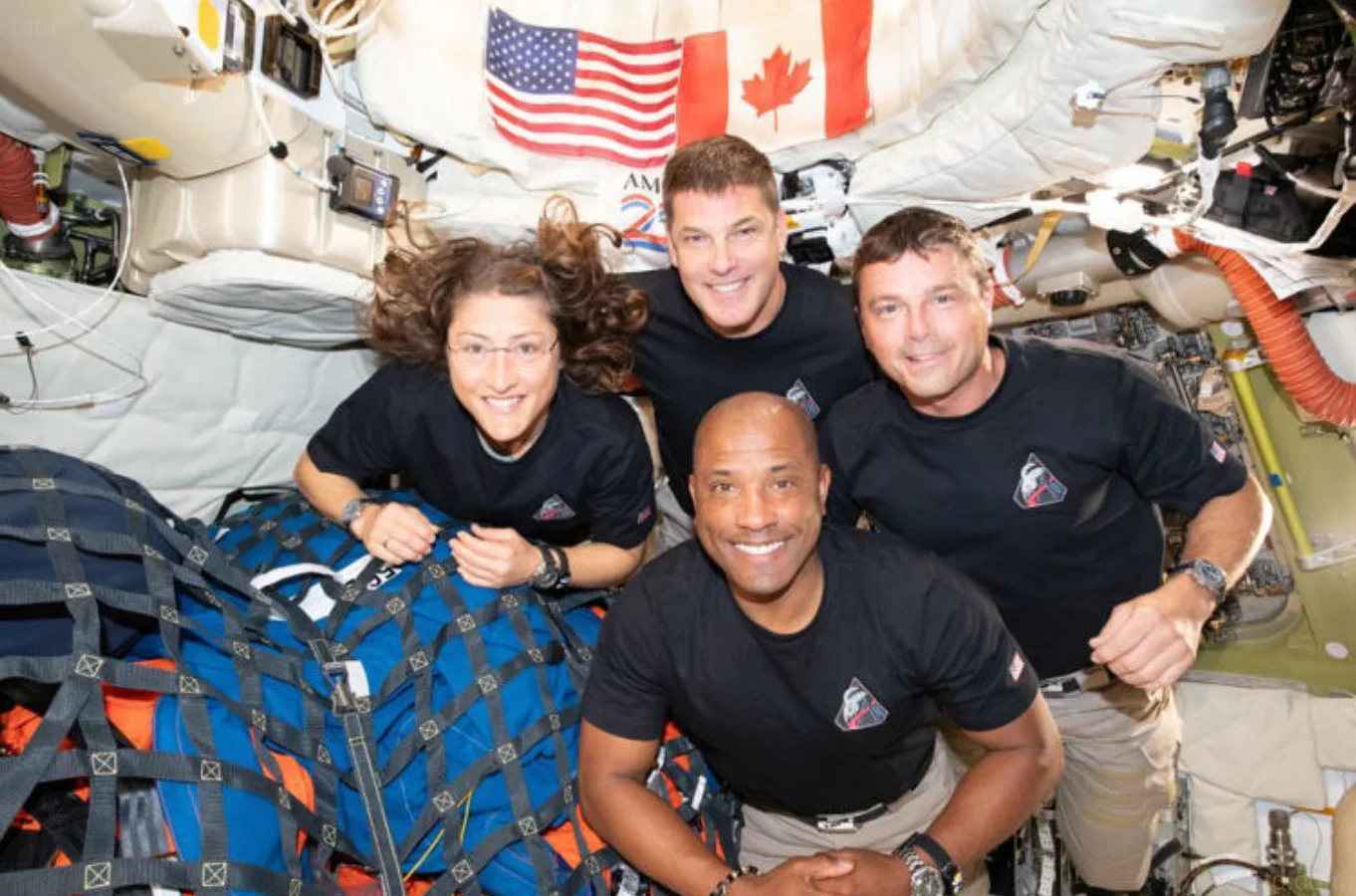
The vastness of space has always beckoned explorers, and now it’s becoming a powerful source of inspiration for global tattoo culture. The completion of the Artemis 2 mission, during which a crew consisting of Reid Wiseman, Christina Koch, Victor Glover, and Jeremy Hansen made a historic flyby of the Moon, has not only caused a scientific sensation but also an unexpected surge of creativity among fans. One of the space enthusiasts, Ariel Lynn, known on Threads as @ariel_lynn34, decided to immortalize this human triumph on her body by turning to the space agency itself for help.
The Artemis 2 mission was a true breakthrough: the astronauts traveled further from Earth than anyone in history, testing systems for future landings on the lunar surface. However, for Ariel Lynn, this event took on a deeply personal meaning. The young woman plans to complement her existing “lunar” tattoo with a special inscription, and on April 14th, she turned to NASA with a request that instantly went viral. She asked the agency to persuade Christina Koch to write the phrase “Copy, moon joy” in her handwriting to use this autograph as a sketch.
The Story Behind a Phrase: Why “Moon Joy” is So Important for a Tattoo
The phrase Ariel chose is not just a collection of words. It was born during an emotional dialogue aboard the Orion spacecraft. As Reid Wiseman described the incredible views from the window, calling them “absolutely incredible,” a flight control center officer responded with the now-famous phrase about “moon joy.” For NASA, this phrase became a symbol of the intense happiness and delight that a mission to the Moon brings. In tattoo culture, such “live” phrases, taken out of the context of real historical events, are valued much higher than standard quotes from books.
Expert Analysis: The Trend of Authentic Handwriting in Tattoos
From the perspective of professional tattoo copywriting and industry analysis, Ariel Lynn’s request reflects an important modern trend – a shift from decorativeness to maximum authenticity. Tattoos created based on real handwriting (so-called “script” or “handwriting tattoos”) possess a unique energy. In this case, we see an intersection of several layers:
- Memorialization: Capturing a moment of humanity’s greatest achievement.
- Personalization: Using Christina Koch’s handwriting makes the tattoo one-of-a-kind, turning the skin into a document of the era.
- Emotional Intelligence: The phrase “moon joy” carries a positive charge, which is extremely popular in modern minimalist tattoos.
NASA, demonstrating excellent SMM team work, responded to the request: “Message received. We’ll see what we can do, but no promises!” This response garnered thousands of likes and enthusiastic comments, highlighting how close the connection between high technology and ordinary people has become.
Technical Aspects of Implementing a Space Tattoo
If NASA indeed provides Ariel with a sample of Christina Koch’s handwriting, the tattoo artist will face a responsible task. Working with handwriting requires meticulous precision, especially if the Fine Line style is chosen. It is important to preserve the astronaut’s characteristic pen strokes and pressure so that the tattoo does not turn into a standard printed font.
| Mission Participant | Role in Crew | Cultural Significance |
|---|---|---|
| Reid Wiseman | Commander | Author of the first enthusiastic descriptions of the Moon’s view |
| Christina Koch | Mission Specialist | First woman to travel to the Moon as part of the Artemis program |
| Victor Glover | Pilot | First African American in a lunar mission |
| Jeremy Hansen | Mission Specialist | Canadian representative, expanding the boundaries of international cooperation |
Photographs of the crew inside Orion, dated April 7, 2026, demonstrate the team’s cohesion, which has inspired millions. For tattoo artists, such news is a signal that space themes are going beyond simple depictions of planets and rockets. Today, micro-realism, the geometry of orbital trajectories, and, as in Ariel’s case, calligraphy related to specific moments of triumph are in vogue.
Ariel Lynn’s case with NASA shows that tattooing remains one of the most sincere ways to express appreciation and solidarity with great deeds. While the world waits to see if the agency will keep its “half-promise,” the tattoo community is already discussing how “moon joy” could become a new global trend in inscription design. After all, when the handwriting of a person who has seen the far side of the Moon adorns your wrist or collarbone – that is the true magic of art.