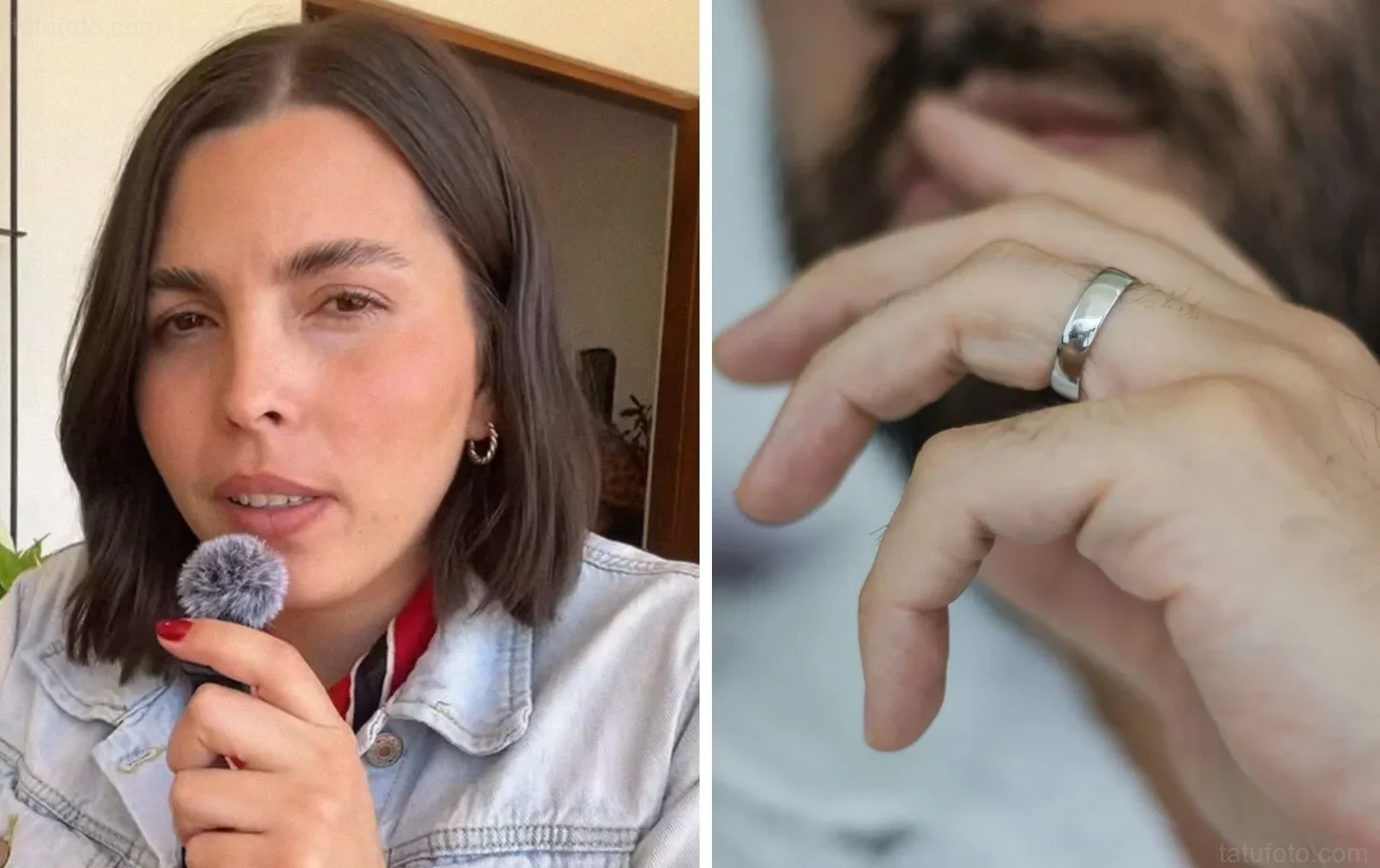
The tradition of wearing wedding rings on the ring finger has remained a powerful symbol of fidelity and a public declaration that a person’s heart is taken for centuries. However, in modern culture, classic jewelry is increasingly facing practical and personal objections, forcing couples to seek alternative, sometimes radical, ways to signify their union.
The Story of a Compromise: a Tattoo Instead of Gold
On April 17, 2026, the story of Maria (@mjo.wiggins), a blogger from Mexico, gained widespread attention on social media. She solved the problem of her husband’s reluctance to wear a wedding ring in a very straightforward way. Her husband repeatedly stated that the traditional metal jewelry caused him physical discomfort and interfered with his daily life. Instead of accepting the absence of a marriage symbol on her husband’s hand, Maria suggested they go to a tattoo parlor.
The published video captures the process of applying a thin black line around the man’s ring finger. Although Maria called it the “perfect compromise,” it’s noticeable in the footage how her husband winces in pain and behaves quite stiffly while sitting in the artist’s chair. The content creator herself was delighted with the result, emphasizing that her husband is now “ringed” forever and feels comfortable at the same time.
Public Reaction: 1.5 Million Views and a Storm of Criticism
The video quickly went viral, garnering over 1.5 million views, but the audience’s reaction was far from celebratory. Many users saw signs of coercion rather than voluntary consent in the man’s behavior. Heated debates about the boundaries of personal freedom in marriage erupted in the comments. Viewers noted that Maria’s husband looked unhappy, and the very idea of “marking” a partner with a permanent drawing seemed overly controlling to many.
The main criticisms from commenters boiled down to a few points:
- Suspicion of insincerity: if a ring is uncomfortable, why has a tattoo (a process and healing that is much more painful) become an acceptable option?
- Visual discomfort: users noticed that the man was literally “fidgeting” in the chair, which was interpreted as a reluctance to get the tattoo.
- Social subtext: opinions were expressed that refusing a ring is often associated with a desire to appear “free” in the eyes of others, and a tattoo is an attempt by the wife to curb such thoughts.
Expert Analysis: Tattoo Rings from the Perspective of an Artist and Culture
From the perspective of tattoo culture, the couple’s decision to get ring tattoos is a trend that has both ardent supporters and opponents among professionals. Tattooing fingers is considered one of the most challenging tasks for several reasons. Firstly, the skin on the hands renews much faster than on other parts of the body, and constant friction and exposure to the external environment cause the tattoo to quickly lose its clarity and “blur” (blowout effect).
Secondly, it’s a matter of durability. The thin lines chosen by Maria’s husband tend to disappear or turn into indistinct smudges within a year or two. Thus, an “eternal” symbol may require regular and painful touch-ups, which calls into question the argument of “comfort” compared to a regular ring.
Why Do People Refuse Traditional Rings?
There are a number of objective reasons why people choose alternatives to jewelry. The table below lists the main factors influencing such a choice:
| Reason | Description |
|---|---|
| Professional risks | For mechanics, construction workers, and athletes, a metal ring can cause injury (degloving). |
| Physiological features | Swelling, metal allergies, or weight changes make wearing a ring impossible. |
| Personal beliefs | Dislike of jewelry as a category or a desire to stand out from the crowd. |
Silicone rings are becoming a popular alternative today – they are safe, inexpensive, and easily replaceable. However, a tattoo remains the most radical and emotionally charged option. Experts in family relations recommend discussing such issues even before the wedding to avoid conflicts like the one that occurred in Maria’s family. Ultimately, the value of marriage is determined not by the presence of metal or ink on a finger, but by the level of trust and the ability to hear each other without coercion into painful procedures.