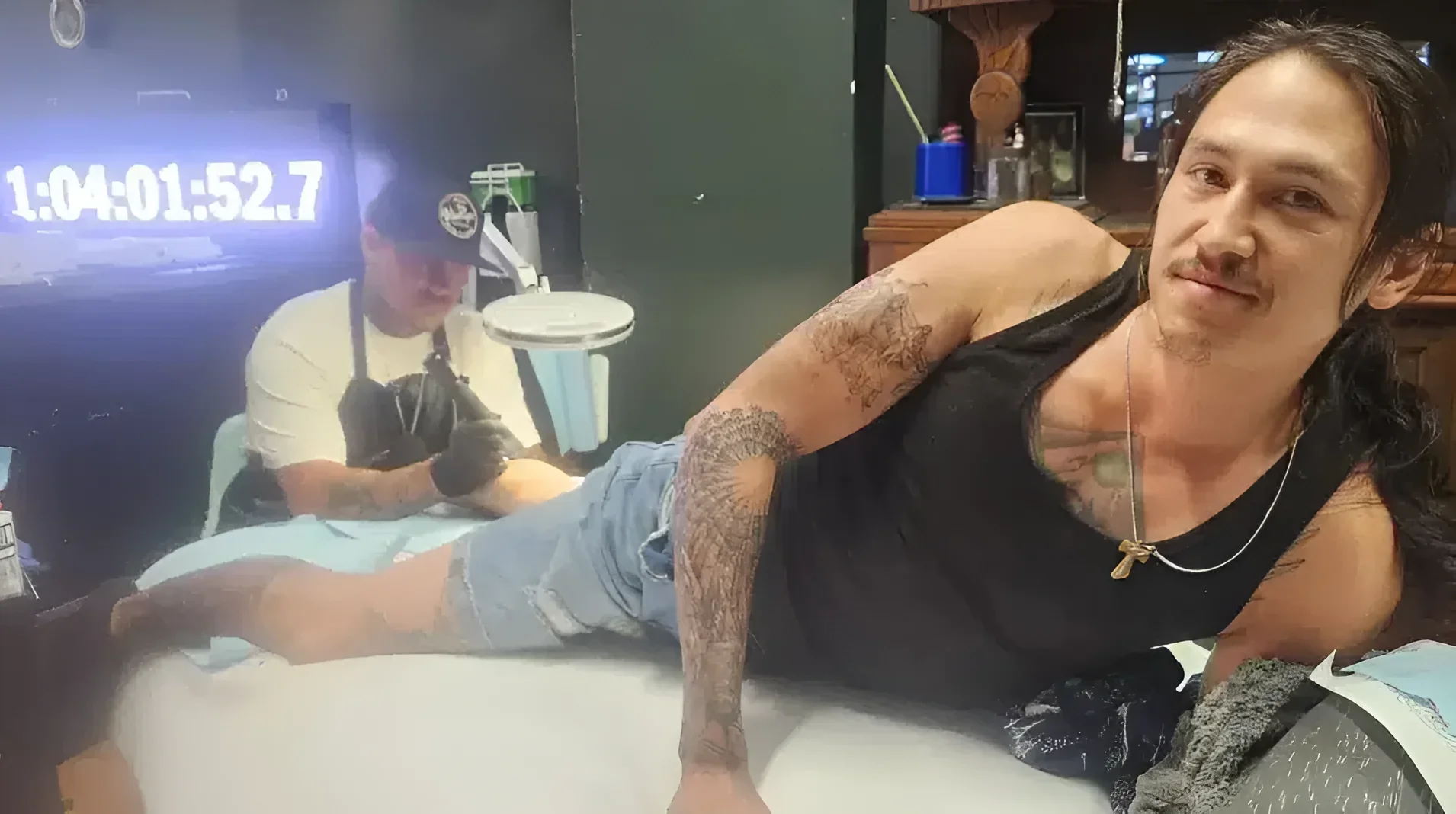
In the world of tattoo art, where every artist strives for uniqueness, the boundaries of what’s possible are sometimes pushed not for aesthetics, but to test human limits. This is exactly what happened last week in West Chester, where artist Brannan Clift not only enhanced his reputation but also etched his name anew into the Guinness World Records. It was a marathon that lasted 76 hours, and its goal was not just ink on skin, but the creation of a large-scale artistic canvas on one person’s body.
Endurance Marathon: How the 76 Hours Unfolded
Brannan Clift, owner of Liberty Bell Tattoo & Piercing at 124 E. Gay St., decided to go all in. His previous record was 52 hours, but this time he aimed to surpass the achievement of an Italian team. The plan was simple yet brutal: three days and four hours of continuous work on a single client. The session started on Tuesday at noon and concluded on Friday at 4 PM. The timing was not accidental – it symbolically coincided with the date the Declaration of Independence was read in 1776, adding historical context to the event.
It’s important to understand that tattooing is not just about creativity but also physical exertion. For the artist, it’s a standing job, constant strain on the wrist and back, and for the client, a test of their nervous system’s resilience. However, as this experiment showed, with the right motivation and preparation, the human body is capable of miracles. The client, Christian Ashbaugh from California, managed to endure this marathon, occasionally falling asleep on the chair while the needle continued its work.
Sacred Meaning and Choice of Subject
What distinguishes this record from other similar attempts is the strict censorship filter set by the artist himself. Brannan Clift runs a studio founded on Christian principles, and before the record-breaking attempt, he set a firm condition: all images had to be dedicated to God. This transformed the session into a kind of pilgrimage, where each needle prick was an act of faith.
As a result, Ashbaugh left the studio transformed into a walking illustration of biblical parables. His body now features black and grey depictions of:
- scenes of David and Goliath’s battle;
- the prophet Daniel in the lion’s den;
- key moments from the life of Jesus Christ.
In addition to religious themes, elements dedicated to the 250th anniversary of the USA were incorporated into the composition. Ashbaugh, commenting on his choice, noted that if one is going to get a tattoo, it’s best to depict one’s God. This is a rare example where aesthetics are entirely subservient to spiritual meaning, which is not so common in contemporary tattoo culture.
The Psychology of the Record: Why Is It Possible?
Brannan Clift, now 44 years old and having worked in the industry for 26 years, described the finale of this marathon as both exhausting and cathartic. But why did he choose Ashbaugh specifically? The artist was brutally honest: he only did it because they are true friends, and Ashbaugh is one of the most pain-tolerant people Clift had met during his travels around the world. In the tattoo world, pain tolerance is currency, and not everyone can afford 76 hours under the needle.
The official witness to the record was Pastor Dr. Glenn Dietz, a lifelong firefighter. He remained awake for all 76 hours to confirm the legitimacy of the achievement, although he later admitted to recovering quickly within a few days. This underscores the seriousness of the approach: for a record to be recognized, it requires not only hours but also strict oversight from independent observers.
Context of Tattoo Culture and Records
Attempts to set records for session duration are a long-standing tradition in the tattoo community. They serve not only to popularize craftsmanship but also to demonstrate dedication to the craft. However, 76 hours is an extreme measure. Typically, sessions last from 2 to 6 hours, and large projects are broken down into multiple sessions. Merging all stages into one continuous process requires immense discipline from both parties.
Brannan Clift’s success shows that even in the age of digital technology and fast fashion, live art and human endurance remain in focus. This case became not just news but proof that tattooing can be a form of meditation, faith, and self-overcoming. And as artists continue to explore new frontiers of possibility, such stories will inspire both colleagues and art enthusiasts.