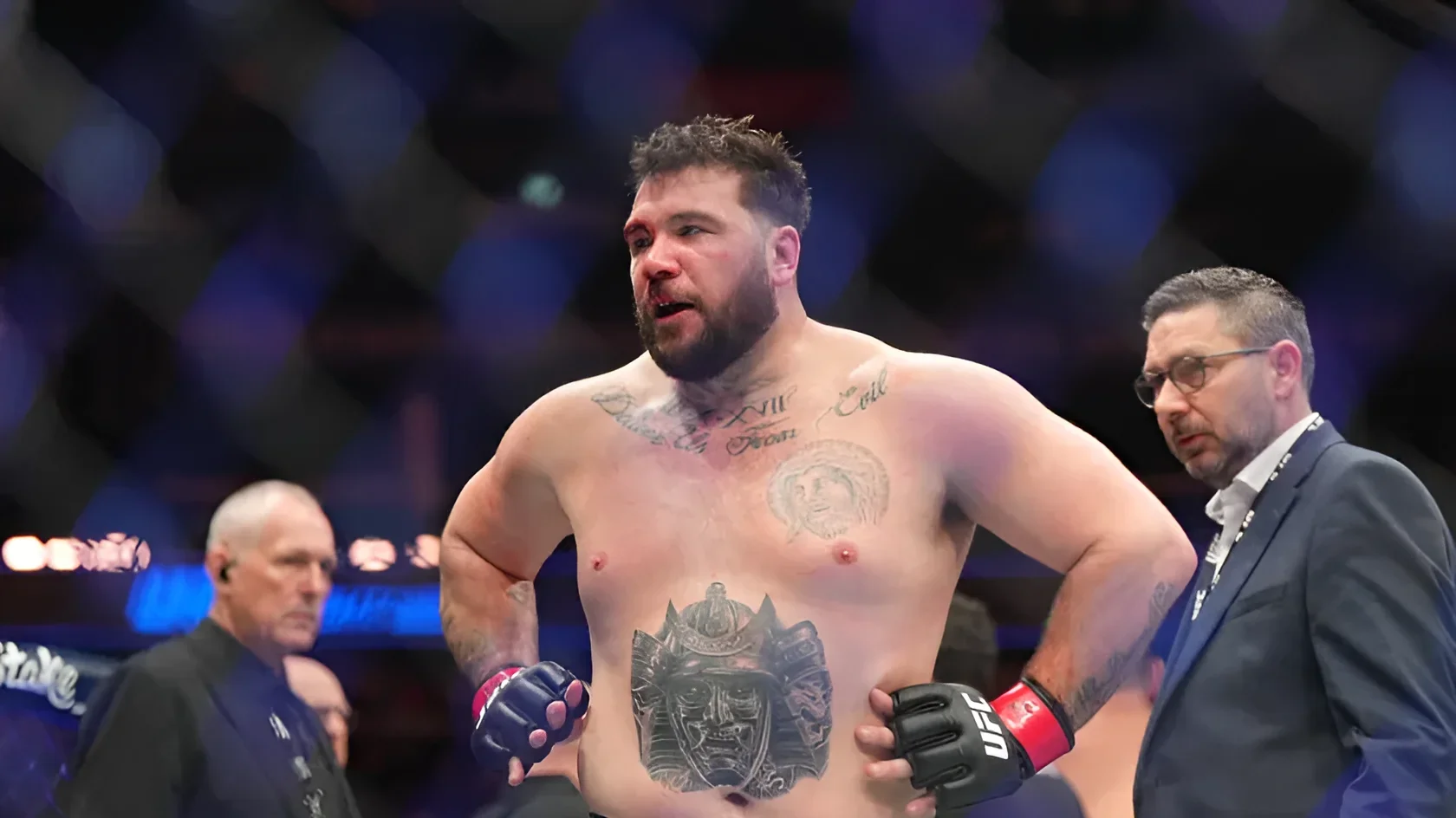
In the world of mixed martial arts, a fighter’s appearance often becomes as important a part of their brand as their win-loss record. A prime example of this approach is Louis Sutherland, affectionately nicknamed “Vanilla Gorilla” by fans. His career in the UFC octagon is rapidly gaining momentum, but the public’s attention is drawn not only to his powerful physique and aggressive fighting style but also to the unique tattoos covering his body. Unlike many of his colleagues who turn their life stories into open books on their skin, Sutherland prefers to keep the meaning of his ink a secret, leaving room for speculation and interpretation.
A Prayer on the Chest: Protection or Defiance?
The central element of the Irishman’s tattoo arsenal is the inscription on his upper chest. It’s a large banner with the text “Deliver Us From Evil”. For many, this phrase is associated with the Lord’s Prayer, where it serves as a plea for protection from evil. However, in the context of combat sports, where every fight is a clash with physical and mental darkness, the meaning can be deeper. It could be a personal amulet, a reminder to remain pure in spirit despite the brutality of the ring, or even a challenge to fate.
Directly below this inscription, on his left pectoral muscle, is a portrait. The details of this portrait remain a mystery, as the fighter himself has never revealed whose face is captured in ink. In tattoo culture, chest portraits are always the highest degree of trust and affection. Typically, they depict loved ones who have passed away or spiritual mentors. By concealing the identity of the portrait’s subject, Sutherland emphasizes the intimacy of this moment, turning it into a personal sanctuary inaccessible to prying eyes.
Samurai on the Stomach: A Symbol of Discipline
Lower down, on his upper abdomen, another large-scale design dominates – an image of a samurai in traditional Japanese armor. This imagery in the tattoo world is not accidental. The samurai is an archetype of a warrior, embodying codes of honor, absolute discipline, and readiness for sacrifice. For an MMA fighter, whose work requires iron willpower and self-control, such a symbol becomes an ideal reflection of their inner state.
Visually, the samurai tattoo creates the effect of “armor” protecting vital organs. This is not just aesthetics; it’s a psychological anchor. When Sutherland enters the octagon, this design reminds him to act coolly and calculatedly, like a true warrior. Unlike many modern tattoos where samurai are depicted in the “Japanese school” style with floral motifs, here the emphasis is on severity and strength, which perfectly matches the “Gorilla’s” image.
The Phenomenon of Secrecy in Tattoo Culture
It’s interesting to note that Louis Sutherland has chosen a path opposite to that of most UFC stars. Fighters like Conor McGregor or Justin Gaethje often turn their tattoos into biographical markers, telling the press about every significant event marked by ink. Sutherland, however, maintains distance. His refusal to comment on the meanings creates an aura of mystery that only enhances public interest in his persona.
In the professional tattoo industry, this phenomenon is called “sacred privacy.” Fighters understand that their body is a tool, and sometimes the meanings embedded in the artwork are so personal that public discussion could destroy the magic or protection they attribute to their art. By keeping the meaning of the portrait and the samurai hidden, Sutherland preserves their energy solely for himself, making them a part of his fighting arsenal, not just decoration.
Aesthetics and Functionality
From a tattoo artist’s perspective, Sutherland’s choices demonstrate an excellent understanding of anatomy. The placement of the inscription on the chest allows it to be visible even in a standing position when the muscles are tensed. The portrait on the left pectoral is a classic location for “heart” tattoos, as this muscle is closest to the heart. And the samurai design on the abdomen fits perfectly with the contours of the abs, changing its geometry depending on muscle tension during a fight.
Thus, Louis Sutherland’s tattoos are not just a collection of pictures. They are a complex visual code, combining religious motifs, historical archetypes, and personal mysticism. As “Vanilla Gorilla” continues his journey to the top of the UFC, his ink remains his personal secret, adding to his charisma and depth in the eyes of fans worldwide.