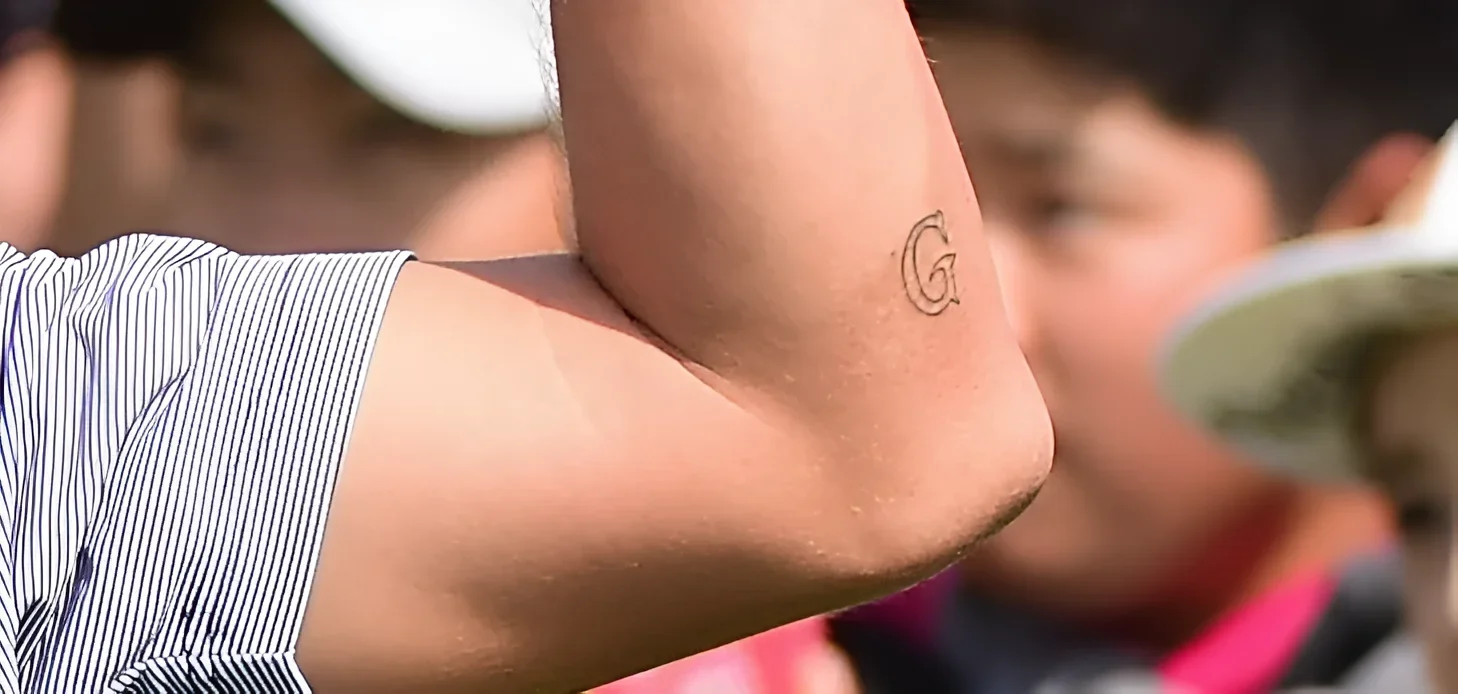
At the recent Presidents Cup tournament, many noticed a new tattoo on the arm of American golfer Rickie Fowler. It’s a simple yet expressive letter ‘G’ inked on the inside of his left forearm, just above the elbow. In the world of professional sports, where every gesture and detail of an athlete’s image often becomes a topic of discussion, this tattoo immediately sparked keen interest among fans and the media.
What’s Behind the Letter G?
The fact that Rickie Fowler got a tattoo wasn’t a surprise – he already bears several meaningful designs on his body. However, this particular letter G turned out to be especially emotionally charged. As Fowler himself explained during a press conference at the Presidents Cup, the tattoo is dedicated to little Georgia Veach, a four-month-old girl diagnosed with a rare and severe brain disorder – lissencephaly, also known as “smooth brain.” This condition is characterized by the absence of folds in the cerebral cortex, leading to severe developmental impairments and often early death.
Fowler’s acquaintance with the Veach family began through a mutual friend, renowned golfer Bubba Watson. It was he who introduced Rickie to Chad Veach, pastor of The City Church in Seattle, and his wife Julia. When Fowler learned about their daughter’s diagnosis, he decided to support the family with a symbolic gesture – a tattoo that became not just an adornment, but a sign of solidarity and hope.
Tattoos in the World of Golf: From Taboo to Trend
In the past, golf was considered one of the most conservative sports, where athletes’ appearances were strictly regulated. Tattoos were practically forbidden, and those who wore them often faced criticism from organizers and sponsors. Today, the situation has changed dramatically. The younger generation of golfers, including Rickie Fowler, Justin Timberlake, and others, openly display their tattoos, turning them into part of their personal brand and a form of self-expression.
Interestingly, the letter G is not a unique idea. For example, singer Justin Bieber also sports a tattoo of this letter, although the meaning of his tattoo may differ. In tattoo culture, letters are often used as symbols related to the names of loved ones, important dates, or personal mottos. For Fowler, however, G is not just a letter, but a reminder of the importance of support, empathy, and human connection during times of trial.
Rickie Fowler’s Other Tattoos
The tattoo with the letter G is not the only one on Fowler’s body. He also has a tattoo in memory of his late swing coach, Barry McDonnell. This design became his way of preserving the memory of the person who played a key role in his career. Such tattoos are becoming increasingly common in the sports world – they allow athletes to express gratitude, grief, or love for those who have influenced their lives.
Expert View: Why Tattoos Are Becoming Part of Sports Culture
According to experts in tattoo culture, the growing popularity of tattoos among athletes is linked to changing social norms. In the 2000s, tattoos were perceived as markers of rebellion or belonging to subcultures. Today, they have become part of mainstream culture, a symbol of individuality and personal narrative. In sports, where every athlete strives to stand out, tattoos help create a unique image that is memorable to fans.
Furthermore, tattoos in sports often serve as an emotional anchor. They remind the athlete of important moments in life, maintain motivation, and help cope with pressure. For Rickie Fowler, the tattoo with the letter G is not just a design, but a reminder that even in the most difficult situations, one can find strength in the support of others.
A Tattoo as a Symbol of Humanity
Rickie Fowler’s tattoo with the letter G is a vivid example of how tattoo art can transcend aesthetics and become a tool for social support and emotional connection. In a world where sports are often associated with competition and achievement, such gestures remind us of the importance of humanity, empathy, and mutual aid. And although the tattoo may seem simple, its meaning is much deeper – it reflects a person’s ability to feel, empathize, and act for the sake of others.
In conclusion, it’s worth noting that tattoos in sports are not just a trend, but part of a cultural shift that reflects changes in society. Rickie Fowler, like many other athletes, uses tattoos to tell his story, express gratitude, and support those in need. And in this lies the true power of tattoo culture.