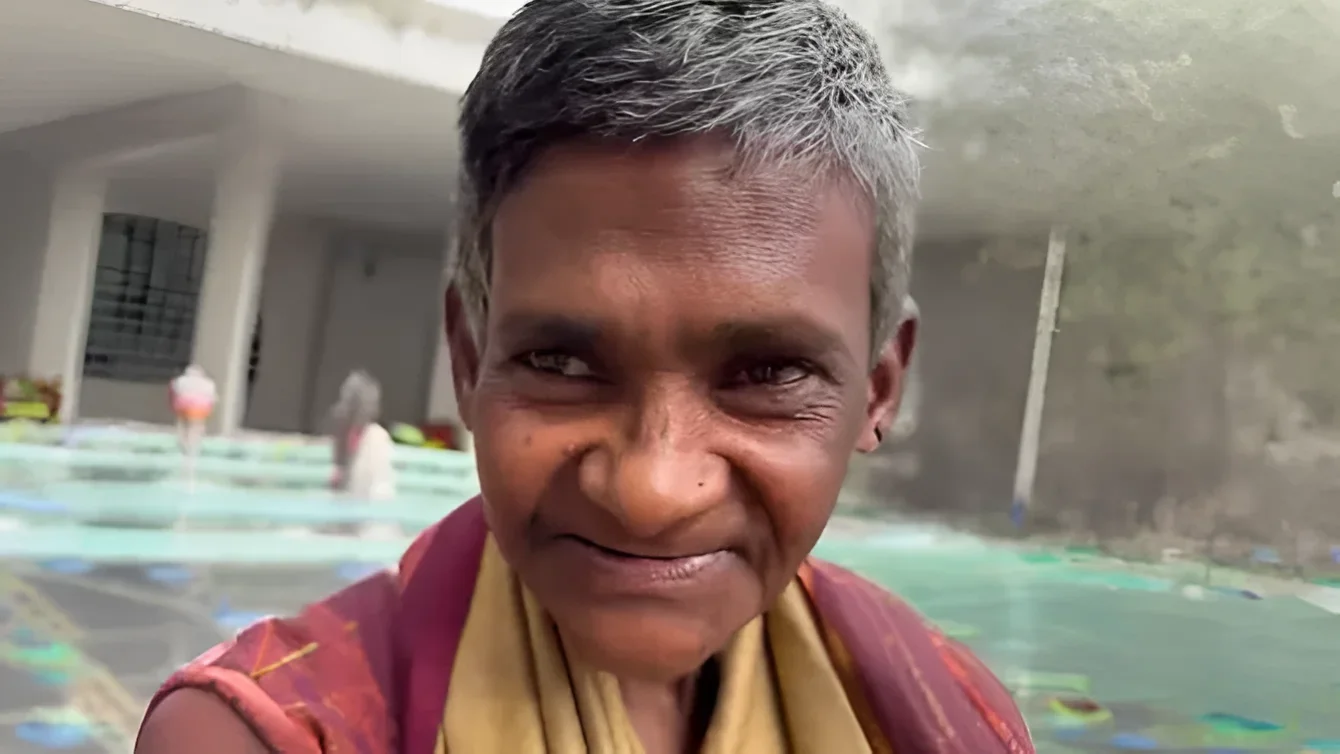
In one of the nursing homes in the state of Himachal Pradesh, an elderly woman named Pramila was in contact with her own family for the first time in 35 years. The conversation with relatives from the state of Odisha took place via video link on Tuesday, September 28, 2026. Pramila owes the fact that this story even had a continuation to a tattoo on her forearm – a traditional pattern in the Odia language, which became the main reference point for investigators. A rare and illustrative case where body adornment turned into a living document that returned a person to their родной круг.
The Road Through Foreign Names and Institutions
Pramila was originally from the Kendrapara district in Odisha, but she spent most of her life far from home. In a number of official documents, she was listed under a completely different name – Ramkali Malik – which repeatedly complicated any attempts to establish her identity. According to records, from 2011 to 2018, she was in a psychiatric institution in Shimla, after which she lived in the Nari Niketan center, and was then transferred to a nursing home in Bhangrotu, where she received care.
The woman’s memory was fragmented: she recalled individual place names in Odisha, including Cuttack, but could not piece together the whole picture. This is precisely why the tattoo on her arm, made in the Odia style, turned out to be the missing link that allowed the search to be narrowed down from an entire state to a specific district.
How the Search Was Conducted
Progress began after the Mission Apno Tak program took on Pramila’s case – an initiative of the Himachal Pradesh government aimed at identifying and reuniting homeless, missing, and vulnerable people with their families. Local administrator Smitika Negi, along with a social welfare officer from Dharamshala, visited the nursing home and interviewed the woman. Short videos in which Pramila recalled details of her past were passed on to the organization India Cares, which expanded the search geography to Odisha. The state police joined the effort: officer Amit Kumar Malik checked the leads received and eventually led investigators to a family in Kendrapara.
Key facts of the case:
- Duration of separation from family – about 35 years.
- Native district – Kendrapara, Odisha state.
- Identification by documents – under the name Ramkali Malik.
- Period in Shimla psychiatric institution – 2011–2018.
- Place of residence at the time of contact – nursing home in Bhangrotu.
- Main reference point – a tattoo in the Odia language on the forearm.
Tattoo as an Identity Marker: A Tattoo Culture Perspective
For tattoo culture specialists, this case is a vivid reminder that traditional tattoos in South Asia were never just decoration. In Odia and broader Indian practice, body patterns carry social and cultural significance: they fix belonging to a region, caste, community, sometimes even to a specific family or lineage. Unlike mass-produced “tattoos for memory,” such marks were made consciously and were read by “insiders” as a kind of visual passport.
This is precisely why Pramila’s tattoo worked as a clue: it did not require letter-by-letter deciphering, but immediately pointed to a cultural circle. In modern tattoo culture, where personalization and sacred symbols are back in vogue, this episode shows that the body can preserve memory longer than any papers. When documents are lost and names are changed, the pattern on the skin remains the last and most honest testament to one’s origin.
As of the publication date, a physical meeting between Pramila and her relatives had not yet occurred – only video communication marked the first stage. But for a woman who had spent 35 years within foreign walls under a foreign name, this call became a return home, and the tattoo on her arm – the quiet key that opened the locked door.