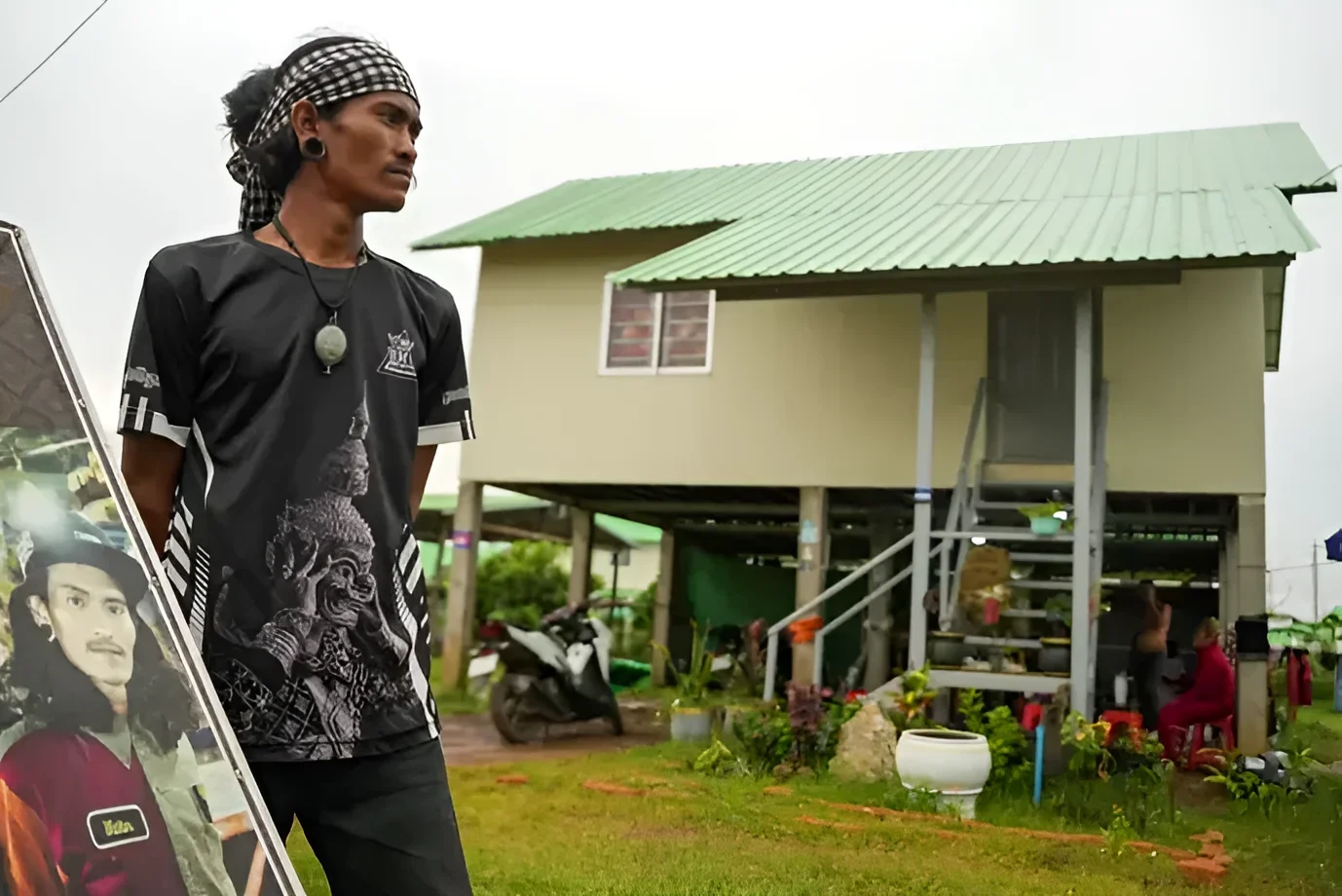
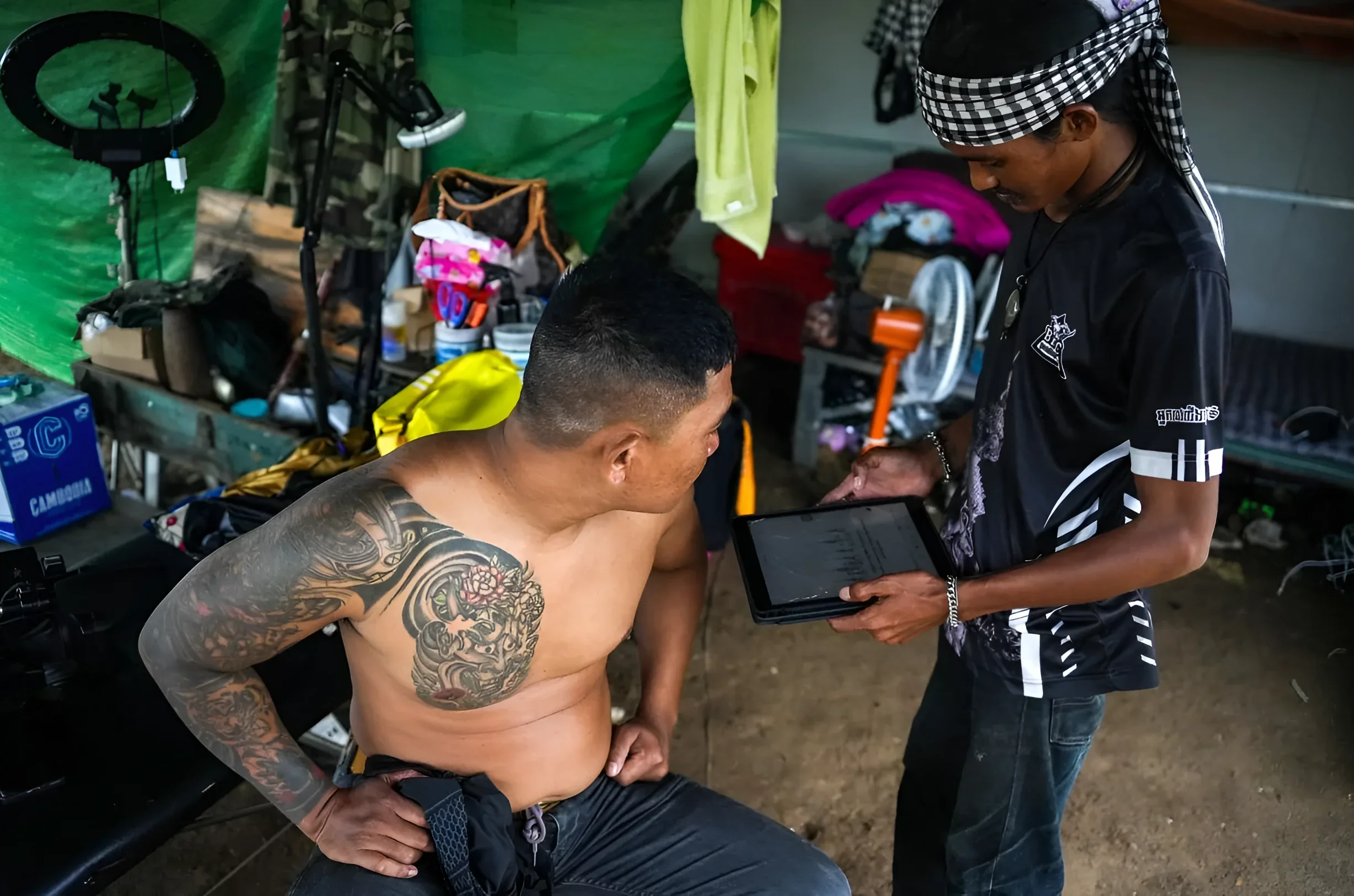
In a refugee camp, affectionately and bitterly called the “village of waiting” by locals, a tattoo artist named Sam is once again picking up his needle. Only now, instead of a bustling workshop at a border crossing, his workspace is the narrow courtyard of a small house, and his client base has shrunk to a handful of people. The story of Cheng Bora, known to everyone as Sam, vividly illustrates how a geopolitical crisis can instantly deprive a craftsman not only of income but also of his accustomed life.
The Village of Waiting and Its Inhabitants
Rong Cham covers about 400 hectares of land in Banteay Meanchey province and stretches in even rows for over three thousand houses. Families who fled fighting on the Cambodian-Thai border were brought here and are still waiting to be allowed to return. Nine months have passed since the ceasefire, but the homes have not yet reopened. According to UN Special Rapporteur on the situation of human rights in Cambodia, Tom Andrews, the number of people who have not yet been able to return exceeds 20,000. Bangkok, in turn, denies that its military is illegally occupying Cambodian territory and refers to a bilateral ceasefire agreement, while border crossings between the two countries remain closed.
From Border Workshop to Odd Jobs
Sam used to run a thriving tattoo studio in Bueng Trakuon, a busy trading post on the border. “This place was very lively, many people did business here, and money was earned easily until the fighting started,” recalls the artist, looking at the fortified line that now separates him from his former life. The Thai border is only 20 kilometers from the camp, and Sam’s family stops at the metal barricade just to catch a glimpse of their old home. To make ends meet, the tattoo artist had to learn other professions: he works part-time as a plumber, an electrician, and takes on small construction jobs for his camp neighbors.
Key facts of the conflict:
- The first round of clashes between Cambodian and Thai troops erupted in July 2025 in a disputed section of the common border, over 800 km long.
- The second round of fighting occurred in December, after which a ceasefire came into effect.
- On August 1, the Thai Ministry of Foreign Affairs stated that caring for affected citizens is an internal matter for the Cambodian government.
- Border crossings between the countries remain closed.
A Divided Family
The crisis has also split the artist’s own family. His nine-year-old daughter returned to live with her father in the camp, while his adult son remained on the Thai side with some relatives. Sam names two main fears: when he will be able to return to his former home and whether a third round of hostilities will begin. It is these questions, he says, that trouble him the most.
Tattoo Culture in Survival Conditions
To understand the scale of the loss, it is important to look at Southeast Asian tattoo culture more broadly. In Cambodia and neighboring countries, tattooing has long gone beyond purely street or subcultural practice: Buddhist motifs, protective symbols, and a craft tradition intertwine here, where the artist is not just an executor but a figure with a certain social weight. Border trading posts like Bueng Trakuon have historically served as showcases for this kind of “road” tattoo culture: clients came in transit, ordered works as souvenirs, and the artist received a stable flow. When the border closes, this ecosystem collapses instantly – along with it, both clients and the very reason for the craft disappear.
Sam’s situation is typical for a mobile craftsman in a conflict zone: a tattoo artist cannot take their studio with them, but they can carry their skill. Therefore, retraining as a plumber or electrician is not a weakness but a logical adaptation. At the same time, even in camp conditions, where the artist inks a needle into a simple jar of black paint and works on the client’s lap, the very meaning of a tattoo as a way to leave a mark, record a story, and maintain a connection with past life is preserved. This, perhaps, is the main resilience of tattoo culture: it survives wars, moves, and closed borders because it lives not within the walls of a workshop, but in the hands of a person and in the story they are willing to tell.