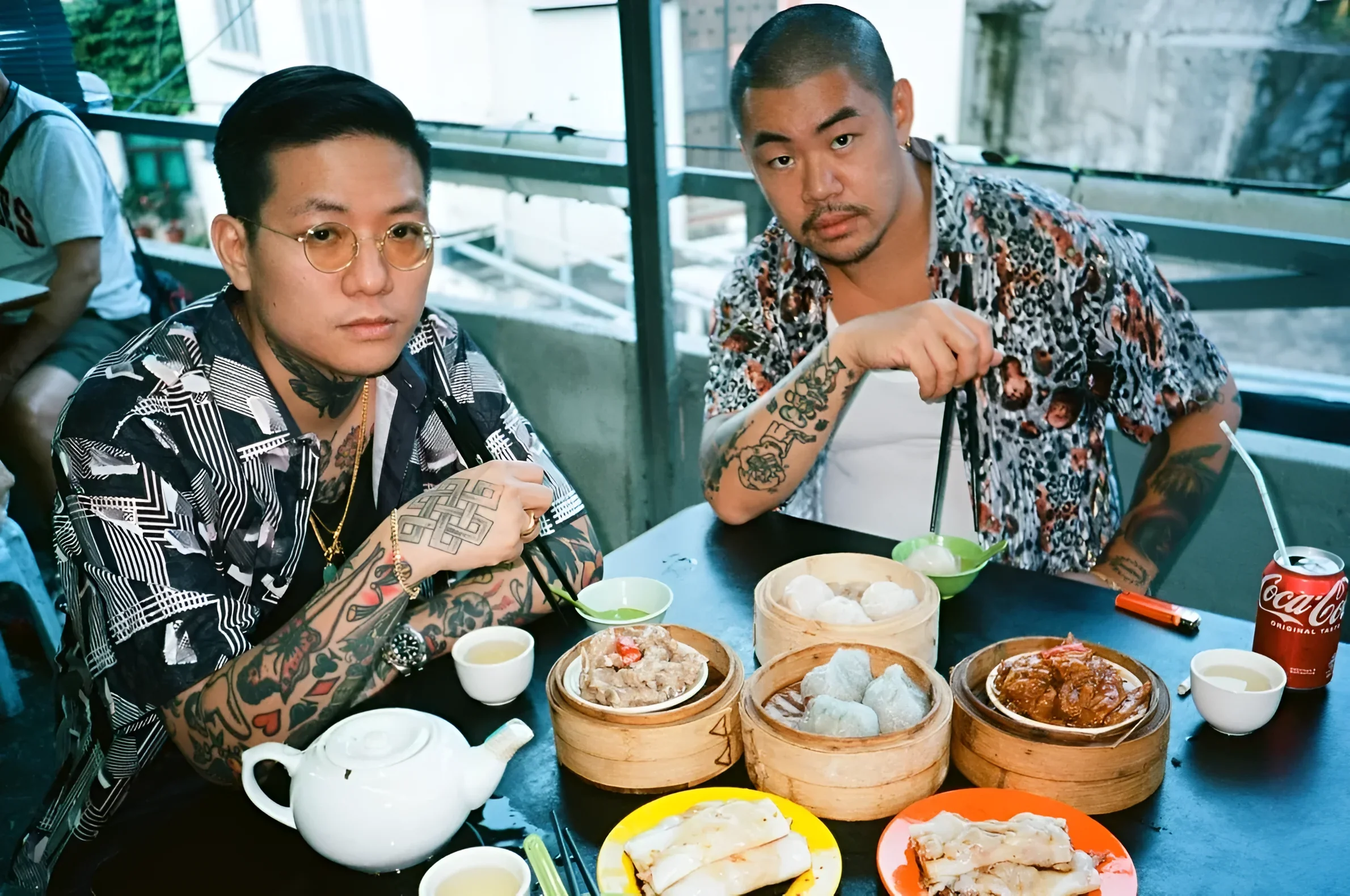
When Taiwanese tattoo artist Jimmy Shay and street photographer Yu Chan traveled to Hong Kong to document the city’s fading post-war tattoo history, they agreed on one rule: models would be found only on the street, with no staged or studio sessions. “We relied purely on intuition,” Shay recalls of the project, which formally launched in 2023 but actually began earlier in the form of casual phone snapshots. Since most tattoos were hidden under clothing, the pair had to first persuade strangers to show their skin, and these encounters rarely went according to plan.
One construction worker agreed to pose only after Shay and Chan helped him carry bags of cement. Another refused until both showed their own tattoos – and then something like a competition broke out between them: the man lifted his shirt and declared, “Mine is bigger than yours,” revealing a huge old eagle on his body. “Sometimes we look at these people and their tattoos, knowing nothing about them, and still capture a glimpse of their spirit and lived life,” Shay shares. The result of their work is the photo album Hong Kong Traditional Tattoo, released in July 2026. The title immediately raises the question: what makes these tattoos “traditional,” and why are they specifically Hong Kongese?
More Than a Triad Mark
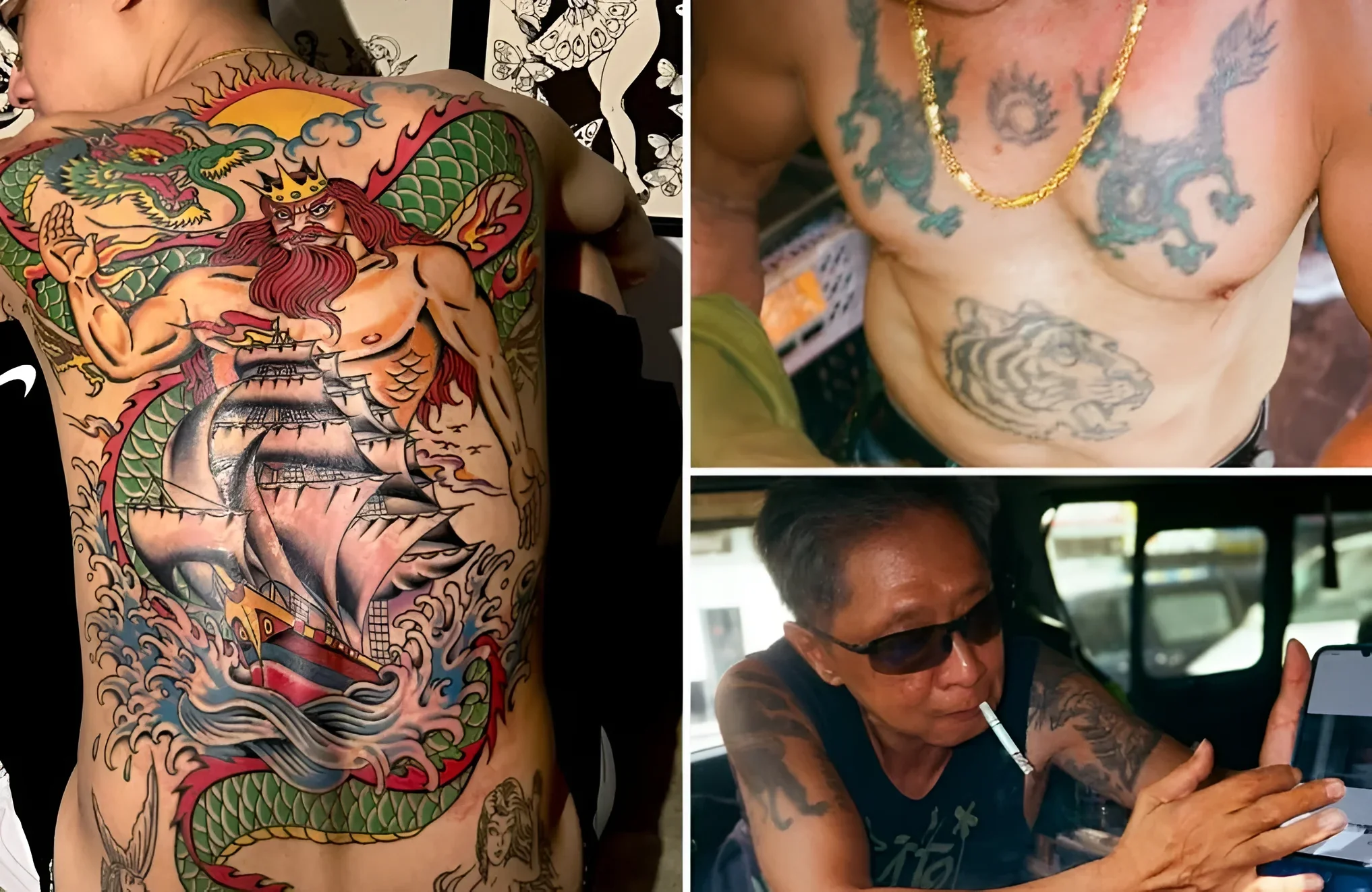
The first thing that comes to mind with the word “Hong Kong tattoo” is a scene from a martial arts or crime film from the golden age: graphic patterns as a sign of belonging to triads and street status. But Shay insists the story is more complex. “Without deep immersion, most would never guess that some images now considered gangster-like were not born in gangster culture at all.” Shay, co-founder of Hello Tattoo Studio in Taipei, has spent years studying a forgotten chapter he calls “Asian sailor tattooing” – a tradition that emerged in post-war Asian port cities, with Hong Kong becoming one of the key crossroads.
Before World War II, tattooing in East and Southeast Asia was defined either by indigenous spiritual practices or by strict prohibition and the stigma associated with branding criminals. In pre-war Chinese ports, commercial tattoo shops practically did not exist. The turning point occurred between the late 1940s and the mid-1970s: Western naval forces and merchant sailors began using Asian ports, including Hong Kong and the Philippines, as logistical hubs and rest areas for the US Navy and its allies.
Western Techniques, Eastern Imagery
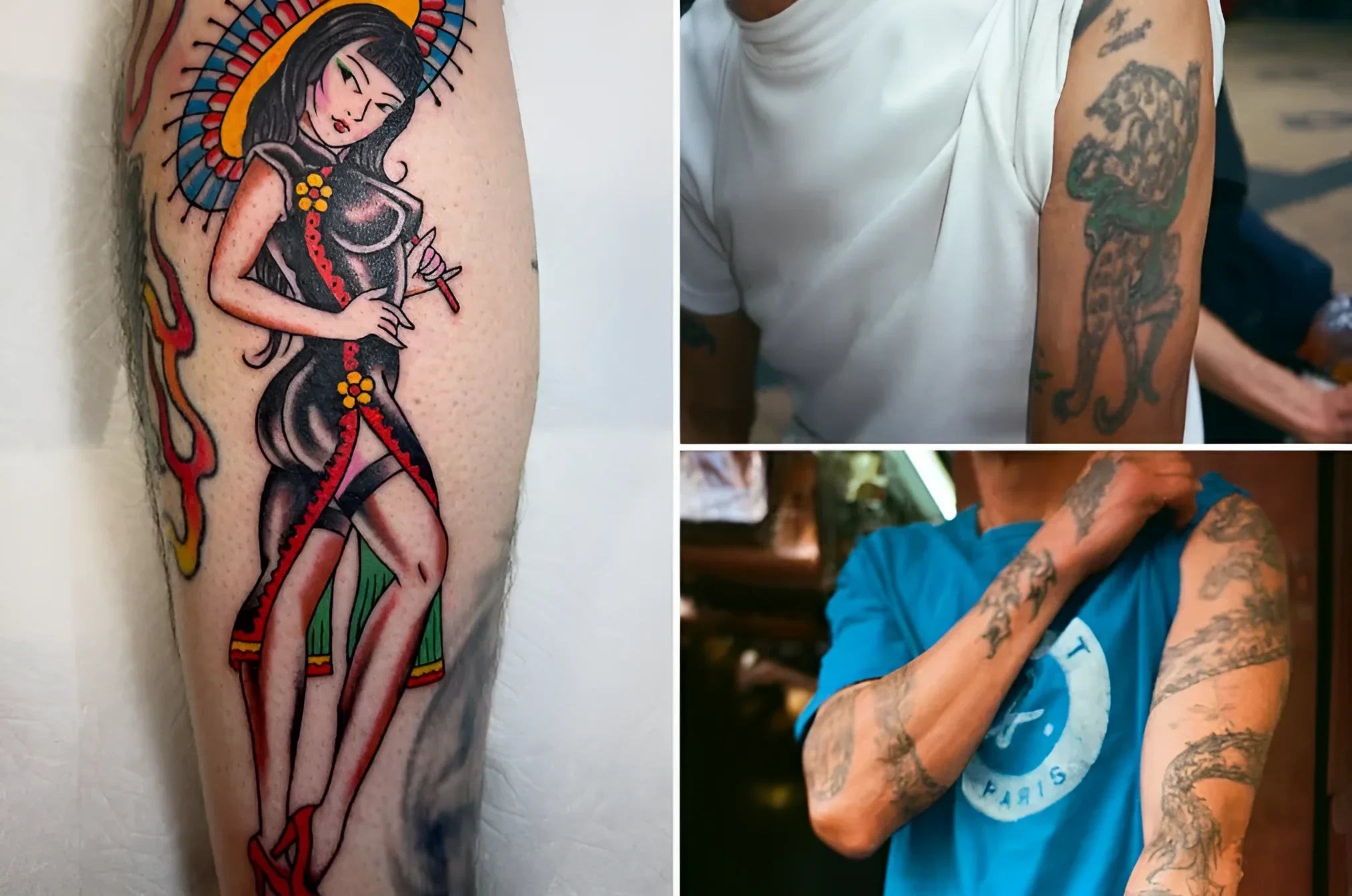
Tattoo parlors quickly opened near military bases and docks in the Wan Chai and Tsim Sha Tsui districts, serving the influx of foreign sailors. Among them was Rose Tattoo Studio, Hong Kong’s first official commercial shop, founded by James Ho in 1946. Thus, a hybrid style emerged, combining Western techniques with Eastern iconography: anchors, ships, and eagles were reinterpreted alongside Chinese dragons, tigers, and pin-up girls in high-slit qipaos. “A tattoo could become a special souvenir from time spent in Asia,” Shay notes.
At the center of this story is Pinky Yun, considered the godfather of the Oriental style. His career spanned Japan, Taiwan, Macau, and Europe, and in the early 1970s, he settled in the USA, where he continued to work in the sailor tradition and exchanged sketches and machines with American artists. According to Shay, some of Sailor Jerry’s (Norman Collins) pin-up drawings from the 1960s were adapted from Pinky’s designs, and the exchange continued even after he opened his American studio. Two flash designs best embody that era: Neptune with Dragon – a bearded sea god with a trident, entwined with a Chinese dragon amidst East Asian clouds and waves, and Suzie Wong – an image from the 1960 Hollywood novel The World of Suzie Wong, filmed in the Neptune bar directly below Yun’s studio in Wan Chai; Nancy Kwan played the role, becoming an Eastern alternative to the classic American pin-up.
The Tattoo Boom and Its Price
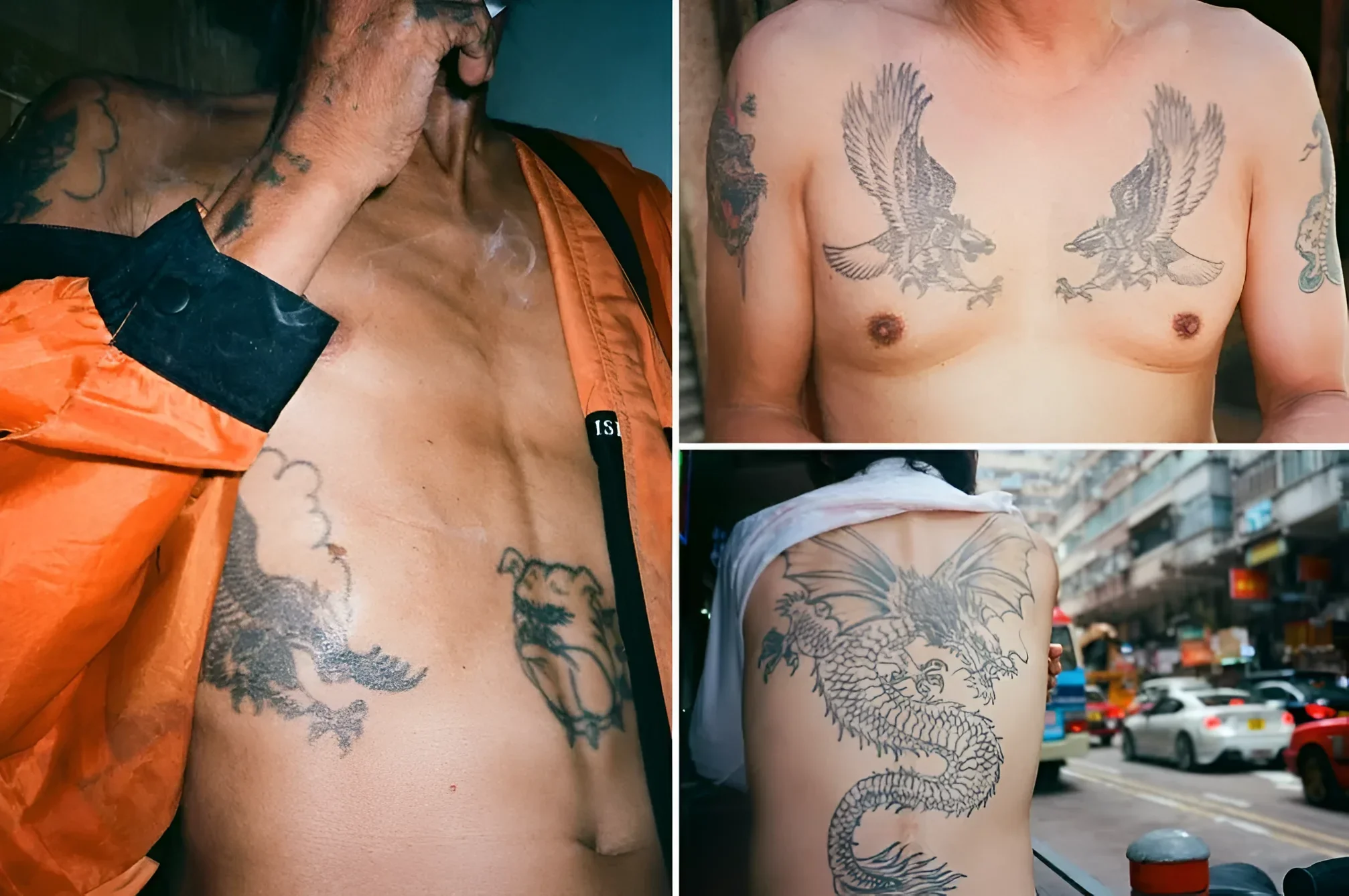
The business of that time was dictated by the logic of military life: ships arrived with thousands of sailors, shore leave lasted hours, and tattooing was sometimes forbidden due to the risk of diseases, so artists worked secretly in cramped rooms with modified machines. “Everything had to be as efficient as possible: as soon as a soldier entered the shop, he had to choose a design almost instantly, the walls were covered with ready-made flashes.” The economy was impressive: Yun’s nephew told Shay that at 15, his main dream was to become a police officer, but the tips for helping in the tattoo shop brought in more than a police salary. “There were so many clients that there was a desperate shortage of hands, and he was put to work even though he could barely tattoo.”