
Actor Joe Manganiello, 49, known for the series “True Blood” and the film “Magic Mike,” posted photos on Instagram of a large tattoo that runs along the right side of his body from chest to thigh. According to him, the approximately three-foot-long (about 90 centimeters) design was specifically done to cover scars from surgical intervention. On Monday, the star guest of show business showed fans not only the finished result but also the entire process of work – from the black outline to the colored image in red and orange.
Why a Dragon
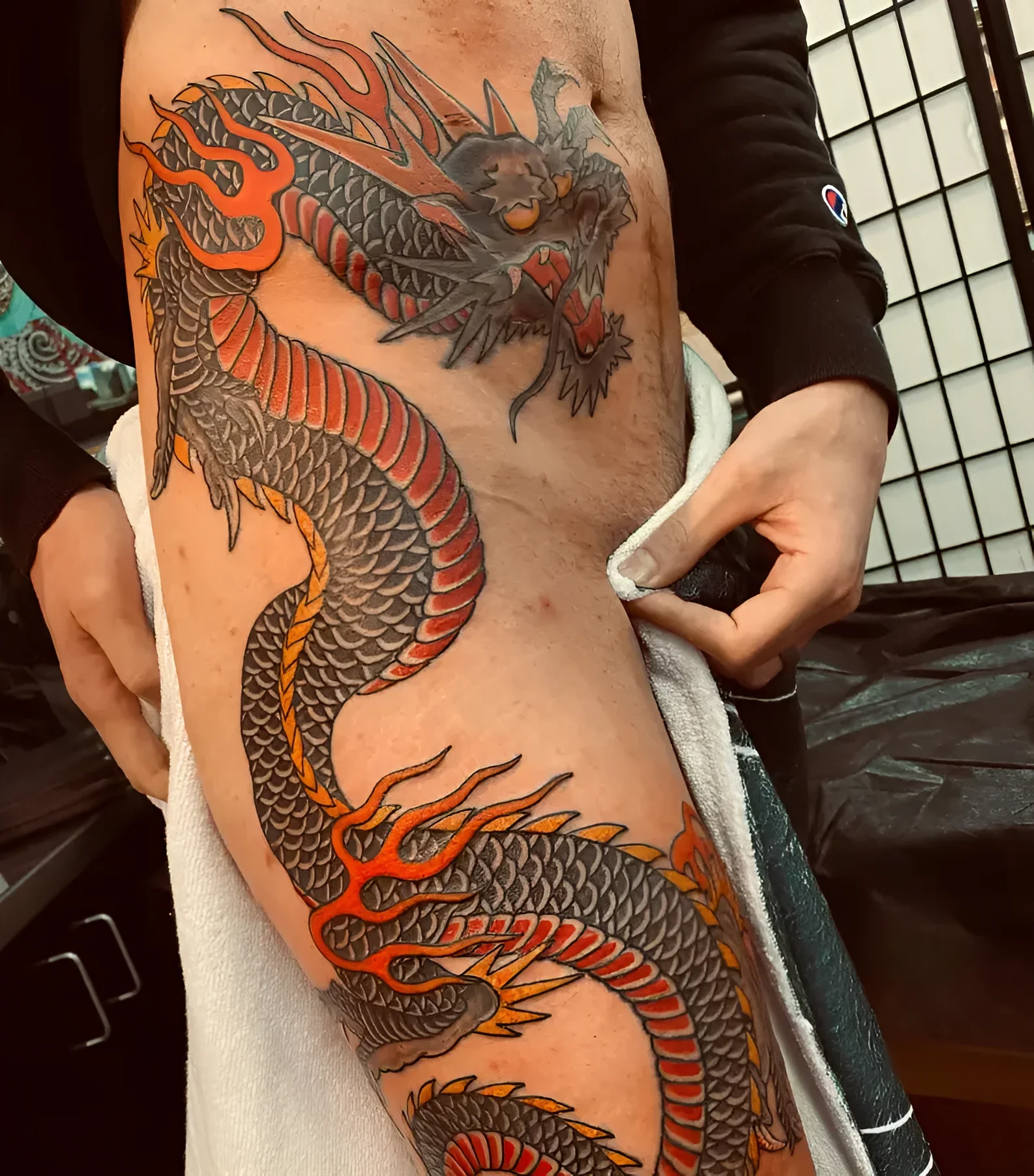
Manganiello connects the choice of motif with his own memoir “Bloodlines,” which he released in the same vein as the tattoo publication. In the fourth chapter of the book, he describes the struggle with illness as a battle in which the body sends out “knights” to fight a non-existent Western dragon, and the soldiers, unable to find the enemy, punch holes throughout the body. Essentially, the autoimmune system attacked the host himself. This is the key metaphor: the Eastern dragon in the tattoo became a symbol of Manganiello himself, and he calls the decision to cover the scars with his first tattoo an attempt to regain control and “tell the body to stop attacking the dragon.”
Context for understanding: in tattoo culture, scar cover-up work is called a cover-up and is considered one of the most delicate tasks for an artist. Here, it’s important not just to hide the scar tissue but to integrate it into the composition so that the scar reads as part of the design, not as a defect under the paint. A dragon with a long, winding body is a classic choice for the side of the torso because its shape follows the anatomy and allows the seam to be distributed along the creature’s movement line.
Stages of Tattoo Work
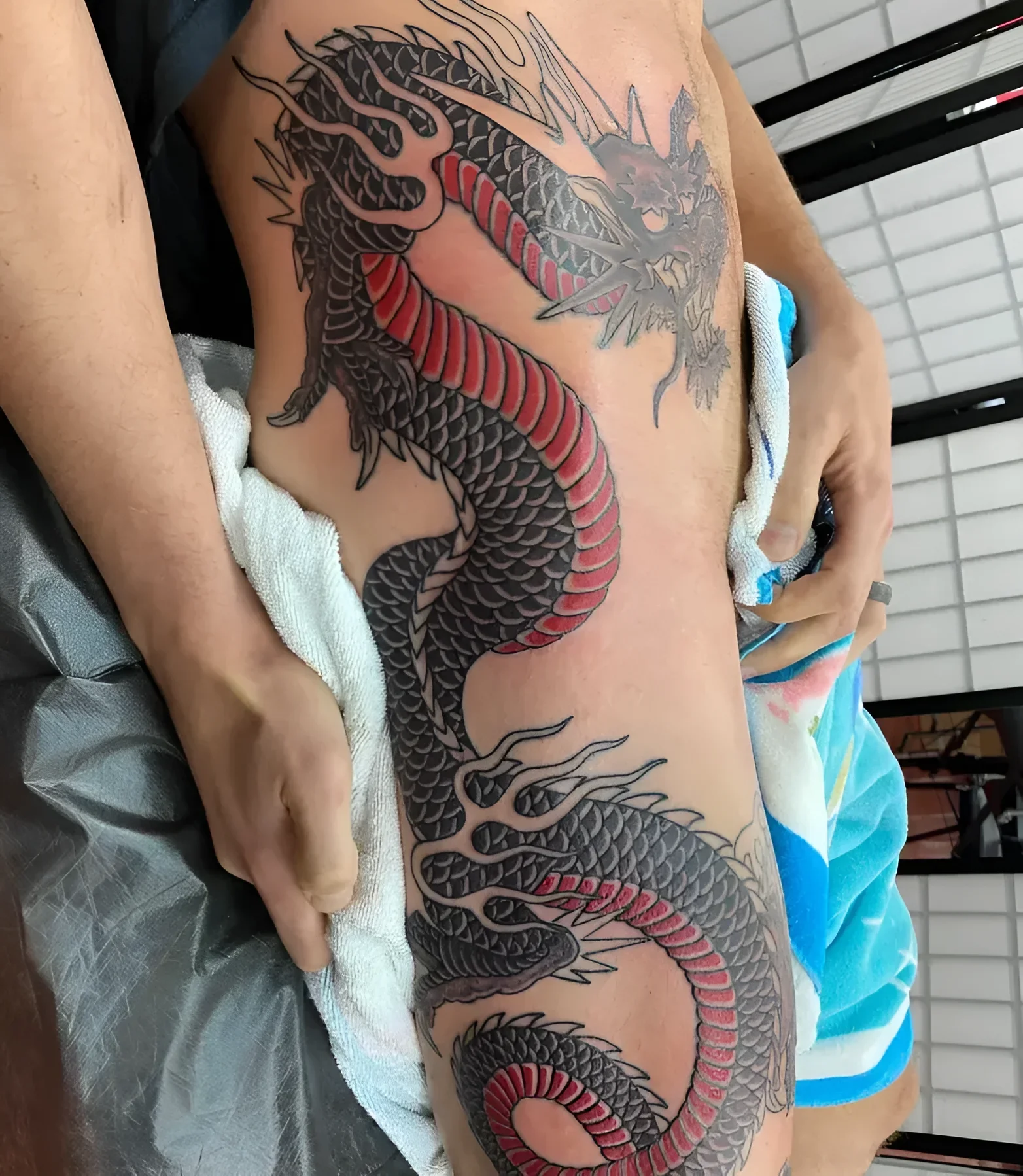
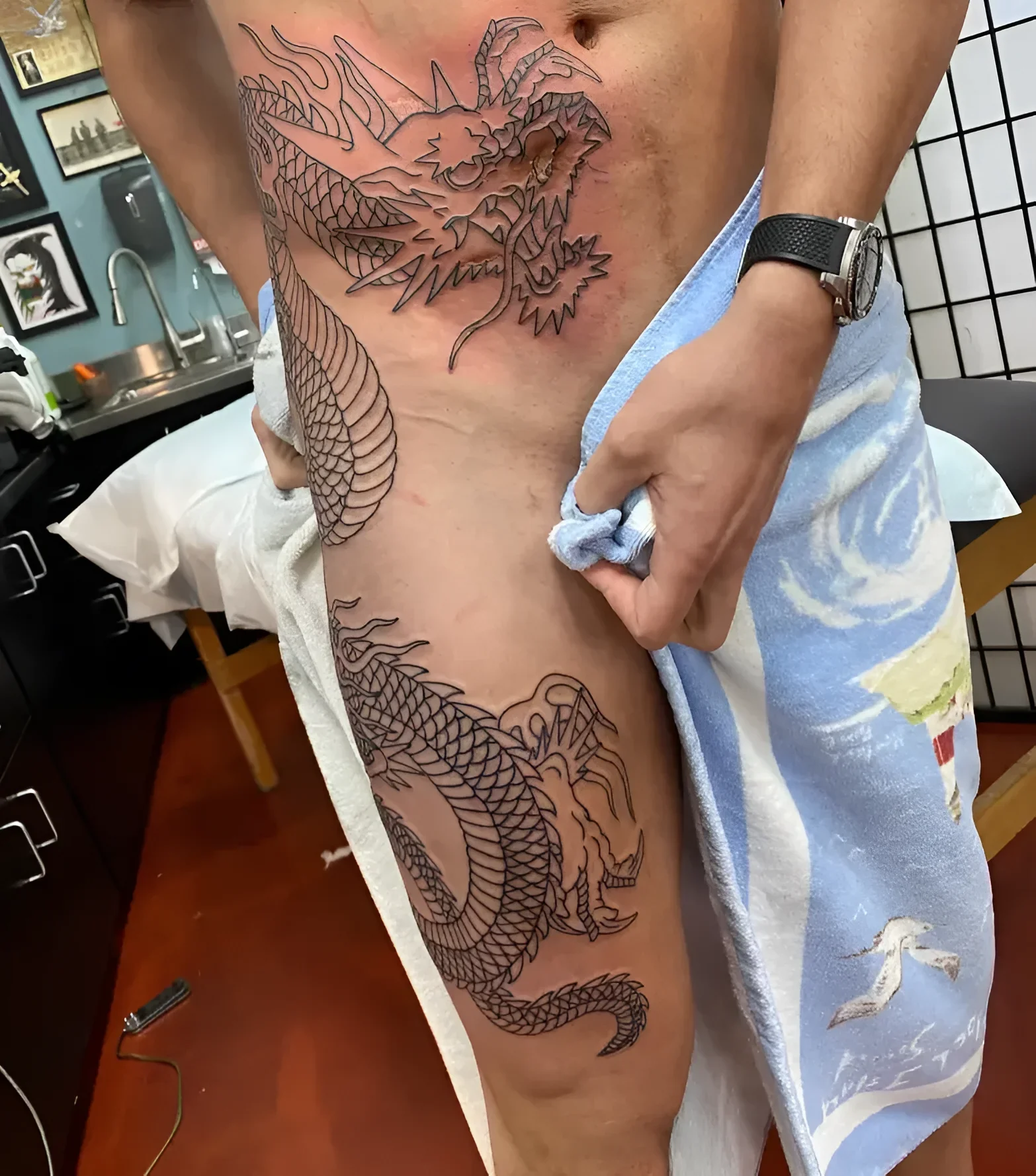
The published shots show a logical sequence typical for large color works:
- first, the black outline and scale detailing without color are applied – at this stage, the entire architecture of the composition is visible;
- then the main color is introduced: dark scales, red accents on the crest and belly;
- in the final step, orange and warm transitions are added, which “bring to life” the dragon’s head and tail.
This approach is typical for the Japanese and neo-traditional schools, where the dragon is built in layers: first the structure, then the depth, then the light.
Medical Background
Let me remind you of the facts that Manganiello himself stated in his memoirs and on social media. In 2016, he underwent emergency bowel surgery, and for seven years he battled a life-threatening autoimmune disease. Last week, the actor posted graphic images from the hospital after the removal of his colon and showed a sharp weight loss: in two weeks after the operation, he lost a total of 60 pounds (about 27 kilograms). In a separate shot, he showed his abdomen after an anastomosis – a surgery where the colostomy bag was removed and the remaining parts of the digestive tract were connected.
| Parameter | Detail |
|---|---|
| Tattoo Size | about 3 feet (≈90 cm) |
| Location | right side, from chest to thigh |
| Purpose | covering scars after 2016 surgery |
| Motif | Eastern dragon |
| Palette | black, red, orange |
| Connection to Book | metaphor from the memoir “Bloodlines” |
Personal Side

It’s worth noting separately that the memoir also touched upon Manganiello’s relationship with his ex-wife Sofia Vergara. The actor wrote that she mocked him for a five-pound dog named Bubbles, which he got in 2019 when, according to him, he was contemplating suicide, and refused him embraces. Vergara, in response, posted on Instagram about “narcissistic men.” In an interview with “CBS Mornings,” Manganiello emphasized that the book is not about the failure of the marriage but about suffering from illness, and added that the trauma and pain affected everyone around him, including himself, in unpredictable ways.
For tattoo culture, this case is illustrative: increasingly, large works are ceasing to be mere decoration and are becoming a tool for working with bodily trauma – a way to regain narrative control over one’s own body after illness. Manganiello’s dragon fits precisely into this trend, where a scar ceases to be a mark of defeat and transforms into a central element of the story a person tells about themselves.