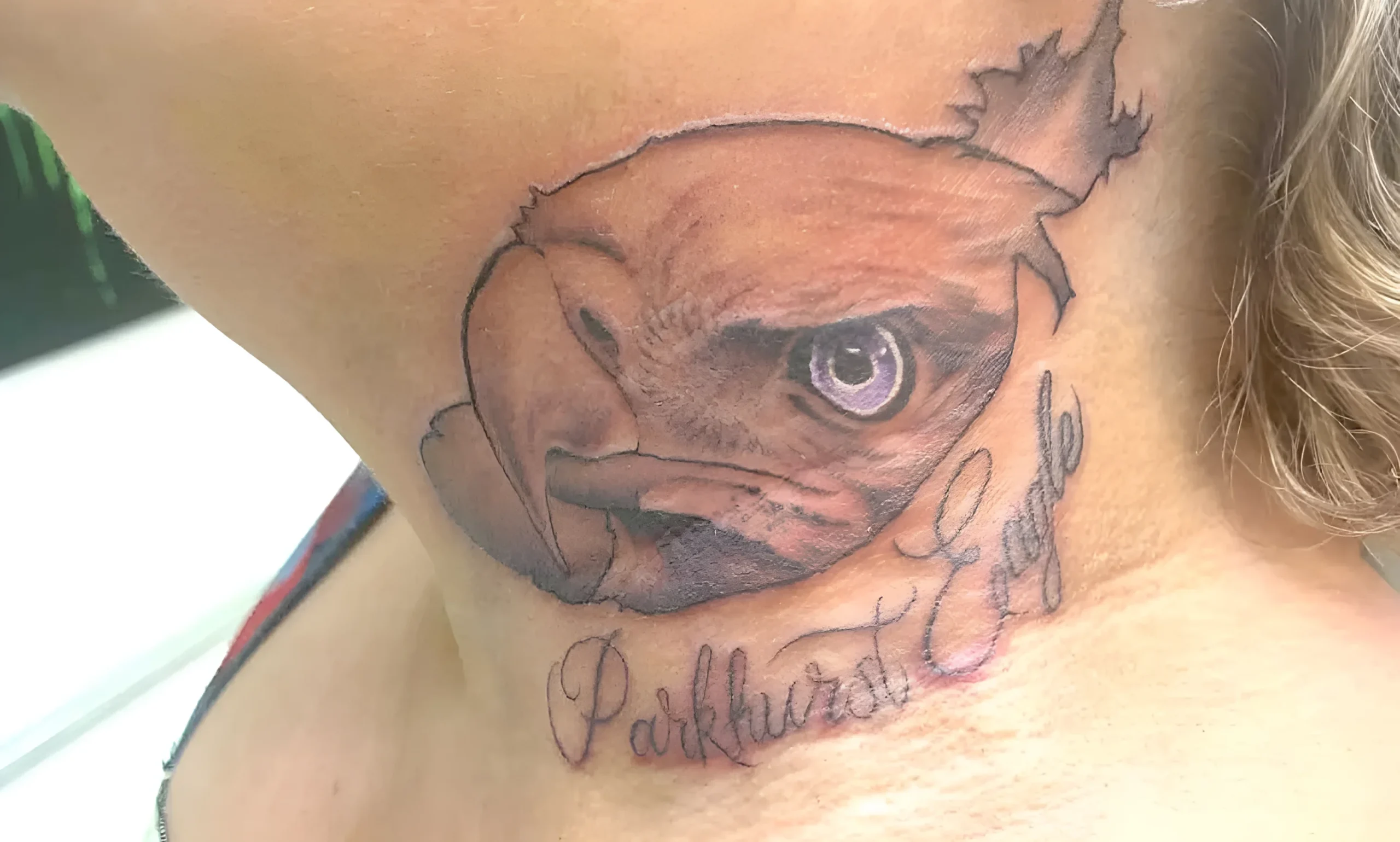
In the small town of Casper (Natrona County, USA), a real storm erupted over a neck tattoo. Client Angelina Parkhurst Eagle Alvarado and artist Ivan TwoBulls from the TwoBulls Tattooing studio in Mills accuse each other of dishonesty, and the dispute has escalated from personal to public, flooding local social media groups. According to Alvarado, the finished drawing looks like a “penis on my neck,” while the artist insists the work was unfinished and that he is being blackmailed. We’re looking into what really happened and what this case says about the tattoo industry culture.
Barter Instead of Payment
The most unusual aspect of this story is the payment method. Alvarado owns a bounce house rental business, and she and the artist struck a deal: she provided a bounce house, and in return, she received a tattoo. According to Alvarado, she sent the artist a reference – an eagle’s head peeking out of a large feather, for the left side of her neck. TwoBulls developed an original sketch based on it with the inscription “Parkhurst Eagle” below the drawing. The sketch was approved, and the session was scheduled for September 16.
Alvarado is of Oneida-Iroquois descent; her grandmother gave her the name Little Eagle, so for her, the drawing is not just an ornament but a sacred symbol. “Feathers are sacred in our culture. This is a sacred tattoo, not a penis tattoo,” she emphasizes.
Where the Versions Diverged
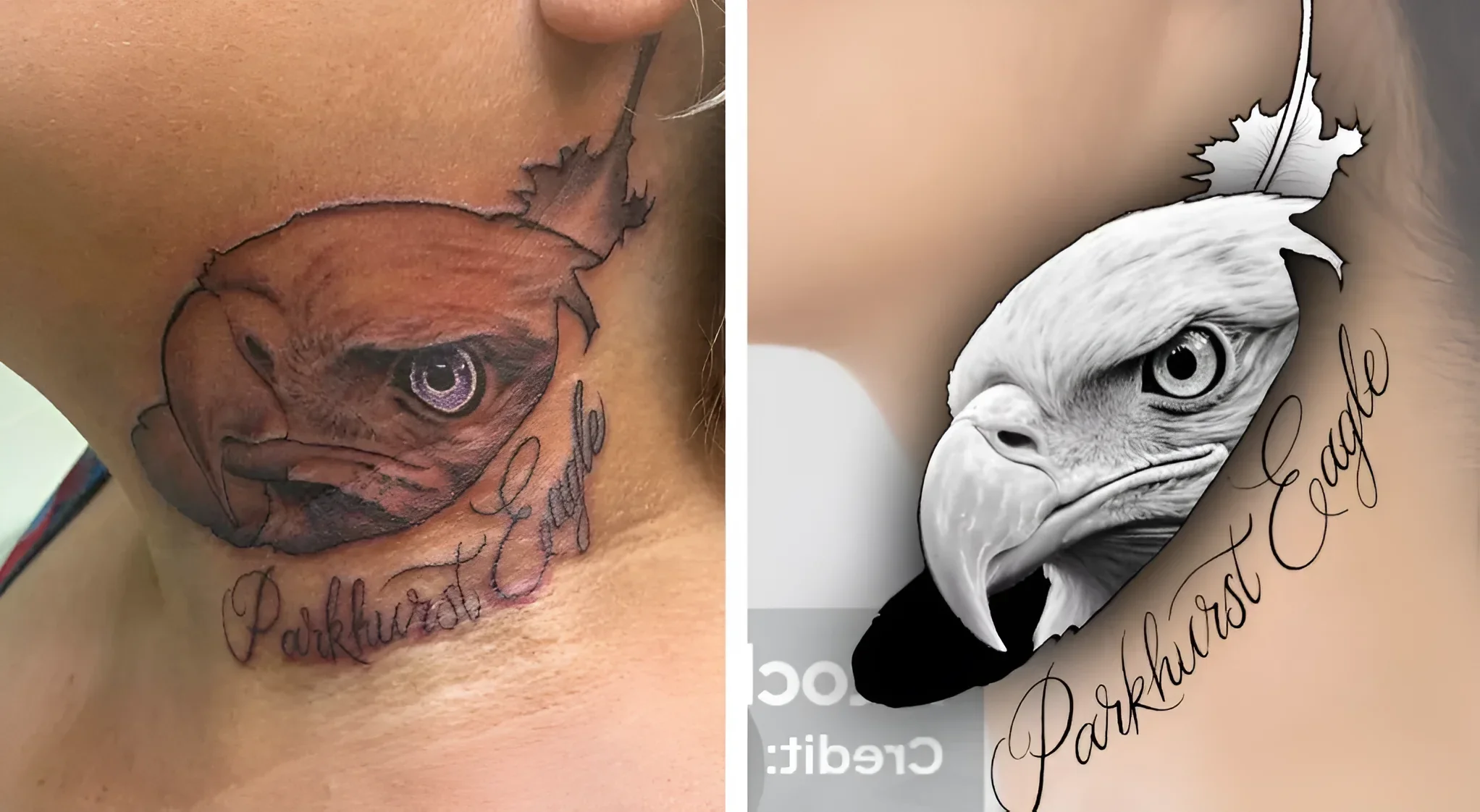
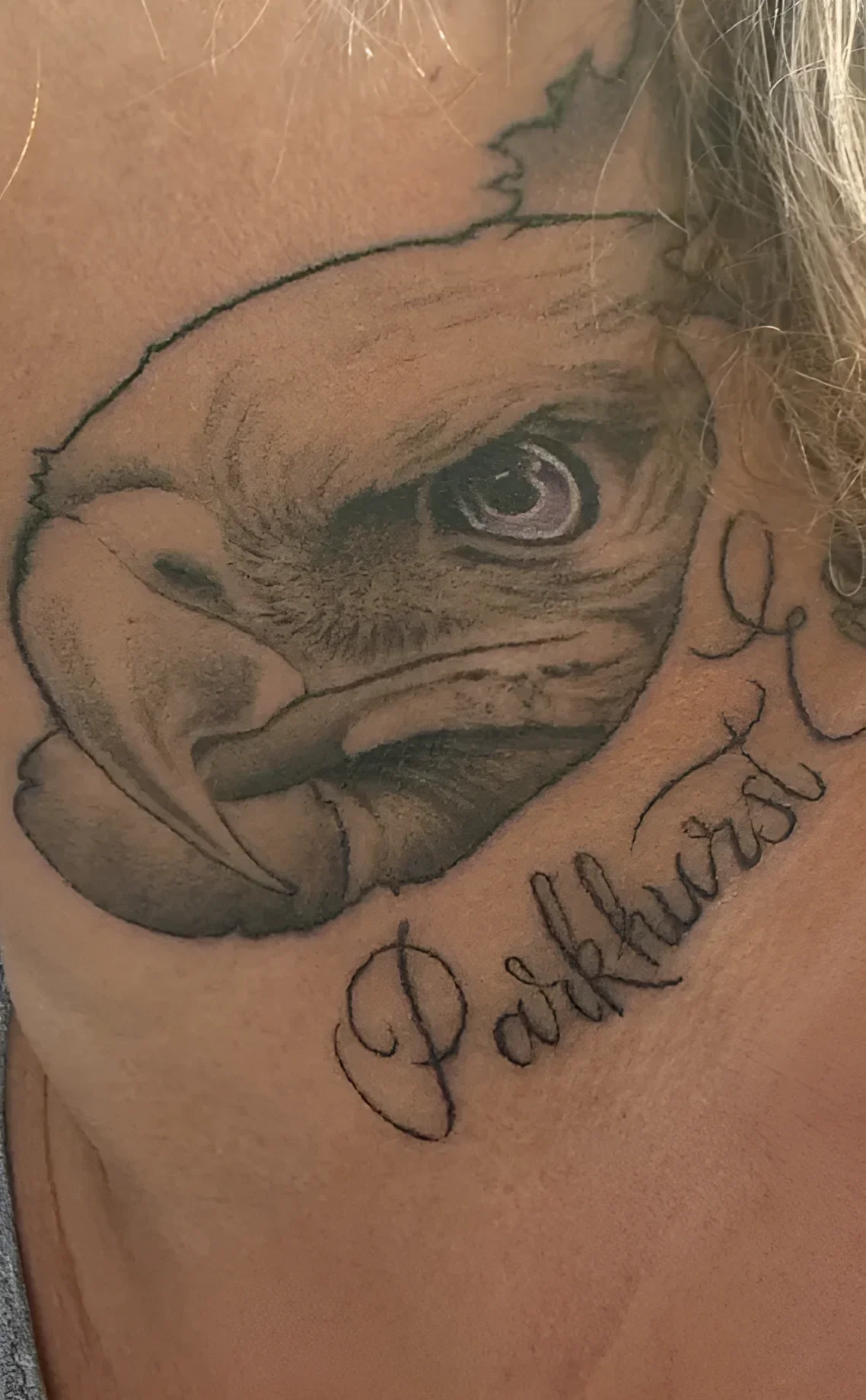
The dispute began after the healing process. Alvarado claims the artist never mentioned that the work required a second session, and it was only her 15-year-old daughter who noticed the strange shape. On October 9, she contacted TwoBulls asking him to finish the drawing. From this point on, the parties’ versions diverge:
| Position | Alvarado | TwoBulls |
|---|---|---|
| Tattoo Condition | The artist hid that the work was unfinished | This is a minimal outline; shading and black areas are needed |
| Finishing Timeline | The artist dismissed it: “I don’t control what others see” | Offered a date in January, wanted to negotiate |
| Reason for Conflict | The artist refused to fix the mistake | The client posted about him on social media – blackmail |
According to the artist, he couldn’t “drop everything and review the records,” so he gave a January date “off the cuff” to start negotiations. Alvarado, however, expected a visit within a week. Negotiations did not take place: posts appeared in the Casper Rants and Raves and Ink Shaming groups, damaging the studio’s reputation.
Tattoo Artists’ “Code”
An interesting turn occurred when Alvarado tried to find another artist to finish the tattoo. She even paid a $60 deposit, but TwoBulls’ colleague refused, citing the “code” that artists adhere to regarding each other’s work, and that interference would put him in an awkward position with the professional community. TwoBulls himself does not acknowledge this “code,” explaining his colleagues’ refusal by saying that no one wants to get into such a public situation.
Expert Opinion
From a tattoo culture perspective, this case is typical and instructive. Firstly, it reminds us of the importance of touch-ups: complex realistic works, especially with dense shading, often require a second session a few weeks after healing, and this is a normal part of the process, not a defect. Secondly, the story shows how quickly a local dispute turns into a public tribunal: social media and “ink-shaming” groups become arenas where an artist’s reputation is decided in the comments. Thirdly, it clearly illustrates the informal “code” of the industry – the reluctance of colleagues to touch other people’s work in an area of active conflict, which effectively limits the client’s choices.
In the end, both sides are sticking to their guns: Alvarado has found a new artist and is willing to pay for the correction, but believes TwoBulls should apologize; the artist sees no reason for apology and is definitively closing his work with this client. The irony is that Alvarado still praises the eagle itself and especially the “cool” eye. So, in the world of tattoos, where aesthetics and emotions go hand in hand, the line between a masterpiece and a scandal is sometimes thinner than a contour line.