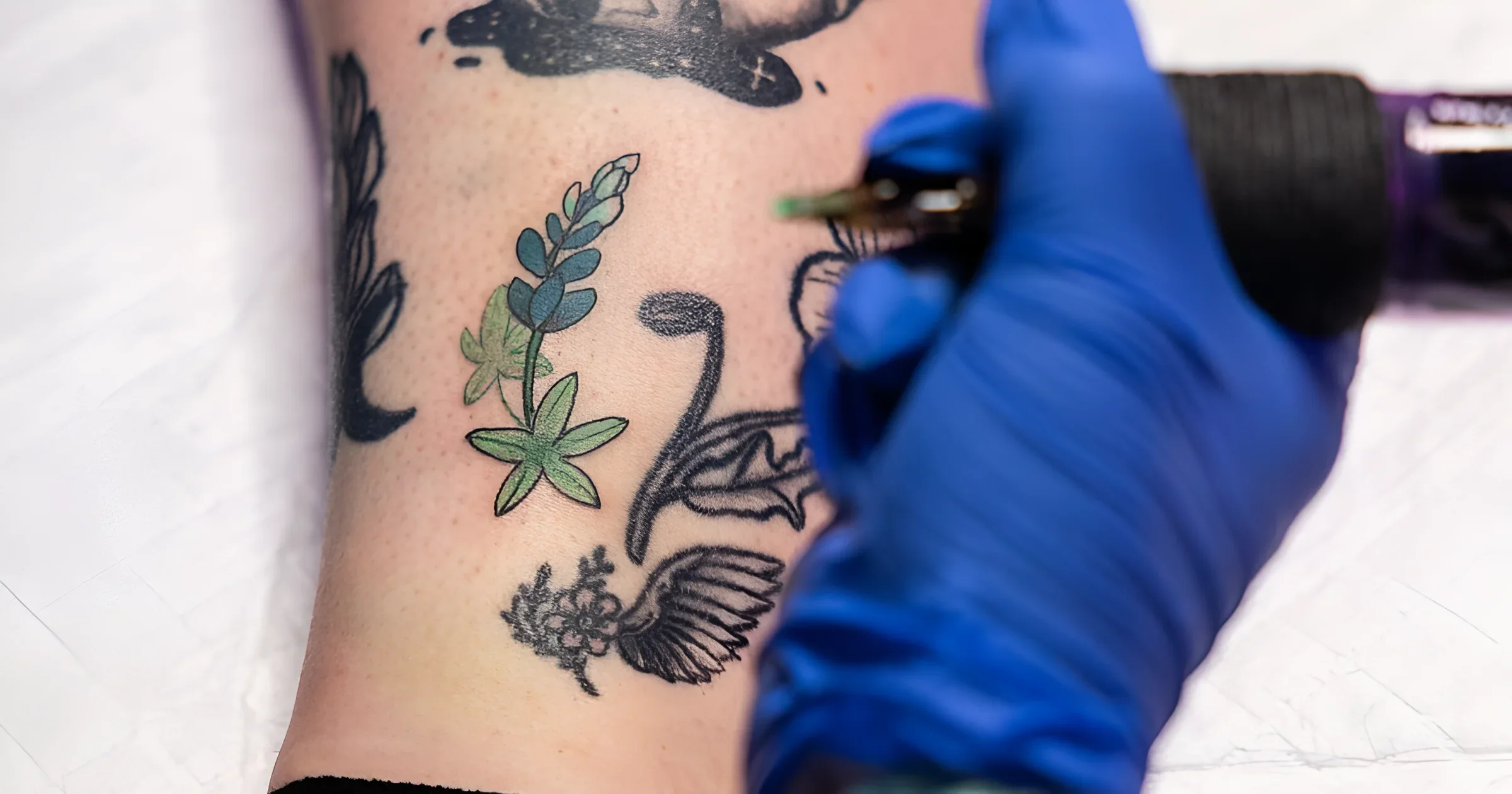
US Air Force veteran Sandra O’Hara sits in a black leather chair, waiting for her turn. She is already used to this ritual: she has over fifty tattoos on her body, and the studio has long since become something of a second home to her. But this time is different. The machine begins to hum near her thigh, the familiar slight burning sensation rises, and it is not just another ornament being laid onto her skin, but a bluebonnet — the native flower of Texas.
For O’Hara, this design is not just about aesthetics. It is a marker of a political shift. After the midterm elections, the state, which had been in the “red” camp for decades, turned blue for the first time in a long while: Democrats broke a multi-year losing streak, taking a Senate seat, the governorship, and all key statewide races. And now, hundreds of residents are deciding to capture this moment on their skin.
From shame to pride: what this flower means to Texans
“I used to want to leave Texas because I was ashamed to call myself a resident — I didn’t like where we were heading. I wanted my children to have a sense of home again,” says O’Hara. “But on the day the results were announced, I felt like I was coming home.”
Such an emotional reaction is no coincidence. Political body art has long ceased to be a niche phenomenon: from flags and slogans to regional symbols, people are increasingly transferring to their bodies what they previously only expressed through votes in elections. The bluebonnet here works as a double code: on one hand, it is a botanical motif in a traditional flash style; on the other, it is a condensed manifesto of “we have returned to our roots.”
A studio that keeps up with the trend
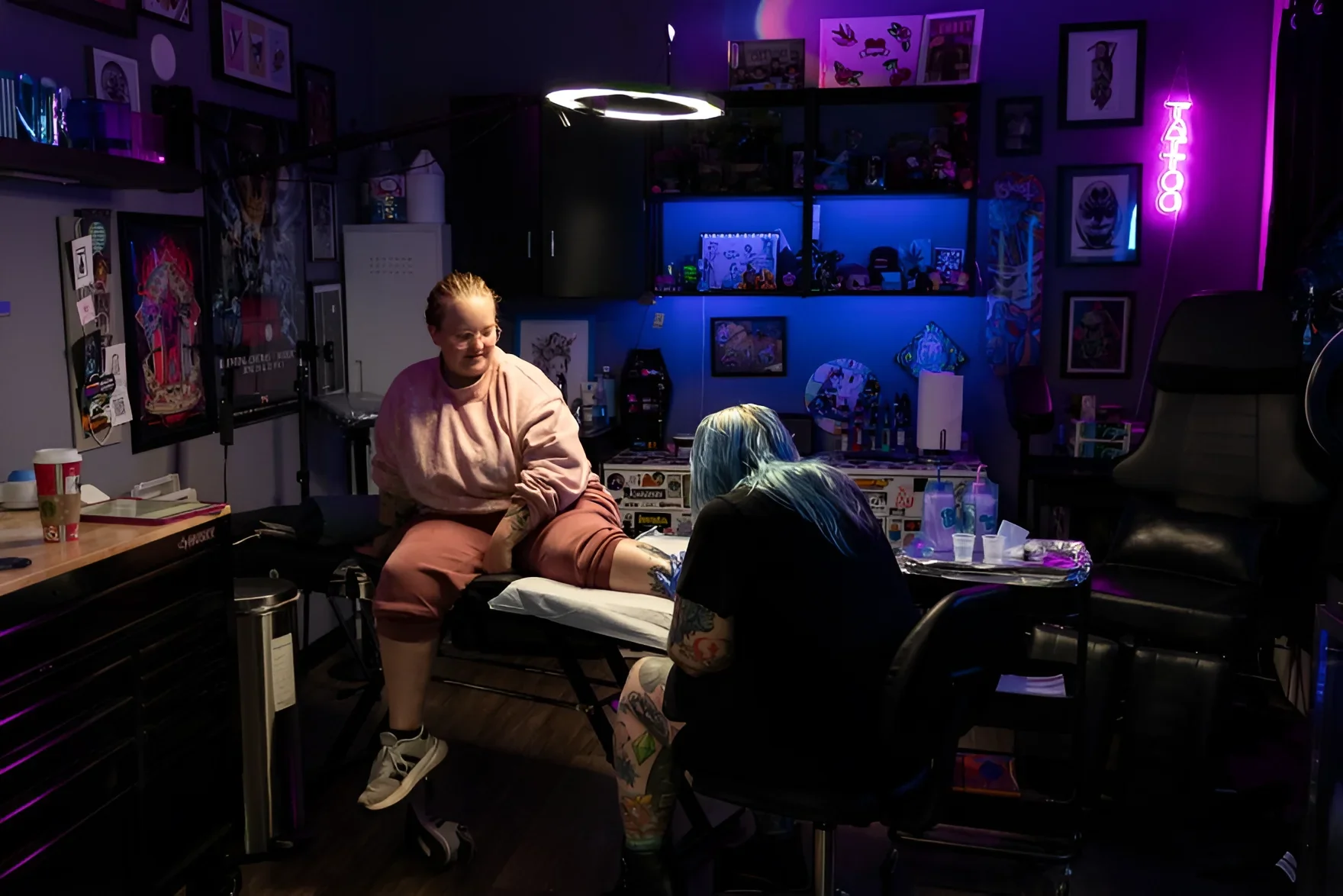
O’Hara’s tattoo was done by Sarah Vodak, co-founder of the Neon Knights Tattoo Club in North Austin. According to her, this is already the sixteenth such appointment since the election. The idea was born on social media: when people in the comments promised to get a flower tattoo if Texas “turned blue,” Vodak drew a separate flash sheet and promised to perform the designs regardless of the outcome.
Her husband, Joe Tricomi, the second owner of the studio, explains why these works were offered at a reduced price: it is a way to give back to the community that supports the studio. At the same time, he says, the internet backlash about “why tattoo politics” amuses him more than anything — “it’s just a flower, give it a rest.”
Today, Vodak has sixty appointments booked through the first week of December, and she admits she did not expect such a response. “Many of us who voted for the ‘blues’ all this time felt alone — we were like in a Red Sea. Now people are finally starting to be proud of Texas because we have a reason to be proud,” says the artist.
Context: why this is important for tattoo culture
The bluebonnet case is a clear example of how local symbolism turns into a mass flash request. For the studio, it is both a challenge and an opportunity: one needs to quickly develop a repeatable design, maintain quality during a surge, and at the same time not turn the work into an assembly line. Below are key facts to remember:
- Sandra O’Hara — Air Force veteran, over 50 tattoos; the new one is a bluebonnet.
- Sarah Vodak and Joe Tricomi — co-founders of Neon Knights Tattoo Club in North Austin.
- Sixteenth bluebonnet tattoo after the election; 60 appointments until the first week of December.
- Democrats in Texas: Senate seat, governorship, and all statewide races.
- Prices for these designs are intentionally lowered as a gesture to the community.
It is worth noting from an expert perspective: mass demand for the same motif is a rare and valuable moment for a tattoo artist. It allows one to hone technique, test how a flash design “lives” on different skin types, and at the same time build a strong community around the studio. In the long run, such works become part of the region’s visual memory: ten years from now, a bluebonnet on a Texan’s body will be read as unambiguously as sailor anchors or traditional-style roses are read today. And for now, the studio in Austin is simply keeping up with demand — and doing it with character.