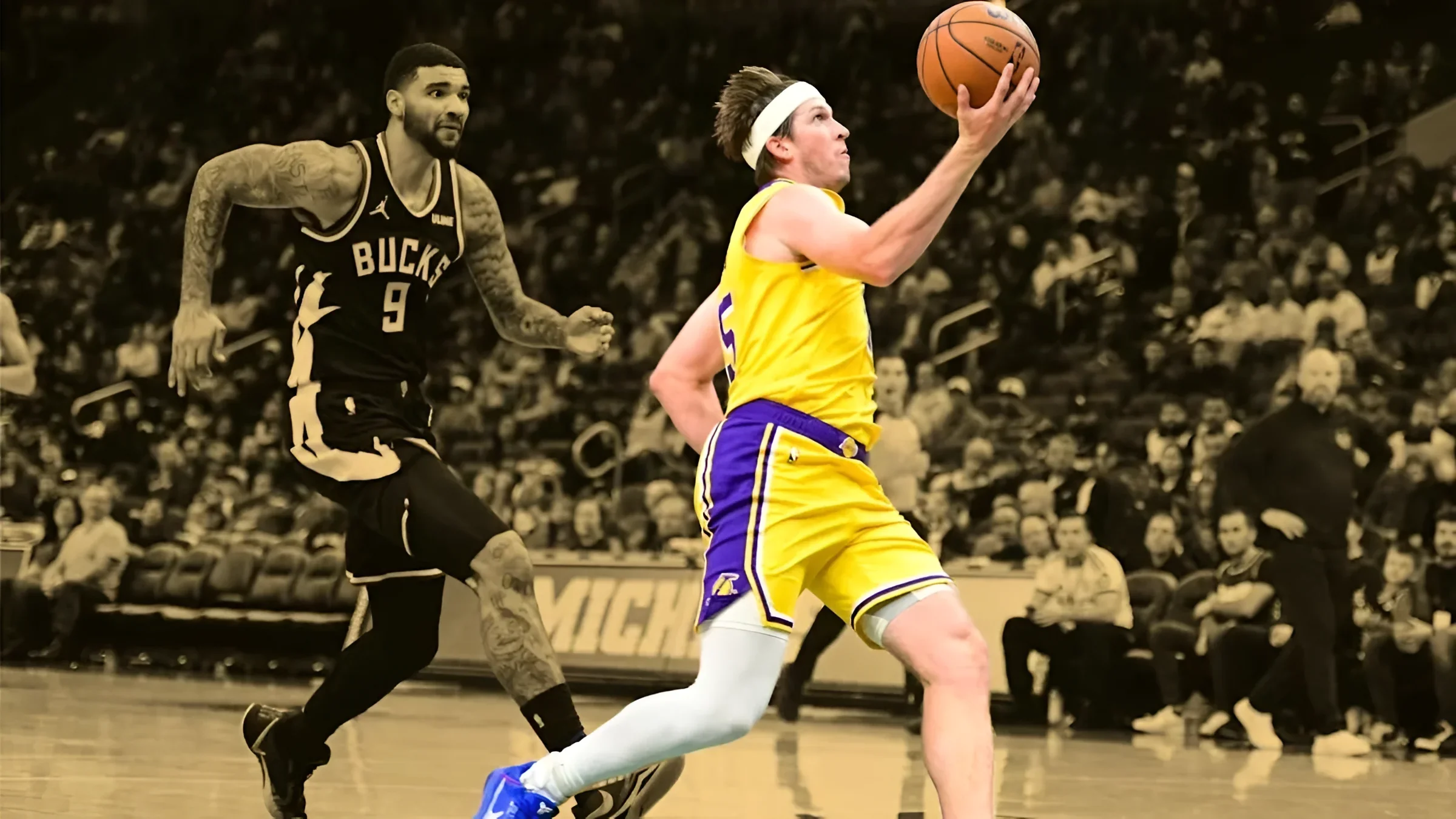
When it comes to the Los Angeles Lakers with their 12-2 record, all eyes are on Luka Dončić, who is averaging 39 points per game, a mark surpassed only by Wilt Chamberlain. But behind the Slovenian’s historic season is a man without whom such statistics would be impossible: Austin Reaves. His ability to find open spaces and make shots makes him a second option that defenses pay a high price for.
It was precisely around Reaves’ image that a recent discussion unfolded on the “All the Smoke” podcast. Keyshawn Johnson, a Super Bowl champion and now an analyst, stated that Austin could contend for the title of the best second player in the NBA, but he lacks one thing: tattoos. “I just want him to get a tattoo,” Johnson said. “He looks plain, flat. Look at Tyler Herro — he has tattoos, and he became an All-Star in 2025.”
Tattoos as an Element of Sports Image
The debate over whether a basketball player should have tattoos seems superficial at first glance. But for those who follow tattoo culture, there is something to unpack here. In American sports, tattoos have long ceased to be a marker of rebellion and have become part of a player’s visual language. They shape a persona, add individuality, and create a narrative around the person. When Keyshawn Johnson says Reaves “looks flat,” he is effectively pointing to the absence of the visual story that accompanies many NBA stars.
It is worth noting that Johnson is not the only one noticing this trend. Tyler Herro, the former Miami Heat guard, does indeed have tattoos. He won the Sixth Man of the Year award in 2022, made his first All-Star appearance in 2025, and this summer at age 26 was traded to the Milwaukee Bucks as a key part of the Giannis Antetokounmpo deal. His example shows that tattoos and a high level of play are not mutually exclusive.
Counter-argument: Clean Skin as a Weapon
Matt Barnes, another guest on the podcast, took the opposite position. According to him, it is the contrast between Reaves’ pristine appearance and his destructive play that makes his performances more impressive. “When he’s tearing up your defense, and he has no tattoos and is styled like the guy next door — it’s just lethal,” Barnes declared. This argument relies on the psychological element of surprise: the viewer and the opponent subconsciously expect a “clean” player to be less aggressive, and it is this dissonance that intensifies the perception of his actions.
In the context of tattoo culture, this is an interesting point. A tattoo is a choice, not an obligation. And in a world where the tattoo industry is rapidly growing and penetrating all spheres, including elite sports, the idea that a player “should” get a tattoo to look more convincing raises questions. Reaves, with his 24.7 points, 4.7 assists, and 1.2 steals on 50-40-90 shooting splits, has already proven that his game speaks for itself.
Recognition from a Legend
Last week, Tim Hardaway Sr., an NBA Hall of Famer, commented on Reaves’ performance, where he scored 40 points against the Detroit Pistons on November 8 at Little Caesars Arena. Hardaway explicitly stated that Austin deserves to be an All-Star this season. “We saw it three years ago without Luka, we saw it when Luka came. They have a real superstar and an All-Star,” he emphasized.
Thus, the discussion about Reaves’ tattoos remains within the realm of aesthetic preference rather than athletic potential. For tattoo culture, this case demonstrates that in professional sports, a player’s visual image becomes part of their brand, but it does not define their value. Austin Reaves will likely remain true to his style, and that is his right. And tattoos, as in any other sphere, should be a personal choice, not a requirement from analysts.