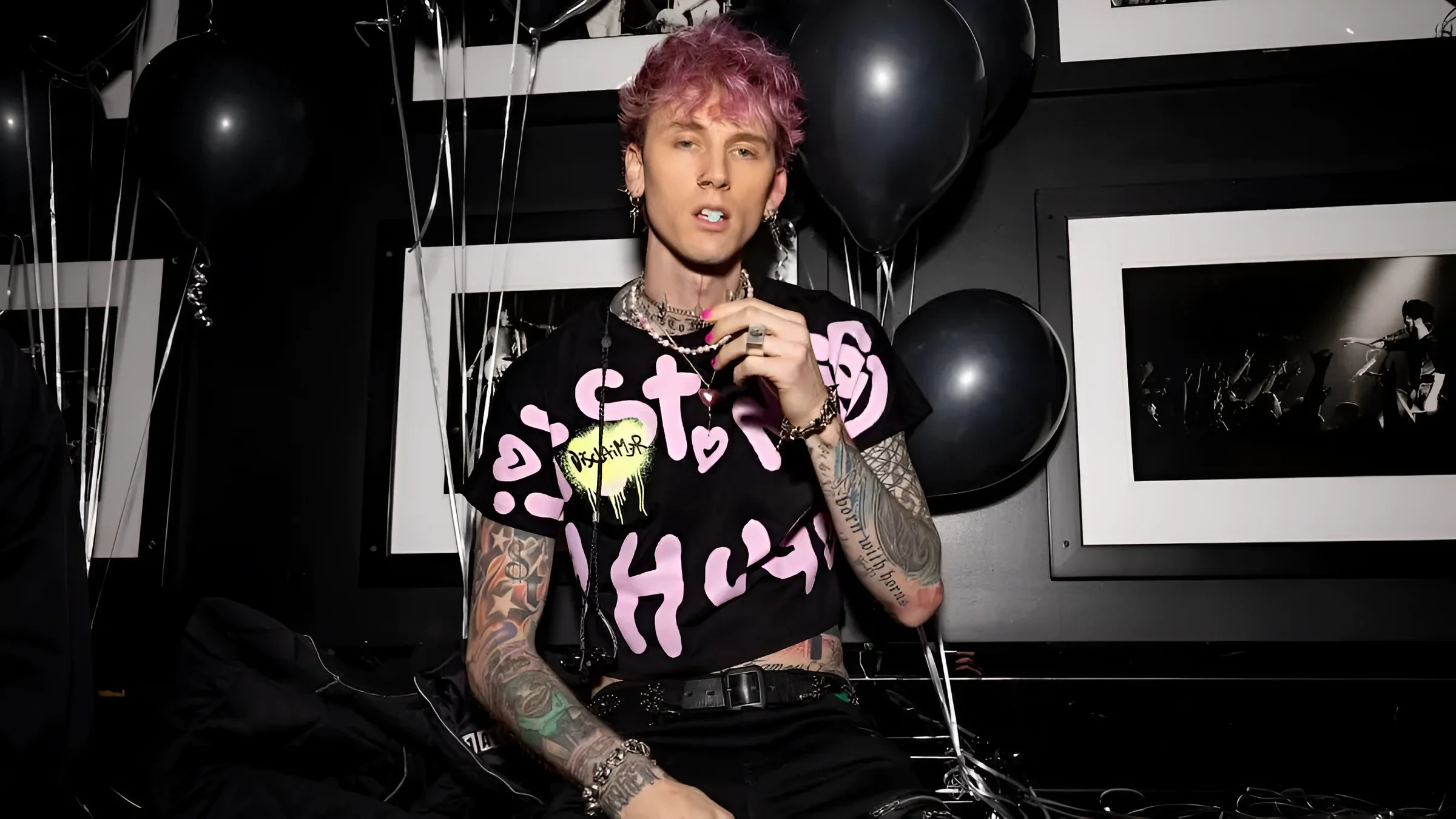
Visiting a tattoo artist is usually perceived as a light, almost recreational activity. Yes, the first few minutes require getting used to the unusual sensation of the needle and lying still, but overall, the process does not turn into an exhausting ordeal. It is a different story with large-scale full-body work: here we are talking about dozens of sessions, weeks of pain, and a truly surreal experience. That is precisely why some clients choose sedation to relieve anxiety and pain. But Machine Gun Kelly considers this approach a true “escape from reality.”
The rapper and rocker reacted to a video where a man was getting an ambitious full-body design, but wore a diaper and went under anesthesia instead of simply enduring the process with the artist. According to MGK, such a shortcut is a betrayal of the very essence of tattoo culture. In his post on X, he sarcastically wrote: “You didn’t earn that tattoo. You got put to sleep and put a diaper on, I hope you s**t yourself, you f**king fairy.”
Why the phrase “you didn’t earn it” triggered the community
The replies under the post, as is typical with Kelly, were quickly filled with accusations of hypocrisy and excessive drama. Users pointed out that the very phrasing “didn’t earn it” sounds absurd. One commenter noted: “Tattoos under anesthesia are silly, but saying ‘you didn’t earn that tattoo’ is just ridiculous, what does that even mean?” Another reminded him: “You wear mascara and nail polish. Who are you to call someone a fairy?”
It is worth pausing here to consider the cultural context. In the tattoo community, there is a persistent idea that pain is not a side effect, but part of the ritual: it “cements” the decision, turns the design into a personal narrative, and separates a conscious choice from an impulsive one. That is why phrases like “earned ink” have become an almost ritualistic marker of belonging to the subculture. Sedation breaks this logic: the body receives the design, but the experience that “sanctifies” it disappears. Hence Kelly’s sharp reaction — he is defending not so much a specific design, but the ethics of the process itself.
Aggression as family trauma
Such vicious outbursts are not accidental for MGK — their roots go back to childhood. In August 2026, he recalled how his father constantly insulted him because of the way he dressed. “I grew up in a house where my dad constantly called me a homosexual for the way I dressed,” Machine Gun Kelly shared. “My mom gave me a folder with videos from my childhood. I was one year old, and in the recording, she gave me a pink punching bag, and he said: ‘Why would you give our son that? Do you want him to become a homosexual?’ She gave him a kitchen set, and he asked: ‘Why are you giving him that? Do you want our son to become a homosexual?'”
This background explains why Kelly reacts so sharply to any “shortcuts” in matters of identity and choice, in his view: for him, a tattoo without pain is the same compromise he rejected in his own childhood. The conflict surrounding the sedation video, in essence, became a clash of two perspectives: one where a tattoo is a slow, painful, and conscious act, and another where client comfort is more important than the ritual. Both approaches exist in modern tattoo culture, but it is the debate over them that makes such discussions go viral.