
The modern labor market is undergoing a quiet but irreversible revolution: the boundaries between strict corporate style and personal self-expression are rapidly blurring. Just a decade ago, visible body art could have been a serious obstacle to career advancement in conservative industries. However, new data indicates tectonic shifts in the perception of body art. A study, published on March 30, 2026, and edited by Gary Dreves, raises an important question: does a tattoo remain a risk factor in employment, or has it definitively transformed into a natural element of professional image?
dress code
Scandals over tattoos on cruises: ethics, law, and the limits of what’s permissible

Today, tattoos are no longer solely an attribute of marginalized social groups or closed subcultures, having transformed into a global phenomenon of self-expression. According to current statistical data, about 32% of US residents have at least one design on their body. Aboard a modern cruise liner carrying thousands of passengers, tattoos are ubiquitous: from delicate inscriptions to large-scale artistic canvases. In most cases, bystanders react neutrally to others’ body art, but the situation changes dramatically when the content of a tattoo becomes, to put it mildly, questionable.
Tattoos and Career: Why the “Glass Ceiling” for Tattoos No Longer Exists
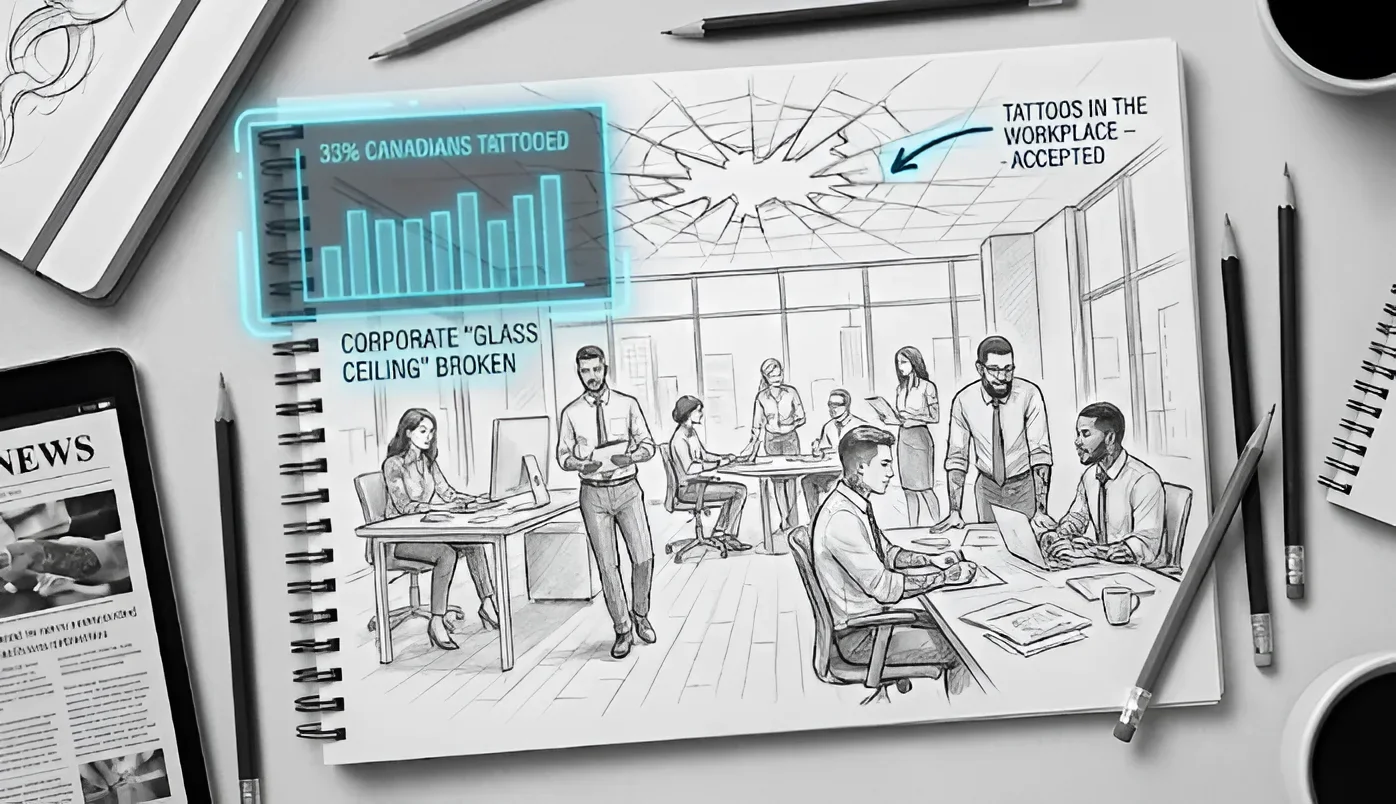
The era when tattoos were considered a sign of marginality or belonging to closed subcultures has definitively passed into the past, giving way to a new visual aesthetic in the business environment. Today, we are witnessing not just a tolerance for body art, but a full-scale cultural shift where tattoos are becoming an organic part of a professional image. If just ten to fifteen years ago, “sleeves” or designs on the hands could be an insurmountable obstacle when applying for a job at a bank or law firm, then in 2026, the corporate world demonstrates unprecedented openness. The modern office has transformed into a space where individuality is valued above conservative appearance standards.