
One in four Swedes already adorns their bodies with tattoos, and this habit is even more common among young women. According to a recent survey by the Swedish Public Health Agency, 28% of women and 21% of men admitted to having at least one tattoo. While most people live with them peacefully, nearly five percent (4.7%) experience skin problems that can become a real headache over time. We’ve explored what exactly gets under the skin, where pigment particles go, and whether you should fear what you’re permanently applying to your body.
macrophages
Tattoos and Immunity: Why Ink Changes the Body’s Response to Vaccines
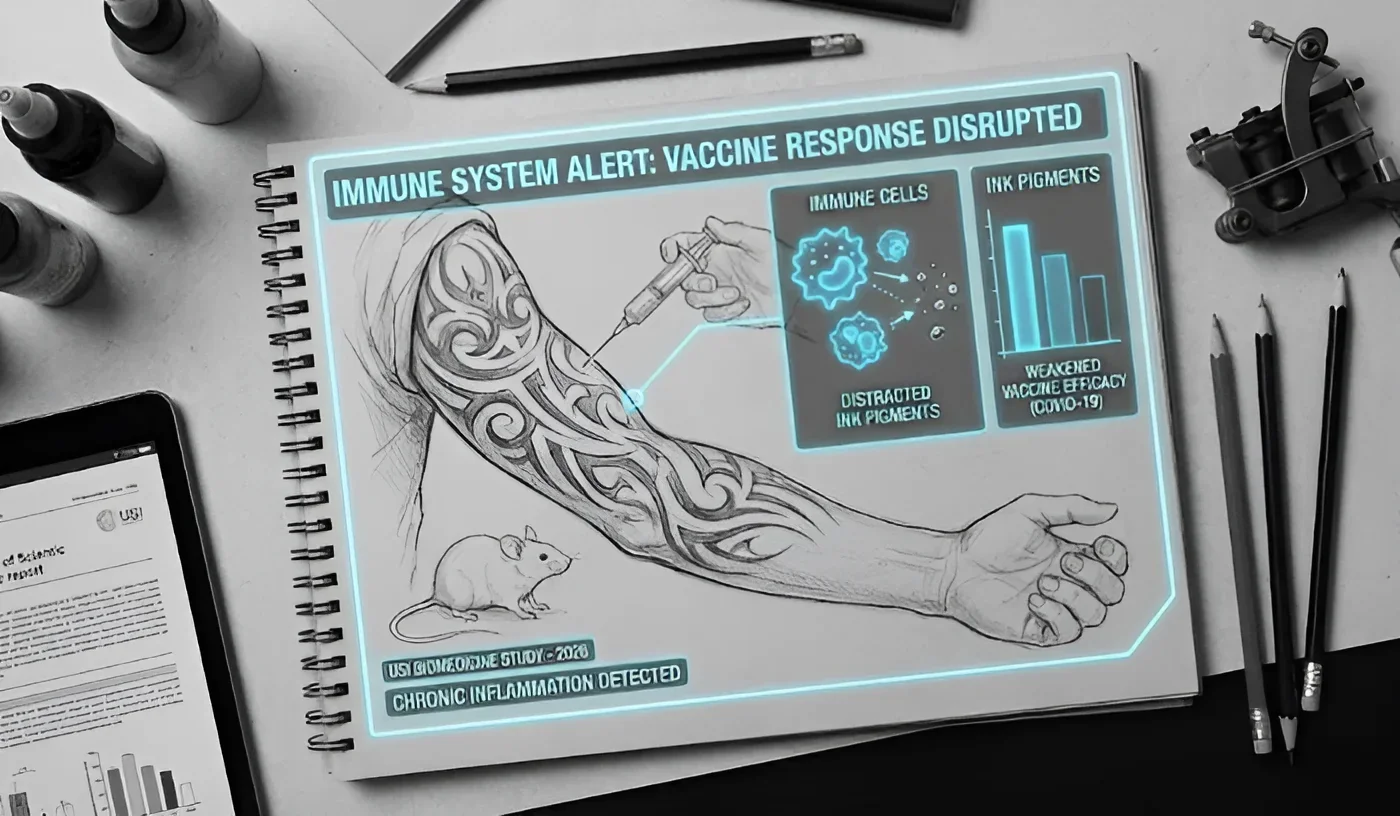
Modern tattoo culture has long ceased to be solely a matter of aesthetics or self-expression, becoming an object of close attention from fundamental science. While artists hone their realism techniques and clients choose designs, scientists are trying to understand how the presence of foreign pigment in the dermis affects the complex mechanisms of our immune system over the years. This week, the professional community was stirred by the results of a recent study conducted by specialists from the Institute of Biomedical Sciences (USI) in Switzerland. Experts have found that the usual process of wearing a tattoo creates a specific biological background in the body that can directly correct the effectiveness of modern vaccines, including those against COVID-19.