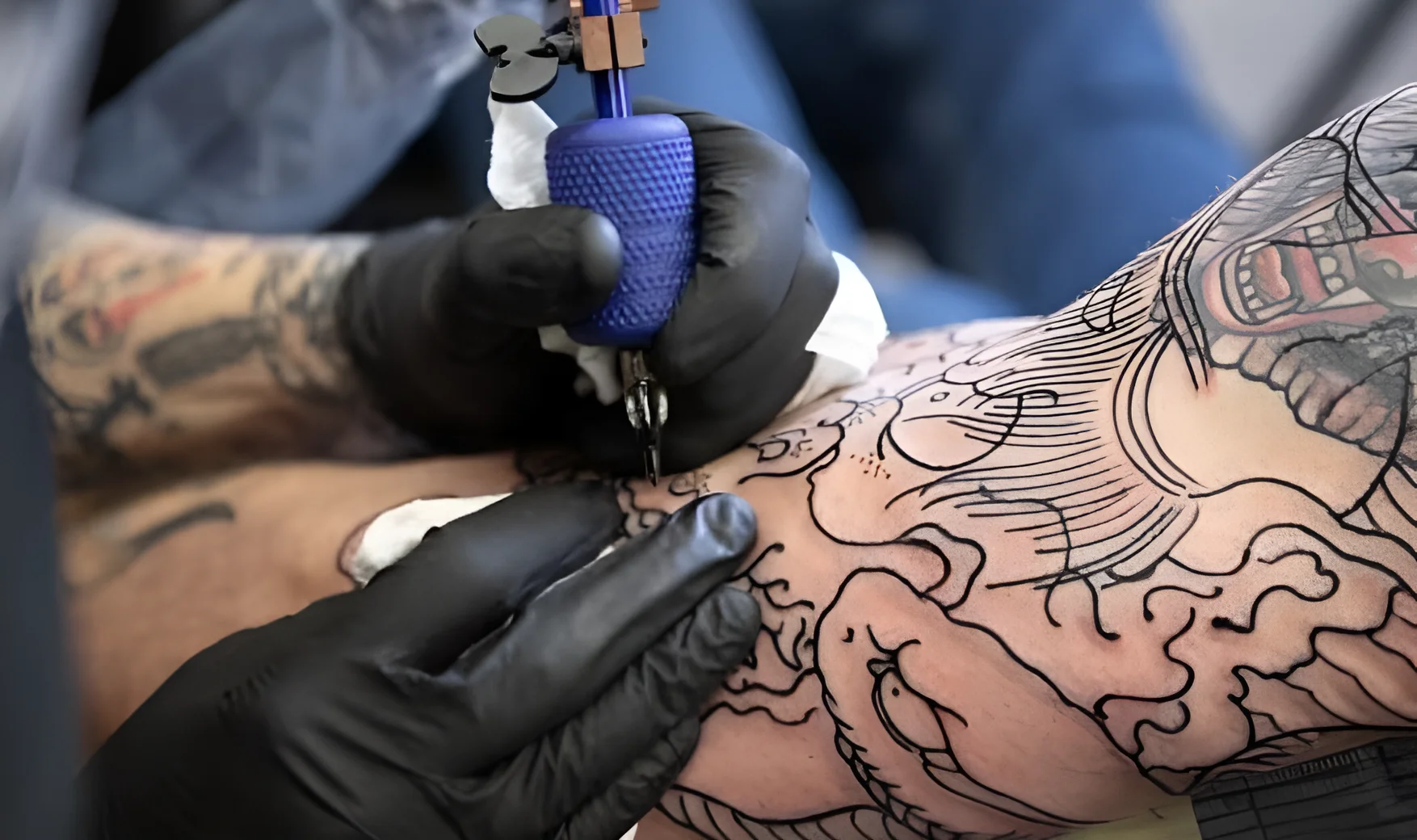
October 23, 2025. The Cypriot tattoo community finds itself trapped in a legal labyrinth, where formal legislative requirements paralyze the work of even the most conscientious artists. The absence of approved studios for practical training and the non-recognition of certificates have turned the legalization process into an endless quest, jeopardizing both the professional development of the industry and public health. The situation, which has exposed critical gaps in regulation, was detailed in a recent report by the country’s Ombudsman, who investigated a complaint from a local artist.
Bureaucratic Stalemate: How Legality Crumbles Against Invisible Walls
The issue surfaced thanks to the persistence of a Cypriot tattoo artist who attempted to officially register his name in the state registry of apprentice tattoo artists and piercers. His application, submitted in April 2024, became a catalyst for a large-scale investigation. The artist, already possessing professional experience, provided a complete set of necessary documents in March 2023 but received no official written response regarding the status of his application for nearly a year.
The Ombudsman’s investigation revealed that the roots of the problem run much deeper than mere delays. The Ministry of Health and the Registration Council cited two key obstacles that effectively make legalization impossible for any artist on the island:
- Unrecognized Certificates: The applicant’s qualification document, obtained from a foreign educational institution, was rejected because the institution lacked official recognition in Cyprus.
- Absence of Approved Studios: The most absurd point is that the legislation requires mandatory practical training in an officially approved studio. However, at the time of the investigation, no tattoo studio in Cyprus had been officially approved for this purpose.
Thus, even highly qualified professionals seeking to operate within the legal framework find themselves outside the law, as the state has established requirements that are physically impossible to fulfill.
Ombudsman Criticizes: Transparency and Safety in Question
In his report, the Ombudsman severely criticized both the Ministry and the Council. The main complaints concerned a lack of transparency and good governance. The inability to provide timely, and most importantly, written decisions on applications creates fertile ground for corruption and chaos.
A far more serious aspect addressed in the report is the threat to public health. With legal studios unable to be registered, most tattoo parlors are forced to operate without official licenses, oversight, or regular sanitary inspections. This leaves clients and artists themselves unprotected against risks associated with infections and non-compliance with hygiene standards.
“Without approved studios and proper oversight, neither professionals nor the public can be fully protected,” the report emphasizes, summarizing the current state of the industry.
Expert Analysis from tatufoto.com: The Cost of a Regulatory Vacuum
The situation in Cyprus is a classic example of how outdated or flawed legislation can destabilize a rapidly growing creative industry. Modern tattoo culture has long moved beyond the image of underground parlors; it is a field that demands strict safety protocols, professional ethics, and a high level of artistic training.
Professionalization vs. The Underground: Unlike many European countries where licensing clearly regulates requirements for equipment (autoclaves, pigments, ventilation) and training (hygiene and first aid courses), Cyprus has created a vacuum. When the legal path is blocked, artists, especially young and talented ones, are forced into the “grey zone” or to work from home. This not only deprives the state of tax revenue but also inevitably leads to a decline in safety standards.
Educational Dead End: Refusing to recognize foreign certificates, especially from EU countries where tattoo training standards are often higher than local ones, is a serious barrier to importing knowledge and skills. In a globalized tattooing world where artists constantly move and exchange experiences, such protectionism becomes a brake on the development of the local scene.
For comparison, in Germany or the UK, the licensing process focuses not so much on the place of training but on demonstrating competence in sanitation and health. An artist must pass exams confirming knowledge of sterilization protocols and bloodborne pathogen handling, and the studio undergoes inspection for compliance with sanitary norms. Cyprus, however, has focused on formal but unfulfillable requirements.
Consequences for Cyprus’s Tattoo Culture
Long delays (documents submitted in 2023, and a decision still not made) are not just annoying—they kill investment. Entrepreneurs cannot plan studio development, take out loans, or expand their staff, knowing that their activities could be deemed illegal at any moment. This freezes the development of the artistic scene, forcing the best artists to seek their fortune in more hospitable jurisdictions.
Ultimately, Cyprus, which strives to be a modern European center, is inadvertently pushing the tattoo industry back into the underground. The only way out of the situation is the swift implementation of legislative reforms, which are rumored to be in the works by the authorities. These reforms should be aimed at:
- Simplifying and clearly defining the requirements for recognizing foreign qualifications.
- Promptly approving a list of studios capable of conducting practical training, or replacing this requirement with mandatory state exams on sanitation.
- Establishing clear deadlines for application review.
Until these measures are implemented, the professional tattoo community in Cyprus will continue to exist in a state of “regulatory limbo,” where the law exists, but it is impossible to work under it.