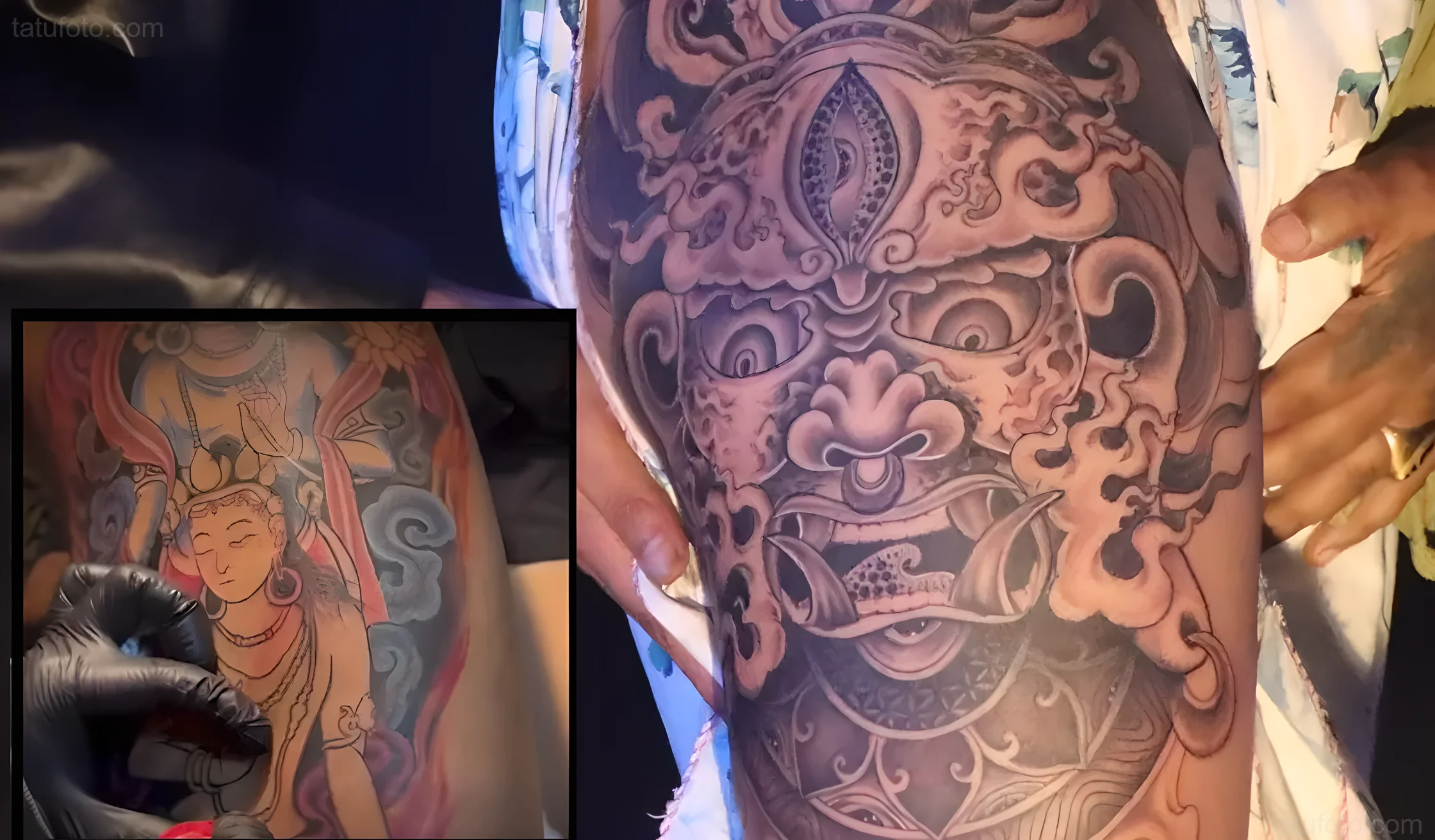
The International Tattoo Convention, held in Saramsa (Gangtok, Sikkim) on October 12, 2025, found itself at the epicenter of a massive religious scandal. The event, which gathered over 100 artists from around the world, faced sharp criticism from influential Buddhist figures and politicians due to the practice of tattooing images of Mahayana Buddhist deities on the lower part of the body.
Fire of Indignation: Why Lower Body Tattoos Became Blasphemy
The unrest began after the public started actively discussing the works of some artists who displayed religious symbolism in areas traditionally considered “unclean” or least revered in Buddhist culture. The catalyst for public outrage was Ongdi Penzu Bhutia, coordinator of the All India Buddhist Forum for Sikkim.
Bhutia expressed his deepest indignation, emphasizing that placing sacred images, particularly Mahayana Buddhist deities, on areas below the waist (legs, feet) is an act of profound disrespect and desecration of faith. He immediately appealed to the state government with a demand to intervene immediately, stop such practices at the convention, and provide an adequate response to the legitimate concerns of the religious community.
Political Resonance: “This is Intentional Insult”
The scandal quickly moved beyond religious forums, gaining significant political weight. Former Minister Tsering Wangdi Lepcha publicly condemned the actions of the tattoo artists. In his video address, which quickly spread across social networks, Lepcha harshly criticized those who, in his opinion, are “intentionally offending the religious feelings of the innocent residents of Sikkim” by tattooing divine faces on the lower limbs.
“Sikkim is a Buddhist state,” Lepcha stated uncompromisingly, emphasizing: “Such works that undermine the trust and faith of the people will not be accepted at any cost.” He urged all participants, regardless of their professional level or international status, to “understand ethics before proceeding with their work.”
The convention, which gathered over 100 artists, including many international stars, came under intense scrutiny not only from religious organizations but also from local think tanks. The escalation of the conflict once again vividly highlighted the critical clash between modern forms of artistic self-expression and deeply rooted religious and cultural taboos in South Asia.
tatufoto.com Expert Analysis: A Lesson in Cultural Ethics for the Global Tattoo Community
The situation in Sikkim is a powerful reminder that the globalization of tattoo culture does not negate, but rather exacerbates, the need to observe cultural and religious ethics. For a Western or secular artist, a tattoo is primarily a canvas and aesthetics. For deeply religious communities, especially in Asia, the body is a hierarchical map where every zone has its spiritual value.
Body Hierarchy in Mahayana Buddhism
In the Mahayana tradition, prevalent in Sikkim, Tibet, and Nepal, there is a strict hierarchy of bodily purity and sanctity:
- Head: The most sacred part, the abode of consciousness and the highest spiritual energies.
- Torso and Arms: A neutral zone suitable for most symbols and images.
- Lower Limbs (below the waist): Considered the least pure, touching the earth and symbolizing the mundane.
In this context, tattooing an image of the Buddha, a Bodhisattva, or any other highly revered deity on the legs or feet is tantamount to the deliberate desecration of a holy object. This is not just a matter of taste or artistic freedom; it is a violation of fundamental religious protocols, perceived as a direct insult.
The Problem of “Tattoo Tourism” and Lack of Contextual Knowledge
Many international tattoo artists working at Asian conventions may genuinely not realize the depth of this taboo. They see Buddhist iconography merely as beautiful, complex designs. However, this case highlights the urgent need for mandatory cultural sensitivity training for artists working with symbolism that does not belong to their own culture.
Historically, religious tattooing in Asia (such as Thai Sak Yant) has always been strictly regulated. Sak Yant masters would never apply sacred mantras or images of deities below the waist, as this instantly strips the tattoo of its spiritual power and is considered profanation. Modern artists borrowing these motifs cannot ignore millennia-old rules.
Consequences for the Industry: This scandal may have long-term repercussions for hosting international tattoo events in regions with strong religious traditions. Organizers will have to introduce strict rules and conduct preliminary censorship, which, in turn, will inevitably spark debates about the limits of artistic freedom.
Silence of the Organizers and Expectations from the Government
At the time of publication, the organizers of the International Tattoo Convention and the participating artists had not issued a detailed statement regarding the serious accusations of religious offense. The full weight of the situation has now shifted to the state authorities of Sikkim. Religious and political leaders expect the government to take decisive action—either by introducing strict regulations governing the content of the convention or by completely halting activities that so clearly contradict the cultural foundations of the state.
This incident serves as a clear signal: the tattoo community needs to seriously review its ethical standards when working with religious and culturally significant symbolism to avoid repeating such conflicts where artistic self-expression directly contradicts the deep faith of an entire people.