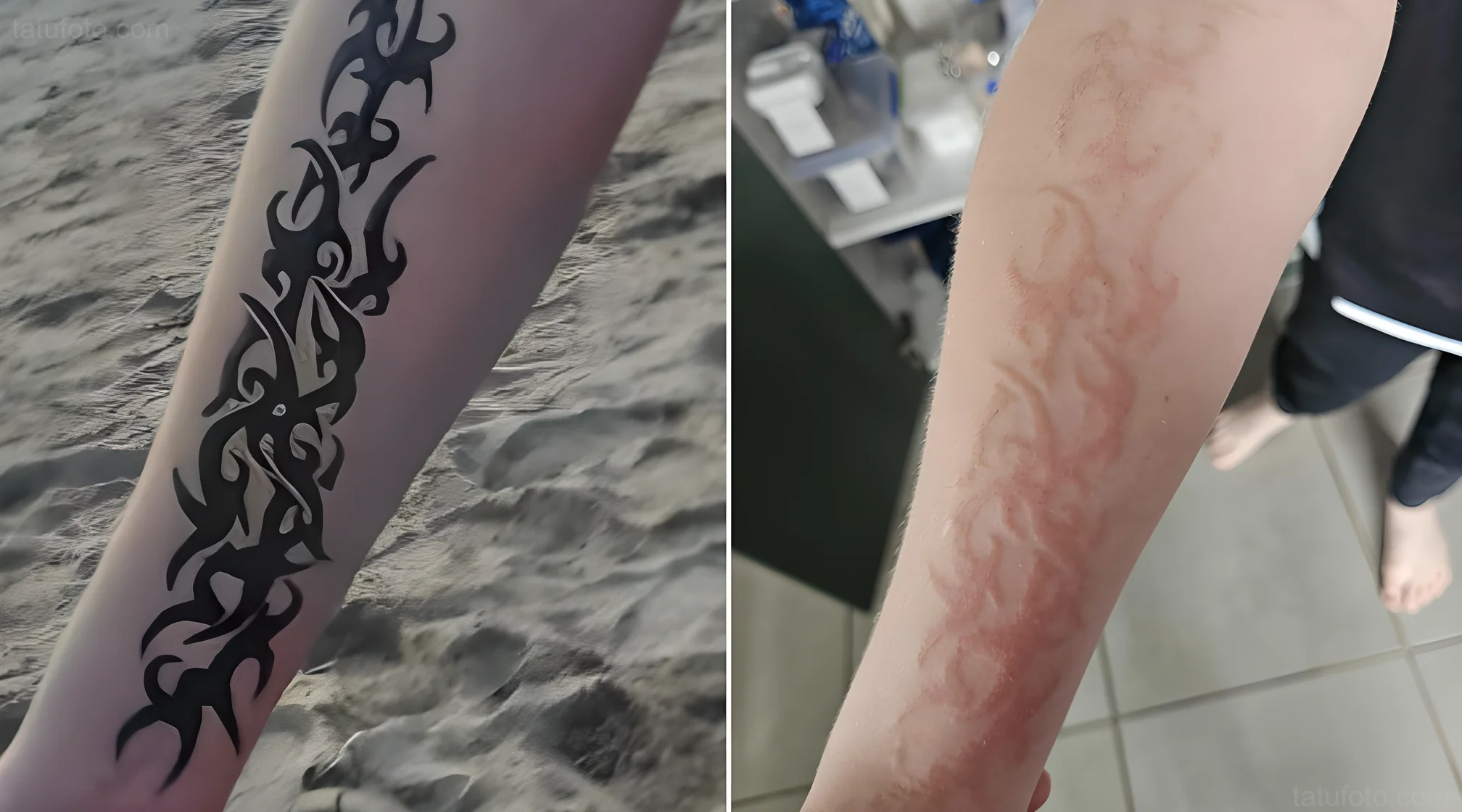
Holidays in exotic resorts are often accompanied by the temptation to get bright, temporary body art. However, what seems like innocent entertainment can turn into a serious injury. New Zealand mother, Danielle Choat, has issued a stern warning to all tourists heading to Southeast Asia after her 10-year-old son, Mason, suffered a chemical burn and a potentially permanent scar from so-called ‘black henna’ in Bali.
A Fateful Sunset on Kuta Beach
The incident occurred on September 21st on the popular Kuta Beach, famous for its picturesque sunsets. The Choat family was watching the sun when a local artist approached them, offering temporary henna tattoos. Ten-year-old Mason was the only one who agreed, and an intricate pattern made with black pigment appeared on his right inner forearm. At first glance, it looked like a typical resort souvenir.
However, the carefree mood ended seven days later, after the family had already returned home to New Zealand. Danielle Choat said the tattoo began to itch severely. When the pigment was washed off, painful blisters and swelling were revealed underneath. The skin condition rapidly worsened, requiring immediate medical attention.
A week of treatment, including topical and oral antibiotics, did not bring the expected results. According to the mother, there was no improvement. “It’s only starting to scab over now, but it looks terrible,” Choat commented, fearing that the temporary design would leave Mason with a permanent, disfiguring scar on his skin.
The Danger of ‘Black Henna’: The Toxic PPD Cocktail
For the tatufoto.com community, which deeply values safety and a conscious approach to body modification, Mason’s story is a classic example of why it is crucial to strictly distinguish between natural henna and its toxic counterpart often offered to tourists. The problem lies in the composition of the black pigment.
Traditional, safe henna is a paste made from the dried leaves of the Lawsonia inermis shrub. It yields a reddish-brown or rusty hue and requires prolonged contact with the skin (from six to twelve hours) to achieve a lasting design. Real henna is safe and has been used in body art for millennia.
The ‘black henna’ that caused Mason’s suffering has nothing to do with the natural plant. It is a chemical mixture into which a high concentration of paraphenylenediamine (PPD) is introduced. PPD is a powerful toxic substance legally used in industry, particularly as a component in black hair dyes. When applied to the skin, PPD allows the pigment to penetrate the epidermis instantly, providing a fast and dark result, which is highly attractive to unscrupulous street artists.
Consequences of PPD Chemical Burns
Contact with PPD on the skin can cause severe reactions that go far beyond a simple allergy:
- Contact Dermatitis: Severe inflammation accompanied by itching and burning.
- Blisters and Ulcers: A chemical burn leading to the formation of blisters.
- Permanent Scarring: In most cases, such deep damage leaves behind keloid or hypertrophic scars.
- Sensitization: Increased sensitivity to PPD for life, making it impossible to use many types of hair dyes.
- Systemic Reactions: In rare but severe cases—bronchial asthma, nausea, and dizziness.
It is important to note that in most developed countries, including Australia (as indicated by the Western Australia Department of Health), the use of PPD for skin application is illegal. However, in popular tourist destinations like Bali, as well as in parts of Asia and Africa, this toxic dye continues to be actively used.
Tourist Guide: How to Identify a Fake
Danielle Choat’s warning boils down to one thing: tourists must be ‘absolutely sure’ of the natural origin of the henna used. The online resource Living In Indonesia echoes this, providing clear recommendations on how to determine if the paste contains dangerous PPD.
Before agreeing to a design, ask the artist two key questions:
1. How long does it take to stain?
If you are told that it only takes ‘an hour or two,’ this should raise strong suspicion of PPD presence. Natural henna requires the paste to remain on the skin much longer—usually from six to twelve hours—to achieve a rich and lasting color.
2. How long will the design last?
If the artist promises that the design will last ‘a week or more,’ this is also an alarming signal. Natural henna, although long-lasting, usually begins to fade faster than a chemically enhanced mixture.
Expert Analysis and Tattoo Culture Context
This story, unfortunately, is not unique. It highlights a critical problem in the body art industry: the lack of regulation in tourist areas. For our audience at tatufoto.com, who understands the value of safe and professional tattooing, such cases serve as a reminder of the need for deep research into materials, even when dealing with a temporary design.
From a tattoo culture perspective, the use of ‘black henna’ is outright fraud. It exploits the beauty of the ancient art of Mehndi by substituting it with dangerous chemicals for quick profit. The reaction to PPD doesn’t just ruin a vacation; it can permanently alter the skin, making it hypersensitive. People who have suffered PPD burns may face restrictions even when choosing cosmetic products in the future.
The professional tattoo community always advocates for maximum transparency. If you are in a country where safety standards differ from those you are accustomed to, always demand that the artist show you the composition of the paste or at least allow you to perform a quick test on a small patch of skin long before applying the main design. Remembering Mason’s tragic experience, we must realize that in the pursuit of the perfect vacation photo, one might acquire not a souvenir, but a chronic problem that even strong antibiotics cannot fix.