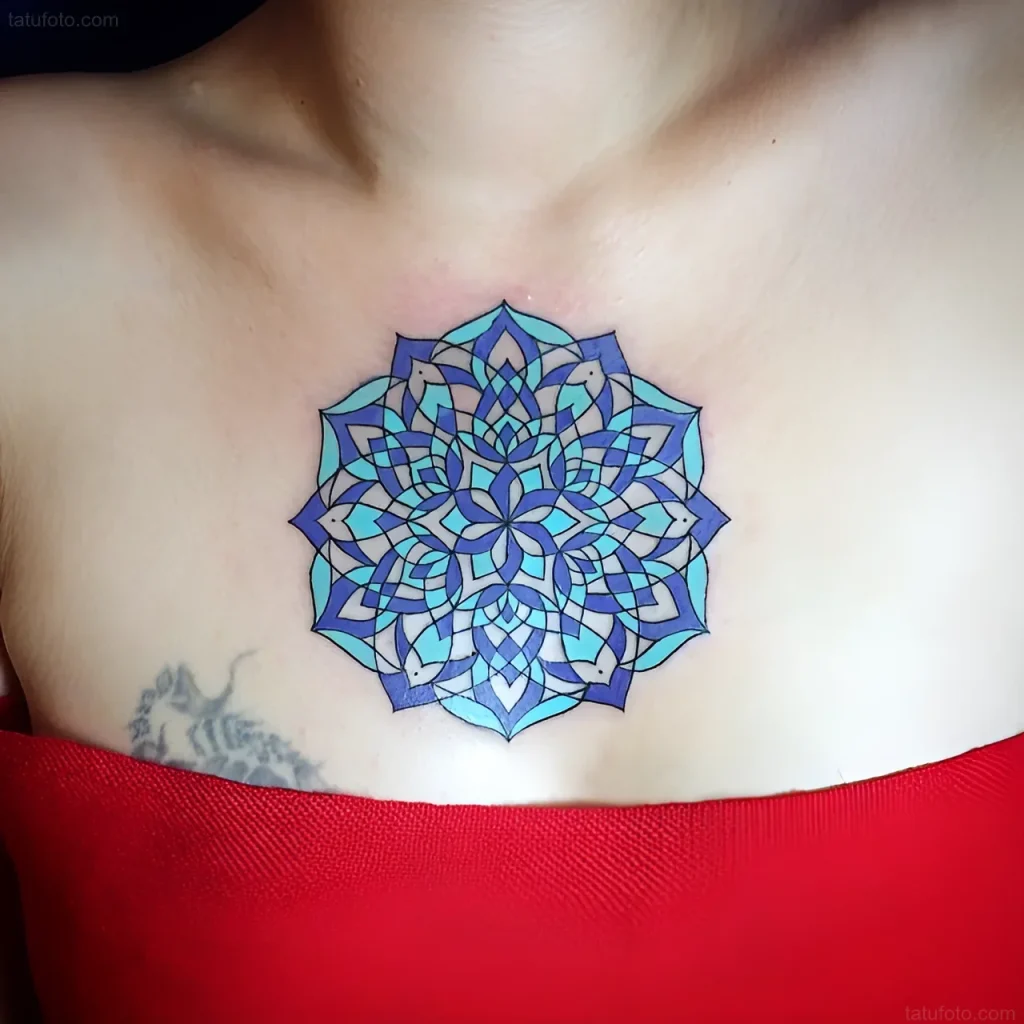
The meaning of a kaleidoscope tattoo requires not just a superficial analysis, but a deep dive into optics, philosophy, and personal symbolism. The kaleidoscope, being both a scientific instrument and a metaphor, represents one of the most complex and aesthetically rich subjects in modern tattoo art. It symbolizes not only the beauty of intricate patterns but also the fundamental idea of life’s endless transformation and perpetual motion.


Kaleidoscope Tattoo Meaning: Deep Symbolism and the Beauty of Diversity
A kaleidoscope tattoo is a choice for individuals who perceive the world not as a static picture, but as a dynamic process where even chaotic elements coalesce into a perfect, albeit fleeting, harmony. The primary interpretations of this symbol are rooted in its functionality: with the slightest movement, the inner world of the device changes, displaying a new, unique composition.
For the wearer, such a tattoo often becomes a visual manifesto of the following ideas:
- Eternal Change and Adaptation: The kaleidoscope is an ideal symbol of cycles and change. It reminds us that life consists of constant shifts, and the ability to adapt to new circumstances is key to harmony.
- Finding Order in Chaos: The kaleidoscope’s pattern is created from many random, colorful elements. The tattoo reflects a belief that even the most confusing or painful life events, when viewed from the right angle, form a higher, meaningful picture.
- Infinity and Cyclicity: Due to mirror reflections, the pattern appears boundless, fractal. This can symbolize the infinity of the soul, the cyclical nature of time, or the continuous personal development.
- Perception and Perspective: Changing the viewing angle completely alters the image. A kaleidoscope tattoo is often chosen by people who value the ability to look at situations from different sides, understanding that truth depends on the observer’s perspective.
It’s important to note: unlike many traditional symbols, the meaning of the kaleidoscope is not historically fixed in ancient cultures. Its power lies in modern, deeply personal philosophical interpretation, based on optics and geometry.
History of Kaleidoscope Symbolism: From Scientific Discovery to Art
Although the device itself was invented in 1816 by Scottish physicist Sir David Brewster as a scientific tool for studying light polarization, its symbolic meaning quickly extended beyond physics. Initially patented as a “philosophical instrument,” the kaleidoscope soon became a symbol of:
- Aesthetic Mathematics: It demonstrated how strict laws of geometry (symmetry, reflection) could generate infinite beauty. In the 19th century, it inspired designers, architects, and artists seeking perfect, repeating motifs.
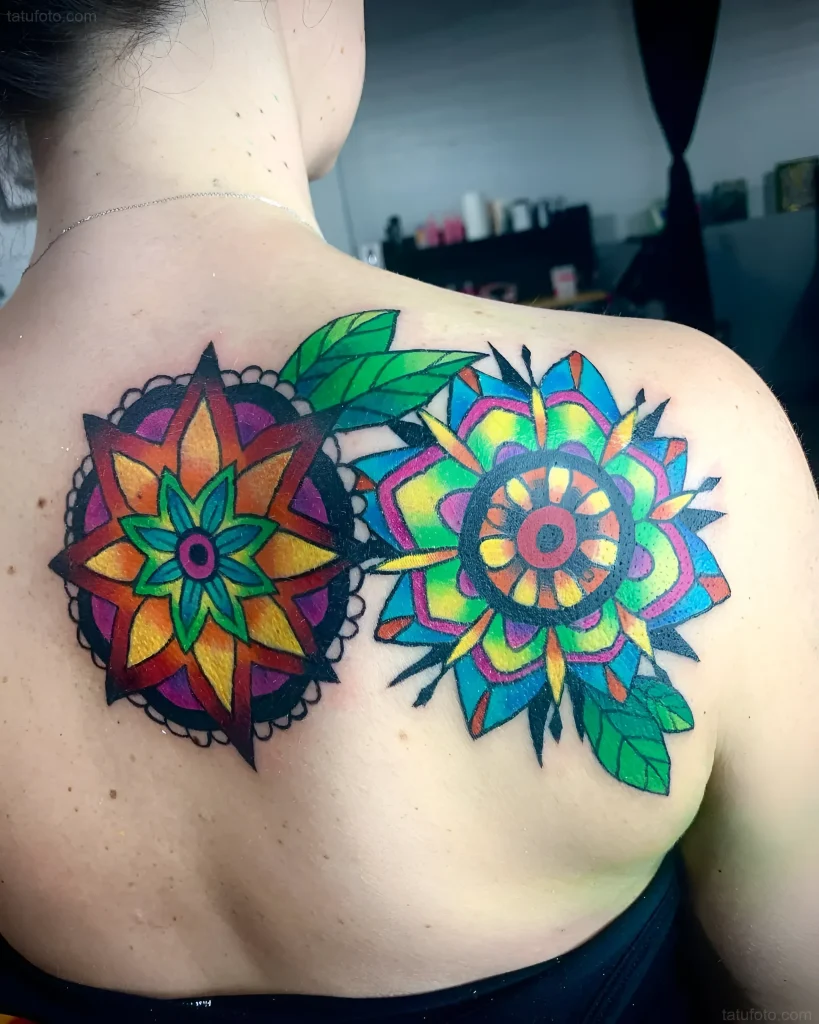
- Psychedelic Culture: In the 20th century, especially in the 1960s, kaleidoscopic patterns became closely associated with altered states of consciousness, expanded perception, and psychedelic art. A tattoo done in bright, iridescent colors can carry this meaning – a striving for a non-linear, expanded view of reality.
- Meditative Focus: Observing the slowly changing pattern is used in some practices as a form of visual meditation, helping to focus on the present moment and realize the transience of all things.
Transferring this image to the skin is an acknowledgment that the body is a vessel for constant internal and external changes, and the pattern itself is a reflection of a person’s complex yet ordered inner life.
Kaleidoscope Tattoo Meaning: What the Design Signifies for Different People
Given the multifaceted nature of the symbol, its meaning often varies depending on the wearer’s life experiences and profession. A kaleidoscope is always a personal story told through geometry and color.
Symbolism for Creative Individuals
Artists, musicians, writers, and designers often choose the kaleidoscope as a symbol of inexhaustible inspiration and creativity. For them, it represents:
- A Source of New Ideas: The constant generation of unique combinations reflects the creative process.
- A Symbol of Synthesis: The ability to combine disparate elements (colors, sounds, words) into a single harmonious work.
Symbolism for Travelers and Philosophers
People whose lives are connected with constant movement or deep introspection see in the kaleidoscope a reflection of their life path and wisdom:
- “The Wanderer’s Gaze”: Each new city or culture is a new turn of the kaleidoscope, changing the overall impression of the world.
- Acceptance of Fate: The realization that one cannot control which “pieces of glass” will fall next, but one can enjoy the resulting pattern.
Symbolism for Those Who Have Experienced Change
For individuals who have gone through significant personal crises or transformations (career changes, recovery, relocation), the kaleidoscope becomes a symbol of rebirth and restructuring of the personality:
- Reassembling Life: Old, “broken” elements (past traumas or mistakes) do not disappear but are rebuilt into a new, more beautiful, and stronger pattern.
- Hope: The confidence that even after the darkest period, a new, bright, and ordered phase will surely follow.
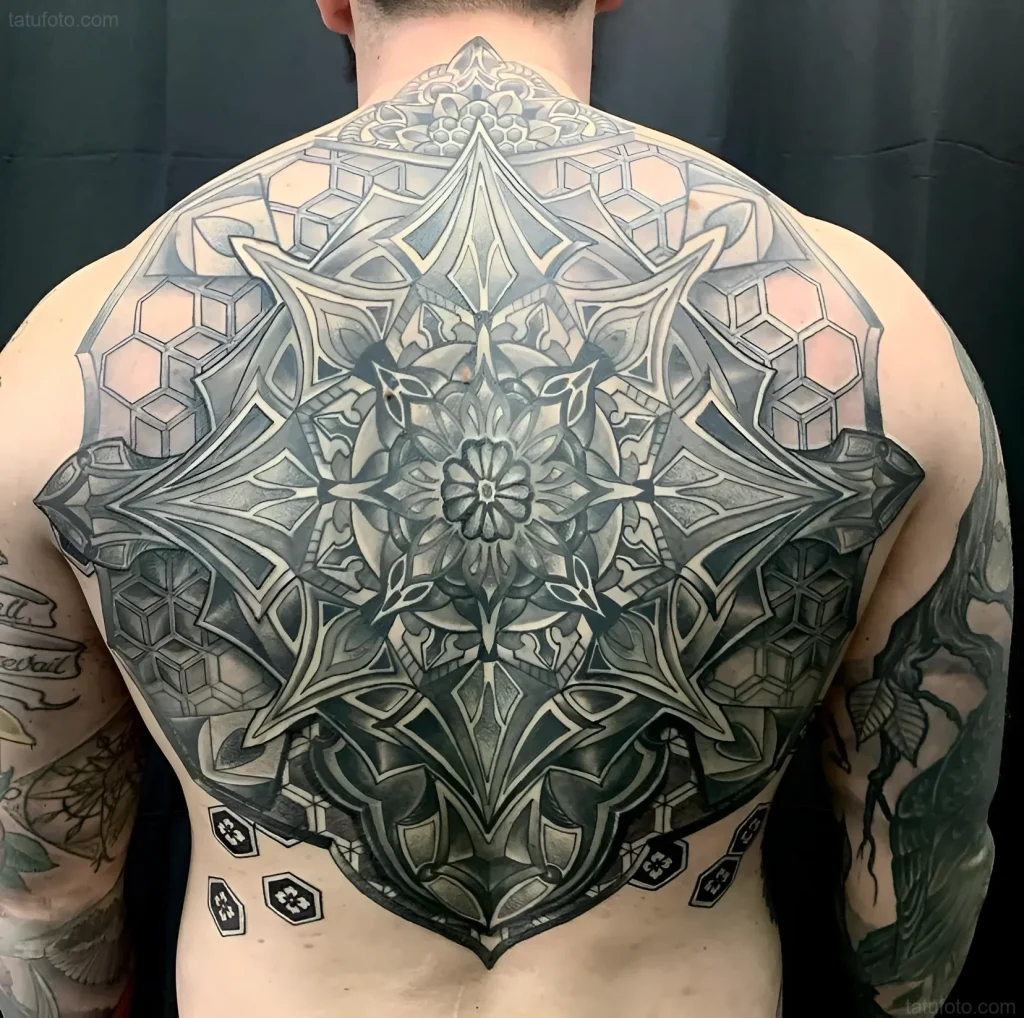

Kaleidoscope Tattoo Styles: From Realism to Watercolor – Choose Your Style
Executing a kaleidoscope tattoo requires the highest level of skill, as it’s necessary to convey both strict geometric symmetry and the illusion of depth and movement. The choice of style is critically important as it determines which aspect of the symbolism will dominate.
1. Geometric Dotwork and Blackwork
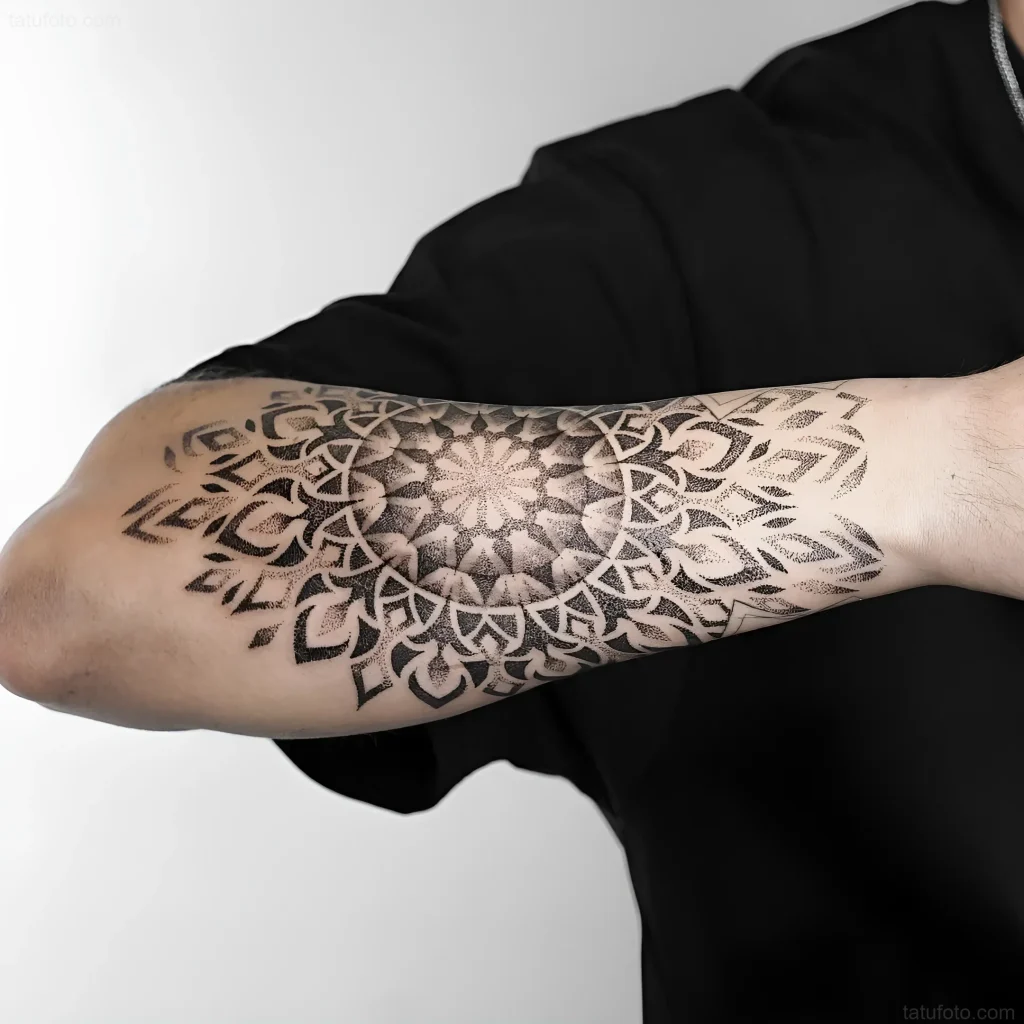
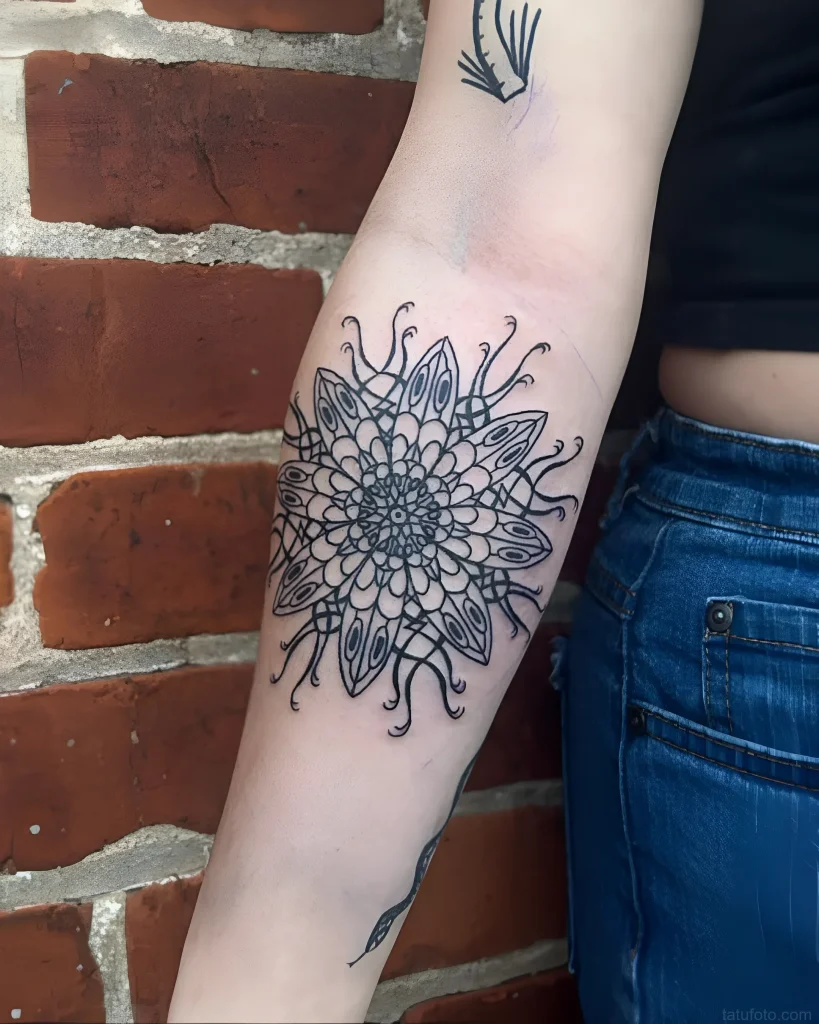
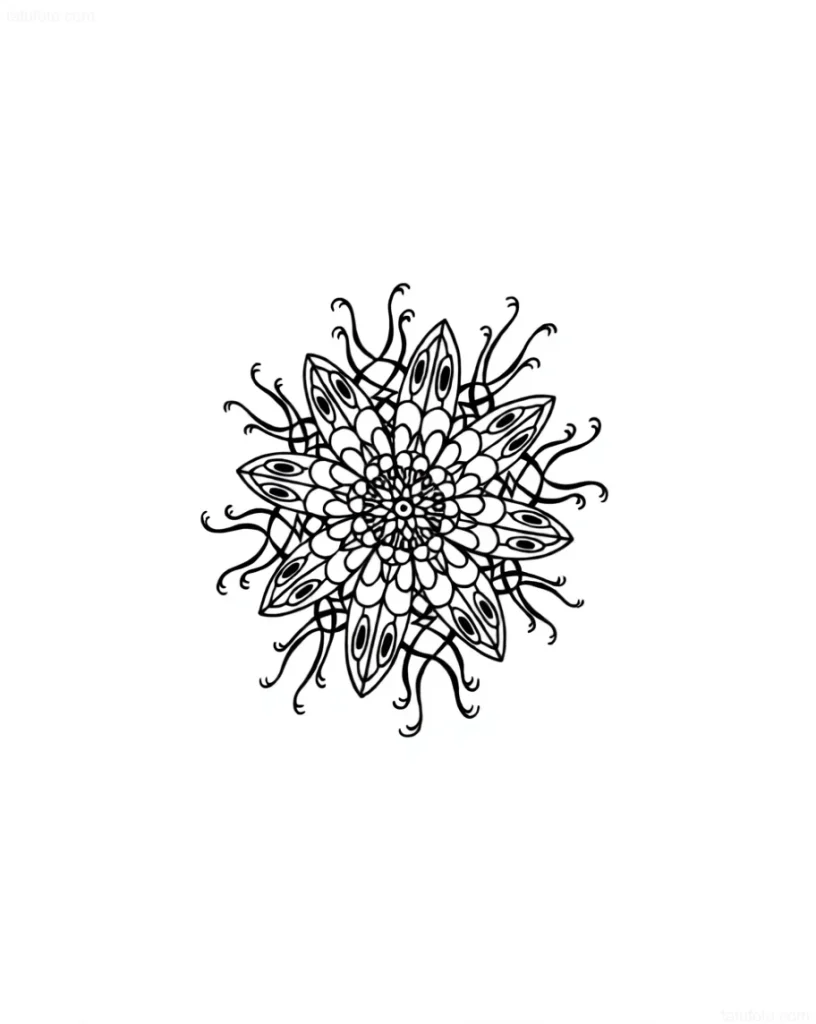
Symbolism: Maximum emphasis on order, structure, infinity, and mathematical beauty. This style often uses only black pigment, which highlights the contrast between light and shadow, between the manifest and the hidden.
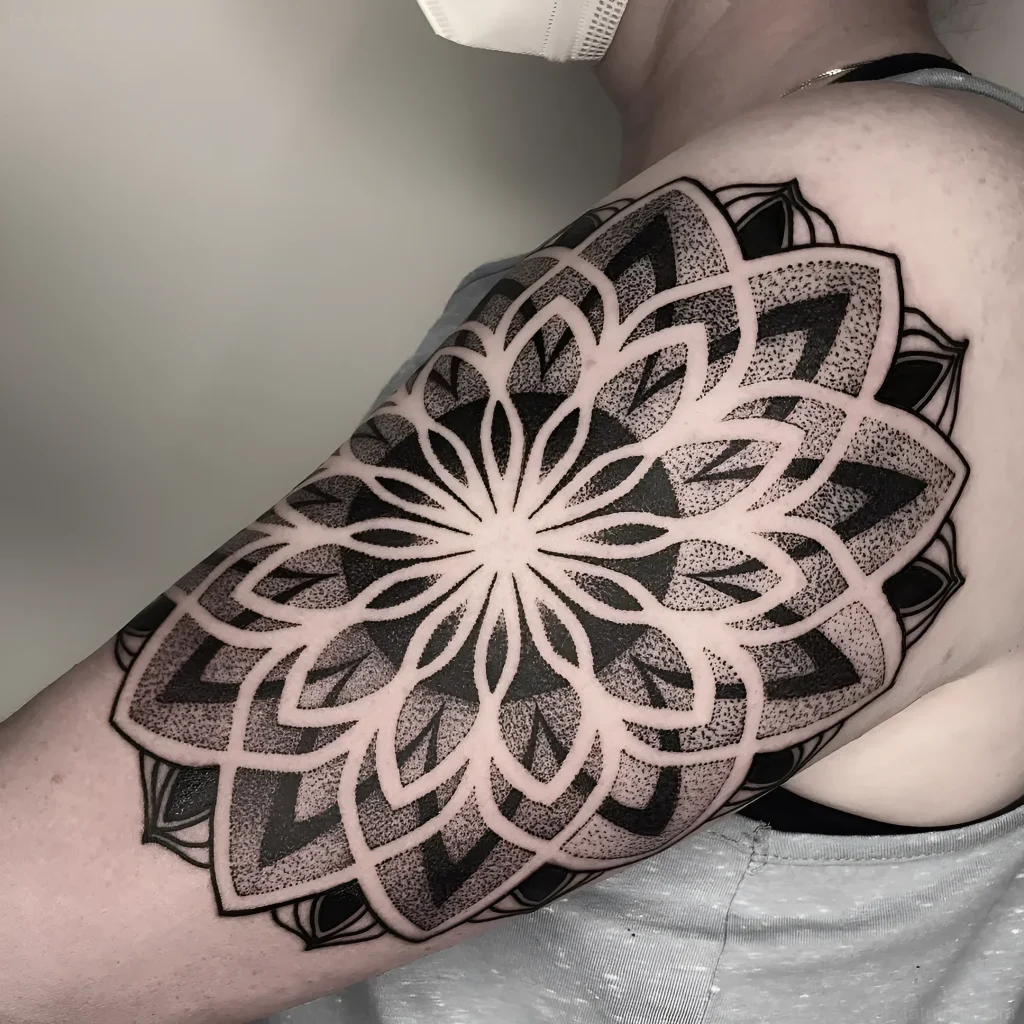
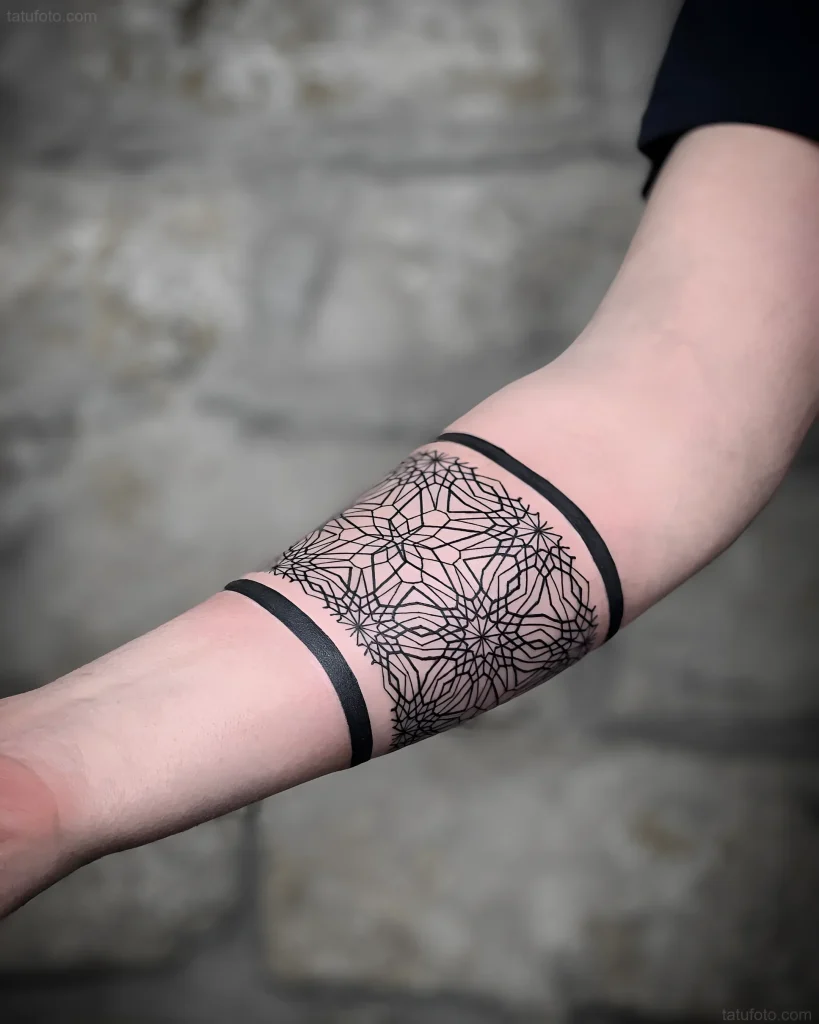
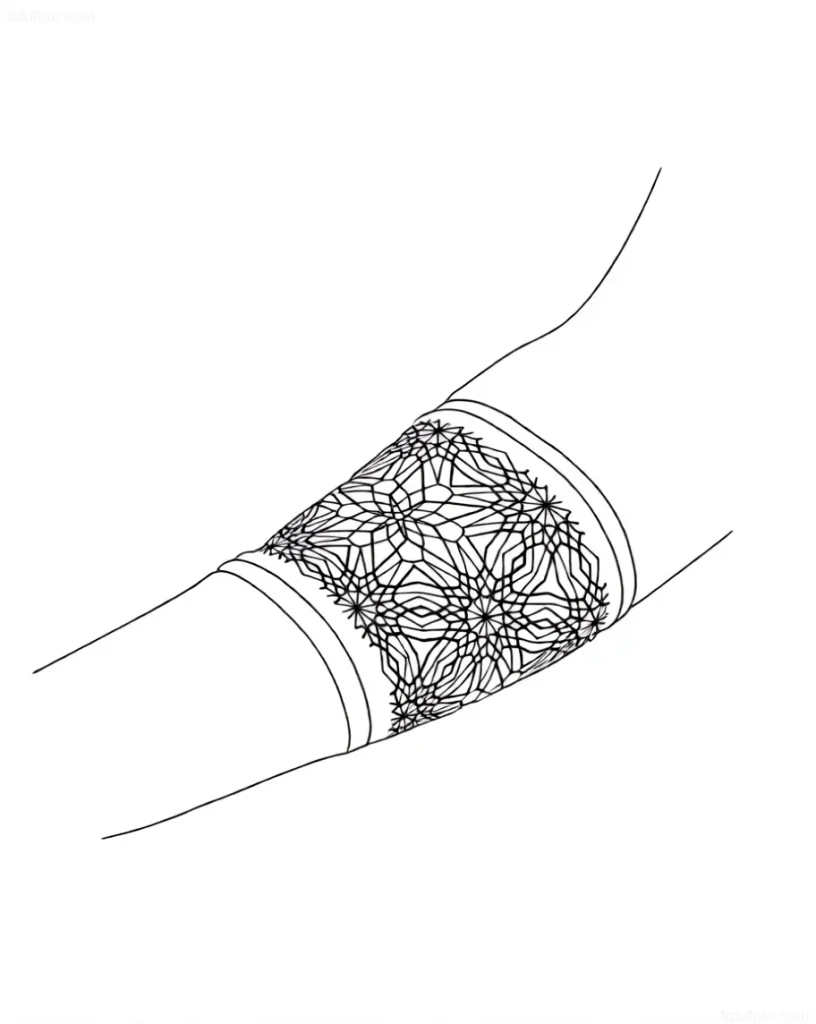
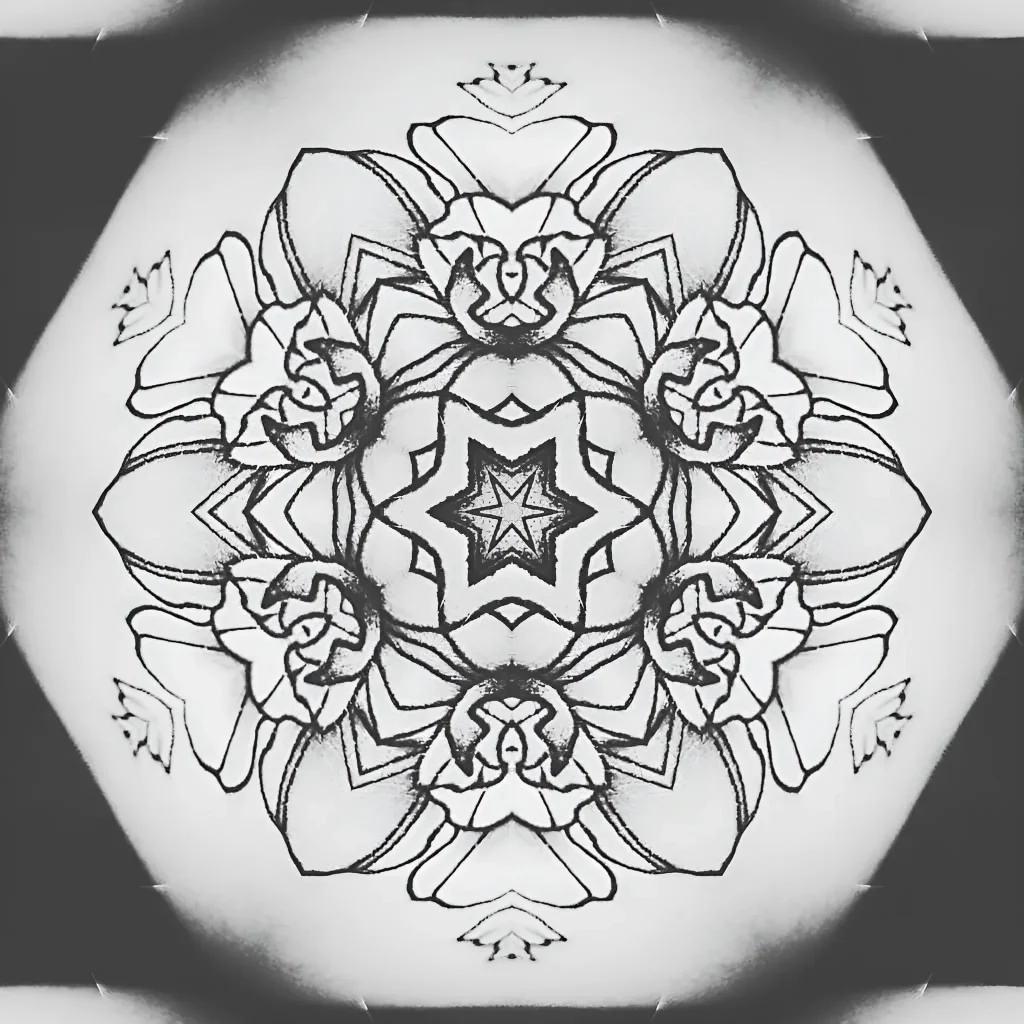
- Features: Use of tiny dots (dotwork) or strict lines (geometry) to create fractal patterns. The patterns can be symmetrically arranged around a central point or stretched in a mandala shape.
- Who it suits: Those who value clarity of thought, structure, and want a tattoo that looks strict yet mesmerizing.
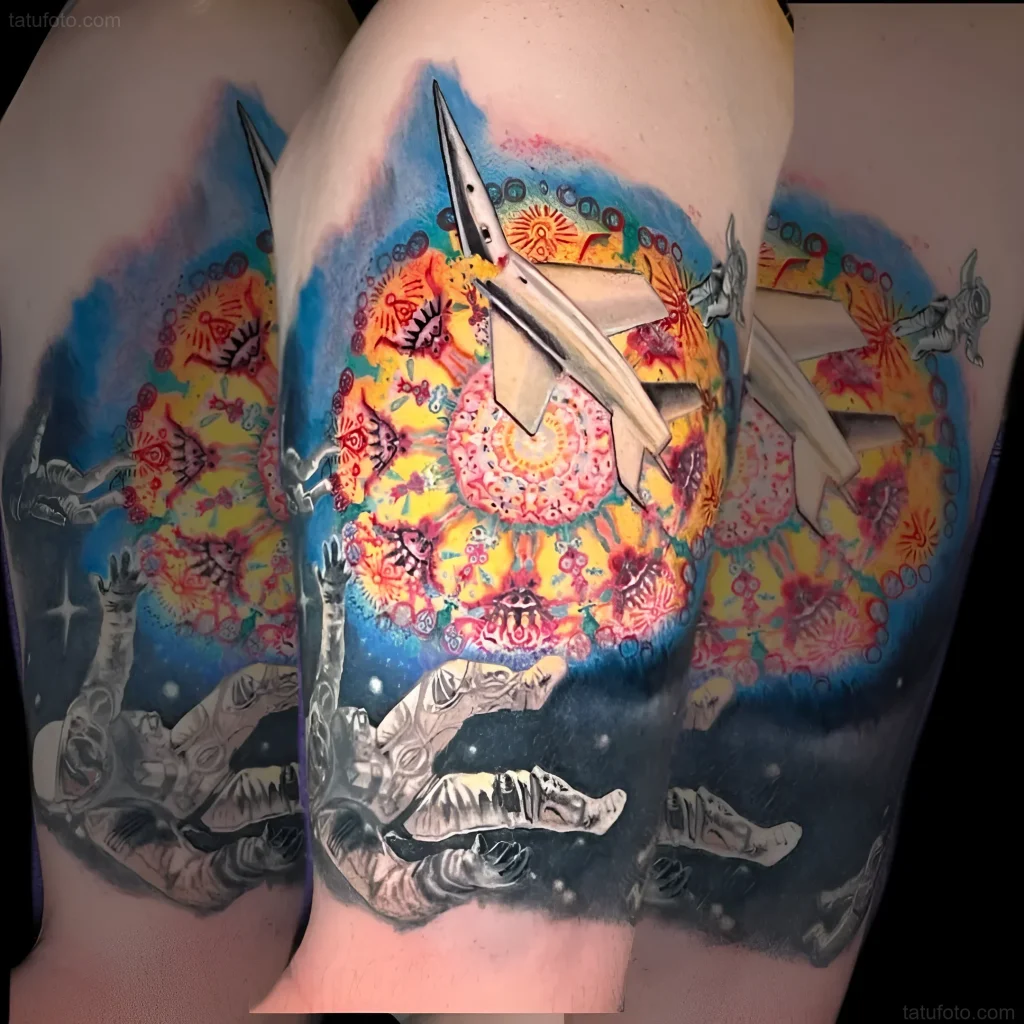
2. Watercolor
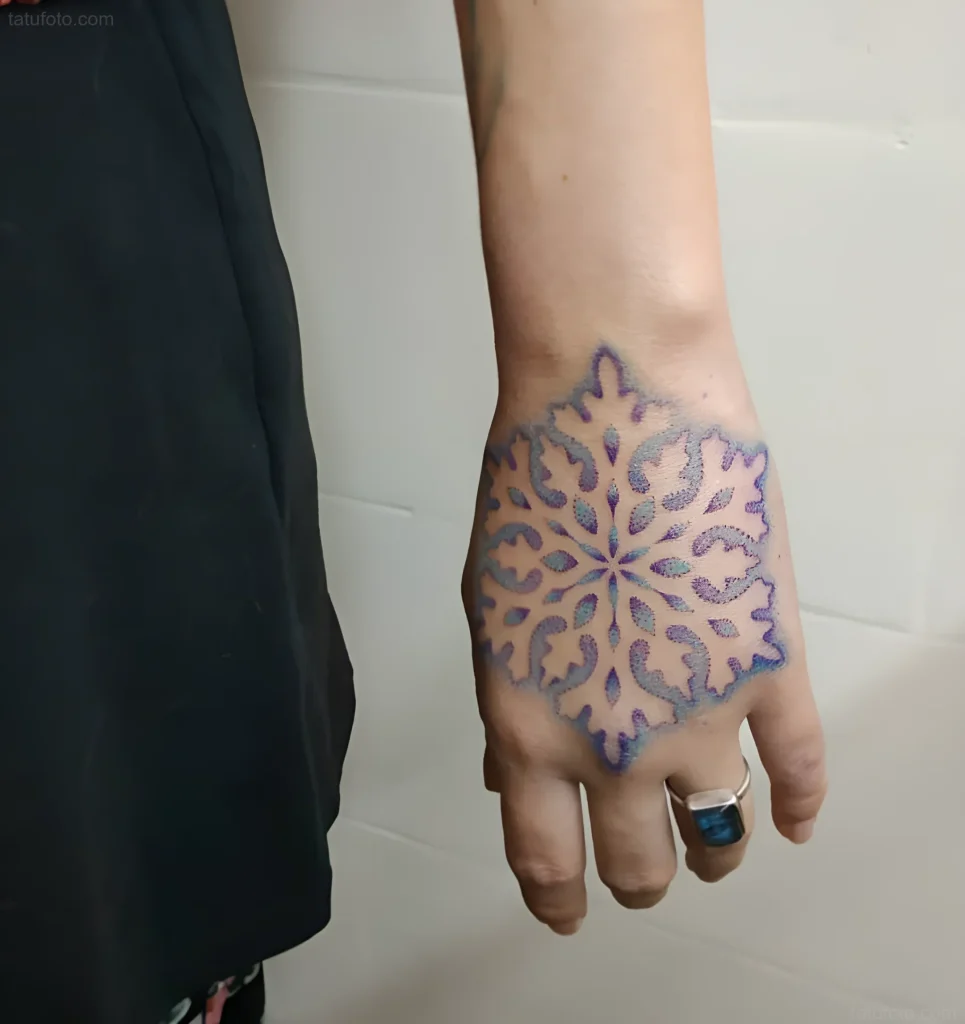
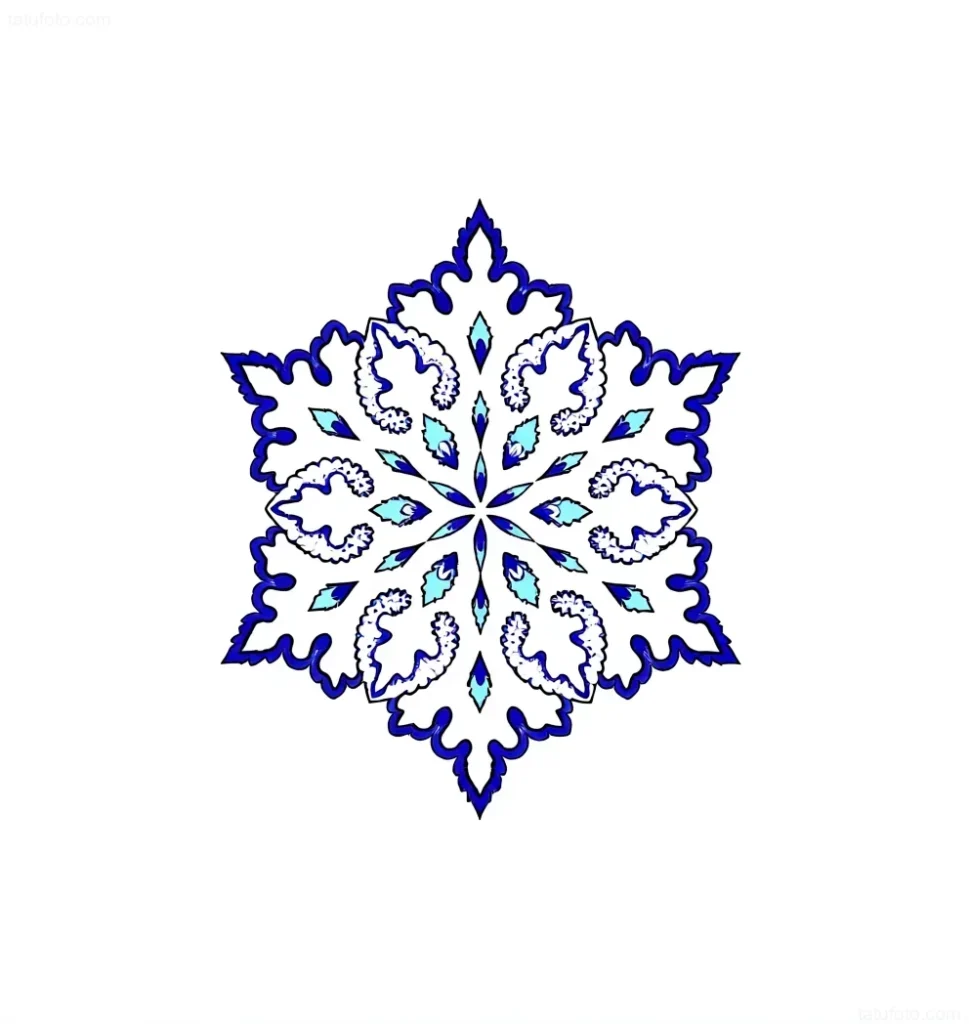
Symbolism: Focus on dynamics, emotions, vibrancy, and the fleeting nature of beauty. Watercolor perfectly conveys the sense of movement and iridescence characteristic of a real kaleidoscope.
- Features: Absence of sharp outlines, soft color transitions, imitation of blurred spots and splashes. This creates the effect that the pattern has just changed, and the colors haven’t “settled” yet.
- Who it suits: Creative, emotional individuals who want to emphasize the changeability of their inner world and their love for the vibrant colors of life.
3. Neo-Traditional
Symbolism: A combination of classic aesthetics with modern volume. A kaleidoscope in this style is often adorned with additional elements (eyes, flowers, precious stones), which enhance its metaphorical meaning.
- Features: Bold, clear outlines, rich but realistic colors, strong contrast. The kaleidoscope pattern here can be depicted as a window or a lens.
- Who it suits: Those seeking a balance between traditional tattooing and complex, layered symbolism.

Where to Get a Kaleidoscope Tattoo: Best Body Locations and Their Meanings
Choosing a location for a kaleidoscope tattoo is no less important than choosing a style, as the placement can enhance or alter the interpretation of the symbol. Given the complexity of the pattern, relatively large and flat areas of skin are usually chosen.
1. Shoulder and Arm (Elbow to Shoulder)
This is one of the most popular locations. The arm symbolizes action, strength, and the manifestation of will. A kaleidoscope on the arm suggests that the person is actively shaping their life, constantly “turning” it in the right direction, or that their life path is full of dynamic events.
2. Back (Shoulder Blade or Upper Back)
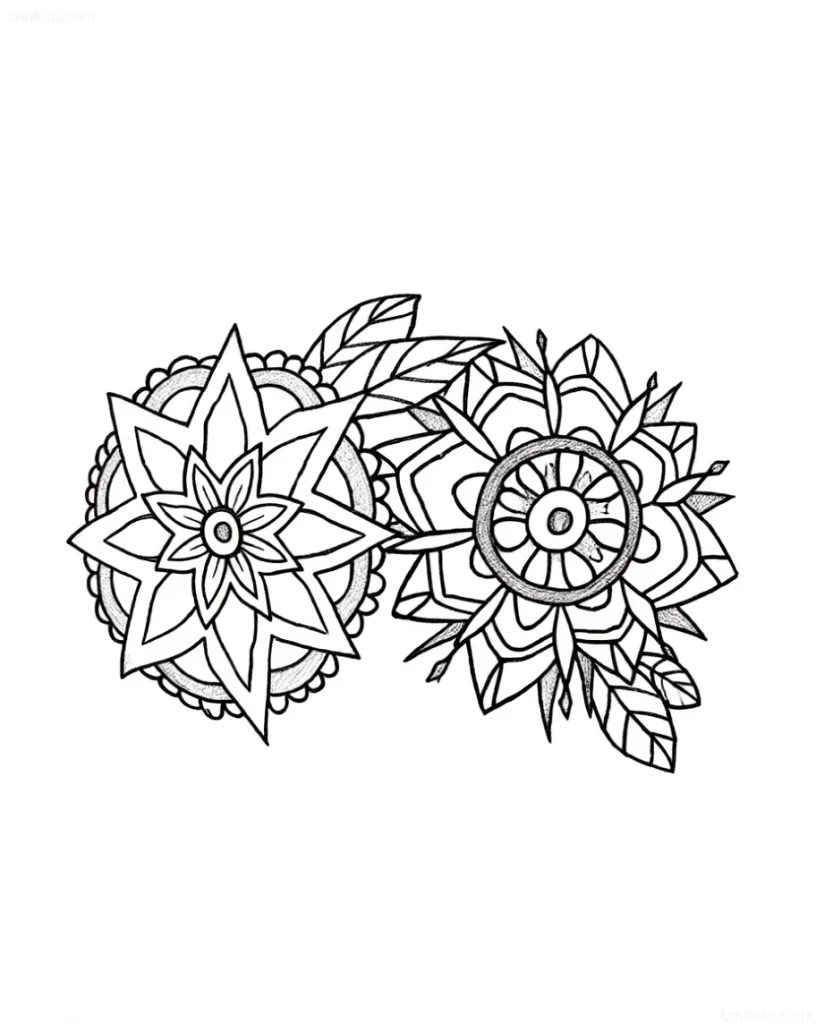
The back is a “canvas” for large-scale, complex works. Here, a kaleidoscope can be designed as a mandala, symbolizing wholeness and protection. The back is often associated with the subconscious and the unseen part of the personality. A tattoo here signifies that a person’s inner world is complex, ordered, and constantly undergoing transformation.
3. Ribs and Side
This is a location for intimate, personal tattoos. A kaleidoscope on the ribs, close to the heart and breath, can symbolize the rhythm of life, the breath of change. Due to the body’s curve, the pattern gains additional movement, emphasizing the symbol’s dynamism.
4. Shin or Thigh
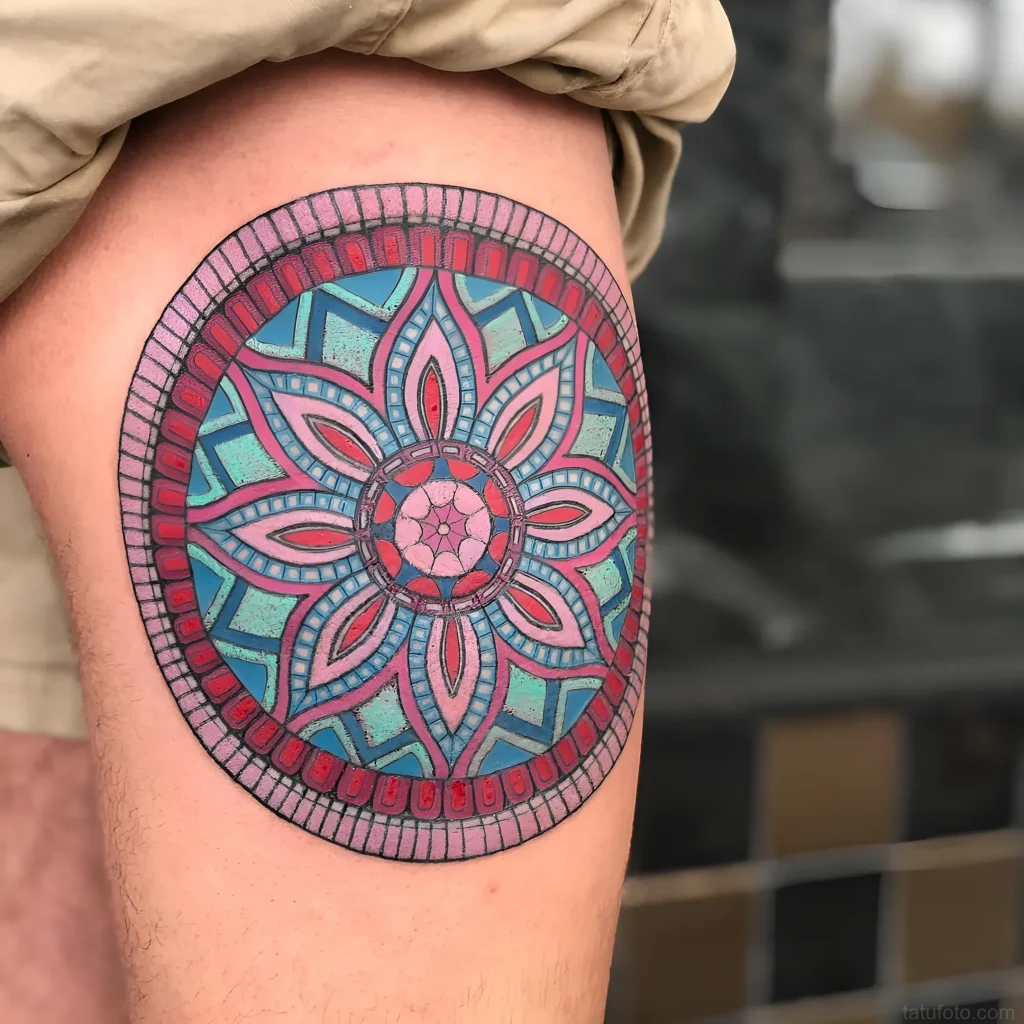
A large kaleidoscope on the leg (especially the thigh) symbolizes forward movement and progress. It reflects the life path, where each step leads to a new turn of the pattern, to new experiences.
Practical Tip: For maximum symmetry and fractal effect, discuss with your artist how the natural curves of your body will interact with the pattern’s geometry. Areas with minimal joints and muscles that significantly change shape with movement are ideal.
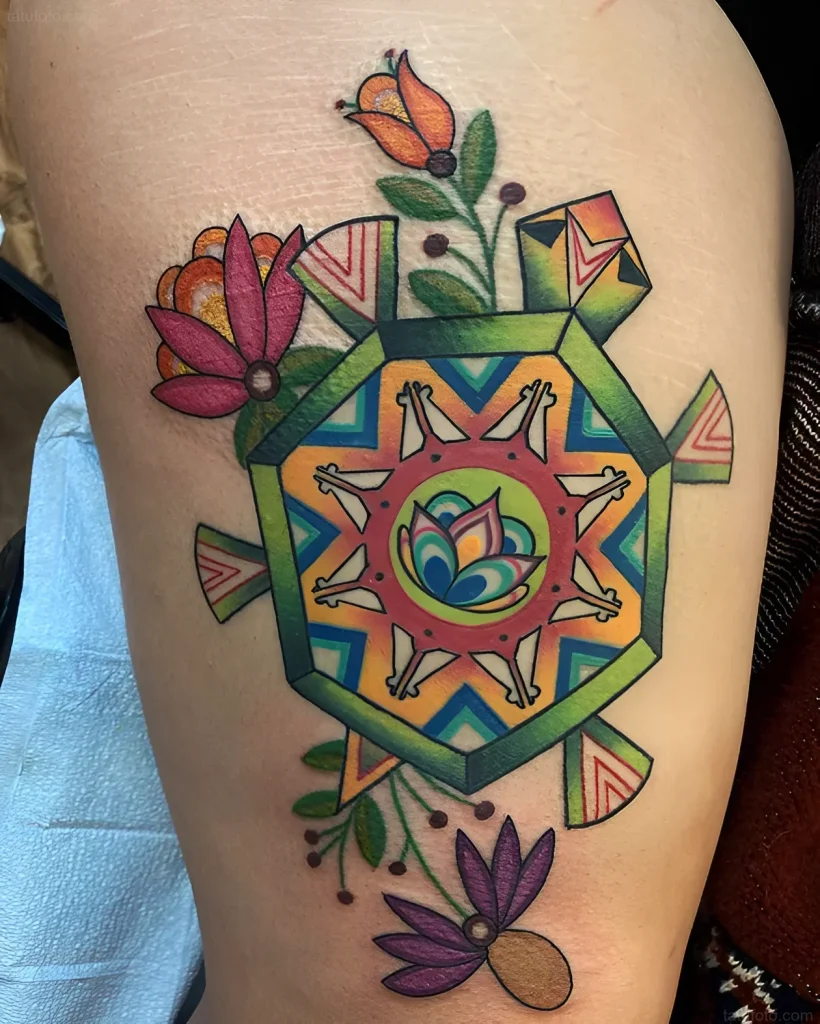
Kaleidoscope Tattoo Care: Maintaining Brightness and Clarity of the Design
Tattoos imitating a kaleidoscope, especially in watercolor styles or using complex color transitions, require special attention during healing and in the long term. Maintaining brightness and clarity is key.
1. Initial Care (First 2 Weeks)
- Gentle Cleansing: Use only mild, unscented soap. A kaleidoscope pattern often consists of many small details, so aggressive rubbing can damage the healing pigment.
- Moisture Control: Excessive moisture can “pull out” color. It’s ideal to use a thin layer of cream recommended by your artist (e.g., containing panthenol) so the skin can breathe but not dry out.
- Sun Protection: Direct sunlight is absolutely forbidden. UV rays are the main enemy of colored pigment.
2. Long-Term Care and Touch-ups
Since a kaleidoscope is a work based on optical illusion and symmetry, any loss of color or “bleeding” of lines (blow-out) will be doubly noticeable.
- SPF 50+ Year-Round: To maintain the brightness of colored pigments (especially reds, yellows, and purples), applying sunscreen to the tattoo should become a daily ritual, even on cloudy days.
- Skin Moisturization: Regular use of lotions helps the skin stay elastic, which preserves the clarity of lines and depth of color.
- Planning Touch-ups: Depending on the pigments used and the style (especially watercolor), touch-ups may be needed every 3–5 years to restore contrast and color saturation. Discuss this with your artist in advance.

Kaleidoscope Tattoo: Frequently Asked Questions (FAQ)
We answer the most common questions our readers have when choosing a kaleidoscope-themed tattoo.
Does the size of the tattoo affect its symbolism?
Yes, it does. The larger the size, the stronger the fractal and immersive effect. A small, minimalist kaleidoscope (e.g., on the wrist) is more likely to symbolize a personal, intimate view of change. A large pattern (on the back or thigh) becomes a powerful, all-encompassing symbol of life philosophy and infinity.
Is a kaleidoscope always a colored tattoo?
No. While color better conveys the idea of “pieces of glass” and the vibrancy of life, a black and white kaleidoscope (often done in dotwork or linework) carries a more strict, philosophical meaning. It focuses on geometry, symmetry, and order, rather than the emotional aspect of change.
How painful is it to get such a tattoo?
Since a kaleidoscope tattoo requires high detail and often covers large areas, sessions can be long. Painfulness depends on the location (ribs, ankles are more sensitive) and the duration of the session. The main difficulty is not the pain, but the need to remain still for a long time so the artist can perfectly maintain the symmetry.
What other elements does a kaleidoscope combine with?
The kaleidoscope combines perfectly with symbols that emphasize its meaning:
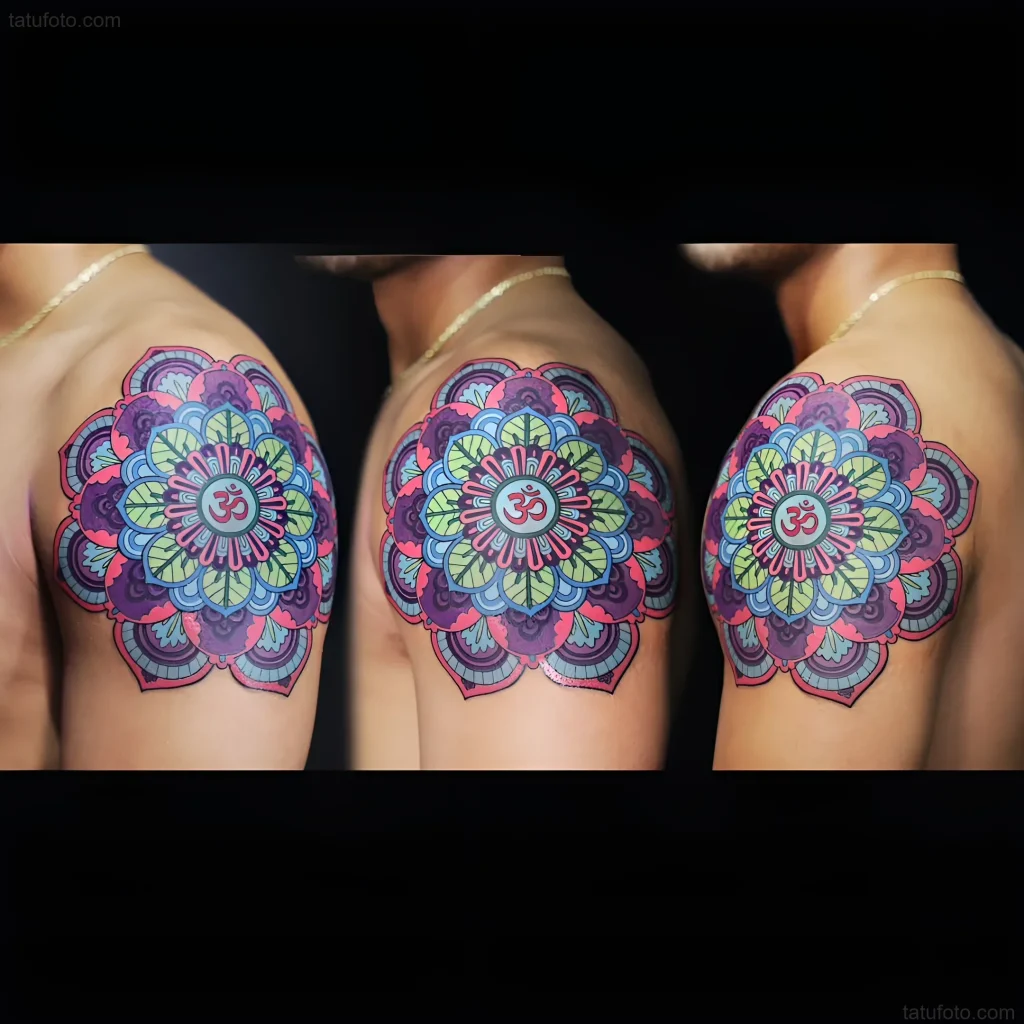
- Mandala: Enhances the meaning of spiritual harmony and wholeness.
- Eye: Emphasizes the theme of perception, insight, and the “correct” view of the world.
- Clock or Gears: Adds emphasis on time, cycles, and the mechanics of change.

Interesting Facts About Kaleidoscope Tattoos and Their Wearers
The phenomenon of kaleidoscope tattoos in modern art has led to several curious observations and trends.
Fact 1: An “Optical Trap” for the Artist
A kaleidoscope tattoo is considered one of the most challenging to execute. The pattern requires perfect symmetry and precision. If the artist makes a mistake in one segment, it will be reflected multiple times throughout the entire design. This demands not only artistic talent but also mathematical precision from the tattoo artist, making such works a testament to a high professional level.
Fact 2: Influence of Digital Art
Many modern kaleidoscopic designs are born not on paper but in digital programs that use fractal generation algorithms. This allows for incredible complexity and precision, which are then transferred to the skin using stencil technology. Thus, a kaleidoscope tattoo is often a perfect example of the synthesis of science, mathematics, and art.
Fact 3: Kaleidoscope as a Symbol of Neurodiversity
In recent years, the kaleidoscope tattoo has gained popularity among people associated with the theme of neurodiversity (e.g., autism, ADHD). For them, the complex yet ordered structure of a kaleidoscope can symbolize the unique, multilayered, and non-linear functioning of the brain, which, despite its apparent “chaos,” operates according to its own perfect laws. It is a symbol of accepting one’s unique inner logic.
Fact 4: Popularity Among Astrologers and Esoterics
The kaleidoscope is often associated with mandalas and astrological charts. In esoteric circles, it is interpreted as a visualization of “cosmic order” or “energy field,” where all elements of the universe are interconnected and constantly rearranging, reflecting a higher design. By choosing such a pattern, a person strives for harmony with this cosmic movement.