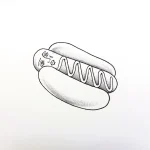
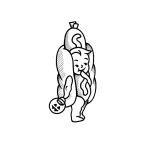
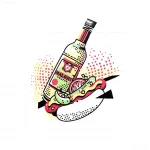
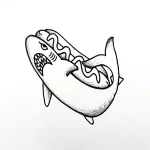
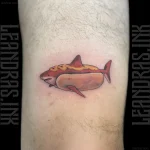
The meaning of a hot dog tattoo is one of the most unexpected yet expressive themes in modern tattoo art. At first glance, an image of street food might seem frivolous or even absurd, but in the context of body art, a hot dog becomes a powerful symbol of self-irony, nostalgia, American pop culture, and a rejection of excessive seriousness. This theme, often rendered in bright, eye-catching styles, allows the wearer to express their love for simple pleasures and freedom from traditional symbolic constraints.
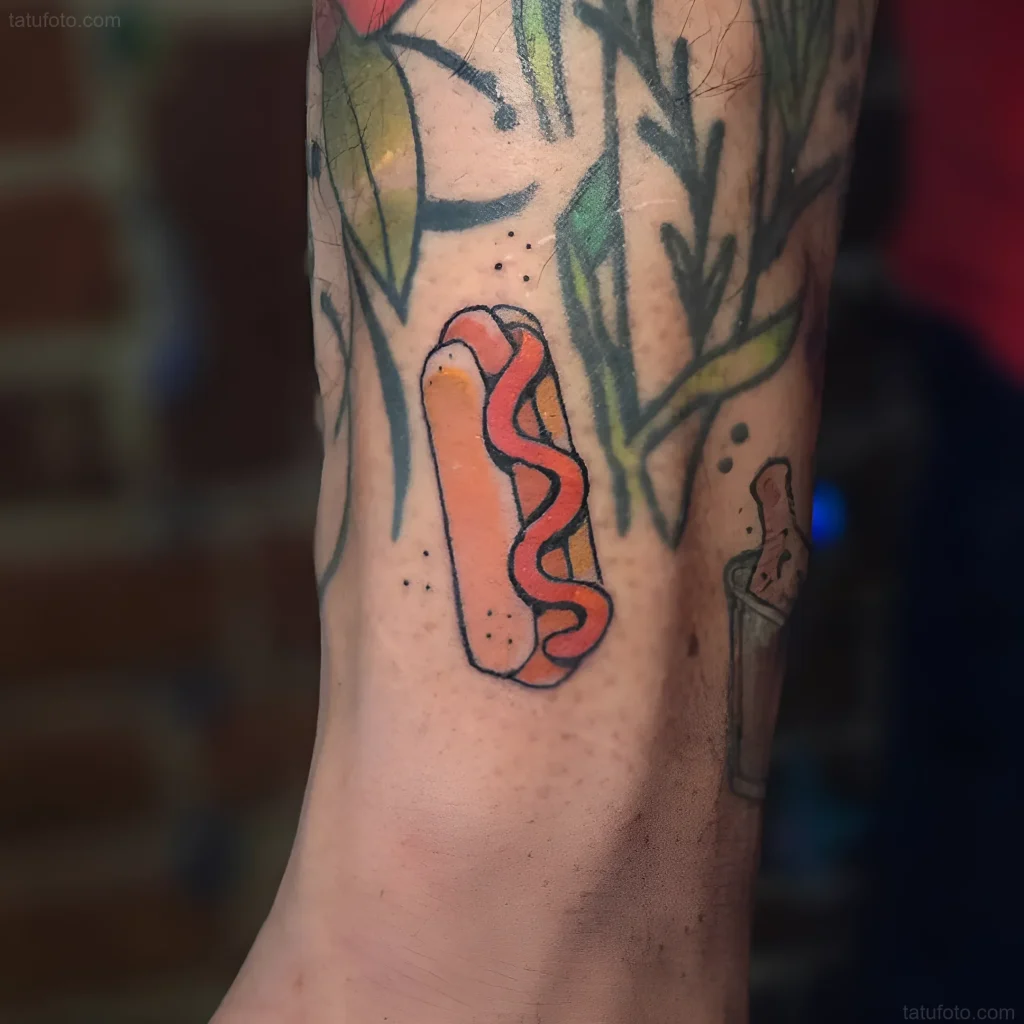

The Meaning of a Hot Dog Tattoo: An Unexpected Symbol and Its Interpretations
In a world where tattoos were traditionally associated with strong, often dark or heroic imagery (lions, skulls, mythological scenes), the emergence of “lowbrow” symbols like the hot dog has become a manifestation of a postmodern approach to body art. A hot dog tattoo is rarely chosen for its deep, universally accepted symbolism; its strength lies in individualism and contrast.
The primary interpretations of this theme are as follows:
- Humor and Self-Irony: This is perhaps the most obvious meaning. Choosing such a theme demonstrates a person’s ability not to take themselves too seriously. It’s a sign that the wearer values fun, the lightness of being, and isn’t afraid to be funny.
- Anti-Elitism: The hot dog is food for the masses, “working-class food,” accessible and unpretentious. A tattoo of a hot dog can symbolize a rejection of snobbery and a commitment to simple, down-to-earth values.
- Pop Culture and Nostalgia: The hot dog is inextricably linked to American culture, baseball, street festivals, and childhood memories. For many, it’s a symbol of carefree times and “comfort food.”
- Hedonism: The image of delicious food, especially one associated with a quick and enjoyable meal, often symbolizes the pursuit of life’s pleasures and enjoying the moment “here and now.”
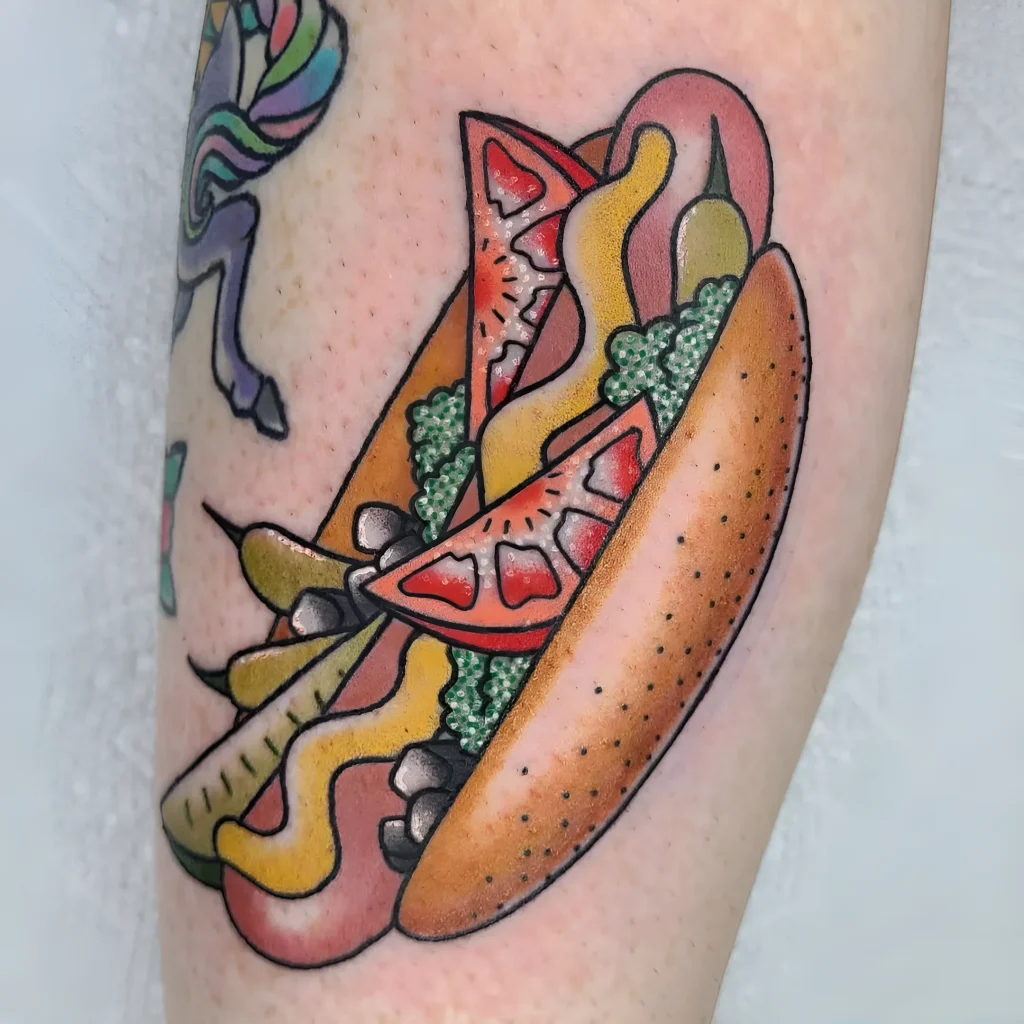

History of the Hot Dog Tattoo: From Street Food to Body Art
While food tattoos have always existed (e.g., images of fruits or drinks as symbols of abundance), the hot dog as a distinct, powerful theme is relatively recent. Its rise coincided with the second half of the 20th century, alongside the development of the American Traditional style.
Initially, in classic tattoo parlors (especially in the 1930s-1950s), flash sheets (pre-designed sketches) were filled with themes related to the sea, the military, and love. However, starting in the 1970s, and especially with the rise of the Lowbrow Art and Kustom Kulture movements, tattoos began to incorporate more surrealism, irony, and elements of mass culture.
Key stages of the hot dog’s inclusion in tattoo culture:
- Flash Art and Old School (1970s): The hot dog became part of “gastronomic flash,” alongside donuts, pizza, and burgers. It was used as a “filler” between larger designs, adding an element of lightness and absurdity.
- Ironic Realism (1990s-2000s): With the development of realism, tattoo artists began creating hyper-realistic food images, emphasizing texture and deliciousness. In this context, the hot dog is often depicted with maximum detail – a shiny sausage, a soft bun, drops of mustard.
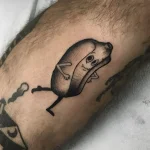
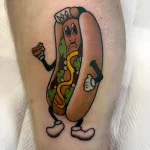
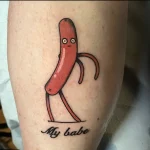
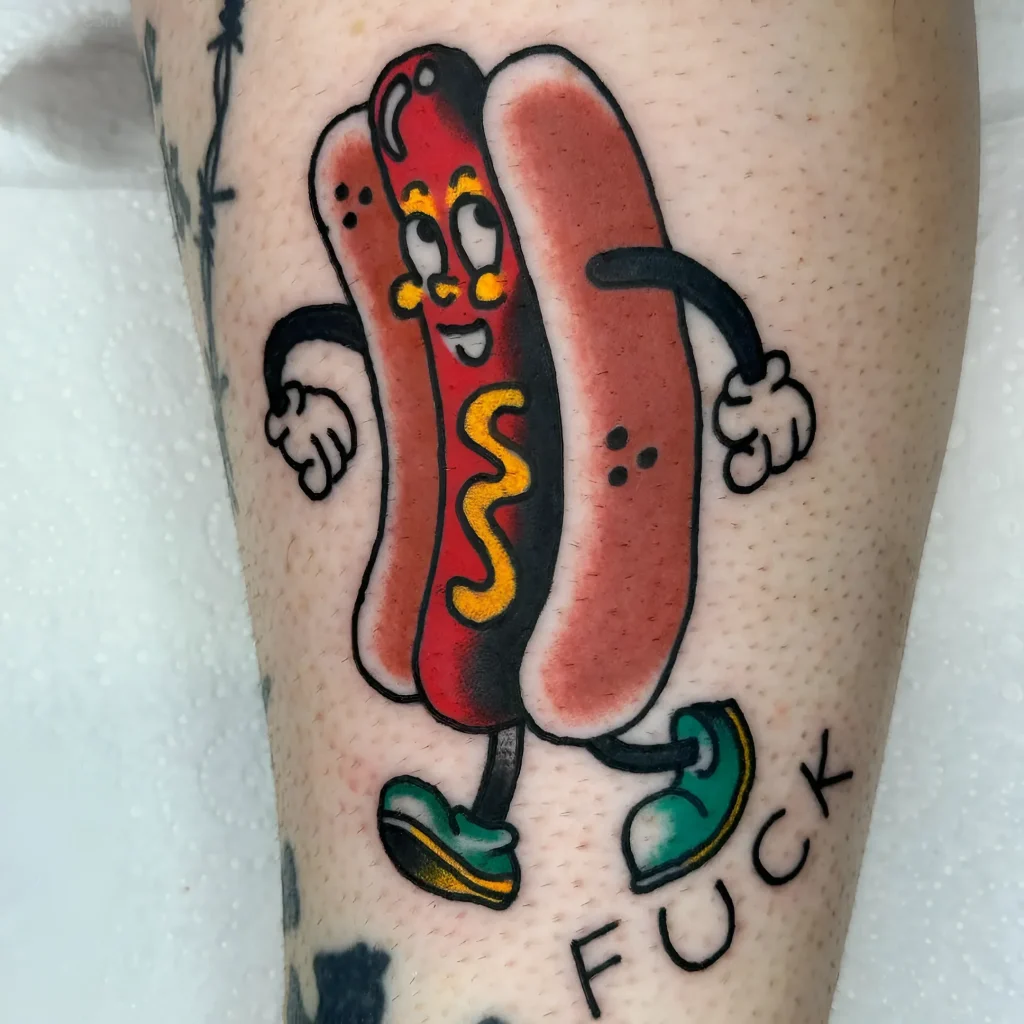
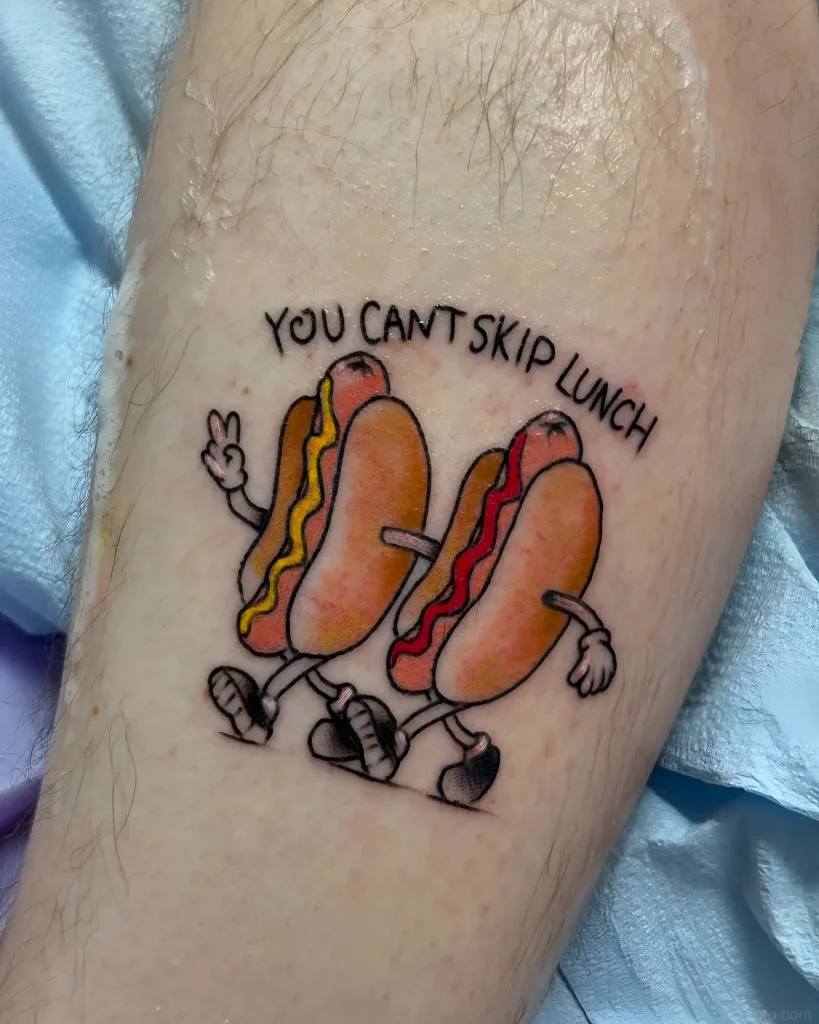
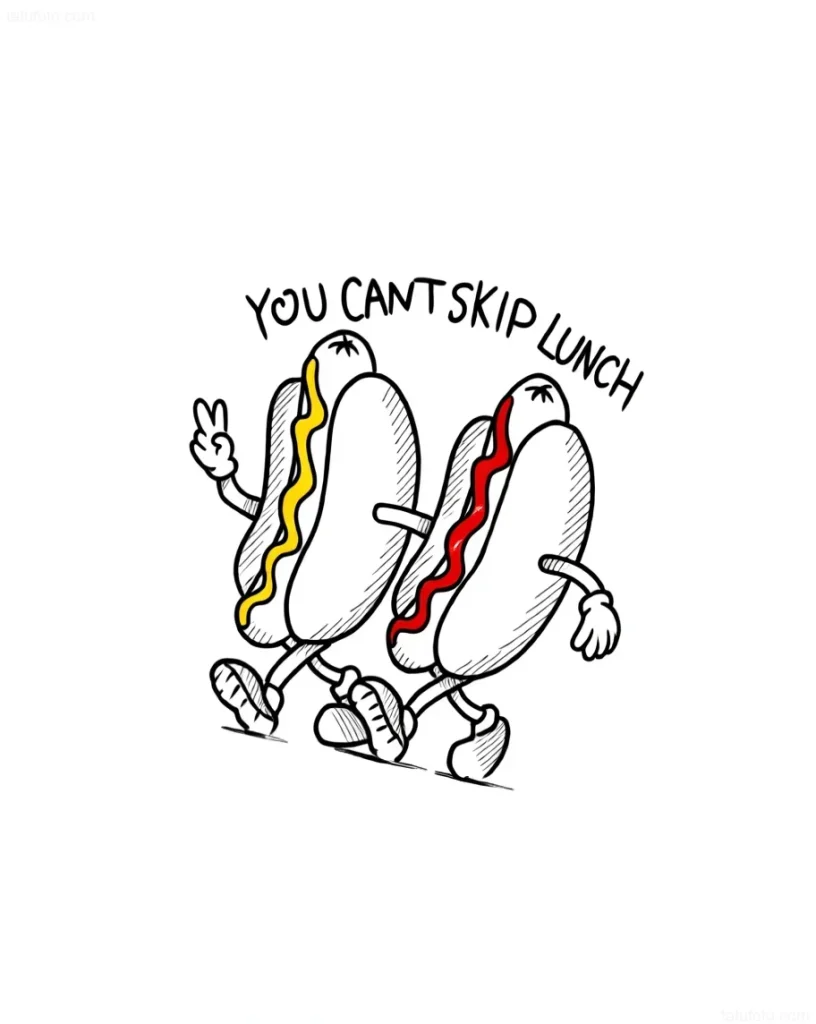
- Surrealism and Animation: Today, the hot dog is often personified – given eyes, arms, and legs, turning it into a running character or even a hero, which enhances the comedic and surreal effect.
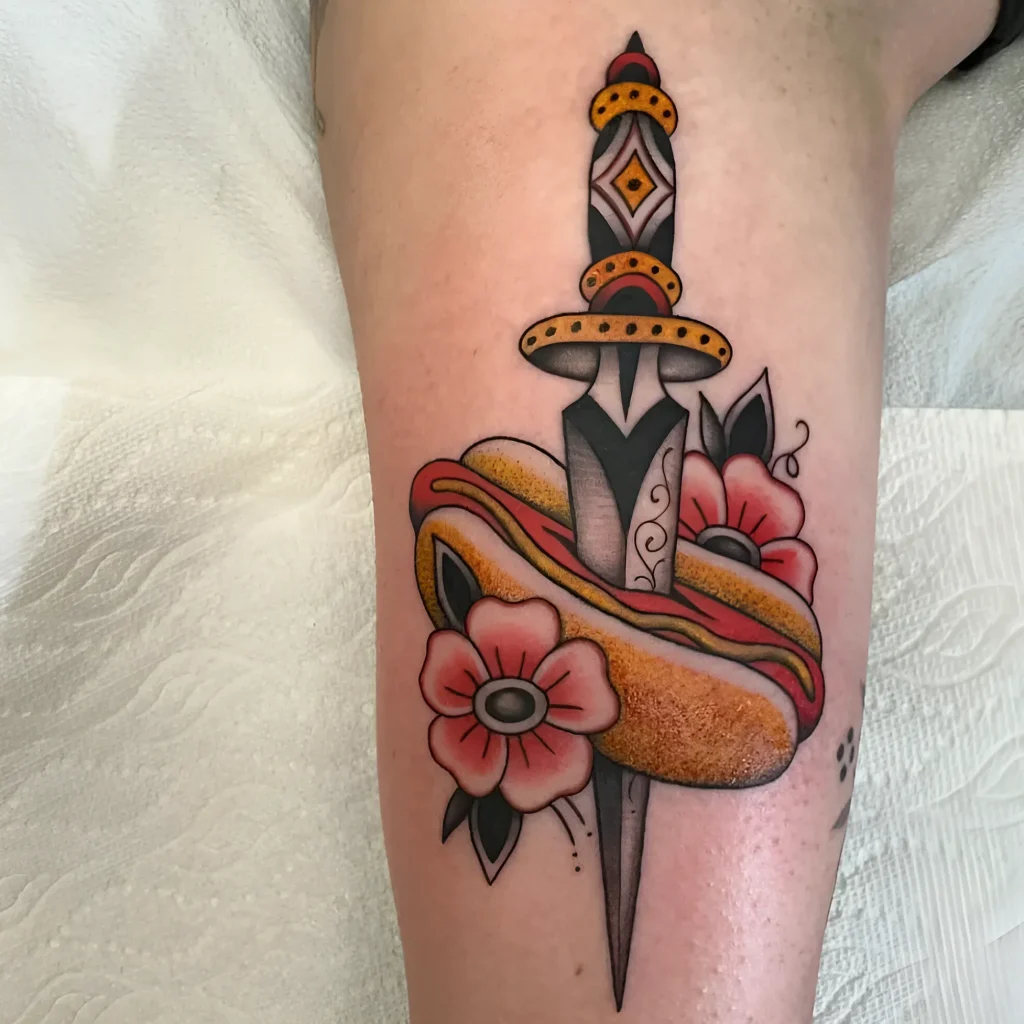

What Does a Hot Dog Tattoo Symbolize: Meanings and Hidden Implications
Beyond its obvious connection to humor, the hot dog carries several deeper, though not universal, symbolic layers. Understanding these layers allows one to appreciate the tattoo not as a joke, but as a conscious choice.
Symbolism of the American Spirit and Freedom
The hot dog, like the hamburger, is an unofficial symbol of the United States. A tattoo can be a tribute to American culture, lifestyle, or, more broadly, a symbol of the freedom that this culture represents – freedom of choice, including in food and art.
The Theme of Transience and Enjoying the Moment
A hot dog is a quick, fleeting pleasure. It’s eaten on the go, requiring no ceremony. In this context, a tattoo can symbolize the Carpe Diem philosophy (seize the day) or a reminder to enjoy life’s simple, transient joys without getting bogged down in long-term plans and serious commitments.
Hidden Subtexts and Irony
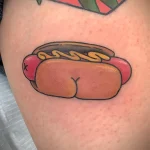
In some circles, especially with the development of the Ignorant Style, the image of a hot dog can carry a slightly absurd or even vulgar subtext, often related to phallic symbolism. However, it’s important to emphasize that this is not the primary or universally accepted meaning; rather, it’s an element of dark humor or provocation that can be incorporated by the artist or client.
Table: Main Meanings of a Hot Dog Tattoo Depending on Context:
| Context and Style | Key Meaning | Emotional Message |
|---|---|---|
| Old School (with banner) | Nostalgia, belonging to pop culture | Joy, simplicity |
| Realism (hyper-detailed) | Hedonism, love of food, enjoyment | Sensuality, appetite |
| Cartoon/Surreal | Self-irony, rebellion against seriousness | Humor, lightheartedness |
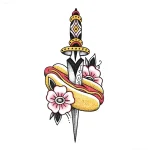
| In combination with other symbols (e.g., weapons) | Absurdity, provocation, dark humor | Skepticism, irony |

Hot Dog Tattoo Styles: From Realism to Cartoon Style
The image of a hot dog is extremely versatile and can be adapted to almost any style. The choice of style is critical, as it determines whether the tattoo will be perceived as a cute joke, a work of art, or an element of aggressive street art.
American Traditional (Old School)
This is perhaps the most common and organic style for a hot dog tattoo. Characteristics:
- Lines: Bold, black outlines.
- Color: Limited palette – bright, saturated reds (ketchup), mustard yellows, browns. No halftones.
- Composition: Often depicted with additional elements such as banners with inscriptions (e.g., “Yummy” or “Eat Me”), stars, or small flames.
- Meaning: A classic, nostalgic symbol.
Neo-Traditional
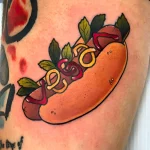
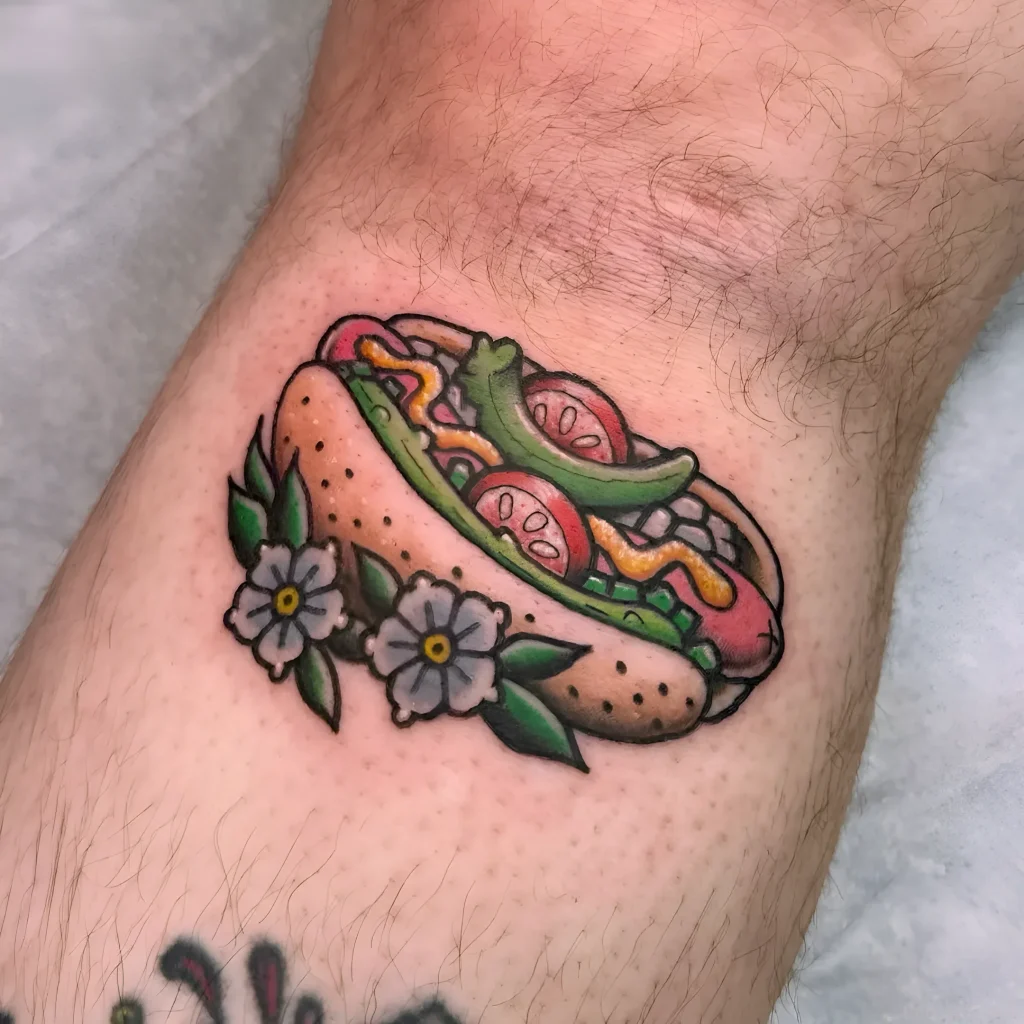
This style gives the hot dog more depth and sophistication. Artists use a wider color palette and complex shading techniques to give the bun texture and the sausage a glossy sheen. A Neo-Traditional hot dog often looks luxurious, surrounded by decorative lettuce leaves, onions, or even art deco elements.
Realism
A realistic hot dog is a challenge to mastery. The goal is to create the most appetizing and recognizable image possible. Such a choice often emphasizes the hedonistic meaning: it’s literally a “tribute” to a favorite food. Realism requires great attention to detail: highlights on sauces, crumbs, the texture of a toasted bun.
Cartoon and Ignorant Style
These styles are used to maximize the humorous effect. The hot dog can be depicted in motion, with exaggerated emotions, often using deliberately crude lines (Ignorant Style). In this context, it can be part of a larger, absurd scene (e.g., a hot dog running from ketchup or fighting a burger).
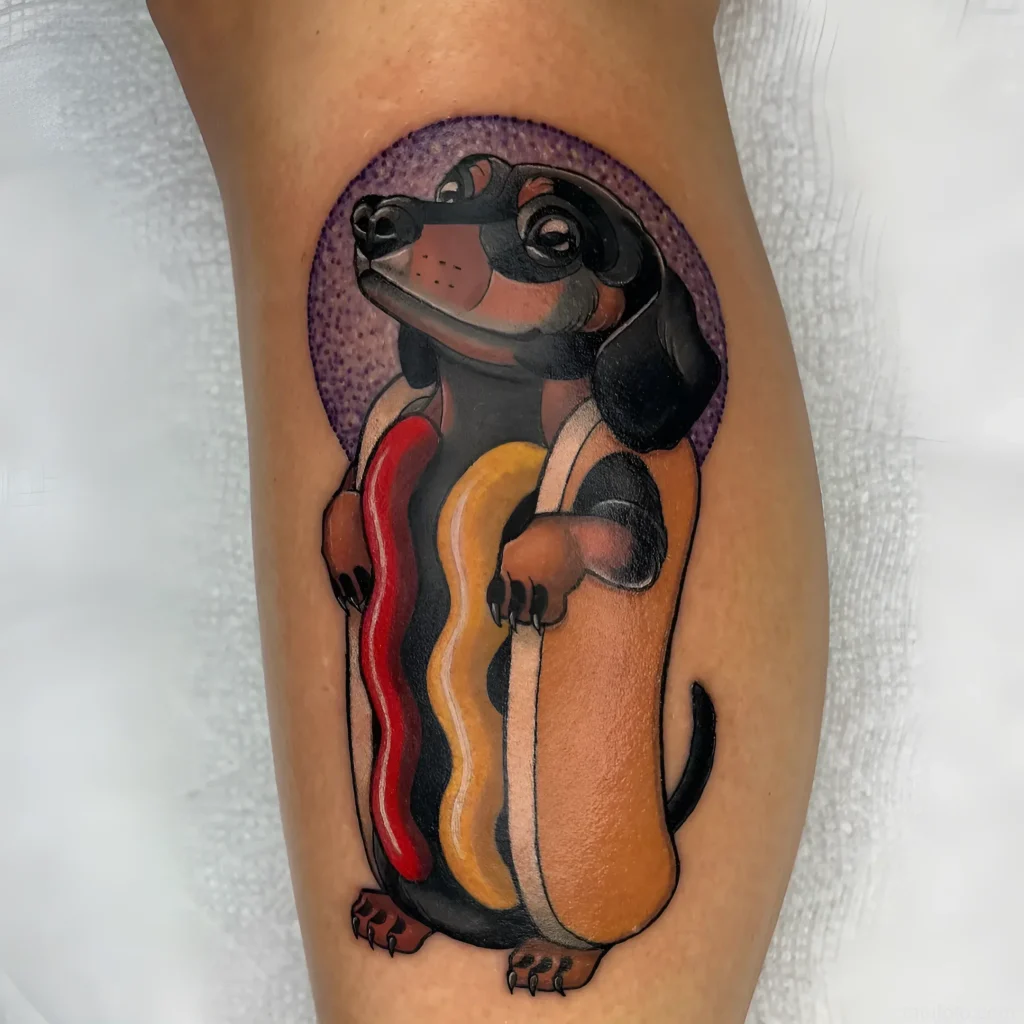

Where to Get a Hot Dog Tattoo: Popular Locations and Recommendations
The choice of location for a hot dog tattoo depends on its size, style, and desired visibility. Since it’s often a humorous theme, it’s perfect for places that can be easily shown in informal settings.
Placement Recommendations:
- Forearm and Bicep: Ideal for classic old school or neo-traditional designs. The size can be medium, allowing for detail in sauces and additional elements. This location offers high visibility.
- Ankle or Shin: Often used for small, cute, or cartoonish versions. A tattoo on the ankle, especially if it’s a running hot dog, adds lightness and playfulness to the image.
- Inner Wrist: Suitable for minimalist or fine-line work. It can serve as a reminder of simple pleasures.
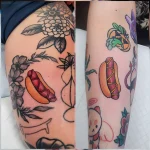
- Filler on a Sleeve: A hot dog works perfectly as a filler element between larger designs on a “gastronomic” or pop culture sleeve, especially in the Traditional style.
- Upper Thigh: Suitable for large, detailed realistic or surreal pieces that the wearer prefers to keep more personal.
Expert Tip: If you’ve chosen a bright, colorful old school hot dog, avoid areas prone to heavy friction or constant sun exposure (e.g., the inner hand) to preserve the vibrancy of the red and yellow pigments.
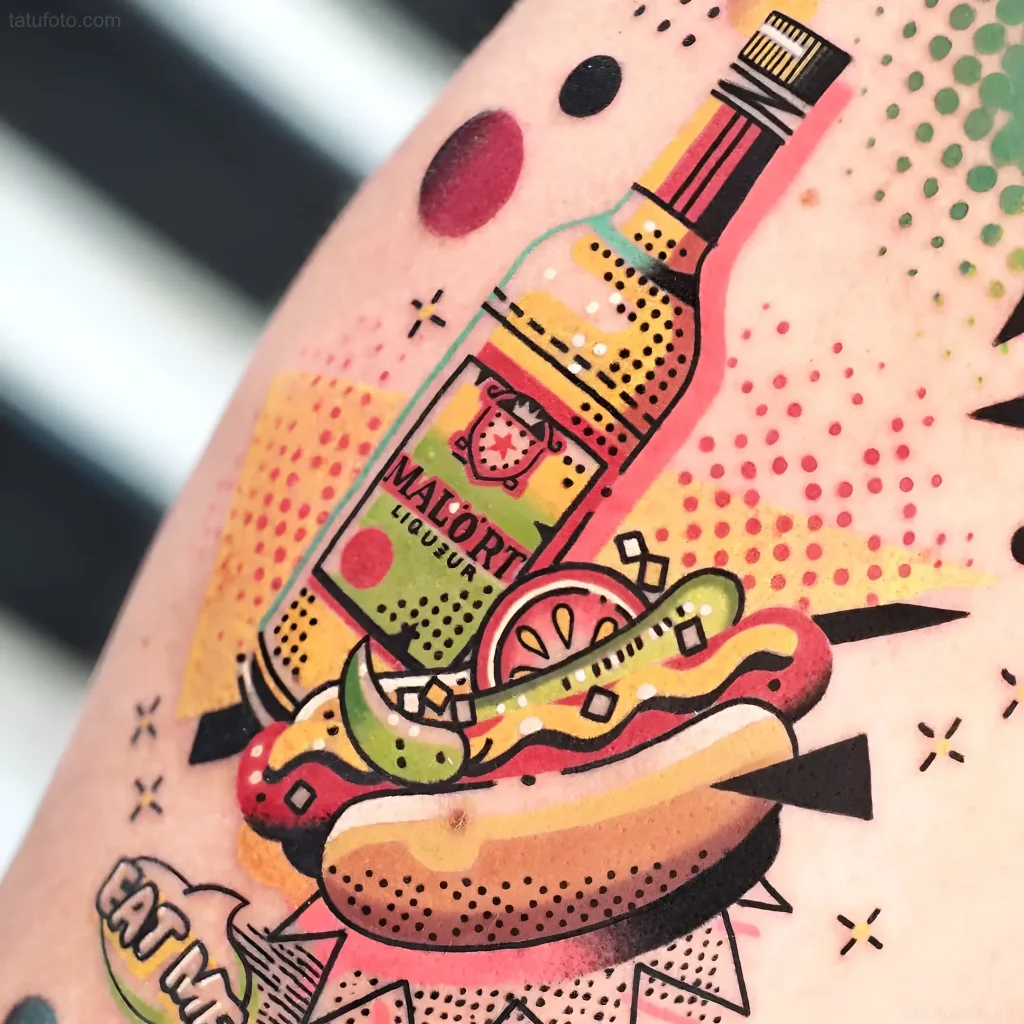

Hot Dog Tattoo Care: Tips for Maintaining Vibrancy and Longevity
Tattoos depicting food, especially those done in bright, saturated colors (Old School, Neo-Traditional), require careful care to maintain their “appetizing” shades – mustard yellow, tomato red, and rich brown.
Initial Care (First 2 Weeks)
- Protection: Follow your artist’s recommendations for using protective films (second skin) or bandages in the first few days.
- Cleansing: Use a mild, unscented antibacterial soap. Rinse the tattoo with cool water 2-3 times a day.
- Moisturizing: Apply a thin layer of specialized tattoo cream or ointment. Avoid overly greasy or petroleum-based products that can “suffocate” the skin.
- Avoid: Swimming in pools, saunas, direct sunlight, and strenuous physical activity that causes excessive sweating.
Long-Term Care (After Full Healing)
Maintaining color vibrancy is crucial for a theme based on visual appeal of food. Fading yellow and red pigments will make the hot dog look pale and uninspired.
- SPF Protection: This is the most important point. Always use sunscreen with high SPF (at least 30) on your tattoo if it’s on an exposed area of your body. UV radiation is the main enemy of colored pigments.
- Skin Moisturization: Regular use of moisturizing lotions helps the skin stay elastic, which visually makes the pigments appear brighter and deeper.
- Touch-ups: After a few years, if the colors (especially mustard and red) have faded, consider a touch-up. A well-executed colored old school design may require “refreshing” every 5-7 years to restore its original saturation.
Hot Dog Tattoo: Frequently Asked Questions (FAQ)
1. Is a hot dog tattoo considered “serious” art?
In modern tattoo art, the line between “high” and “low” art is practically blurred. A hot dog, rendered by a high-class artist in a realistic or neo-traditional style, is undoubtedly a work of art. Its “frivolous” theme is a conscious choice that, in itself, is a form of artistic statement against traditional seriousness.
2. Can a hot dog tattoo have a negative meaning?
Generally, no. The hot dog does not have historically or culturally established negative connotations, unlike some animals or symbols. Any negative or provocative meaning will entirely depend on the context in which it is depicted (e.g., in combination with blood, weapons, or obscene symbols) and on the personal meaning the wearer imbues it with.
3. What elements are most often added to a hot dog tattoo?
The most popular are:
- Weeping or smiling sauces (ketchup, mustard).
- Banners with words related to food or life philosophy (“Fast Life”, “Yum”, “Relish”).
- Elements of the American flag or baseball.
- Fire or flames, symbolizing spiciness or grilling.
4. Is a hot dog tattoo suitable for a first tattoo?
Yes, especially if you choose a small size. Such themes are usually positive, do not carry a heavy emotional or social burden, and are a great way to express individuality without the risk of regretting choosing too serious a symbol.

Interesting Facts About Hot Dog Tattoos
Fact 1: Popularity in “Foodie” Sleeves
Hot dog tattoos have become an integral part of the “food sleeves” subgenre, which is gaining popularity among chefs, food bloggers, and gourmands alike. In such compositions, the hot dog is often found alongside tacos, pizza, sushi, or cocktails, symbolizing a passion for culinary arts and pleasures.
Fact 2: The Hot Dog as a “Hidden Mickey” in Tattoo Culture
Within the professional tattoo artist community, hot dogs, donuts, and other simple food items are often used as a kind of “hidden Mickey” (a nod to Disney) – small, quick, fun tattoos that artists give each other or regular clients simply for enjoyment and to practice their technique. It’s a form of tattoo slang signifying lightness and inner humor.
Fact 3: The Influence of “New School” Style on the Theme
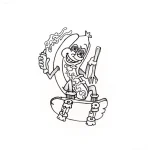
It was the New School style (characterized by exaggerated proportions, bright colors, and an animated effect) that gave the hot dog a second life. Artists began depicting it not just as food, but as a living, often aggressive or comical character that could fly, run, or even ride skateboards, transforming a simple theme into a dynamic scene.
Fact 4: A Symbol of Festivals
A hot dog tattoo is often chosen by people who appreciate festival culture, travel, and spontaneity. It symbolizes street life, music, and food, which are integral to any major summer festival. It’s a kind of visual “ticket” to a world of carefree fun.