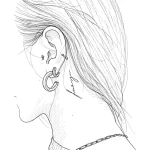
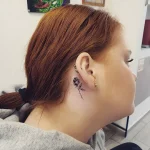
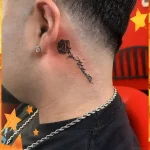
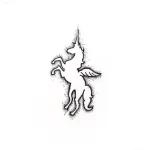
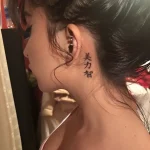
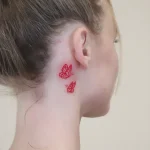
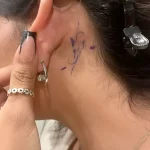
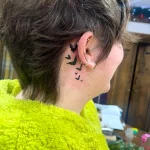
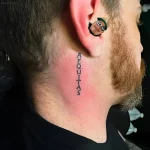
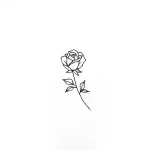
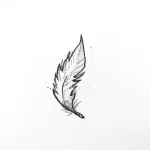
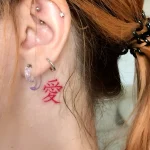
Dear colleagues, welcome to tatufoto.com. The area behind the ear is one of the most sought-after, yet at the same time, one of the most treacherous spots for applying a tattoo, especially for a beginner artist. This space demands precision, a deep understanding of anatomy, and specific technical skills. If you aspire to master the art of micro-tattooing and work with delicate areas, our comprehensive guide to the nuances of tattoos behind the ear will be your indispensable expert resource.
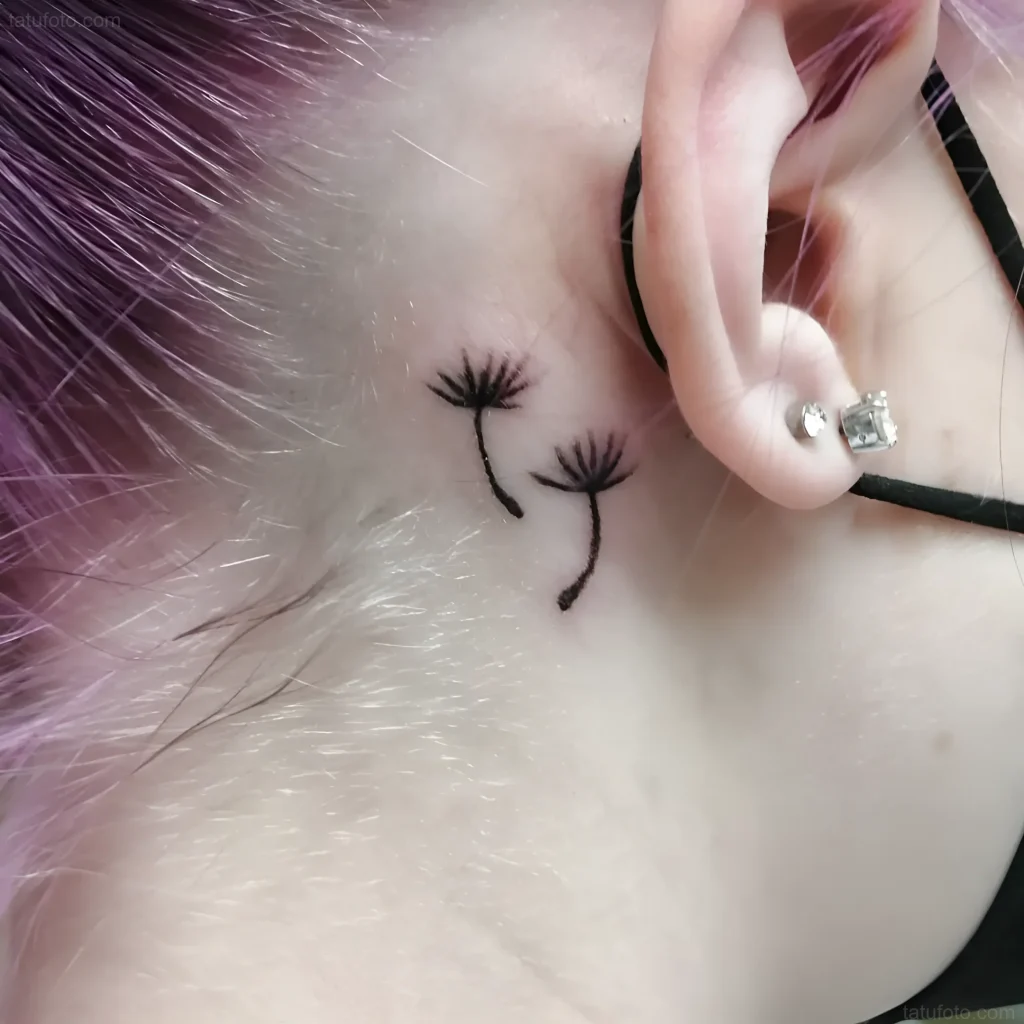
Tattoo Behind the Ear: A Complete Guide for Beginner Tattoo Artists – Introduction and Features
Tattoos behind the ear, despite their modest size, are incredibly popular. They combine intimacy (easily hidden by hair) and expressiveness (clearly visible when hair is up). However, for an artist, this area presents a unique set of challenges:
- Limited Space: The area behind the ear rarely exceeds 5–7 centimeters in diameter, requiring the use of exclusively Fine Line, minimalism, or dotwork styles.
- Proximity to Bone Structures: The mastoid process (part of the temporal bone) is directly under the skin, significantly affecting vibration, client pain, and the need for needle depth control.
- Skin Sensitivity: The skin in this area is thin, mobile, and close to the hairline, making stretching and stable outline application more difficult.
- Acoustic Discomfort: The sound of the tattoo machine, amplified by the proximity to the ear, can cause significant stress for the client.
Understanding these features is critically important. Successful work in this area is not only about technical skill but also about creating a comfortable atmosphere for the client.
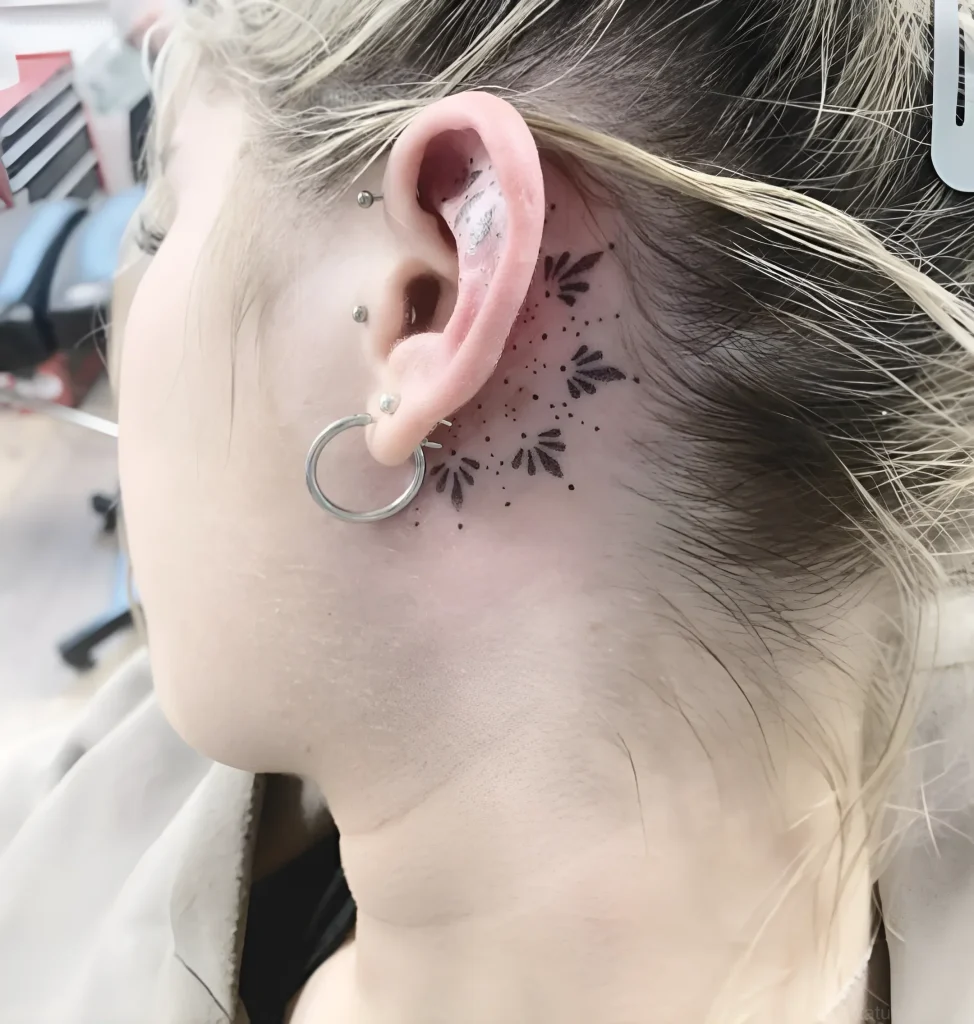
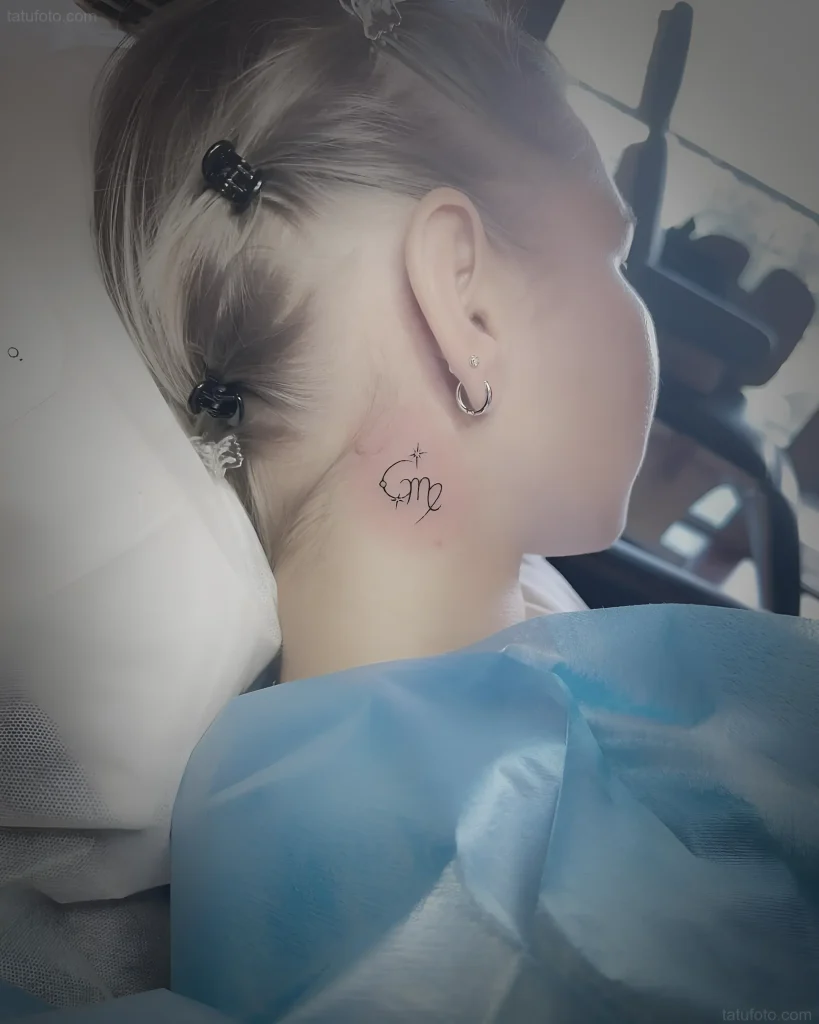
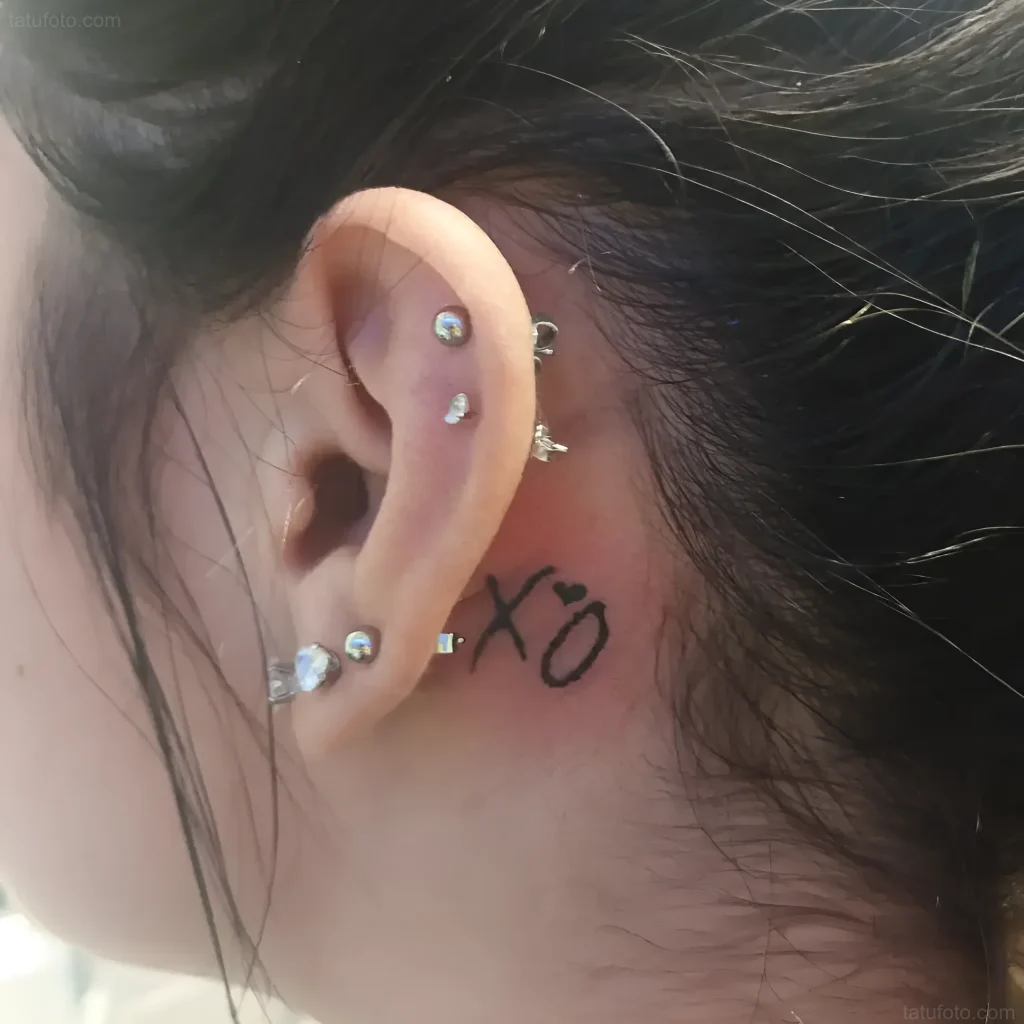
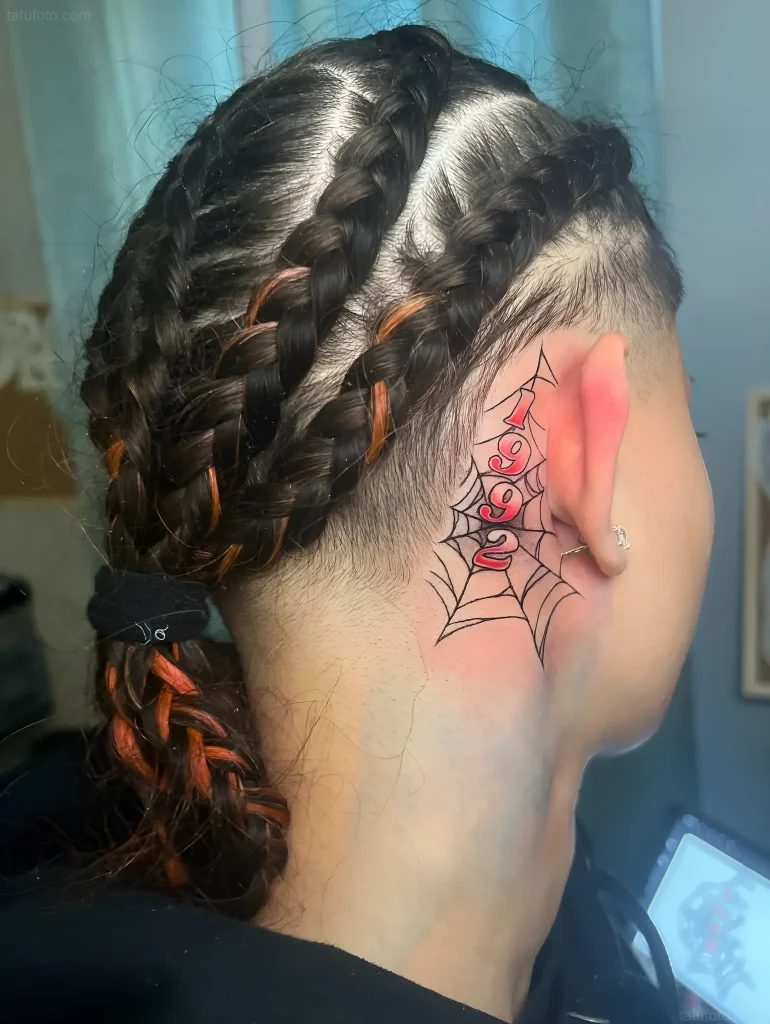
History of Tattoos Behind the Ear: From Ancient Traditions to Modern Popularity
While the trend for minimalist tattoos behind the ear is relatively new, the tradition of marking this area dates back to ancient times. In cultural contexts, the head and neck area were often used for tattoos carrying high social or ritual status.
- Traditions of Concealment and Revelation: In some cultures, tattoos on the head or neck that could be quickly hidden (e.g., by long hair or headwear) symbolized secret knowledge, belonging to a hidden society, or personal vows. This reflects the modern function of a tattoo behind the ear – it’s a personal message displayed by choice.
- Identification and Protection: In ancient Egyptian and Polynesian traditions, tattoos located close to the head sometimes served as amulets to protect the wearer from evil spirits, or as markers denoting the status of a warrior or healer.
- Modern Intimacy: In the 21st century, a tattoo behind the ear has become a symbol of individualism and restraint. Choosing such a location often indicates that the meaning of the tattoo is more important than its public display. It’s an ideal spot for symbols related to music, memory, or personal philosophy.
As an artist, you should know: when a client chooses this location, they are not just looking for a design, but for something deeply personal and often related to sound, thoughts, or memory. This enhances the symbolic value of your work.
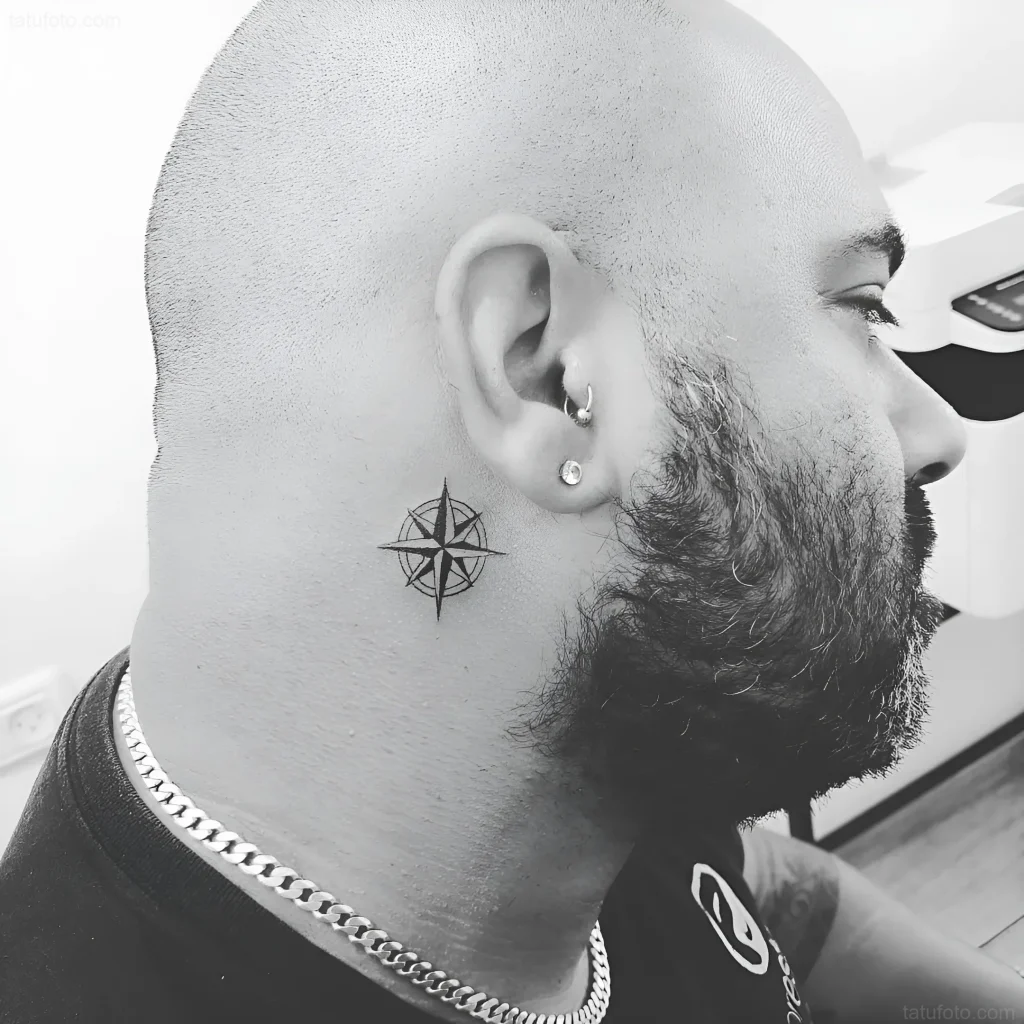
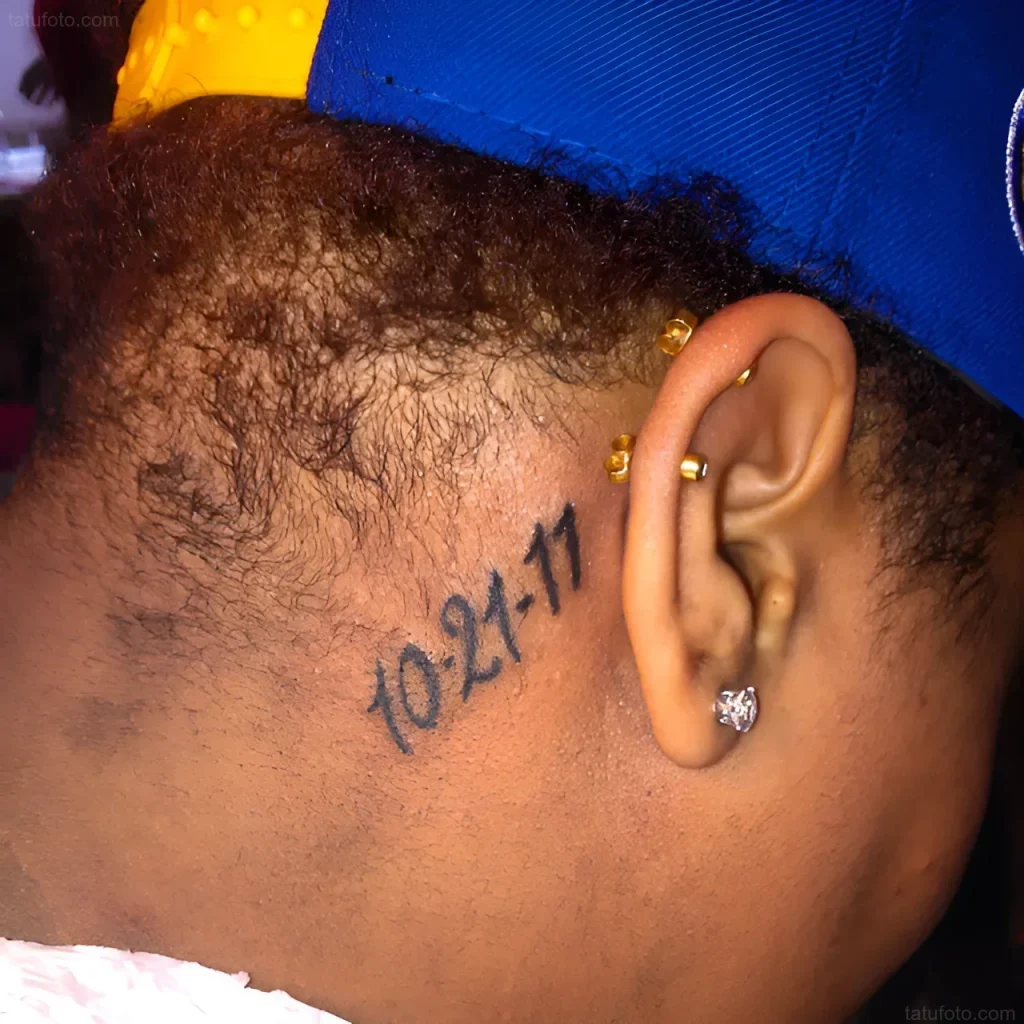
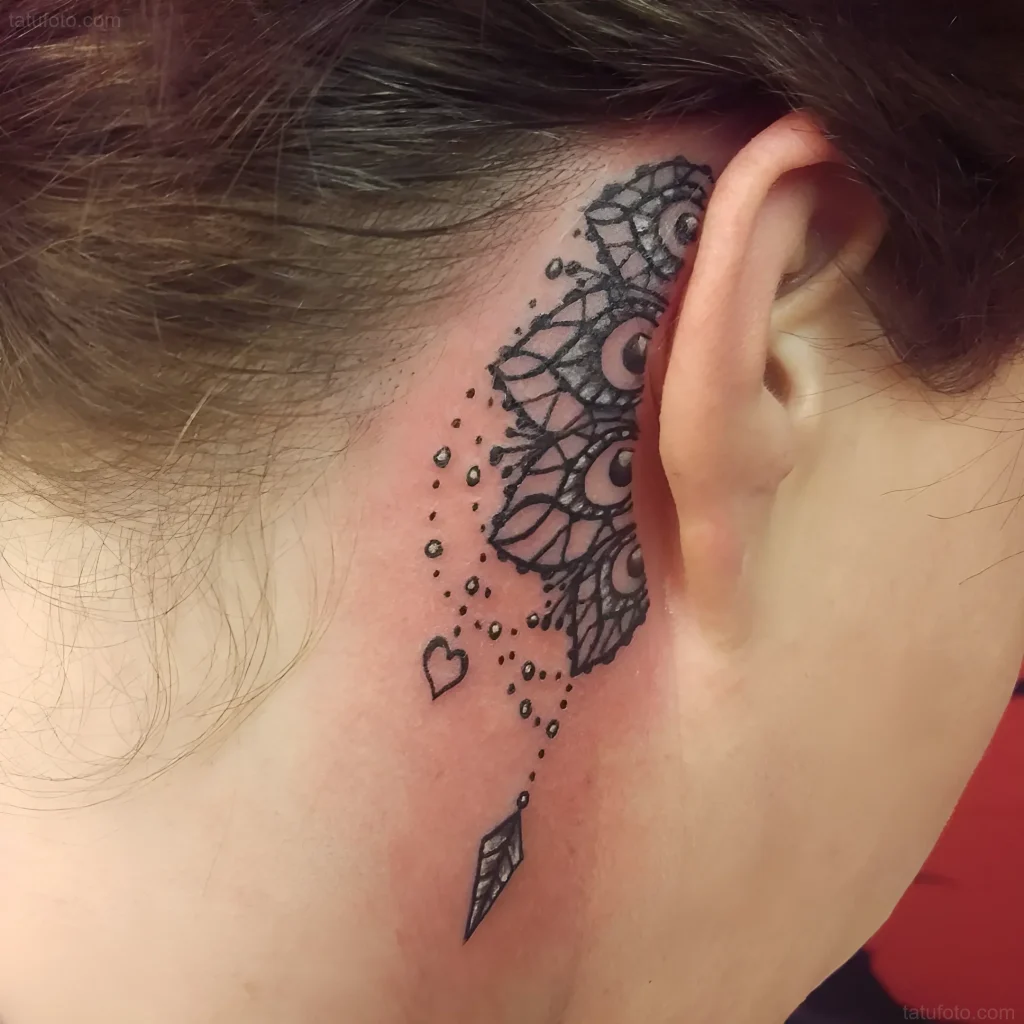
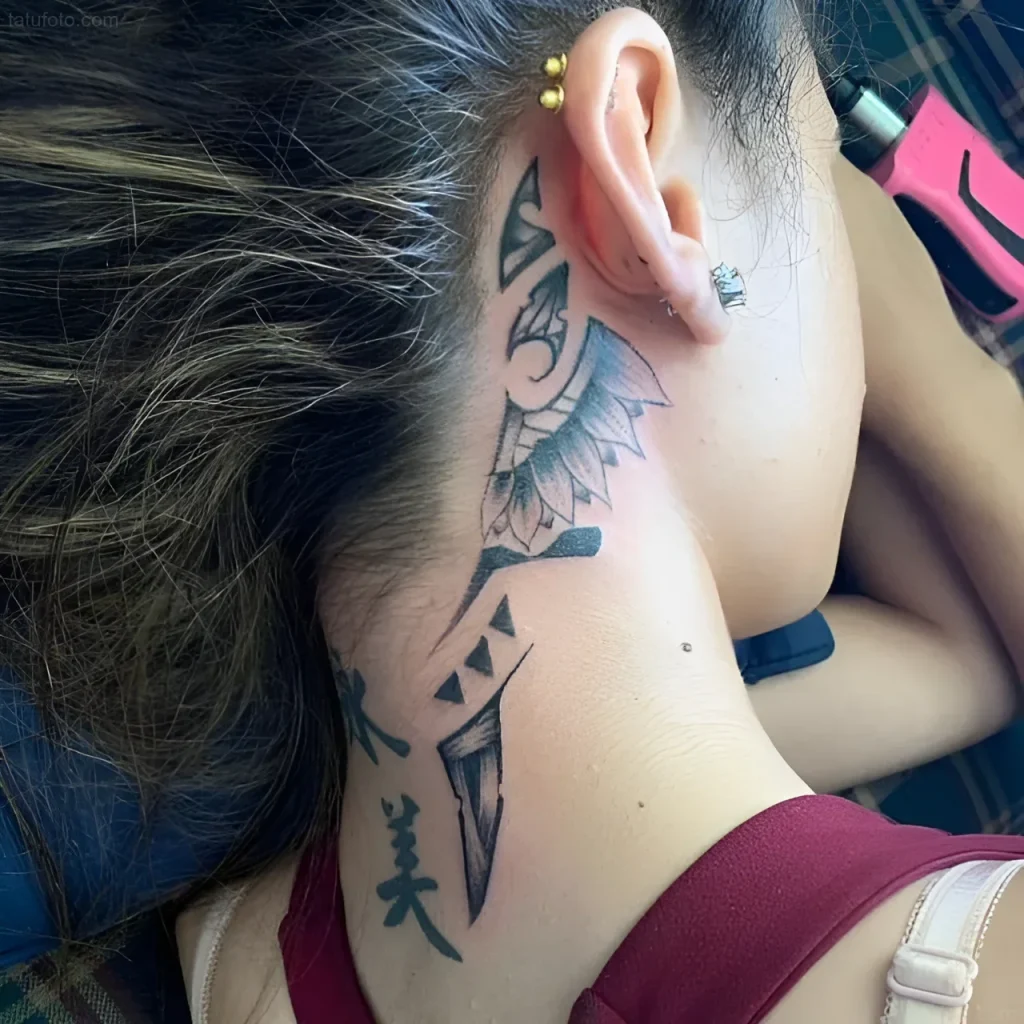
Meanings of Tattoos Behind the Ear: Symbolism and Interpretations of Popular Designs
Due to their limited size, designs behind the ear are usually concise symbols. Your task is to help the client choose an image that is maximally readable and meaningful on such a small scale. Let’s look at the most popular motifs and their interpretations.
Symbols Related to Sound and Music
Since the area is close to the organ of hearing, musical and sound symbols are particularly relevant here:
- Musical Staff or Individual Notes: Symbolize a love for music, harmony, creativity, or remembrance of a specific melody.
- Sound Wave (Equalizer): Represents energy, the rhythm of life, vibration, or the ability to “tune in” to the world.
- Tuning Fork: A striving for precision, inner tuning, balance, and finding one’s “tone.”
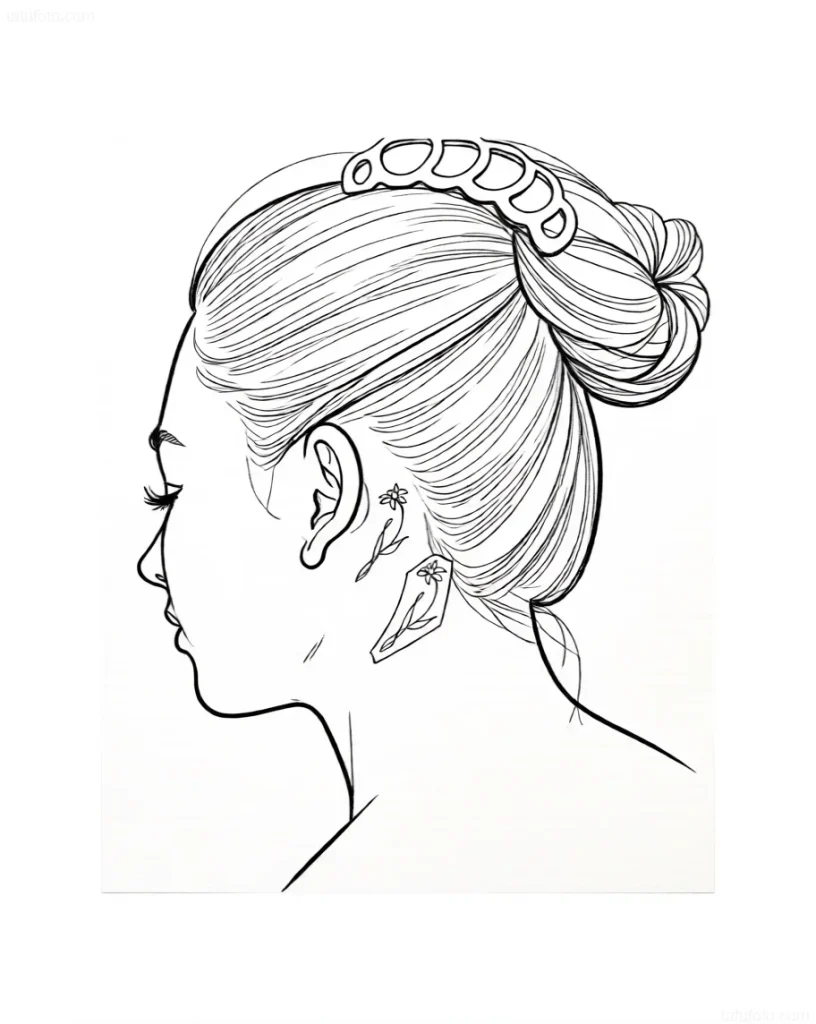
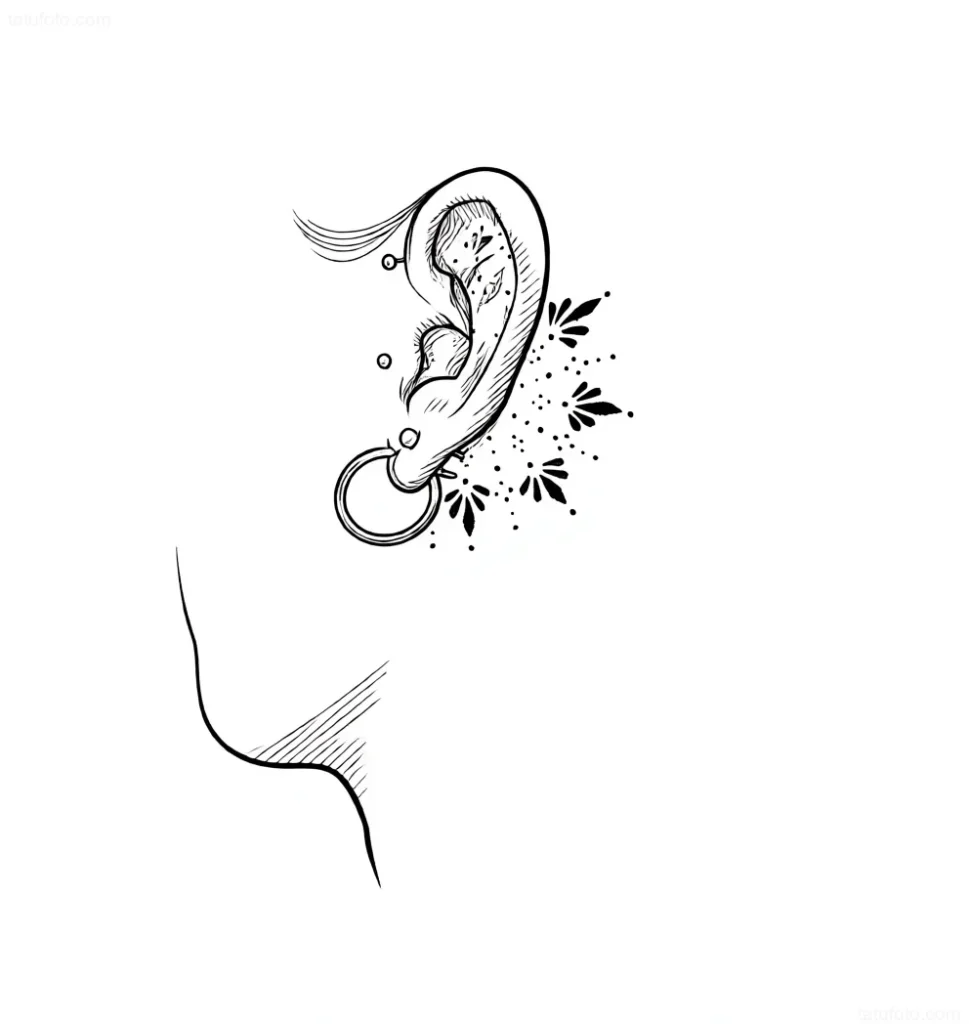

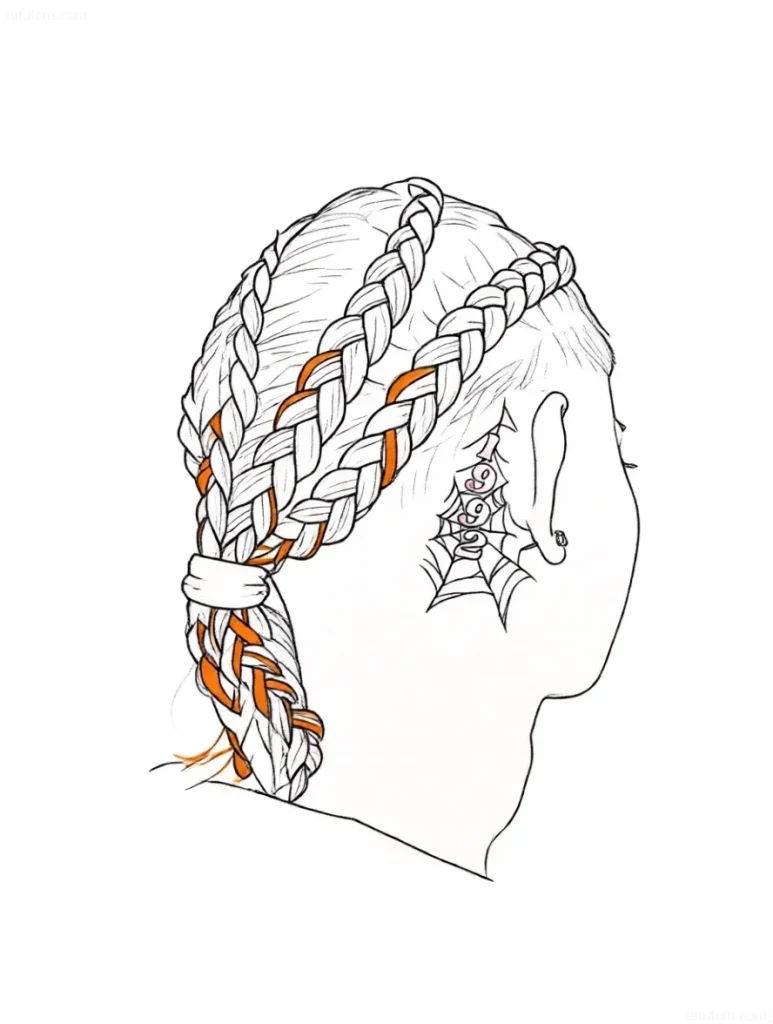

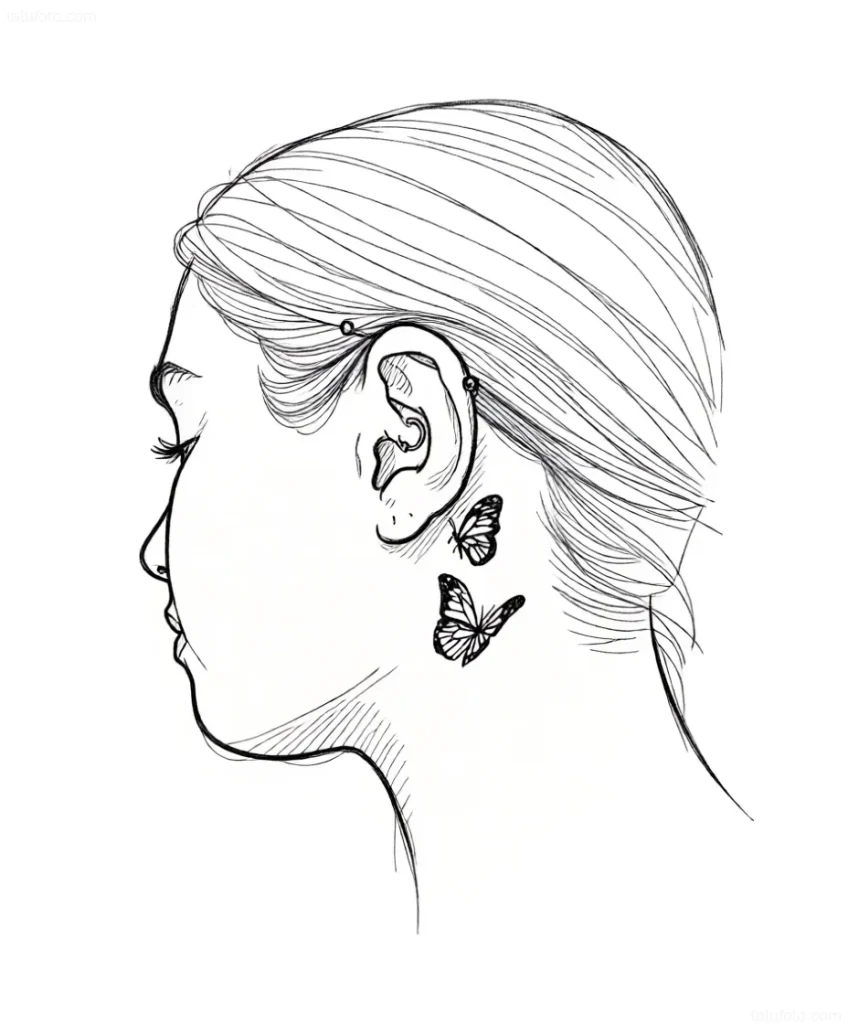

Floral and Nature Motifs
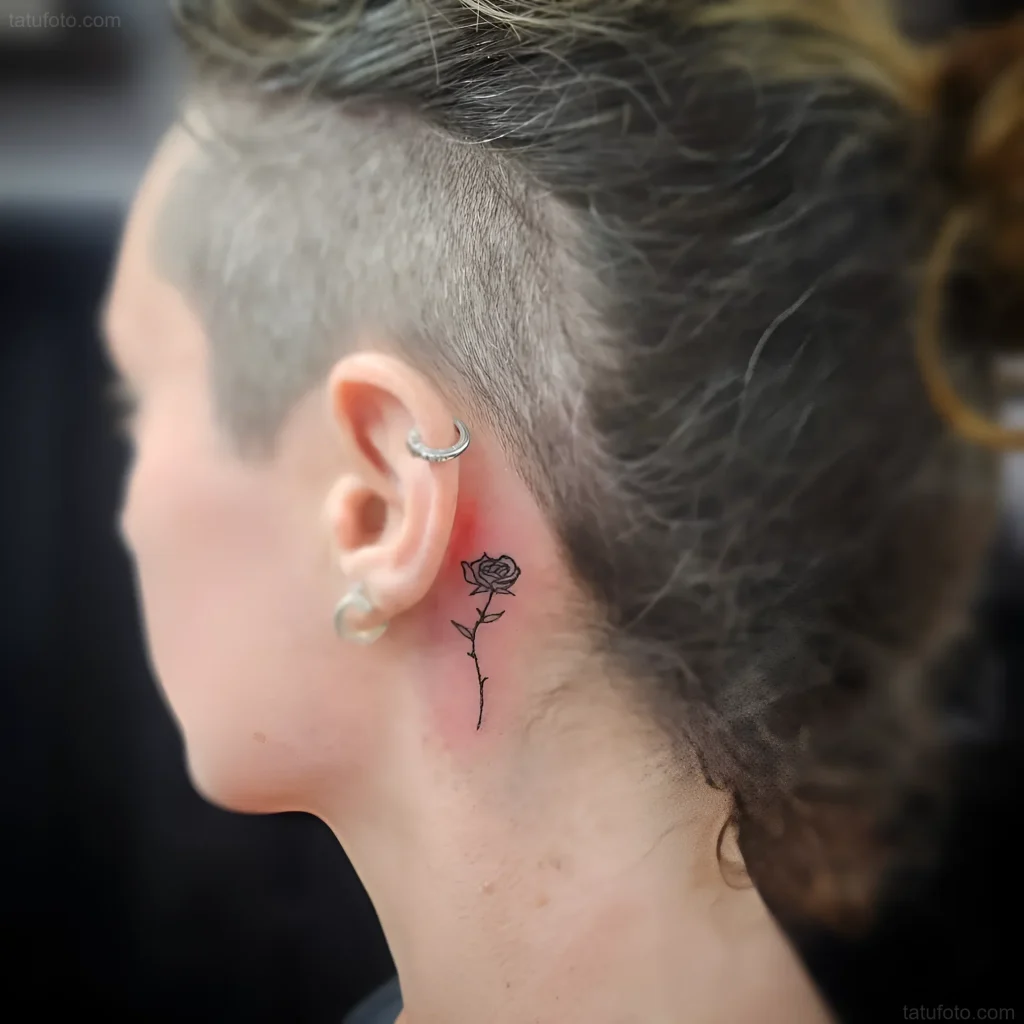
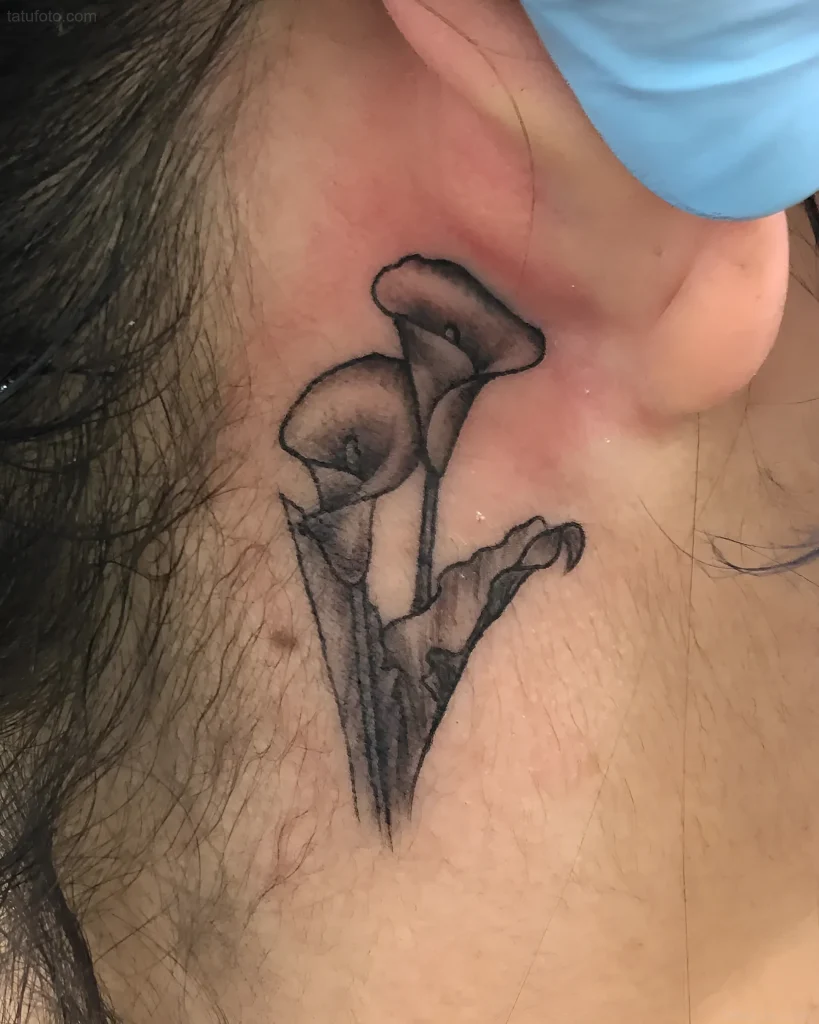
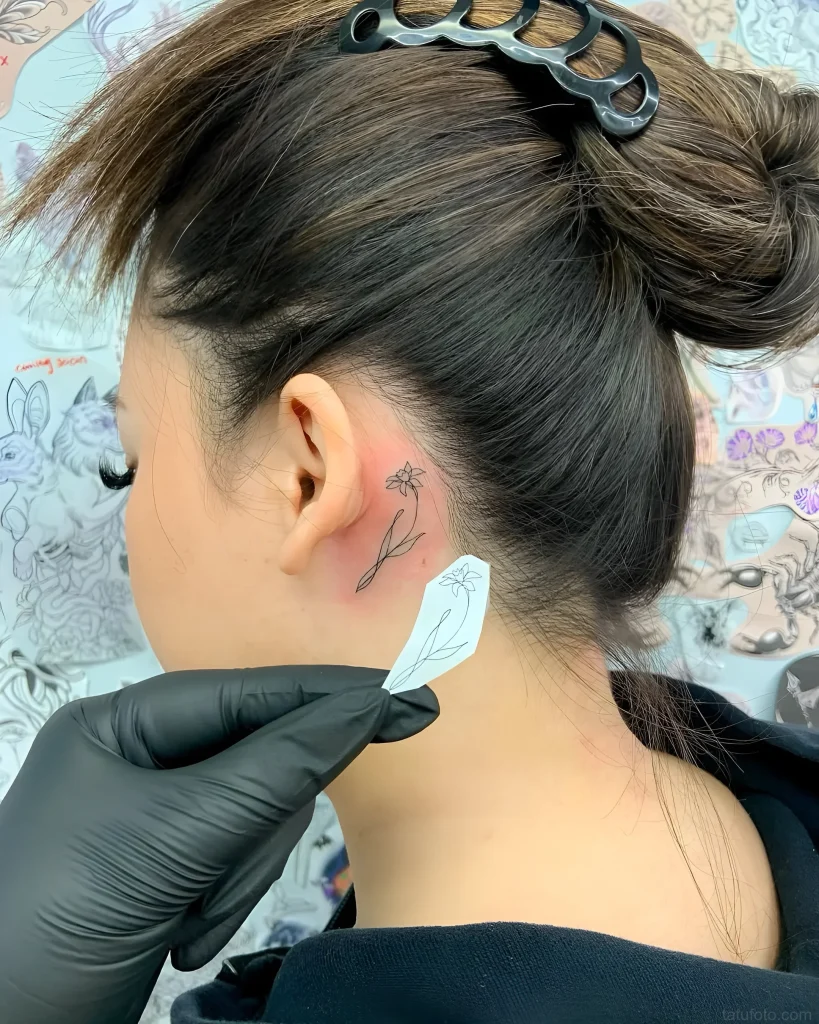
Flowers and plants are a classic choice, requiring the highest skill in the Fine Line technique:
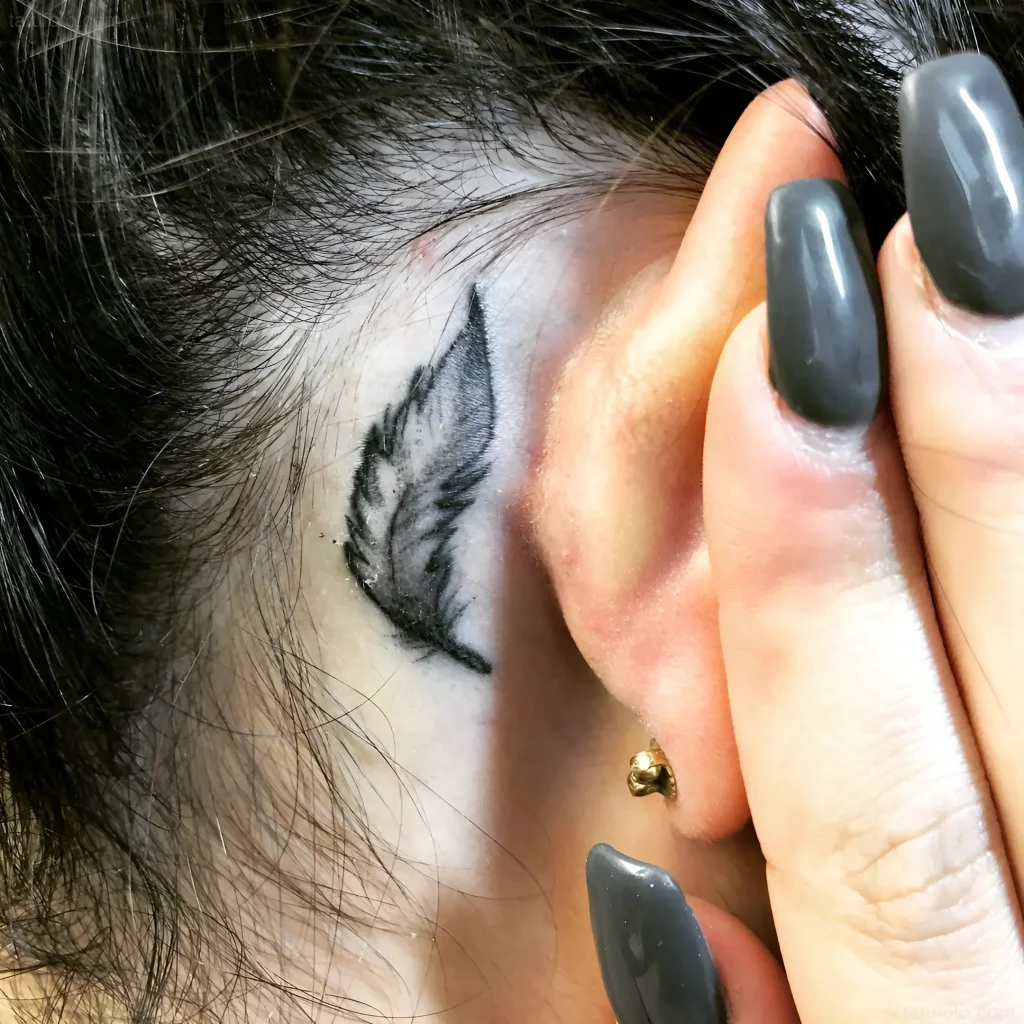
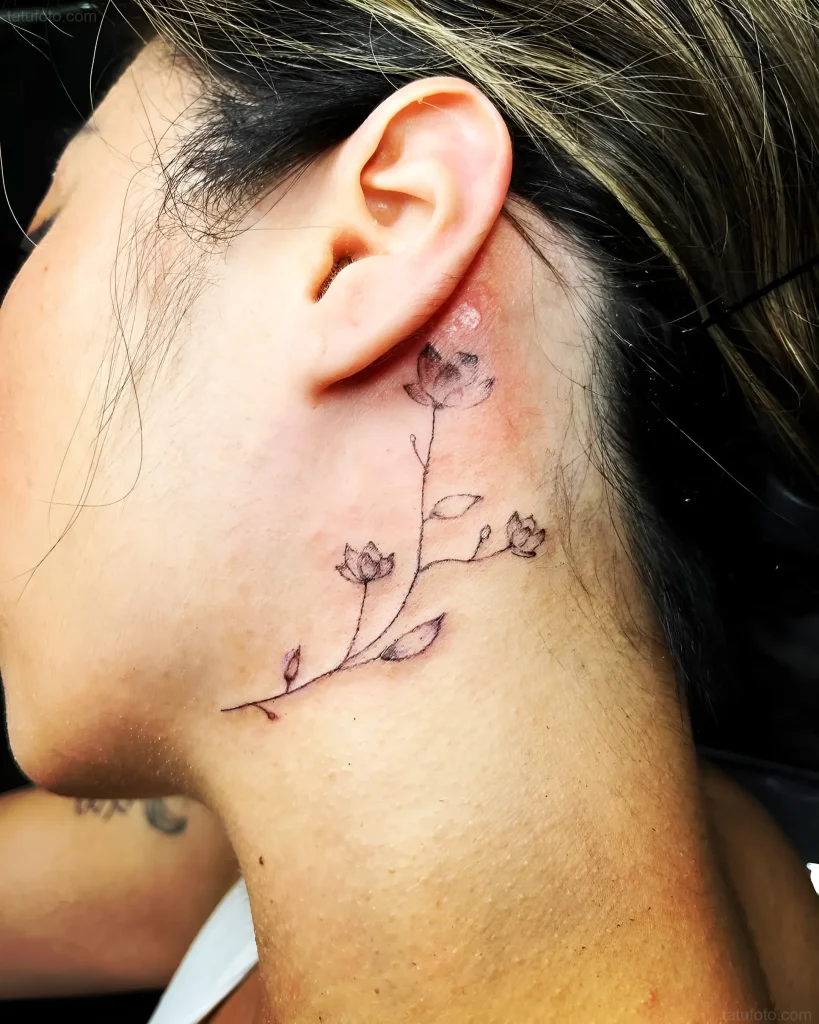
- Lavender: Calmness, purity, devotion, and healing. Ideal for thin, vertically oriented sprigs.
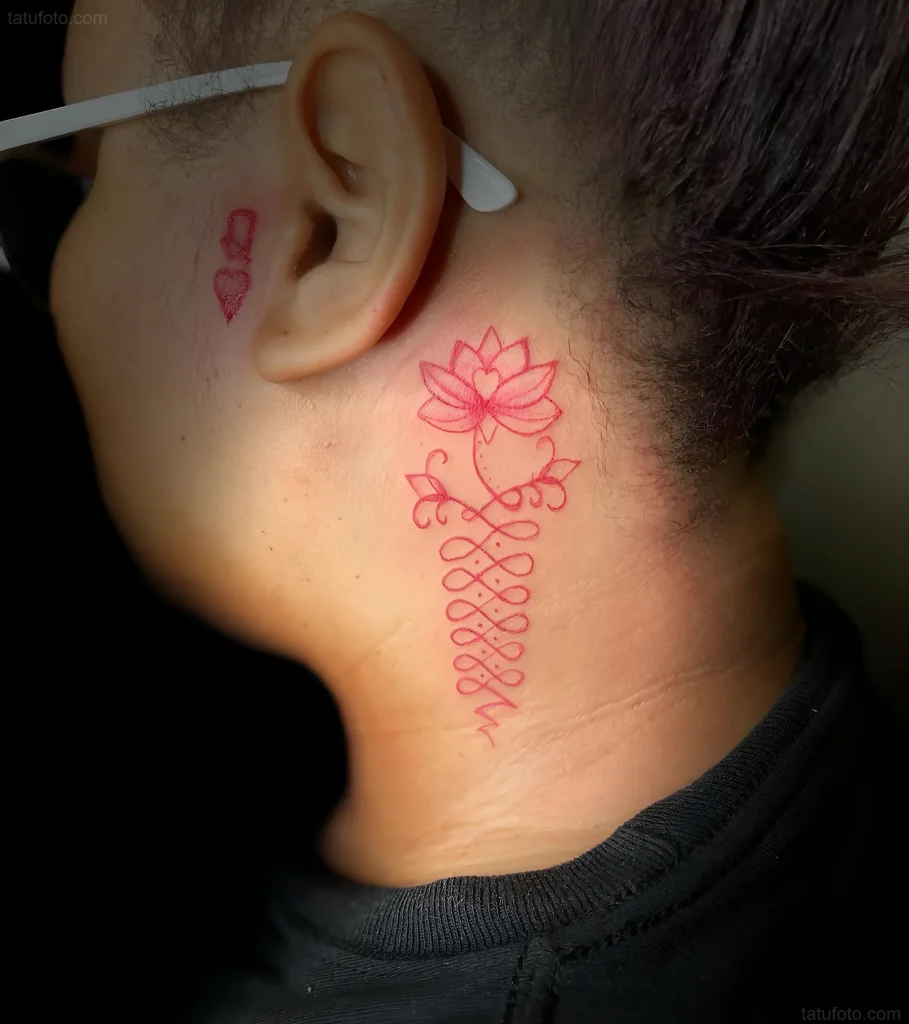
- Lotus (micro-image): Rebirth, purity of spirit, overcoming difficulties. Requires extreme detail.
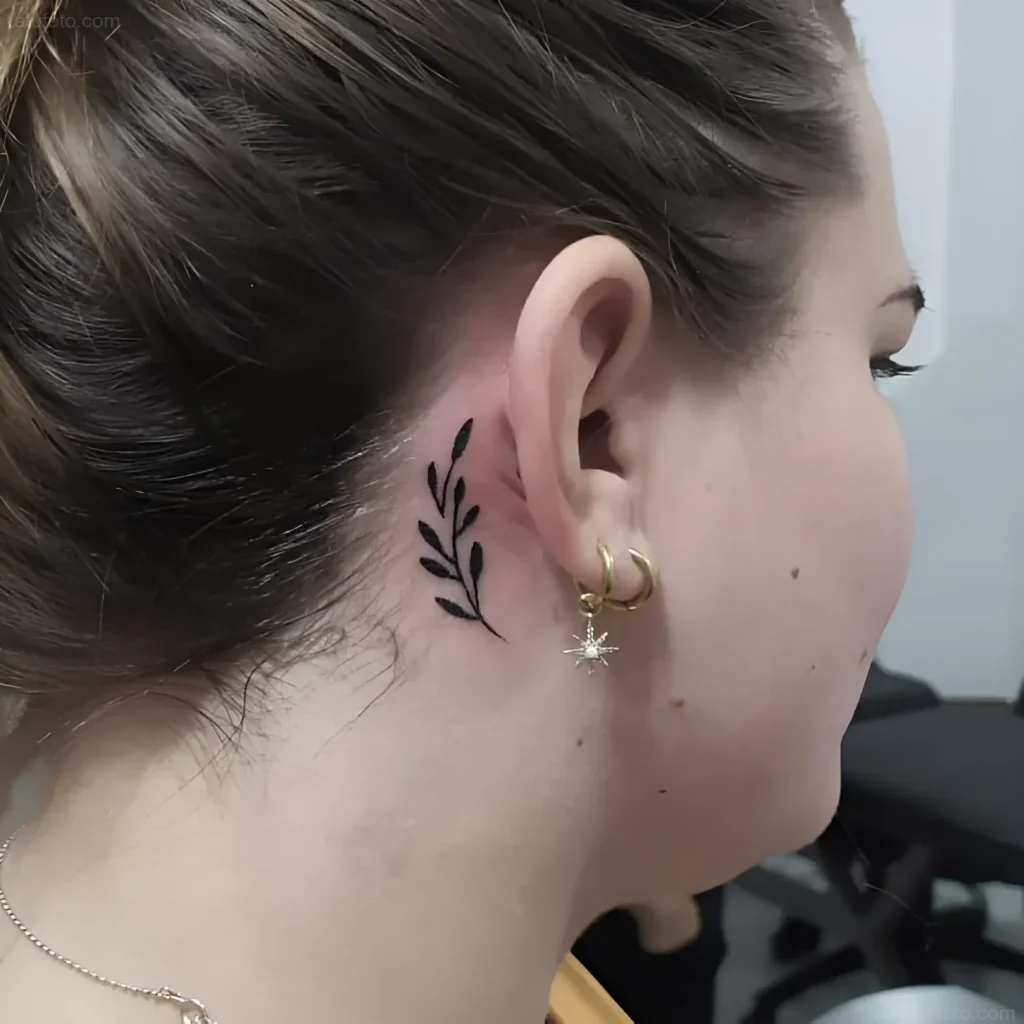
- Minimalist Tree or Branch: Life force, growth, connection to roots or family.
Cosmic and Geometric Elements
These designs fit well with the rounded shape of the mastoid process:
- Stars or Constellations: Hope, dreaminess, guiding light, striving for a goal. Often used to represent family members (by the number of stars).
- Crescent Moon or Moon: Feminine energy, intuition, cyclical nature, mystery.
- Circle or Triangle: Eternity, unity, balance. Geometry allows for working with clean lines, which simplifies work in a difficult area.
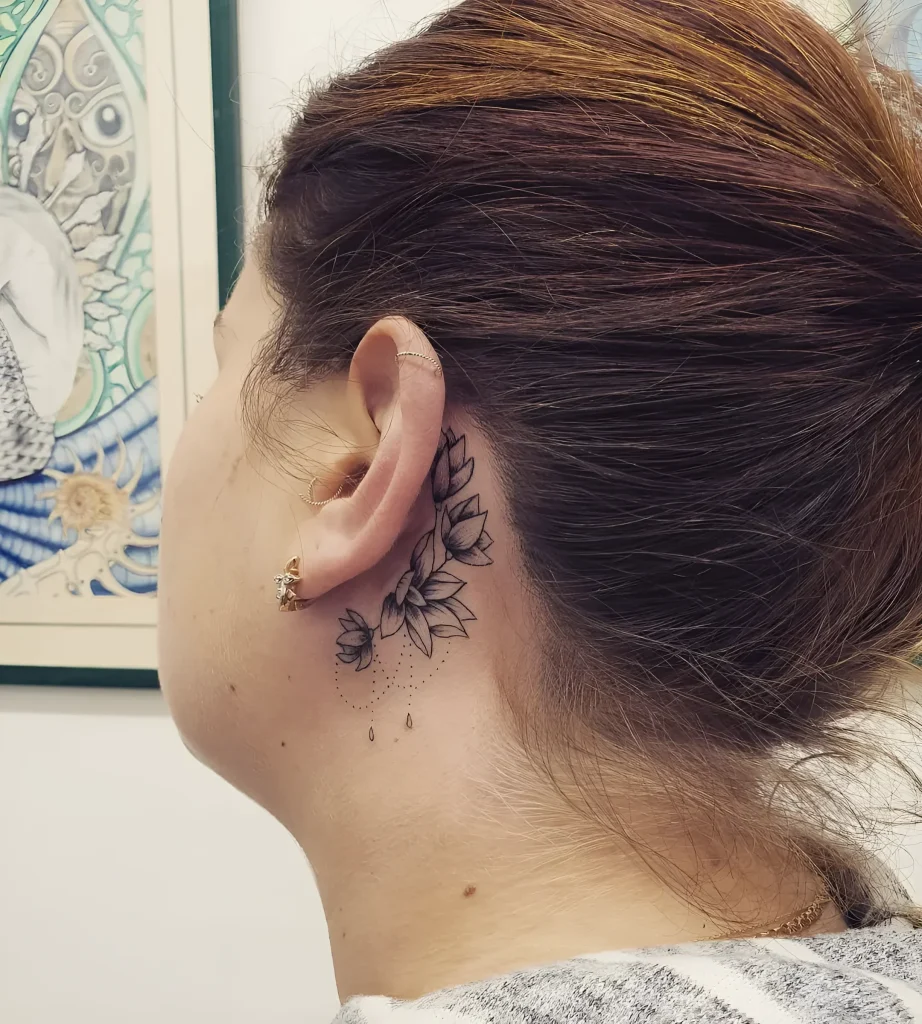
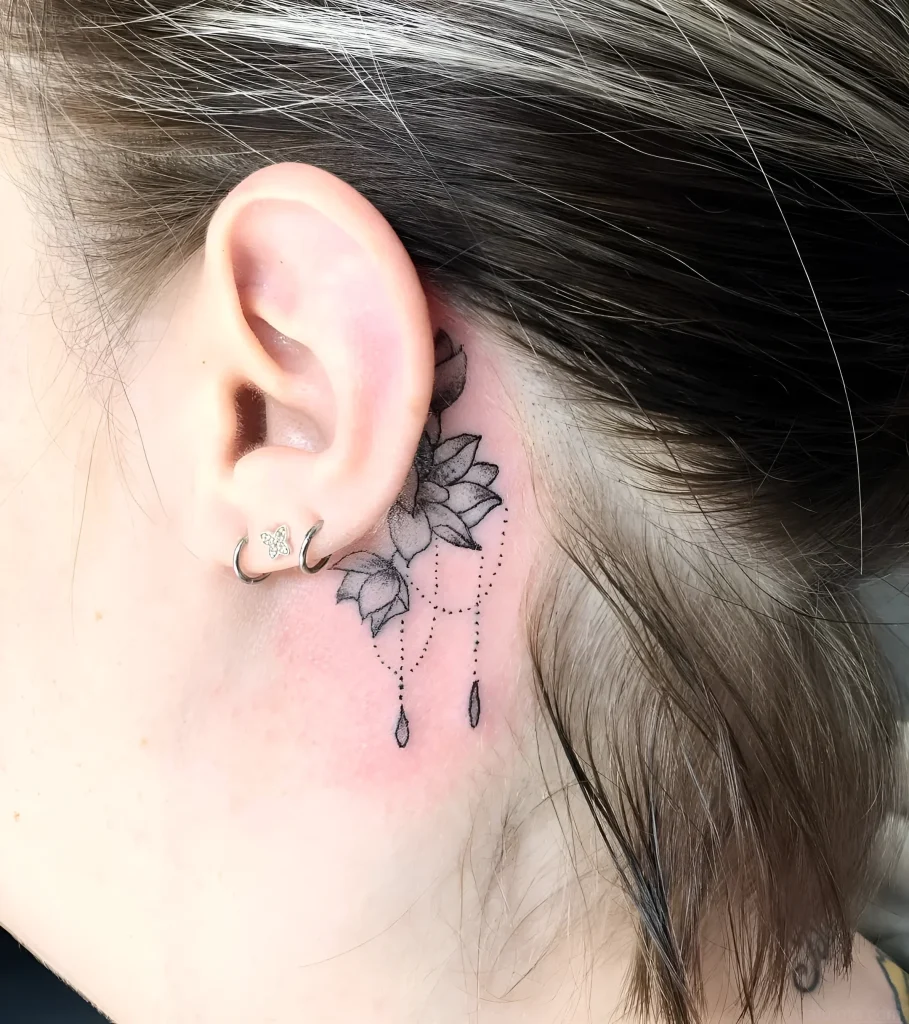
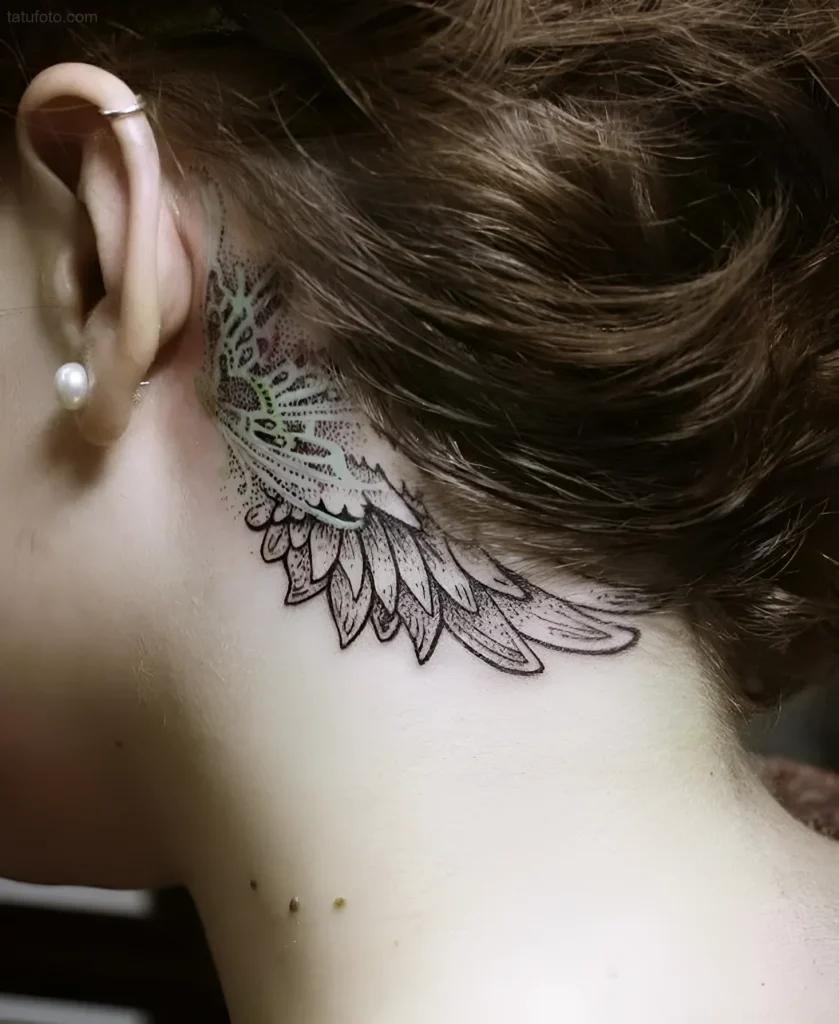
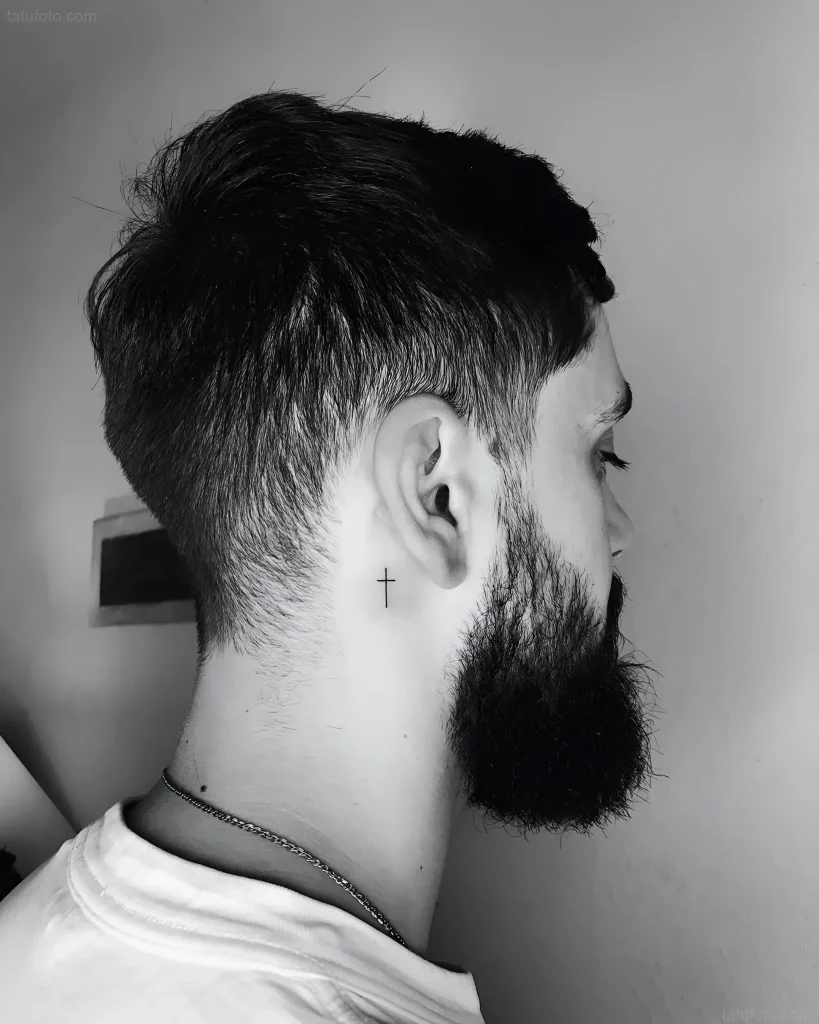
Tattoo Styles Behind the Ear: Choosing the Ideal Style for a Small Space
For successful work in this area, you need to limit yourself to styles that scale down well. Large, dense works in the Traditional or New School style are completely unsuitable here.
1. Fine Line
This is the dominant and most suitable style. It allows for the creation of elegant, almost weightless images. For beginner artists, it’s an excellent school for controlling depth and hand stability.
- Required Tools: 1RL, 3RL, 5RL needles.
- Features: Requires minimal pressure and only high-quality pigments to ensure the longevity of fine lines.


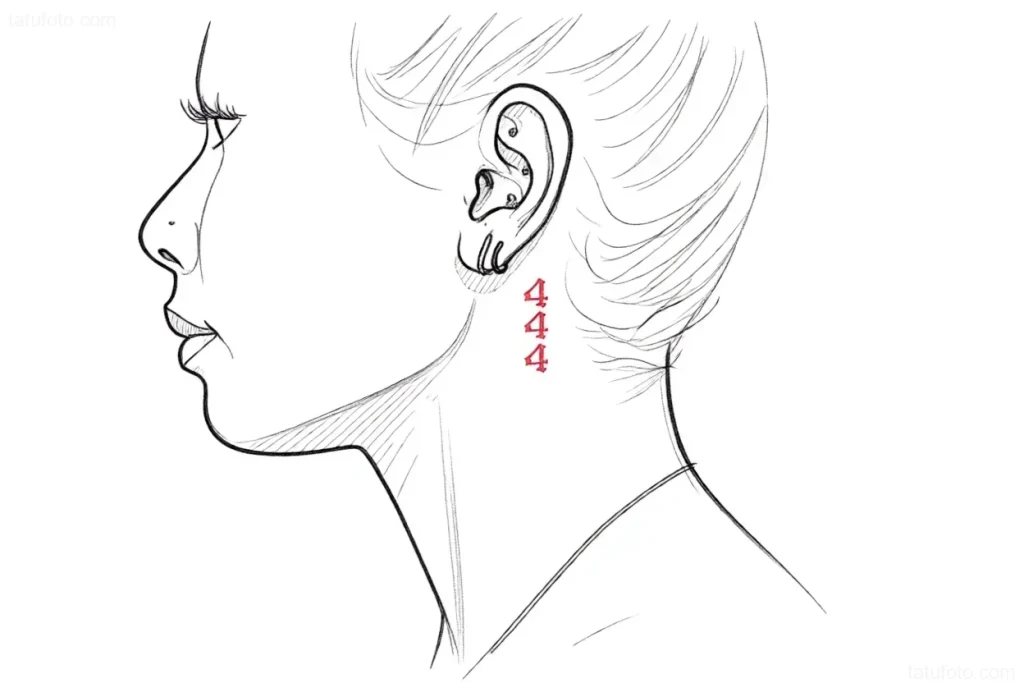

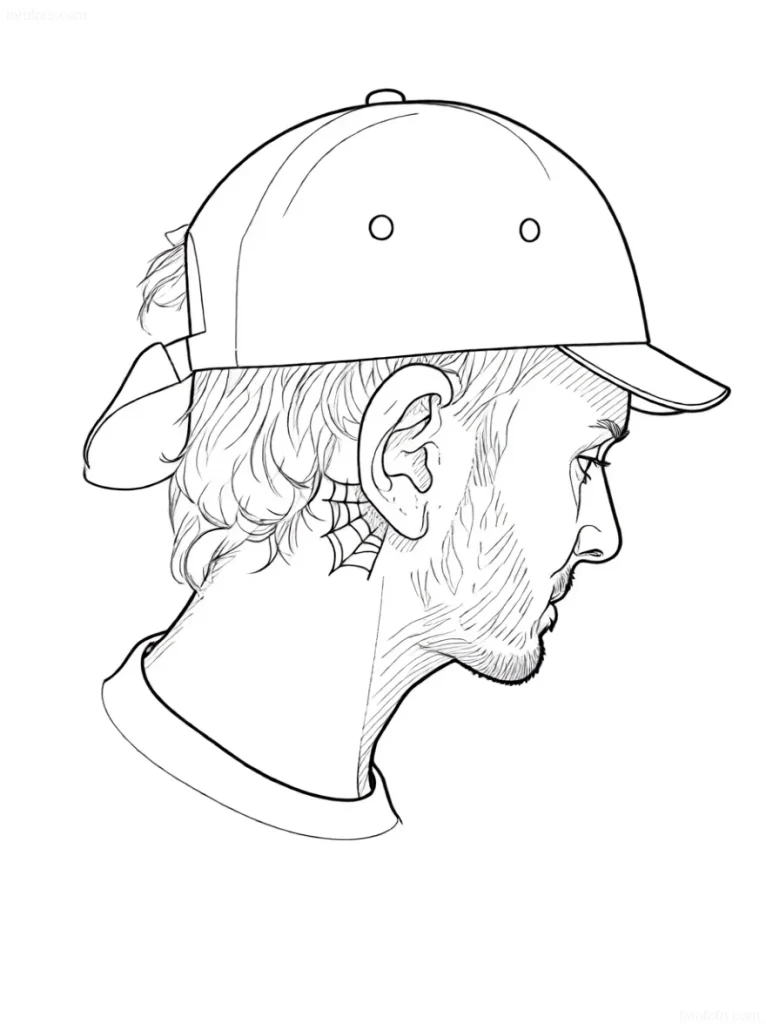
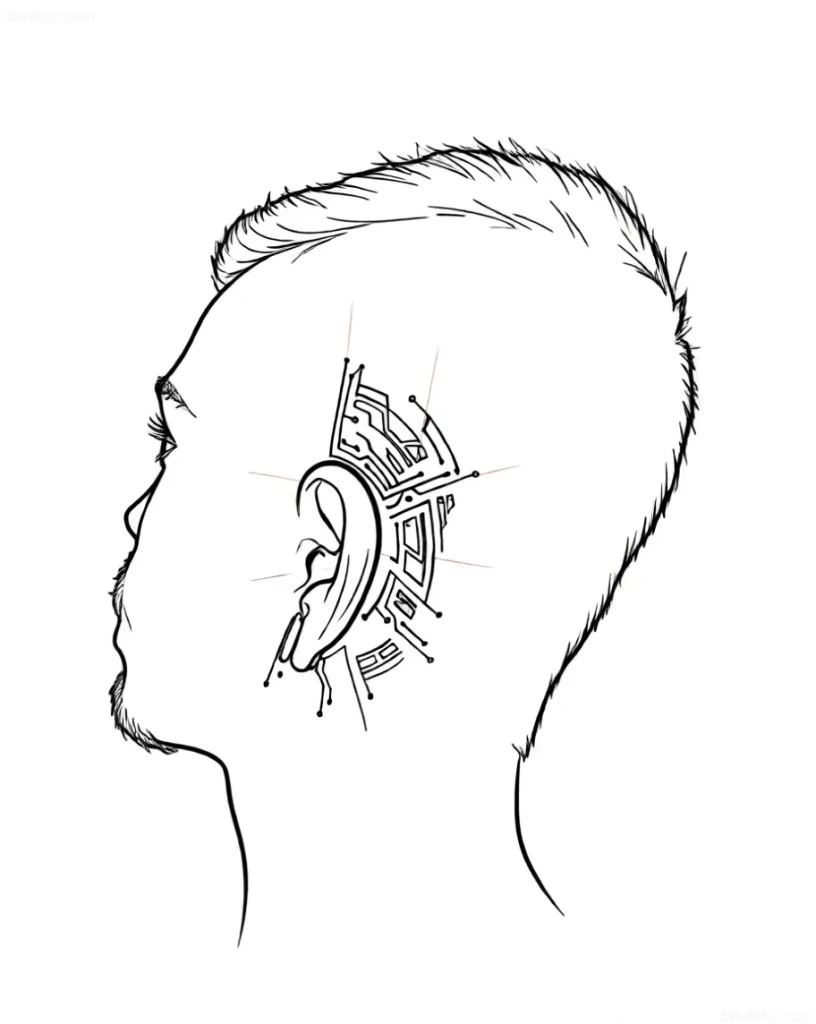
2. Dotwork (Dot Technique)
Ideal for creating soft shadows, gradients, and filling minimalist geometric shapes. Dots are less prone to “blowout” on thin skin than solid outlines.
- Examples: Gradients in the image of the Moon, soft shadow around a flower, or a completely dotted ornament.
3. Minimalism and Symbolism
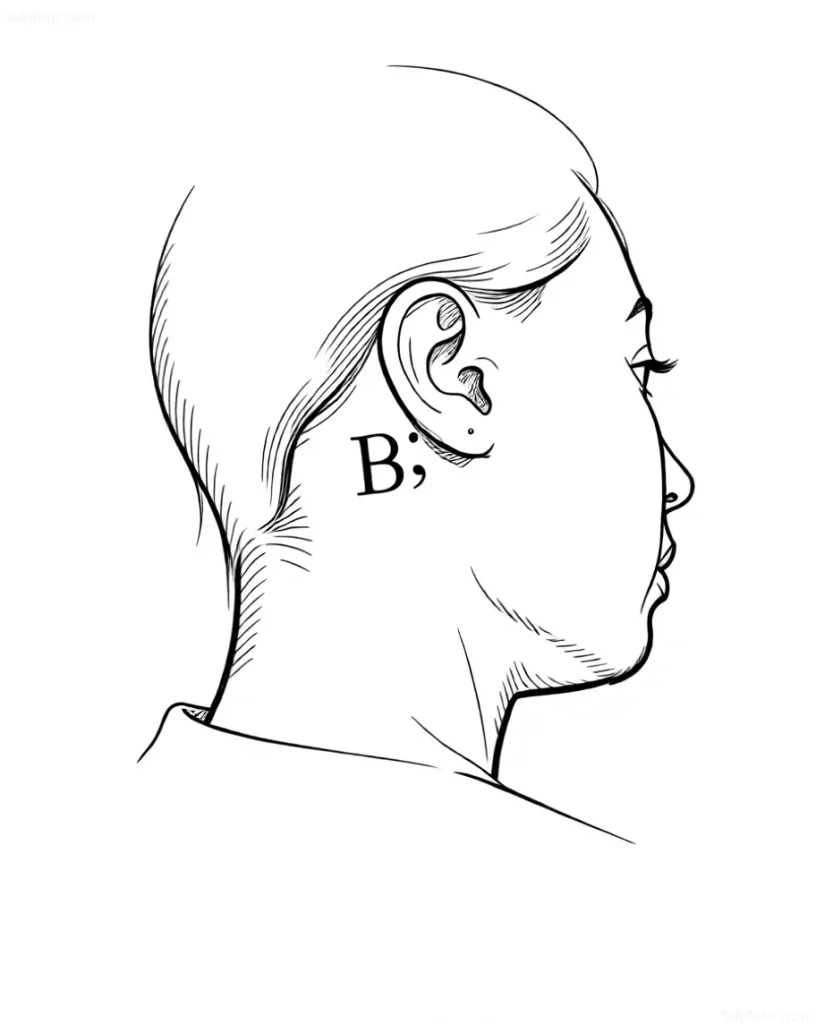
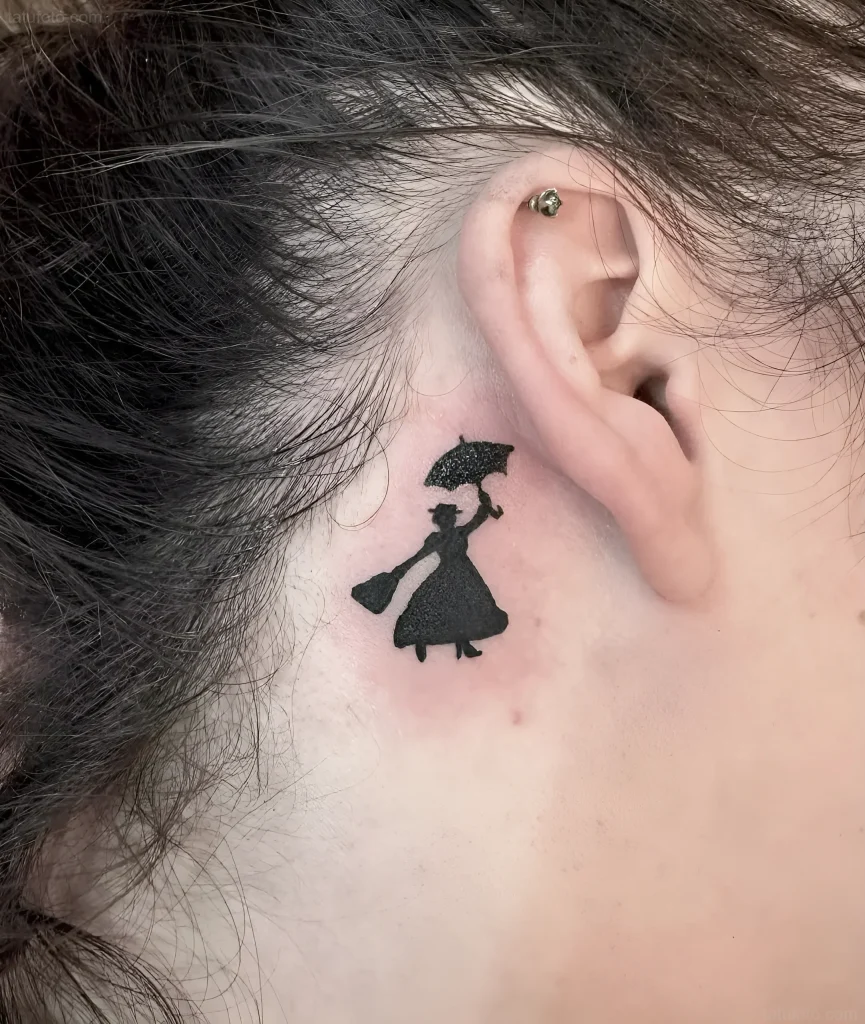
A style where the design is reduced to the absolute minimum – one arrow, one letter, one symbol. This requires the artist to have impeccable geometry and a confident, quick application.
4. Watercolor and Realism (with caveats)
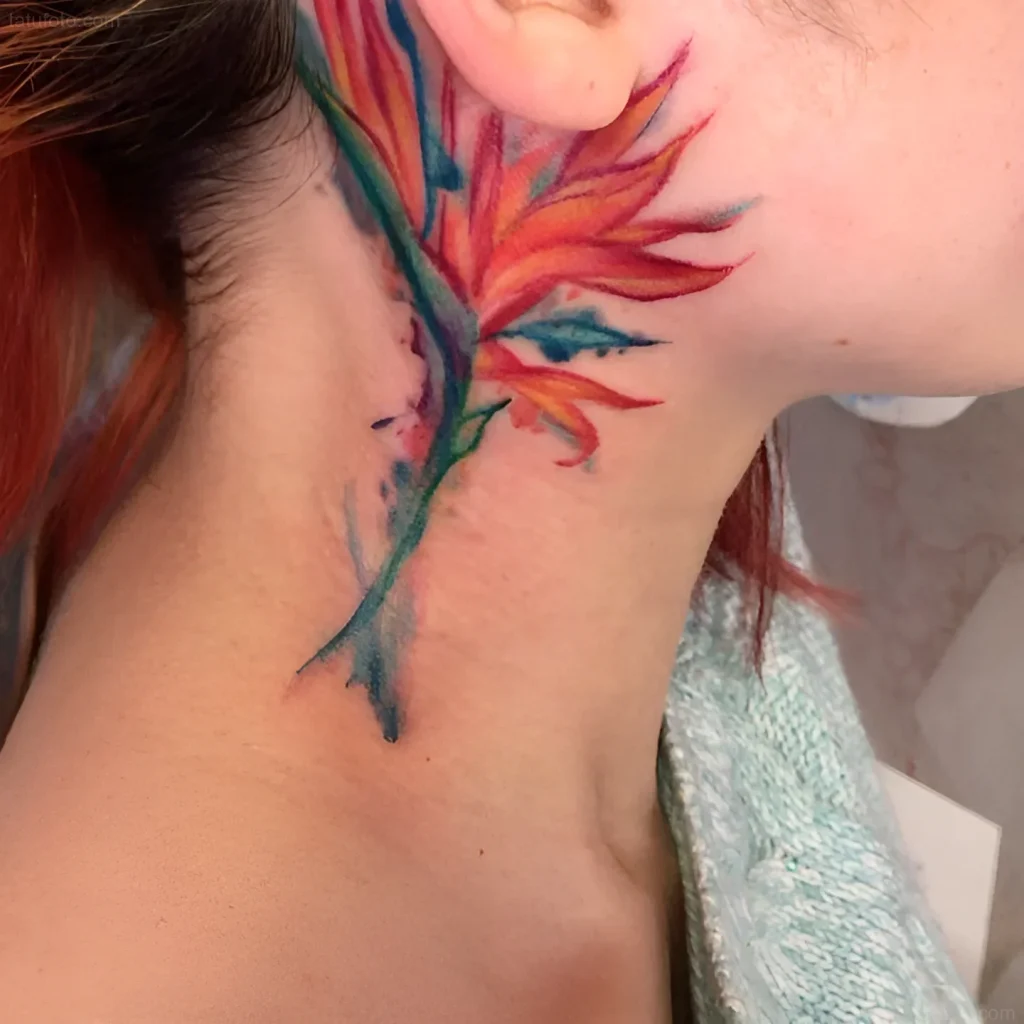
Highly not recommended for beginners. Watercolor blurs require more space, and micro-realism (e.g., a portrait or landscape) is extremely difficult to preserve details during healing and requires very stable skin, which cannot always be achieved behind the ear.
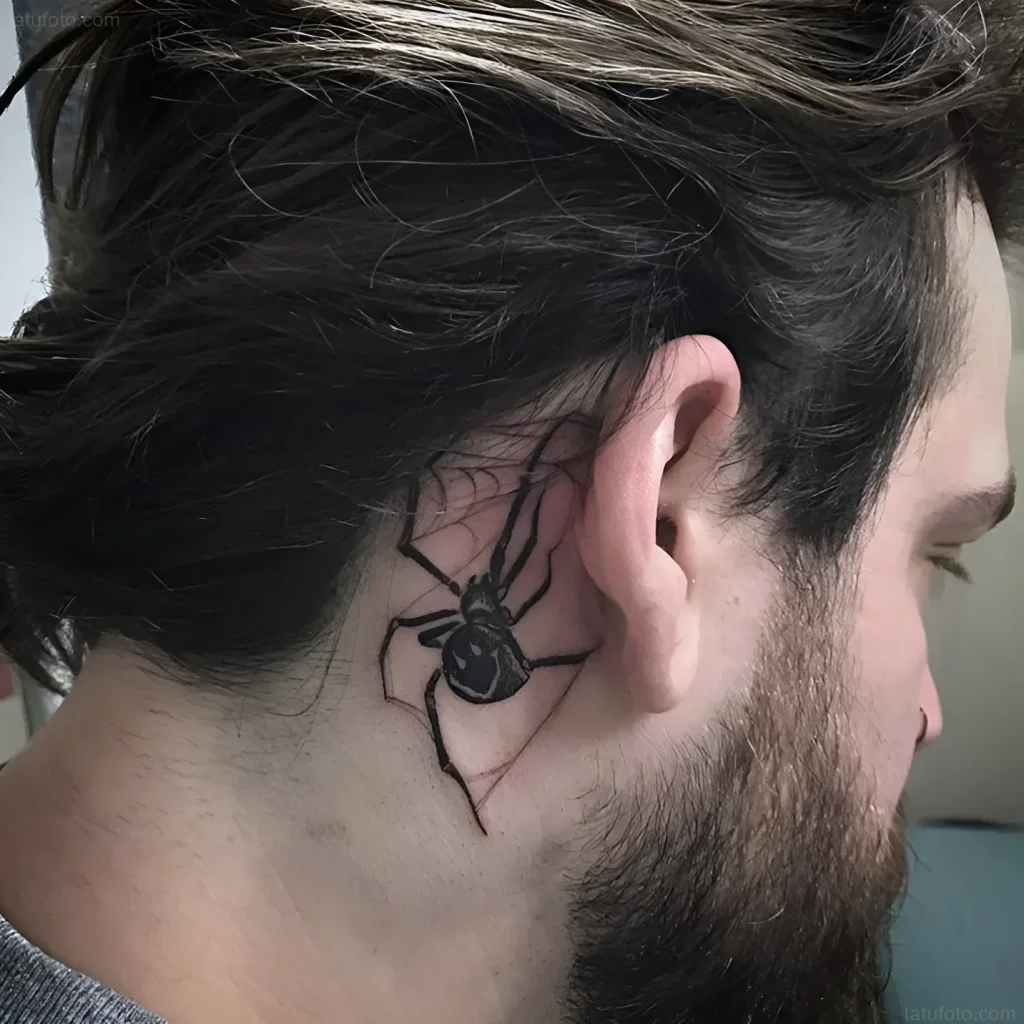
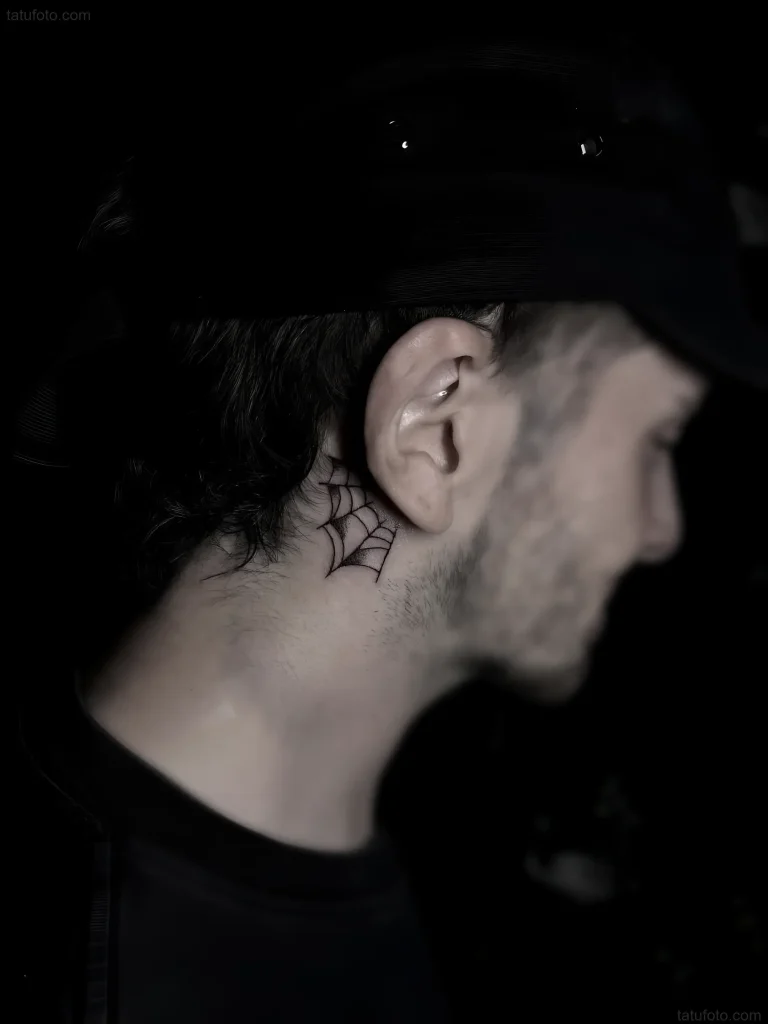
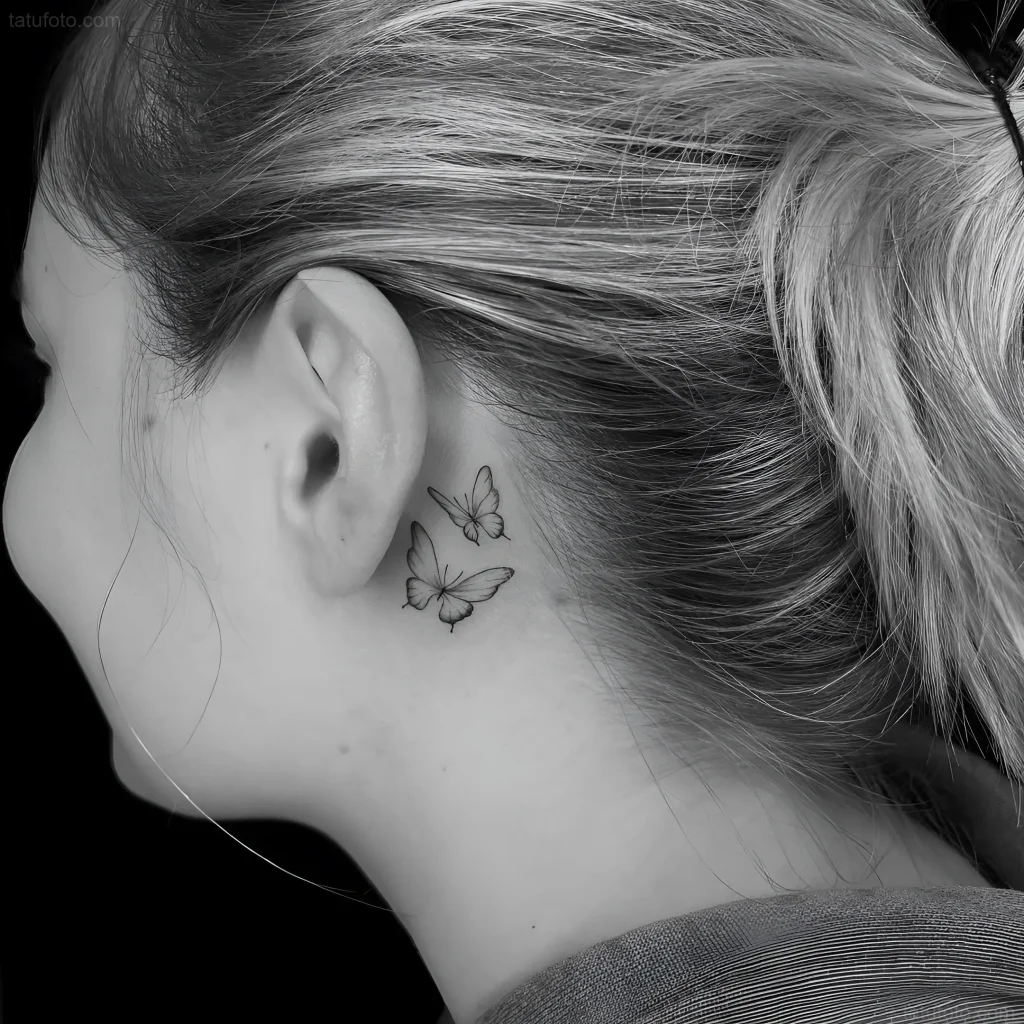
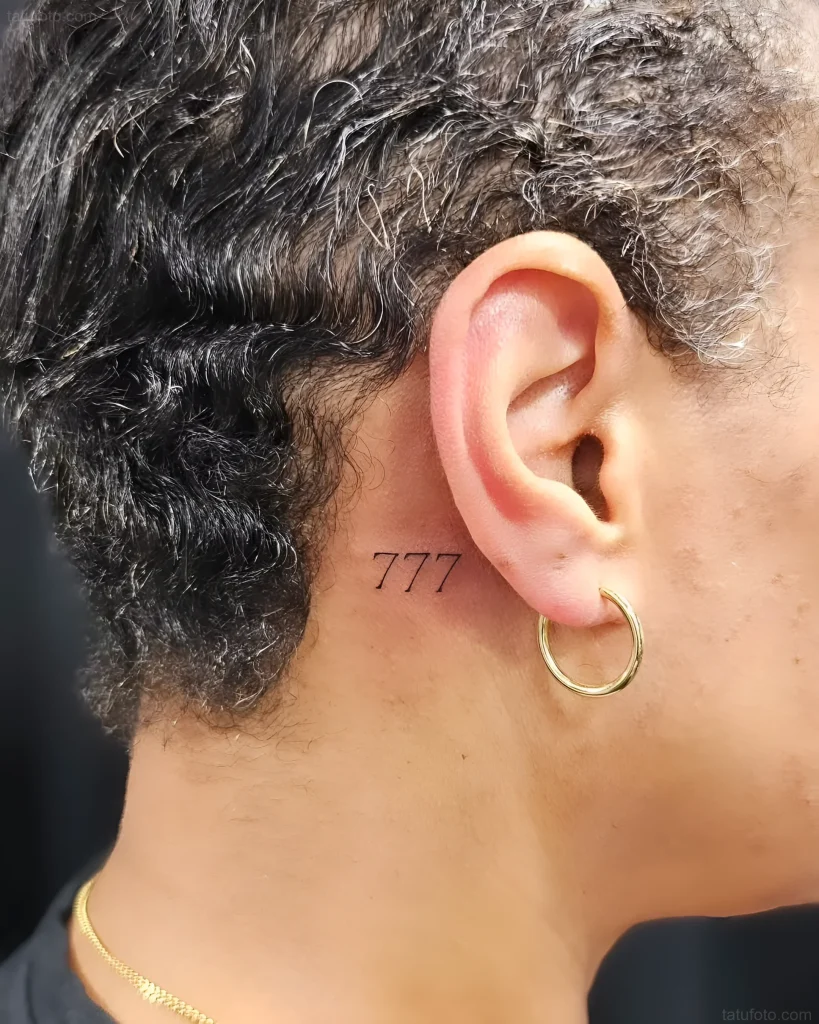
Tattoo Application Technique Behind the Ear: Nuances and Features for Beginner Artists
Working behind the ear is a test of your ability to work with delicate tissues. You cannot use the same techniques here as on the forearm or shin. Key aspects you must master:
Skin Preparation and Stretching
The skin behind the ear is very thin and mobile, especially closer to the hairline. Improper stretching will lead to uneven lines and “blowout” of the ink.
- Client Positioning: The client should lie on their side or sit with their head tilted to the side. Ensure their shoulder does not obstruct your working angle.
- Stretching Technique: Use both hands. One hand (non-dominant) should firmly hold the ear forward, and the other hand (or a finger of the non-dominant hand) should pull the skin down towards the neck. This creates the flattest and most taut surface over the mastoid process.
Equipment and Needle Selection
Rotary machines with a soft hit are preferred for tattoos behind the ear, as they create less vibration and noise, which is critical for client comfort.
| Type of Work | Recommended Needle (RL) | Voltage (V) |
|---|---|---|
| Finest Outlines (Fine Line) | 1RL or 3RL | 5.5 V – 7 V (depends on machine) |
| Medium Outlines and Dotwork | 5RL | 6 V – 8 V |
| Filling (if necessary) | 3RS or 5M1 (magnum rarely) | 7 V – 9 V |
Critical Point: Needle Depth. Due to the thin skin, you must work very superficially. If you feel resistance from the mastoid bone, you are working too deep. Overdoing it will inevitably lead to blowout, which is very noticeable on thin skin.
Working with the Hairline
Never tattoo a hair follicle. Ink injected into the hair growth area can spread or look messy over time. You need to either shave the hair (if safe and the client agrees) or strictly limit the design to the clean skin area. If you work at the hairline, be prepared for lines to appear less sharp due to natural skin movement and hair growth.

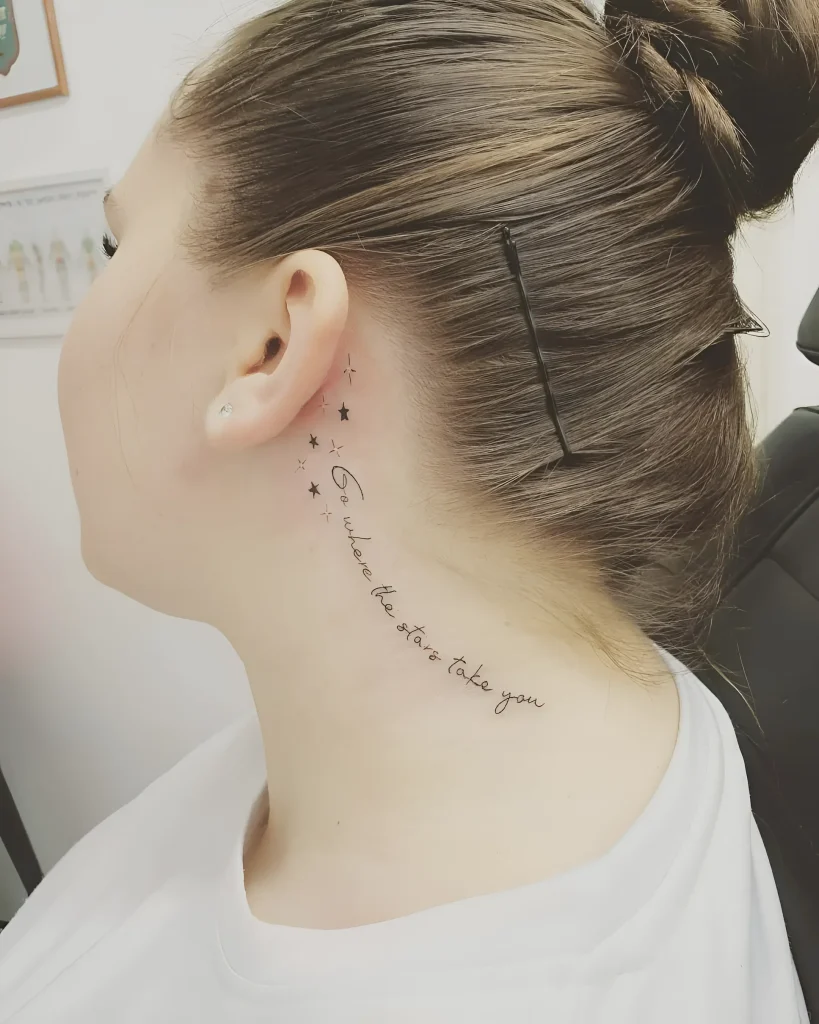
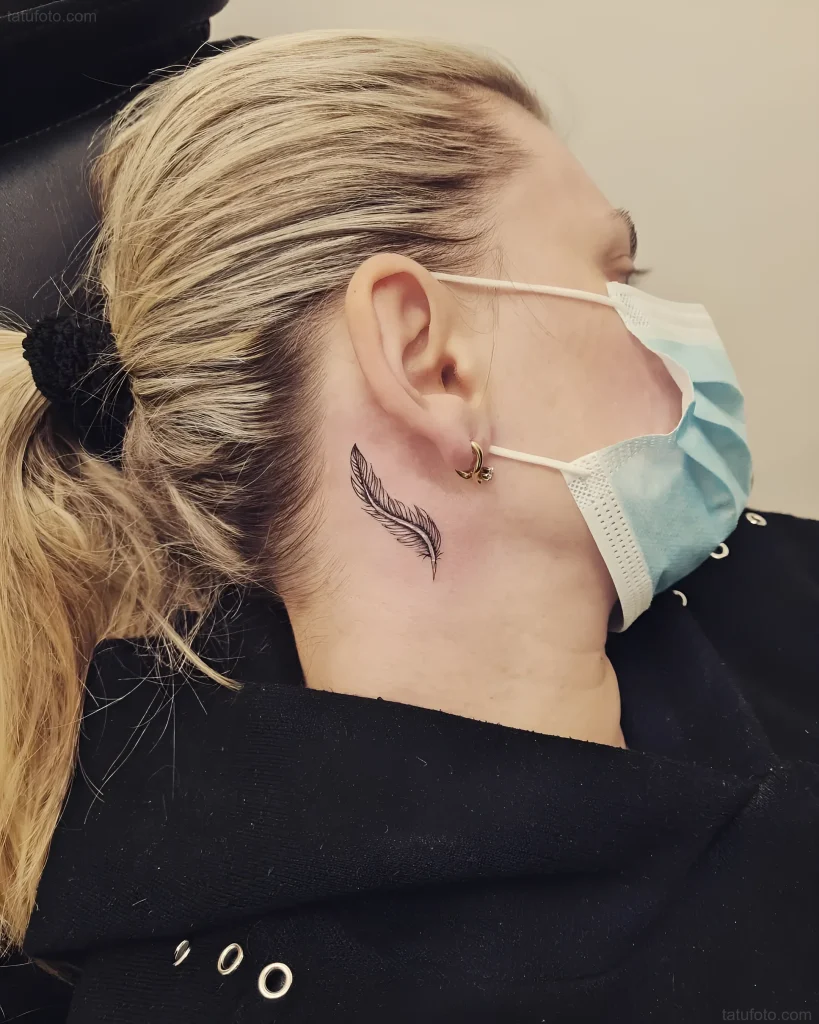
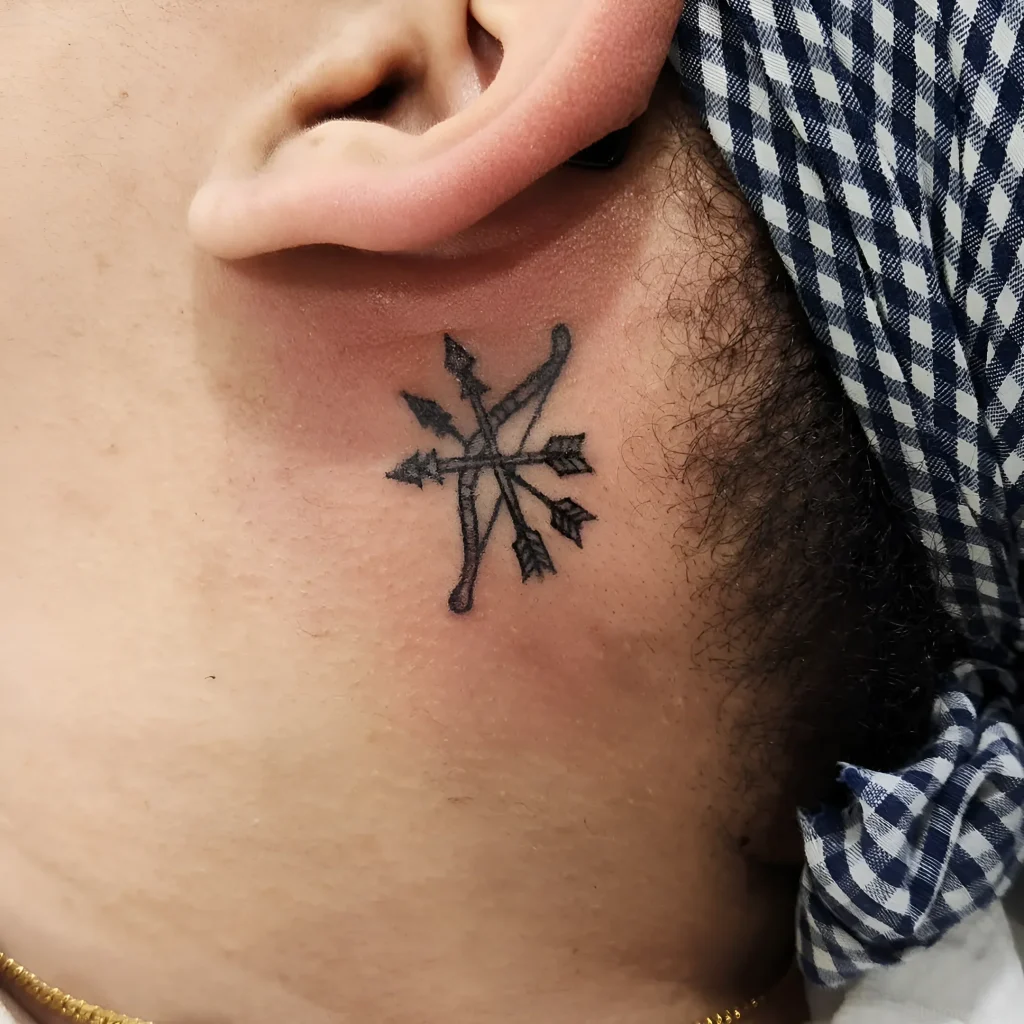
Placement of Tattoos Behind the Ear: Anatomy, Safety, and Design Recommendations
The safety and longevity of a tattoo directly depend on your knowledge of the anatomy of this area. You need to understand where it’s best to work and which areas to avoid.
Anatomical Limitations and Dangerous Areas
1. Mastoid Process:
This is a bony protrusion that serves as an ideal anchor point for skin stretching. However, excessive pressure on it can be painful for the client. Important: avoid tattooing directly on the apex of the bone where the skin is thinnest. It’s better to work on the soft tissues located between the bone and the earlobe.
2. Lymph Nodes:
Numerous lymph nodes are located behind the ear and in the neck area (postauricular, posterior cervical). Although modern research shows that tattooing does not directly harm the lymphatic system, working directly over a large node can cause swelling and slow down healing. Always choose a location away from clearly palpable nodes.
3. Folds and Curvature:
The area behind the ear is not flat. When planning a design, consider the curvature of the head. A design that looks straight on the sketch may distort after application if the volume of the skull is not taken into account. Always use a stencil that accurately follows the contour of the head.
Design Placement Recommendations
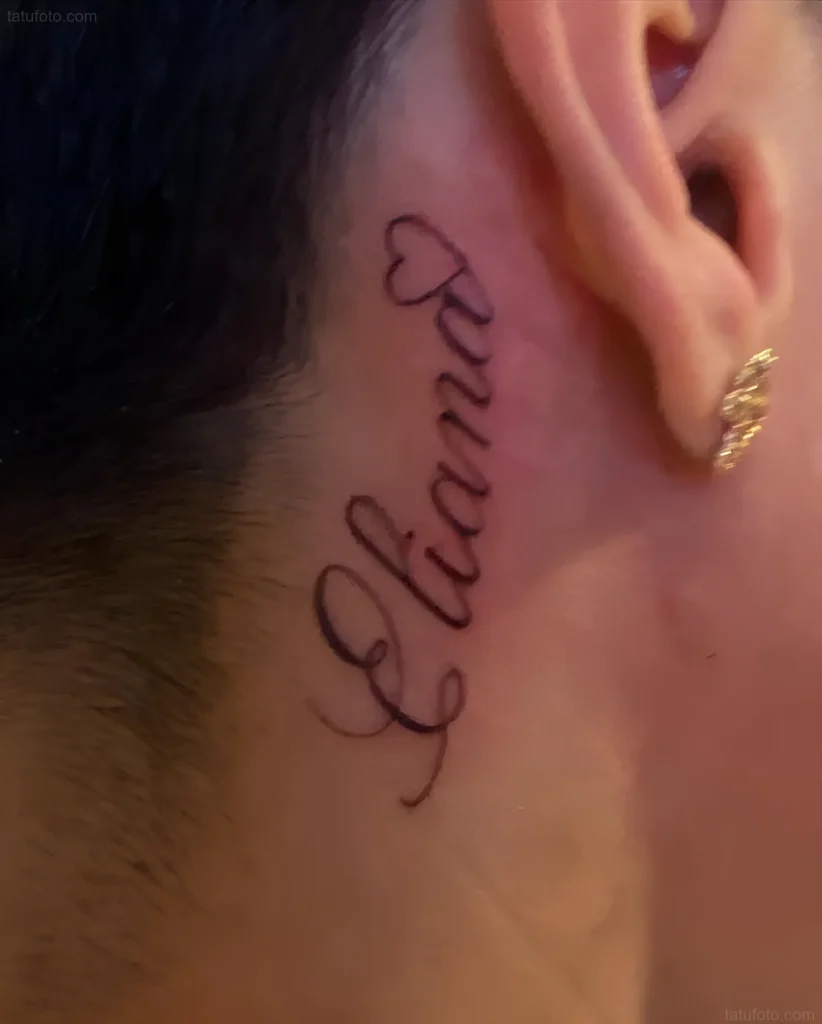
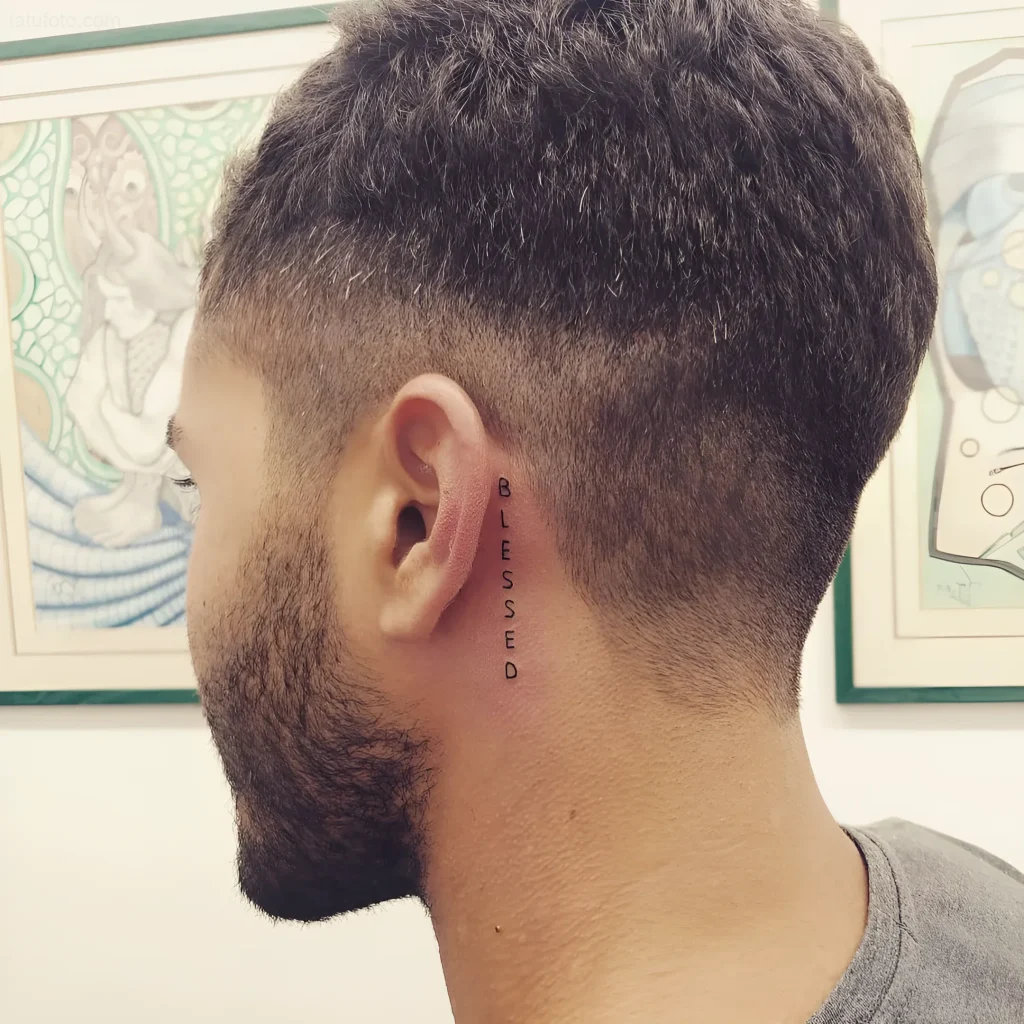
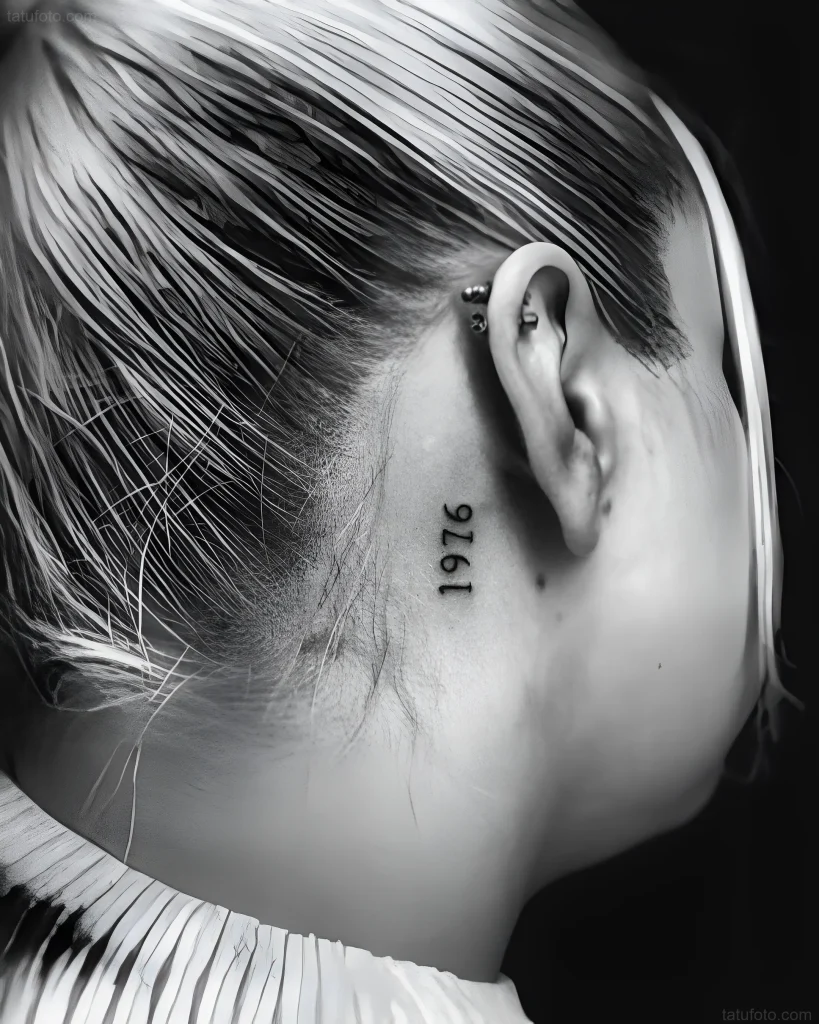
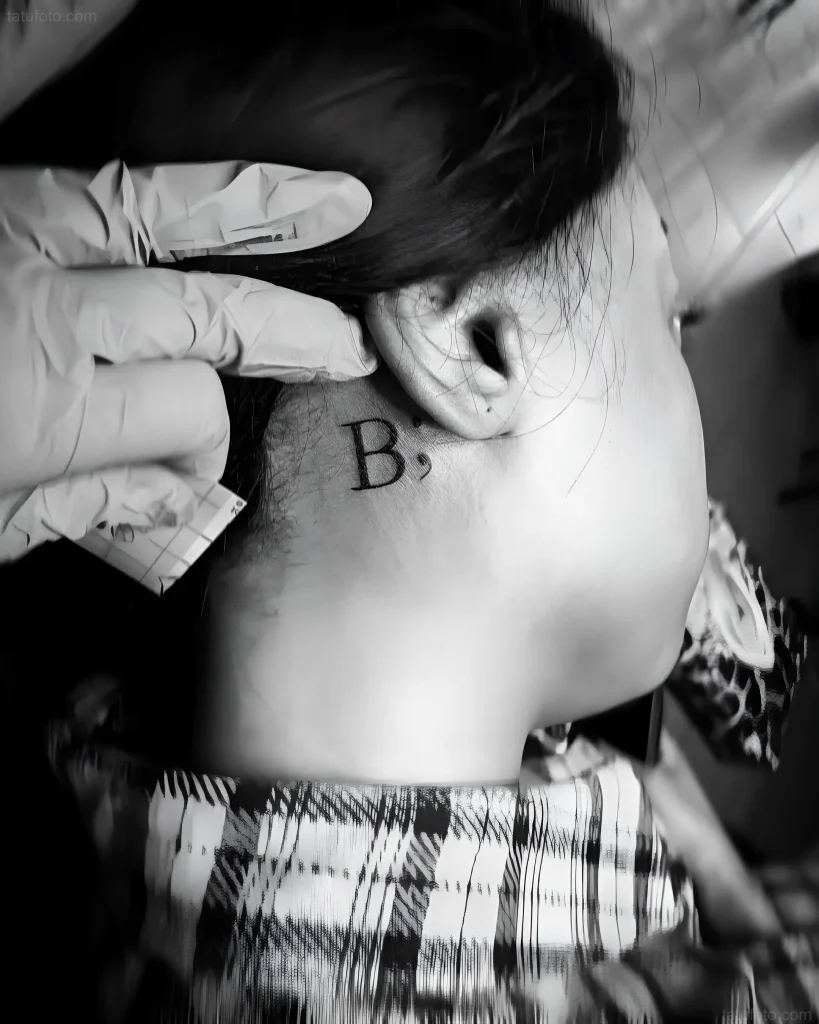
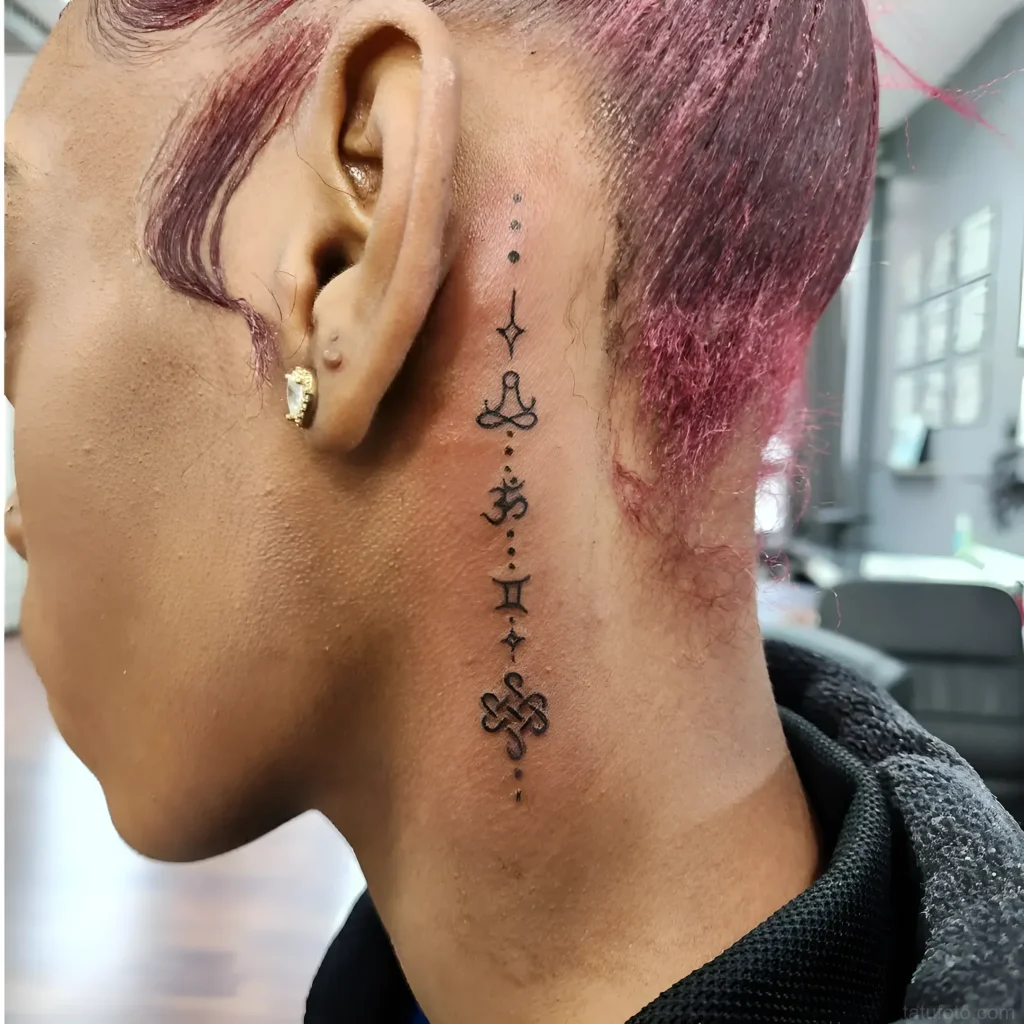
- Vertical Orientation: Most designs (flowers, inscriptions, sprigs) look better if they are oriented vertically, following the line of the ear and neck.
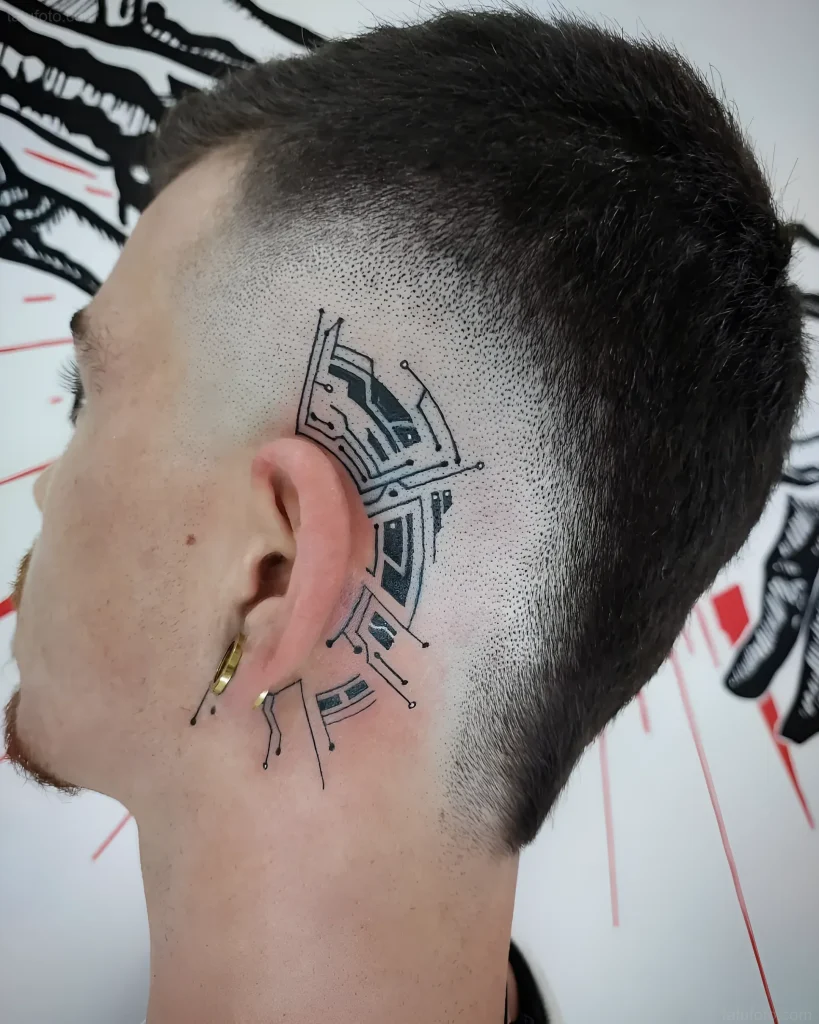
- Contour Repetition: Geometric or abstract designs that repeat the shape of the earlobe or mastoid process (e.g., a crescent moon that follows the curve of the ear) look most harmonious.
- Avoid “Noise”: In this area, where lines are very close together, avoid too many small details. During healing and natural ink “spreading,” they can merge into an indistinguishable smudge.
Aftercare for Tattoos Behind the Ear: Healing Tips and Complication Prevention
Proper aftercare for a tattoo behind the ear has its own specifics that you should inform the client about. This is an area that is constantly exposed to friction and external factors.
Specific Healing Problems in This Area
1. Friction and Pressure During Sleep:
This is the main problem. The client must strictly avoid sleeping on the side of the tattoo for the first 5–7 days. Friction against the pillow can cause irritation, remove the protective film, and increase the risk of infection. Advise the client to use a travel pillow (U-shaped) to avoid contact.
2. Hair and Styling Products:
Hair constantly comes into contact with the tattoo. The client should keep their hair tied up in a ponytail or bun for the first week. Critically important: prohibit the use of any hairsprays, gels, mousses, sprays, and dry shampoos, as chemical components can cause severe irritation and inflammation of the fresh tattoo.
3. Washing Hair:
Hair washing should be done as carefully as possible. The client should tilt their head back so that soapy water runs forward, bypassing the tattoo. If water does get on it, the tattoo must be immediately rinsed with clean water and a thin layer of the recommended healing ointment applied.
Step-by-Step Instructions for the Client
- First 24 hours: The use of healing film (e.g., Dermalize or Suprasorb F) is highly recommended, as it minimizes friction and protects from hair.
- After removing the film: Wash the tattoo twice a day with unscented antibacterial soap.
- Moisturizing: Apply a thin layer of healing cream 3–4 times a day. Warn the client that excess cream in this area, where air circulation is poor, can lead to clogged pores.
- Sun: Completely avoid direct sunlight for 3–4 weeks. After complete healing, always use sunscreen, as this area is extremely prone to fading.
Tattoo Behind the Ear: Frequently Asked Questions (FAQ) and Interesting Facts
As a professional artist, you should be prepared to answer clients’ standard questions regarding this specific area.
How Painful is a Tattoo Behind the Ear?
Pain in this area varies, but generally, it’s above average. Main reasons:
- Proximity to Bone: The vibration of the machine resonating through the bone intensifies the unpleasant sensations.
- Thin Skin: Little fatty tissue for cushioning.
- Acoustic Discomfort: The noise the client hears in close proximity to the ear is often perceived as an additional pain factor.
Your advice: Use quality anesthesia (if necessary and following protocol) and perform short, controlled sessions.
How Quickly Does a Tattoo Behind the Ear Heal?
Thanks to its small size and relatively good blood supply, primary healing takes 7–10 days. Full skin healing and ink stabilization take 3–4 weeks. However, due to constant friction from hair and clothing, clients may experience discomfort longer than on other parts of the body.
Is it True That Tattoos Behind the Ear Fade Quickly?
Yes, this is one of the most fading-prone areas. Reasons:
- Thin Skin: Ink is located closer to the surface.
- Sun Exposure: The area is often exposed to accidental sunlight (especially in summer when hair is up).
- Chemical Exposure: Frequent use of shampoos and styling products.
Your recommendation: Always use high-quality, concentrated pigments and insist on regular SPF use after healing.
Can a Tattoo Behind the Ear Affect Hearing?
No. A professionally done tattoo only affects the epidermis and dermis. It has no physiological impact on the inner ear, ear canal, or eardrum. This is a common myth that you should confidently dispel.
Interesting Facts About Tattoos Behind the Ear
- Hidden Power: Many celebrities choose this area for tattoos symbolizing their children or important personal milestones (e.g., Rihanna with her star design).
- Reflection of Thoughts: Due to its proximity to the head and brain, some clients choose symbols that reflect their inner world, intuition, or intellect (e.g., a small lightbulb, a brain, or an infinity sign).
- “Whispering” Tattoo: Due to the intimacy of its placement, tattoos behind the ear are often called “whispering” tattoos, as they are meant to be seen only by those very close to the wearer.
Mastering tattoos behind the ear requires patience, precision, and respect for the delicacy of this area. By applying the technical and anatomical knowledge outlined, you will not only provide clients with beautiful and long-lasting work but also strengthen your reputation as an artist capable of handling the most complex and delicate tasks in the world of tattooing.