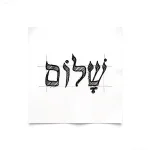
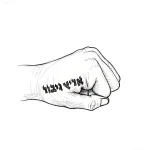
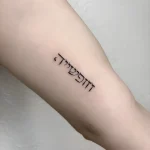
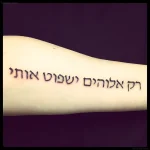
Tattoo inscriptions have always carried a deep personal meaning, but when an ancient, sacred language is chosen to express a profound thought, their symbolic weight increases manifold. Hebrew inscriptions are a unique combination of the deepest historical and religious tradition with the exquisite, almost calligraphic aesthetics of modern tattoo art. Choosing Hebrew for a tattoo speaks not only of a desire for originality but also of a search for connection with fundamental spiritual or philosophical concepts. These are not just words, but symbols carrying millennia of wisdom.
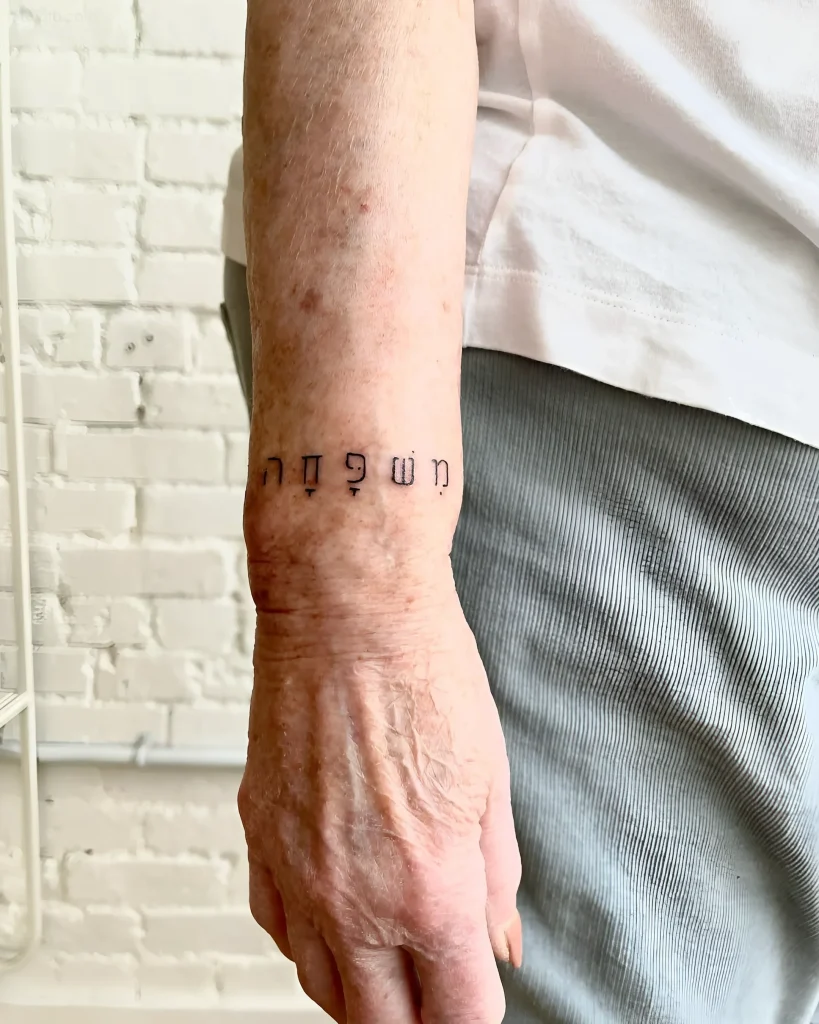
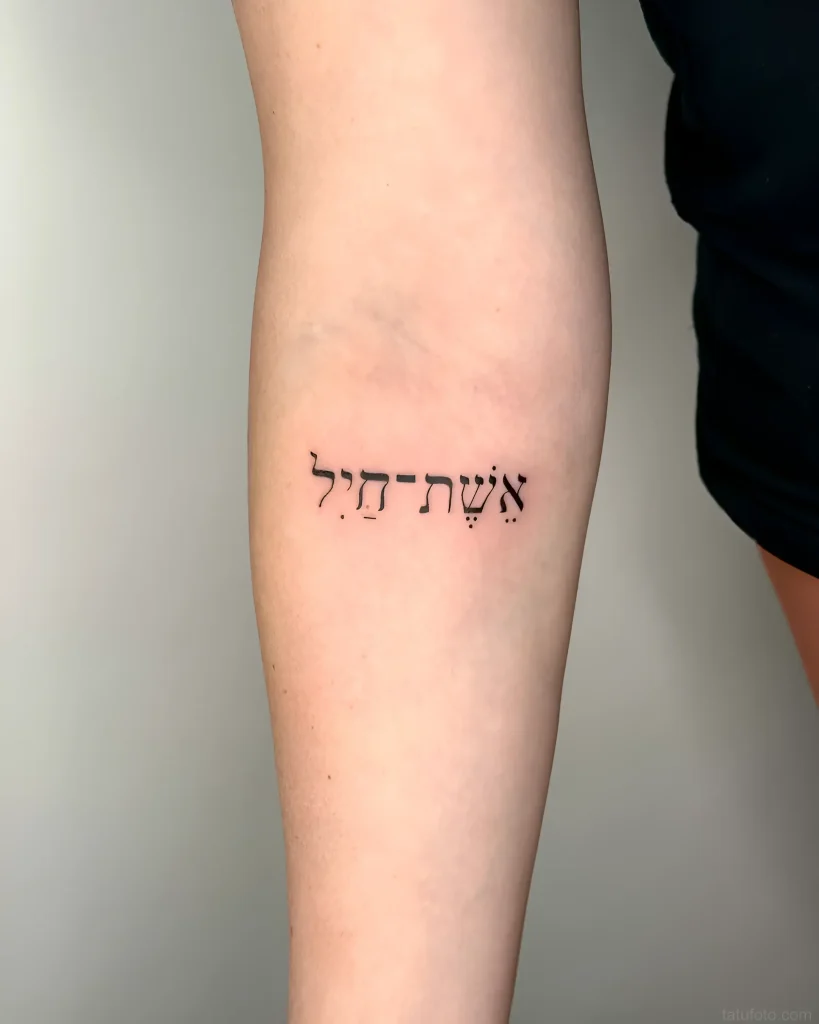
History of Hebrew and Its Influence on Tattoos
Hebrew (עברית) is a language that is not just a means of communication but also a carrier of colossal cultural and religious heritage. Known as the “Holy Language” (Lashon HaKodesh), it is directly related to the key texts of Judaism, including the Torah. It is this sacredness that gives Hebrew tattoo inscriptions their special power and appeal.
For many people not directly connected with Jewish culture, Hebrew is attractive due to the unique visual form of its alphabet – the Alef-Bet (א–ת). The 22 consonant letters, each having not only phonetic but also numerological (gematria) significance, allow for the creation of a tattoo that functions on several levels simultaneously:
- Visual level: Elegant, angular, or rounded forms, read from right to left, provide mystery and aesthetic appeal.
- Meaningful level: The direct meaning of the phrase or word.
- Numerological level (Gematria): Each letter corresponds to a number, and the sum of the numbers in a word can have an additional, hidden meaning known only to the wearer.
It is important to understand that while traditional Judaism does not approve of tattooing, modern Israeli and diaspora culture, as well as a growing interest in Kabbalistic and ancient wisdom, have made Hebrew inscriptions a popular choice for tattoos worldwide. They often serve as a marker of personal identity, resilience, or faith.
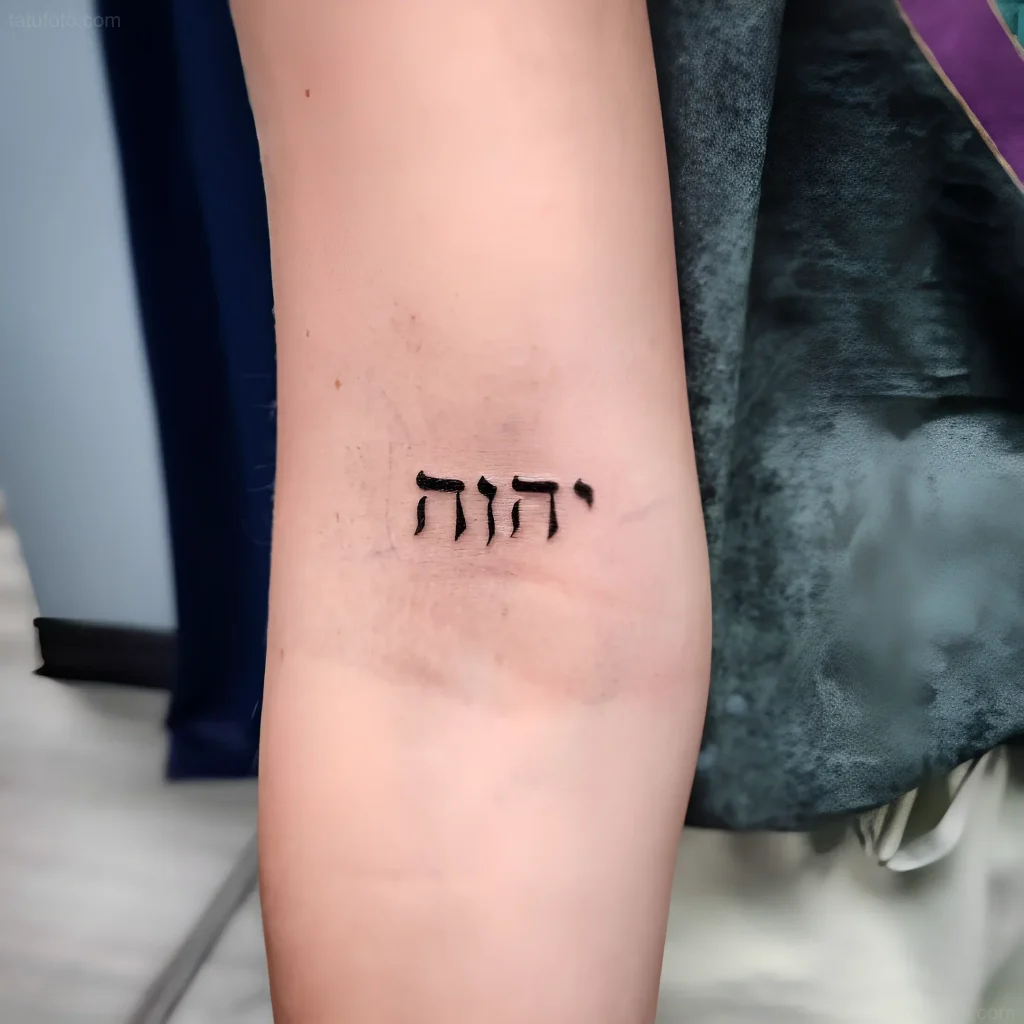
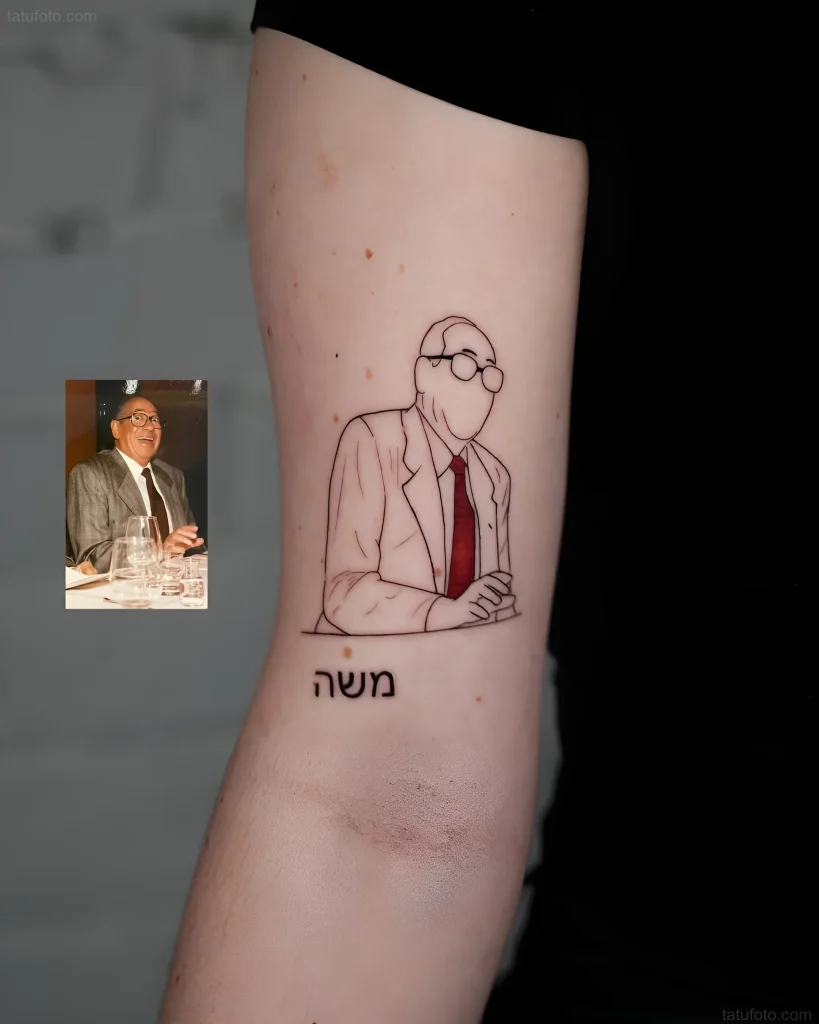
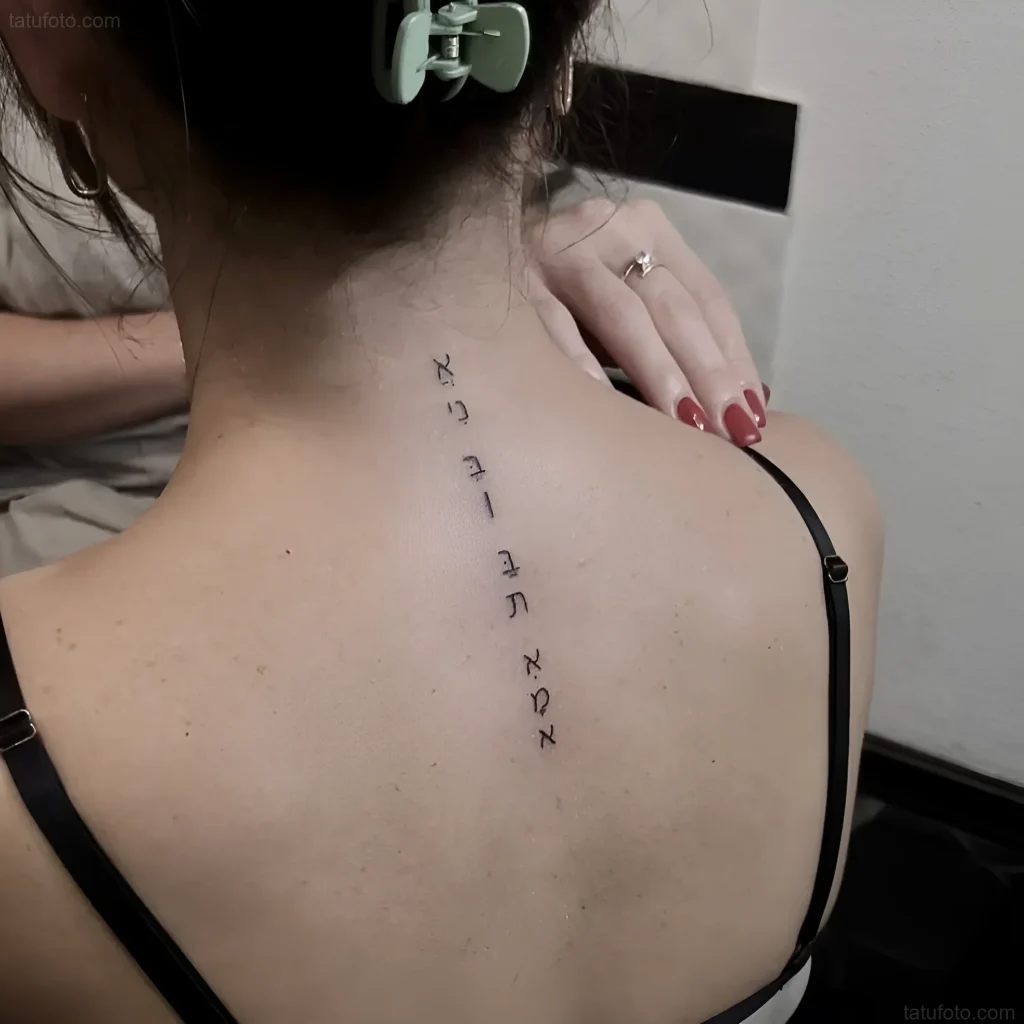
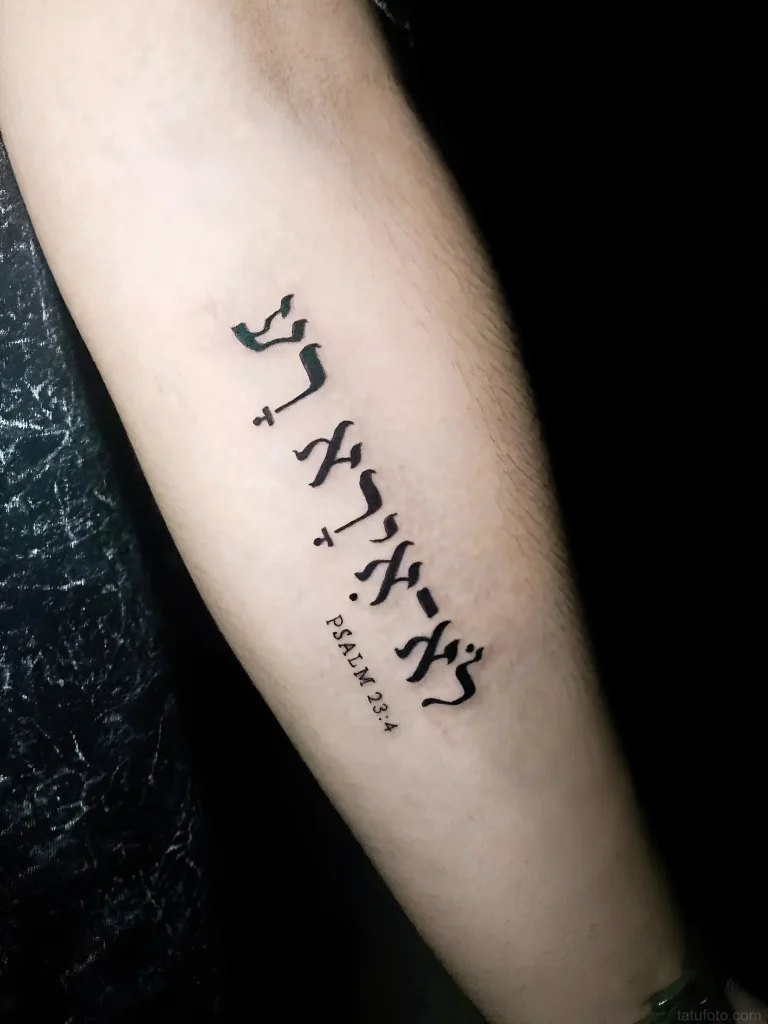
Meanings of Hebrew Tattoo Inscriptions: From Religious to Personal
Choosing a phrase for a Hebrew tattoo requires careful consideration, as translations can have many nuances, and context in an ancient language is critically important. We will examine the most popular categories and specific examples that are often found in tattoo art.
Philosophical and Motivational Inscriptions
These phrases appeal to the eternal themes of resilience, time, and life’s journey. They serve as a constant reminder of one’s personal creed or lived experience.
- “Gam ze yaavor” (גם זה יעבור): “This too shall pass.” One of the most sought-after phrases, attributed to King Solomon. It symbolizes humility in the face of life’s transience – a reminder that neither pain nor joy is eternal. Ideal for those who value balance and a philosophical outlook on life.
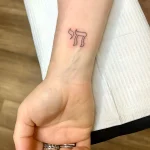
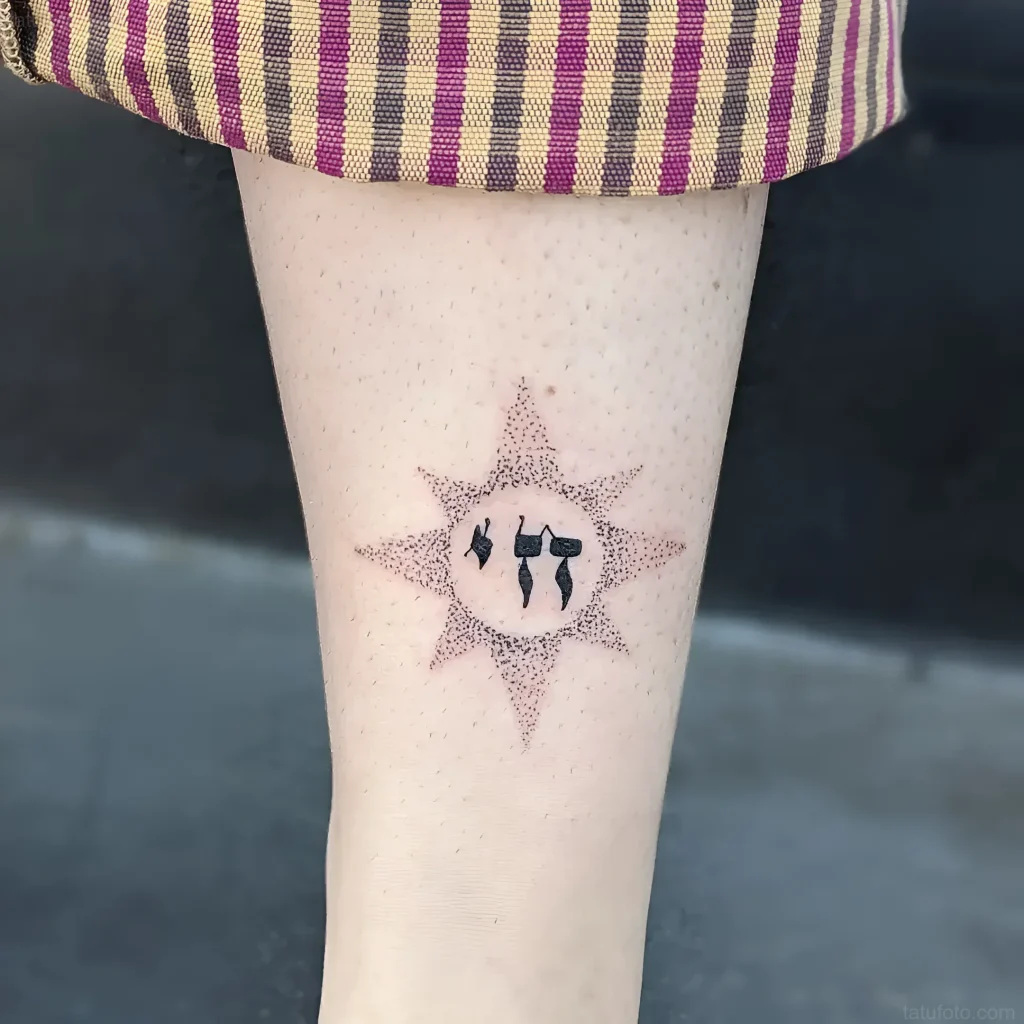
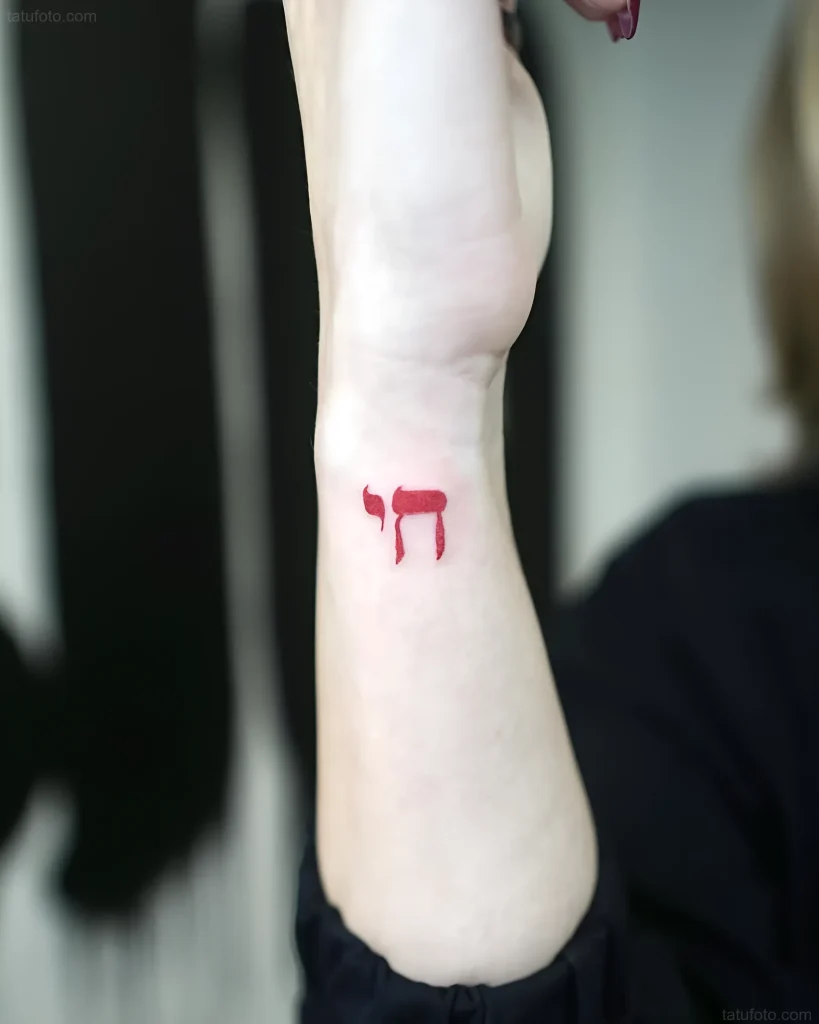
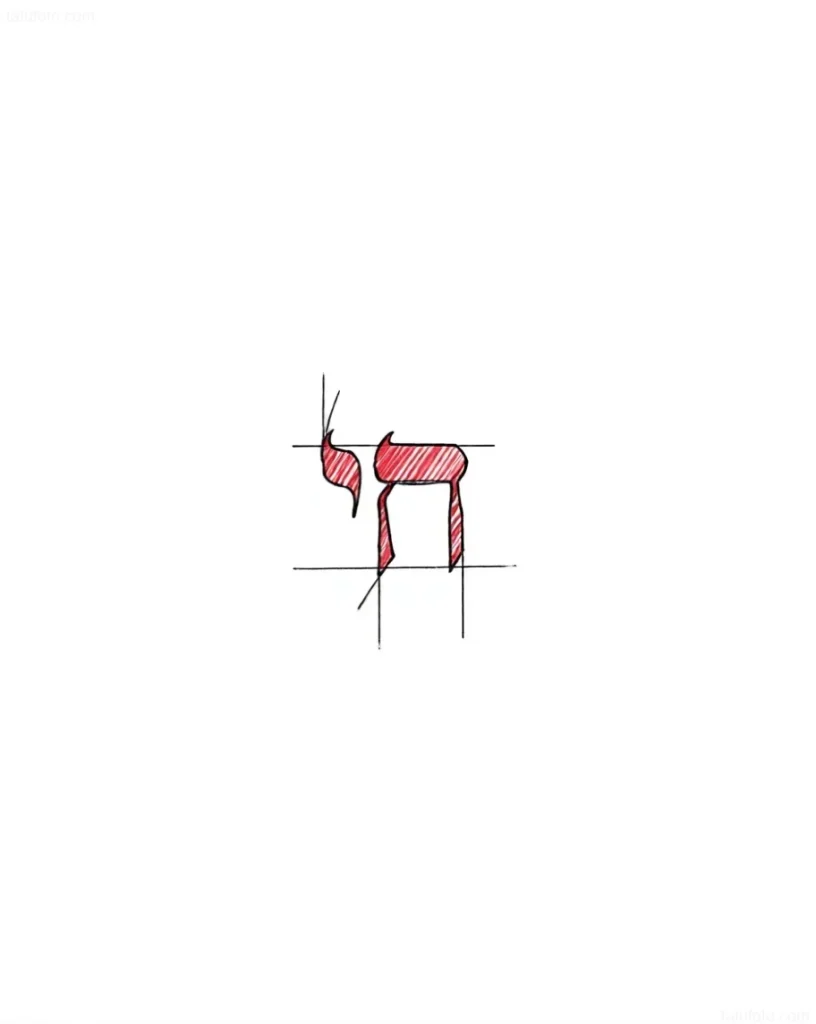
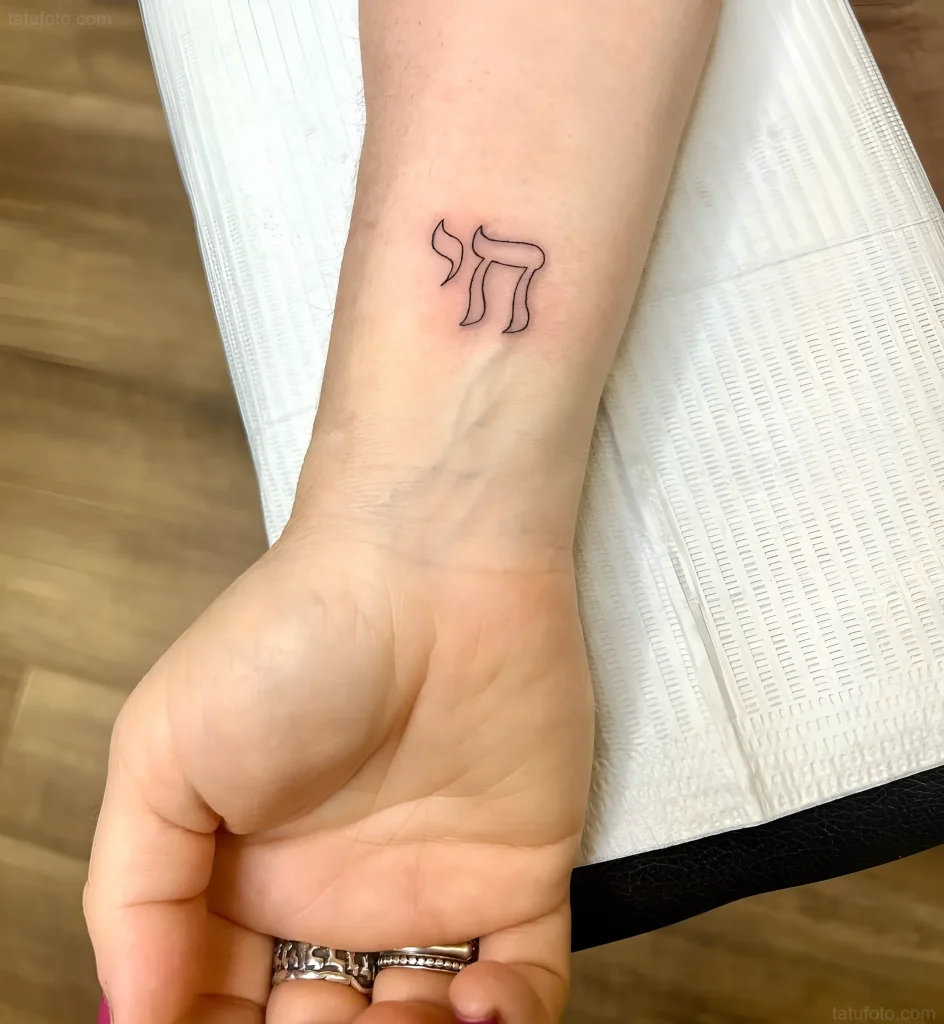
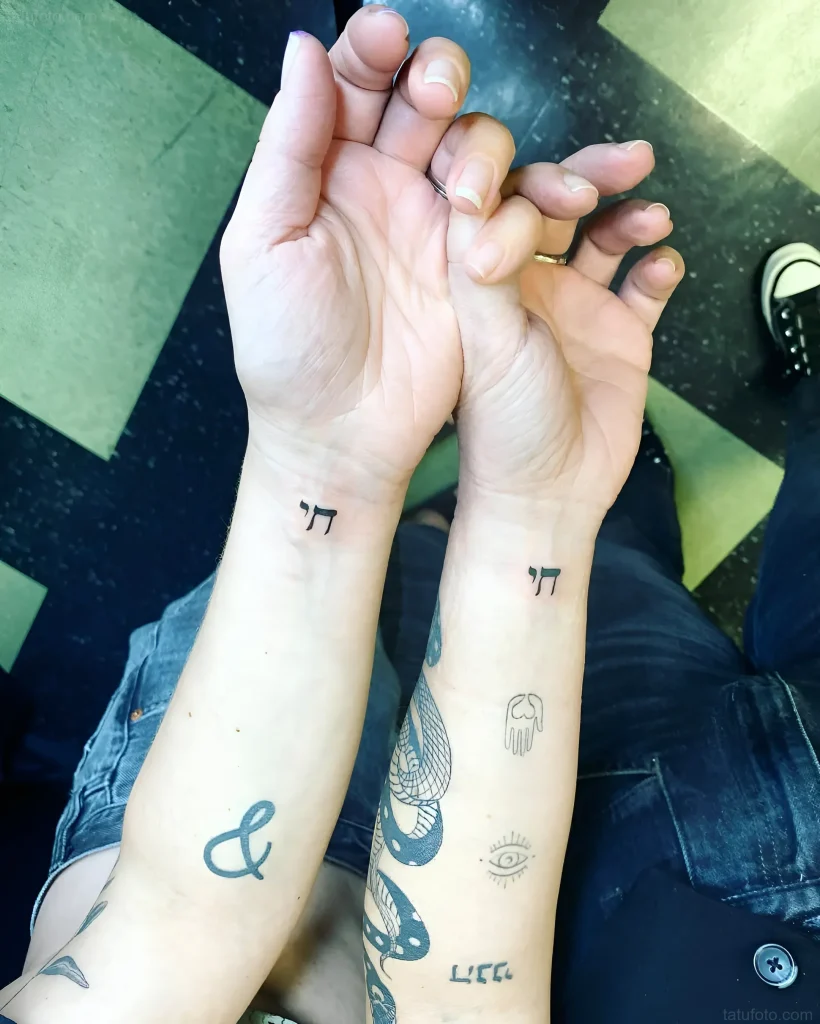
- “Chai” (חי): “Life.” A simple yet powerful symbol. Often used as a protective charm or an expression of love for life. In gematria, it corresponds to the number 18, which is considered a lucky number in Jewish tradition (hence it is often used as a charitable donation or a wish for good luck – “L’chaim”).
- “Ani lo levad” (אני לא לבד): “I am not alone.” Expresses a sense of support, whether divine, familial, or inner strength.
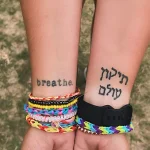
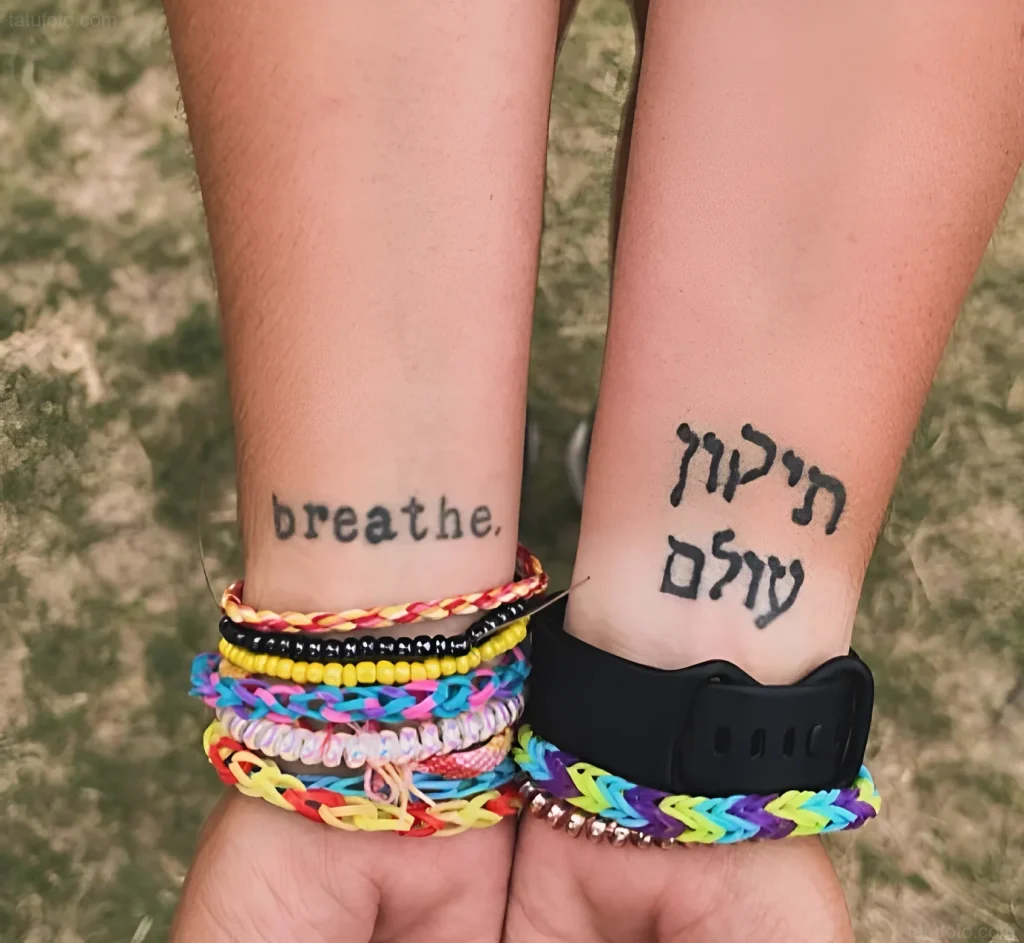
- “Tikkun Olam” (תיקון עולם): “Repairing the world.” A Kabbalistic concept meaning the duty of every person to participate in improving society and the world. An excellent choice for activists or people with a strong sense of social responsibility.
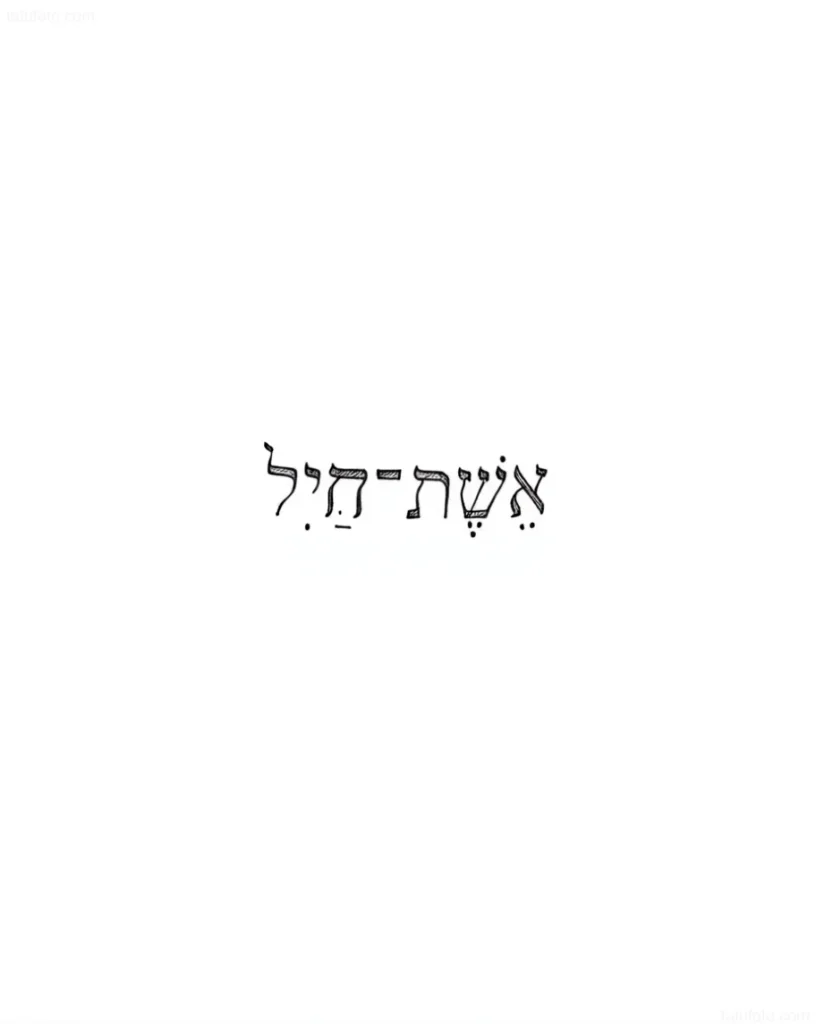
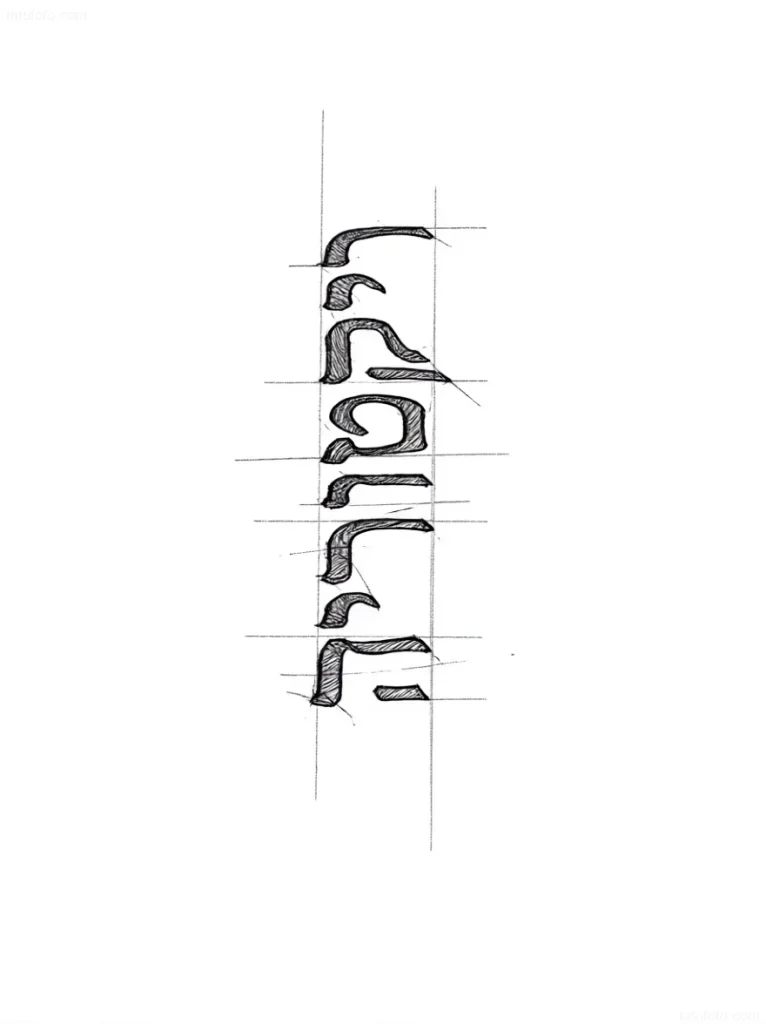


Religious and Spiritual Quotes
These inscriptions are usually taken directly from the Torah, Psalms, or prayers. They carry the strongest sacred charge.
| Hebrew Phrase | Transliteration (approx.) | Meaning and Context |
|---|---|---|
| שמע ישראל | Shema Yisrael | “Hear, O Israel.” The first line of the most important Jewish prayer, expressing the unity of God and faith. A very strong symbol of faith and identity. |
| כי מלאכיו יצווה לך | Ki malachav yitzaveh lach | “For He will command His angels concerning you.” A quote from Psalm 90 (91), often used as a protective charm, a symbol of protection and guardianship. |
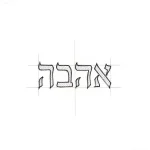
| אהבה | Ahava | “Love.” A fundamental concept. Can be used in relation to both divine and human love. |
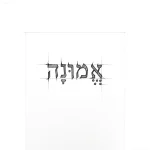
| אמונה | Emunah | “Faith” or “trust.” Expresses deep trust in higher powers or in one’s own path. |
Names and Personal Dates
Hebrew inscriptions are often used to immortalize the names of loved ones, children, or important dates. A name written in Hebrew gains additional solemnity and antiquity. It is important to remember that the Hebrew spelling of names can differ significantly from their phonetic English or Russian equivalents, so precise consultation is required.
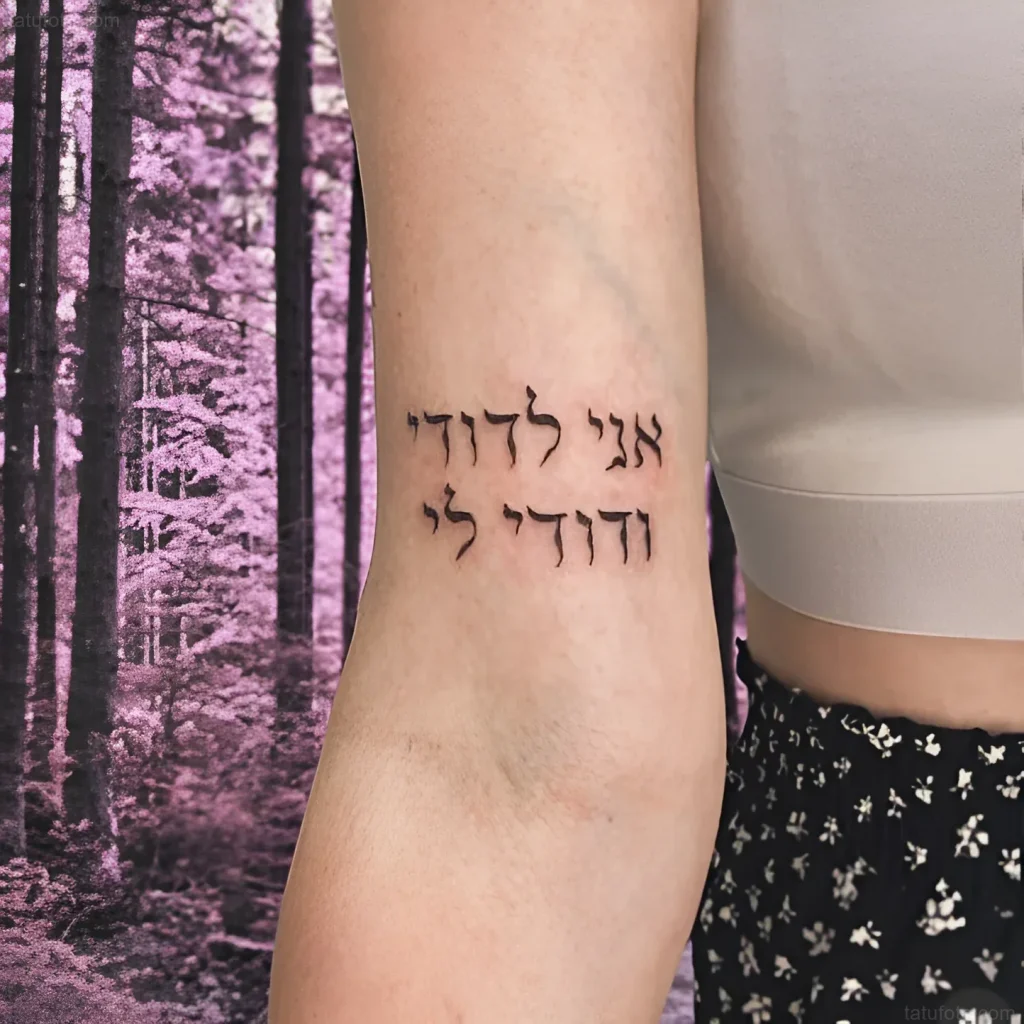
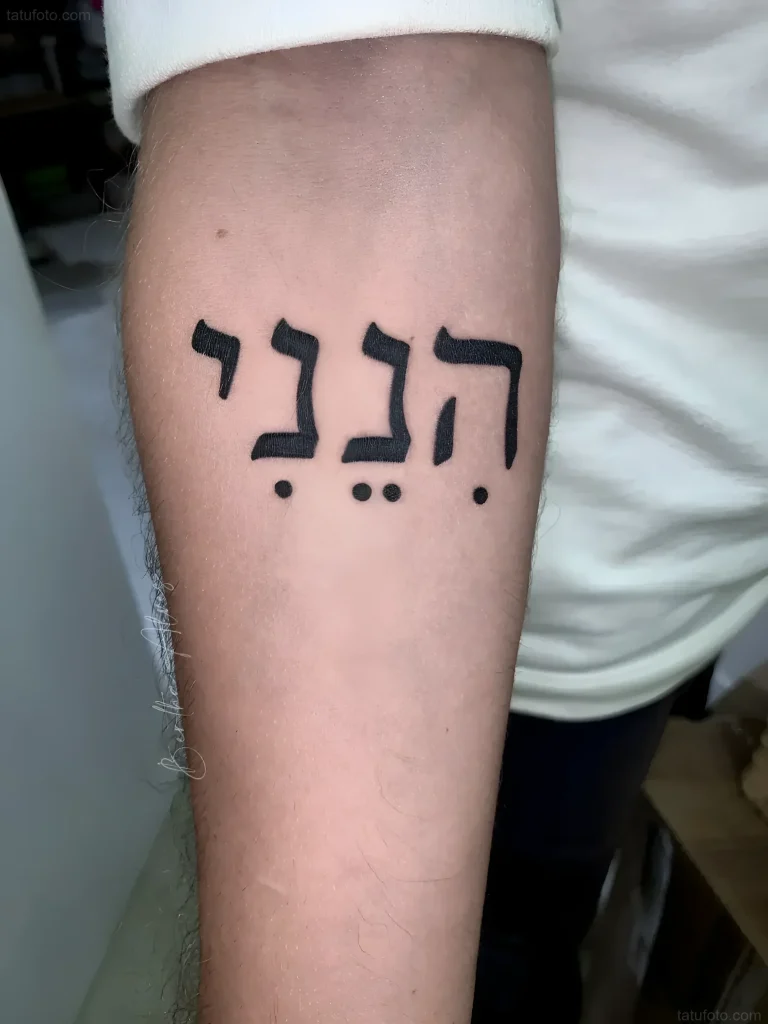
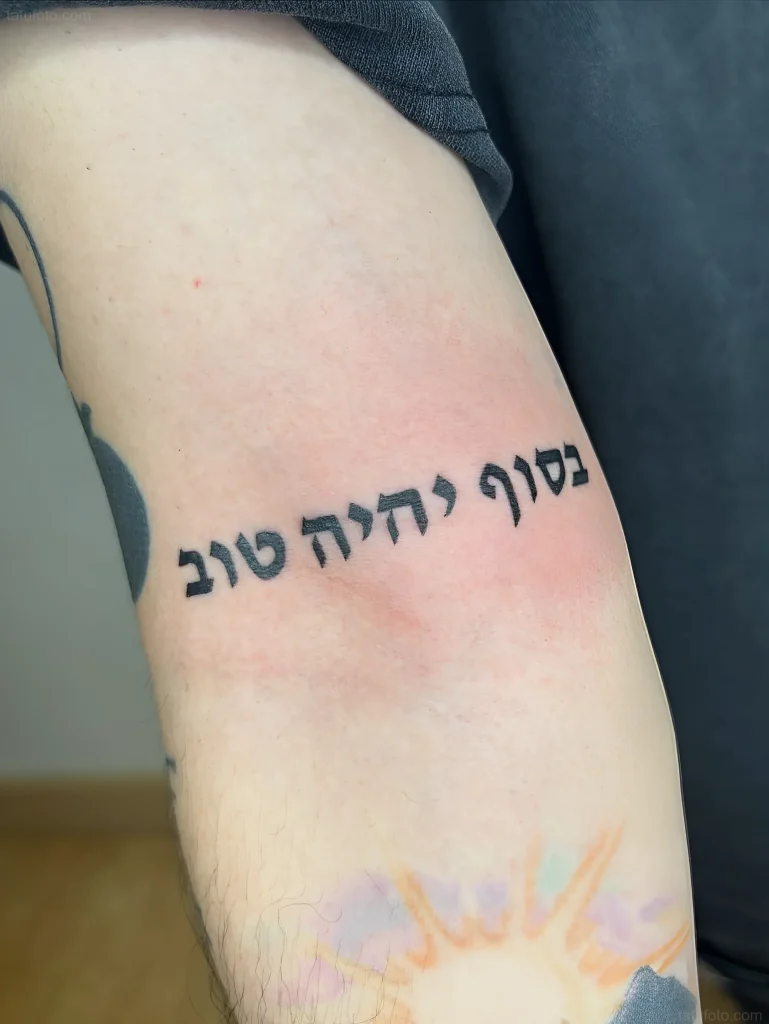
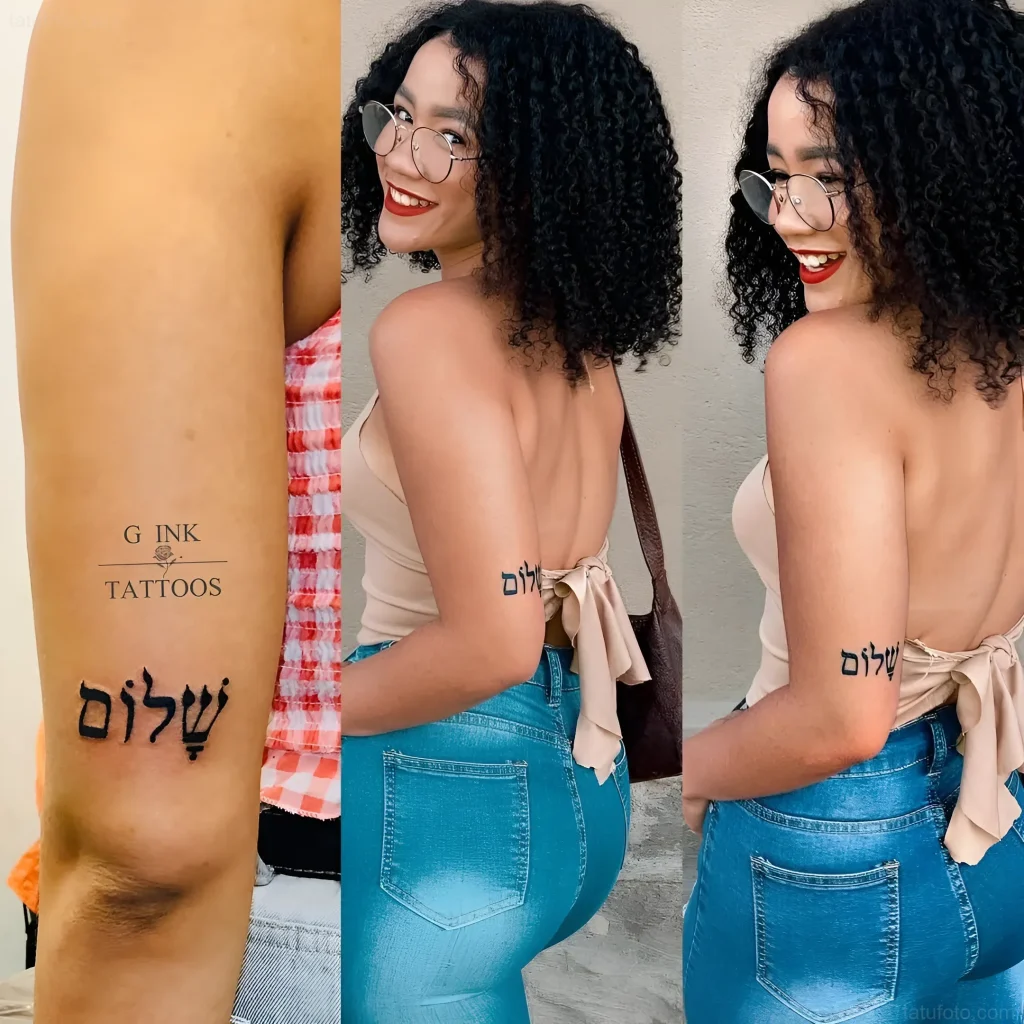
Hebrew Tattoo Styles: From Classic to Modern
The beauty of a Hebrew tattoo largely depends on the chosen font and style of execution. The Hebrew alphabet has several historically established forms, each carrying its own character.
1. Ktav Ashuri (Assyrian Script)
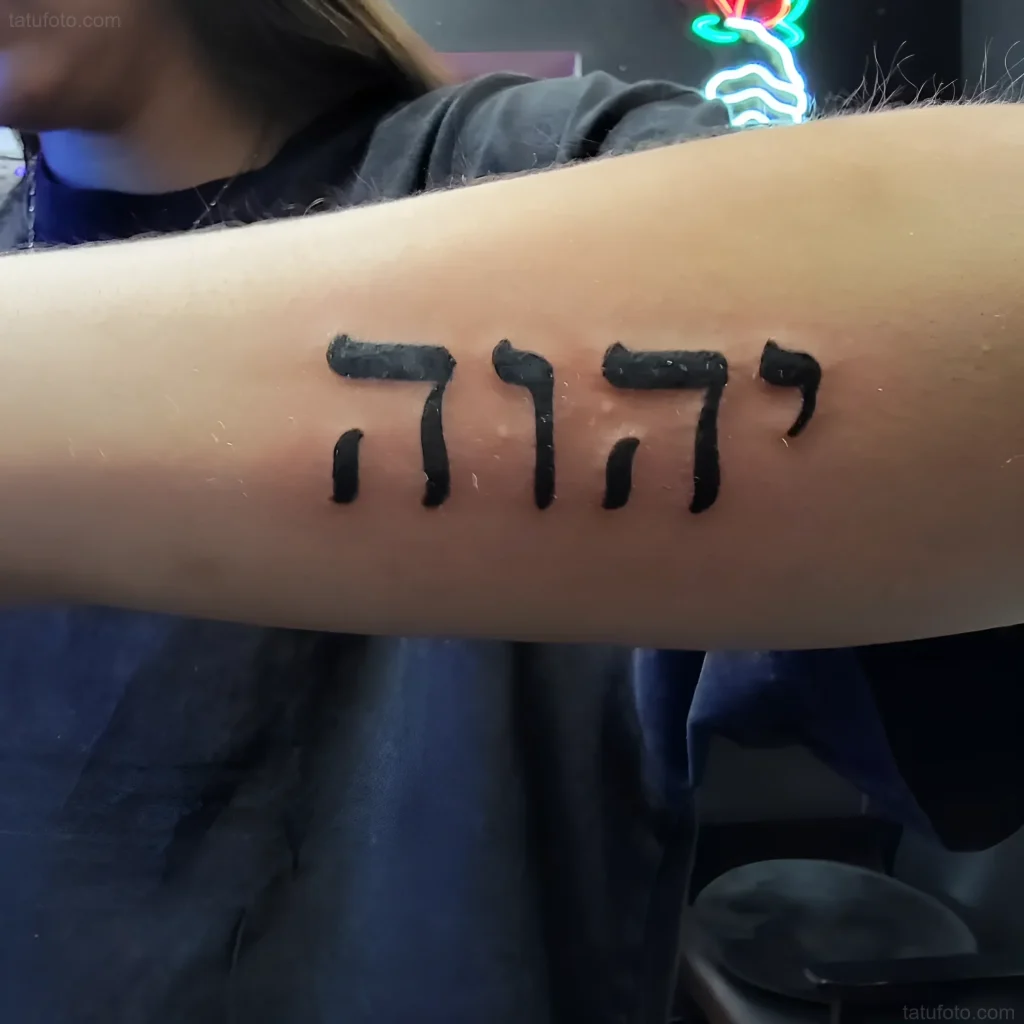
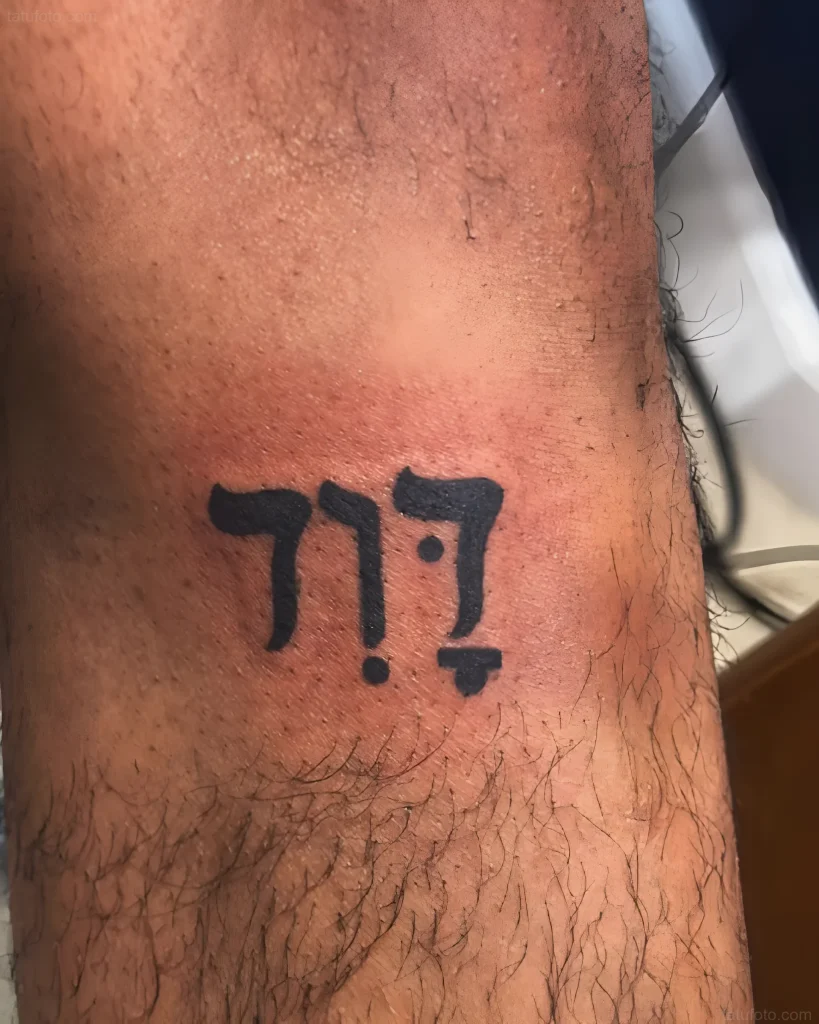
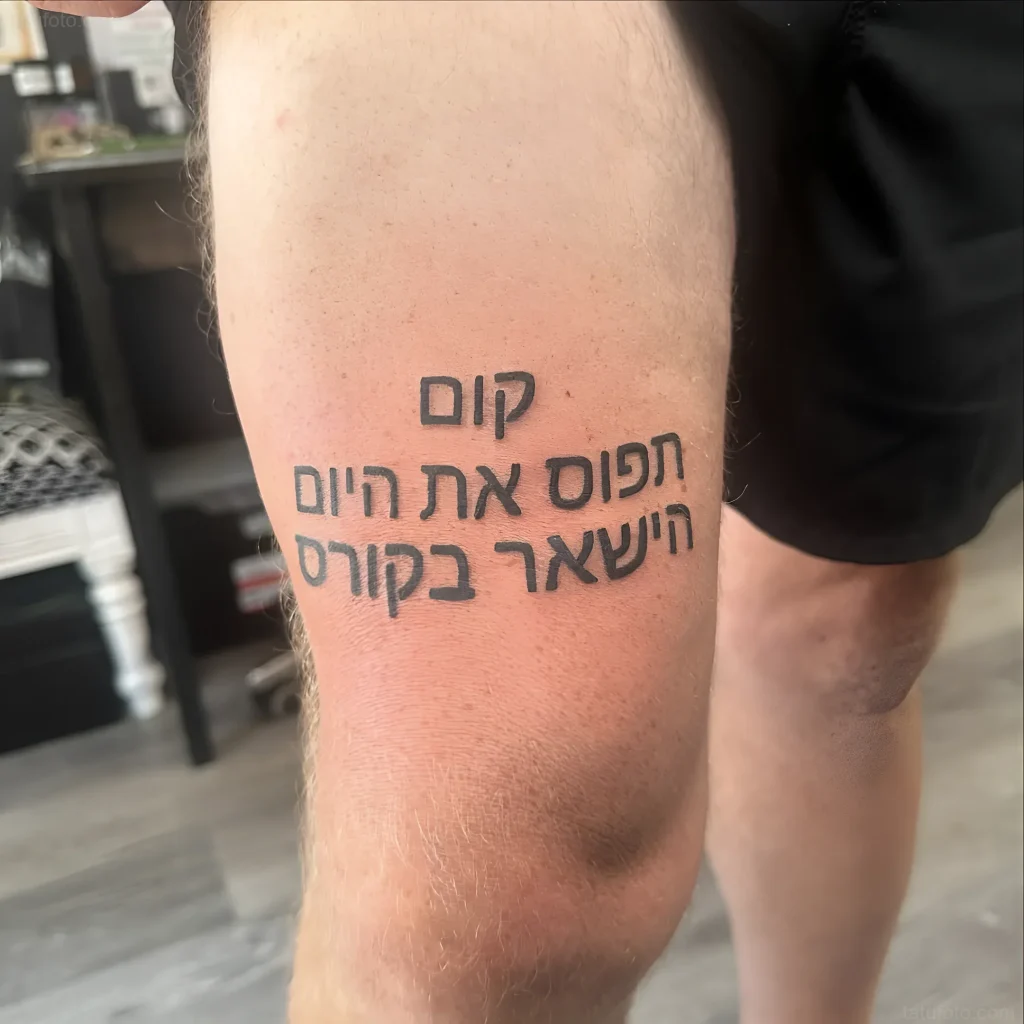
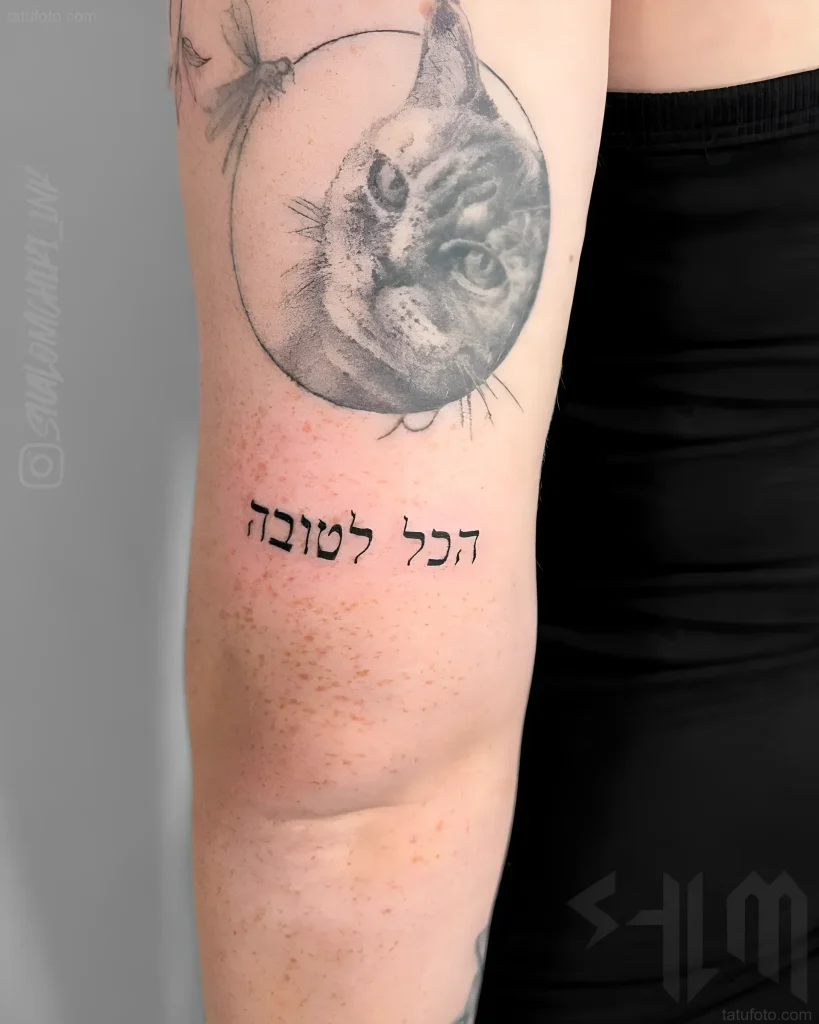
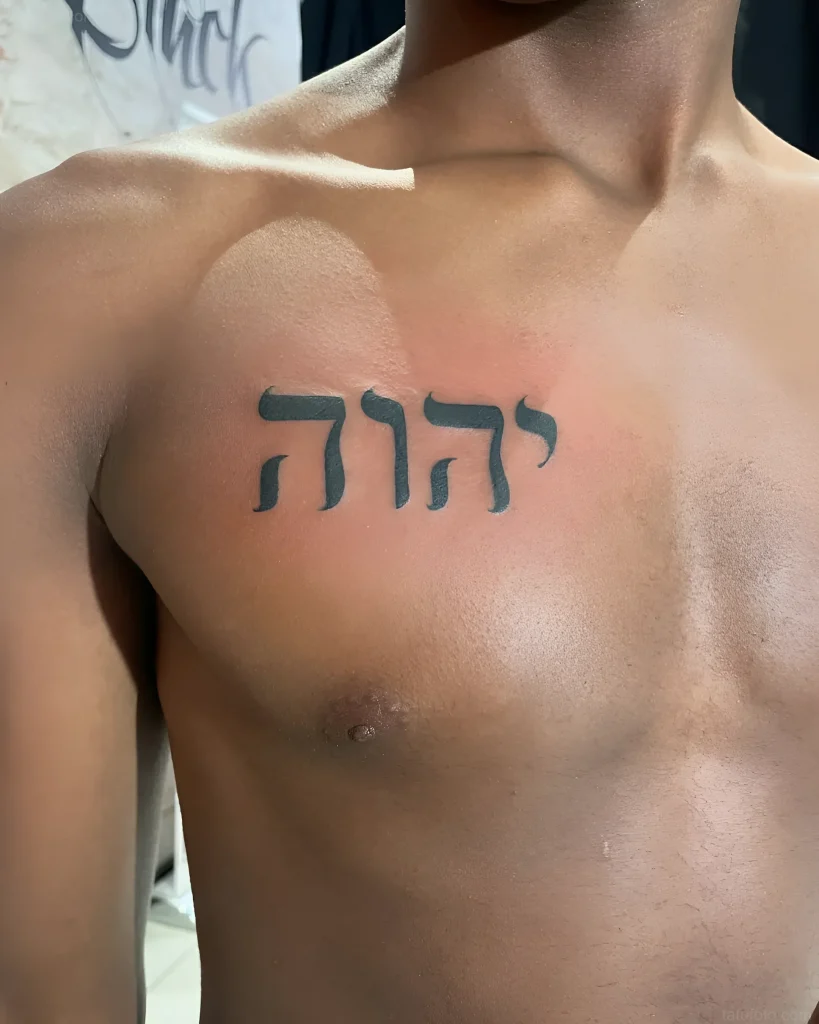
This is the standard, “square” font used today in printed books, Torah scrolls, and most official documents. It is characterized by strict, clear lines and angularity. This is the most common and recognizable style for Hebrew tattoo inscriptions.
- Characteristics: Monumentality, formality, clarity.
- Usage: Ideal for short, powerful phrases that should look weighty and classic. Often used in Blackwork or Dotwork styles for depth.
2. Rashi Script Style
Rashi script is a semi-cursive script developed in the Middle Ages for printing commentaries on Torah texts (hence the name, after the famous commentator Rashi). This font is rounder, softer, and less formal than Ashuri.
- Characteristics: Elegance, historical authenticity, cursive.
- Usage: Suitable for long quotes where a softer, handwritten aesthetic is desired. It often looks more artistic and less aggressive.


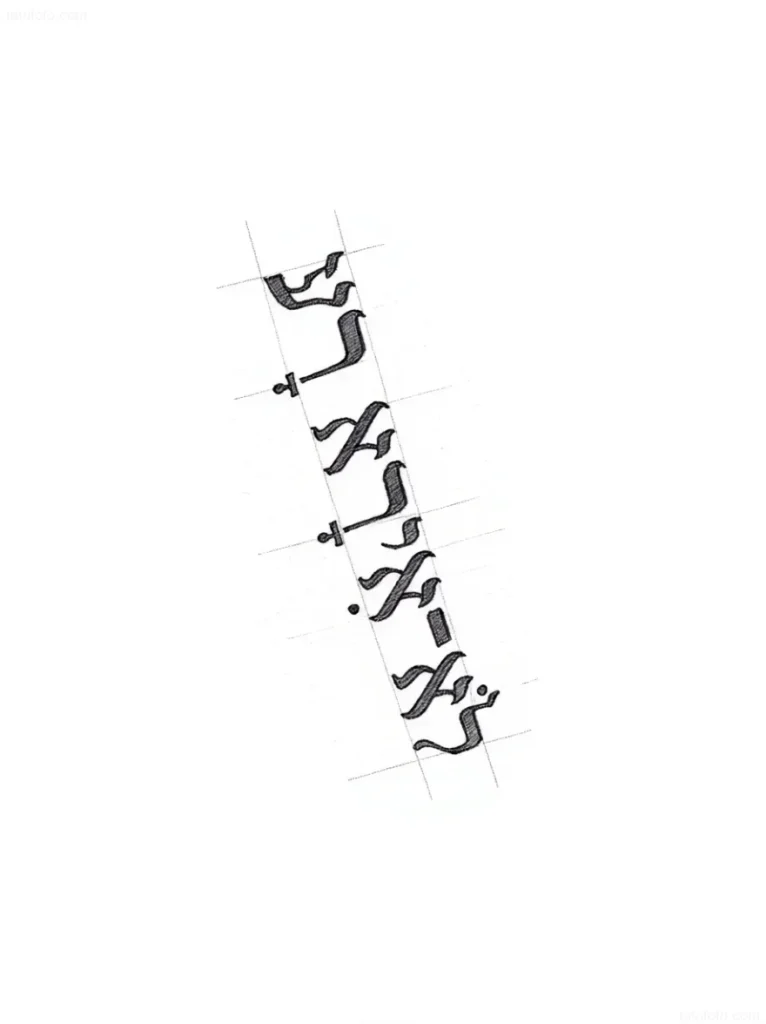

3. Modern Hebrew Cursive (Ktav Yad)
This is a modern handwritten style used in everyday life in Israel. It is faster, more dynamic, and can vary from very casual to elegantly calligraphic. In tattoos, this style requires high skill, as the lines must be clean and not blur over time.
- Characteristics: Dynamism, personal character, “handwritten” feel.
- Usage: Ideal for personal, intimate phrases where imitating handwriting is important.
4. Calligraphic and Artistic Approach
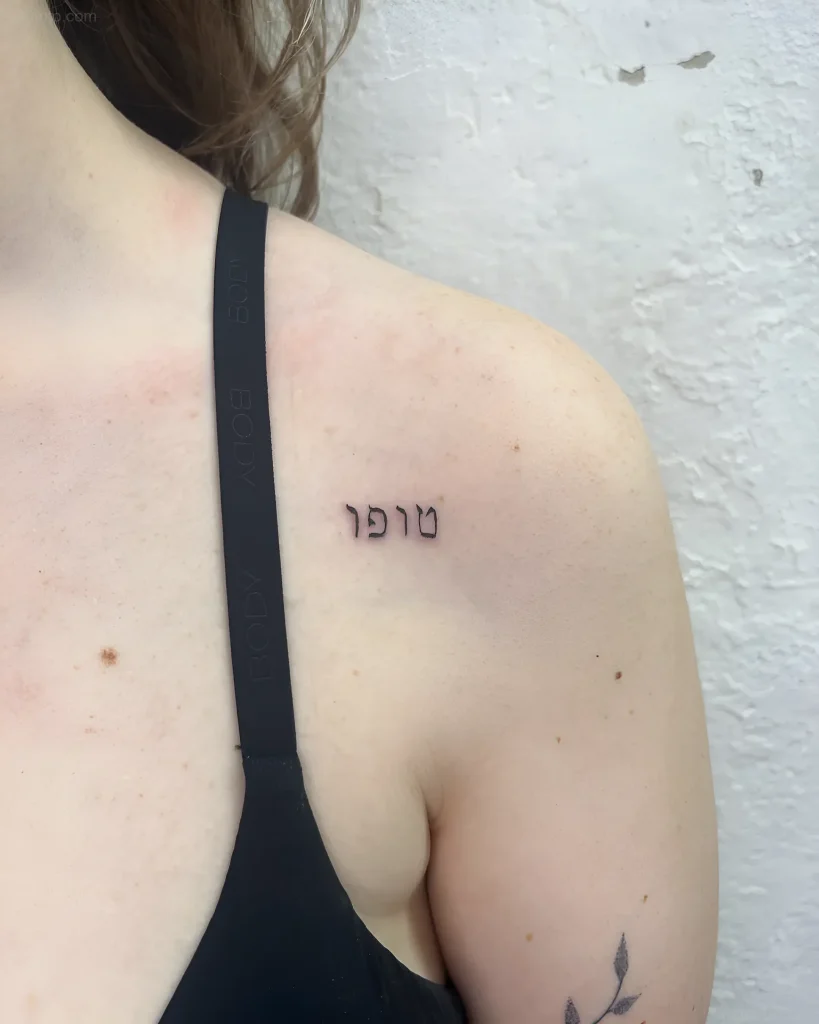
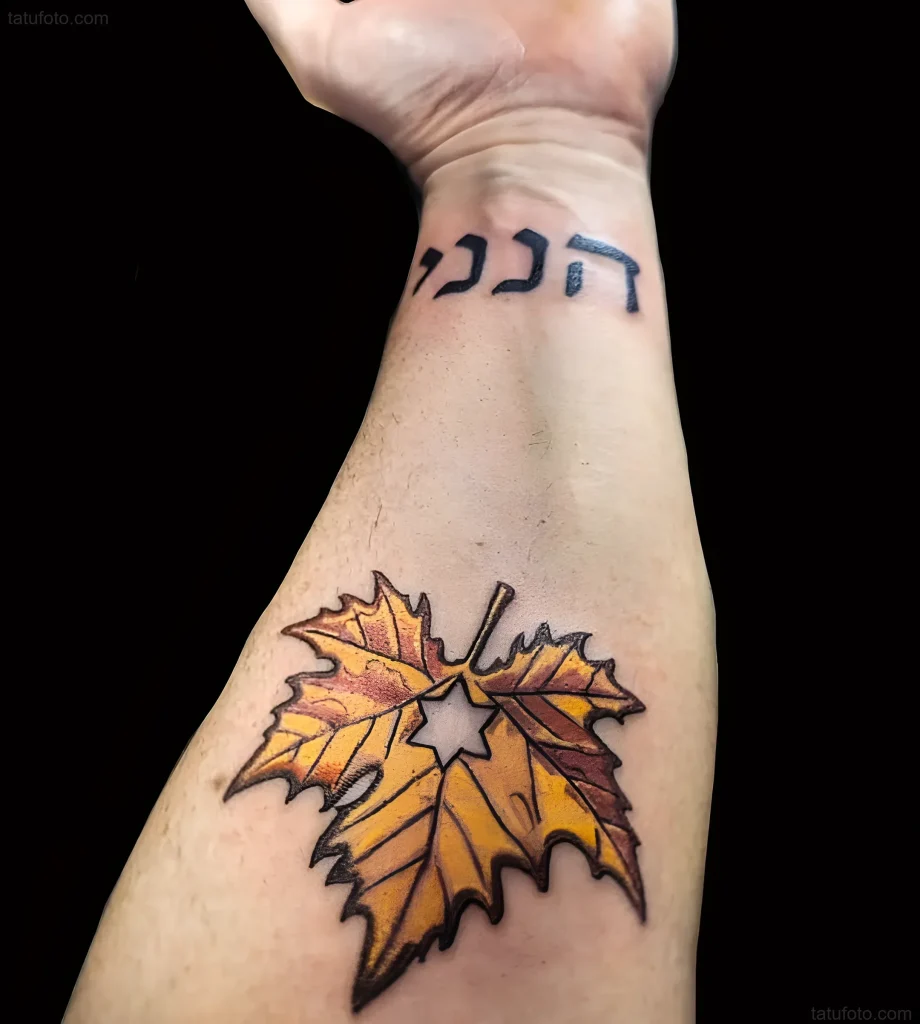
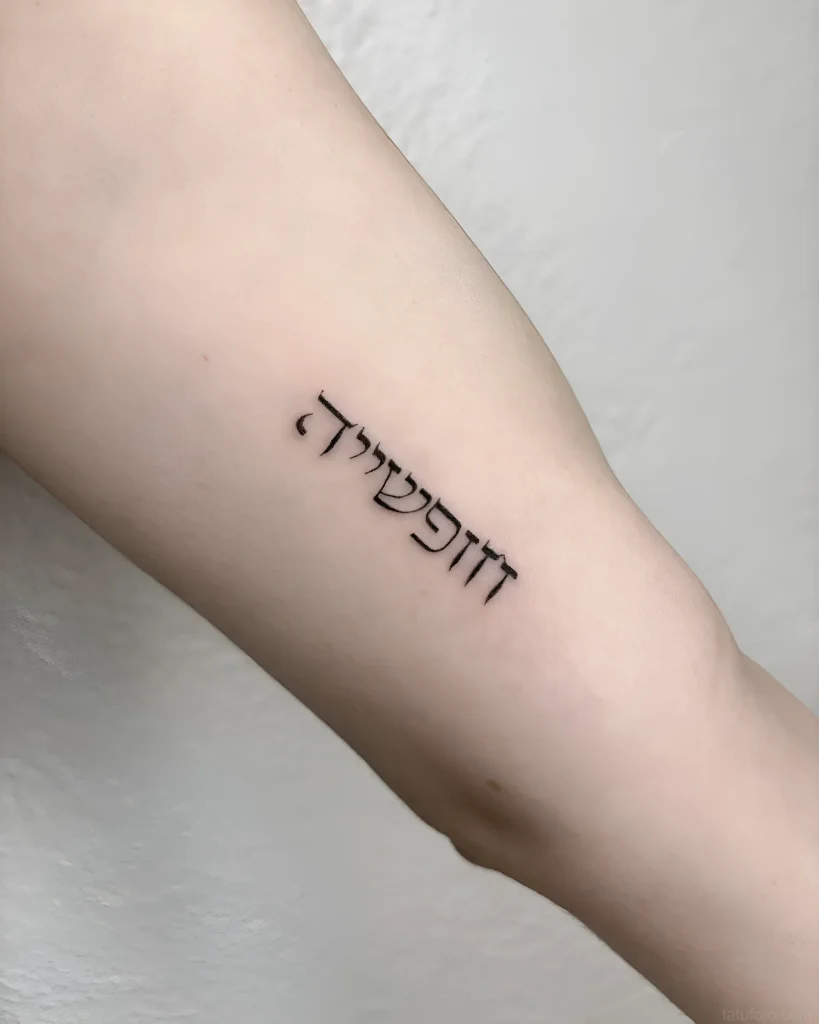
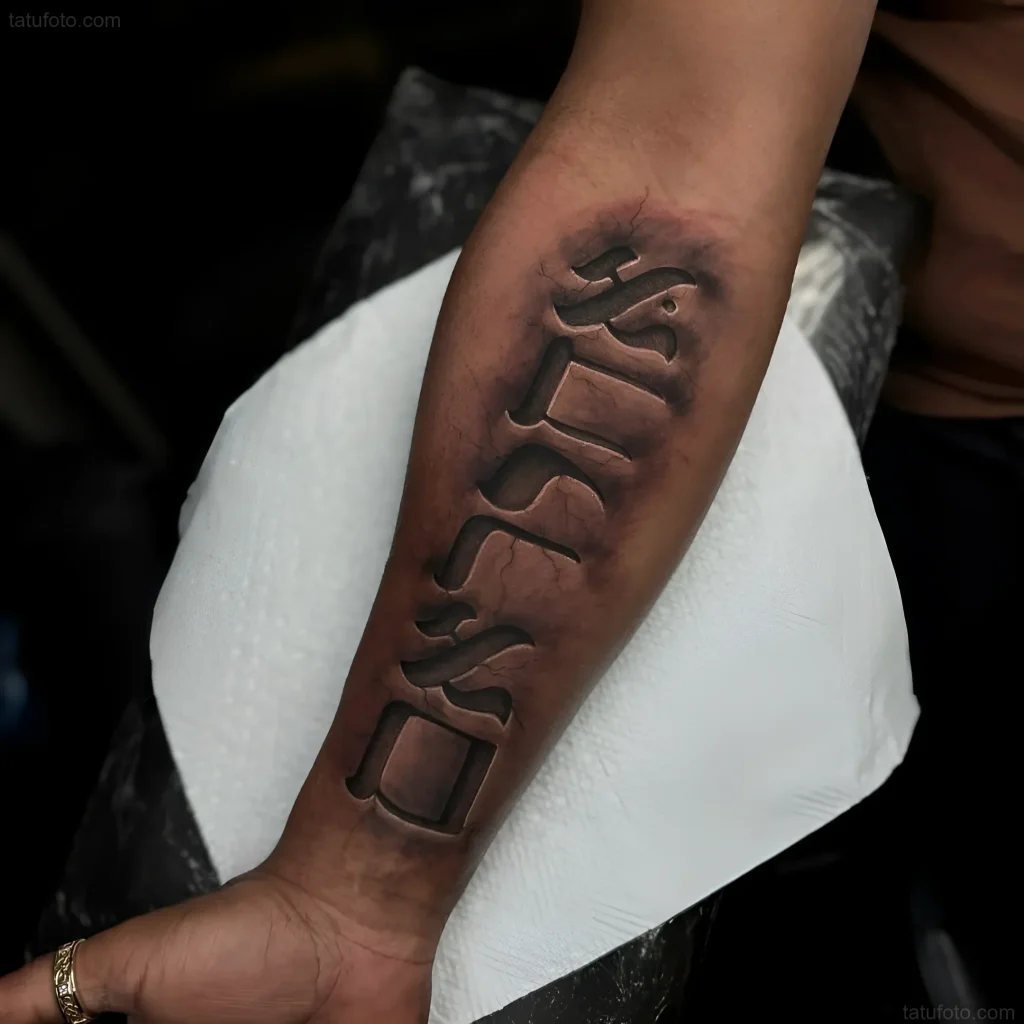
Many artists specializing in Hebrew tattoo inscriptions do not just copy fonts but create unique calligraphic works. They may integrate letters into ornaments, use shadow effects (3D effect), or stylize letters to resemble ancient scrolls (with an aged paper or ink effect).
Where to Get a Hebrew Tattoo Inscription: Best Places on the Body
The choice of location for a Hebrew tattoo not only affects its visual perception but can also be related to its symbolic meaning, especially considering that Hebrew is read from right to left.
Forearm and Wrist
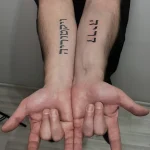
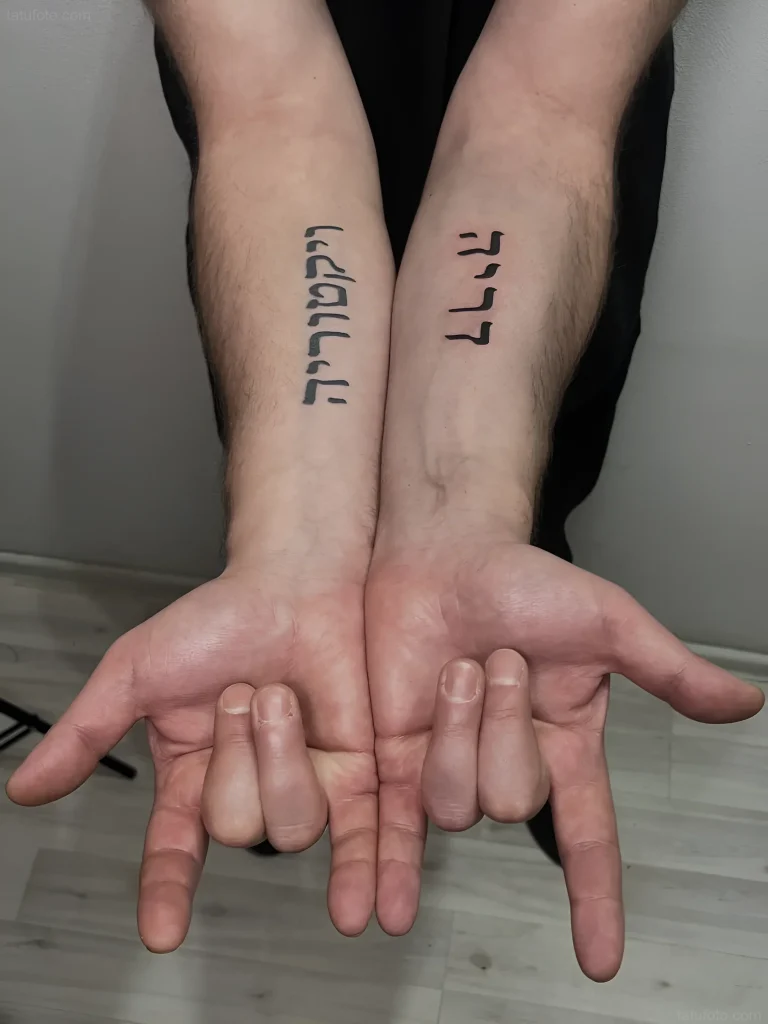
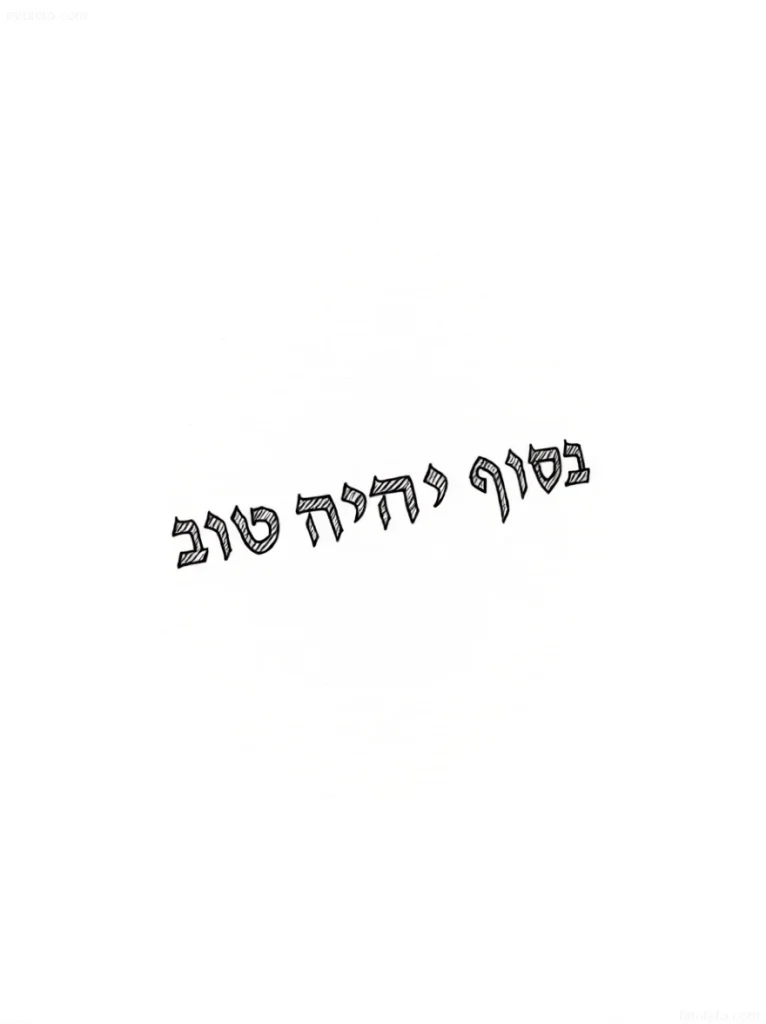
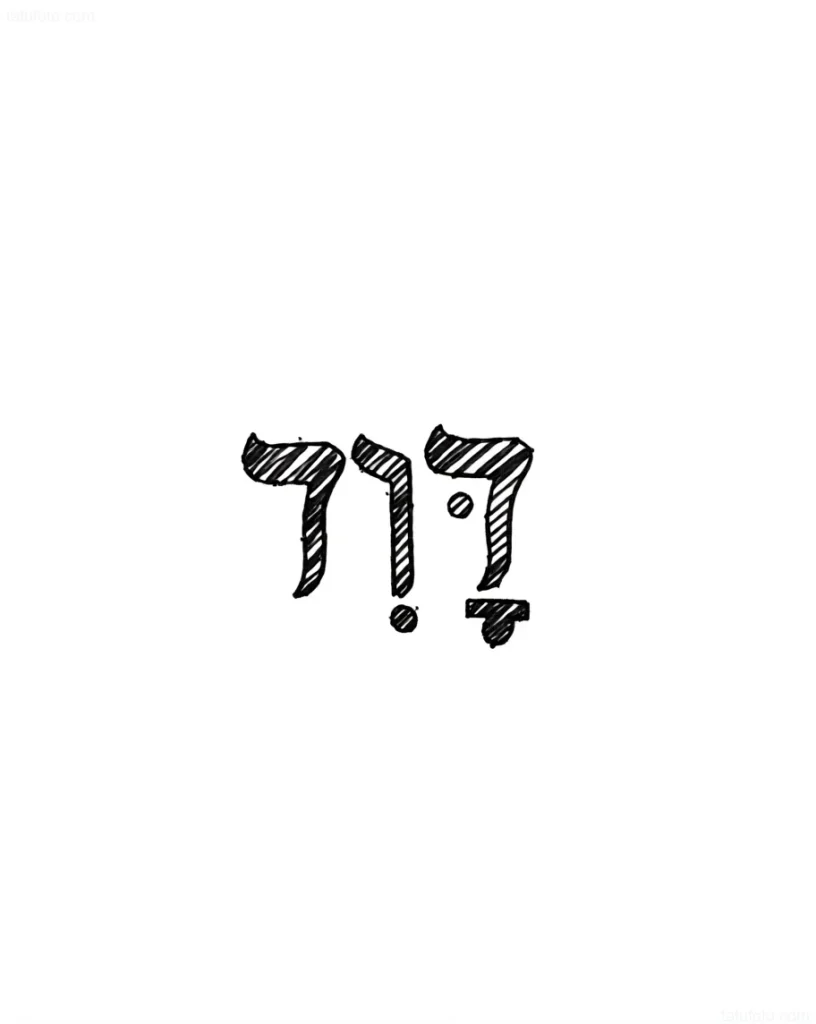
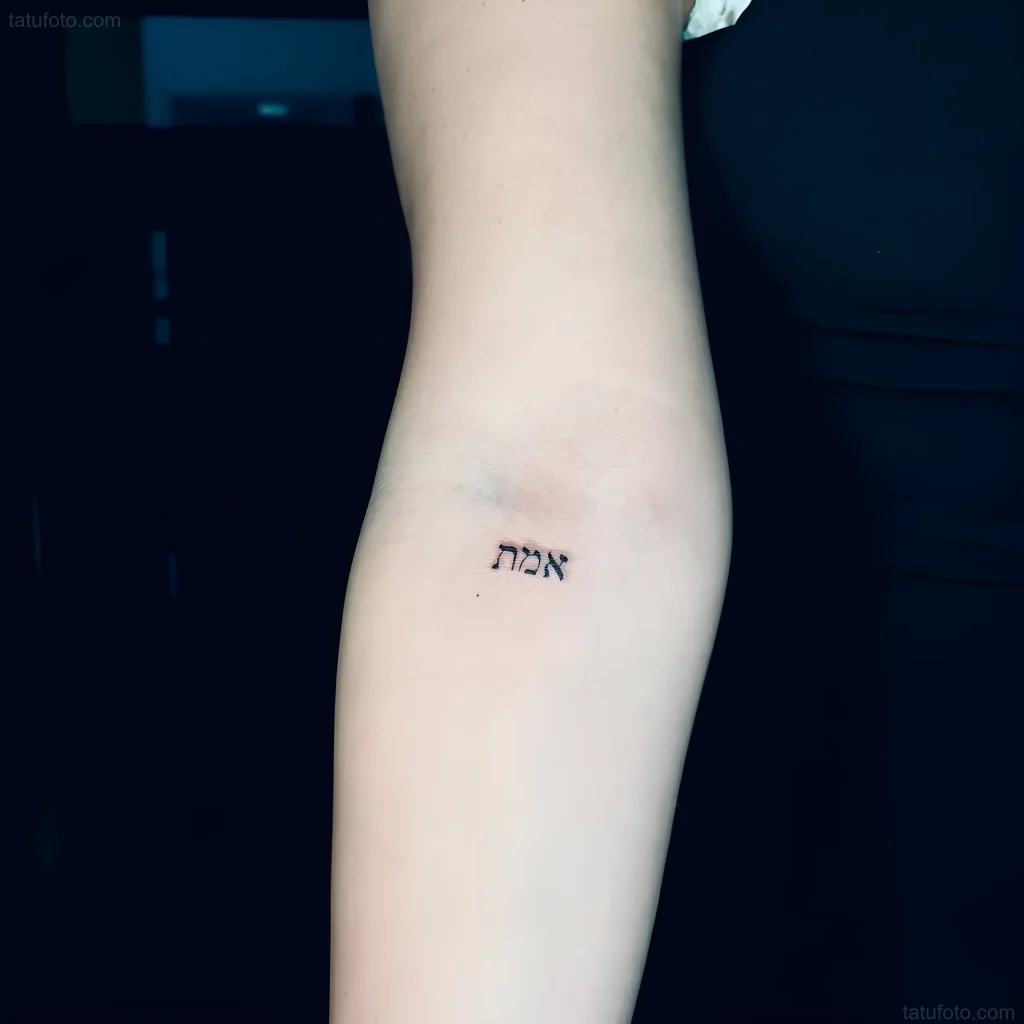
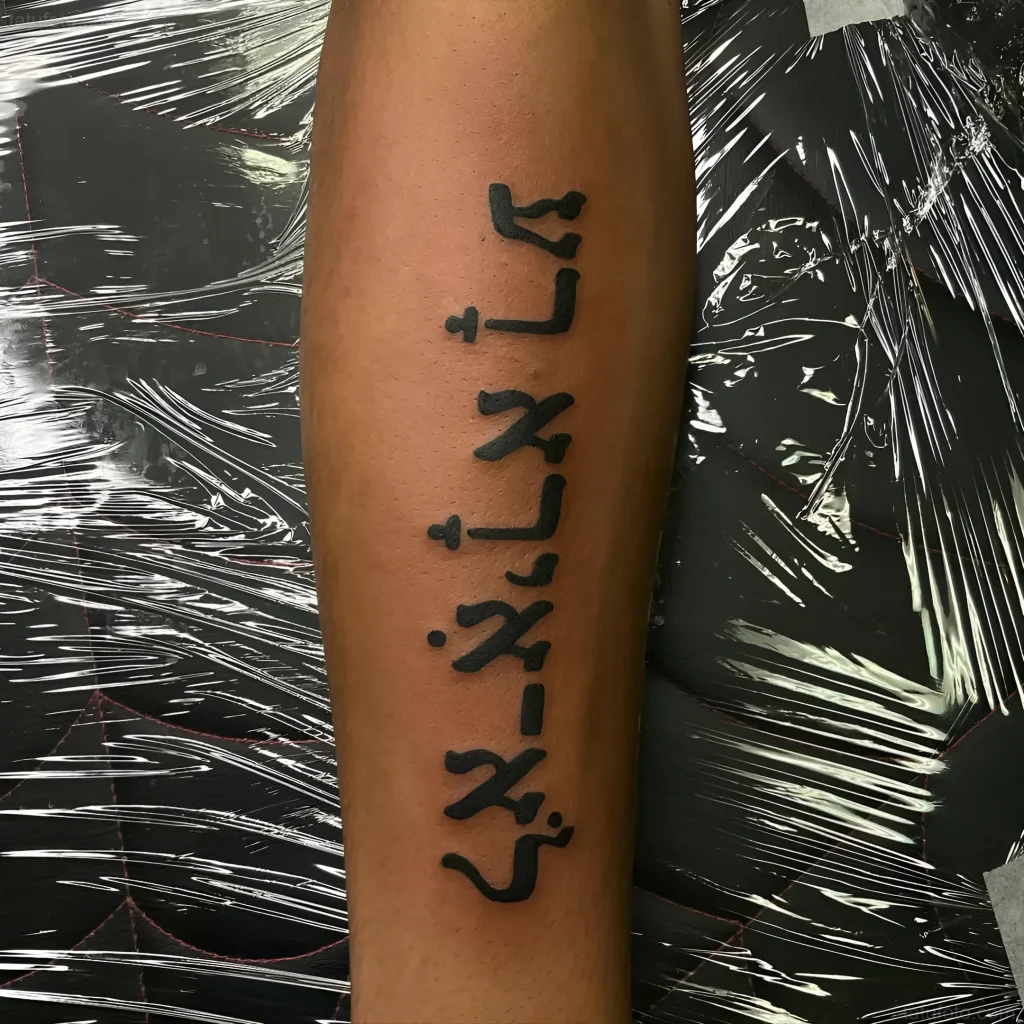
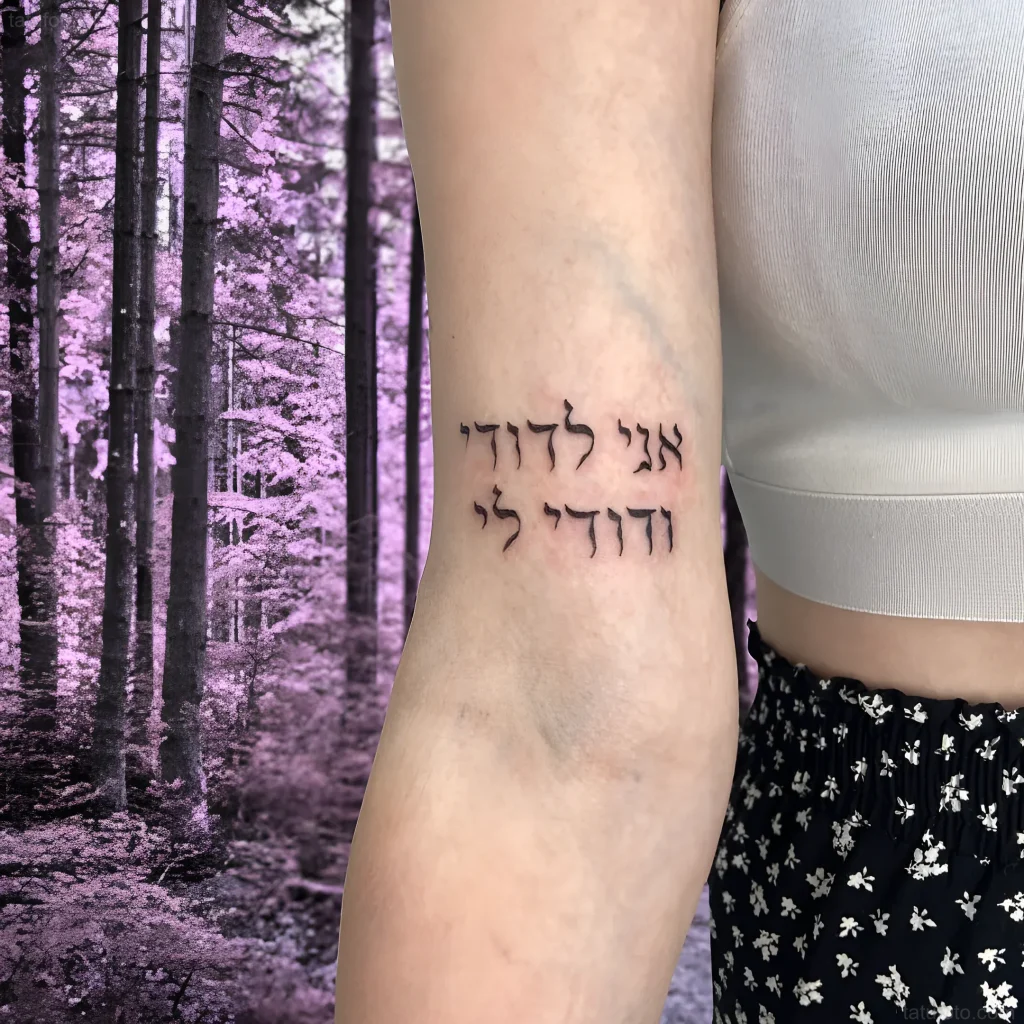
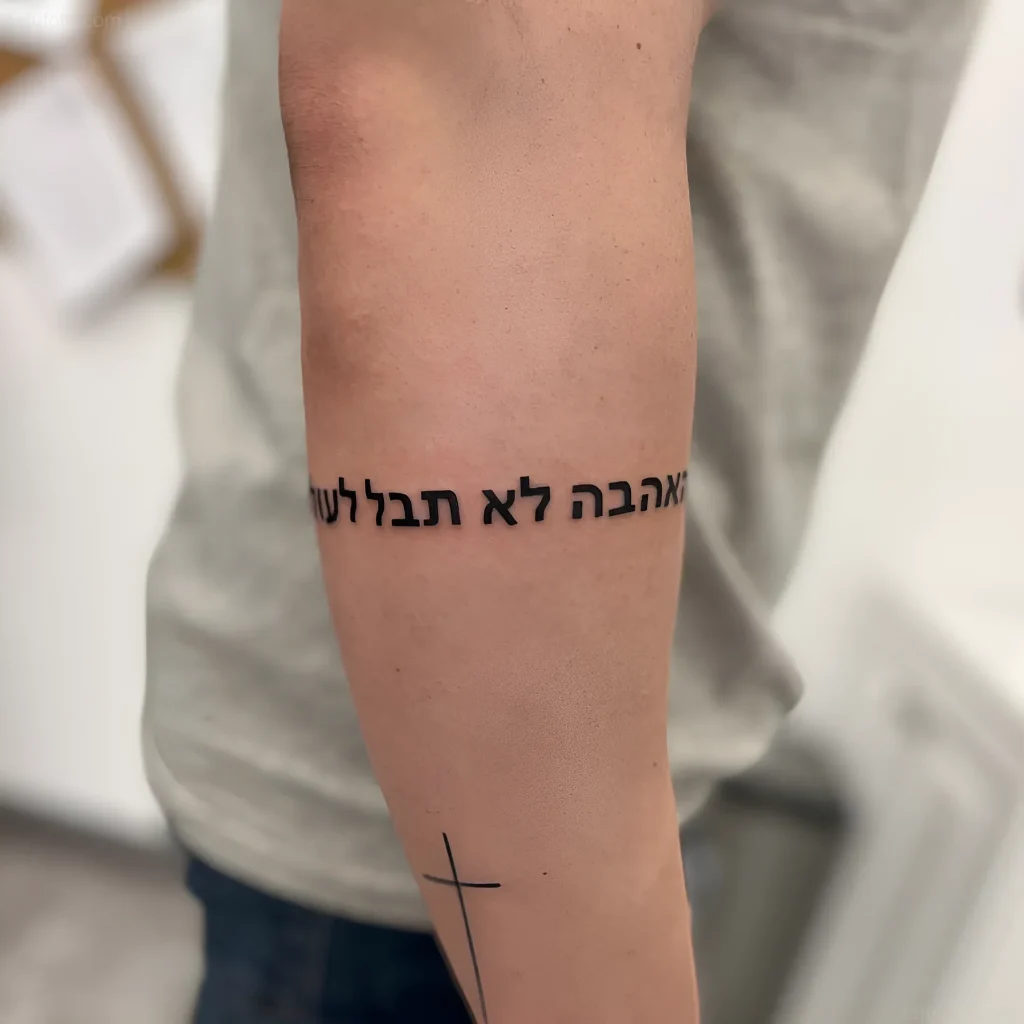
This is a classic choice for inscriptions. The forearm provides enough space for a long phrase, done in a large, readable font (e.g., Ktav Ashuri).
- Symbolism: Visibility and reminder. If the inscription faces you, it serves as a personal motivator. If it is visible to others, it becomes your public statement.
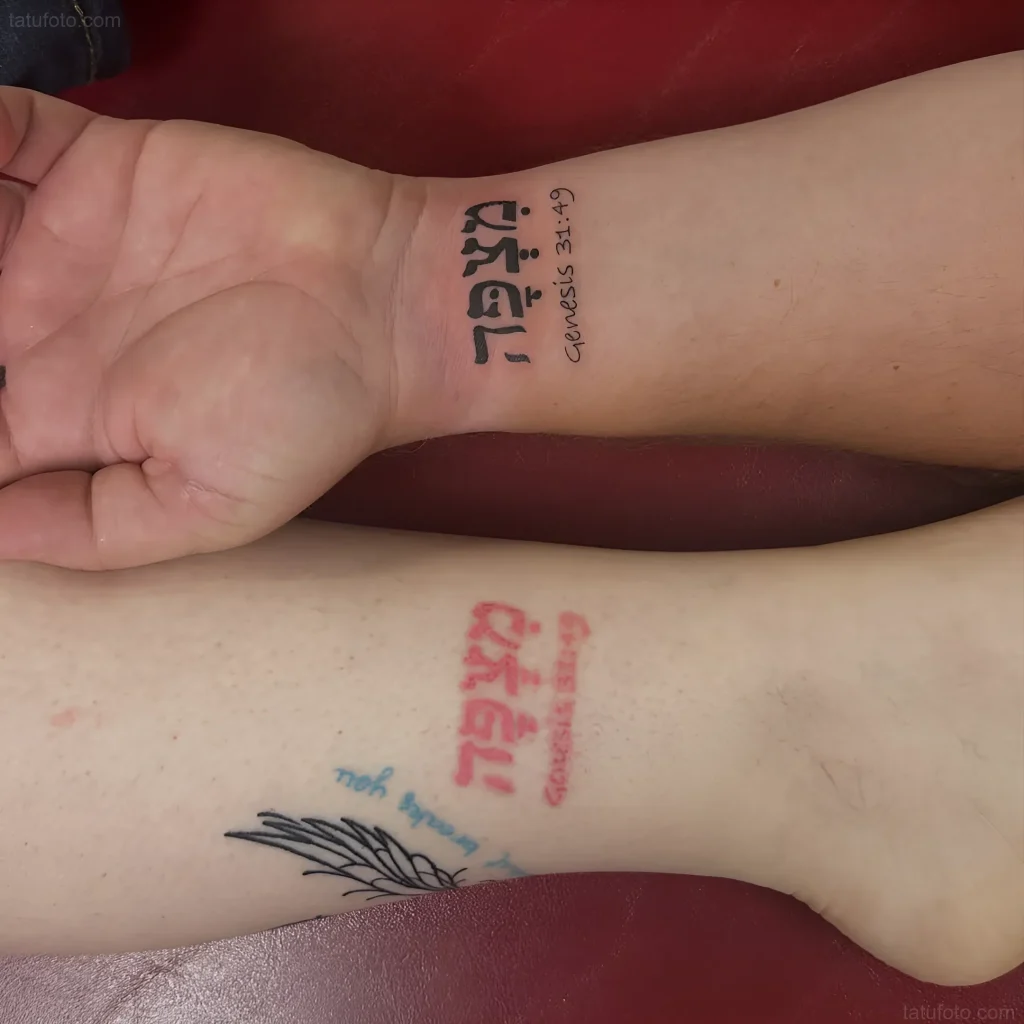
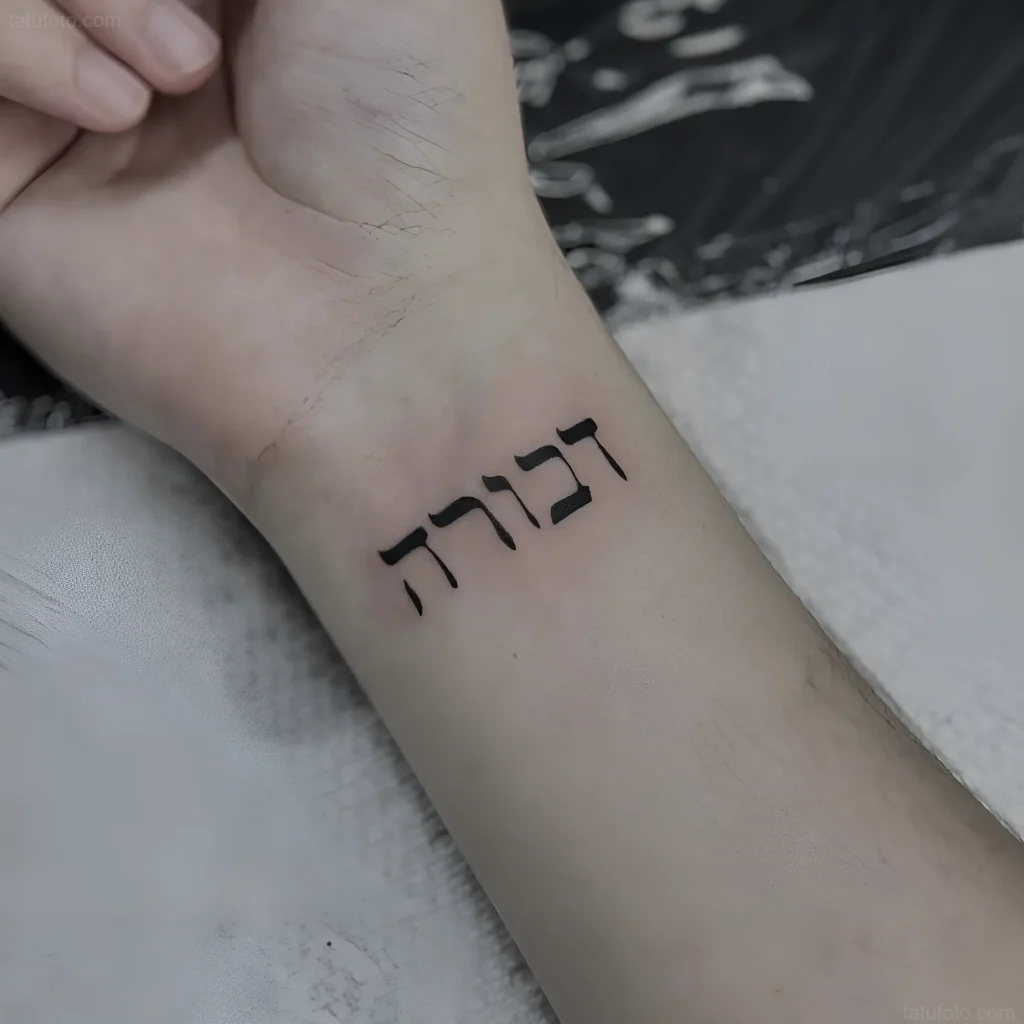
- Practical aspect: Short words (e.g., “Chai” or “Emunah”) are often placed on the wrist.



Ribs and Side
These areas are ideal for long, personal quotes that you don’t want to show everyone. The ribs offer a large, flat surface where calligraphy can be done in great detail.
- Symbolism: Closeness to the heart and concealment. This is a place for the most cherished, intimate beliefs.
- Practical aspect: Due to the sensitivity of the skin in this area, the healing process can be more complex.
Back (between the shoulder blades or along the spine)
Ideal for very long, complex, or multi-line quotes. An inscription running along the spine visually reinforces the idea of “support” or “core.”.
- Symbolism: Resilience, protection, personal foundation.
Neck and Back of the Head
These locations are chosen for short, powerful words or initials. A tattoo on the neck, especially the back, can be easily hidden by hair or clothing, but it is a bold enough statement.
Tips for Choosing and Caring for a Hebrew Tattoo Inscription
A tattoo in an ancient language requires increased attention during the preparation phase to avoid errors that could drastically alter or distort the meaning.
1. Absolute Translation Accuracy
This is the most critical step. Hebrew is a language with rich grammar and many dialects (Biblical, Mishnaic, Modern). An error in one letter (e.g., “tet” ט instead of “tav” ת) or incorrect use of vowel points (nikud), which are often omitted in modern writing, can lead to nonsense or, worse, an offensive meaning.
- Verification: Be sure to get confirmation of the phrase’s correctness from at least two independent sources, preferably native speakers or professional linguists. Do not rely solely on online translators.
- Direction: Ensure the artist has positioned the inscription correctly. Hebrew is written and read from right to left. If the tattoo is on an arm, make sure it reads in the natural direction.
2. Font Choice and Readability
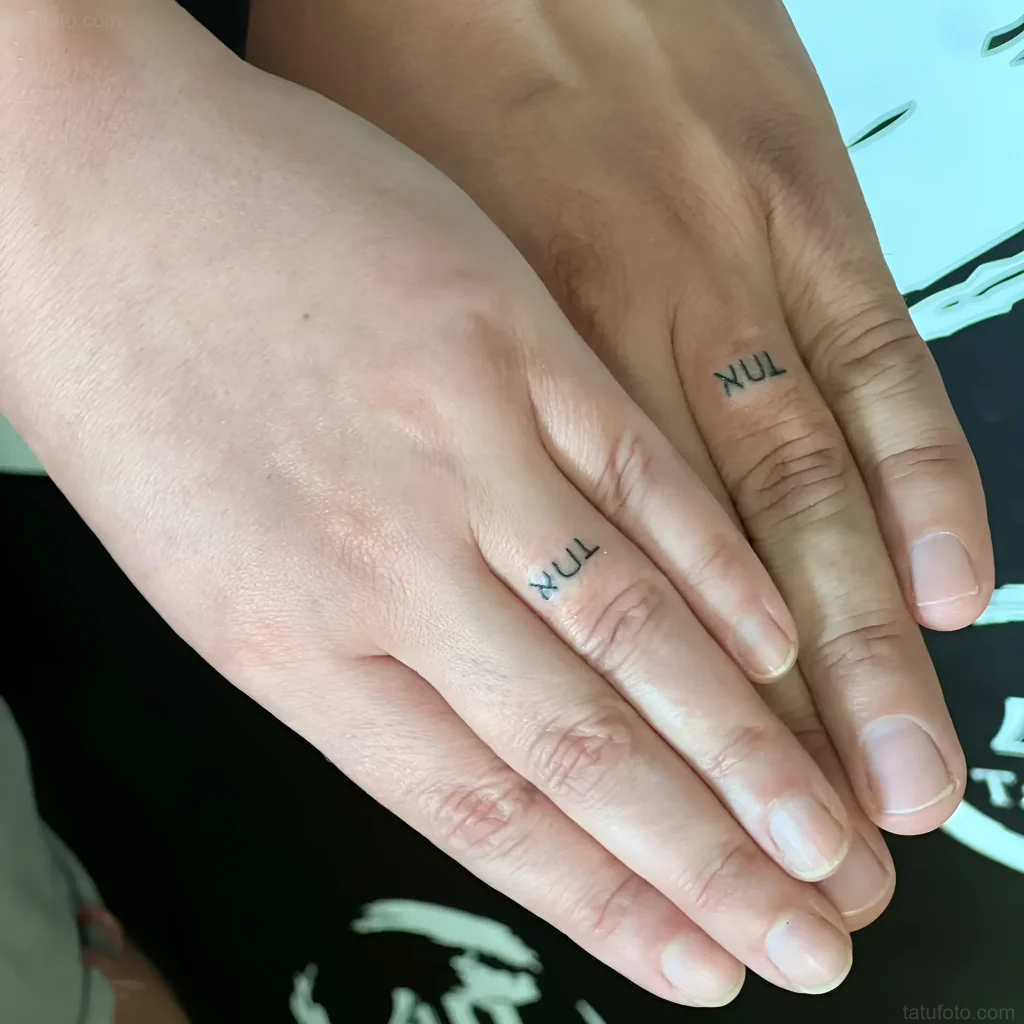
While calligraphic fonts look beautiful, ensure they remain readable. Overly thin lines or excessively intricate decorative elements can blur over time, especially in mobile areas like wrists or fingers.
Recommendation: For durability and readability, it is better to choose bolder, classic fonts (Ktav Ashuri) for smaller sizes.
3. Care and Longevity
Caring for a Hebrew tattoo inscription is no different from caring for any other tattoo, but healing errors can seriously affect the clarity of fine lines, which is critical for text.
- Healing: Strictly follow the artist’s instructions for applying healing ointments and avoiding direct sunlight in the first few weeks.
- Sun: Inscriptions, especially fine ones, are very sensitive to UV rays. Always use sunscreen (SPF 50+) to preserve black pigment and outline clarity.
Frequently Asked Questions about Hebrew Tattoo Inscriptions (FAQ)
1. Are vowel points (nikud) mandatory?
In modern Hebrew, vowel points (dots and dashes above and below letters indicating vowel sounds) are rarely used – in children’s books, poetry, or prayer books. In tattoos, they are usually omitted. The use of nikud can make the inscription more difficult to read and excessively detailed. However, if you have chosen a phrase from the Torah, vowel points may be important for preserving the exact biblical pronunciation and meaning.
2. How religiously acceptable are Hebrew tattoos?
According to traditional Jewish law (Halakha), tattooing is strictly forbidden (Lev. 19:28). Therefore, Orthodox Jews rarely get tattoos. However, for secular Jews, as well as people of other faiths, Hebrew is a cultural or spiritual symbol, not a religious taboo. Choosing such a tattoo is a personal decision related more to respect for ancient wisdom than to adherence to religious precepts.
3. Can Hebrew letters be used to create acronyms or initials?
Yes, this is a common practice. You can use the first letters of words that are significant to you to create an abbreviation. For example, the abbreviation “נ.ע.מ.” (Naama, Eli, Moshe) can combine the names of your children. However, if you are creating an acronym from religious texts, make sure it conforms to generally accepted canons to avoid distorting the meaning.
4. What is the difference between ancient Hebrew and modern Hebrew?
Ancient Hebrew (Biblical Hebrew) is the language of the Torah, Psalms, and other sacred texts. Modern Hebrew is a revived language used in Israel today. Although the alphabet remains the same, grammar, vocabulary, and some idioms have changed significantly. If you are using a quote from the Bible, it should be translated and verified as Biblical Hebrew, otherwise, a modern translation may carry a different, less solemn meaning.
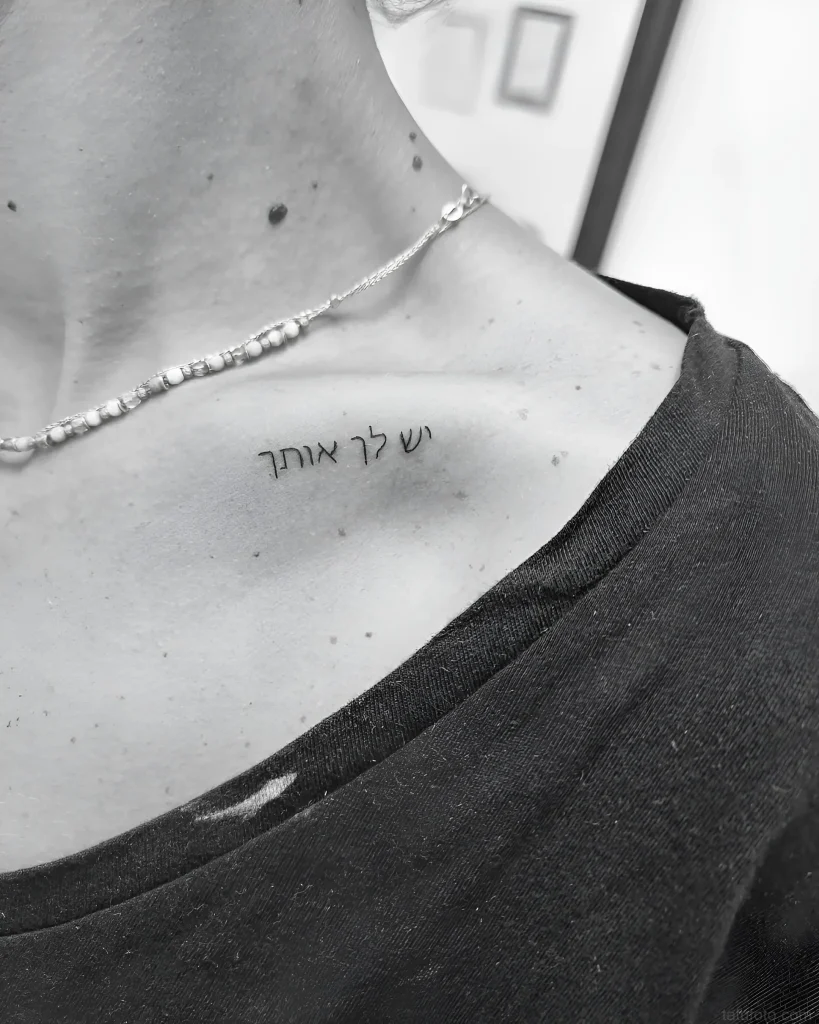
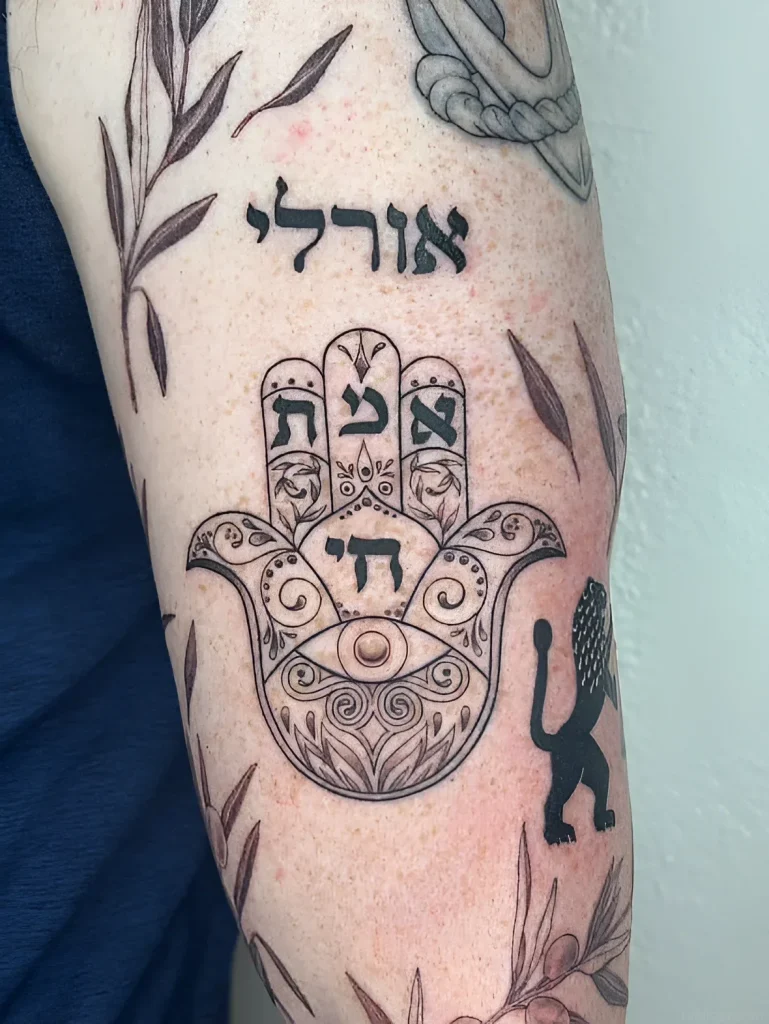
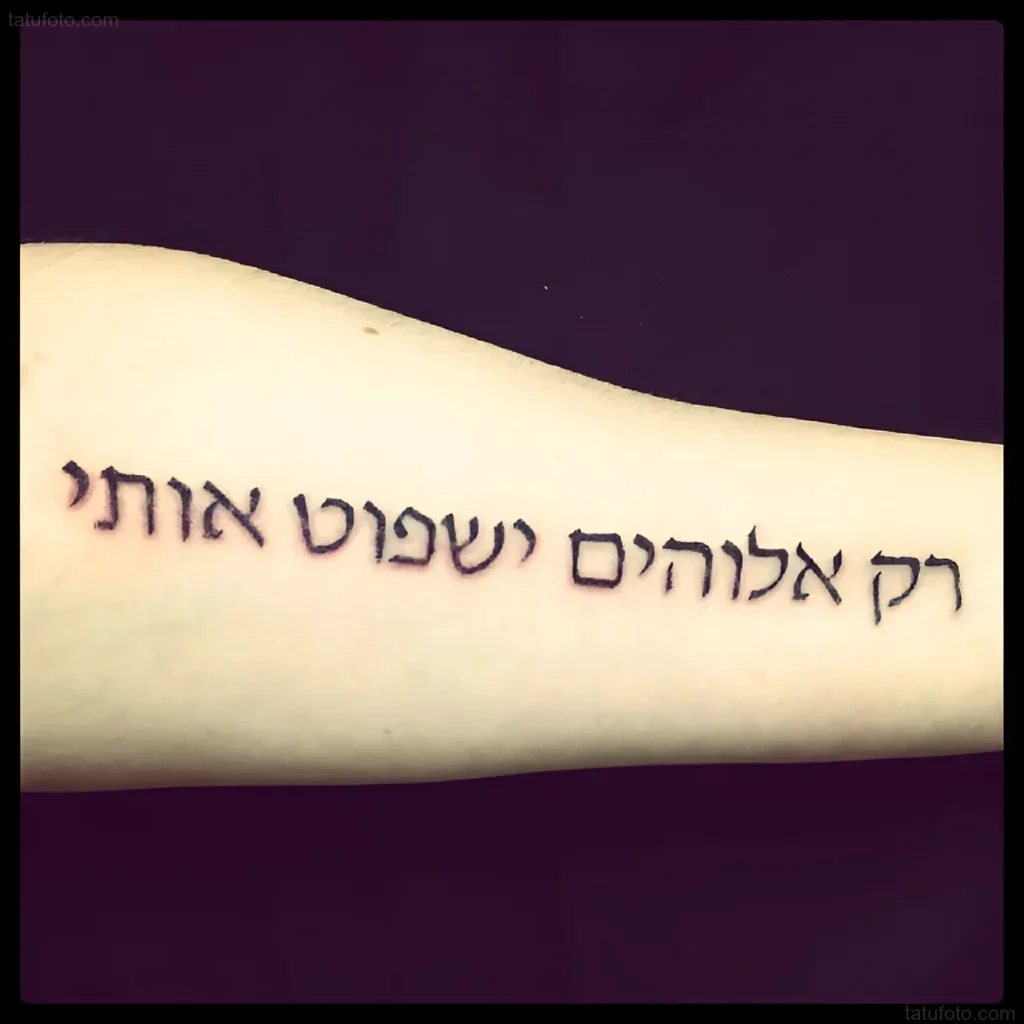
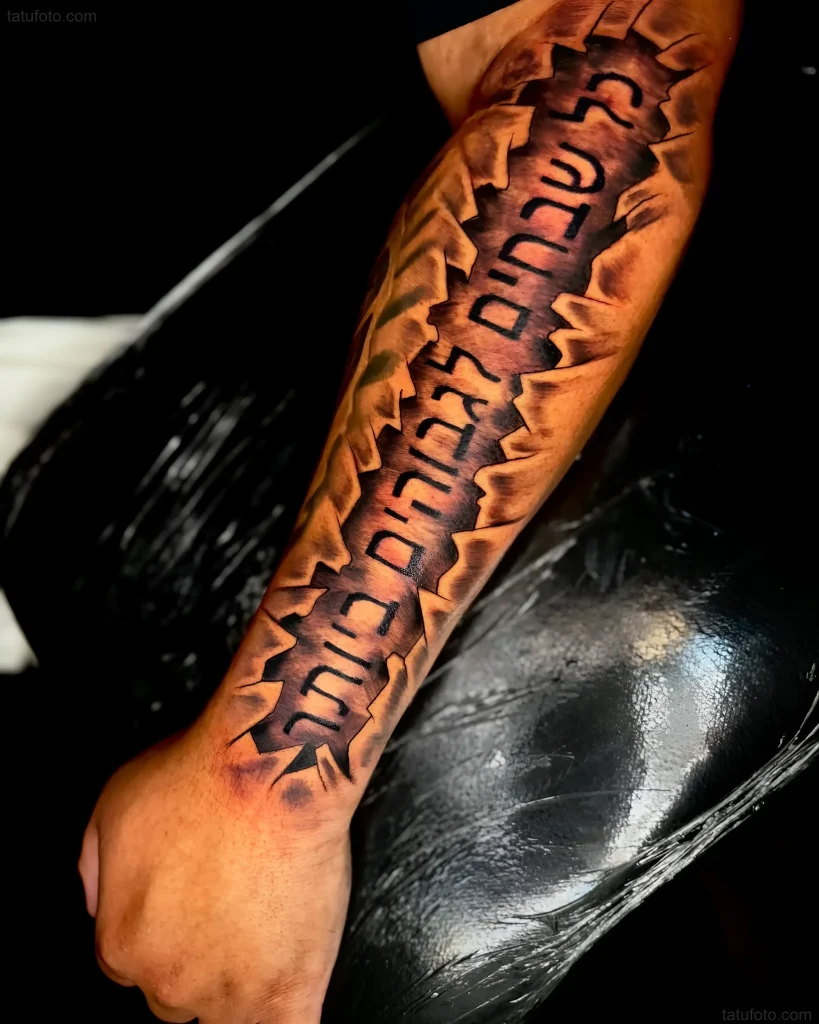
Interesting Facts about Hebrew Tattoo Inscriptions
The cultural context of Hebrew adds several more fascinating layers to tattoos done in this language.
1. Mirror Writing and Palindromes
Because Hebrew letters have symmetrical or easily recognizable shapes, many artists experiment with mirror writing. This is especially popular for inscriptions on the inner forearm, where the tattoo should be easily readable by both the wearer and the observer. Additionally, there are Hebrew palindromes (words or phrases that read the same forwards and backward), which possess a special mystical appeal.
2. Use of “Chametz” and “Sofit”
In the Hebrew alphabet, five letters have a special form when they appear at the end of a word (so-called “final” or sofit forms: ך, ם, ן, ף, ץ). Incorrect use of the standard form at the end of a word (or vice versa) is the most common grammatical error in Hebrew tattoo inscriptions made by non-professionals. An expert will always pay attention to these details, ensuring authenticity.
3. Kabbalistic Tattoos and the 72 Names of God
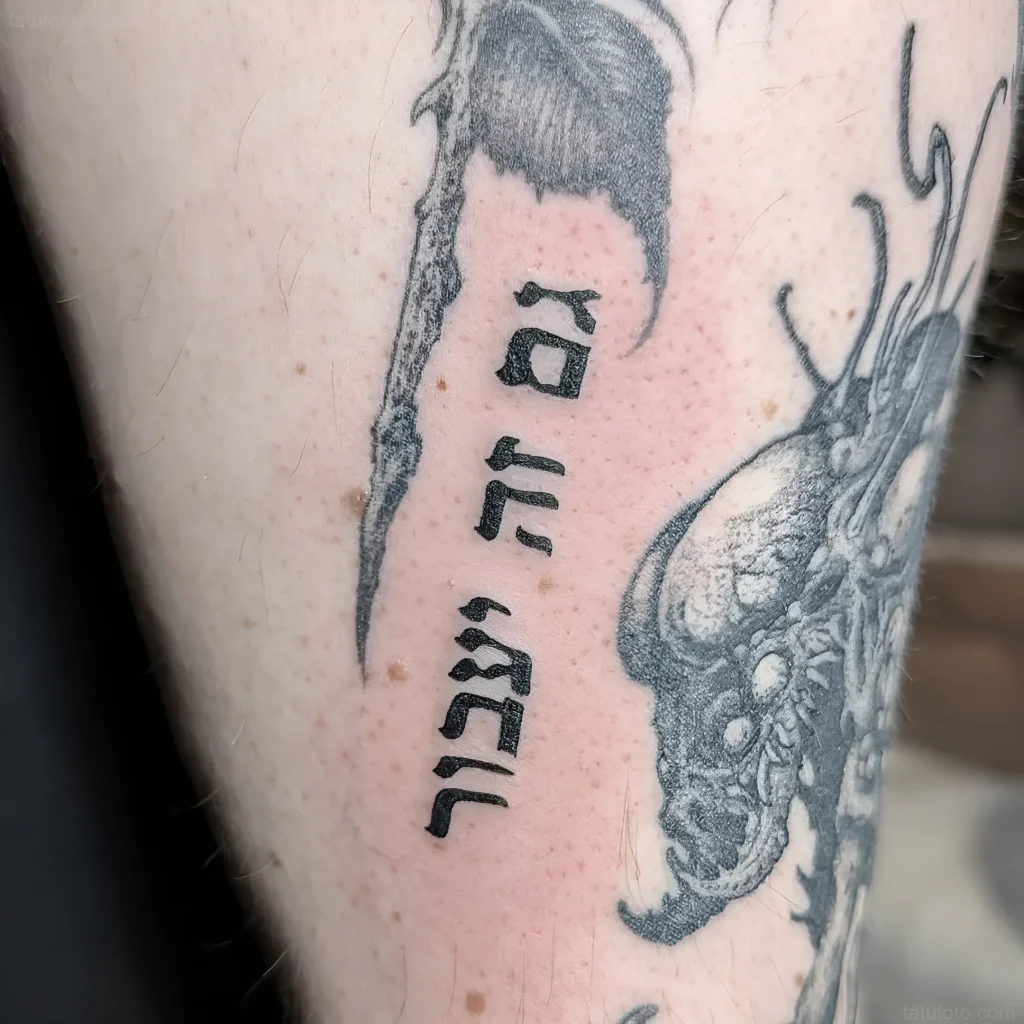
A special category includes tattoos based on Kabbalah. The most famous are the 72 three-letter combinations, which, according to Kabbalistic tradition, are the “72 Names of God.” These combinations (e.g., ס.א.ל. for prosperity or מ.ה.ש. for healing) are used as powerful spiritual amulets. They are always written without vowel points and require a deep understanding of the context, as their power lies precisely in the mystical combination of letters and gematria.
4. Hebrew as a Symbol of Revival
Hebrew is one of the few languages in history that has been successfully revived from a “dead” state (used only for religious purposes) into a fully functional modern language. A tattoo in Hebrew can symbolize personal rebirth, the beginning of a new life, overcoming difficulties, and strength of spirit – qualities that this language itself embodies.
By choosing a Hebrew tattoo inscription, you are not just decorating your body; you are becoming a carrier of a part of an ancient, profound, and incredibly beautiful tradition. Pay due attention to the translation and style, and your tattoo will become an inexhaustible source of strength and meaning.