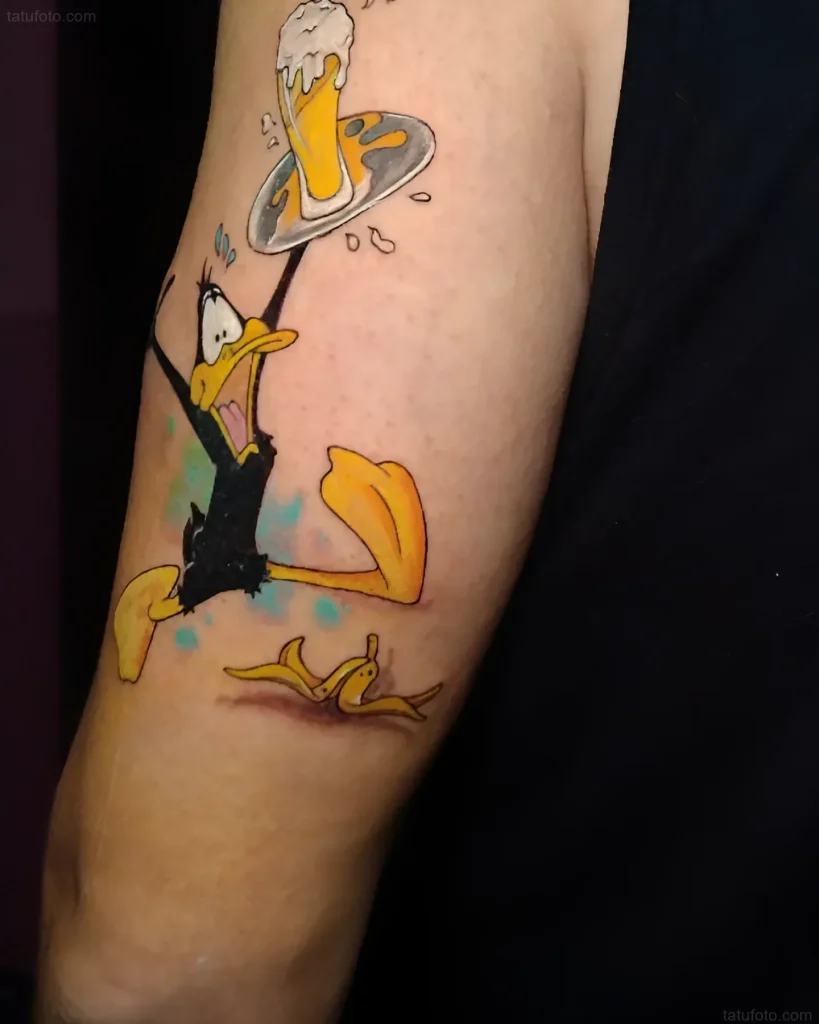
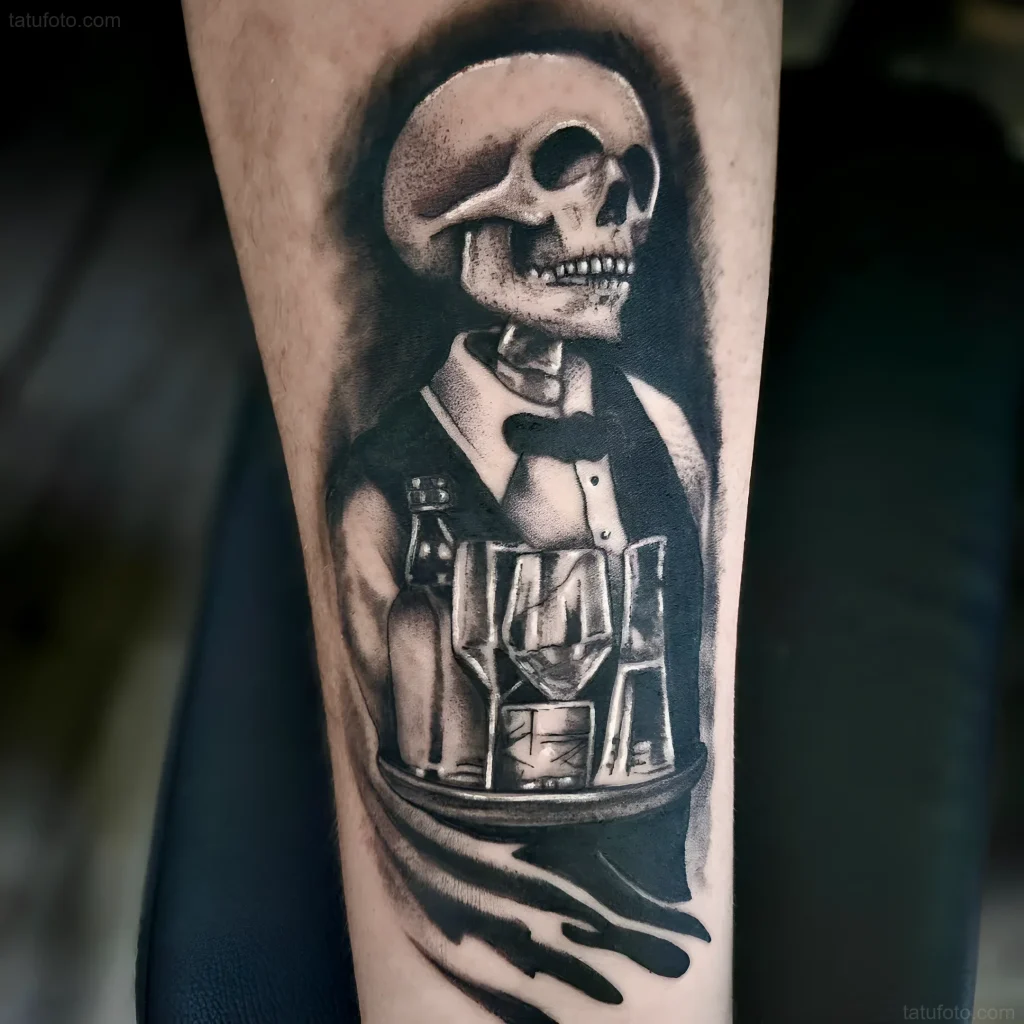
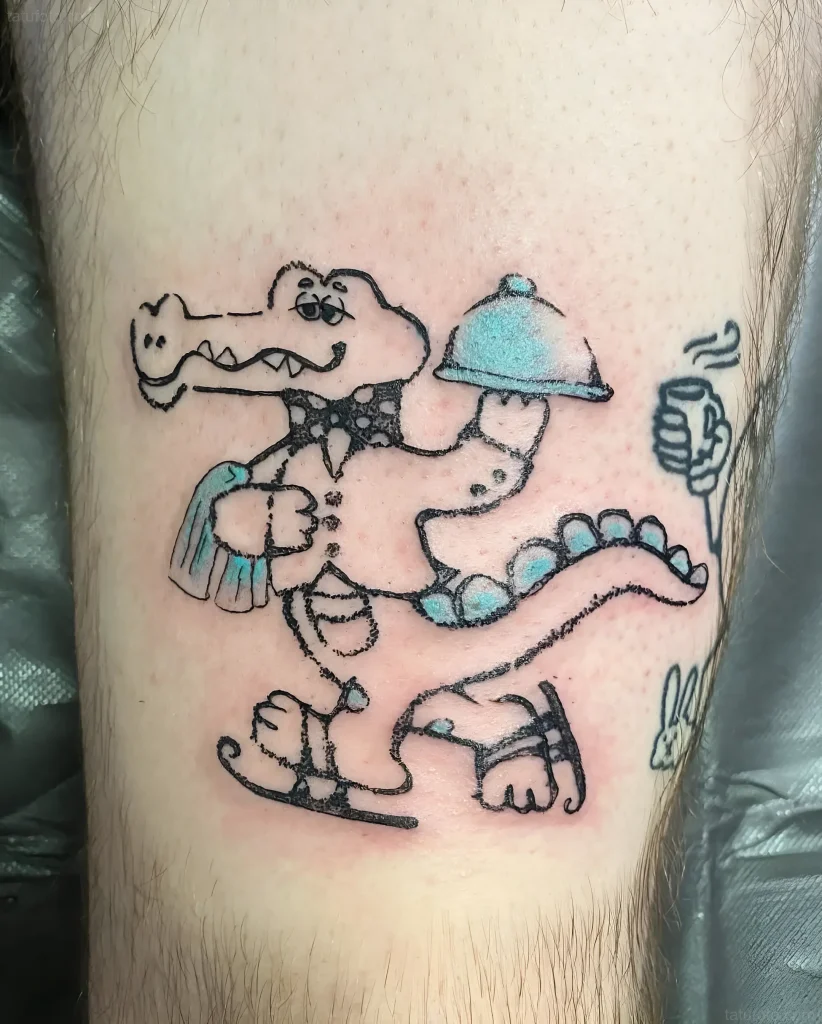
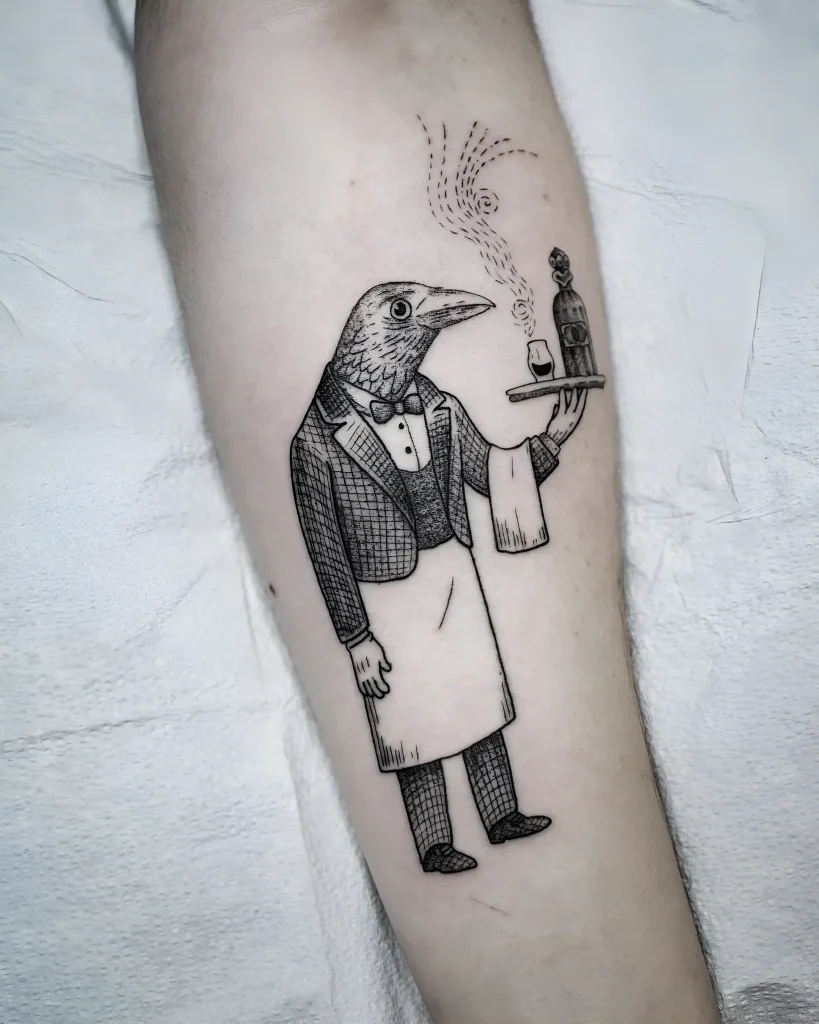
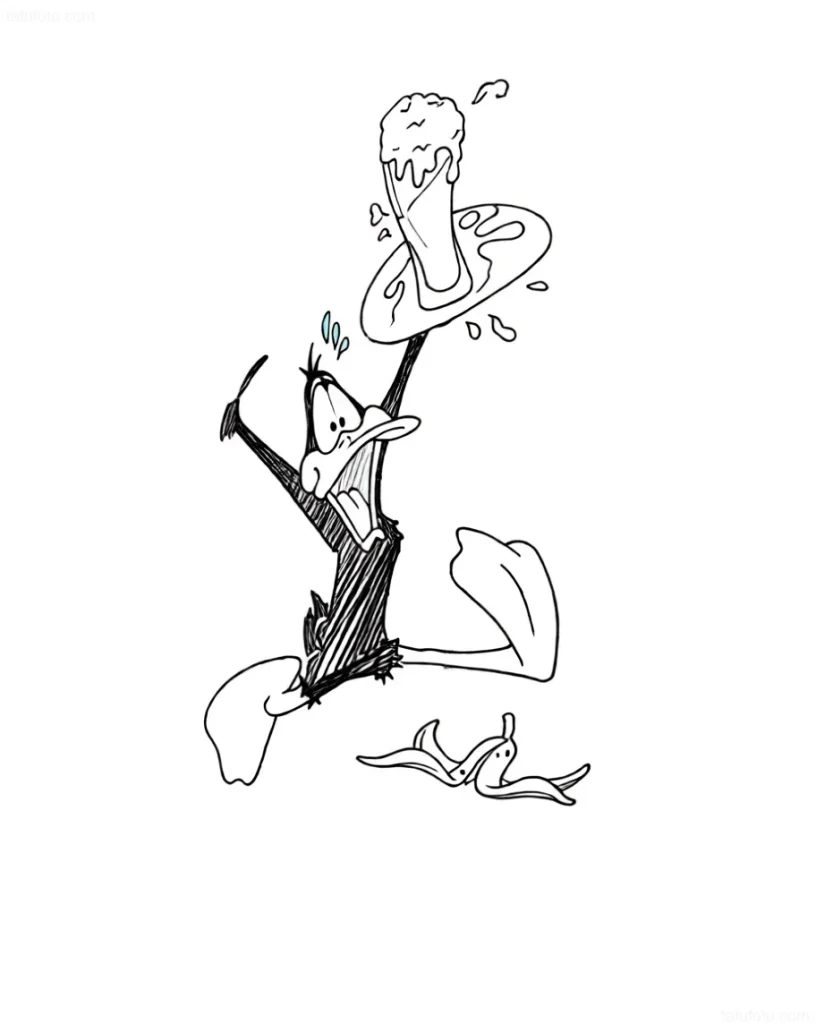
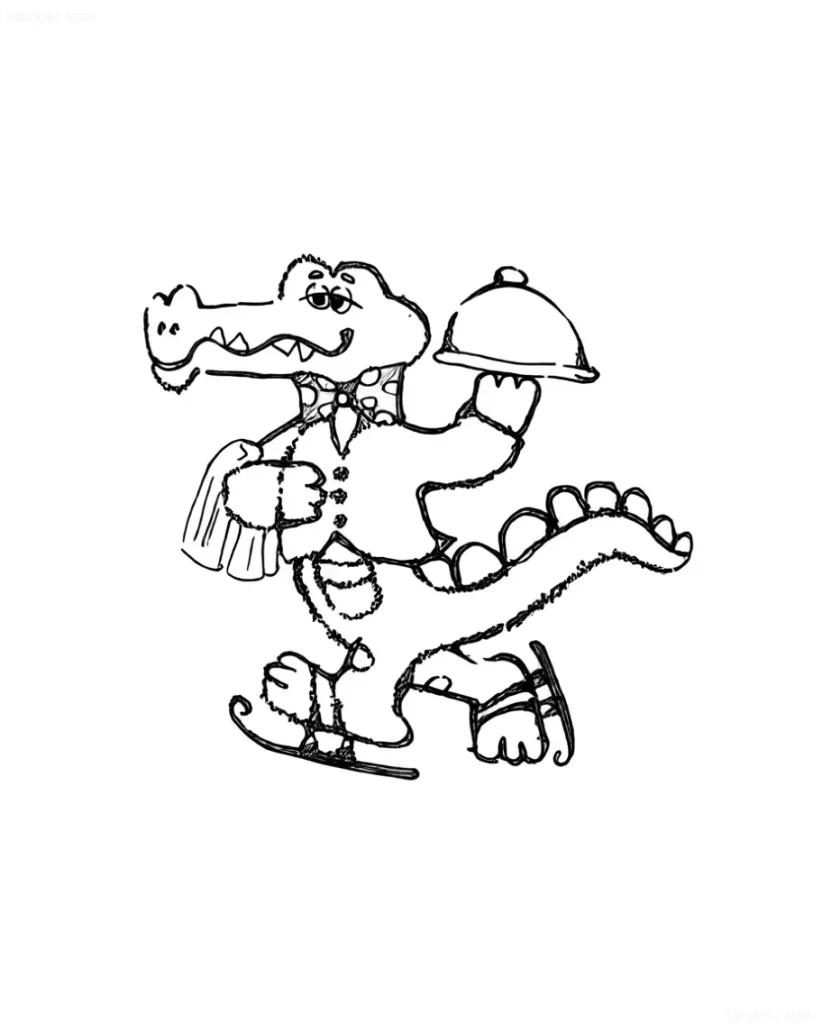
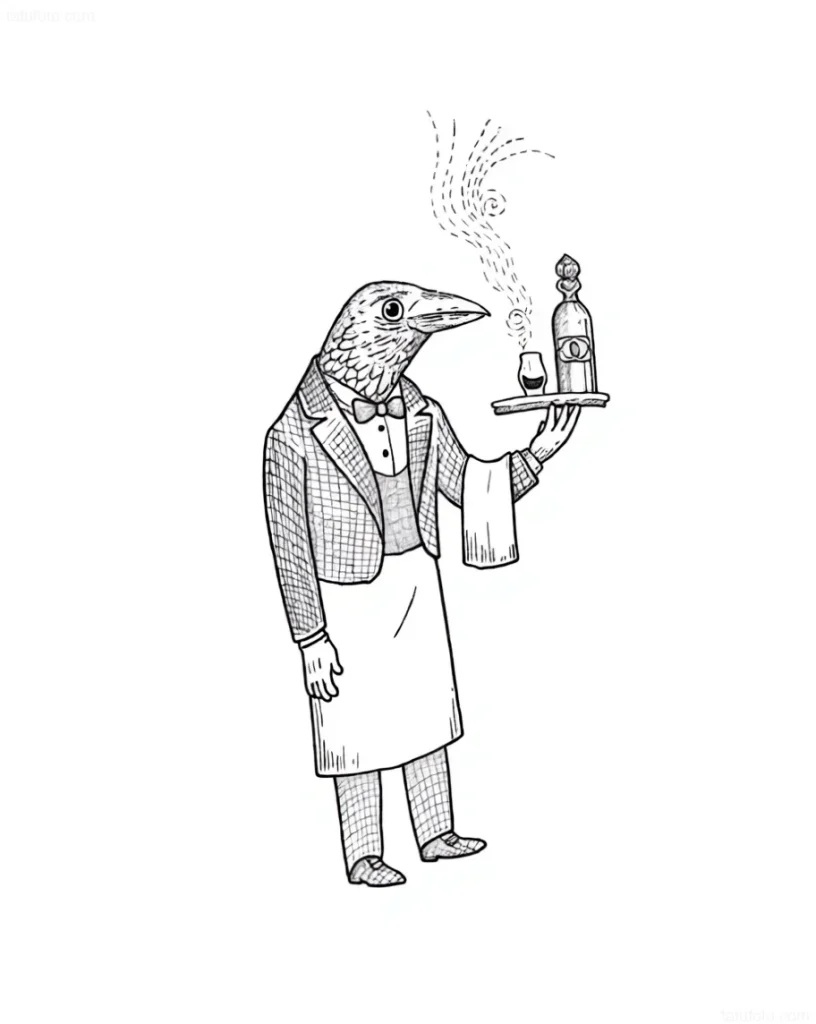
A tattoo dedicated to a profession always carries deep personal meaning and is a manifesto of pride in one’s work. While tattoos of sailors, firefighters, or soldiers have long been a canon of body art, the image of a waiter (or a hospitality worker in general) is just beginning to gain its place, offering unique and multifaceted symbolism. A waiter tattoo is not just a drawing of a uniform; it is a visual statement of endurance, diplomacy, quick reaction, and, above all, service.
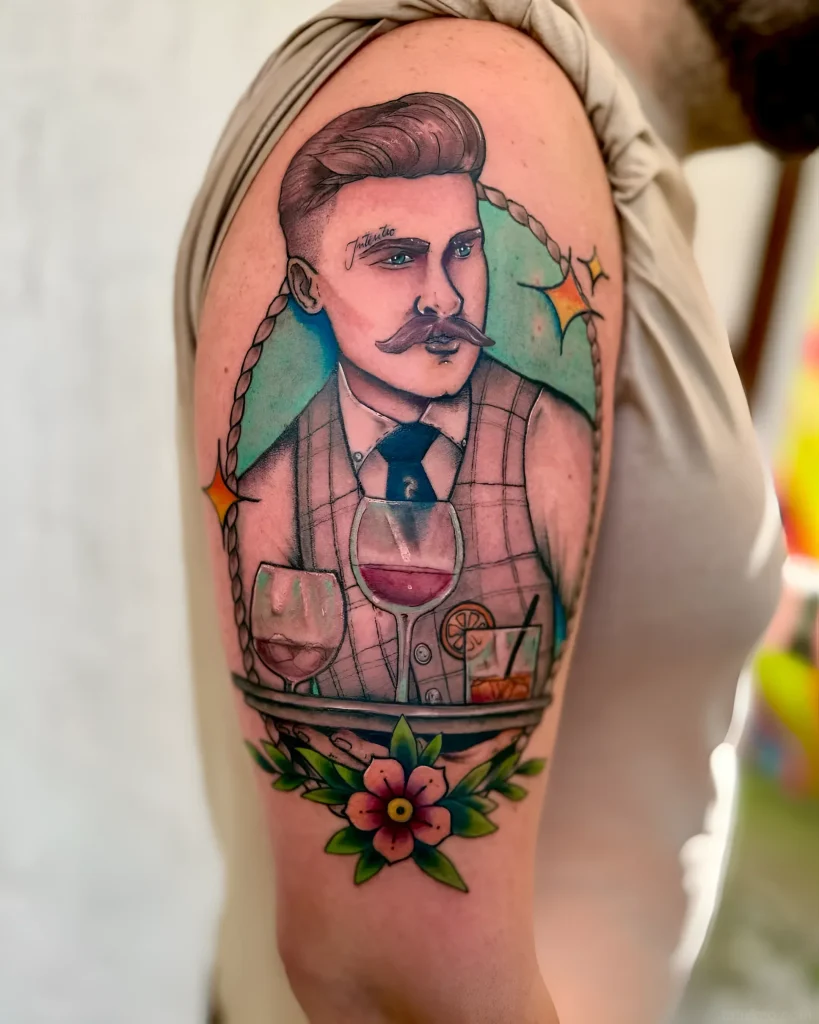
Waiter Tattoo: Meaning and Symbolism in the World of Body Art
In contemporary tattoo art, the image of a waiter or their attributes is a choice for people who see their work not just as a means of earning a living, but as a calling that requires a high level of skill and psychological resilience. The symbolism of this motif lies at the intersection of two worlds: the visible (elegance, impeccable service) and the hidden (constant tension, stress management, the ability to maintain composure in any situation).

When we talk about the meaning of a waiter tattoo, we focus on the following key ideas:
- Professional Pride: Demonstrating respect for one’s challenging work. This is especially relevant in countries where the waiter profession has traditionally been undervalued.
- Skill and Precision: A waiter is someone who must be accurate in calculations, quick in movements, and impeccable in service. A tattoo can symbolize the constant pursuit of perfection in these skills.
- Symbol of Hospitality: In a broad sense, this image reflects a desire to serve people, create comfort, and positive emotions.
- Endurance and Patience: Long shifts, working on one’s feet, and the need to interact with difficult clients make patience and physical endurance essential qualities, which are often encoded in this tattoo.
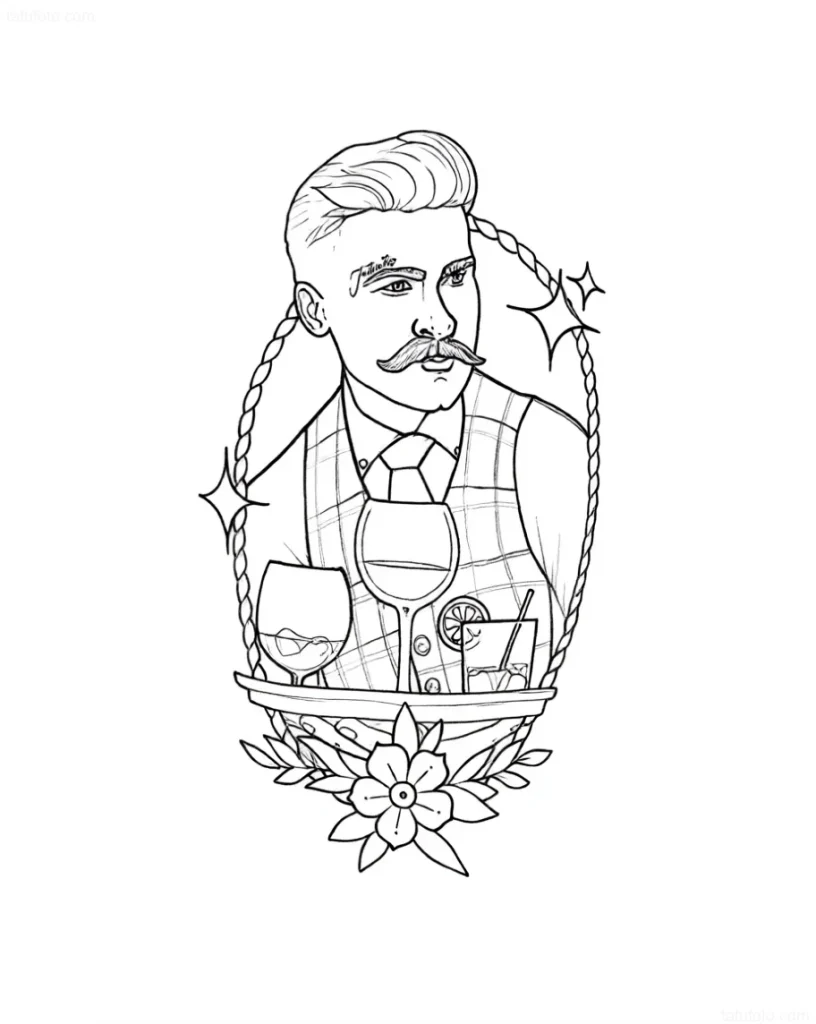
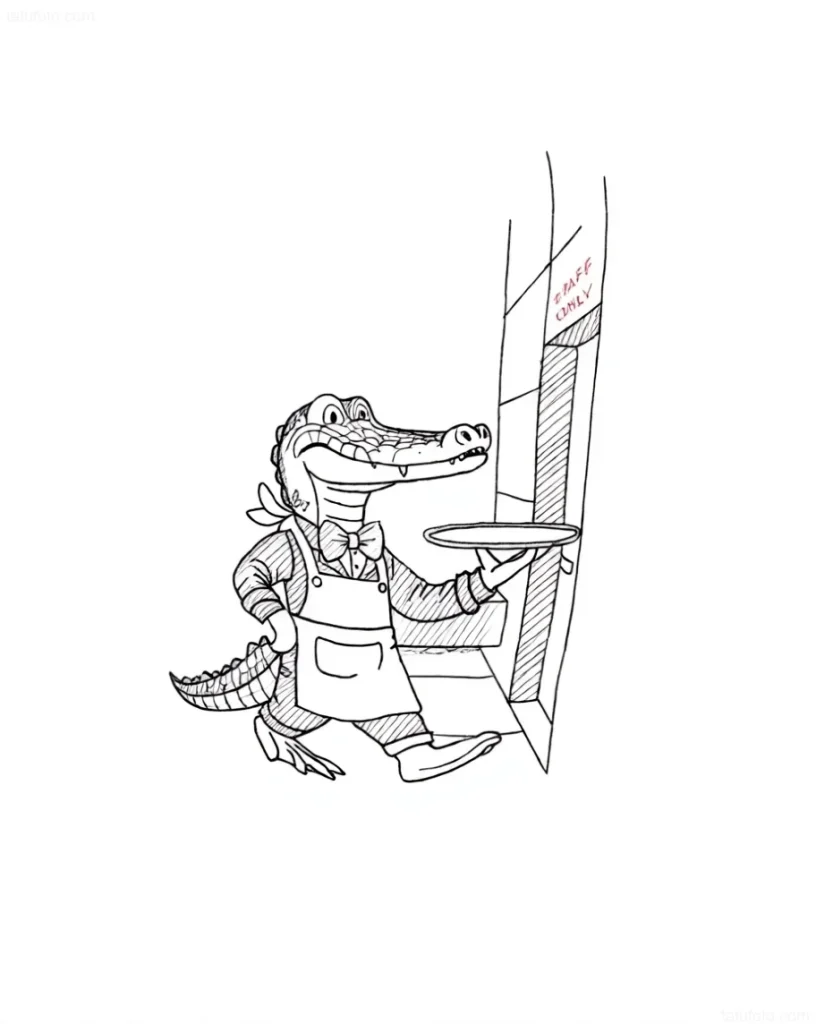
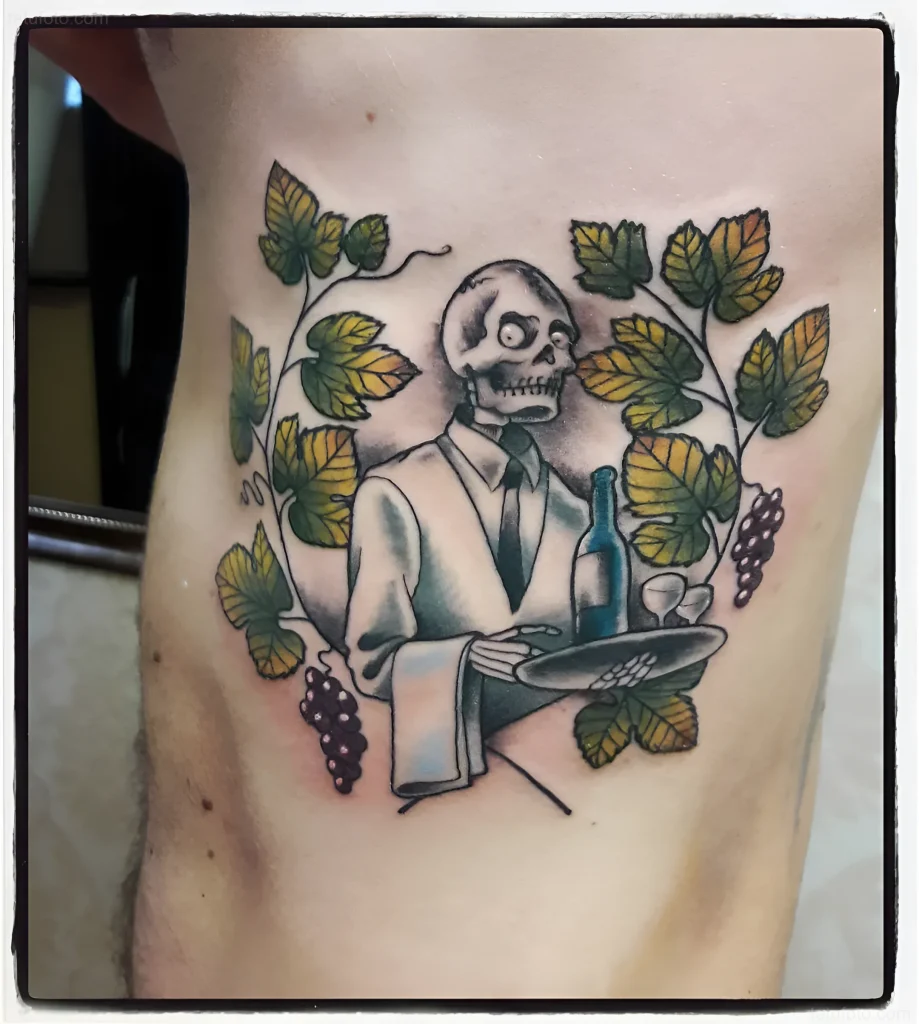
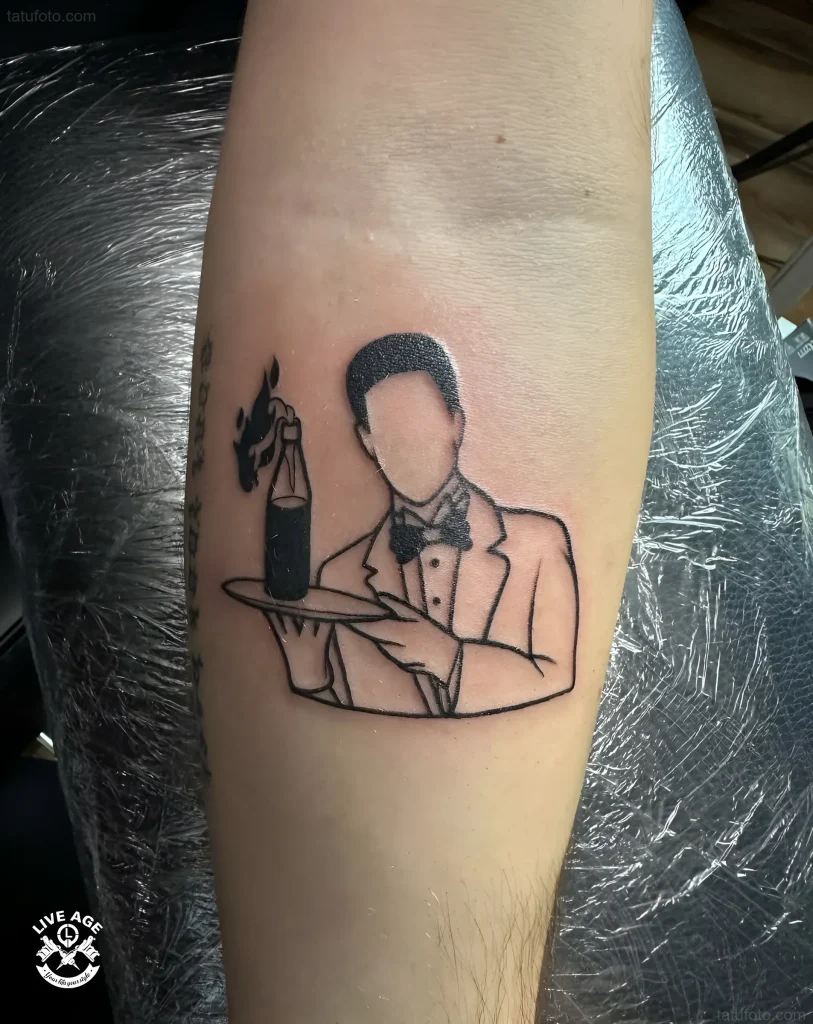
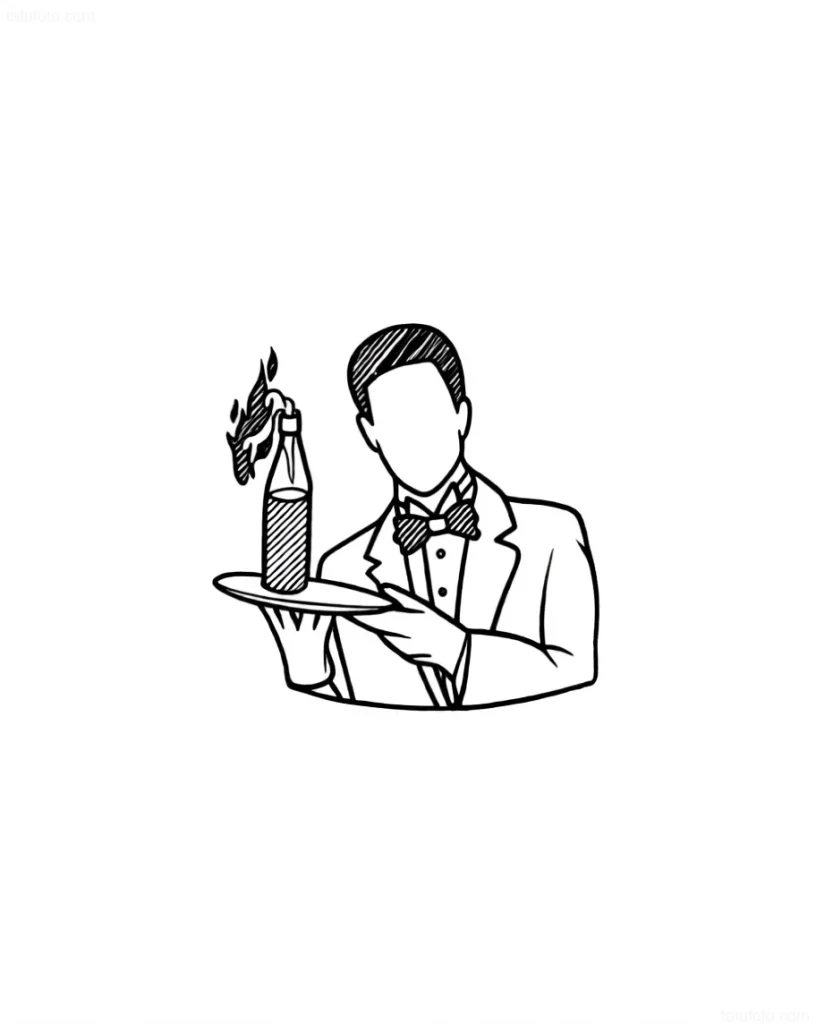
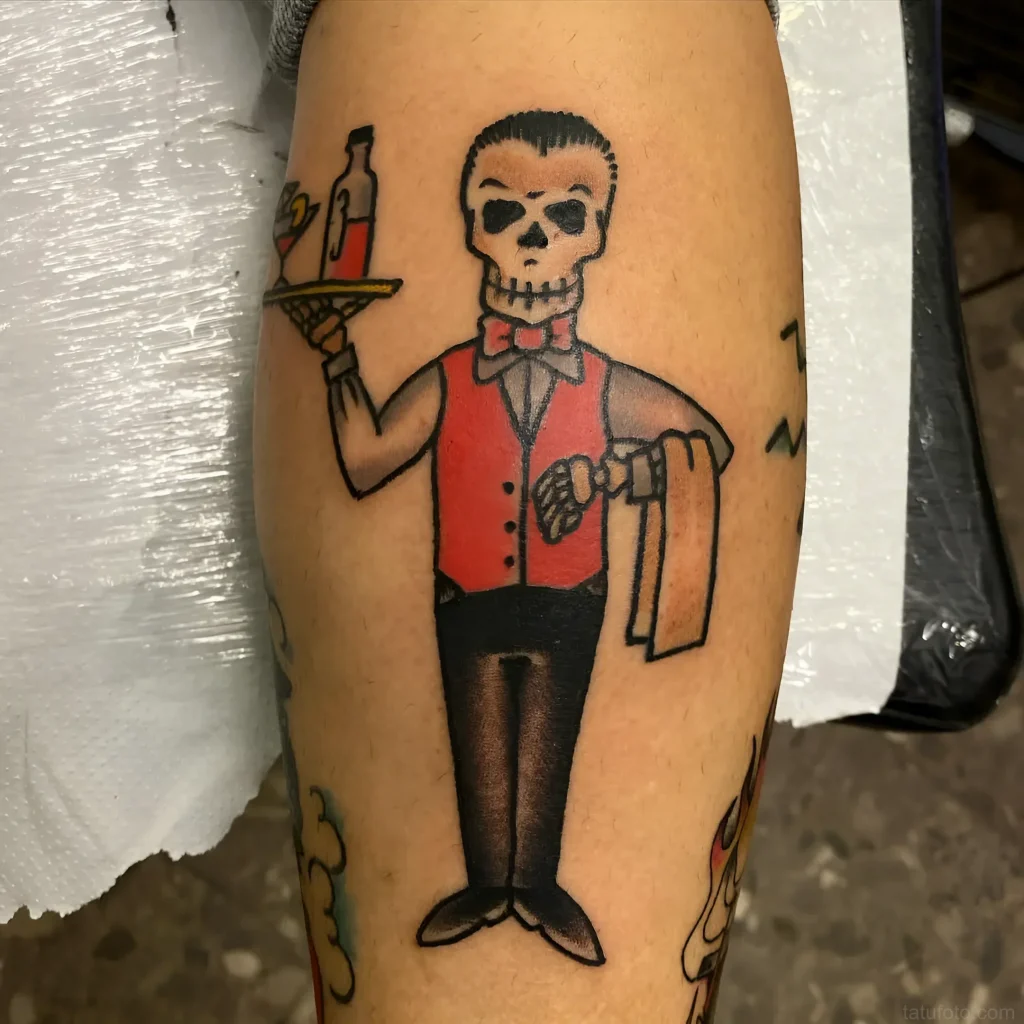
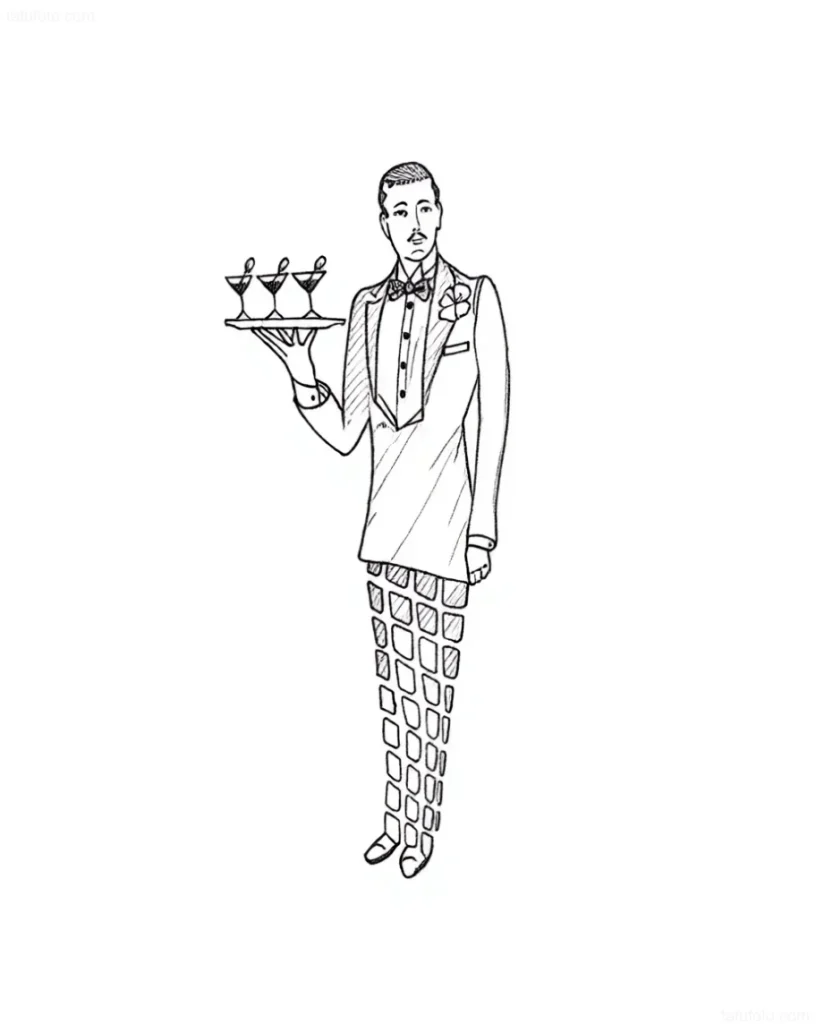
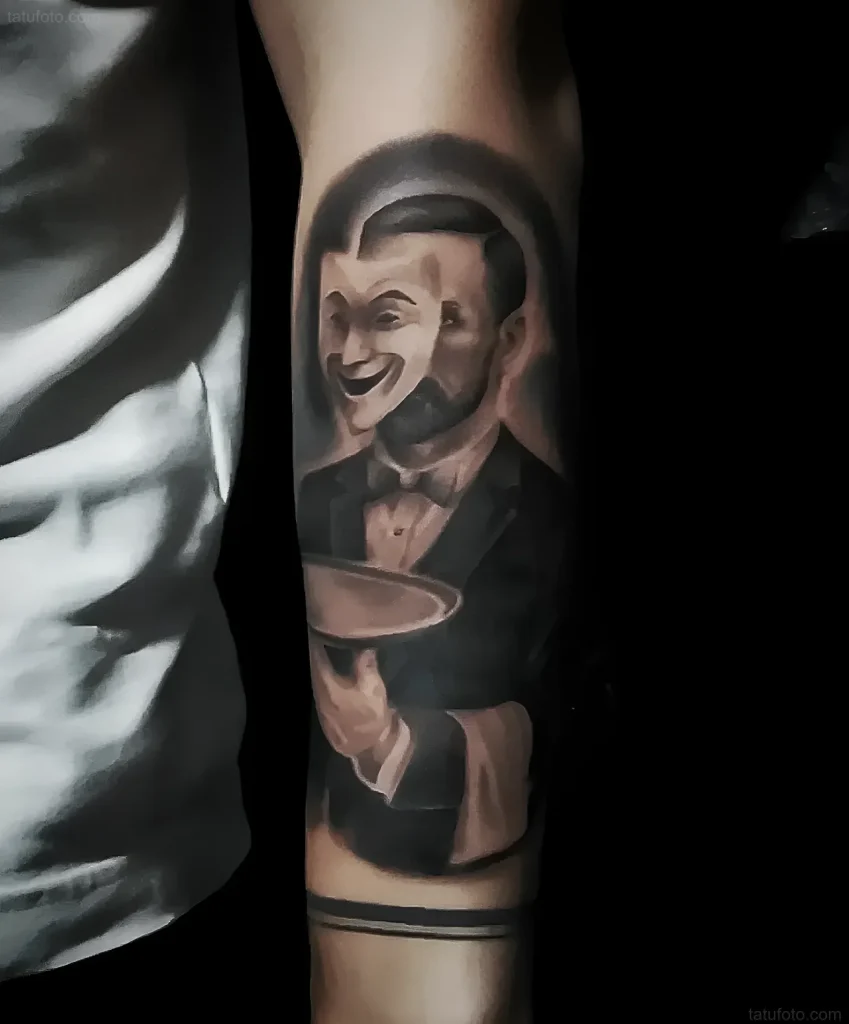
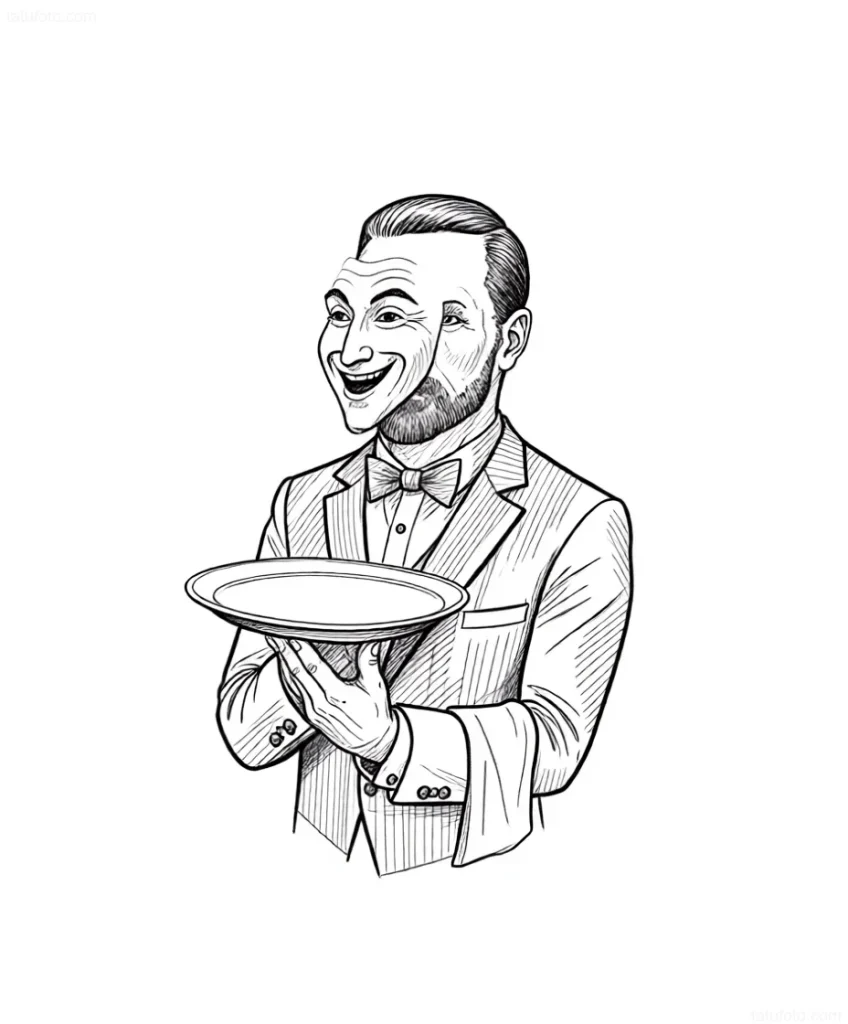
A waiter tattoo can be done as a full portrait in uniform (often in old school or realism style) or through minimalist but recognizable attributes, such as a bow tie or a corkscrew.

The History of the Waiter Image in Culture: From Servant to Symbol of Hospitality
To understand the depth of symbolism in a waiter tattoo, it’s necessary to consider how this image has evolved in the cultural narrative. Initially, in medieval Europe, the role of a servant or server was associated with low social status. However, with the development of restaurant culture and the emergence of haute cuisine in the 18th-19th centuries (especially in France), the waiter became a key figure, standing between the kitchen and the guest.
In the 20th century, especially in the USA and Europe, the waiter became a symbol of the American dream, hard work, and, importantly, psychological agility. Cinema and literature have cemented the image of the waiter as:
- A Diplomat: Able to resolve conflicts and anticipate a client’s desires.
- A Psychologist: Capable of reading a visitor’s mood.
- A Keeper of Secrets: Someone who sees and hears a lot but remains silent.
It is this cultural evolution that allows modern people to get a waiter tattoo with pride. It’s not just a “servant,” but a hospitality professional whose work requires intellect, charisma, and physical fitness. Thus, a waiter tattoo symbolizes the transition from the concept of “service staff” to the concept of “service master.”
Key Meanings of a Waiter Tattoo: What This Symbol Hides
The meaning of a waiter tattoo is rarely superficial. It always reflects the inner qualities of a person necessary for successful work in this dynamic and demanding field. Let’s consider the most common and profound meanings you can imbue into your sketch:
Discipline, Speed, and Multitasking
The ideal waiter is a machine working with maximum efficiency. A tattoo can serve as a constant reminder of the need to maintain a high pace and order even in chaotic conditions.
- Visual Elements: An image of a perfectly balanced tray, or a clock symbolizing the importance of timing.
- Symbolism: “I can manage multiple processes simultaneously and remain calm under pressure.”
Communication Skills and Diplomacy
A waiter often acts as a buffer between the guest and the kitchen. The ability to smooth over rough edges, sell, and persuade are key skills.
- Visual Elements: Elements related to speech or facial expressions (e.g., a stylized image of a “mask” – a smile hiding tension).
- Symbolism: “I value the ability for effective communication and conflict resolution.”
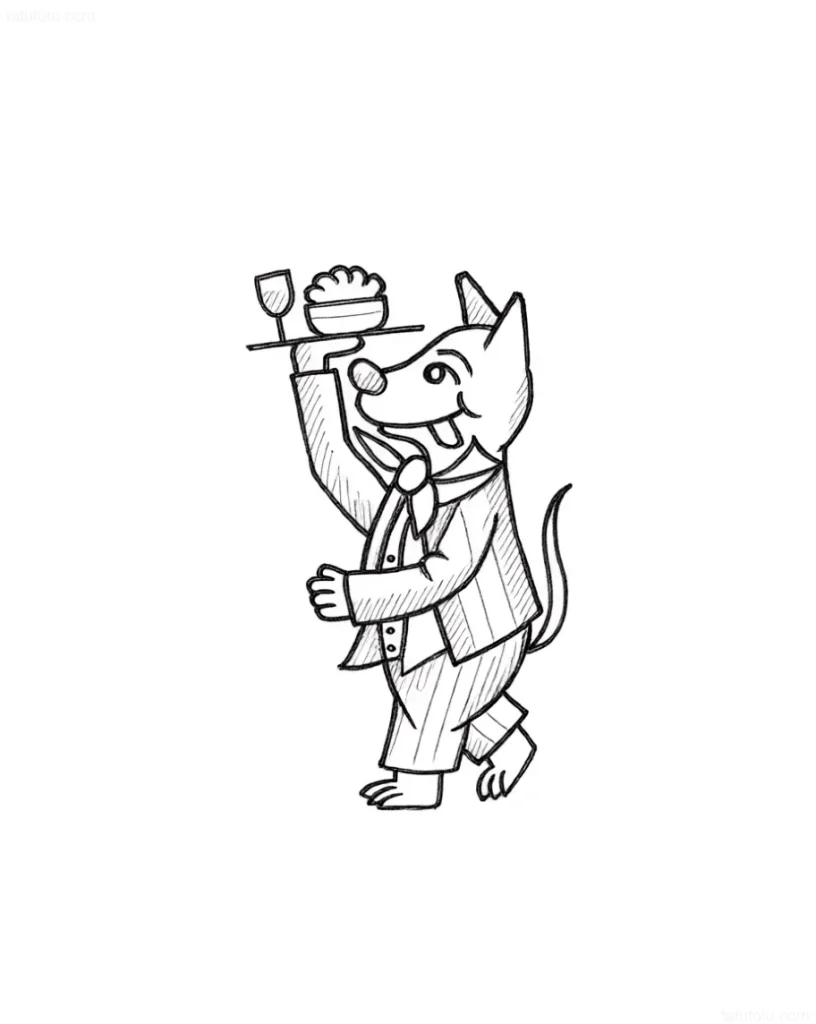
Invisible Labor and Endurance
Much of a waiter’s work happens “behind the scenes” and requires immense physical and emotional effort. A tattoo can symbolize respect for this hidden effort.
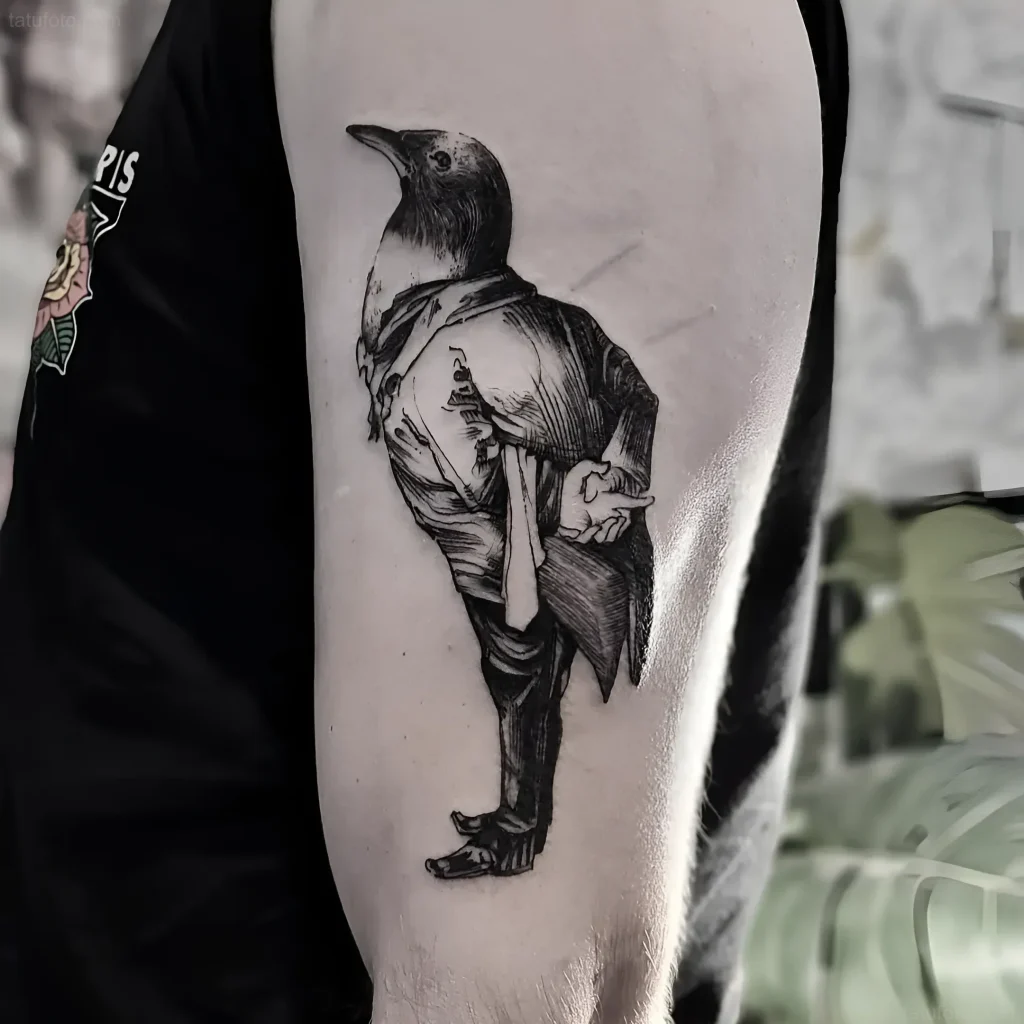
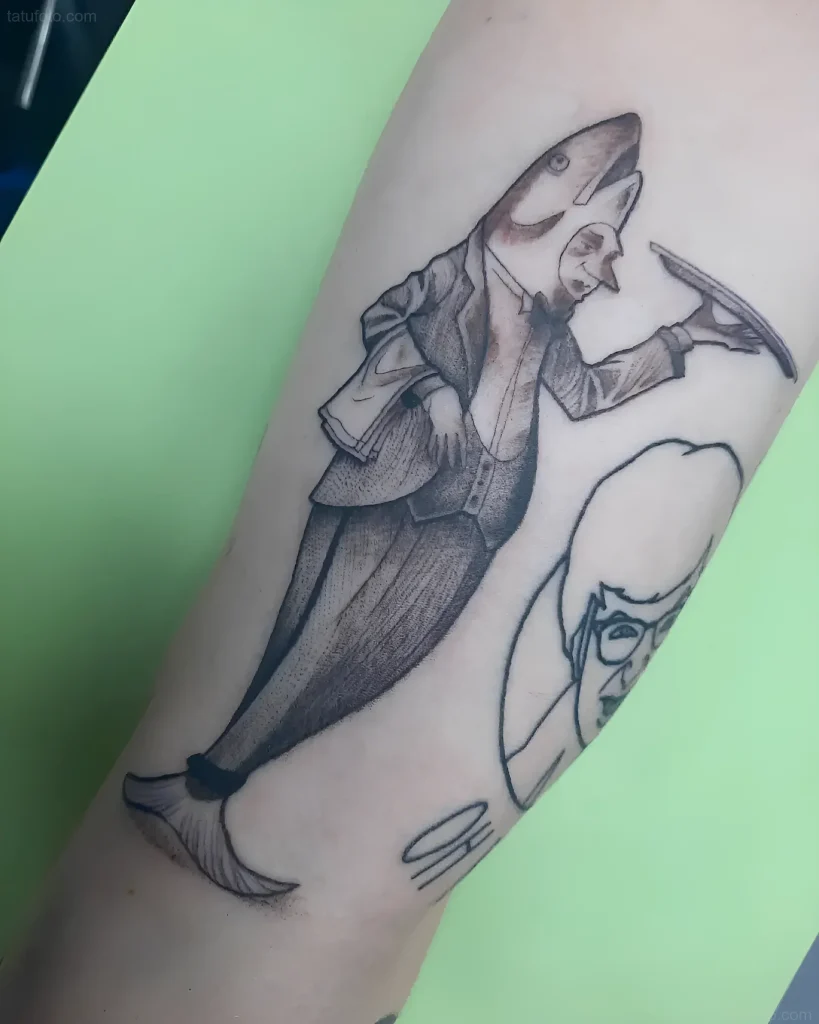
- Visual Elements: Blackwork or engraving style, depicting hands holding heavy trays, or legs in motion, emphasizing fatigue but also perseverance.
- Symbolism: “I know the value of hard work and am not afraid of physical exertion.”
A Symbol of Guild and Brotherhood Affiliation
The hospitality industry often creates strong bonds between colleagues. A tattoo can be a sign of belonging to a specific team, restaurant, or even a “family” of bartenders and waiters.
- Visual Elements: The logo or crest of a fictional or real establishment, the year of commencement of work, matching tattoos with colleagues.
- Symbolism: “I am part of a community united by a common passion for service.”
Waiter Tattoo Styles and Variations: From Realism to Minimalism
The choice of execution style is critical, as it determines which aspect of the profession will be emphasized. We will explore how different artistic directions interpret the image of a waiter.
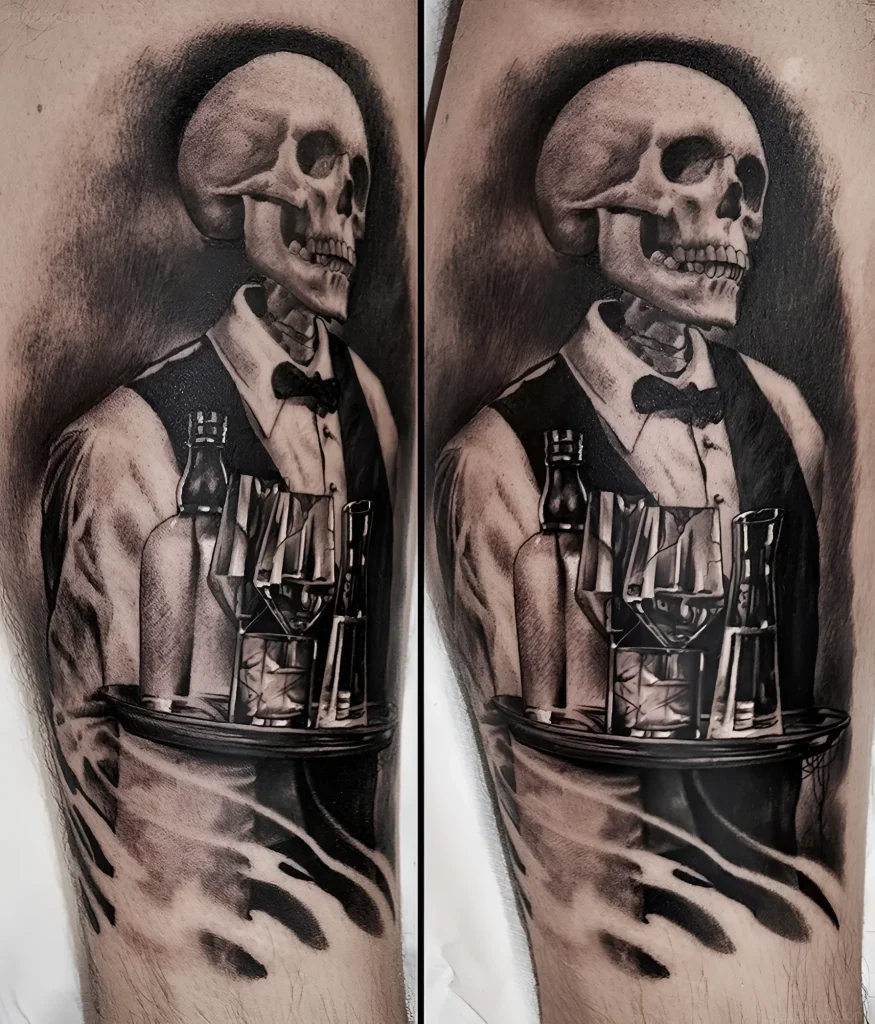
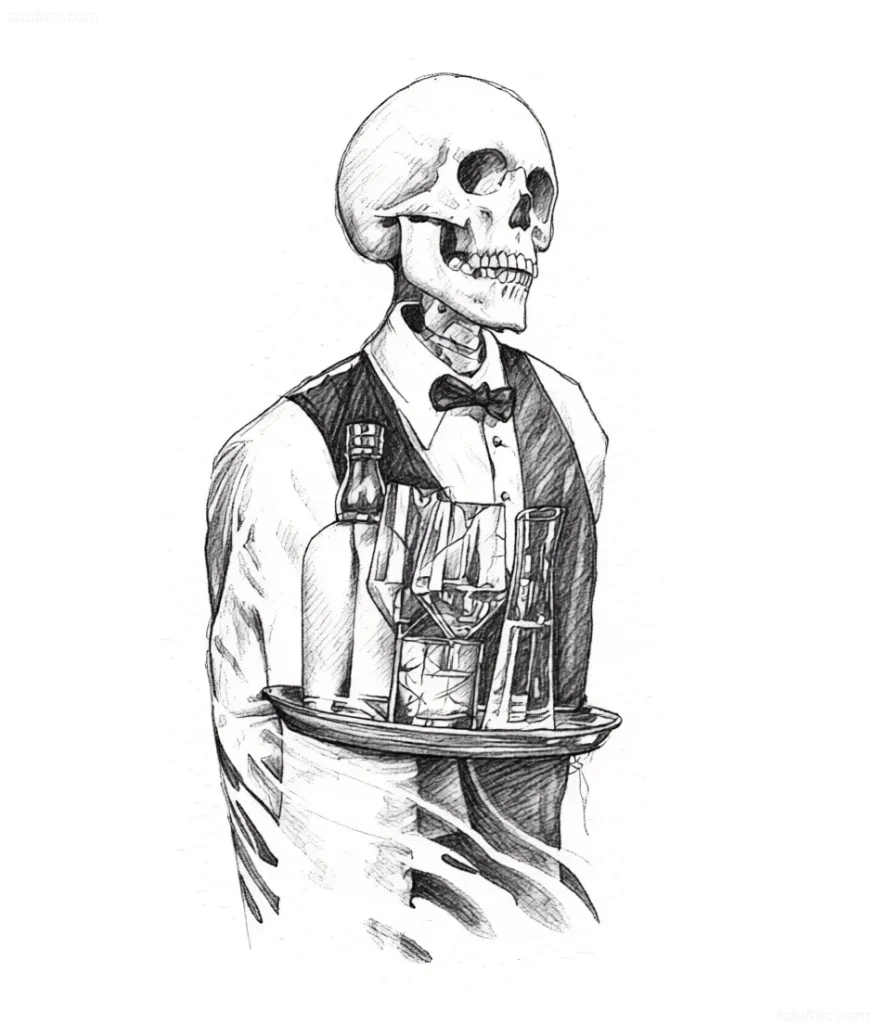
Realism and Portrait Style
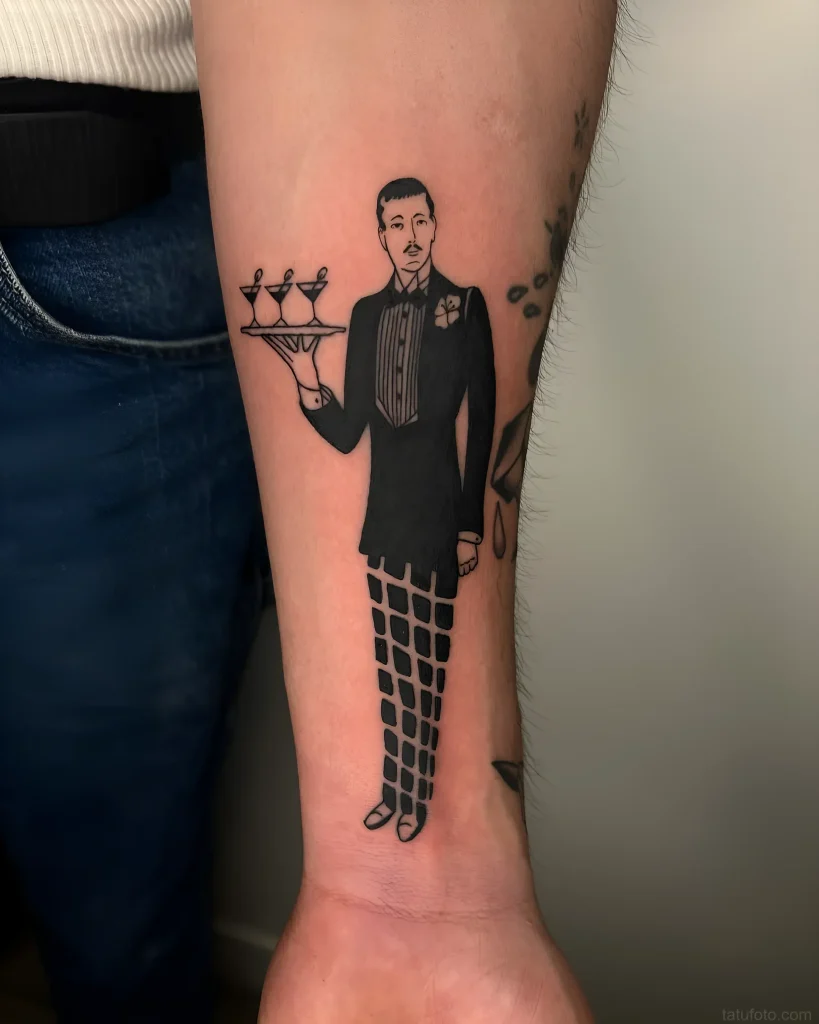
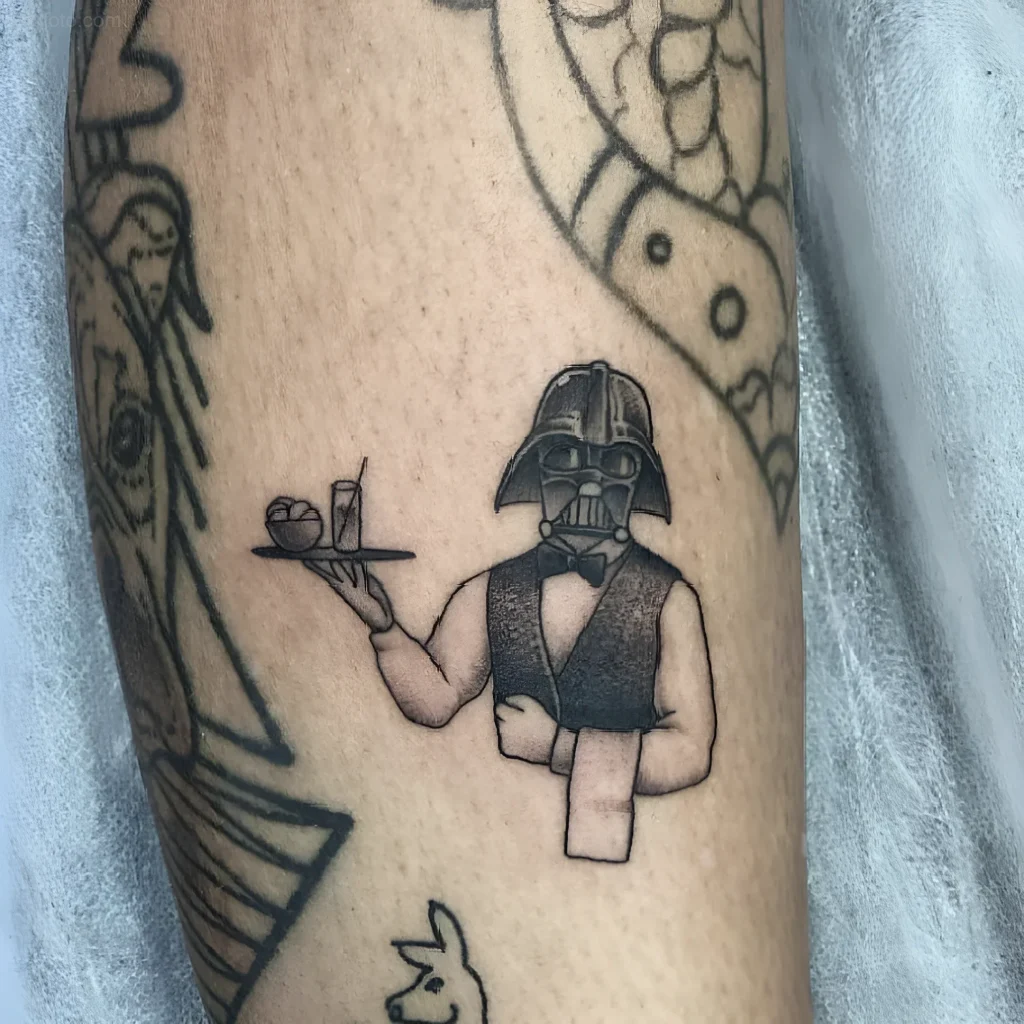
If you want to emphasize individuality, pride in a specific workplace, or the aesthetics of haute cuisine, realism is your choice. This style often depicts the person themselves in full regalia (tuxedo, bow tie, white apron) or famous cinematic characters associated with perfect service.
- Emphasis: On uniform details, facial expression (professional yet friendly smile), and fabric texture.
- Meaning: Identification of the individual with the profession, highest mastery.

Traditional (Old School) and Neo-Traditional
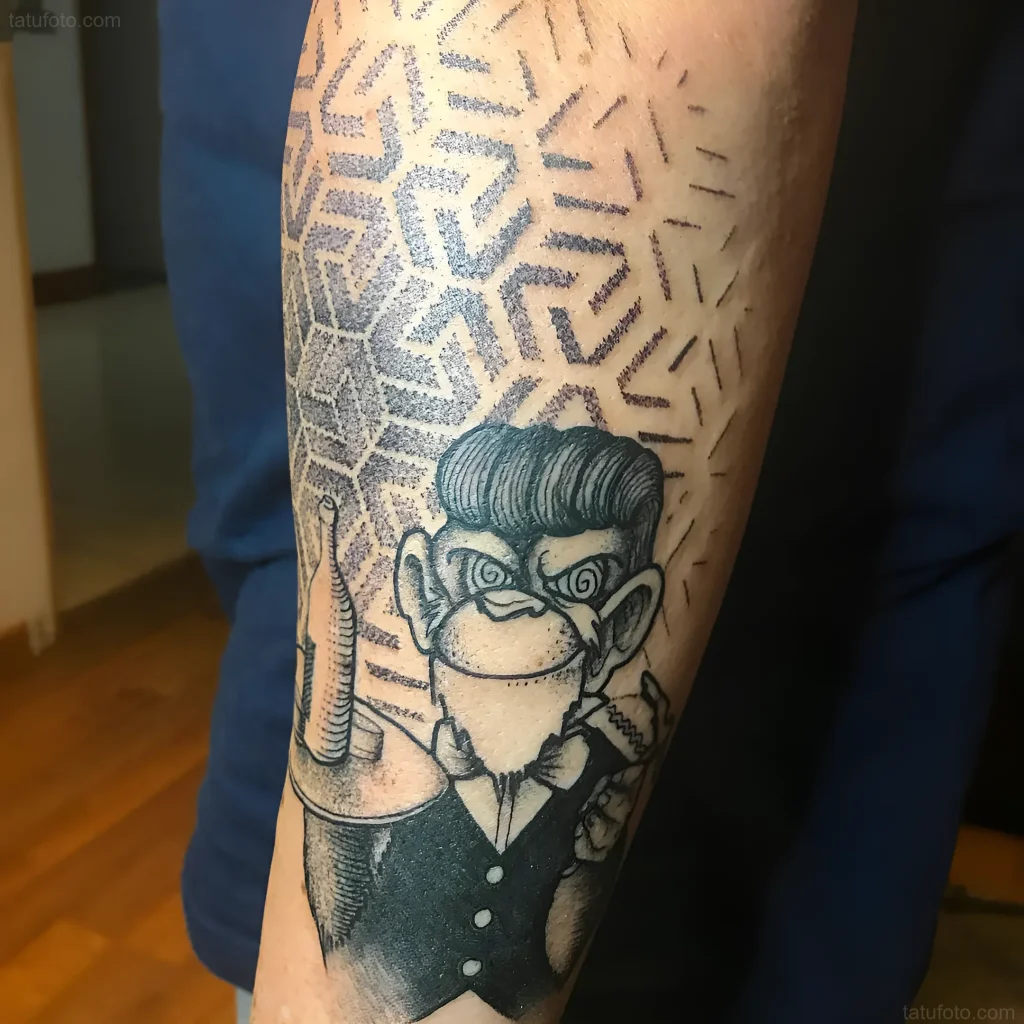
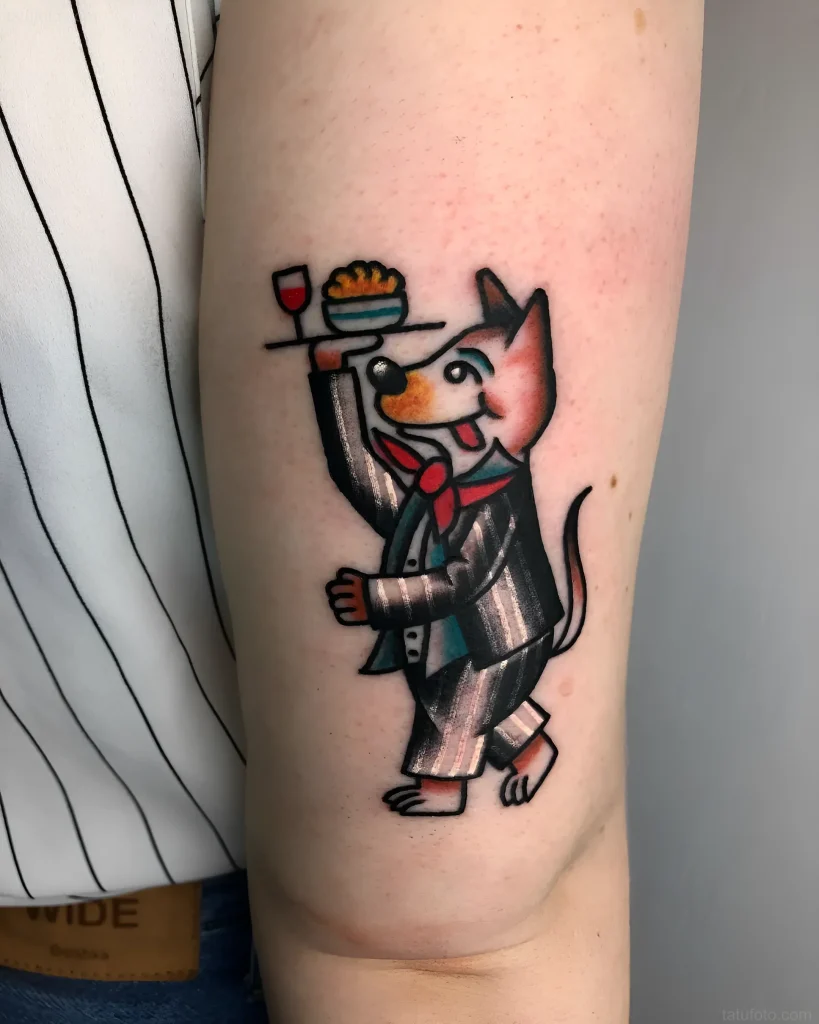
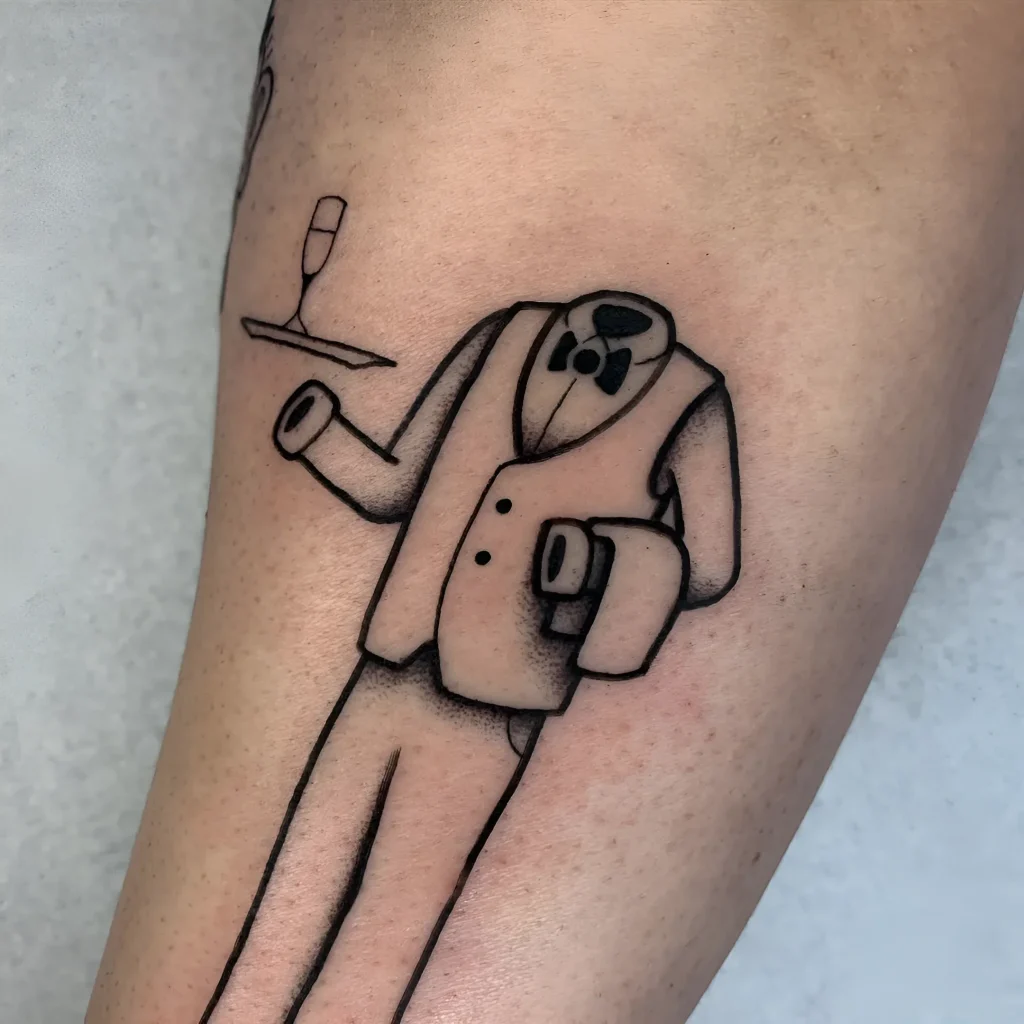
These styles are ideal for conveying classic attributes with a touch of irony or vintage charm. Old school uses bold outlines and a limited palette, often depicting the waiter in a pin-up style or as a grotesque yet charismatic character.
- Emphasis: On classic symbols: a tray with cocktails, glasses, a vintage corkscrew, a stylized bow tie.
- Meaning: Nostalgia, loyalty to service traditions, playfulness, and charisma.
Graphics, Linework, and Minimalism
For those who prefer restraint or want a tattoo that can be easily hidden under clothing, minimalist options are suitable. Here, the emphasis is not on the person themselves, but on their tools, which acquire symbolic meaning.
- Examples of Motifs:
- A precise outline of a bow tie or collar.
- A stylized tray balanced on one finger.
- Crossed cutlery.
- A laconic corkscrew or shaker.
- Meaning: Restraint, precision, professionalism, often used as a “work charm.”
Best Spots for a Waiter Tattoo: Where This Motif Looks Most Striking
The choice of placement for a waiter tattoo often depends on how openly you want to display your commitment to the profession, as well as the requirements of your workplace. In the hospitality industry, neatness and, often, the invisibility of personal adornments are important.
Forearm and Inner Arm
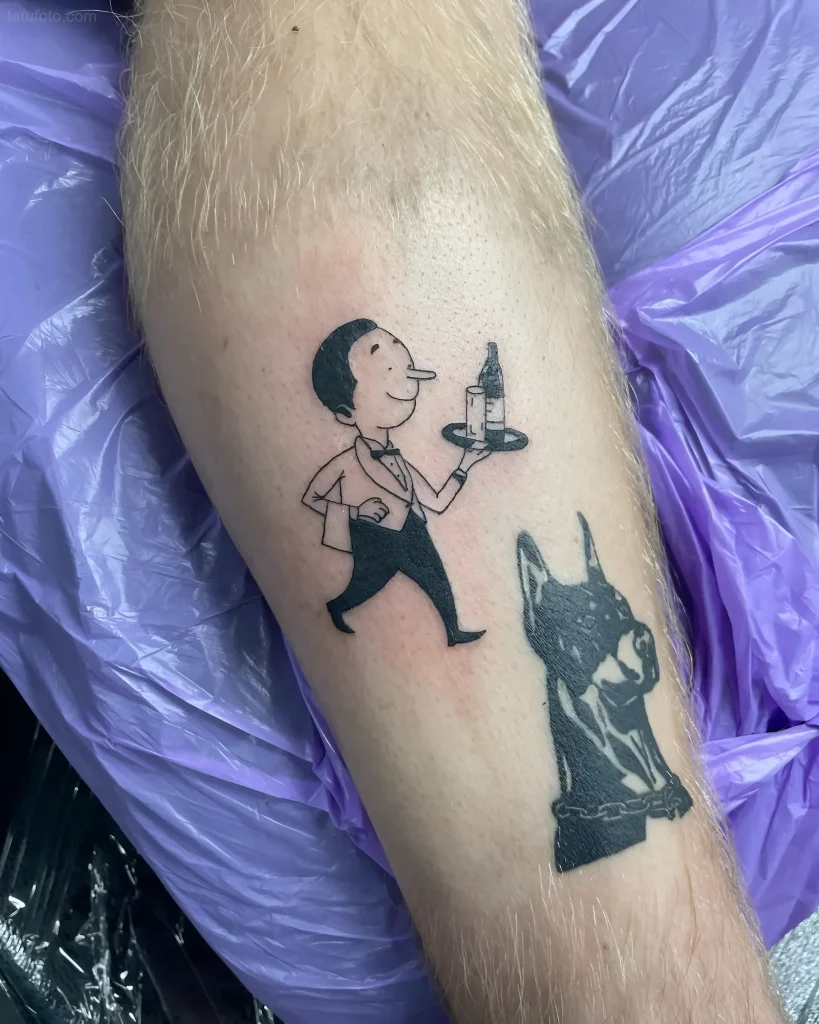
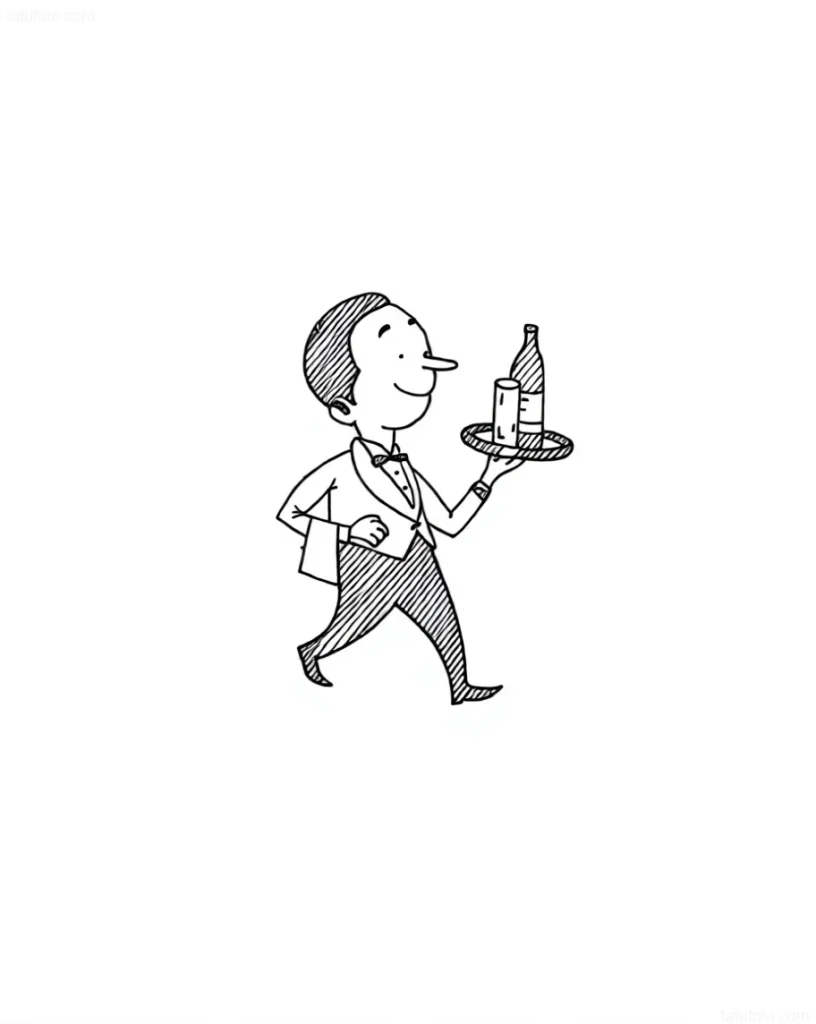
This is one of the most popular places for professional tattoos. The forearm symbolizes strength and skill, and it is also a “working” part of the body, constantly involved in the service process.
- Pros: Excellent area for detailed realism or neo-traditional compositions, easily hidden by a uniform sleeve.
- Symbolism: Demonstration of working strength and endurance.
Wrist and Hand (Symbols of Precision)
Tattoos on the wrist or the back of the hand are often chosen for minimalist symbols (bow tie, coffee bean, corkscrew). They serve as a constant reminder of professional principles.
- Pros: A constant reminder, high visibility (if permitted).
- Symbolism: Accuracy, attention to detail, timing. However, this location requires caution, as most fine dining establishments prohibit tattoos on exposed areas of the arms.
Back and Chest (Personal Pride)
If the tattoo has a deeply personal, almost sacred meaning, or if you want to create a large-scale piece while keeping it invisible to clients, choose the torso.
- Pros: Large area for complex scenes (e.g., a waiter against the backdrop of a famous restaurant).
- Symbolism: Personal pride, deep devotion to the profession.

Tips for Choosing a Sketch and Caring for a Waiter Tattoo
When creating a waiter tattoo sketch, it’s important not to fall into banality, but to create a unique, meaningful image that speaks to your professional journey.
Personalizing the Sketch
To make the tattoo truly yours, integrate elements related to your experience:
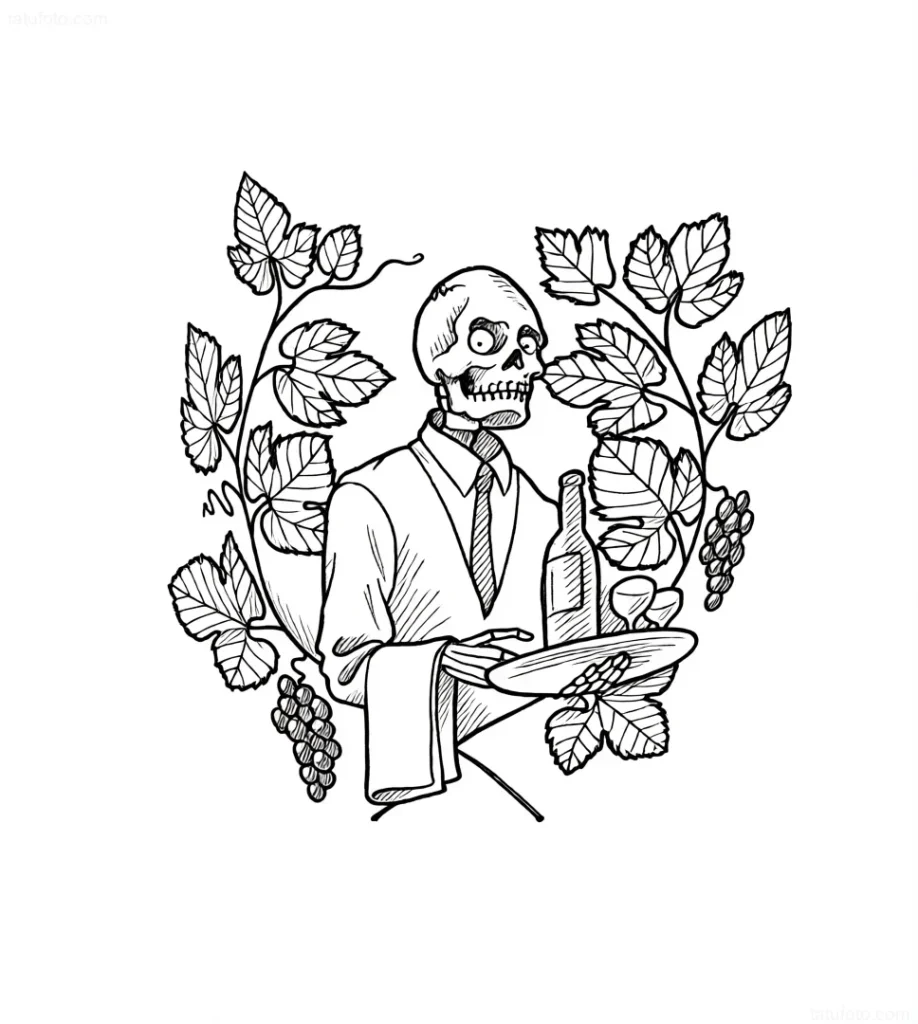
- Drink Specifics: If you are a sommelier, add a grapevine or a decanter. If you are a bartender, add a shaker, ice, or citrus. A coffee shop waiter can add stylized coffee beans or latte art.
- Geographical Context: An image of an iconic building or city skyline where you worked in a top restaurant.
- Specific Tool: If you have a favorite sommelier knife or a special tray, draw that specific item, not a generic symbol.
- Hidden Numbers: The date you started working, the year your favorite restaurant was founded, or your table number that became significant to you.
Expert Tip: Discuss with your artist how to integrate elements of the style in which you work (e.g., Art Deco, if your restaurant is decorated in that style).
Tattoo Care in a Work Environment
The waiter profession involves constant movement, contact with liquids (water, grease, alcohol), and an increased risk of skin injury. Caring for a fresh tattoo requires special attention:
- Moisture Protection: In the first few days, use special healing films (second skin) that reliably protect the tattoo from sweat and splashes when washing dishes or wiping tables.
- Avoid Friction: If the tattoo is on your forearm, ensure that your uniform cuffs do not rub against the fresh design. Choose loose clothing or use soft bandages.
- Hygiene: Working in food service requires frequent hand sanitization. If the tattoo is on your hand, use a mild antibacterial soap without harsh fragrances or alcohol.
- Sun Protection: If the tattoo is exposed, constant light exposure (even artificial light in the dining area) can cause fading. Always use sunscreen with a high SPF once the tattoo is fully healed.
Frequently Asked Questions About the Meaning of a Waiter Tattoo
1. Is a waiter tattoo considered unprofessional?
It depends on the specific establishment. In general, attitudes towards tattoos in the hospitality industry are becoming more liberal. In trendy bars, cafes, and informal restaurants, tattoos are even welcomed as part of the image. However, in expensive fine dining restaurants, strict dress codes may require all tattoos on the arms, neck, and face to be hidden. If you work in such a field, choose locations that are easily covered by a uniform (forearm, shoulder, back).
2. Is it necessary to depict the waiter themselves?
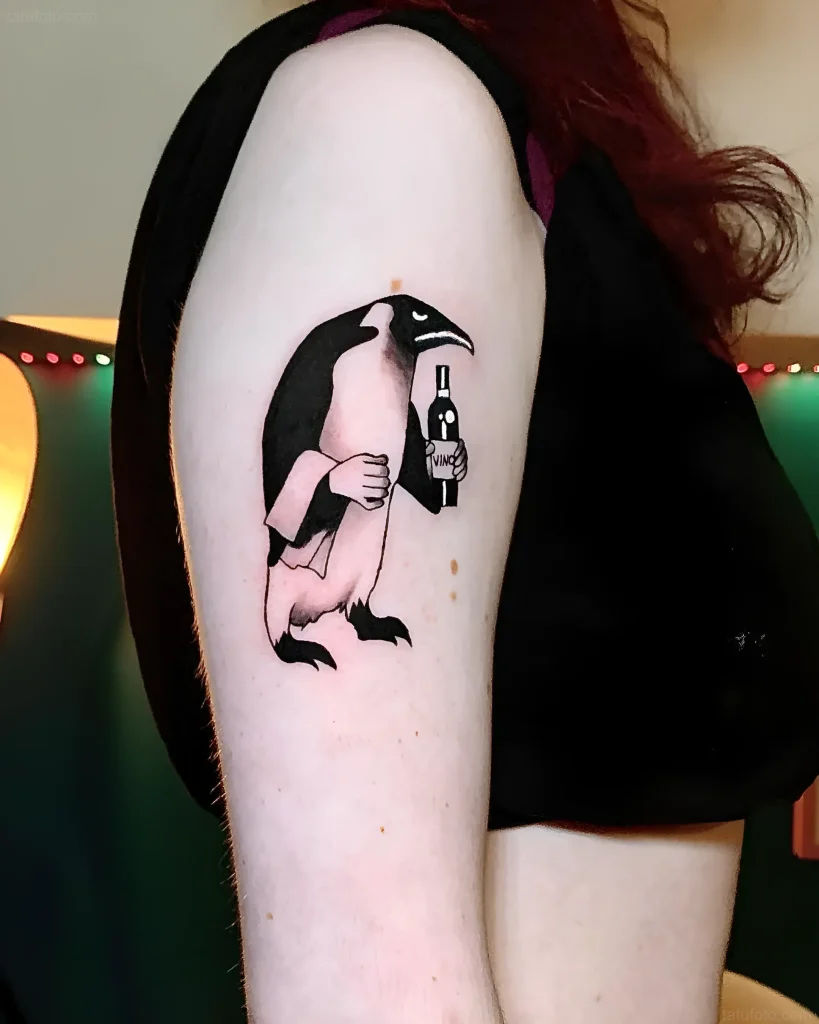
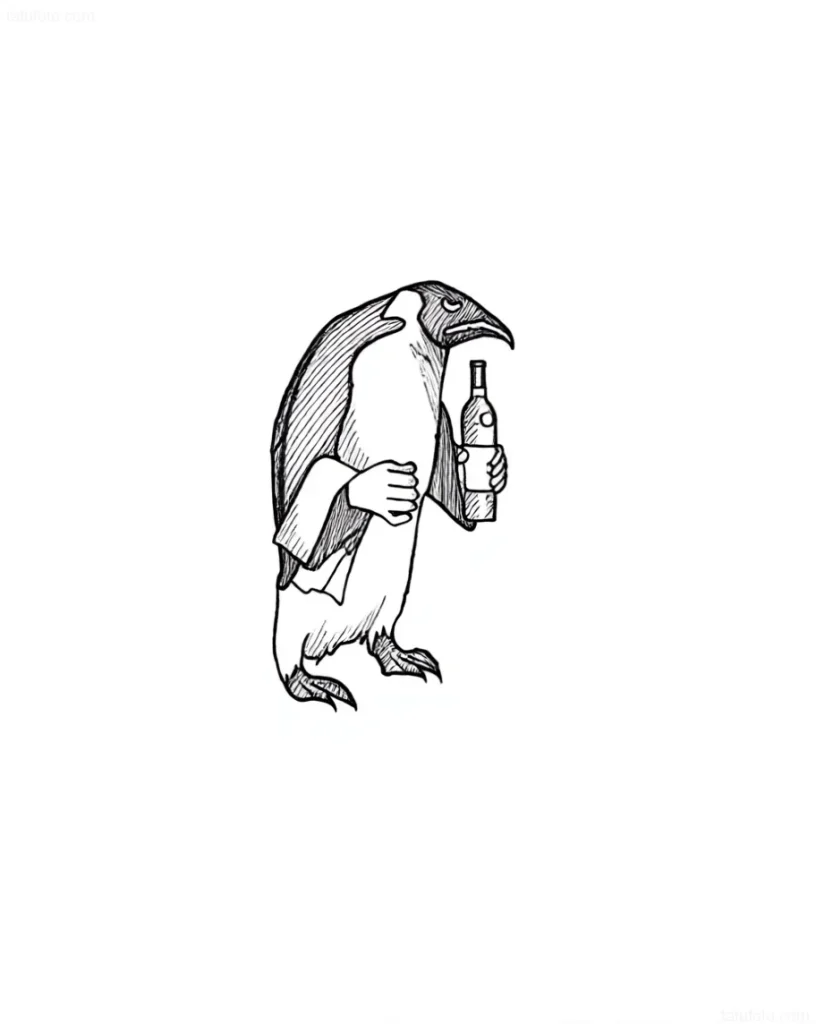
Not at all. Many prefer symbolism. Depicting attributes (e.g., a perfectly clean tray, a bow tie, a bottle of wine, a corkscrew) often carries a more universal and profound meaning than a portrait. Symbolic tattoos allow you to avoid limitations associated with realistic depictions of uniforms, which can change.
3. Is this tattoo suitable for women?
Absolutely. Female waiters, hostesses, baristas, and bartenders demonstrate the same qualities – endurance, grace, diplomacy, and skill. For women’s tattoos, more delicate motifs are often chosen: stylized butterflies, elegant glasses, or elements in the watercolor and linework styles, emphasizing the grace of movement.
4. What is the meaning of a tattoo depicting a bow tie?
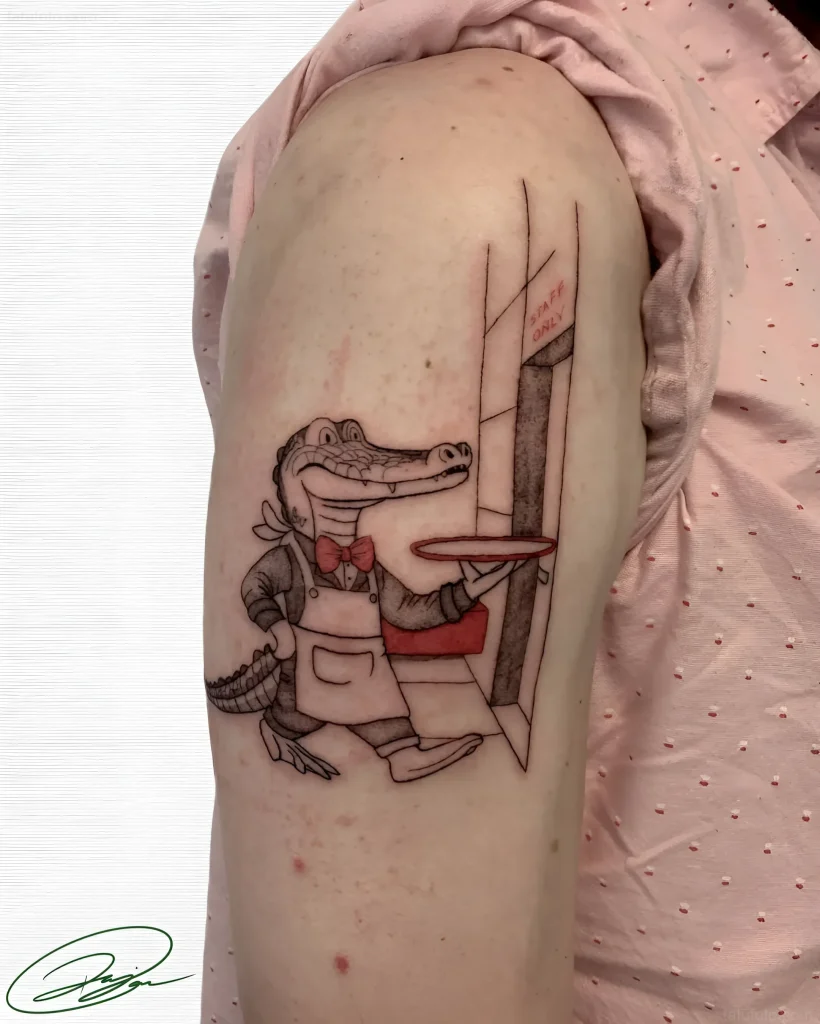
A bow tie is one of the strongest and most concise symbols of a high-class waiter. It signifies formality, elegance, impeccability, and professionalism. It is an ideal choice for a minimalist tattoo that conveys that a person values order and high service standards.

Interesting Facts About Tattoos Related to the Waiter Profession
The service industry, despite its apparent simplicity, has many hidden symbols and traditions that can form the basis for a unique tattoo:
- The “Match” Symbol: In some old traditional bars, a tattoo of a single burning match or a matchbox could symbolize readiness for work, constant activity, and the ability to quickly “ignite” the atmosphere.
- Hidden “Seagull”: In CIS countries and Eastern Europe in the 90s, there were informal tattoos related to the profession that symbolized speed and the ability to “flit” between tables, hence the rare but encountered motif of a seagull or swallow, symbolizing quick service.
- Tiki Tattoos: Bartenders specializing in exotic cocktails often use Tiki Polynesian mask motifs in their tattoos, which symbolize hospitality, exoticism, and the mastery of mixing complex drinks. This is a kind of professional subcategory of waiter/bartender tattoos.
- “Table 13”: Some waiters get a tattoo with the number “13” (a table that brings luck or, conversely, is associated with the most difficult experience). This is a personal charm symbolizing overcoming difficulties and endurance.
- The Inscription “Always on my feet”: A fairly common minimalist motif among hospitality workers, emphasizing physical endurance and constant readiness for action.
A waiter tattoo is a deep and meaningful choice that allows you to immortalize on your skin not just a workplace, but an entire philosophy of service, discipline, and mastery. By choosing this motif, you declare to the world your pride in a profession that requires no less talent and endurance than any other art.