On tatufoto.com, we often encounter requests about the deep meaning and symbolism of tattoos, and today we will delve into the world of one of the most mystical and powerful images – the image of a shaman. A shaman tattoo is not just a drawing on the skin; it is a manifesto reflecting the pursuit of spirituality, wisdom, connection with nature, and unseen forces. The choice of this symbol often speaks of a person’s deep inner processes, their search for a path, and their readiness for self-discovery.
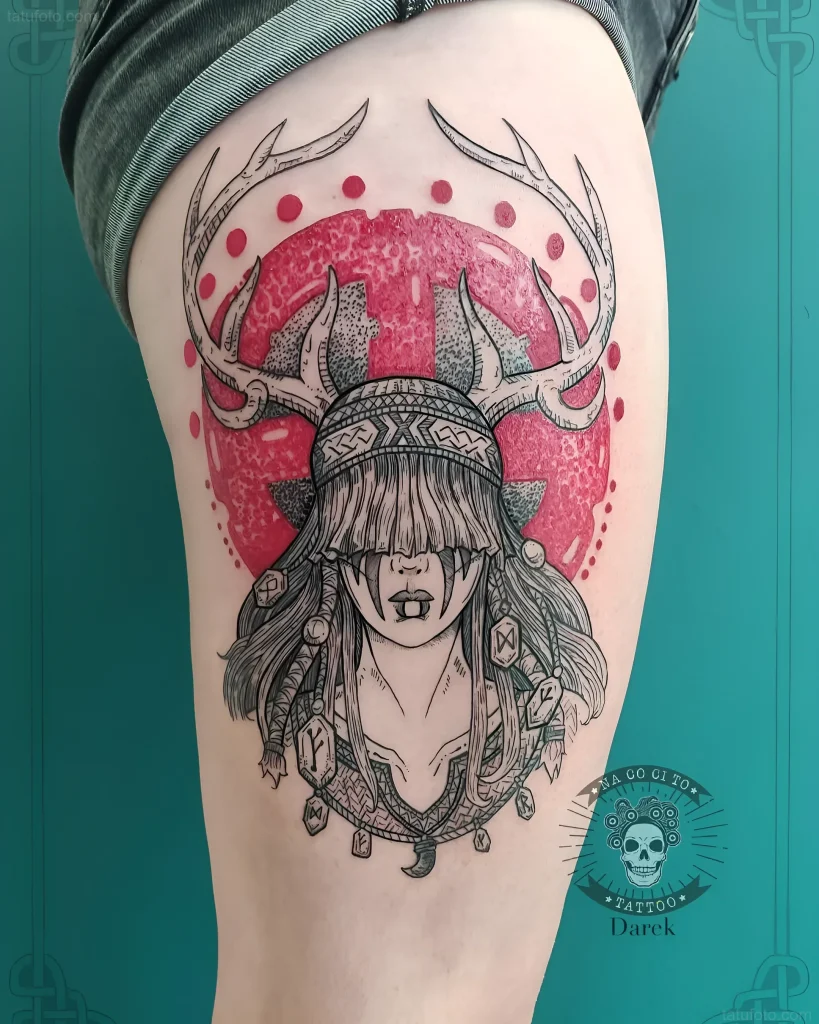
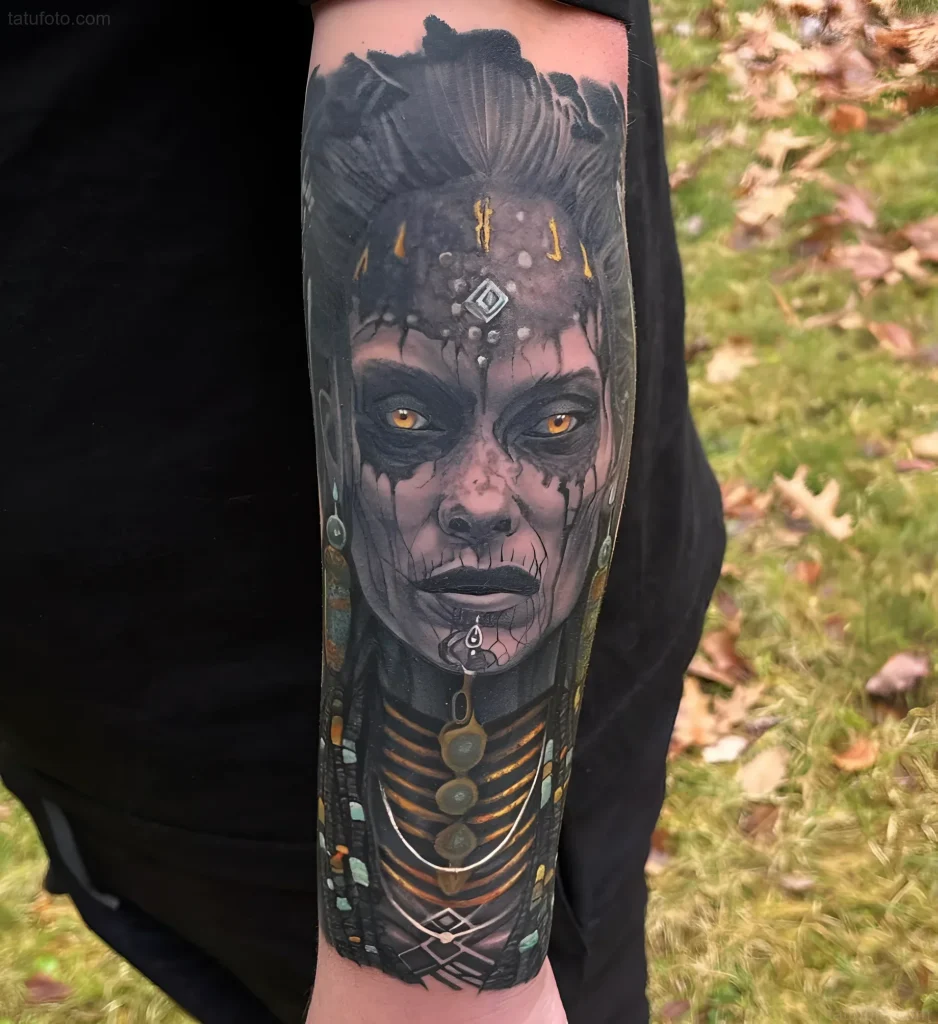
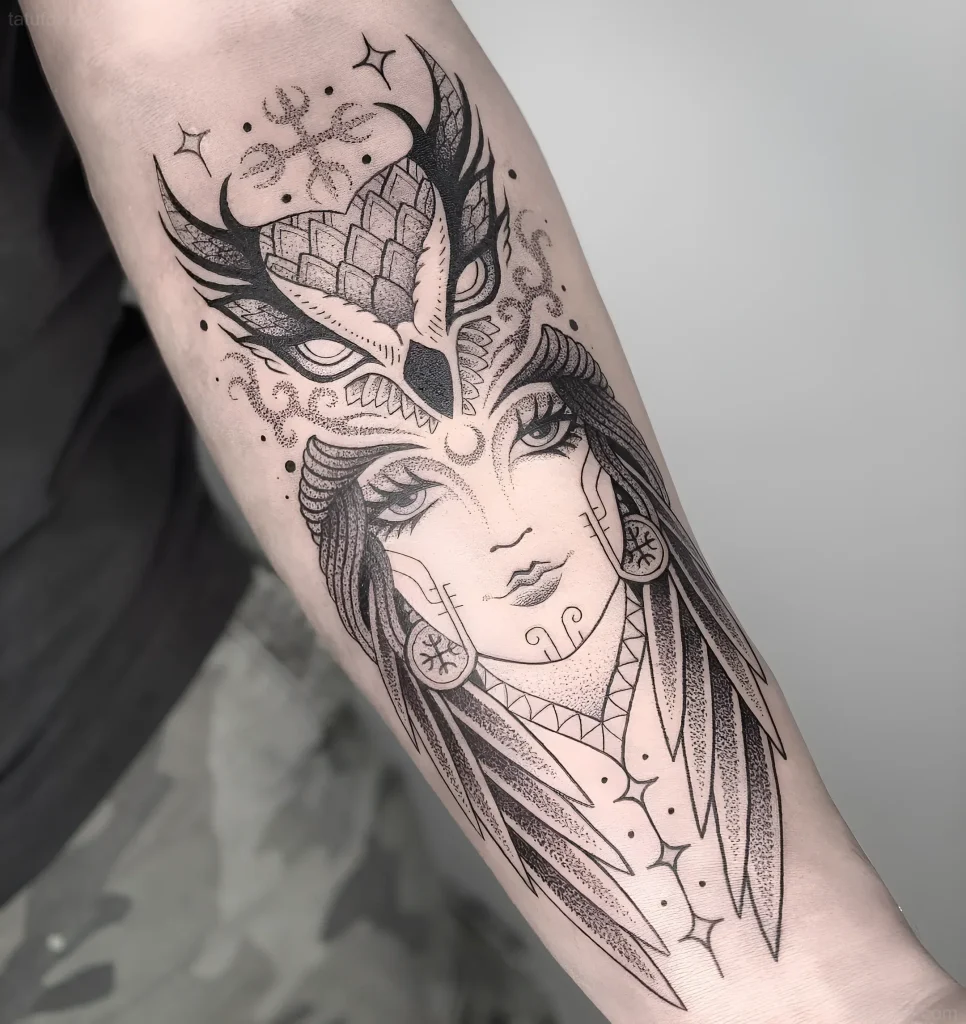
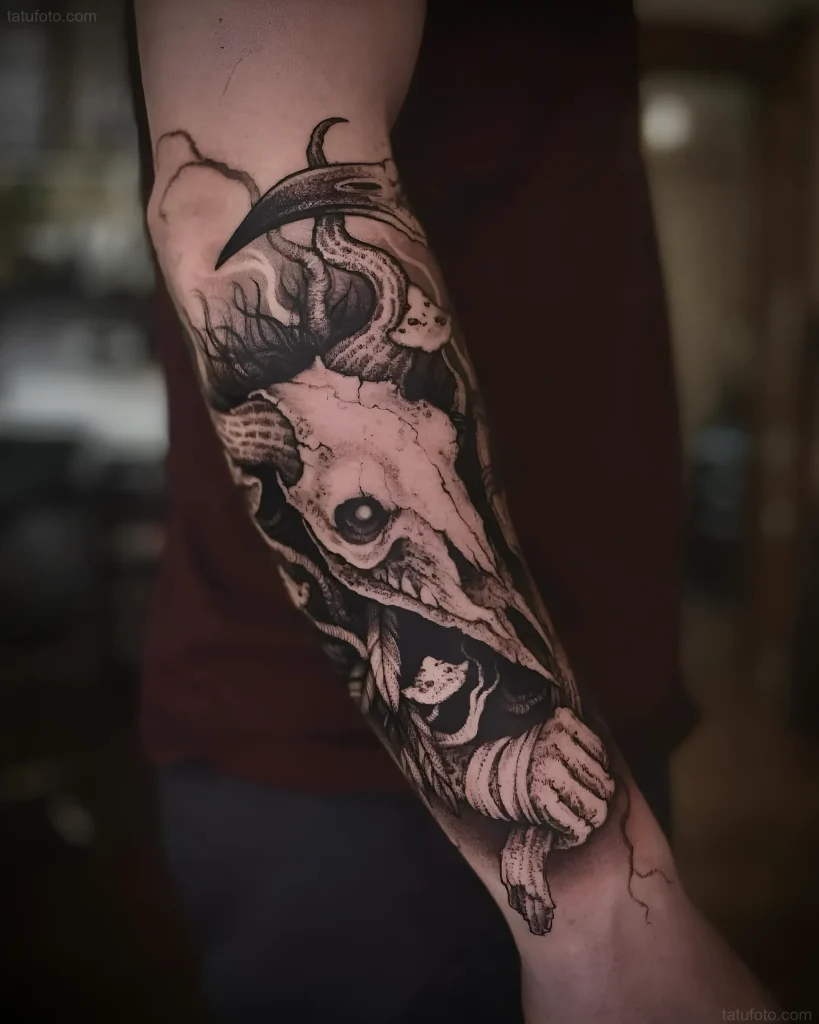
If you are considering adorning your body with the image of a shaman, you likely already feel drawn to its archetypal meaning. This article is intended to be your guide into the world of shaman tattoo symbolism, revealing its multifaceted aspects, from historical roots to modern artistic interpretations. We will help you understand what this powerful image might mean for you, how to choose the perfect sketch, and where on your body it will look most organic, unleashing its full energy and strength.
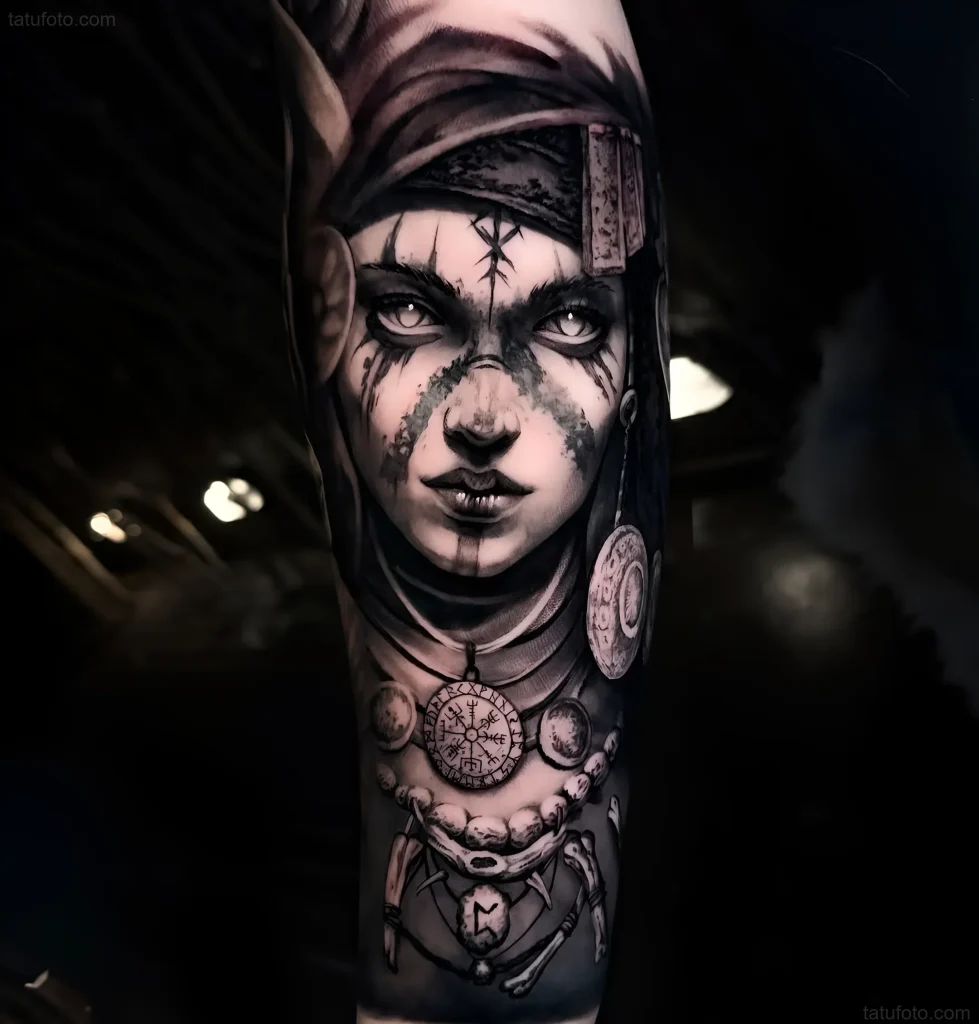
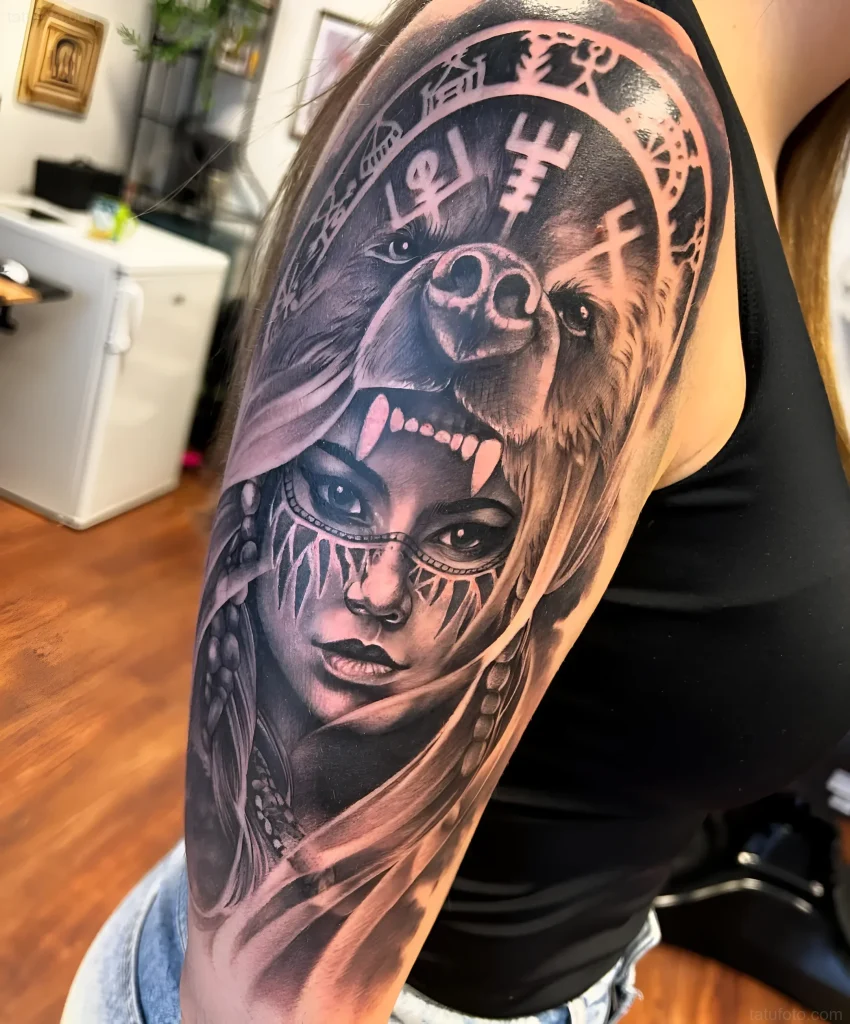
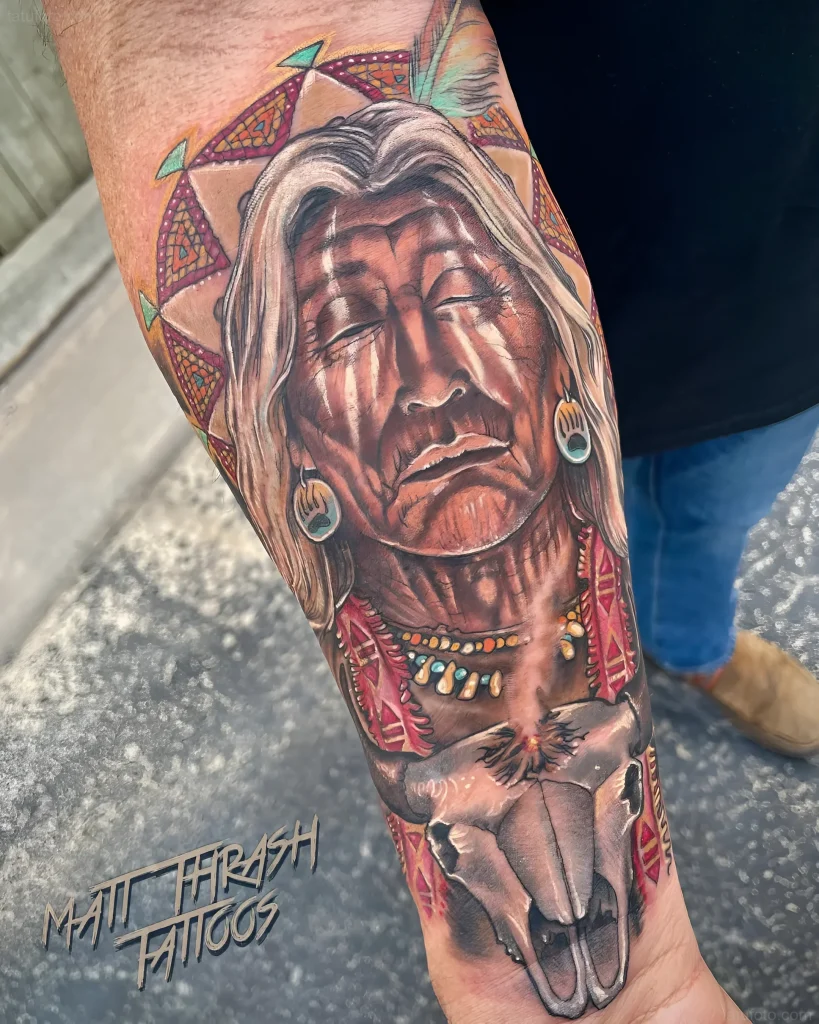
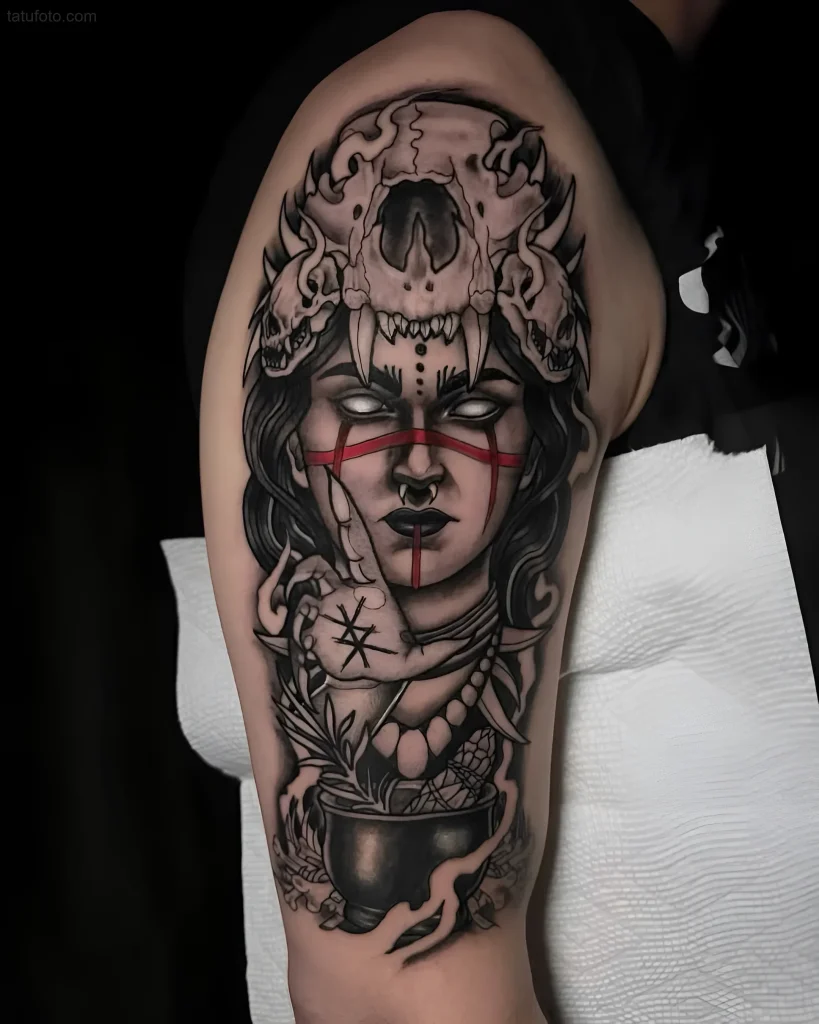
The Meaning of a Shaman Tattoo: Unveiling the Deep Meaning
A shaman tattoo is a powerful symbol that encompasses a whole spectrum of meanings rooted in ancient cultures and spiritual practices. First and foremost, the shaman is perceived as a bridge between worlds: the material and the spiritual, the world of the living and the world of ancestors. For the wearer of such a tattoo, it can symbolize a deep understanding of unseen connections, the ability to see beyond the ordinary, and a striving for harmony between their inner self and the outer world.
Another key meaning is wisdom and knowledge. Shamans have always been keepers of ancient traditions, healers, and advisors. Their image on the skin can speak of the search for or possession of deep intuition, access to hidden knowledge, and the ability to make balanced, wise decisions. It is also a symbol of a person who learns from their experience and strives for constant spiritual growth.
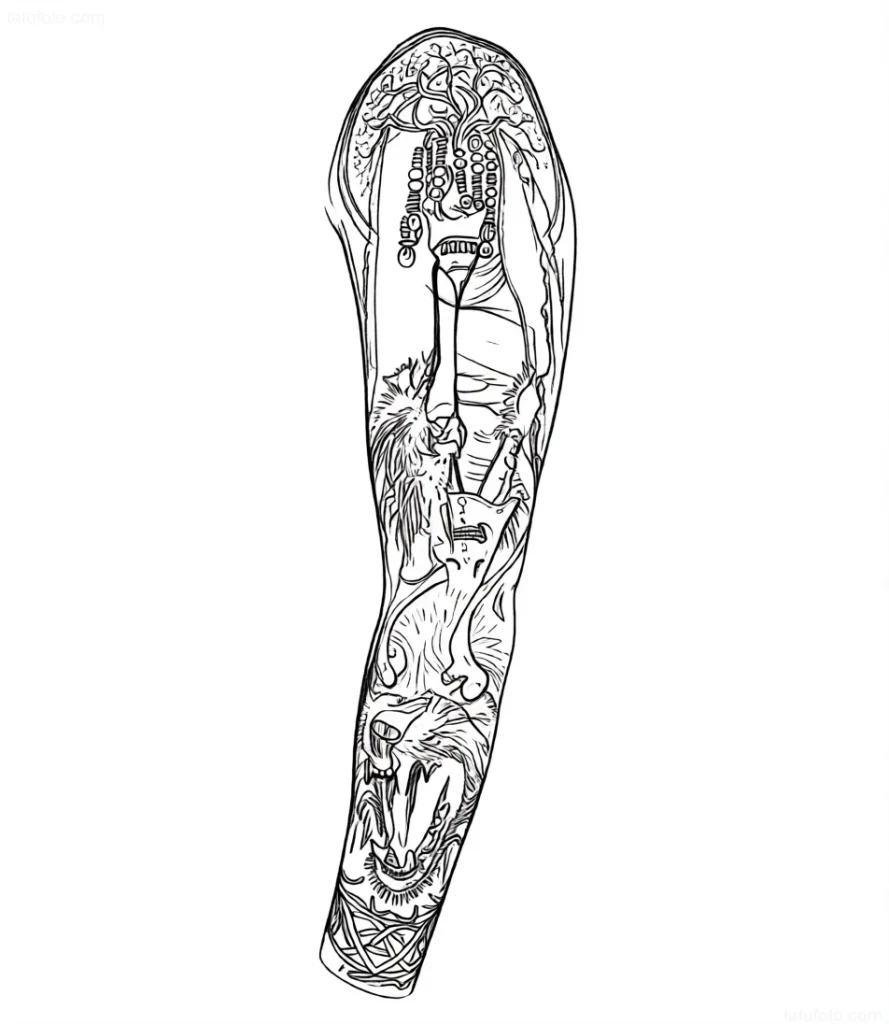
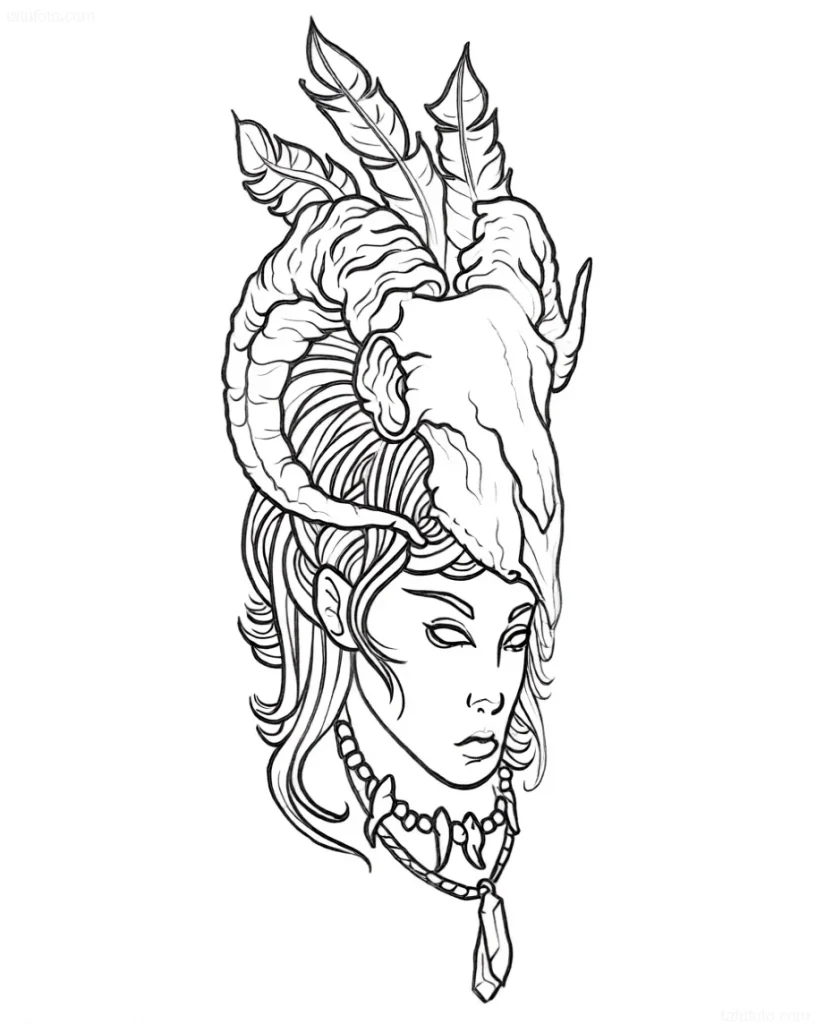
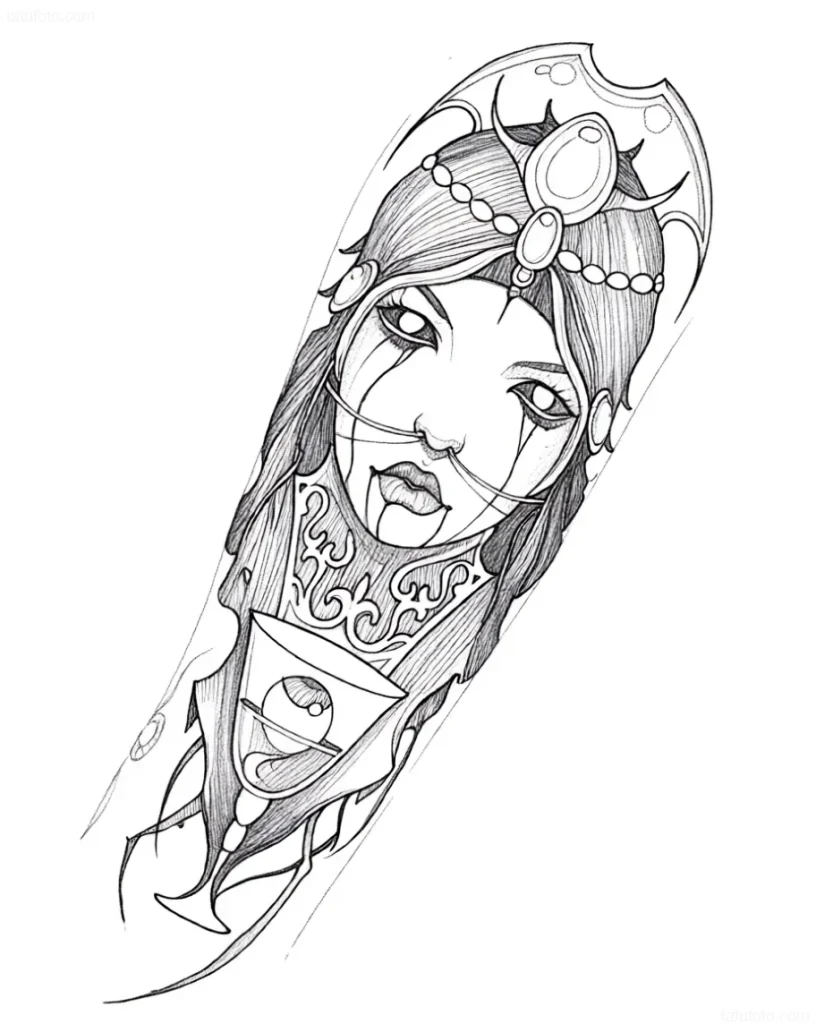

Equally important is the aspect of power and protection. The shaman is often depicted accompanied by totem animals or with attributes symbolizing their power over spirits and energies. Such a tattoo can serve as a protective charm, shielding the wearer from negative influences, ill intentions, and unfavorable circumstances. It is meant to remind of the inner strength that allows one to overcome difficulties and remain steadfast in the face of trials.
Finally, the shaman tattoo is often associated with unity with nature and its elements. Shamans drew their strength from the earth, water, fire, and air, communicating with animals and plants. For modern people, this can be an expression of deep respect for nature, a desire to live in harmony with the surrounding world, and a reminder of our primal roots and connection to all living things on the planet. By choosing a shaman tattoo, you declare your readiness to embrace this deep and multifaceted symbolism in your life.
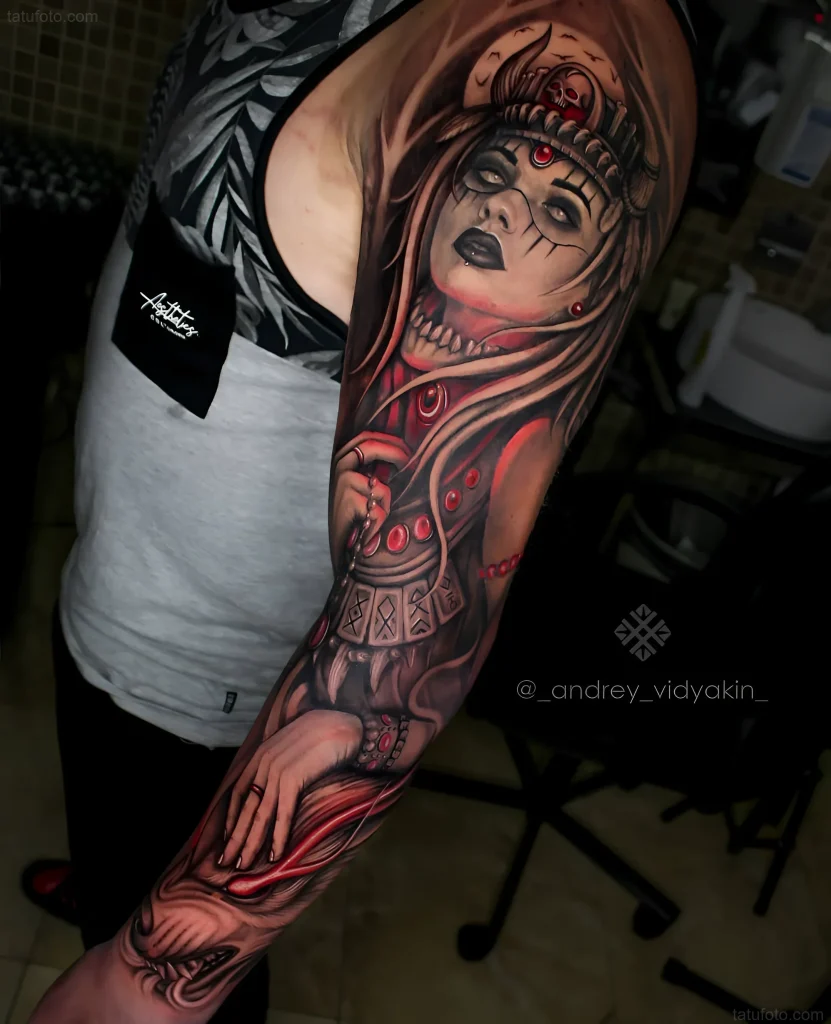

History and Origin of the Shaman Image in Culture
The image of the shaman, deeply rooted in the collective unconscious of humanity, has an ancient history spanning tens of thousands of years. It emerged in Paleolithic societies and was a central figure in the spiritual life of many peoples worldwide – from Siberia and Central Asia to North and South America, Africa, and Australia. The shaman was the link between the human world and the spirit world, performing the functions of a healer, diviner, priest, and keeper of traditions.
In various cultures, the shaman might have been called different names: “sorcerer,” “healer,” “medium,” “man of power.” However, the essence of their role remained unchanged: the ability to enter altered states of consciousness (trance) to communicate with the spirits of ancestors, animals, and natural elements. These journeys into other worlds were undertaken to gain knowledge, heal illnesses, predict the future, or ensure the well-being of the community.
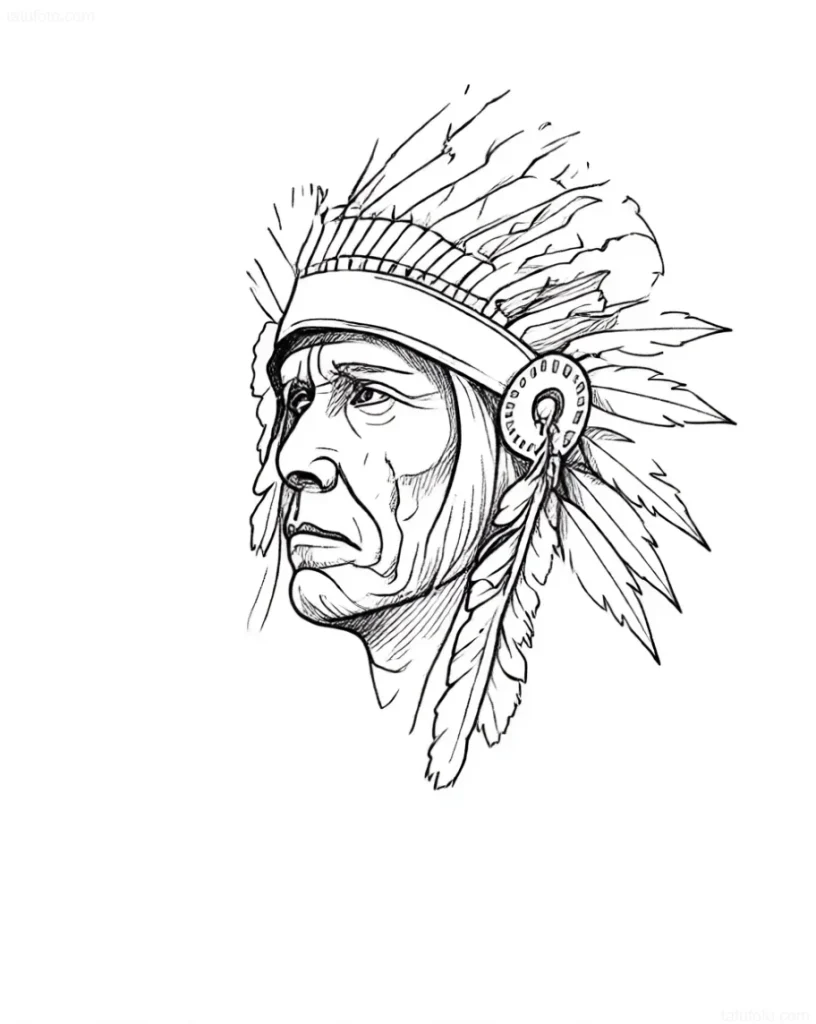
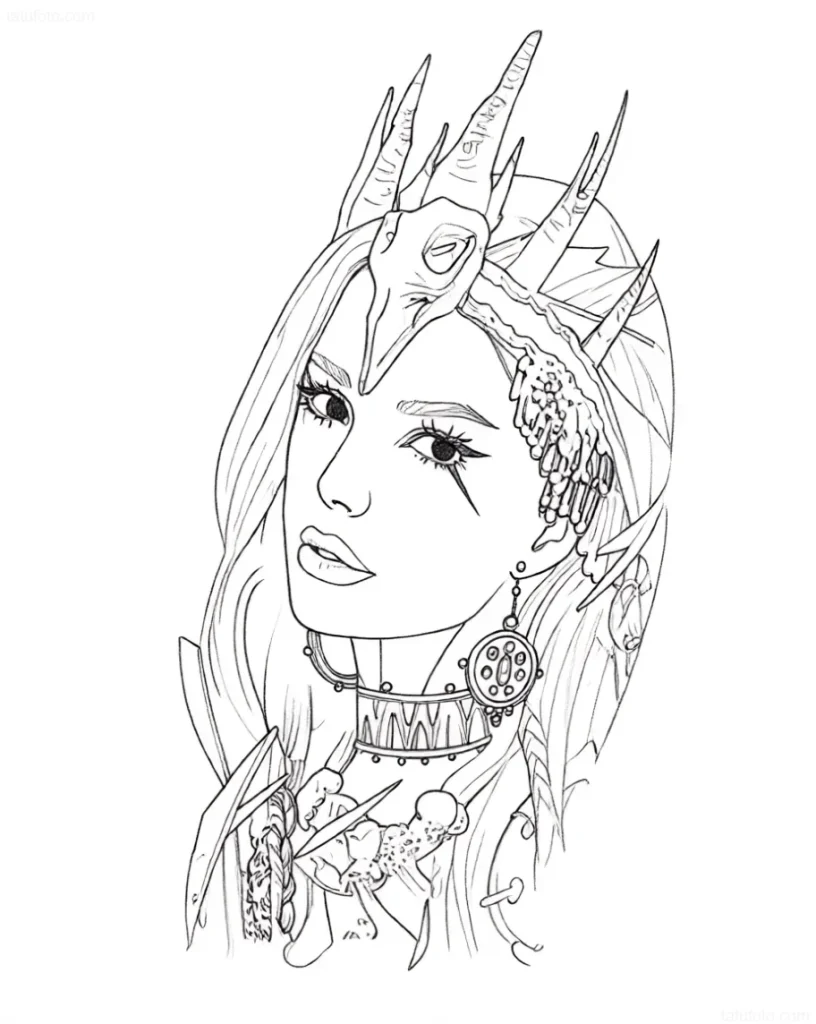
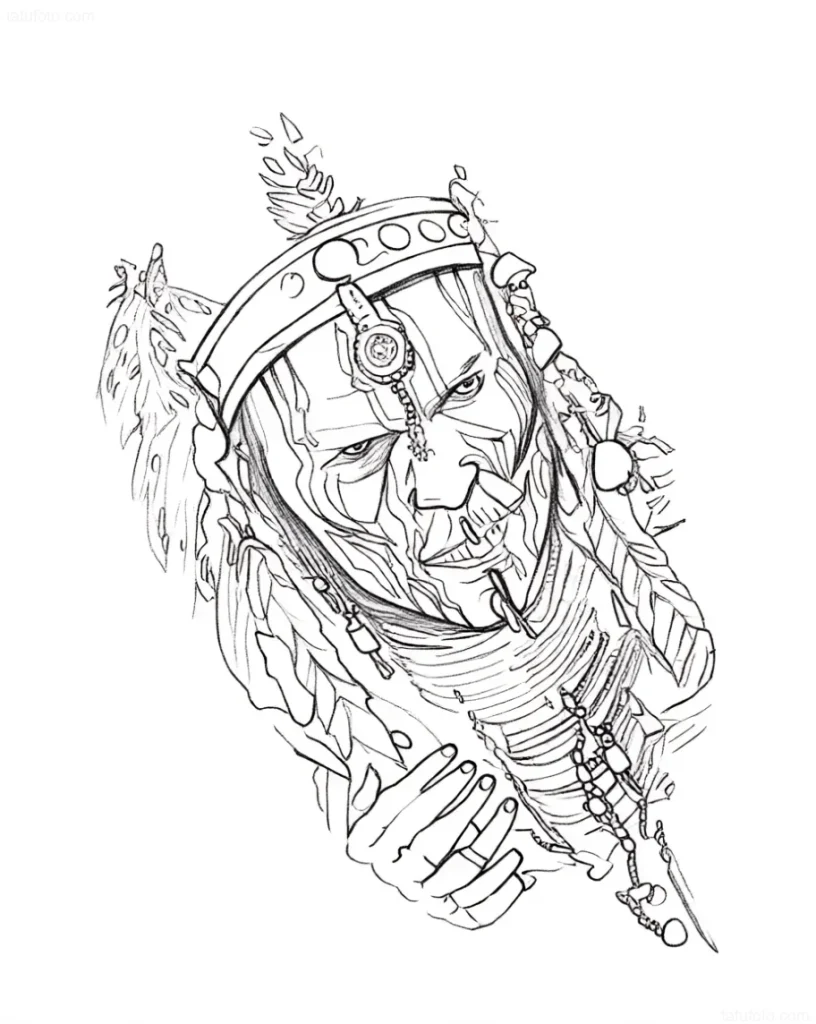
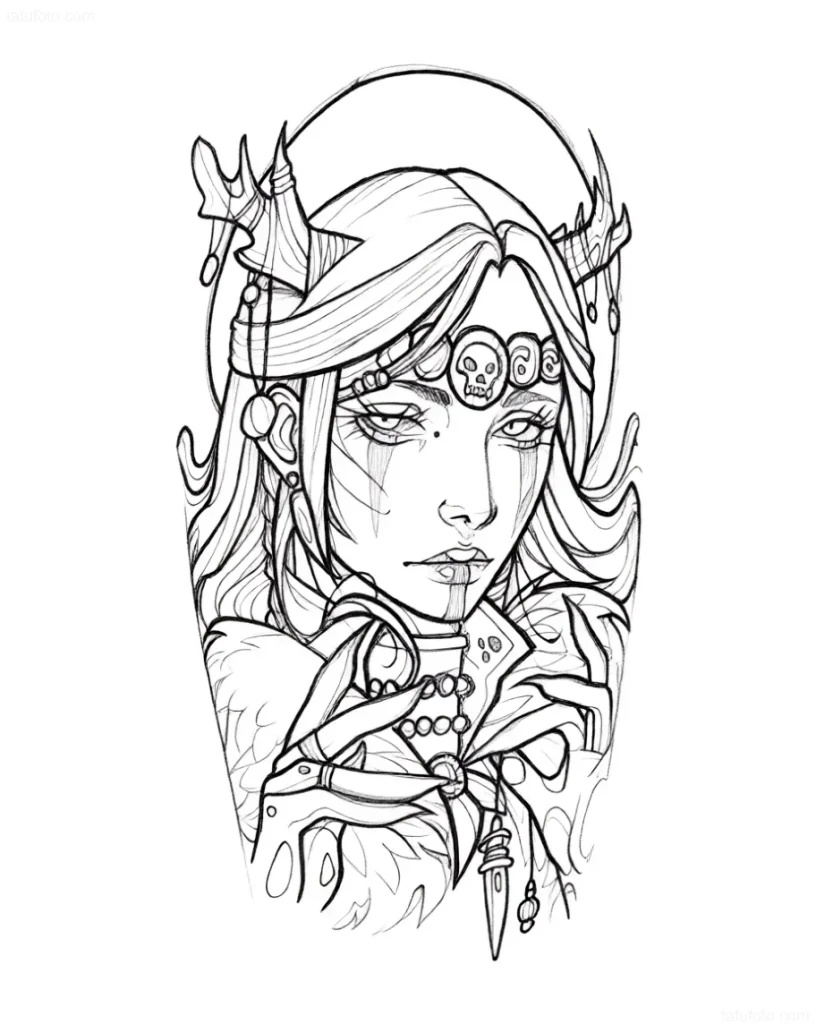
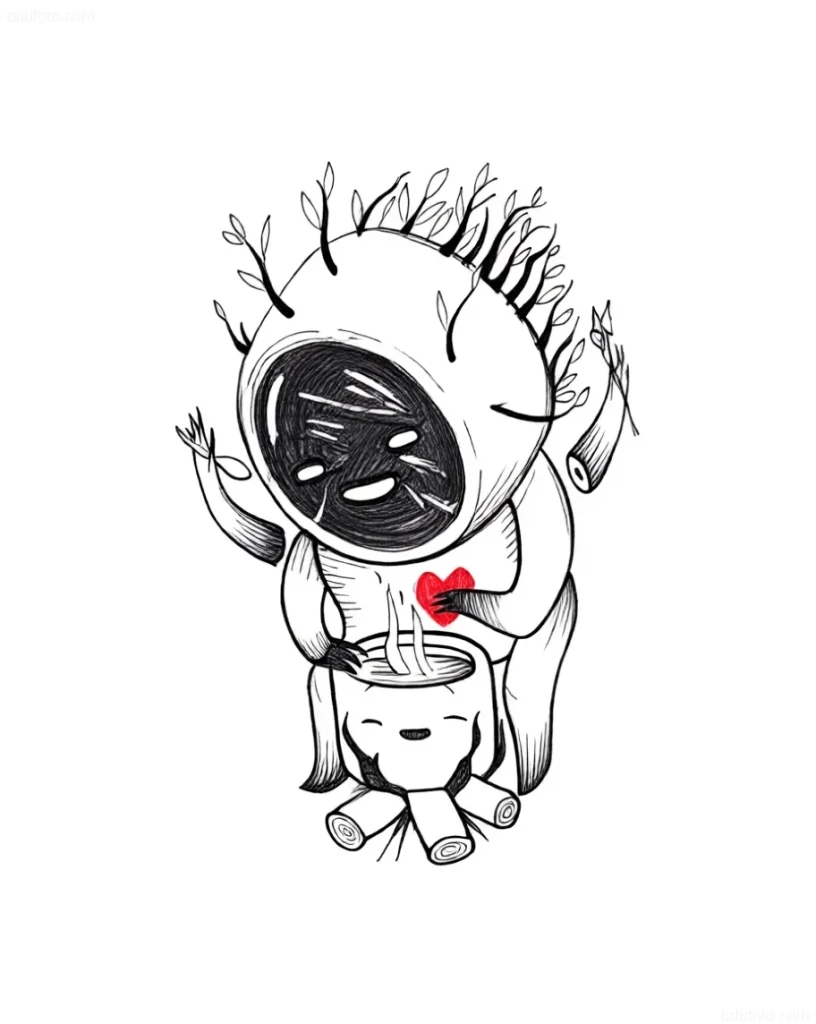
The symbolism of the shaman in tattoos directly stems from these ancient beliefs. For example, depictions of a shaman with helper animals (wolf, bear, eagle, owl) reflect beliefs in totem spirits that grant the shaman their strength and wisdom. A drum or tambourine, often present in sketches, symbolizes the rhythm of the cosmos, a means to enter a trance, and to invoke spirits. Feathers, especially eagle feathers, indicate a connection with celestial forces and the ability for the soul to fly.
Shaman masks, which are also a popular element in tattoos, served the function of transformation – allowing the shaman to take on the guise and power of the spirit whose mask they wore. This symbolizes the ability to change, adapt, and embrace different aspects of one’s personality. Thus, by choosing a shaman tattoo, you are not just getting an image inked, but touching upon millennia of wisdom and spiritual power that has been passed down through generations.
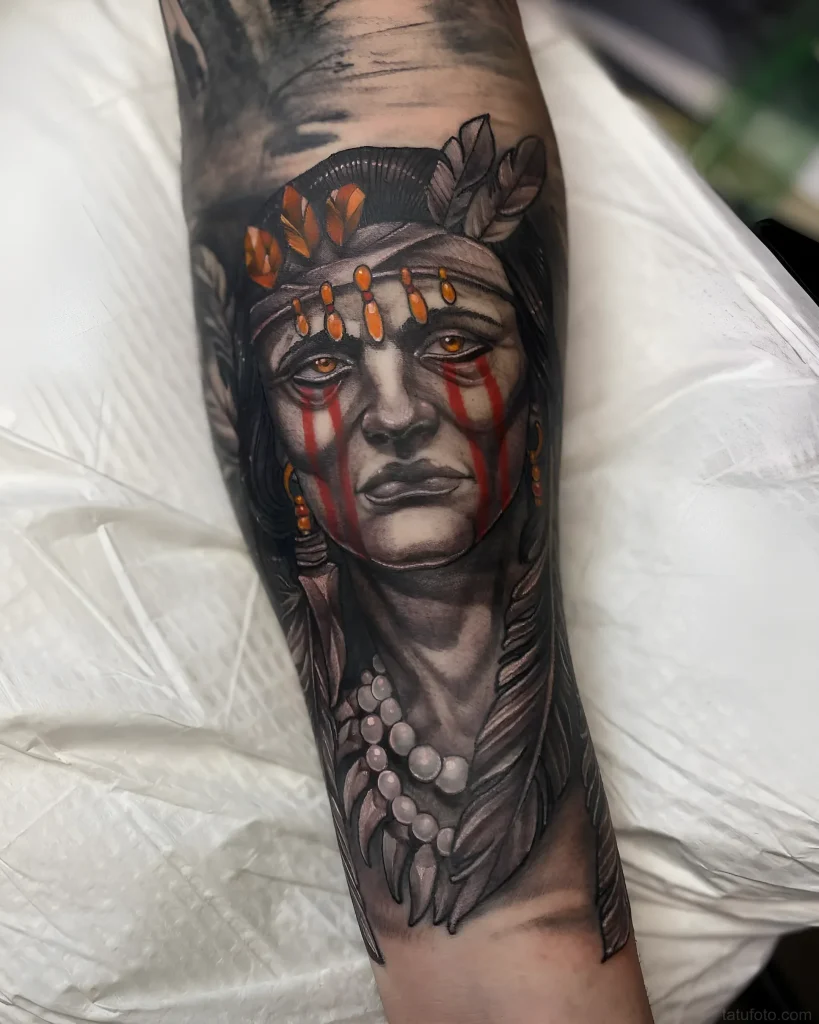
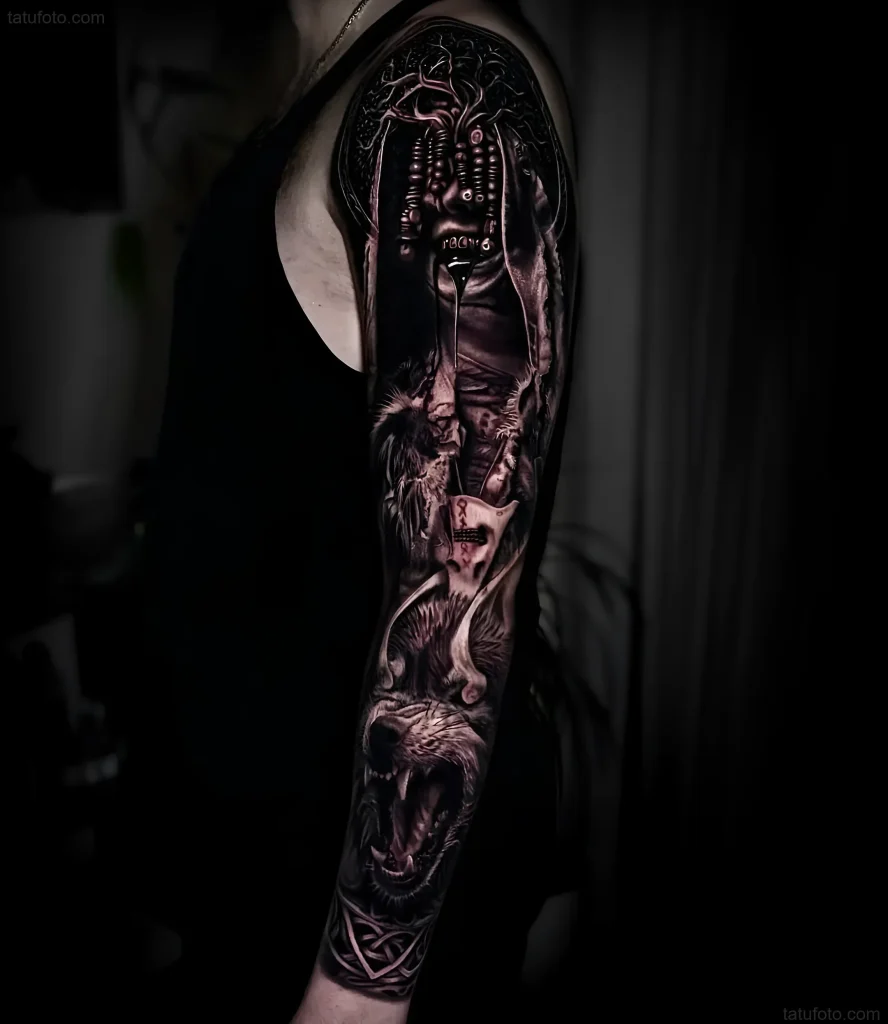
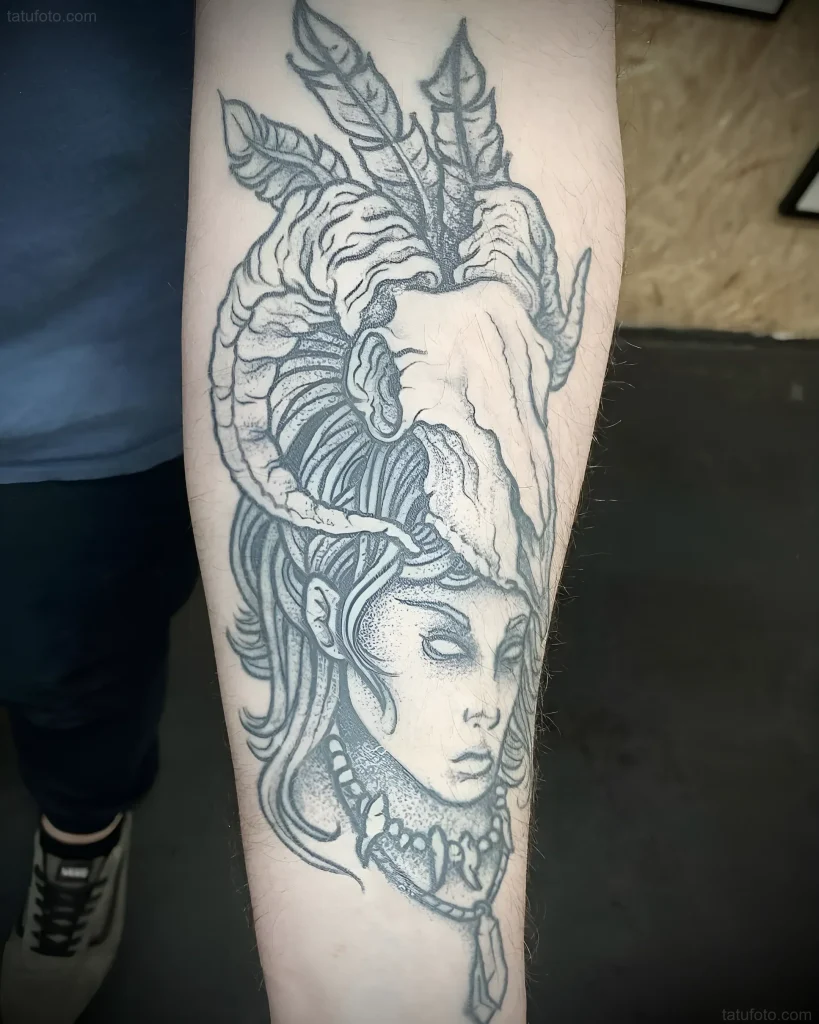
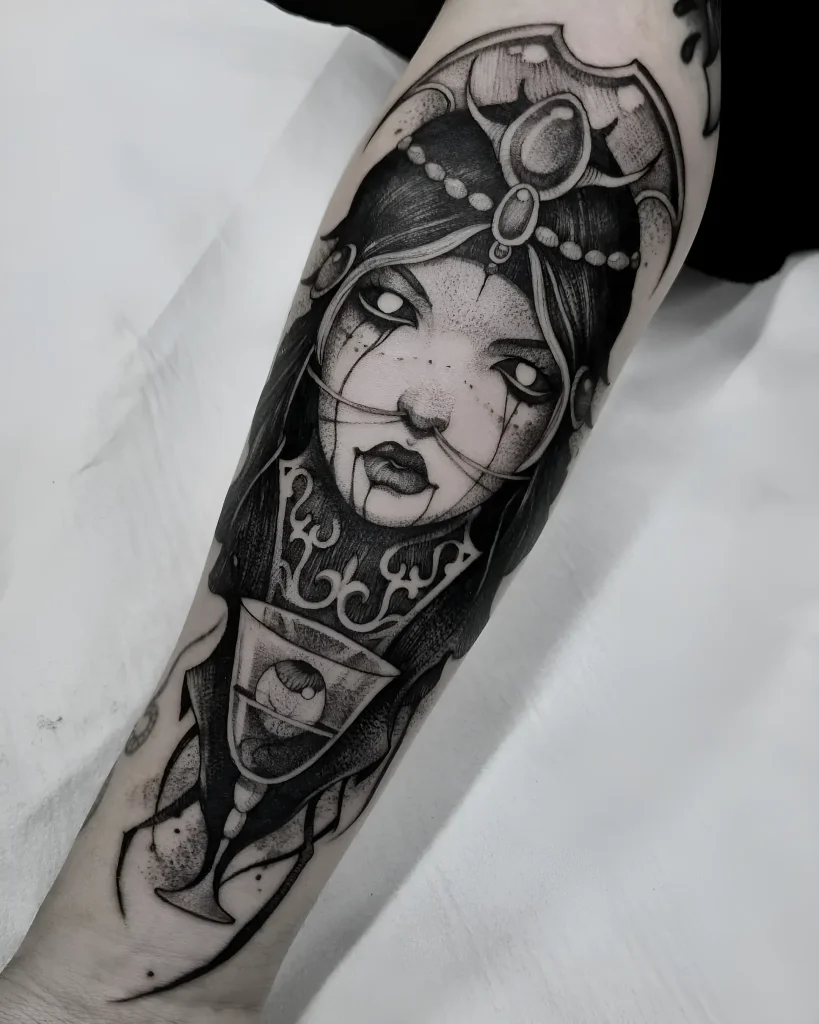
Shaman Tattoo Symbolism: Spiritual Connections and Mystical Powers
The shaman tattoo is one of the most symbolically rich images, with each of its components potentially carrying deep meaning. Let’s break down the main aspects that make this image so appealing to people seeking something more than just aesthetics:
- The Shaman as a Guide: This is one of the central meanings. The shaman is capable of crossing the boundaries between worlds – the world of the living and the spirit world, the material and the immaterial. For the tattoo wearer, this can symbolize a striving for a deep understanding of existence, the ability to see hidden meanings, and an intuitive sense of subtle energies. It can also indicate a person who helps others find their path or overcome difficulties, acting as a spiritual mentor.
- Healer and Guardian of Health: Shamans have historically been the primary healers of their communities, using herbs, rituals, and communication with spirits to cure physical and mental ailments. A shaman tattoo can symbolize the pursuit of self-healing, the restoration of harmony, and also serve as a protective charm against illnesses and misfortunes. It can be a reminder of the power of the spirit capable of overcoming any suffering.
- Wisdom and Knowledge: Shamans are keepers of ancient knowledge, guardians of traditions, and the wisdom of ancestors. Their connection with nature and spirits grants them a deep understanding of the laws of the universe. Such a tattoo can speak of a striving for knowledge, deep intuition, insightfulness, and a wise perspective on life. It is a symbol of a person who values experience and knowledge gained both from the external world and from the depths of their own subconscious.
- Power and Protection: The image of the shaman is often associated with spiritual power and protection. The shaman confronts evil spirits, purifies spaces, and protects their community. A tattoo with a shaman can serve as a powerful amulet, protecting against negative energy, ill-intentioned people, and life’s difficulties. It is meant to awaken inner strength and resilience, helping the owner confidently walk their path.
- Unity with Nature: Shamans are inextricably linked to the natural world, drawing their strength from it. The depiction of a shaman surrounded by animals (wolf, bear, eagle, owl), plants, mountains, or rivers symbolizes deep harmony with the environment, respect for all forms of life, and the awareness of being part of a great ecosystem. It can also indicate a love for wild nature and a desire to live in accordance with its rhythms.
- Transformation and Change: Shamans are capable of taking on the forms of animals and traveling to other worlds, which symbolizes their ability to metamorphose and overcome limitations. A shaman tattoo can reflect a desire or ability for personal growth, transformation, overcoming old habits, and becoming a new, stronger version of oneself.
Every element in the depiction of a shaman – from their headdress adorned with feathers and antlers to the ritual objects in their hands – adds new layers to the overall meaning, making this tattoo truly unique and deeply personal.
Shaman Tattoo Styles: From Realism to Abstraction
The choice of style for a shaman tattoo plays a key role in how its meaning and aesthetics are perceived. The variety of artistic approaches allows everyone to find one that best reflects their personal vision and symbolism. Here are some of the most popular styles:
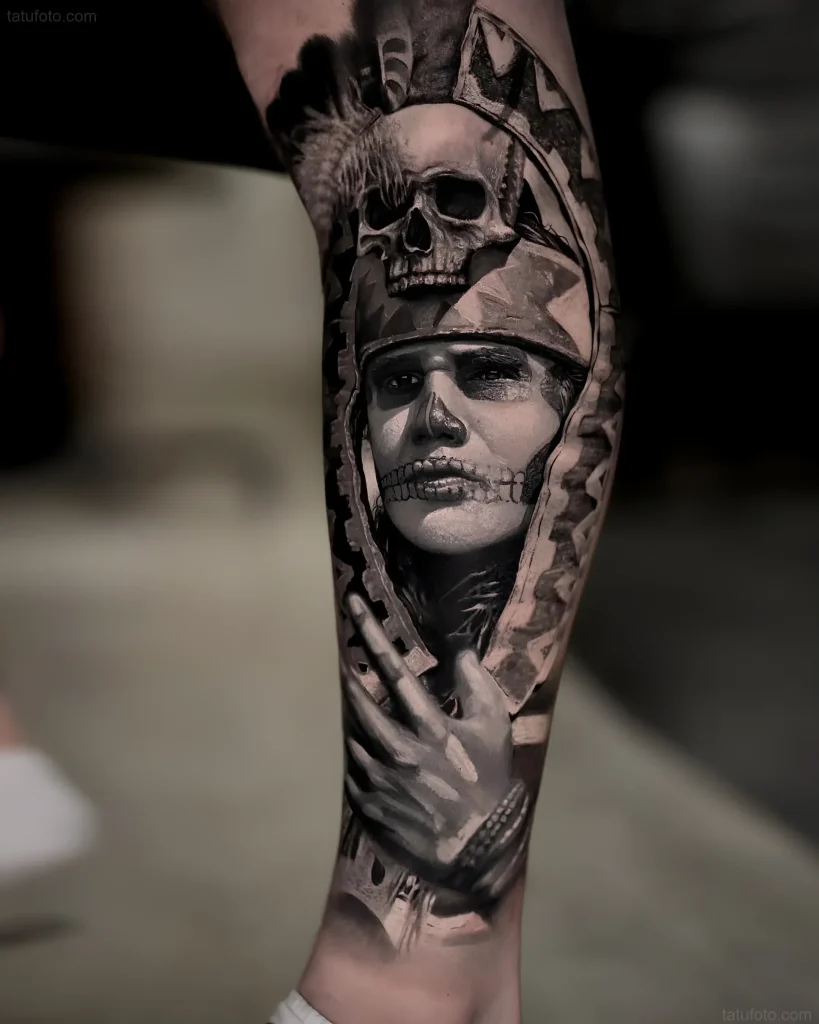
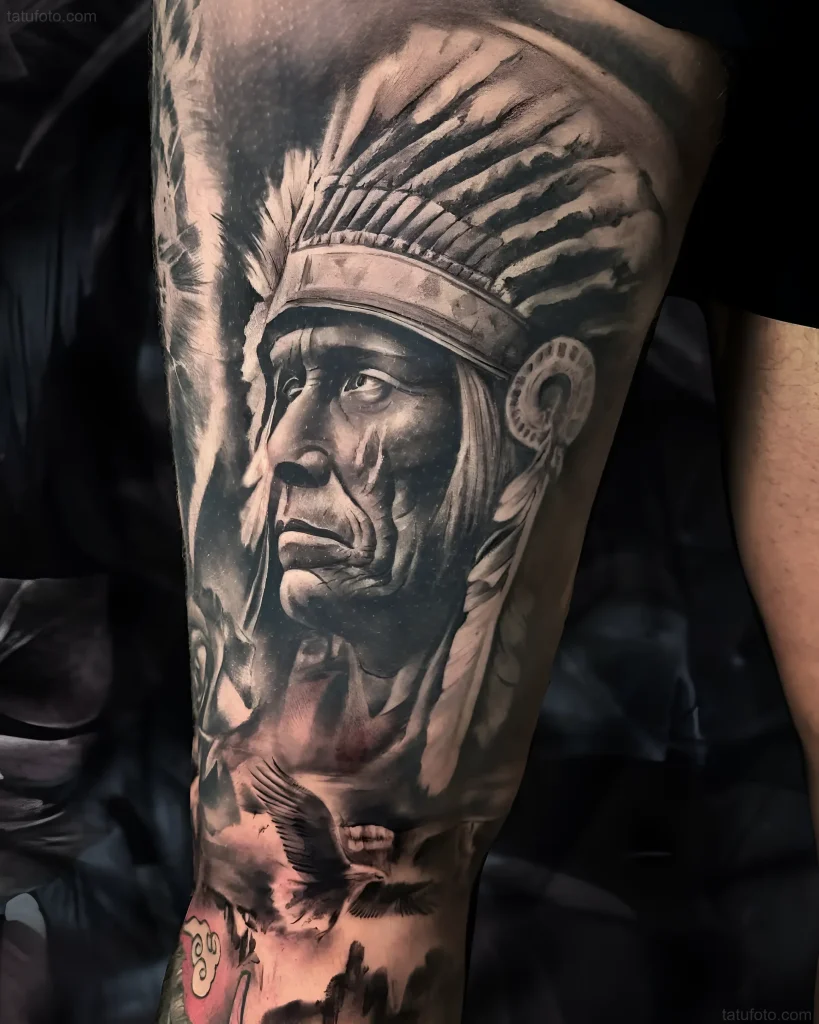
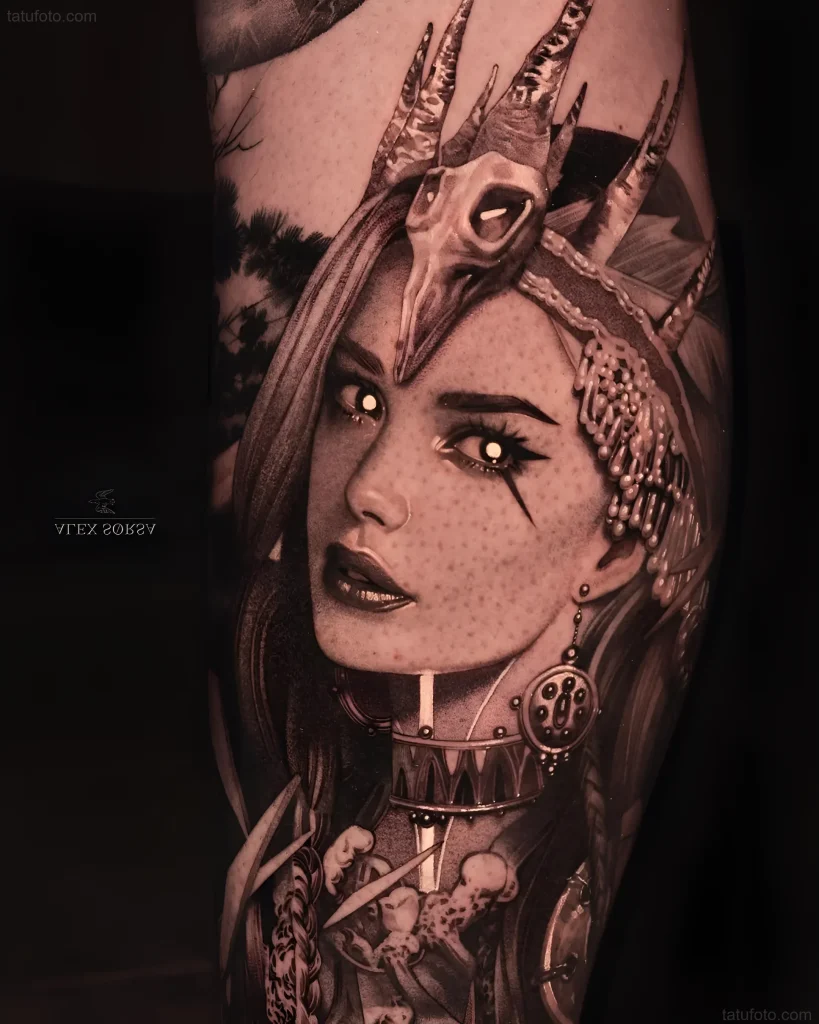
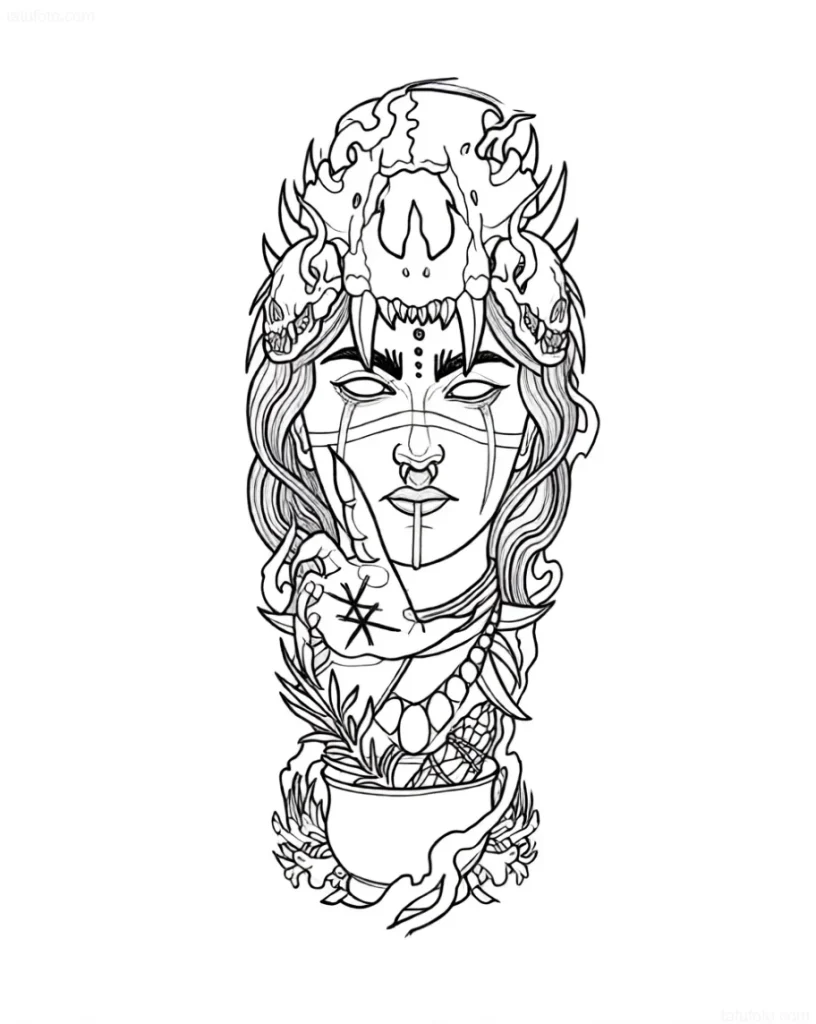
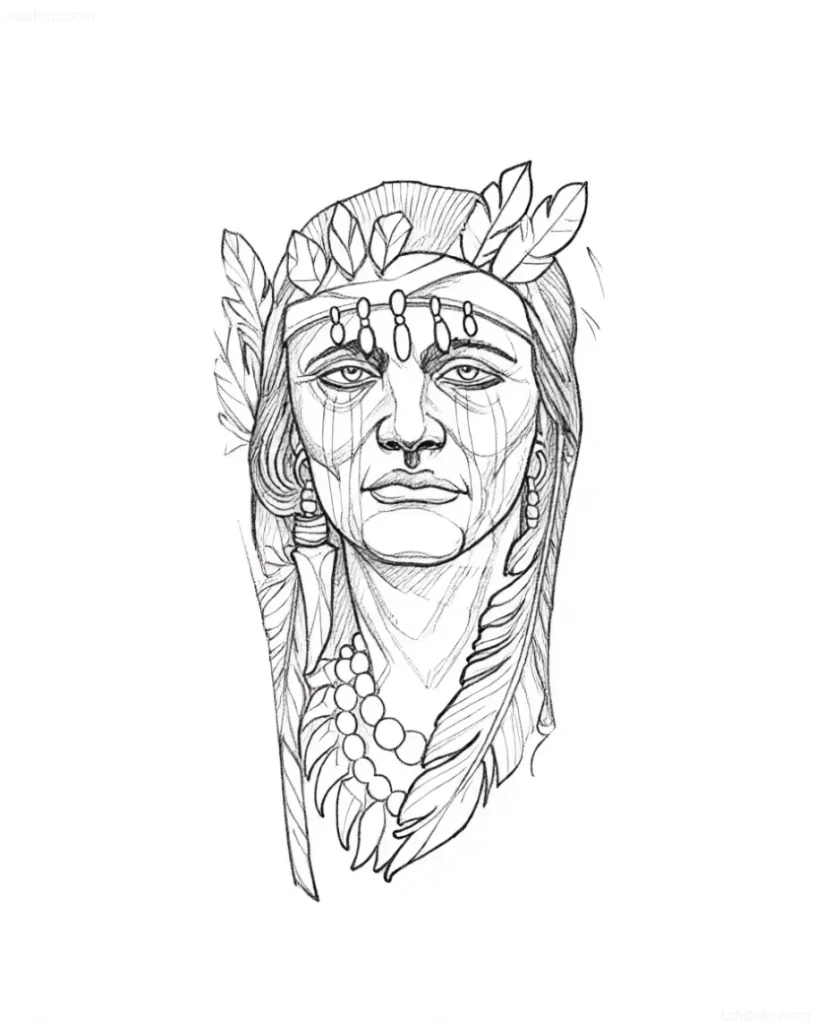
- Realism and Portrait Style: This style is ideal for those who want to depict the shaman in the most detailed and lifelike manner. It allows for conveying the depth of the gaze, the texture of feathers, and facial wrinkles, creating a sense of presence and power. Realism emphasizes the seriousness and grandeur of the image, its wisdom and experience. Often, such works are done in black and gray tones, which adds mysticism and depth, but color accents can also be used to highlight certain details, such as ritual paints on the face or bright feathers.
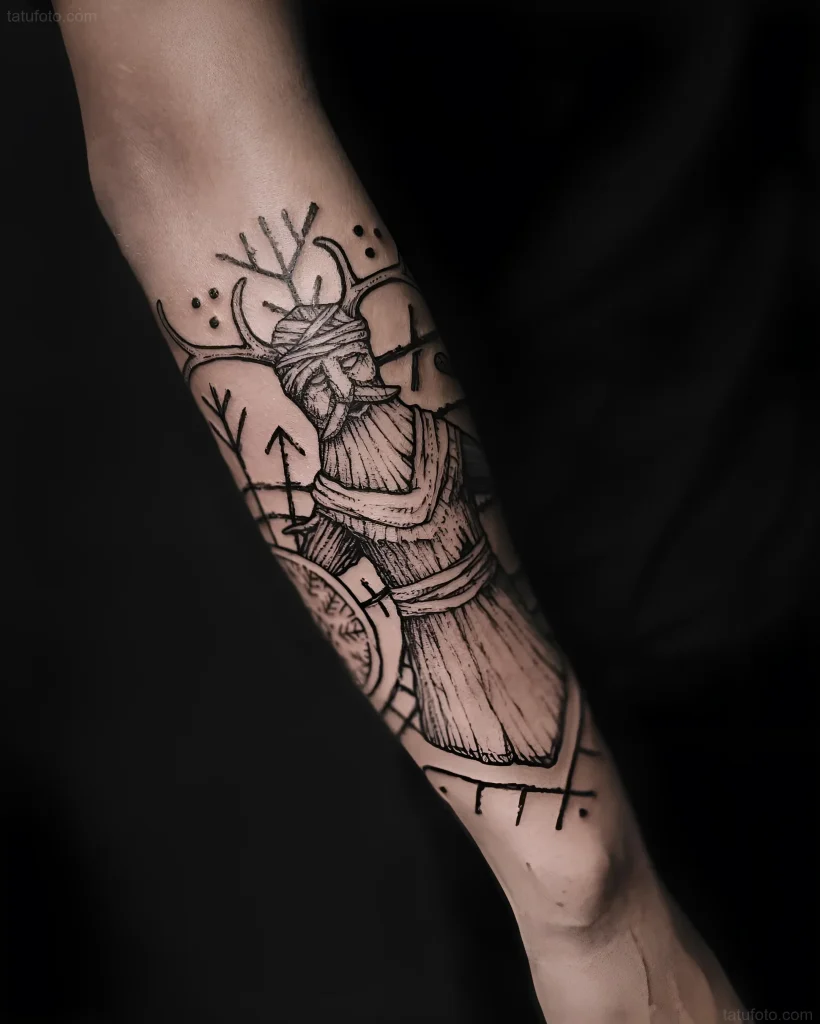
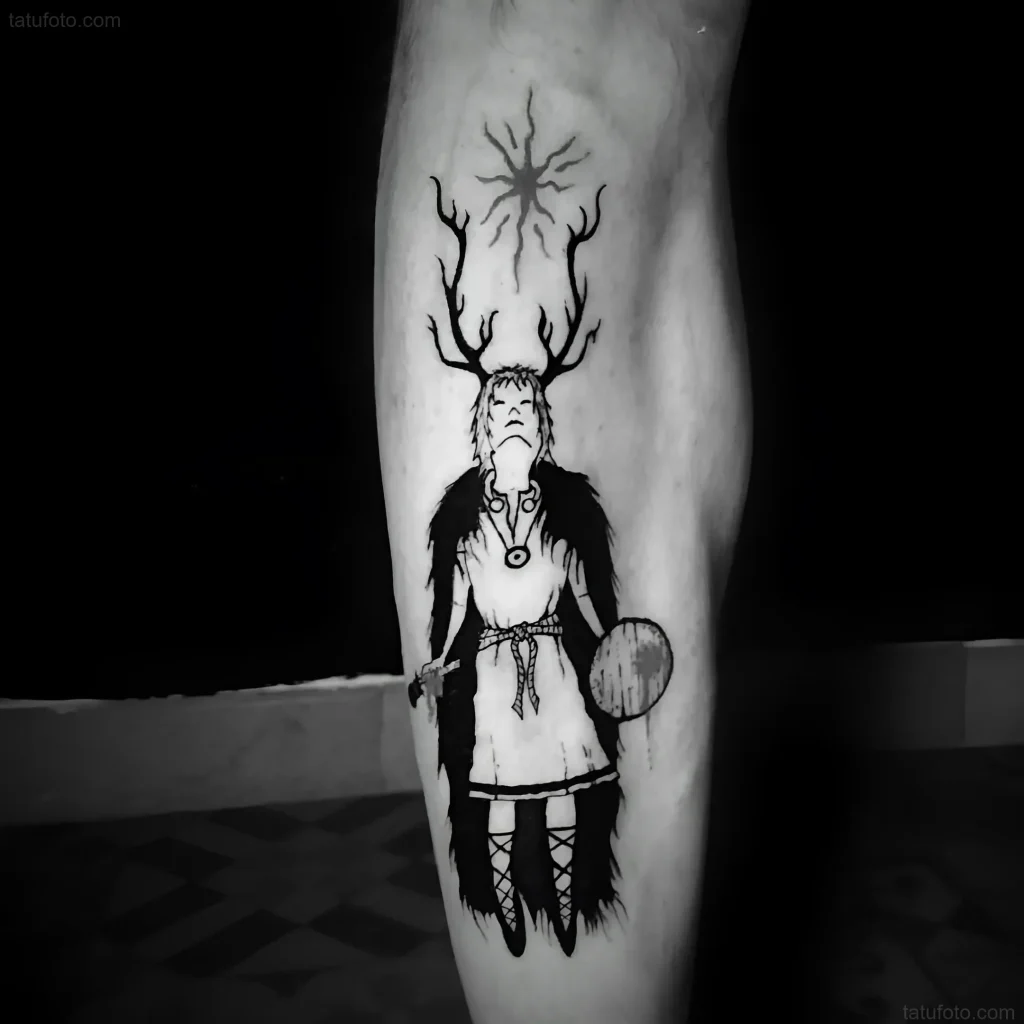
- Graphic and Blackwork: For those who appreciate contrast and clarity, graphic and blackwork will be an excellent choice. The use of dense black fills, thin lines, and shading allows for the creation of a powerful yet stylish and minimalist image. A shaman in a graphic style can appear more abstract or, conversely, emphatically symbolic, focusing on the silhouette, mask, or key attributes. This style often gives the tattoo a more modern and even aggressive feel while retaining its mystical meaning.
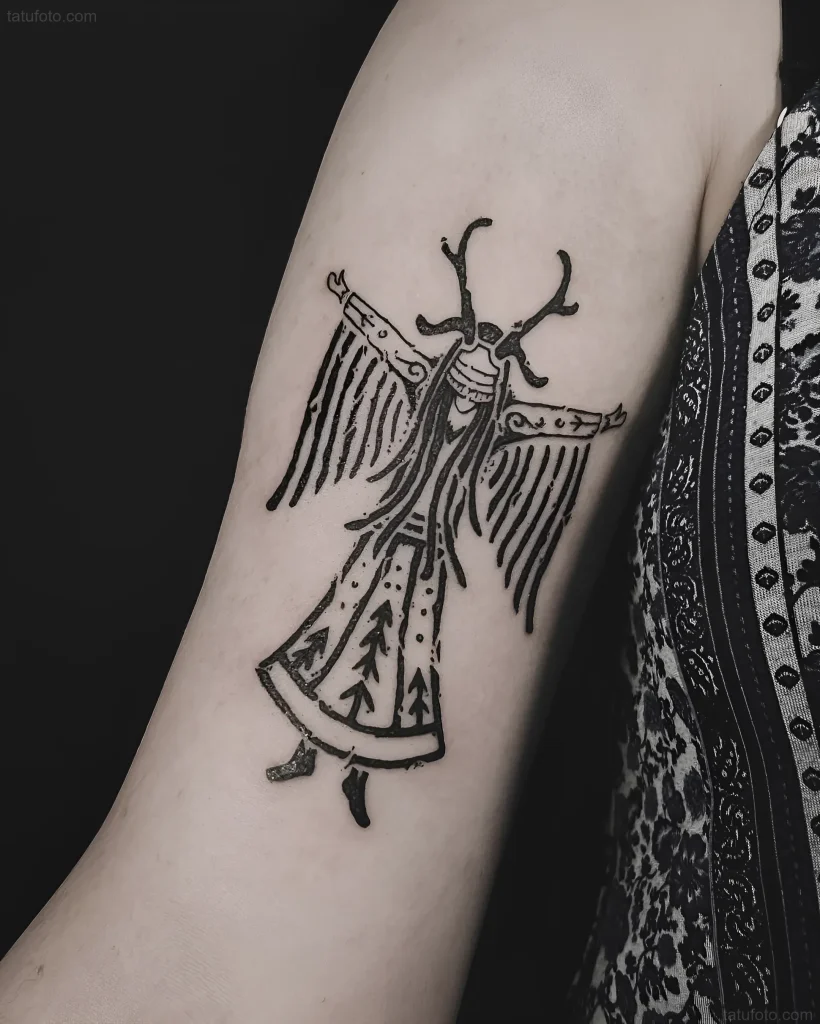
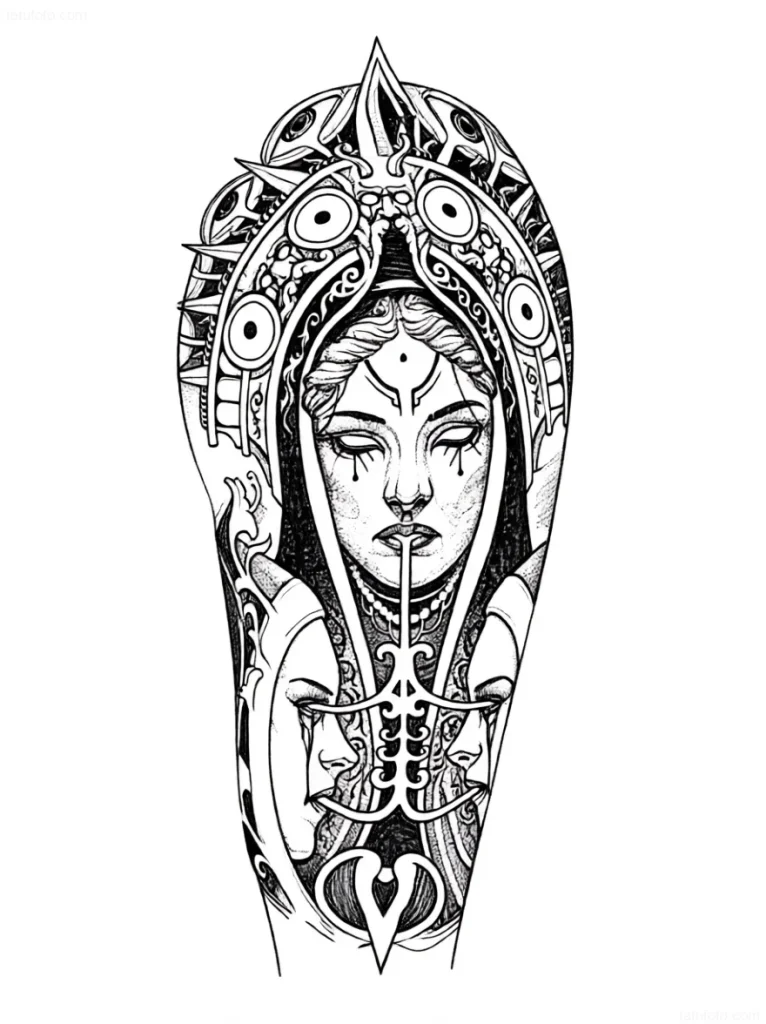
- Tribal and Ethnic Style: Historically, shamanism is closely linked to tribal cultures, so tribal and ethnic motifs fit organically into the concept of a shaman tattoo. This style uses stylized patterns, geometric shapes, and abstract elements characteristic of indigenous art. It can be either large or more delicate, depending on the chosen regional ornament (e.g., Maori, Polynesian, Native American motifs). A shaman tattoo in a tribal style emphasizes its ancient origins and connection to the primal forces of nature.
- New School and Old School: If you prefer brighter, more saturated, and playful images, then the New School and Old School styles can offer interesting interpretations. Old School, with its thick outlines and limited color palette, can give the shaman image a retro charm, while New School, with its voluminous shapes, dynamic lines, and wide color range, can provide a modern and expressive feel. In these styles, the shaman can be depicted more cartoonishly, yet retain their symbolic power, becoming part of a unique artistic statement.
- Watercolor: The watercolor style lends the tattoo lightness, airiness, and a special artistic grace. Blurred contours, smooth color transitions, and brushstroke imitation create the effect of a painted canvas on the skin. A shaman in a watercolor style can appear more dreamy, spiritual, and ethereal, emphasizing their connection to subtle energies and the spirit world. This style is ideal for those who want to convey the mystical, yet soft and artistic side of the image.
Each style offers its unique perspective on the shaman image, allowing you to choose the one that best expresses your individuality and depth of understanding of this powerful symbol.
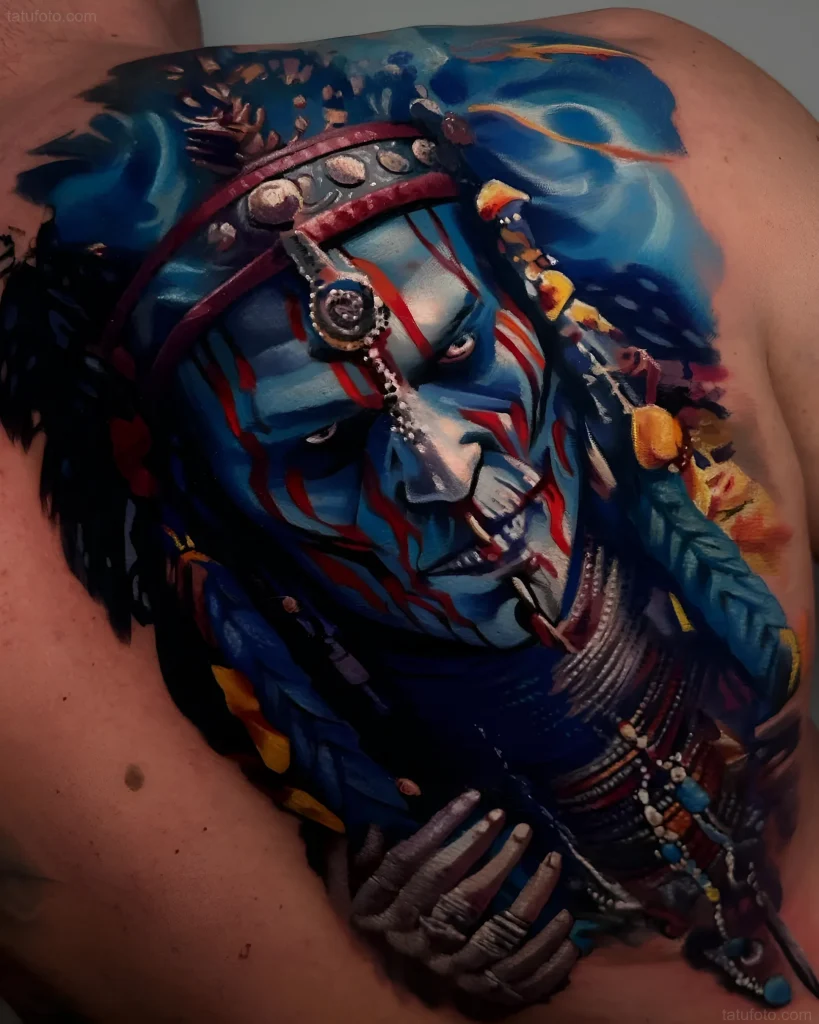

Best Placement for a Shaman Tattoo: Where to Unleash the Energy
Choosing the location for a shaman tattoo on the body is no less important than the sketch itself. The placement affects not only the visual perception but also how the energy and symbolism of this image will interact with you and the surrounding world. Here are some popular and most successful placement options, considering their symbolic meaning:
- Back: The back is one of the largest “canvases” on the body, ideal for large, detailed, and epic compositions with a shaman. This area is associated with protection and support. A shaman tattoo on the back can symbolize a powerful protective charm, defense against external threats, and support from higher powers. It can also indicate that a person carries the burden of wisdom or responsibility but feels protected.
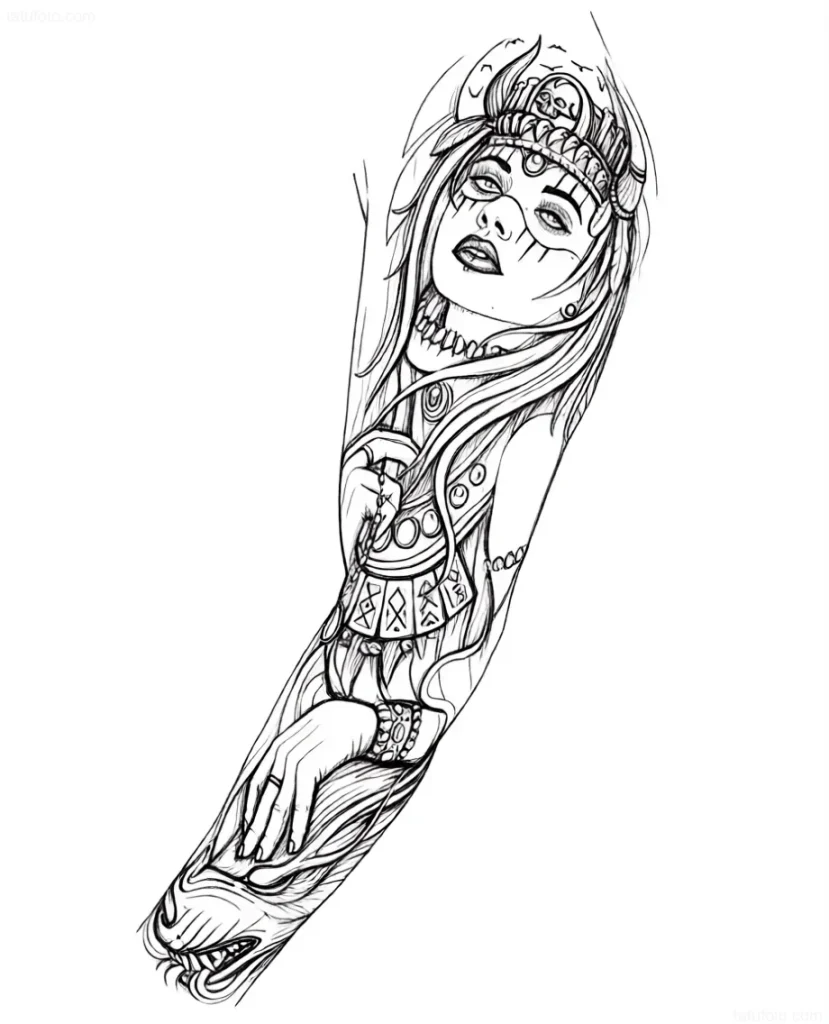
- Shoulder and Arm (Sleeve): The shoulder and arm are zones of strength, action, and manifestation of will. Placing a shaman tattoo here emphasizes their role as an active protector, a warrior of the spirit, someone who is not afraid to act and overcome obstacles. A full sleeve with a shaman image and accompanying elements (totem animals, nature motifs) creates a cohesive story that will always be with you, reminding you of your inner strength and spiritual path.
- Chest: A shaman tattoo on the chest, close to the heart, has a deeply personal and intimate meaning. This area is associated with the soul, emotions, life energy, and personal truth. A shaman on the chest can symbolize a deep spiritual connection, inner wisdom that emanates from the heart itself, or serve as a constant reminder of your personal spiritual quest and striving for inner harmony.
- Thigh: The thigh is a powerful and stable part of the body, symbolizing connection to the earth, stability, and forward movement. A shaman tattoo on the thigh can indicate a desire for groundedness, a deep connection with nature, and the ability to confidently walk one’s life path. It is also a good place for large, detailed works that are not always visible to others but carry deep personal meaning for the wearer.
- Forearm: The forearm is a more exposed area, allowing the tattoo to be displayed more often. A shaman on the forearm can be a symbol of your active life stance, readiness to share your wisdom, or to be a guide for others. It is also a constant reminder of your personal spiritual principles and pursuit of development, which you can always see and feel.
When choosing a location, consider the size and detail of the sketch, as well as how openly you want to display this significant tattoo. Remember that every choice is part of your unique journey.
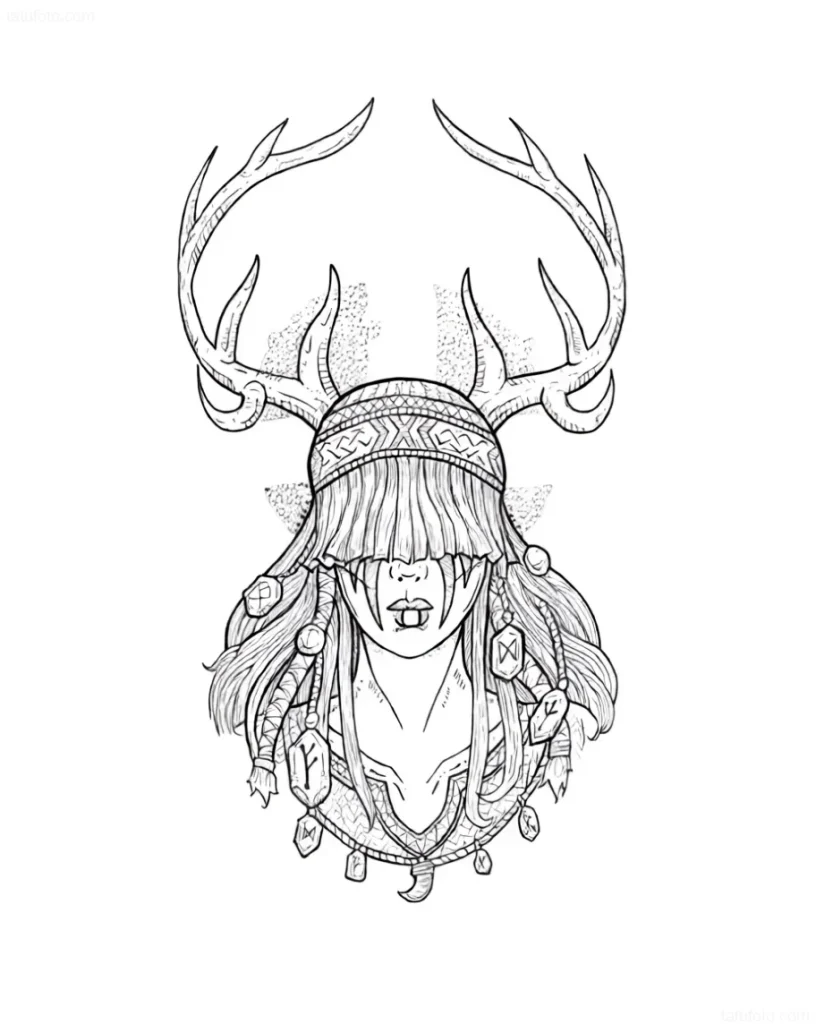
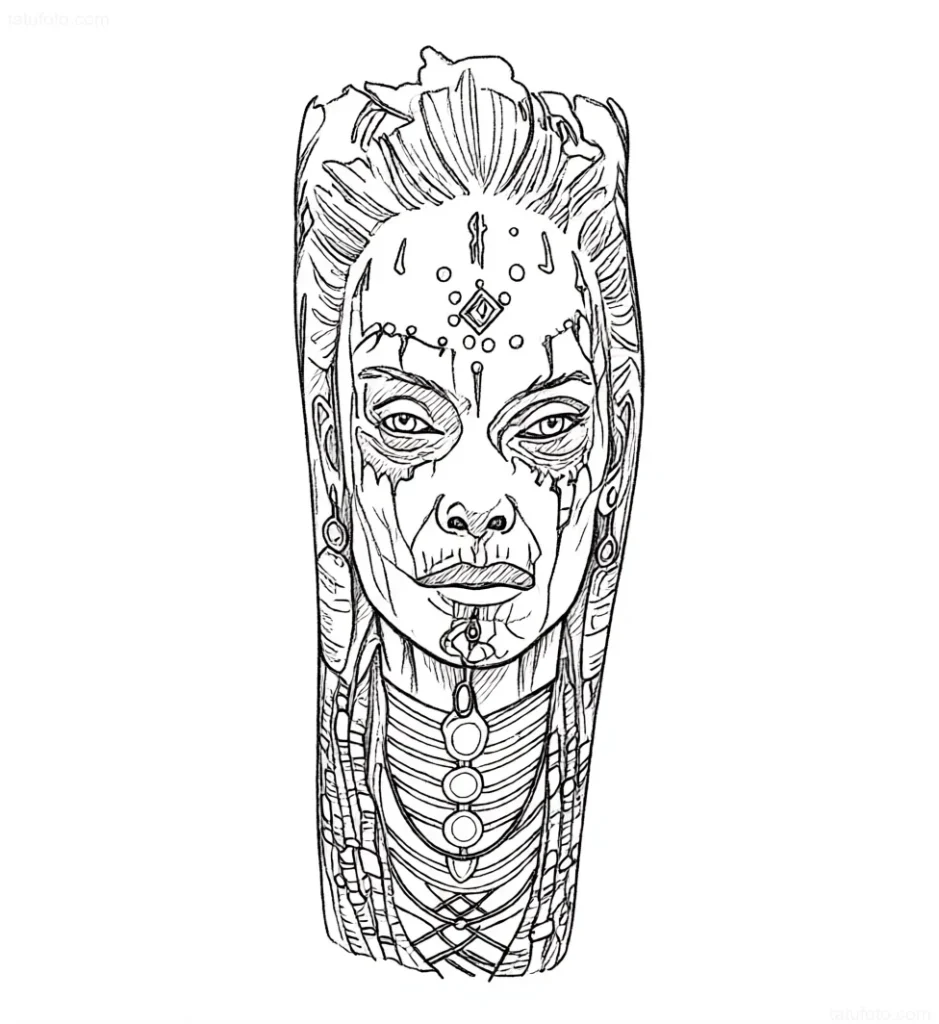
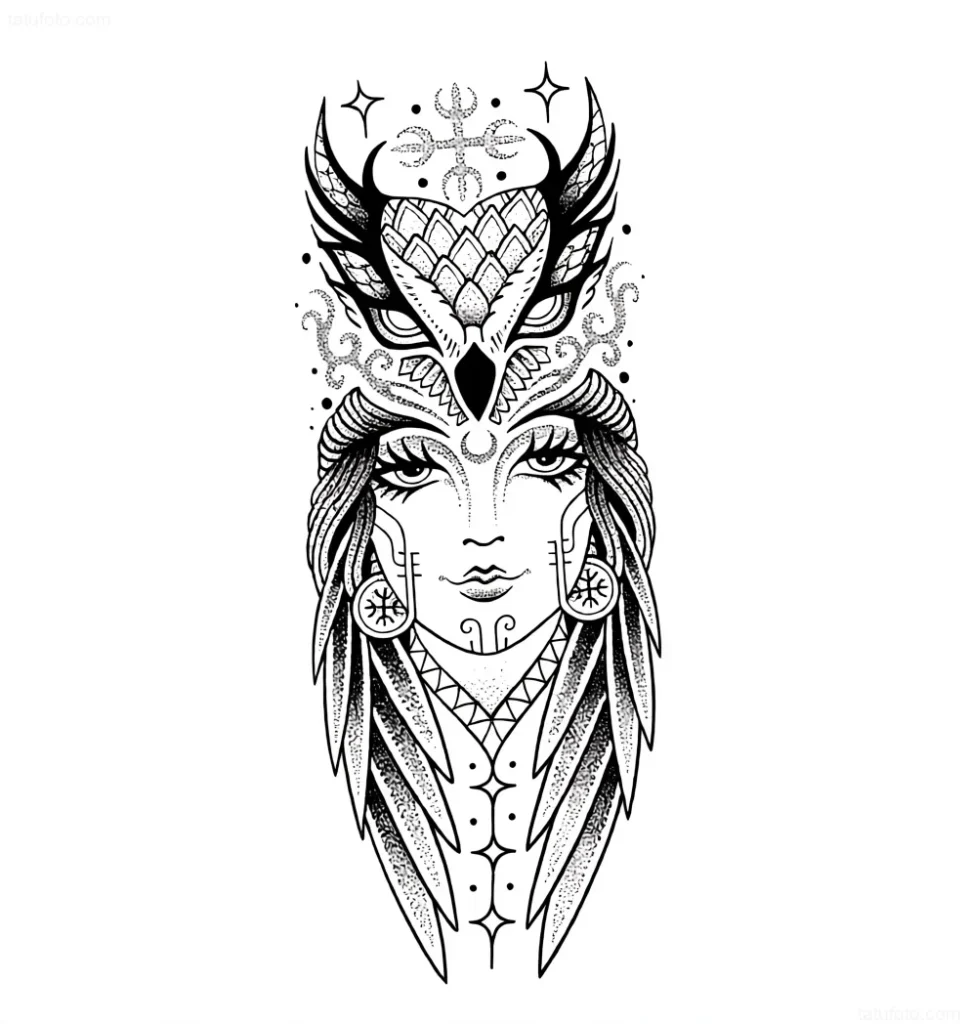
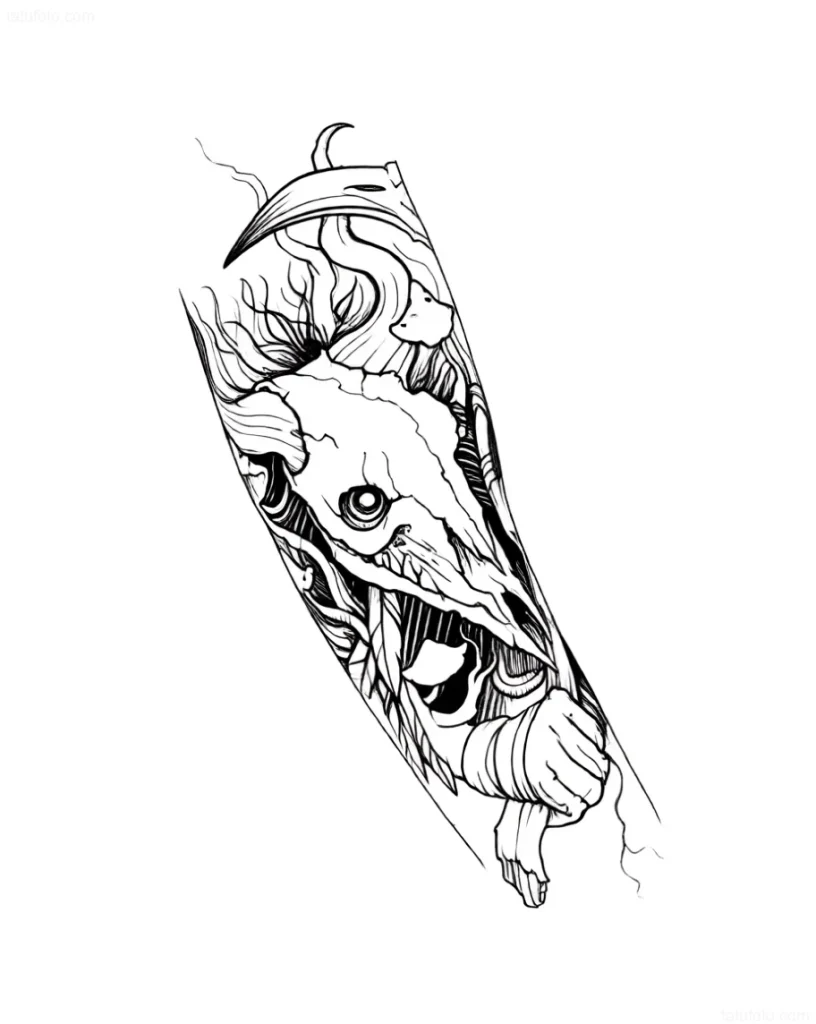
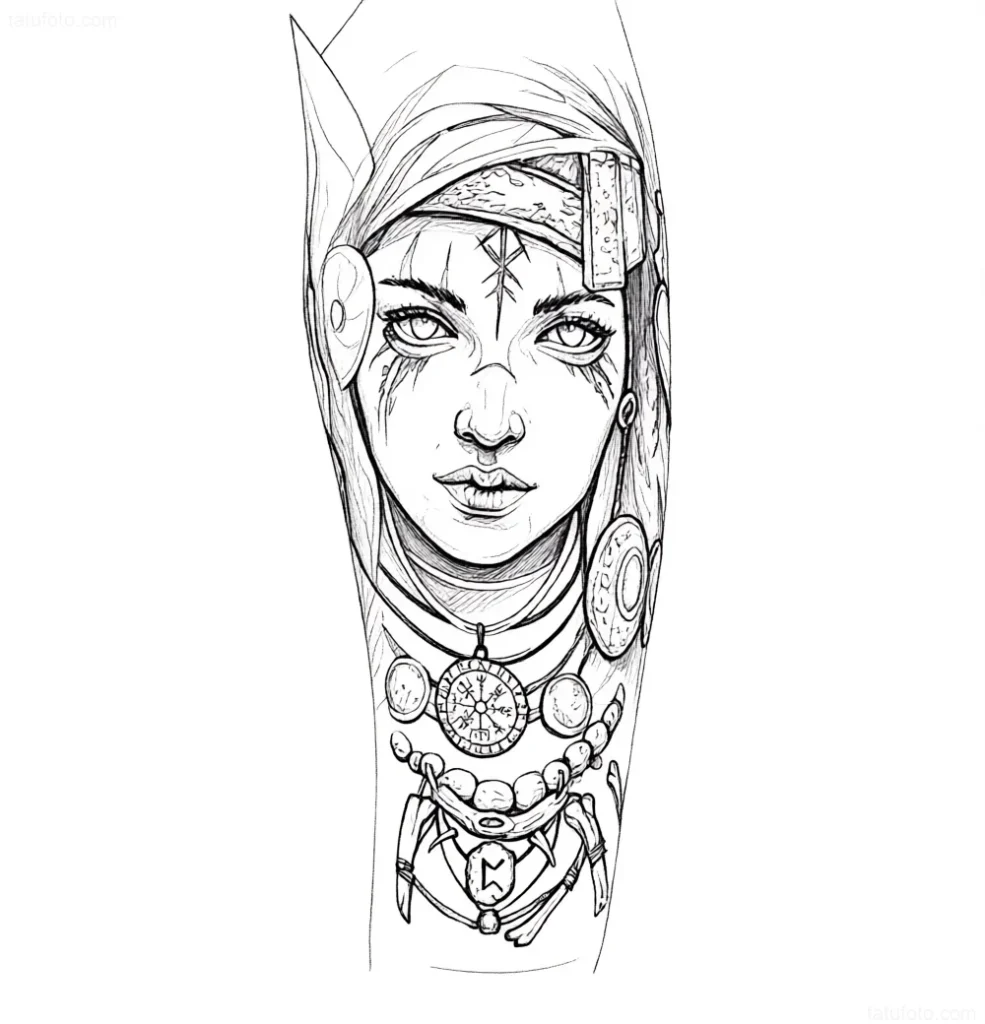
Tips for Choosing a Sketch and Artist for Your Shaman Tattoo
Choosing a shaman tattoo is a serious decision that requires a thoughtful approach. To ensure the result pleases you for years to come and fully reflects the intended meaning, it’s important to consider a few key points:
- Define the Personal Meaning: Before searching for a sketch, deeply consider what the shaman symbolizes for you. It could be a connection with nature, the pursuit of wisdom, protection, healing, or something else. A clear understanding of your personal meaning will help narrow down your search and formulate the task for the artist. Ask yourself: which shamanic attributes resonate with me (feathers, drum, totem animals, mask)? In what atmosphere do I envision my tattoo – mystical, calm, dynamic?
- Explore Sketches and Styles: Browse through numerous images of shamans in different styles (realism, graphic, tribal, watercolor). Pay attention to how different artists convey this image. Save those that evoke an emotional response in you. This will help form a visual idea of the desired outcome. However, remember that your tattoo should be unique, not a copy of someone else’s work.
- Choose an Artist’s Specialty: Each tattoo artist specializes in certain styles. If you want a realistic shaman, look for an artist whose portfolio is full of high-quality realistic works. For graphics or blackwork, find a corresponding specialist. Don’t ask an artist who excels at New School to create a complex realistic shaman portrait for you.
- Study the Artist’s Portfolio: This is the most important step. Carefully examine the works of potential artists. Pay attention to the following aspects:
- Line Quality: They should be smooth, sharp, without gaps or breaks.
- Shading Density: Especially important for blackwork and realism, where deep and even color or shading is required.
- Detail: How well the artist can convey fine details, textures, and emotions (if it’s a portrait).
- Healed Works: Ask to see photos of healed tattoos. This will show how the artist’s work looks over time.
- Reviews: Read reviews from other clients about the artist’s work, approach, and communication.
- Have a Consultation: Be sure to schedule a personal consultation. This is an opportunity to discuss your idea, show references, and hear the artist’s suggestions. A good artist will always ask clarifying questions, offer ideas for improving the sketch, and explain technical nuances. They should also be willing to collaborate on creating a unique sketch, not just copy someone else’s.
- Be Prepared for a Custom Sketch: The best shaman tattoo is one created specifically for you. This may require additional time and payment for sketch development, but the result is worth it. A custom sketch guarantees uniqueness and a deep alignment with your personal wishes.
- Prepare for the Session: Before the session, get good sleep, eat well, and avoid alcohol and blood-thinning medications. This will help you tolerate the process more comfortably and ensure better healing.
Remember that a shaman tattoo is not just a trendy design, but a powerful symbol. By approaching the choice consciously, you will receive not only a work of art on your body but also a constant source of inspiration and strength.
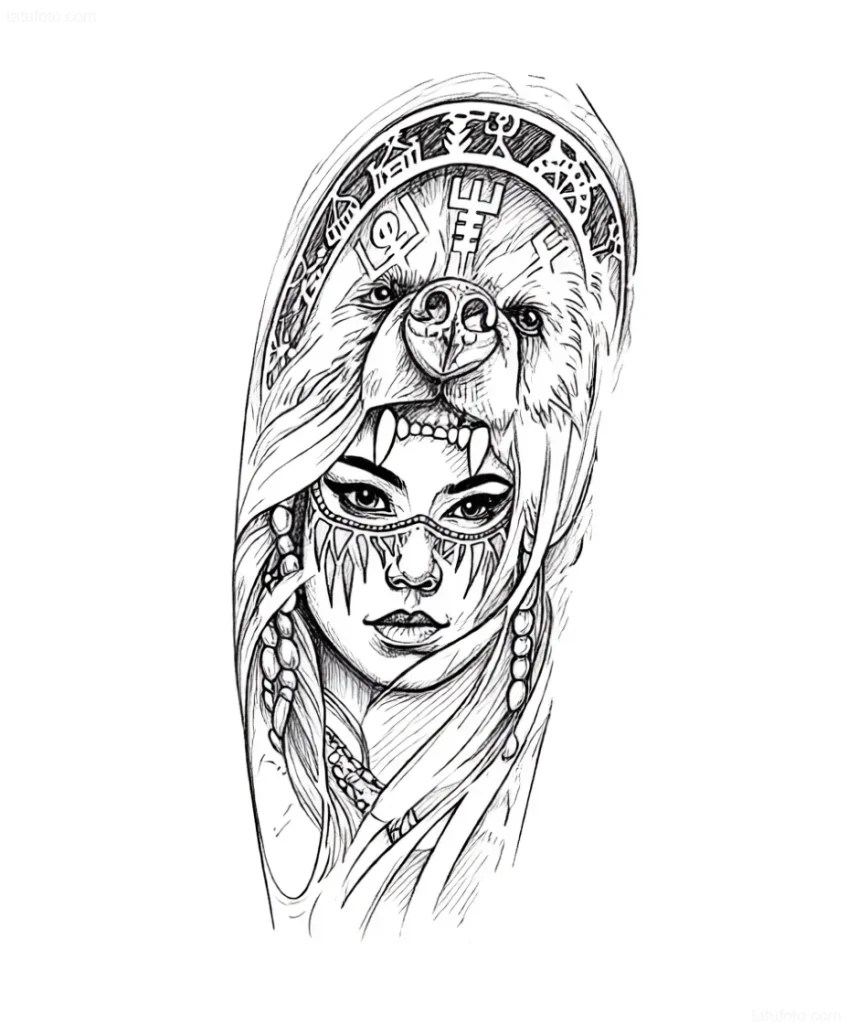
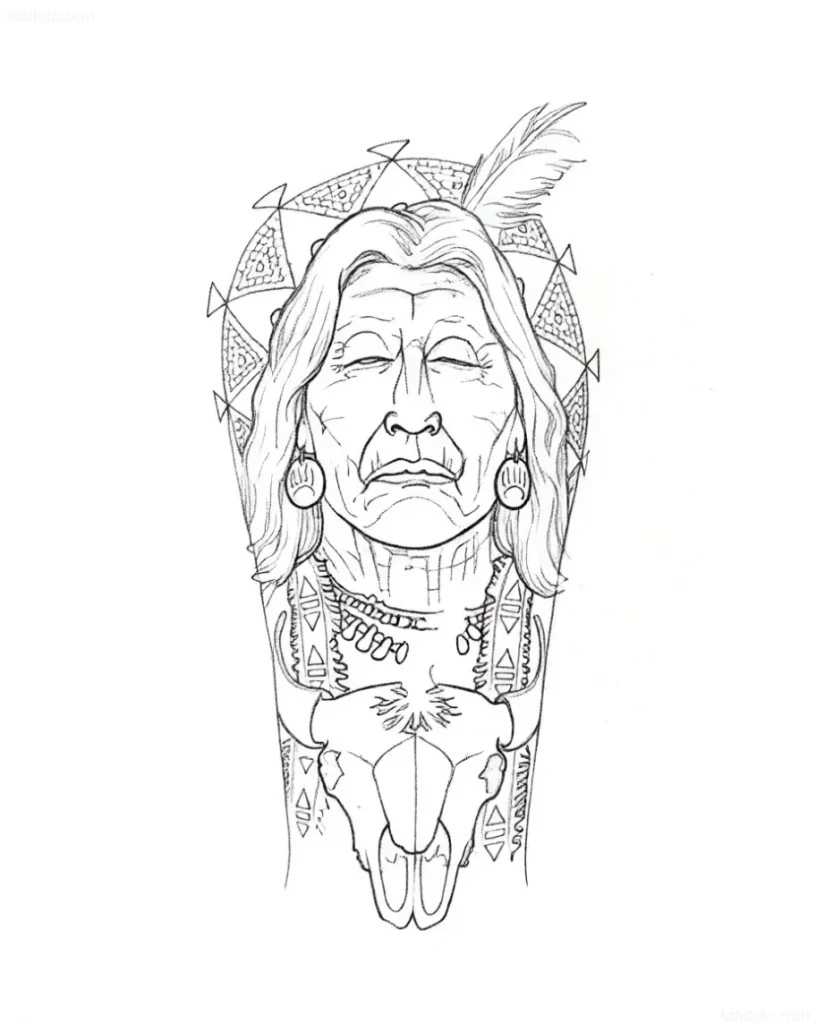
Frequently Asked Questions About Shaman Tattoos
When choosing such a significant tattoo as a shaman, many questions naturally arise. We have compiled the most common ones to help you make an informed decision:
- Can I get a shaman tattoo if I don’t adhere to shamanic beliefs?
Yes, absolutely. Many people choose a shaman tattoo not because they belong to a specific religion or spiritual practice, but because they are drawn to the universal meanings this image carries: wisdom, connection with nature, protection, inner quest. A tattoo is a form of art and personal self-expression, and you have the right to imbue it with the meaning that resonates with you. The main thing is that you understand and respect the cultural roots of the image. - What animals are most often depicted with a shaman, and what do they symbolize?
The depiction of a shaman is often complemented by totem animals that enhance its symbolism:- Wolf: Symbolizes loyalty, intuition, freedom, spiritual strength, and protection. The wolf as a guide in the spirit world.
- Bear: Embodies strength, courage, endurance, healing, and introspection. The bear is the guardian of the forest and ancient knowledge.
- Eagle: A symbol of freedom, spiritual height, foresight, connection with celestial forces, and enlightenment. The eagle as a messenger from higher realms.
- Owl: Signifies wisdom, intuition, secret knowledge, the ability to see the unseen, and to be a guide in the night.
- Deer: Symbolizes tenderness, grace, connection with nature, spiritual rebirth, and a guiding star.
- Snake: Embodies transformation, healing, wisdom, and the cyclical nature of life.
- Are there any negative meanings associated with a shaman tattoo?
Generally, a shaman tattoo carries positive and protective meanings. However, like any powerful symbol, its perception can depend on the context and execution. If the image of the shaman is rendered in dark tones, with aggressive elements, or symbolism associated with dark rituals, it might be perceived as a symbol of dark magic or cause unease. It is important to carefully consider the sketch so that it reflects precisely the positive aspects you wish to embody. - How to care for a shaman tattoo, considering its detail?
Caring for a shaman tattoo, especially if it is detailed and done in realism or graphic style, is standard but requires special attention. It is important to strictly follow your tattoo artist’s recommendations for healing: regularly wash the tattoo with antibacterial soap, apply healing cream, and protect it from the sun. Detailed works may require more careful attention during the healing process to maintain the clarity of lines and vibrancy of colors. - Can the image of a shaman be combined with other symbols in one tattoo?
Yes, this is a very common practice. The shaman can be part of a larger composition, including:- Natural elements: mountains, forests, rivers, stars, moon – to enhance the connection with nature and the cosmos.
- Symbols of the elements: fire, water, earth, air – to emphasize balance and harmony.
- Ethnic ornaments: to add greater authenticity and connection to a specific culture.
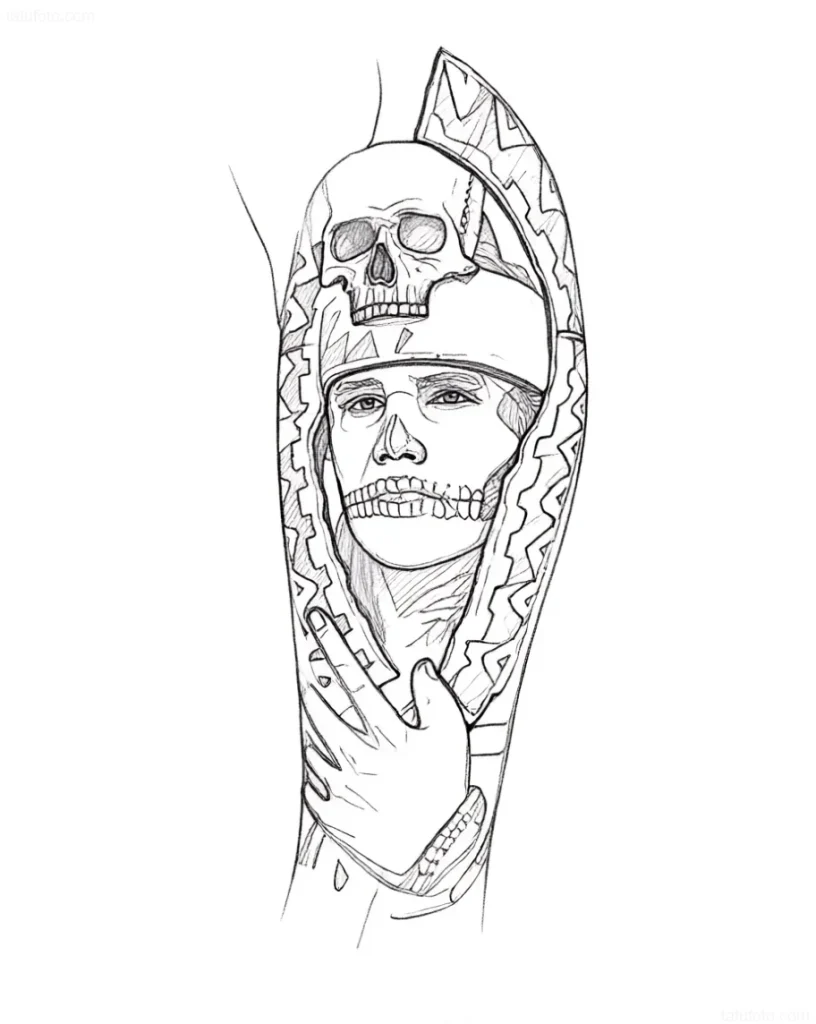
- Symbols of life and death: skulls, trees of life – to denote the cycle of existence and wisdom.
The main thing is that all elements of the composition harmonize with each other and complement the overall meaning, creating a cohesive and meaningful picture. Discuss all your ideas with the artist so they can help create a unified and powerful sketch.
Interesting Facts About Shamanism and Its Influence on Tattoo Art
Shamanism is not just an ancient practice; it is a whole layer of culture, mythology, and art that continues to inspire contemporary artists and tattoo masters. Its influence on the world of tattoos is felt everywhere, bringing depth and mysticism to body art. Here are a few interesting facts:
- Shamanism is the Oldest Spiritual Practice: Shamanism is considered one of the oldest forms of human spirituality, existing since the Paleolithic era, long before the advent of organized religions. This explains its universality and presence in cultures separated by thousands of kilometers and oceans. It is this antiquity that gives the shaman image in a tattoo a special aura of primal wisdom and connection to the origins of humanity.
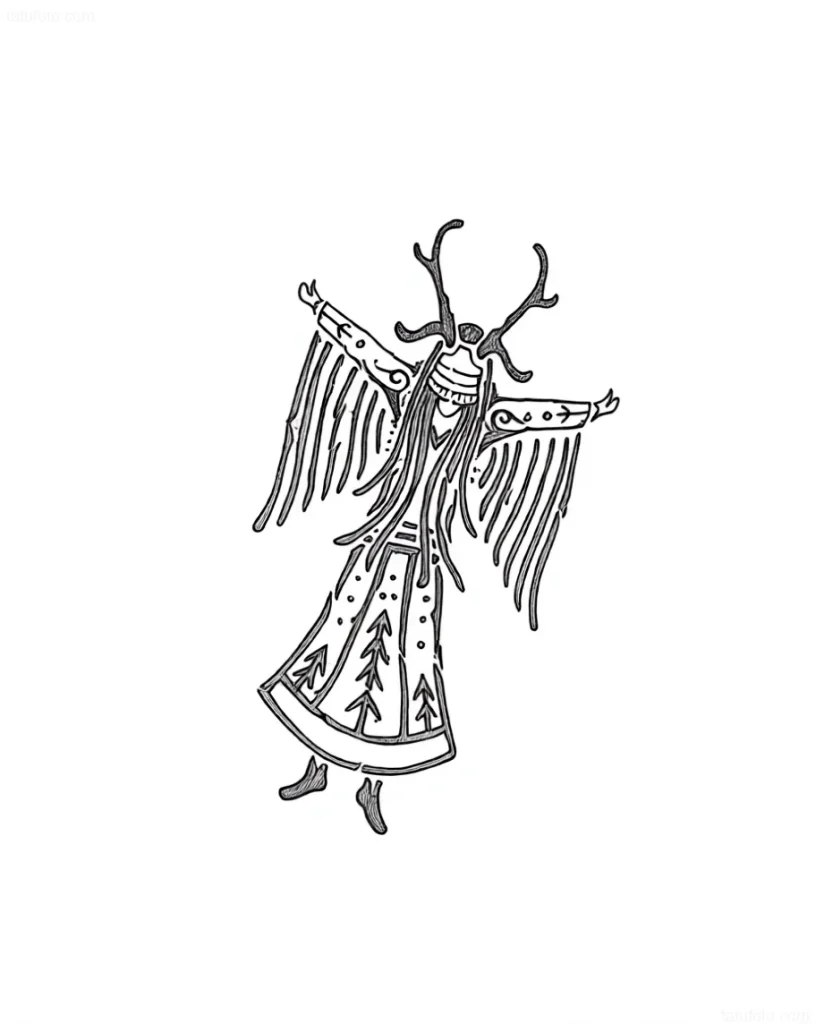
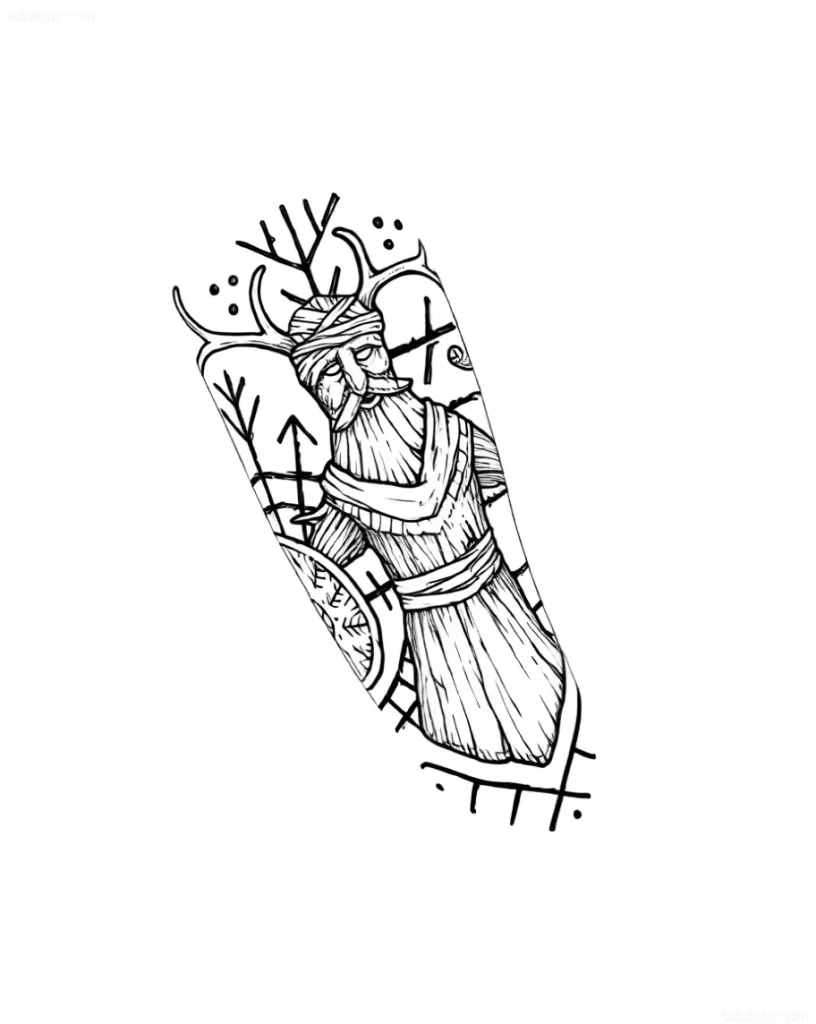
- Transformation Through Art: In shamanic cultures, masks, costumes, and ritual objects were not just decorations but tools for transformation. They helped the shaman take on the guise of spirits or animals, merging with their energy. In contemporary tattoo art, the depiction of a shaman in a mask or with animal elements (e.g., antlers, feathers) symbolizes the desire for personal transformation, acquiring new qualities, or overcoming inner barriers.
- Totem Animals as a Source of Power: The concept of totem animals, closely linked to shamanism, has found its vivid reflection in tattoo culture. The depiction of a shaman accompanied by a wolf, bear, eagle, or owl is not just an aesthetic choice but a deep affirmation of the connection with the specific qualities of these animals that the tattoo wearer wishes to attract into their life or already possesses. It symbolizes the acquisition of strength, protection, and wisdom from helper spirits.
- Connection with Psychedelic Art