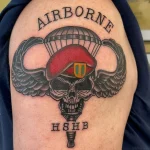
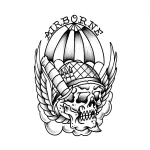
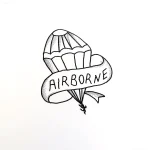
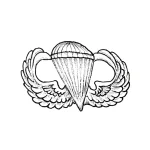
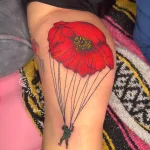
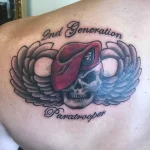
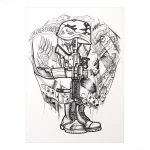
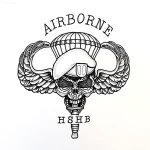
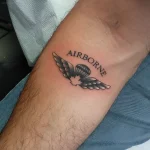
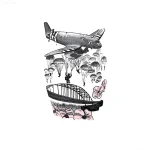
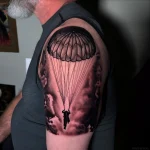
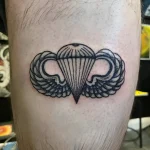
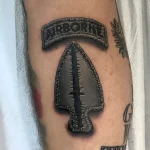
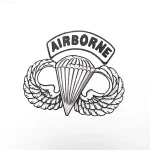
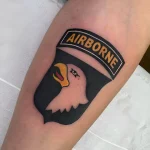
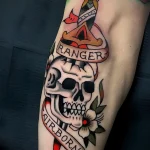
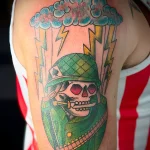
Dear readers and connoisseurs of tattoo art, welcome to tatufoto.com – your main guide in the world of meanings and symbolism of body art. Today, we will delve into the world of one of the most significant and deeply respected categories of tattoos – Airborne Forces (VDV) tattoos. These images on the skin are not just drawings; they are powerful symbols of honor, courage, brotherhood, and loyalty to duty that carry deep meaning for their wearers.
An Airborne Forces tattoo is a kind of identifying mark proudly worn by those who have passed through the harsh school of paratrooper training, who have experienced all the hardships of service in the elite units of the Armed Forces. It is the embodiment of personal history, valor, and belonging to the “winged infantry” – a brotherhood cemented by unbreakable bonds. In this article, we will detail every aspect related to the meaning, history, styles, and practical choice of a VDV tattoo so that you get the most complete and expert understanding of this unique phenomenon in the world of tattoo culture.
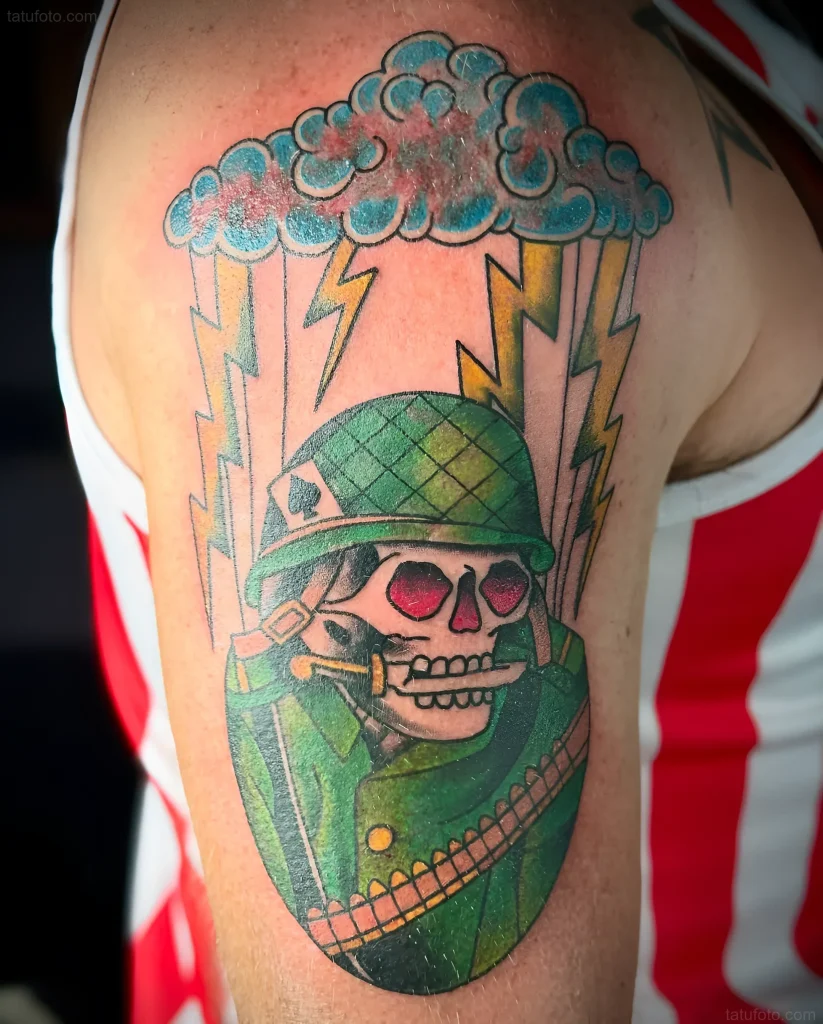
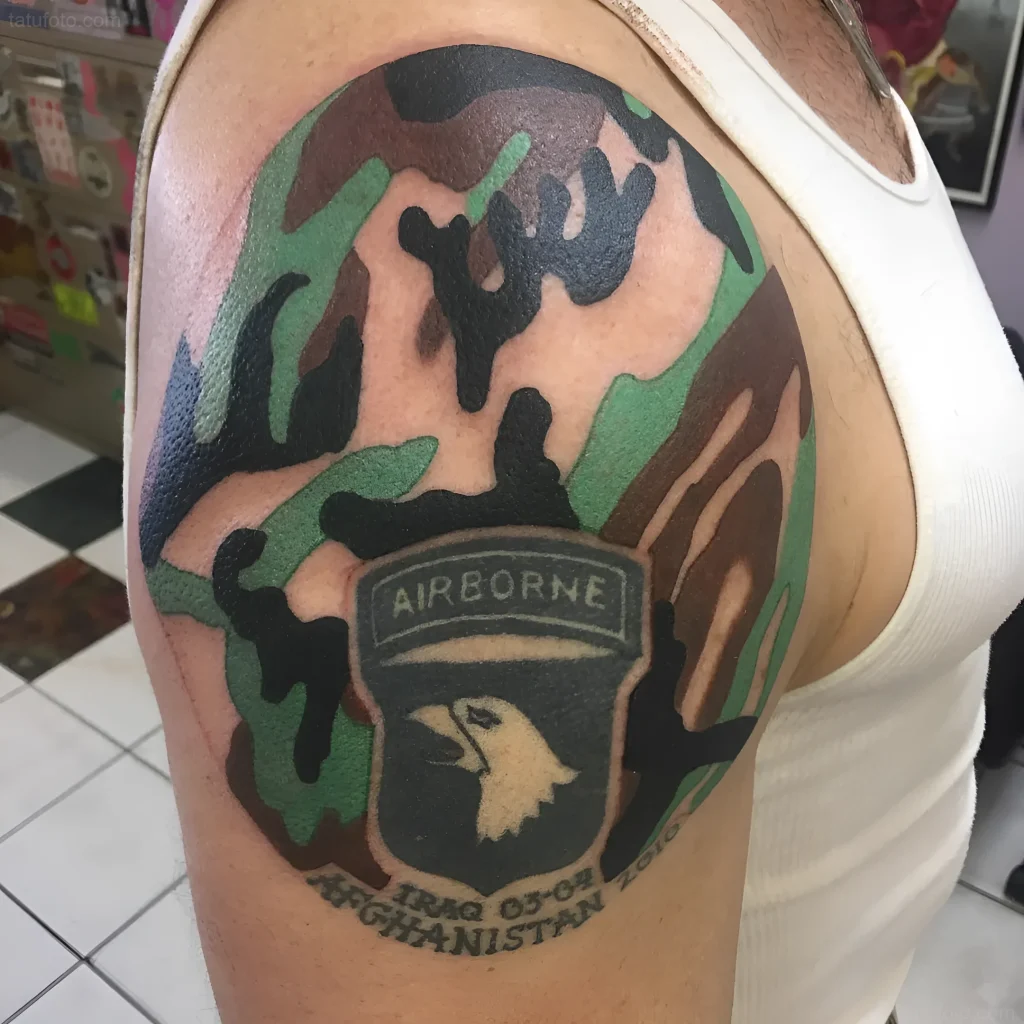
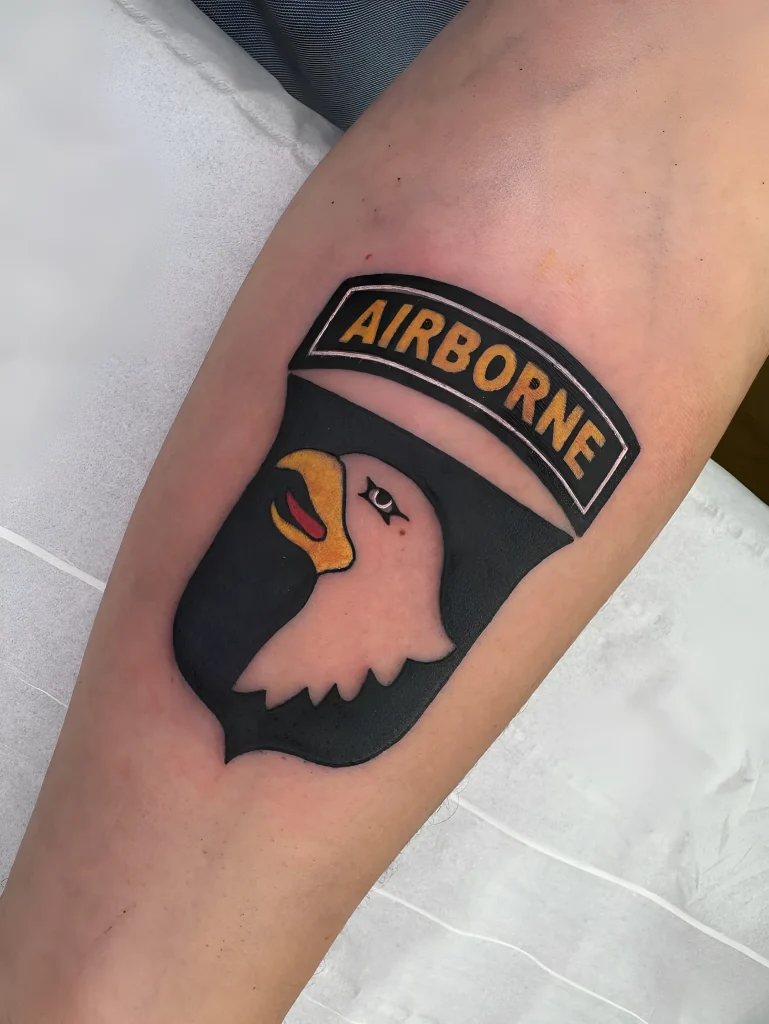
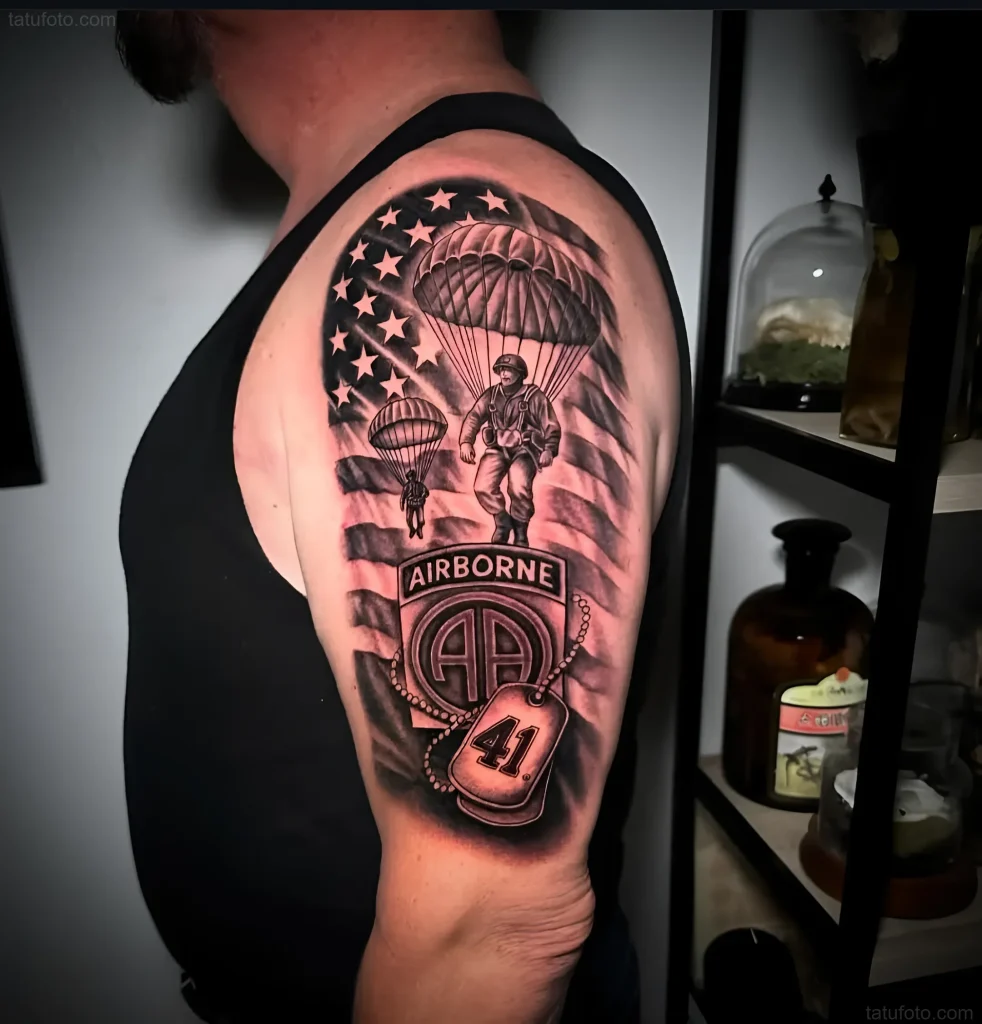
The Meaning of a VDV Tattoo: Symbol of the Winged Infantry
An Airborne Forces tattoo is much more than just a fashion statement or an aesthetic decoration. For every paratrooper who has gone through the crucible of service, it becomes a visible embodiment of their life path, trials, and achievements. It is not just a drawing, but a manifesto of personal valor, unwavering will, and devotion to their homeland. Let’s examine the main facets of this multifaceted symbol.
- Belonging to the Elite: Service in the VDV is an honor available to few. A VDV tattoo is a direct indication that its wearer belongs to elite troops capable of carrying out the most complex and dangerous tasks. It speaks of a high level of physical and moral training, endurance, and discipline.
- Symbol of Brotherhood: The paratrooper brotherhood is a special category of relationship based on mutual trust, support, and readiness to help at any moment. A VDV tattoo serves as a visible marker of this unbreakable connection, uniting people who have gone through the same trials, sharing joys and hardships of service. It is a silent confirmation that “no one but us” understands the full depth of their experience.
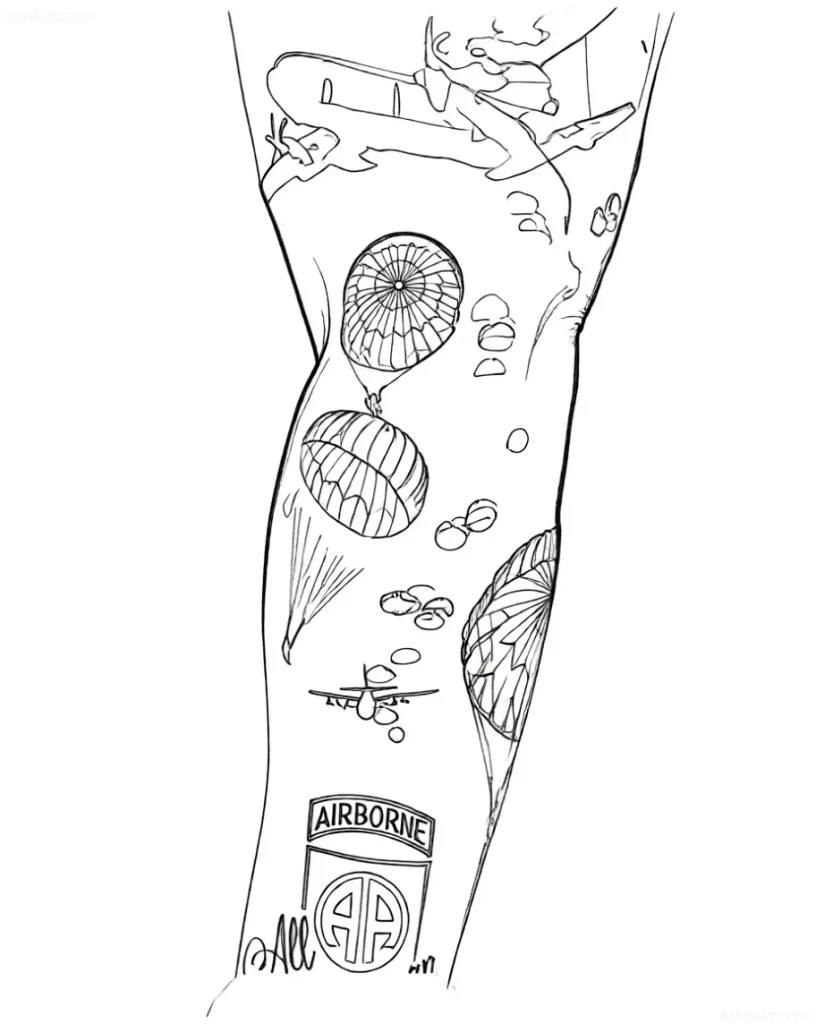

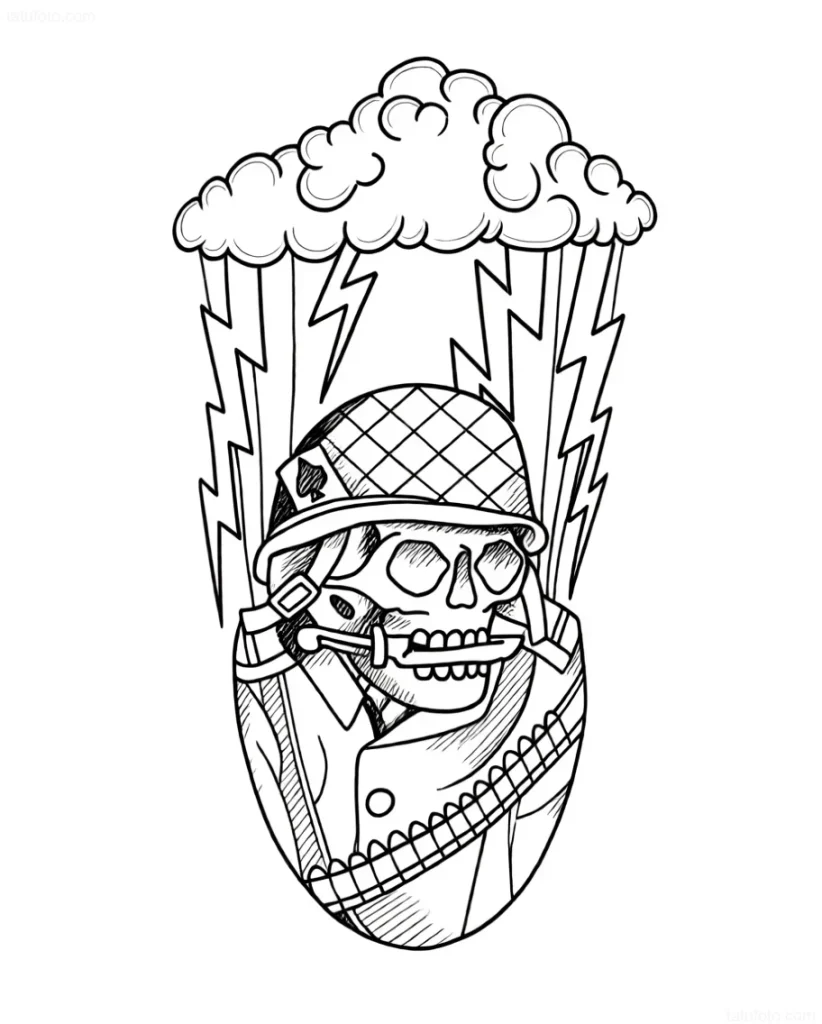

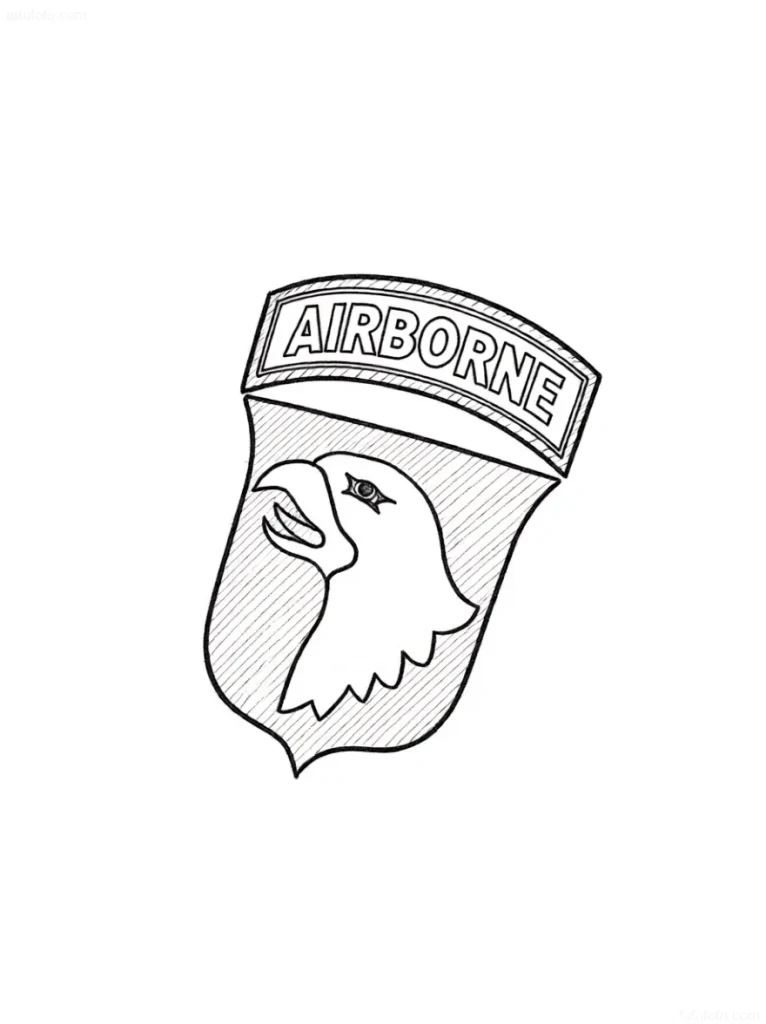
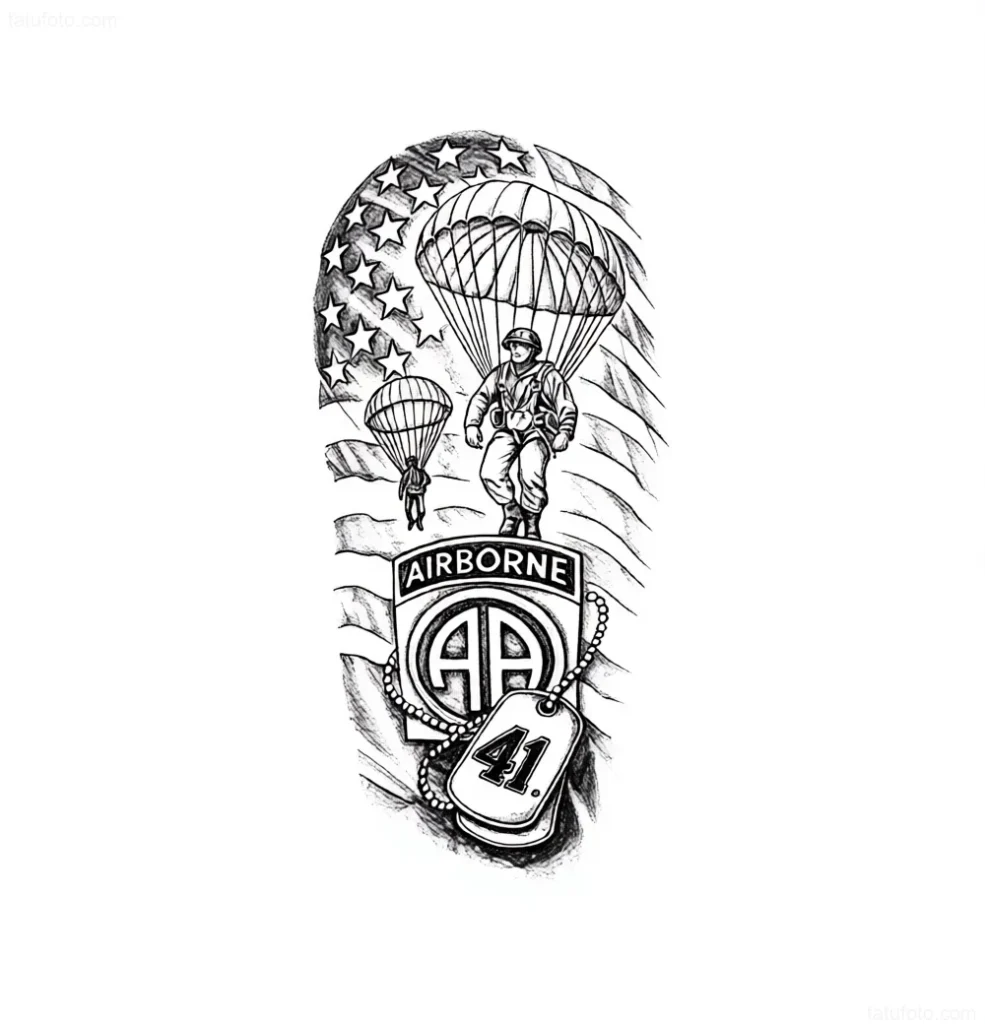
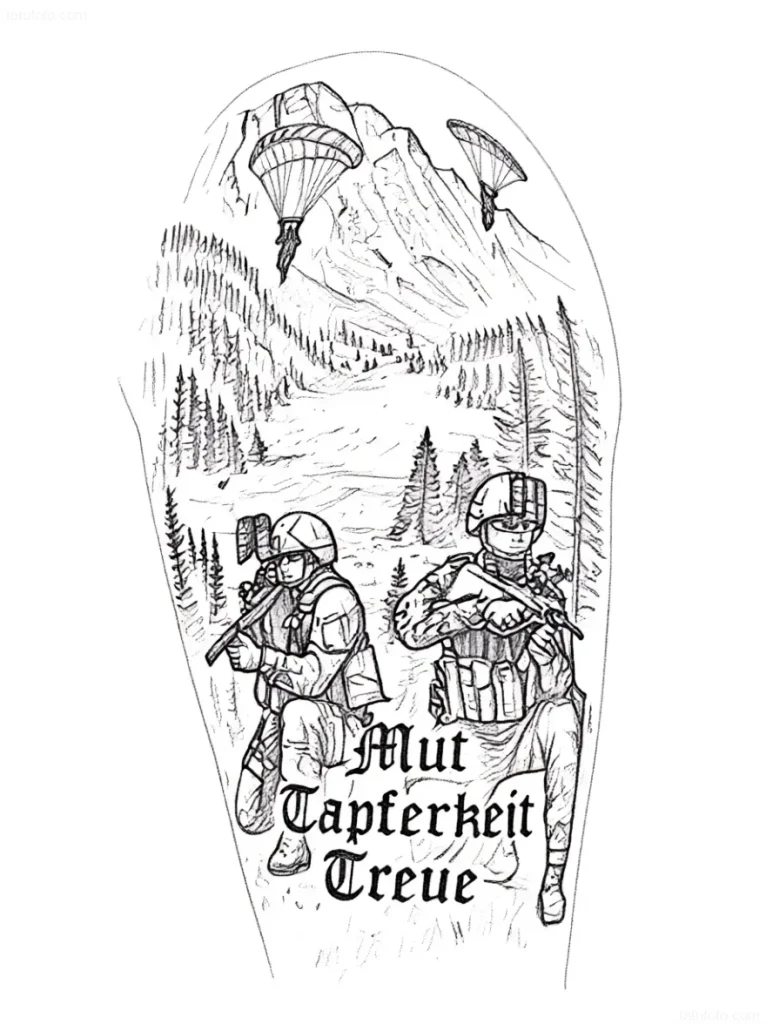
- Memory of Service: For many paratroopers, a tattoo is a way to forever capture the years spent in the VDV. It recalls comrades, parachute jumps, field exercises, hardships, and victories. It is a kind of personal diary on the skin, preserving the most important memories.
- Demonstration of Courage and Spiritual Strength: Airborne troops are known for their fearlessness and resilience. A VDV tattoo is an open declaration of the presence of these qualities, of readiness to overcome difficulties and stand firm for one’s ideals. It speaks of a character tempered in the harshest conditions.
- Loyalty to Duty and the Motherland: The main postulate of a paratrooper is loyalty to the oath, duty, and the Motherland. A VDV tattoo symbolizes this unwavering devotion, readiness to defend their country at any cost. It is an expression of deep patriotism and civic position.
Thus, the VDV tattoo is not just an image, but a complex symbol carrying the deepest personal and social meaning. It is a source of pride, memory, and a declaration of belonging to the unique brotherhood of the “winged infantry.”
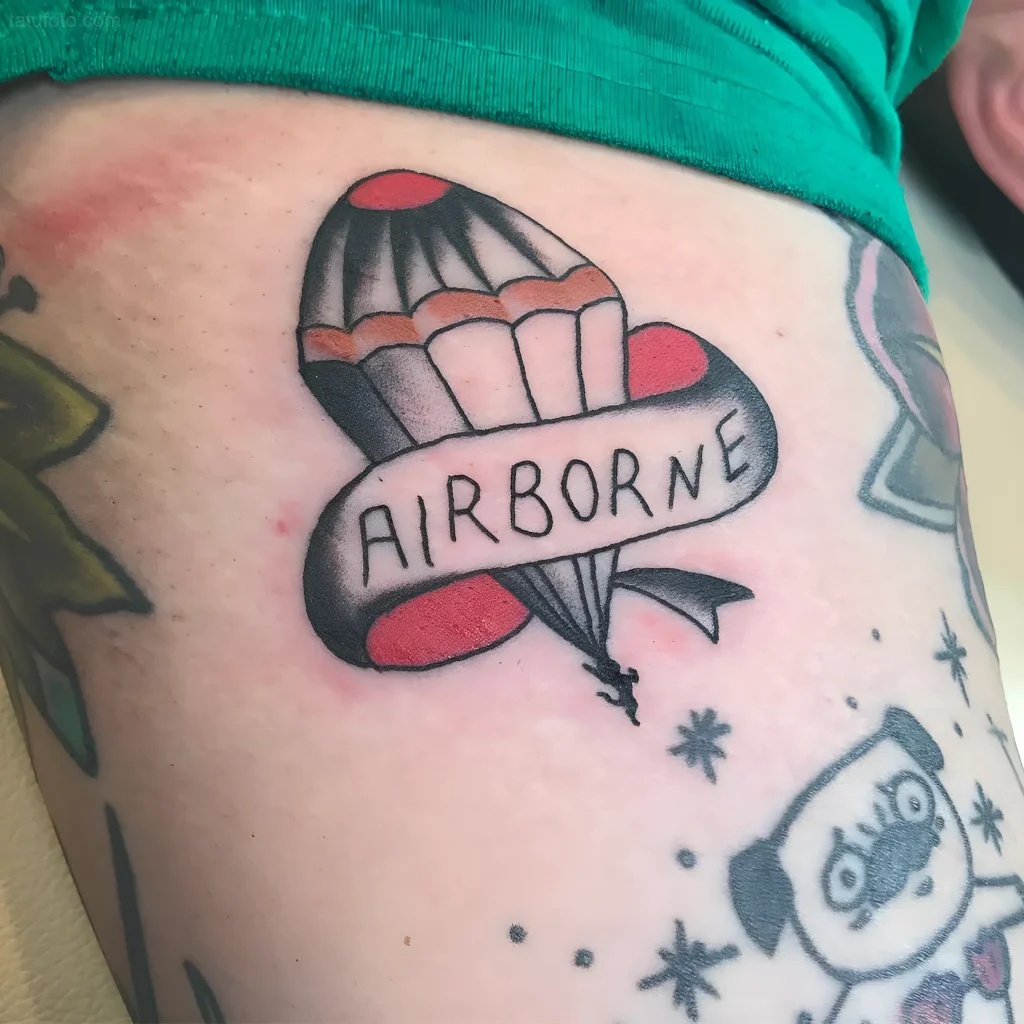
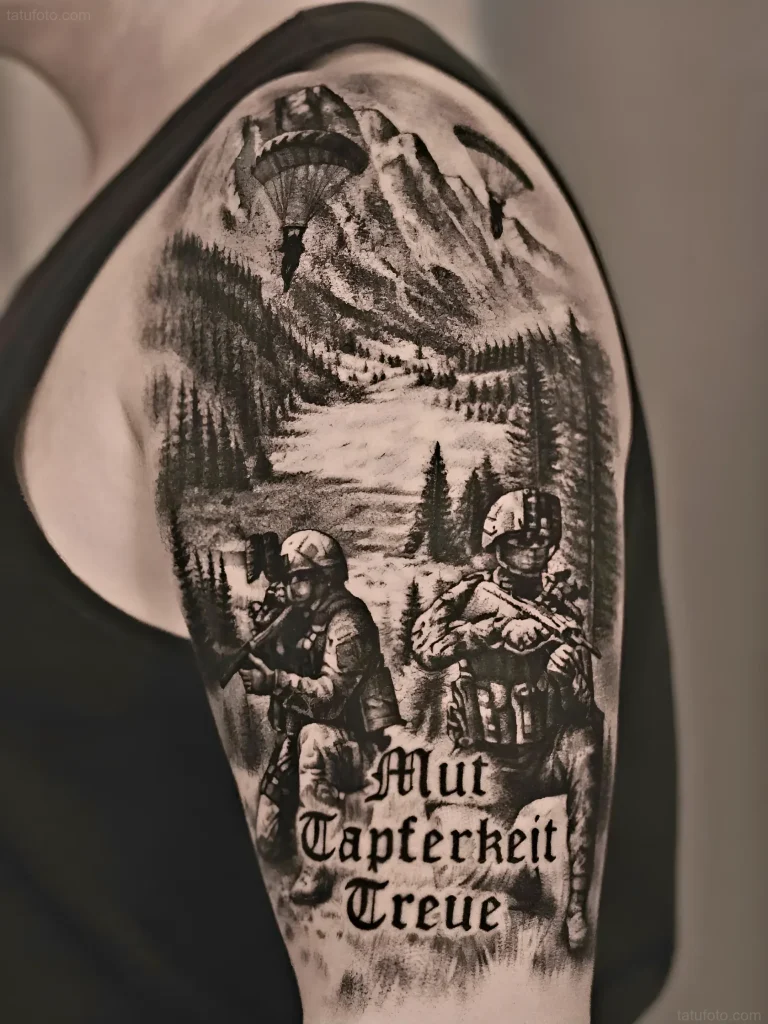
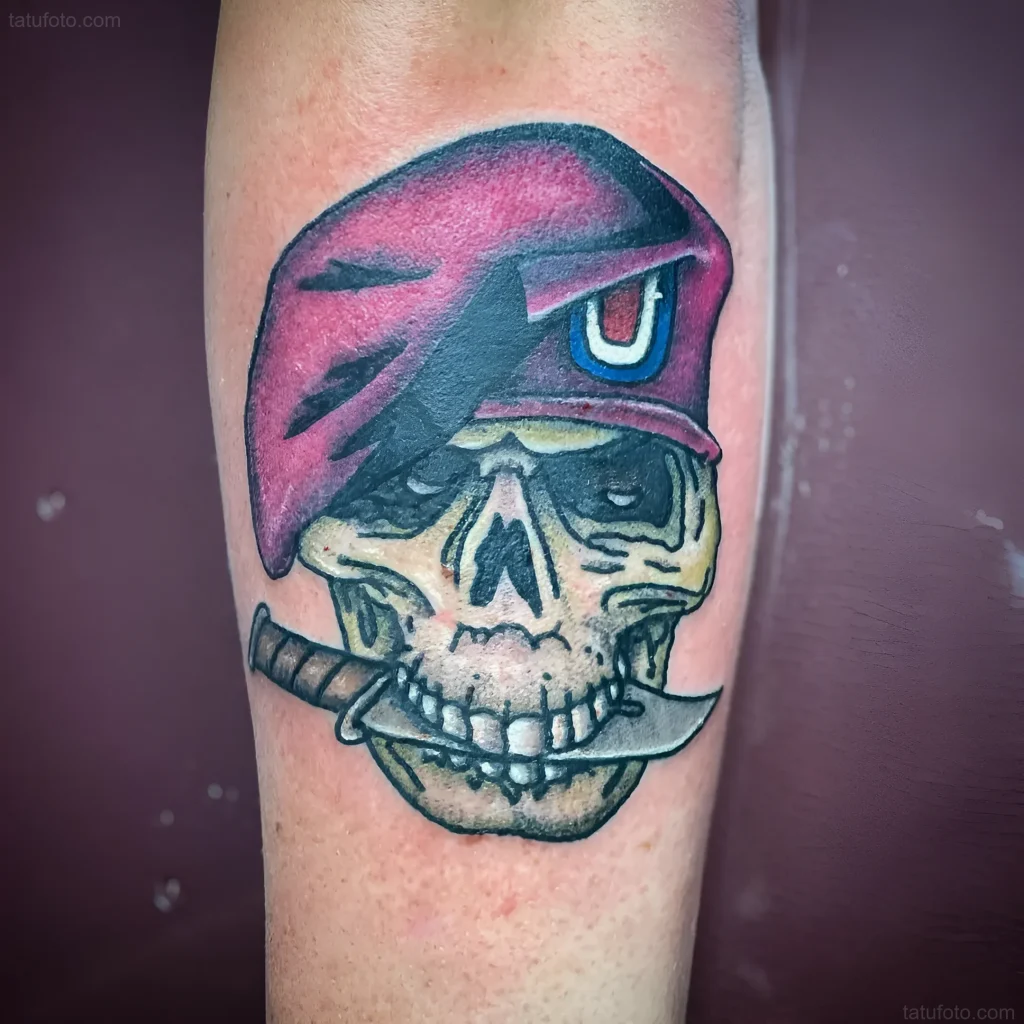
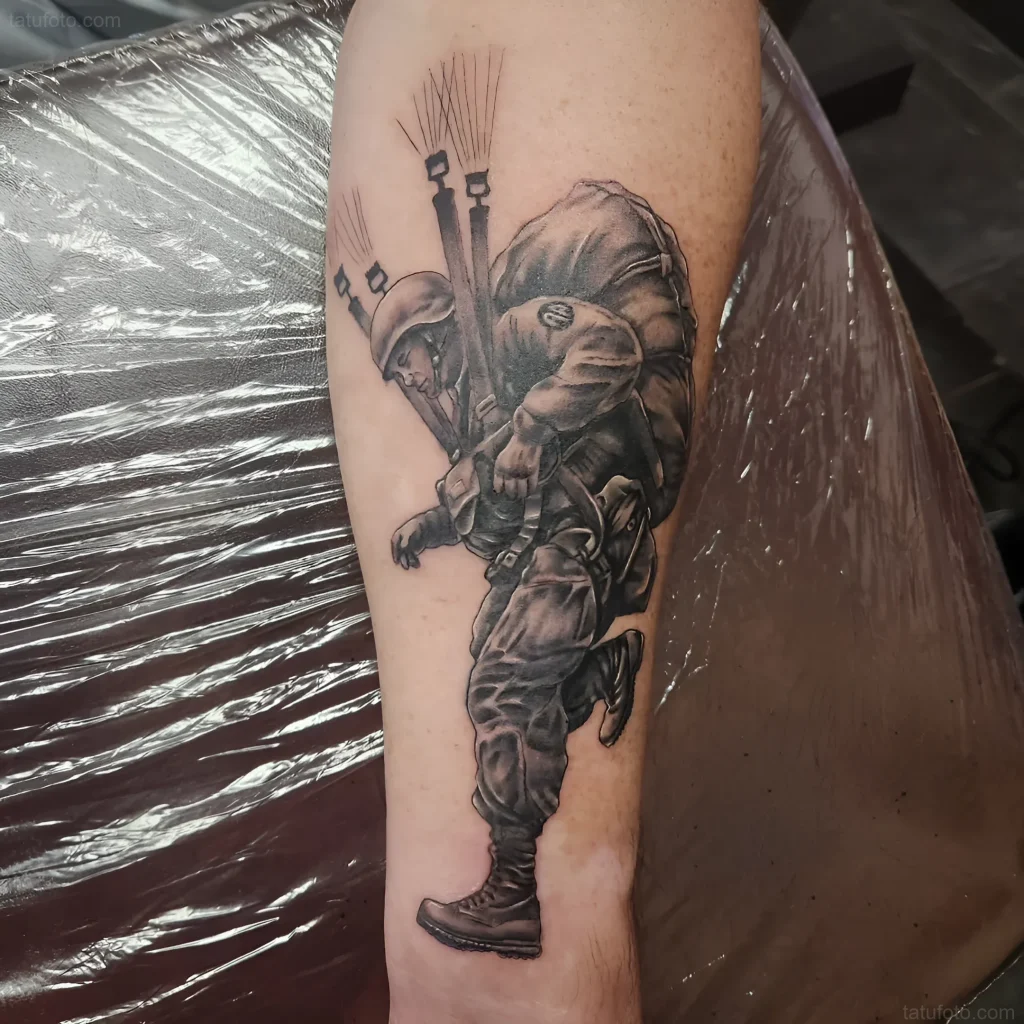
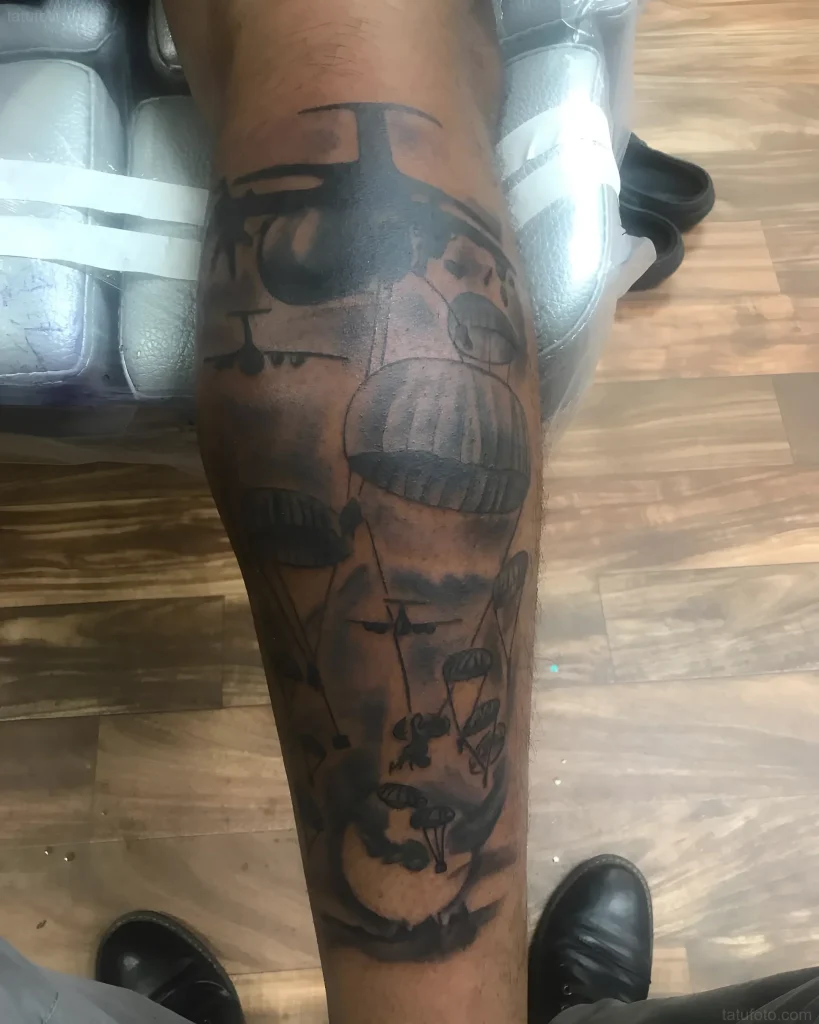
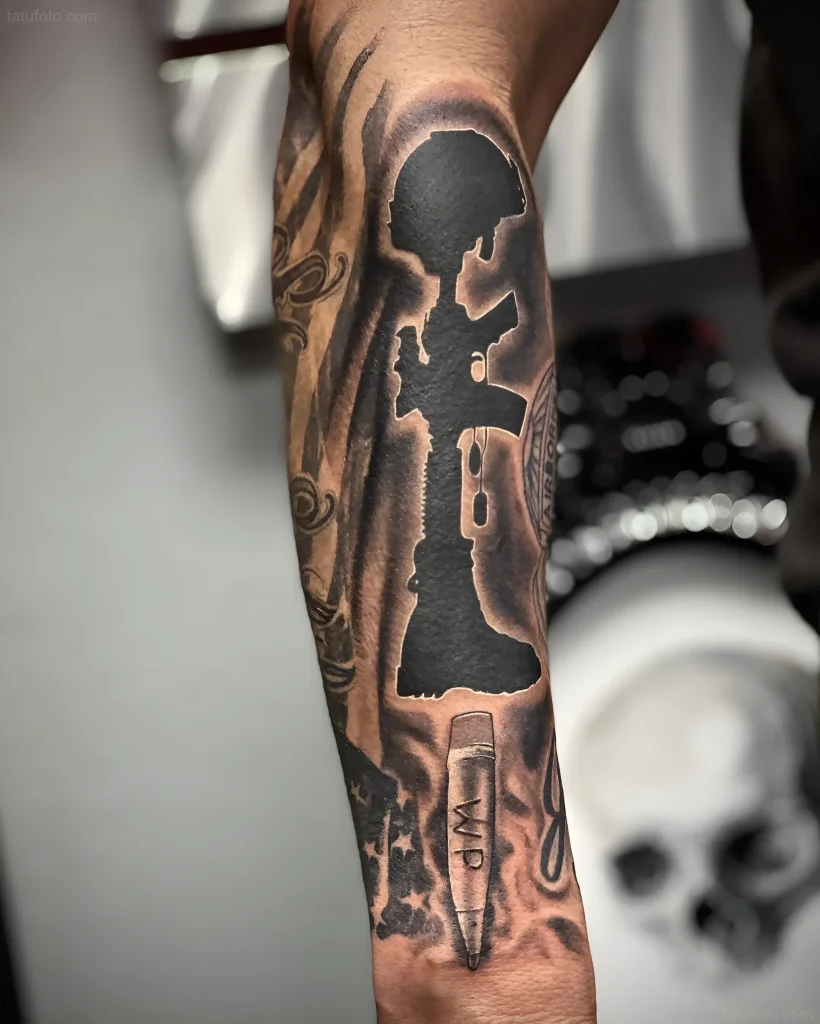
History of VDV Symbolism: From Insignia to Tattoos
To fully understand the meaning of a VDV tattoo, one must turn to the origins of its symbolism, which has evolved from official insignia to deeply personal, yet universally recognized body images. The history of the VDV, which began in the 1930s, is inseparable from the formation of its unique visual identity.
- Early Insignia: From the very moment the Airborne Forces were established, there was a need for distinguishing marks. The first symbols were emblems depicting a parachute, often combined with an airplane or a star. These signs were placed on uniforms and headgear, unequivocally indicating belonging to the new, elite branch of service. They symbolized readiness for air landing, mobility, and the ability to operate behind enemy lines.
- Blue Beret and Telnyashka (Striped Undershirt): In the 1960s, the famous blue berets and telnyashkas were introduced in the VDV. These uniform items instantly became cult symbols of the paratrooper. The blue color of the beret is associated with the sky, the airspace, and the telnyashka (striped shirt) with naval landing forces, emphasizing the versatility and ability of paratroopers to operate in any condition. These elements became such powerful identity markers that their depiction in tattoos became almost mandatory.
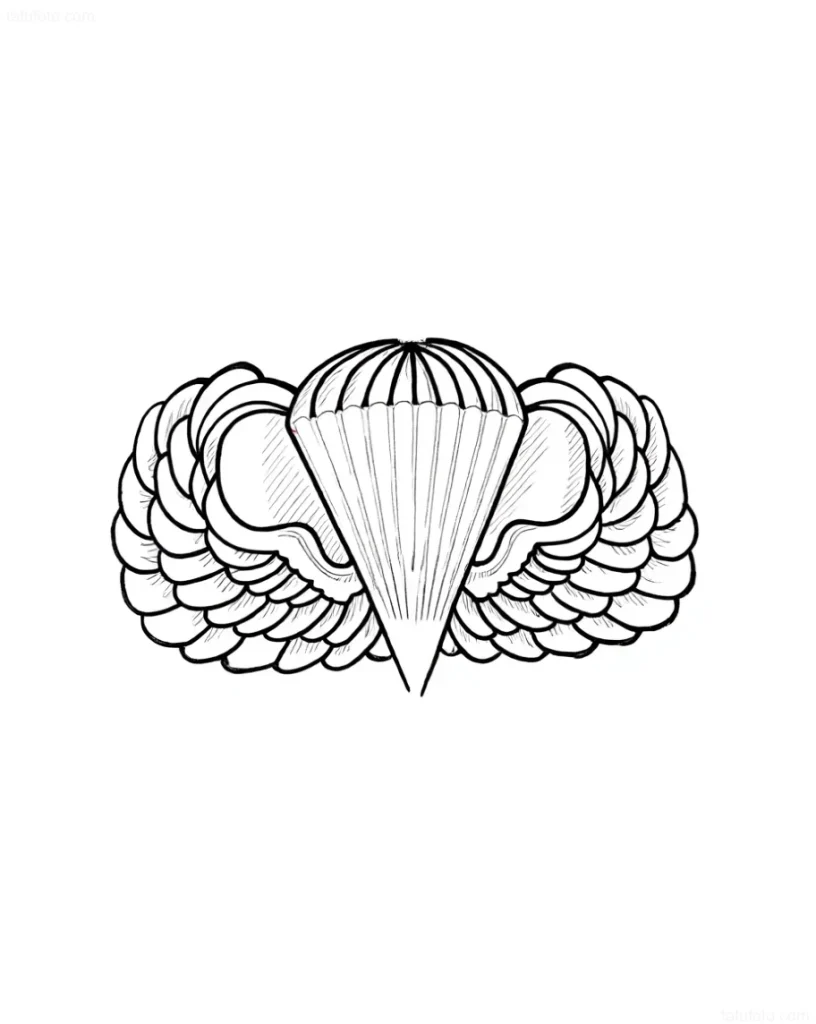
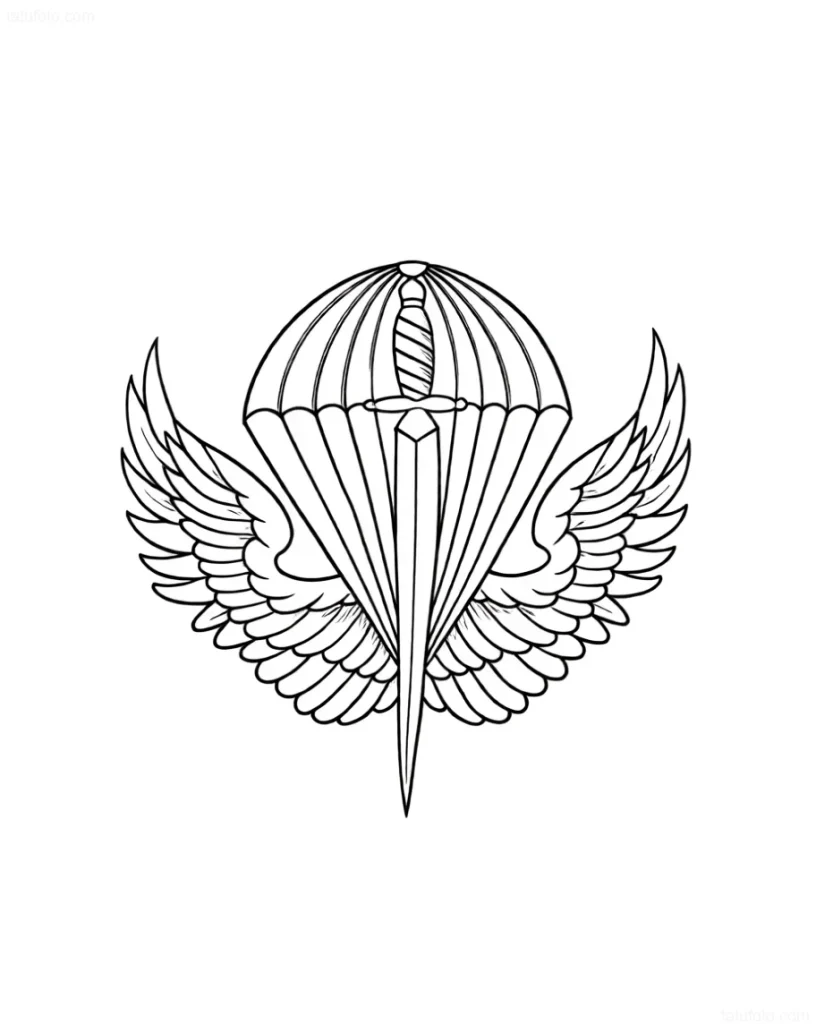
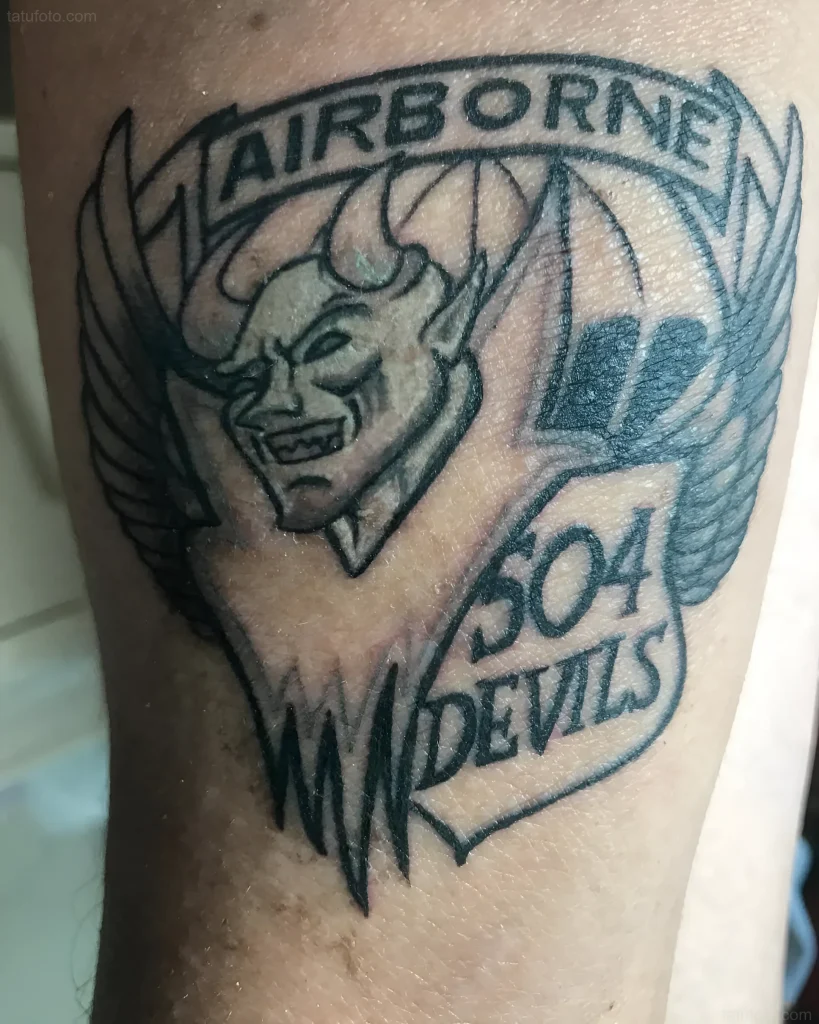
- VDV Emblem: The official VDV emblem, which depicts an open parachute with two airplanes on the sides and a star, became the quintessence of all paratrooper symbolism. It combined the main elements reflecting the specifics and purpose of the troops. This emblem, often combined with service dates or blood types, is one of the most popular motifs in paratrooper tattoos.
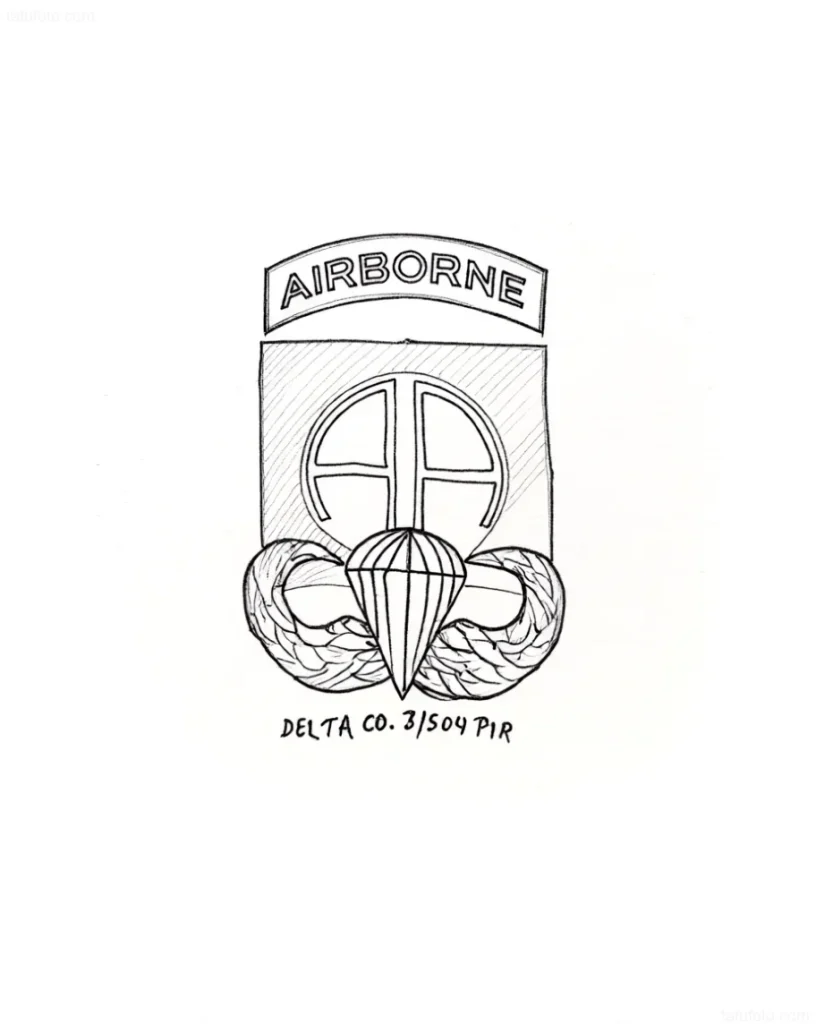


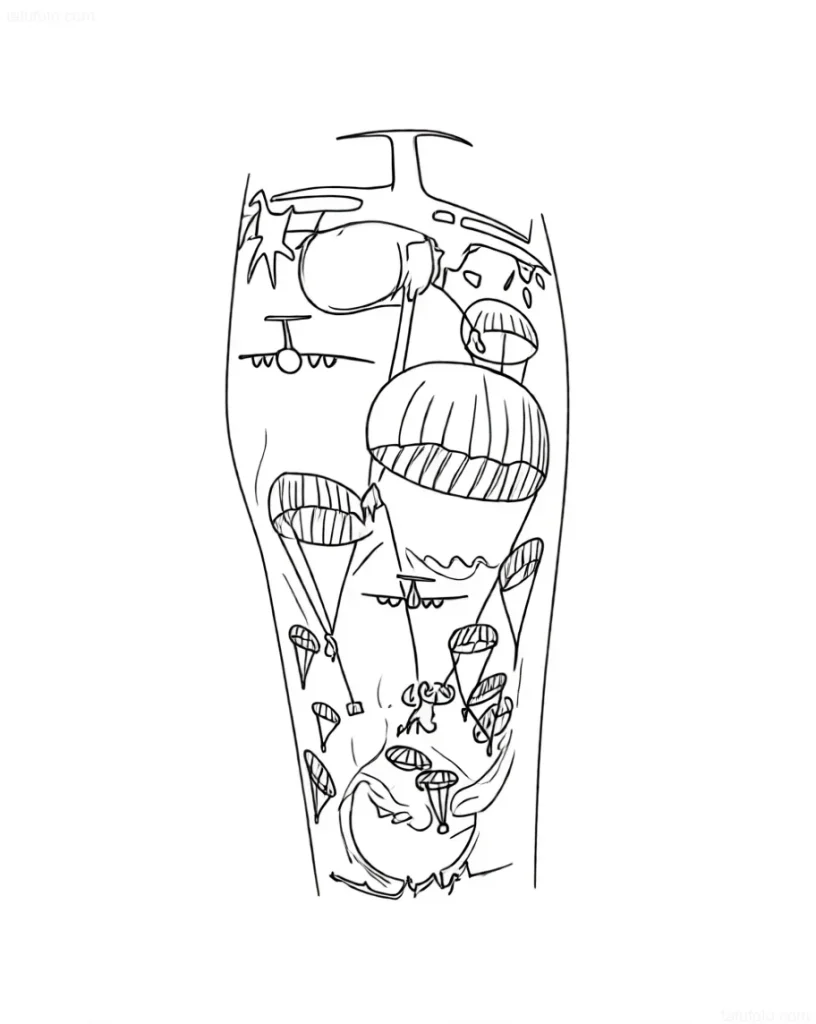
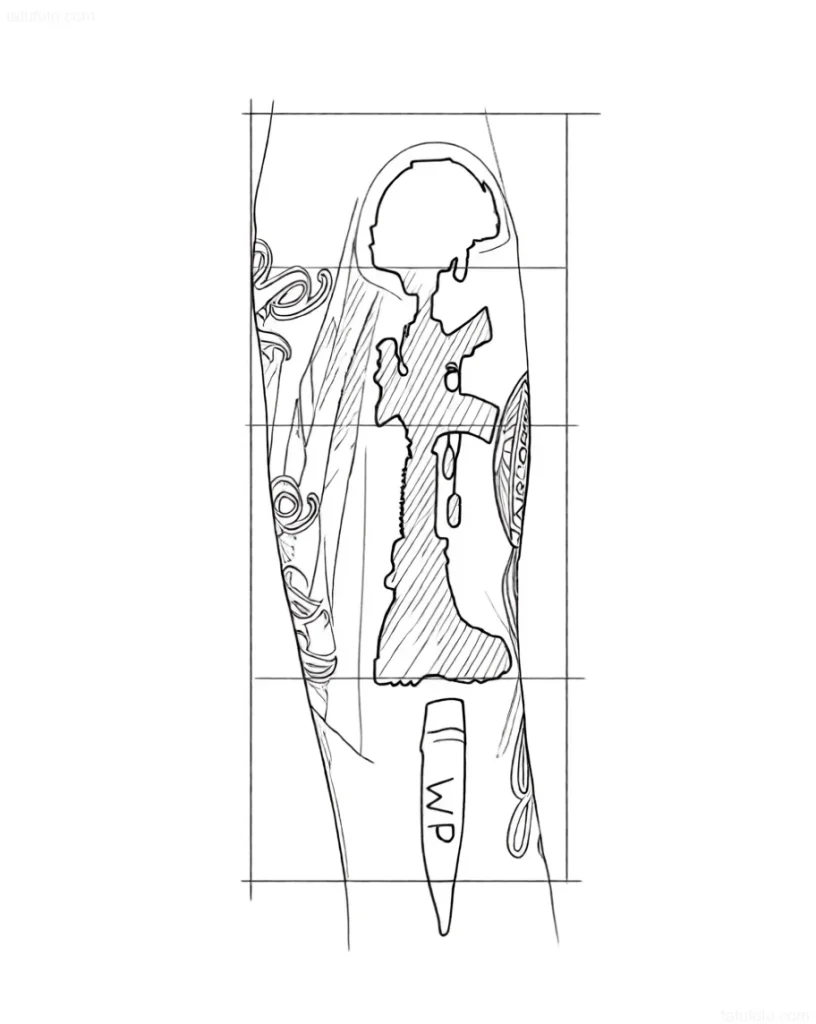

- Development of Tattoo Culture in the VDV: Tattoos as a way to record belonging to a military brotherhood have a long history, but in the VDV they acquired special significance. Over time, along with official symbolism, unofficial but deeply respected symbols began to appear: the bat (a symbol of VDV reconnaissance), the wolf, the tiger (symbols of strength, cunning, endurance), as well as various inscriptions and mottos. The tattoo became a personal way to express pride in service, immortalize the memory of comrades, and demonstrate belonging to a special caste.
- Modern Interpretation: Today, VDV symbolism in tattoos continues to evolve. Artists and paratroopers experiment with styles, adding new elements while preserving the key, recognizable motifs. It is important to note that despite the variety of forms, the main meaning – honor, courage, brotherhood, and loyalty to duty – remains unchanged and is passed down from generation to generation through these powerful body images.
Thus, the history of VDV symbolism is the history of the formation of elite troops, reflected in their external attributes and, ultimately, on the skin of those who proudly bear the title of paratrooper.

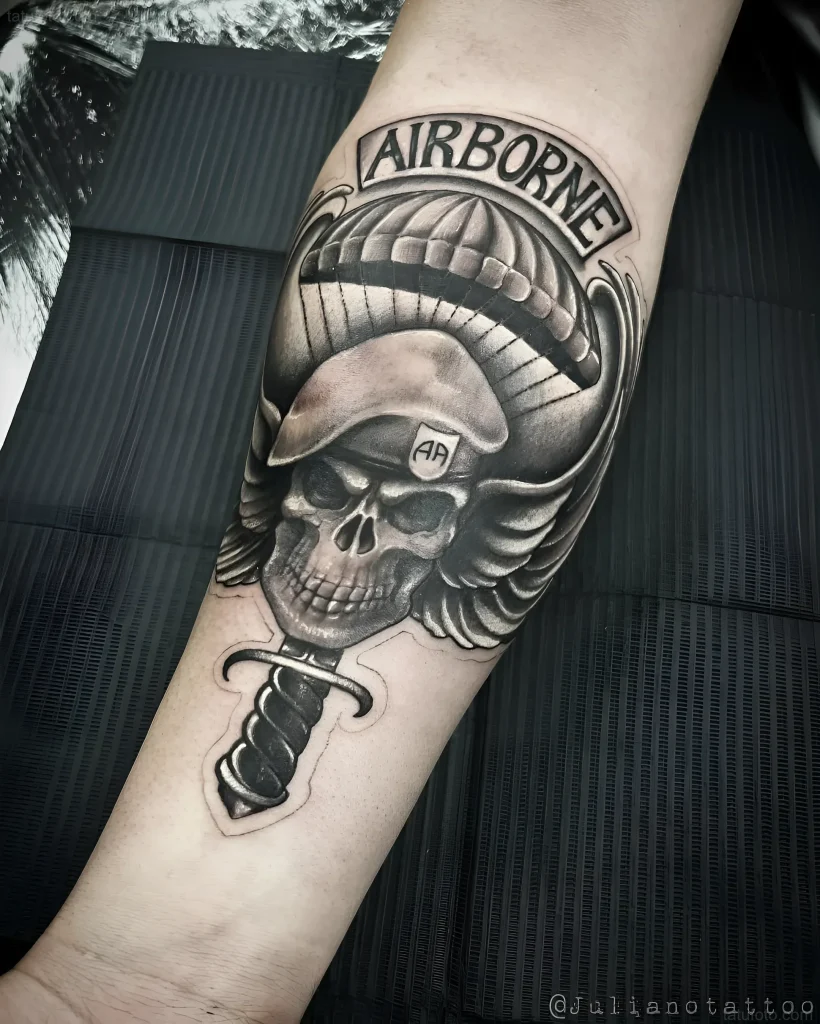
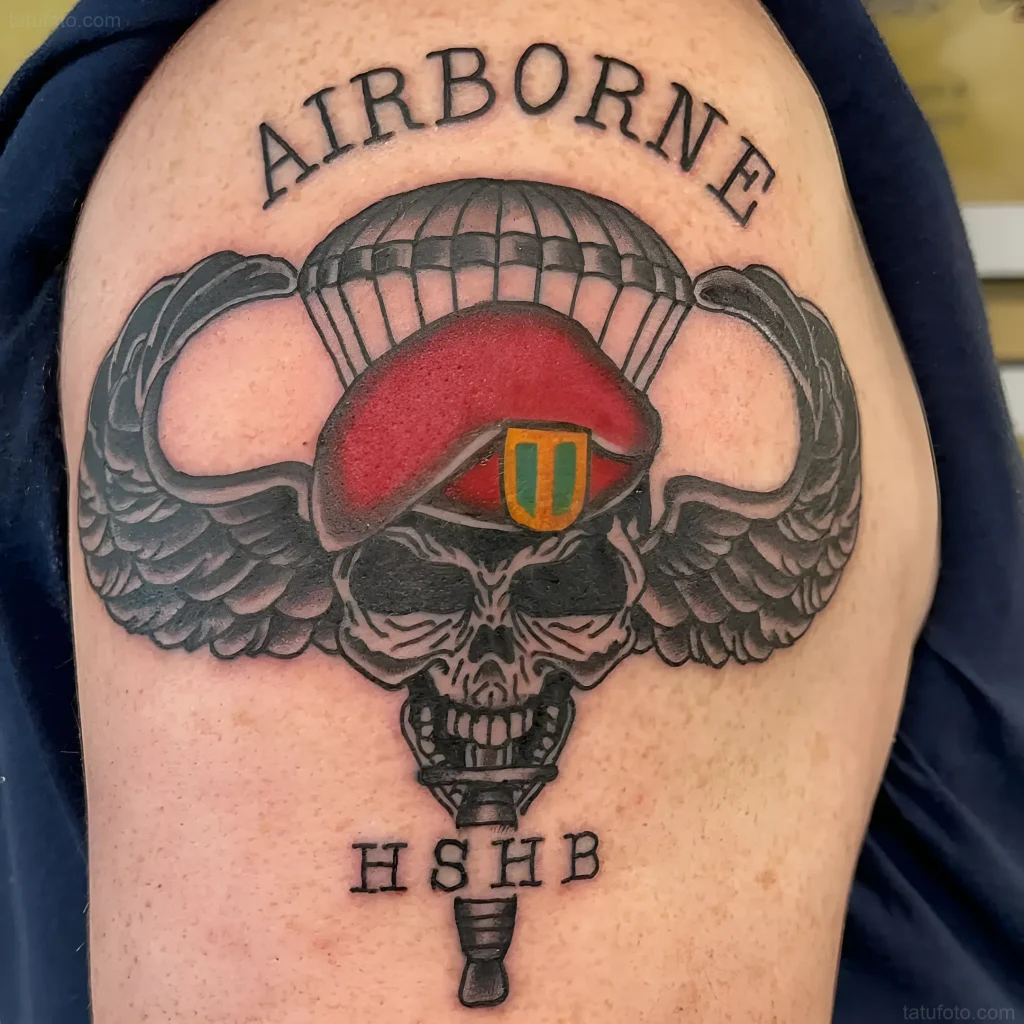
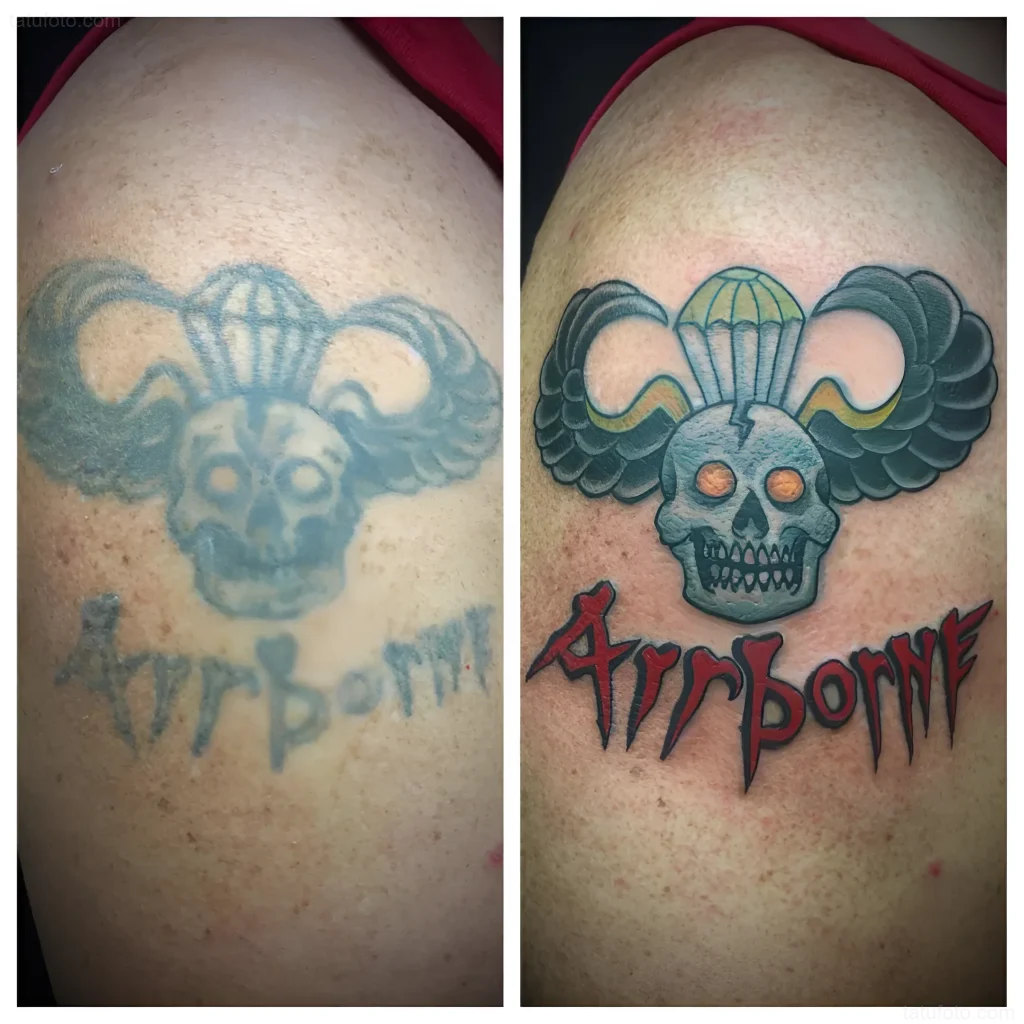
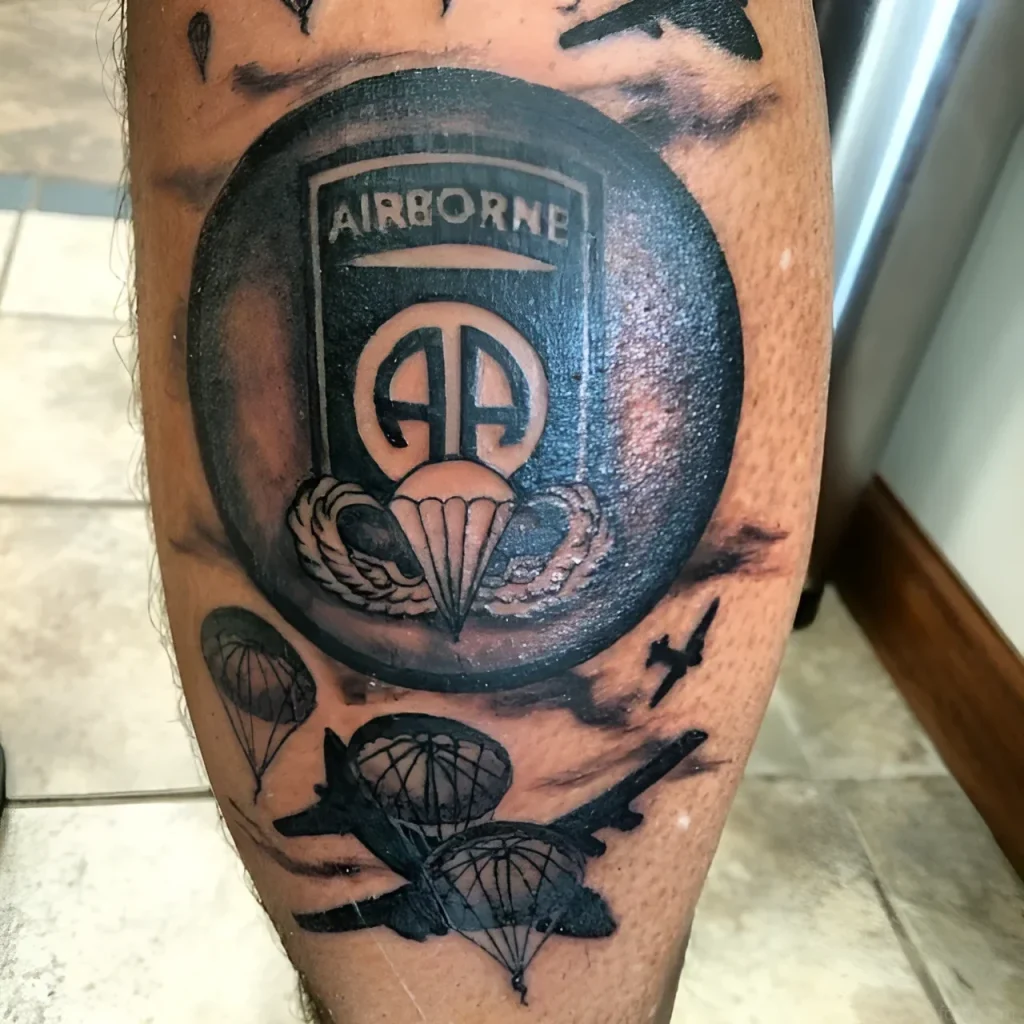
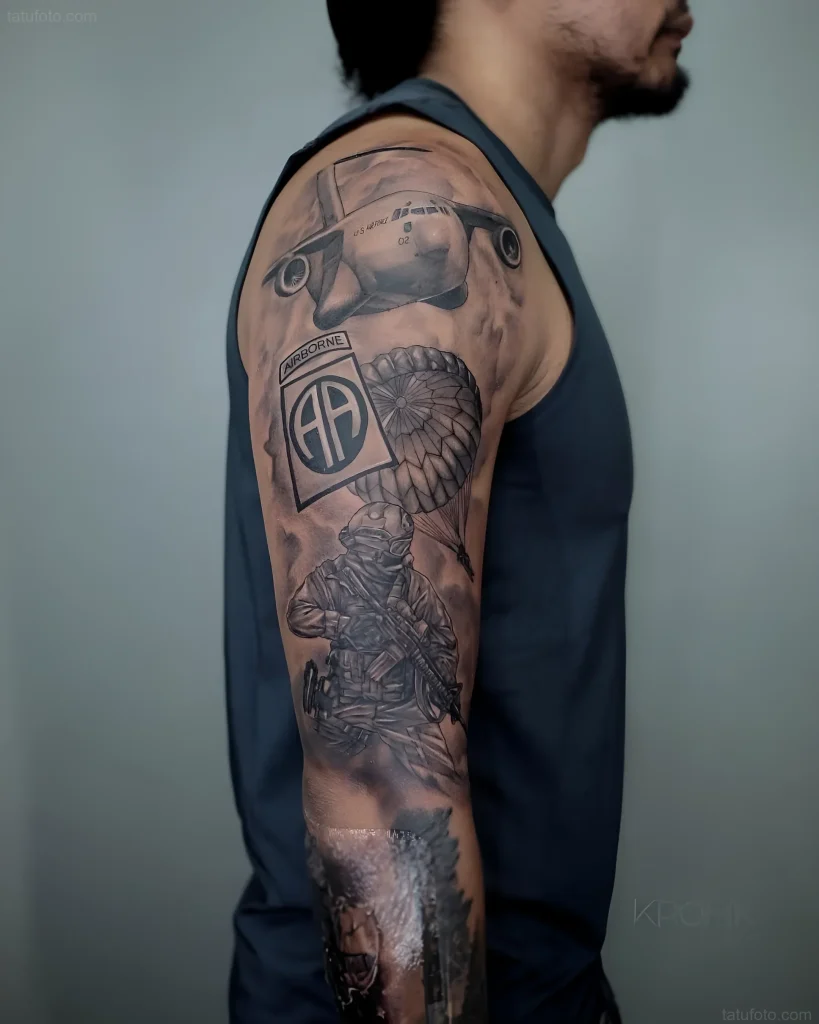
Main Meanings of VDV Tattoos: Courage, Brotherhood, Duty
The VDV tattoo is a whole complex of meanings, each of which has a deep significance for a paratrooper. These meanings are formed based on service experience, troop traditions, and personal experiences. Let’s examine the key semantic layers in detail.
- Courage and Valor: This is perhaps the first thing that comes to mind when mentioning the VDV. A tattoo with paratrooper symbolism is a direct statement of fearlessness, readiness to risk life to accomplish a task. It symbolizes:
- Willingness to take risks: Parachute jumps, air landing behind enemy lines – all this requires exceptional courage and the ability to overcome fear.
- Resilience in Battle: Paratroopers are known for their ability to withstand the toughest trials and continue fighting even under the most unfavorable conditions.
- Physical and Moral Strength: The tattoo emphasizes that its wearer possesses not only physical power but also an unbending strength of spirit.
- Brotherhood and Loyalty: The paratrooper brotherhood is a unique phenomenon based on shared trials and unbreakable bonds. The VDV tattoo serves as a powerful symbol of this connection:
- Mutual assistance: The principle of “one for all and all for one” is the cornerstone of the paratrooper brotherhood. The tattoo recalls the support of comrades and the obligation to help them.
- Trust: In combat situations, a paratrooper’s life often depends on the actions of their comrades. The tattoo symbolizes the deep trust that forms between fellow servicemen.
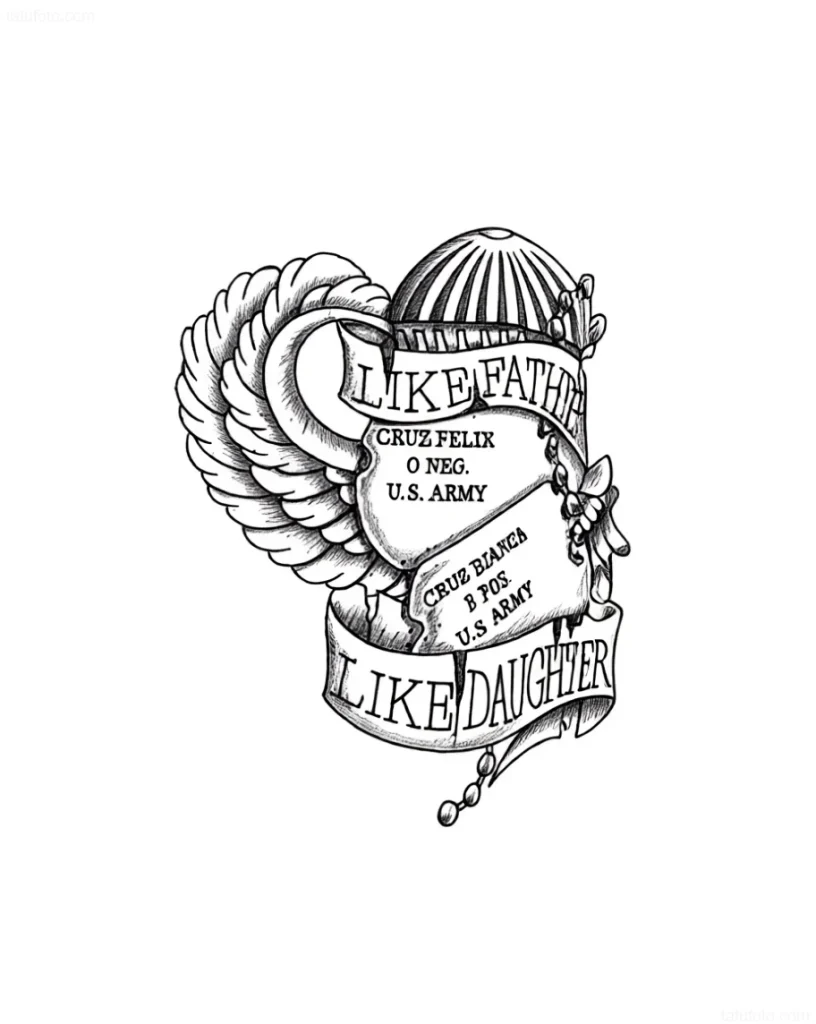
- Memory of Comrades: Many VDV tattoos include the names or initials of comrades, service dates, or memorable events, immortalizing the memory of those who were there.
- Duty and Honor: Service in the VDV is the fulfillment of military duty to the Motherland with honor and dignity. The tattoo reflects these fundamental principles:
- Loyalty to the Oath: It symbolizes unwavering devotion to the military oath and readiness to defend the homeland.
- Fulfillment of Tasks: A paratrooper always strives to carry out the order, despite difficulties. The tattoo emphasizes this aspiration for flawless fulfillment of duty.
- Impeccable Reputation: A paratrooper’s honor is their reputation, their name. The tattoo serves as a reminder to always act with dignity and uphold the high title of a paratrooper.
- Patriotism: Deep love for the Motherland and readiness to defend it are an integral part of a paratrooper’s worldview. The VDV tattoo often includes elements of national symbolism, emphasizing this connection.
- Invincibility and Steadfastness: The motto “No one but us” not only emphasizes elitism but also symbolizes unwavering faith in one’s own strength, in the ability to overcome any obstacle.
Thus, the VDV tattoo is a multilayered symbol that combines the concepts of courage, brotherhood, duty, honor, and boundless devotion. It is a powerful expression of the personality and life principles of its wearer.
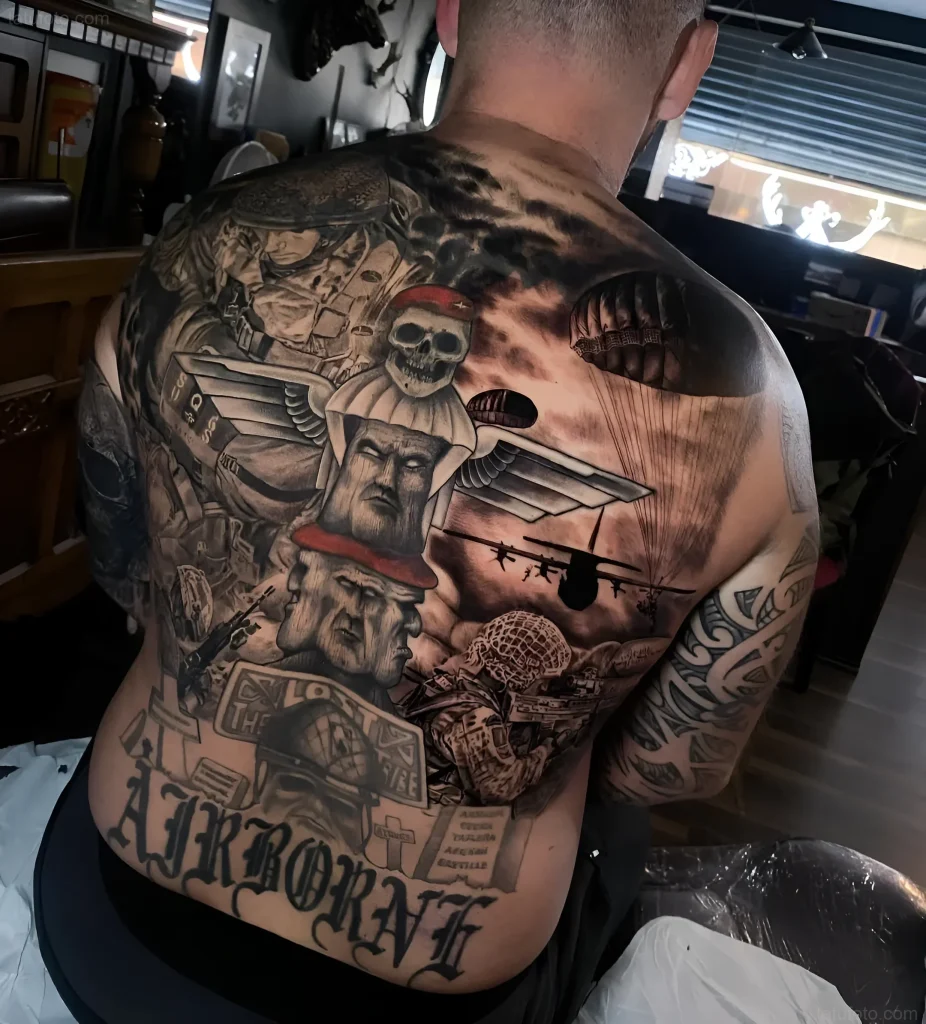
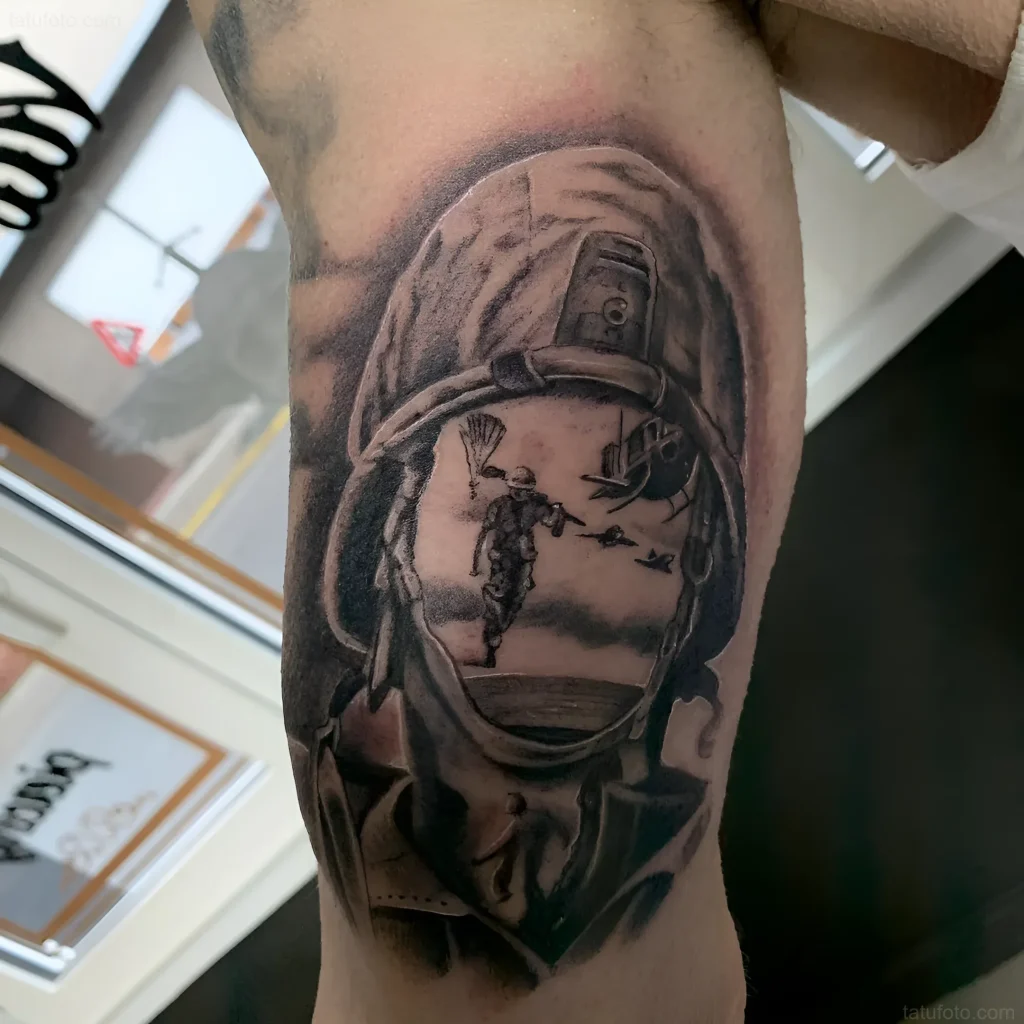
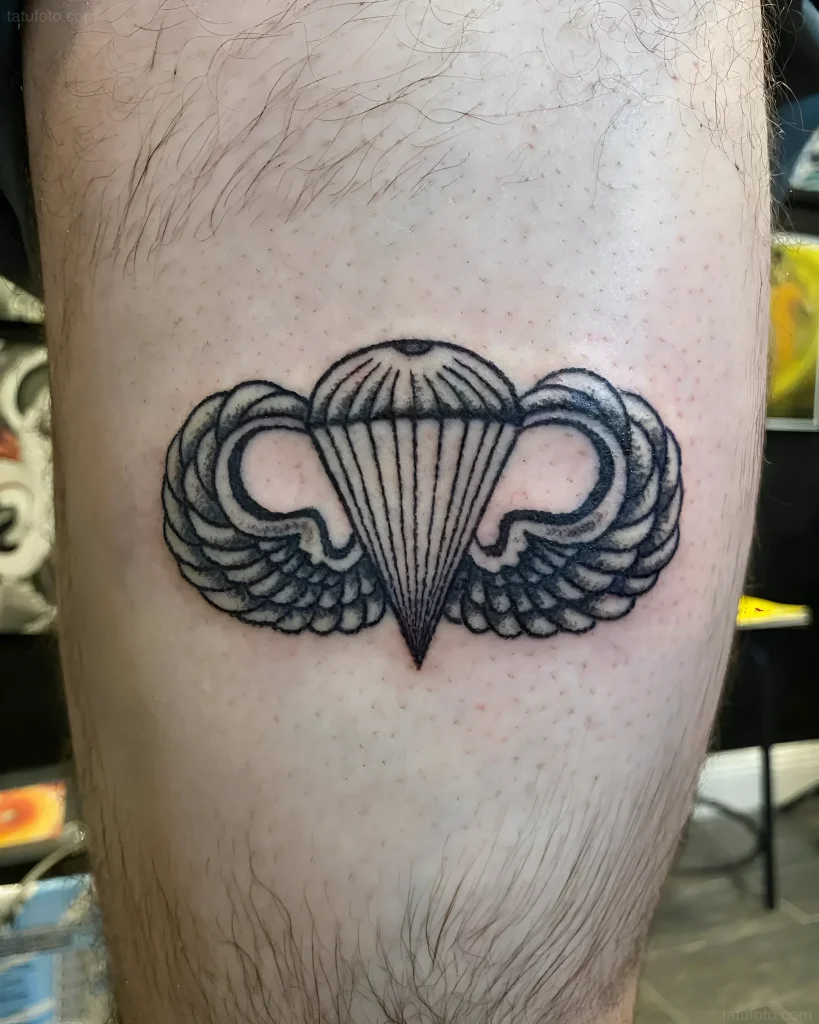
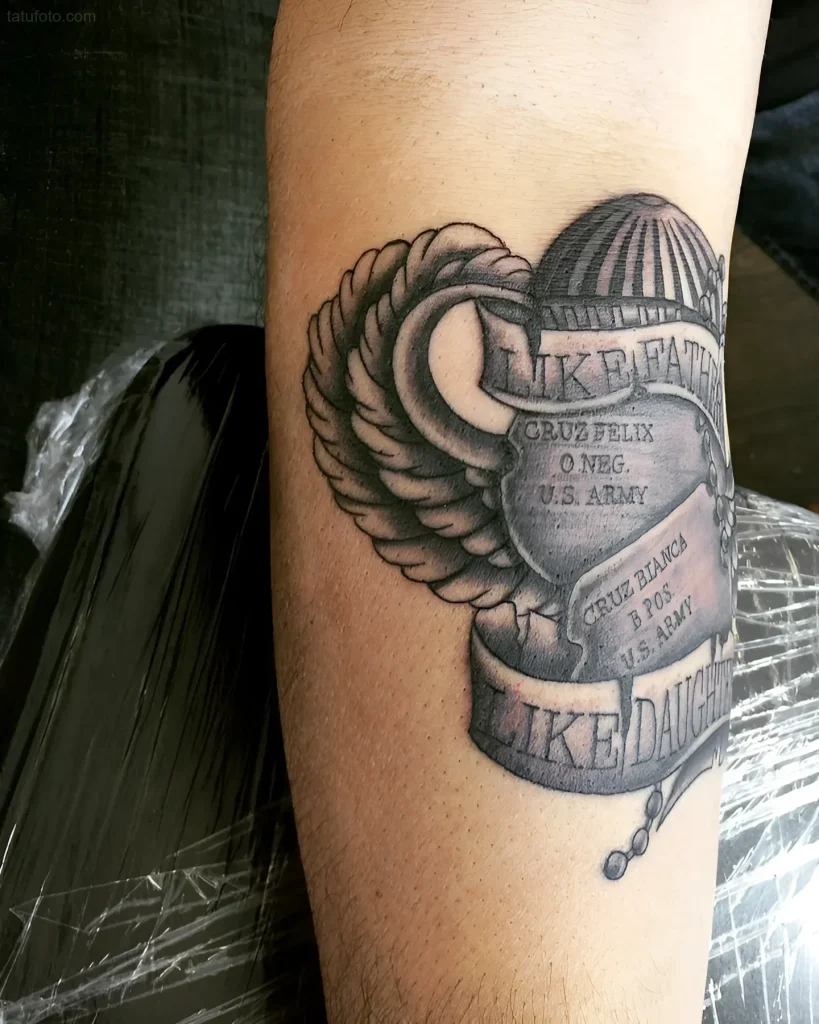
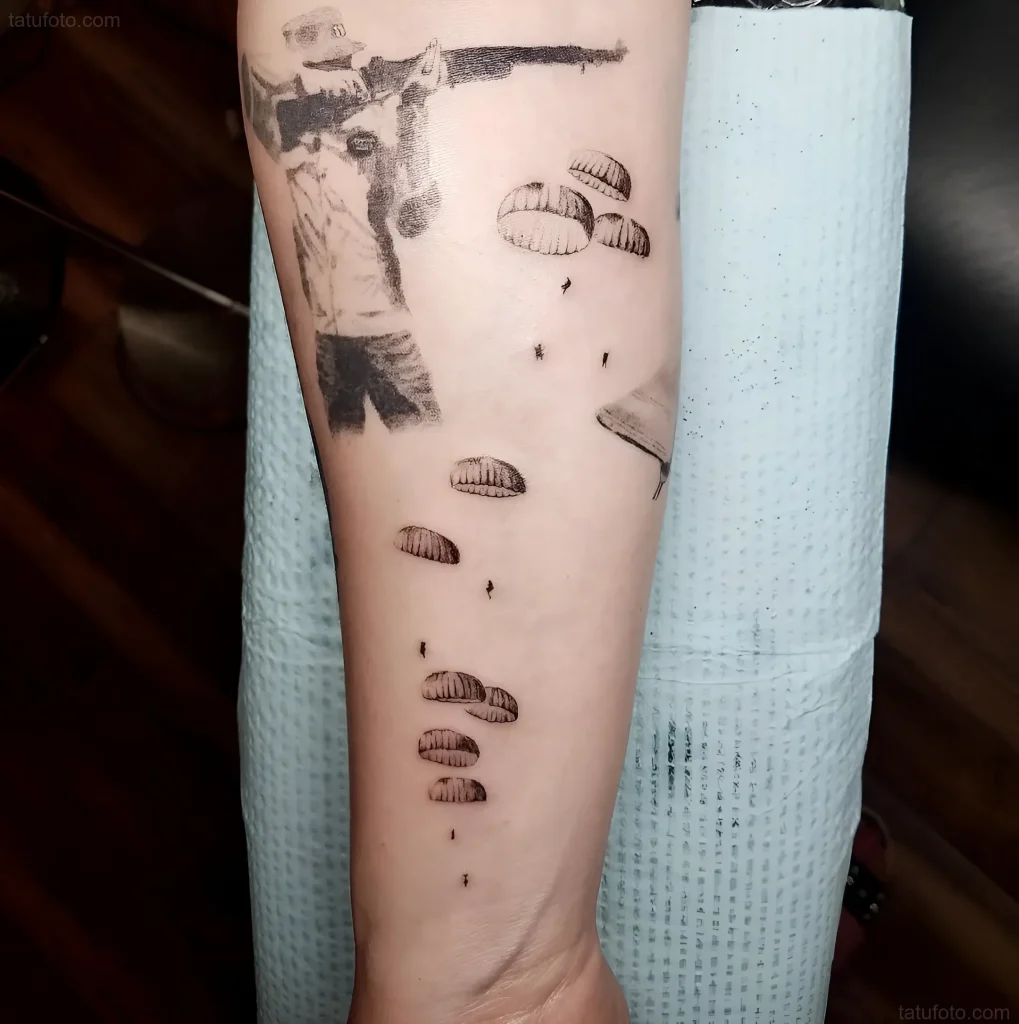
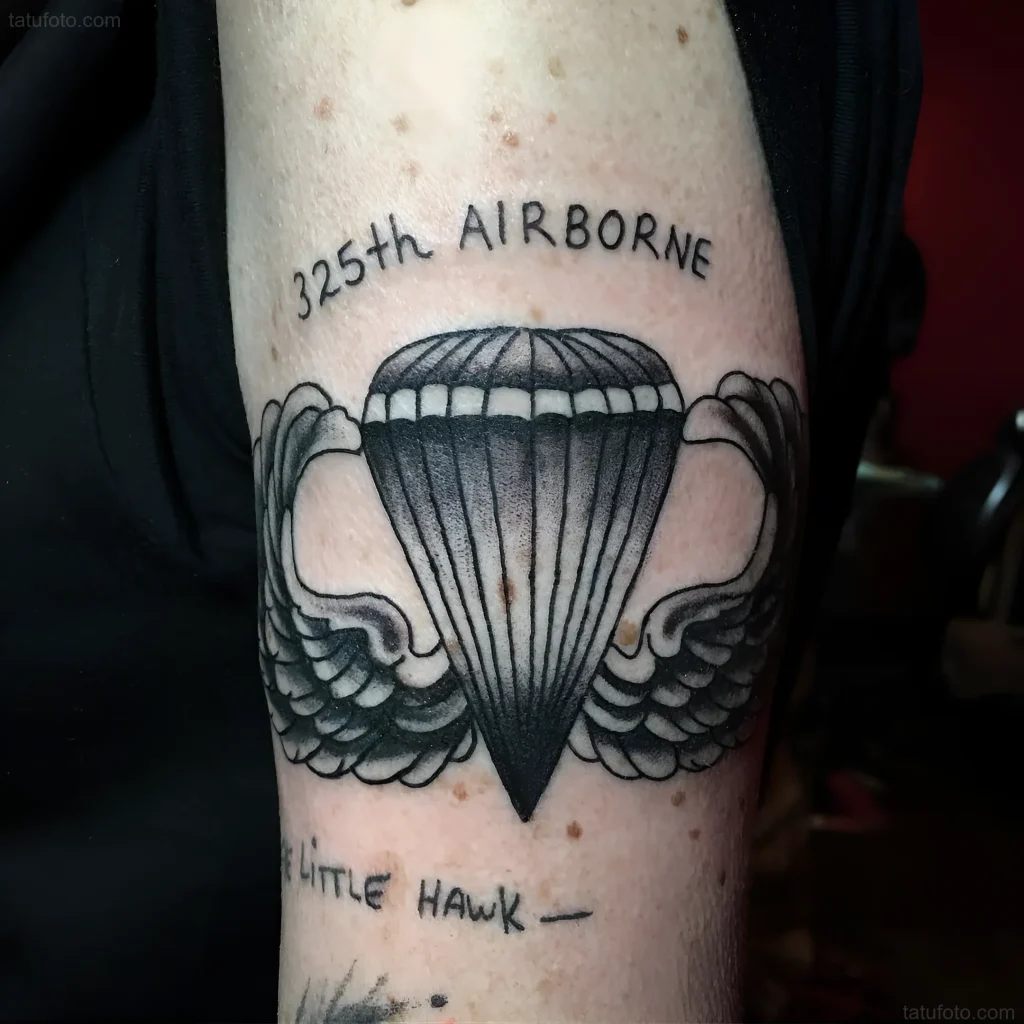
Popular VDV Tattoo Styles: Realism, Graphics, Watercolor
The choice of style for a VDV tattoo is not only a matter of aesthetics but also a way to emphasize certain aspects of the symbolism and the personal attitude towards service. Modern tattoo art offers a wide range of styles, each revealing the deep meaning of paratrooper tattoos in its own way. Let’s look at the most popular ones.
- Realism: This style is ideal for those who want to convey the image as accurately and detailedly as possible. In the context of the VDV, realism is often used for:
- Portraits: Depictions of paratroopers in full gear, with recognizable facial features, conveying seriousness and focus.
- Combat Scenes: Scenes of air landing, combat operations, which allow capturing the dynamism and drama of service.
- Detailed Symbolism: Accurate images of the blue beret, telnyashka, VDV emblem, weapons (e.g., AK-74), which look like photographs on the skin.
- Features: Realism requires high skill from the artist to convey textures, shadows, and volume, making the image as vivid and expressive as possible.
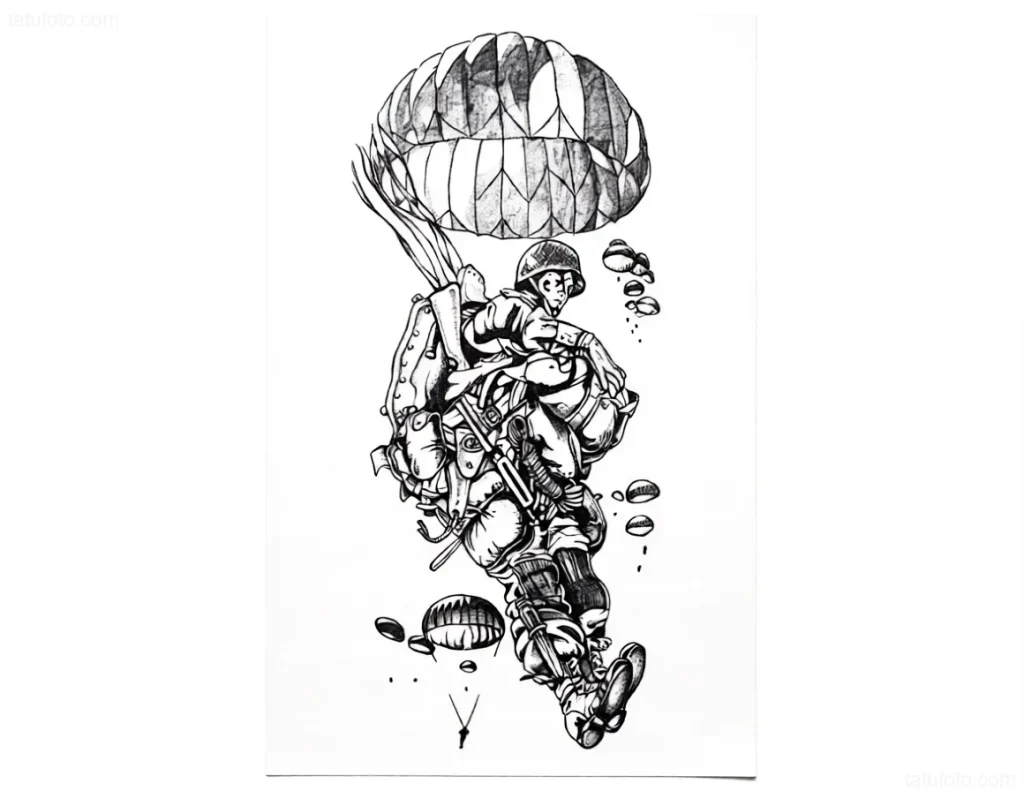
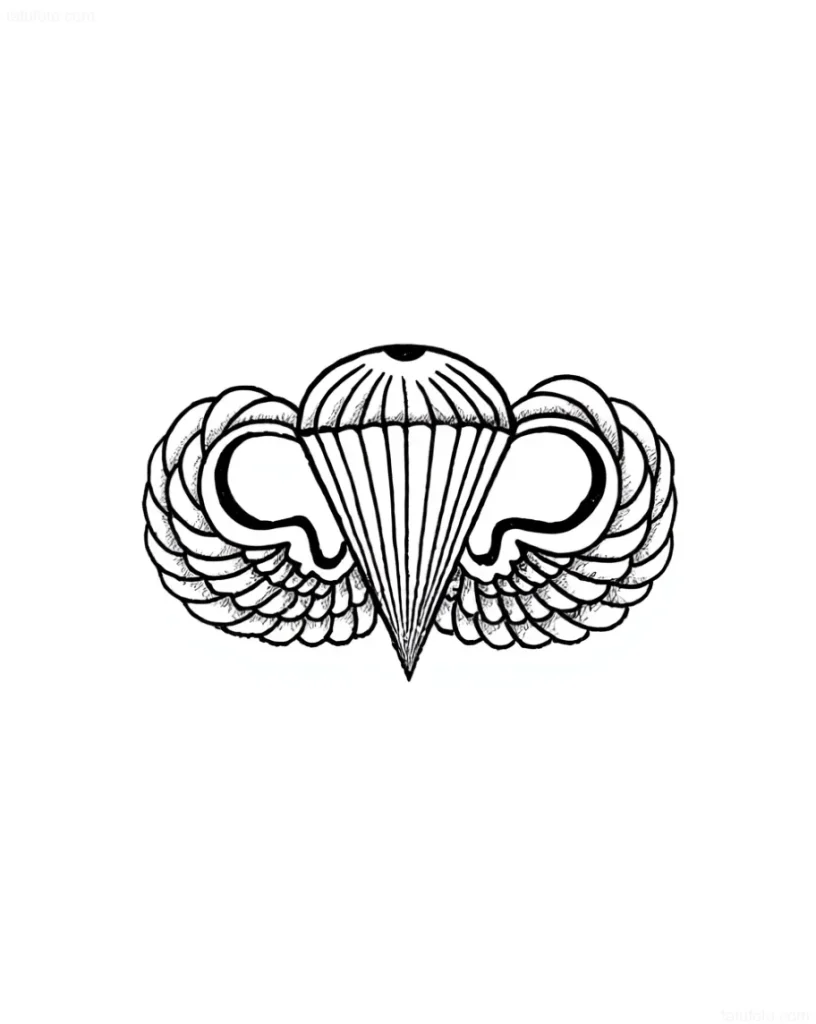
- Graphics and Linework: This style is characterized by clear lines, contrast, and often the use of black color. It can be minimalist or very detailed.
- Symbols in Pure Form: Images of a parachute, airplanes, a star, a bat, executed in a graphic style, look strict and laconic, emphasizing the purity of the symbol.
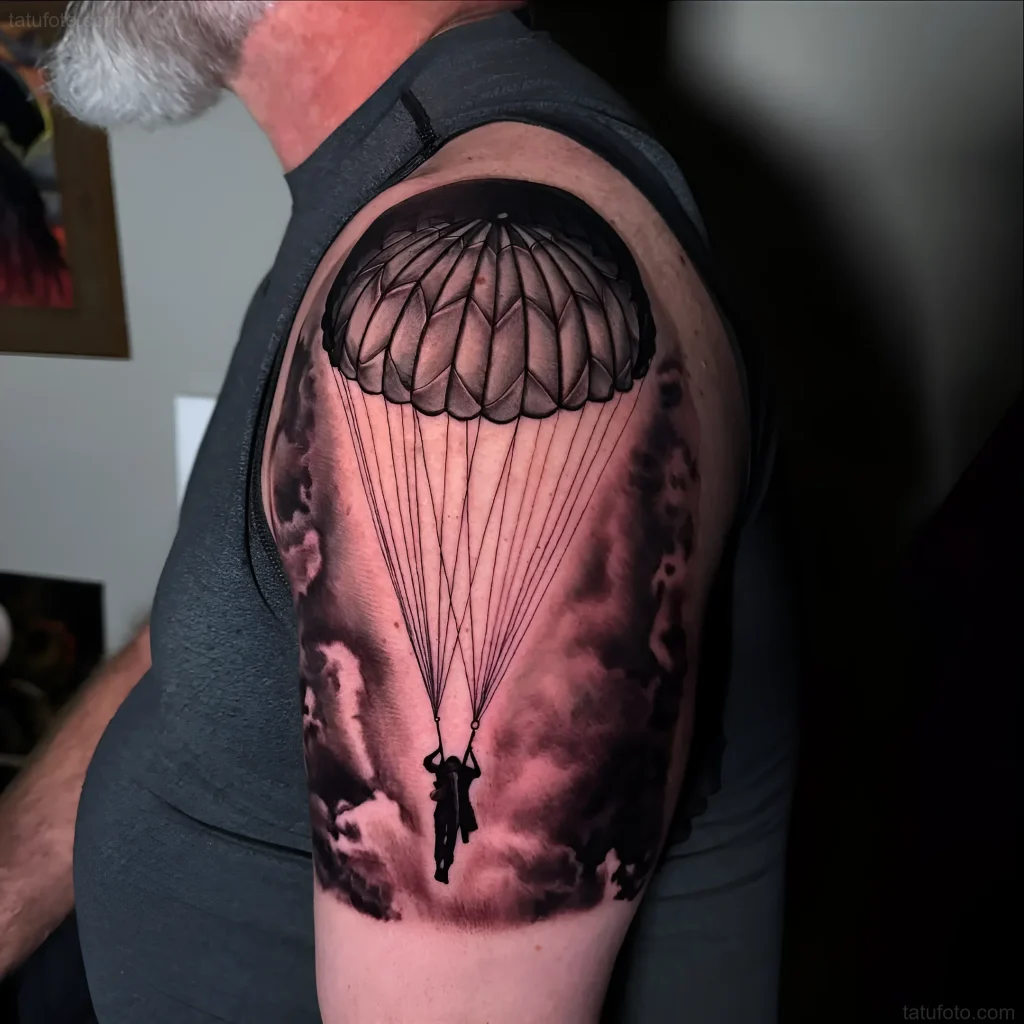
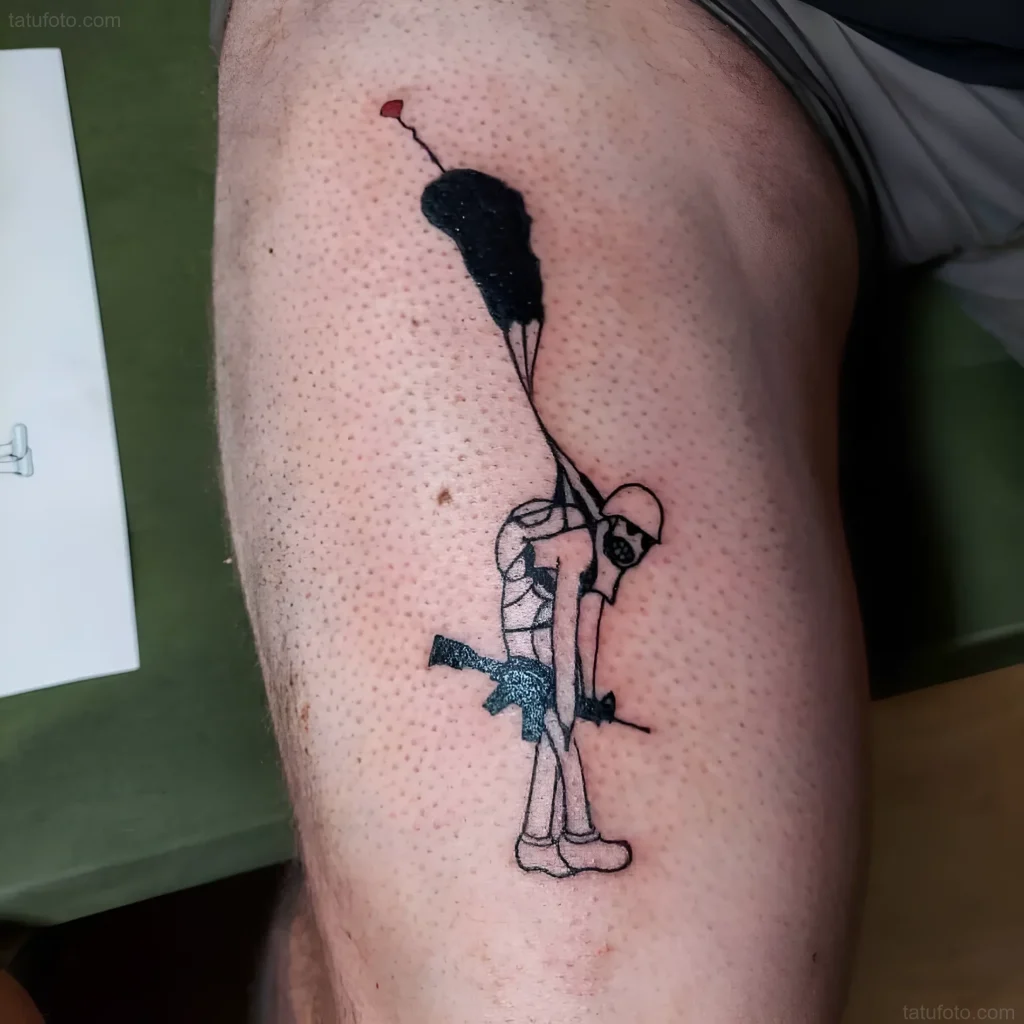
- Silhouettes: Silhouettes of paratroopers jumping with a parachute or marching in formation create a powerful, recognizable image.
- Inscriptions and Mottos: VDV mottos (“No one but us!”, “Glory to the VDV!”) or service dates, executed in a clear font in a graphic style, look very effective and legible.
- Features: Graphics allow for a powerful visual statement that is easily readable even from a distance. It is ideal for those who value clarity and expressiveness.


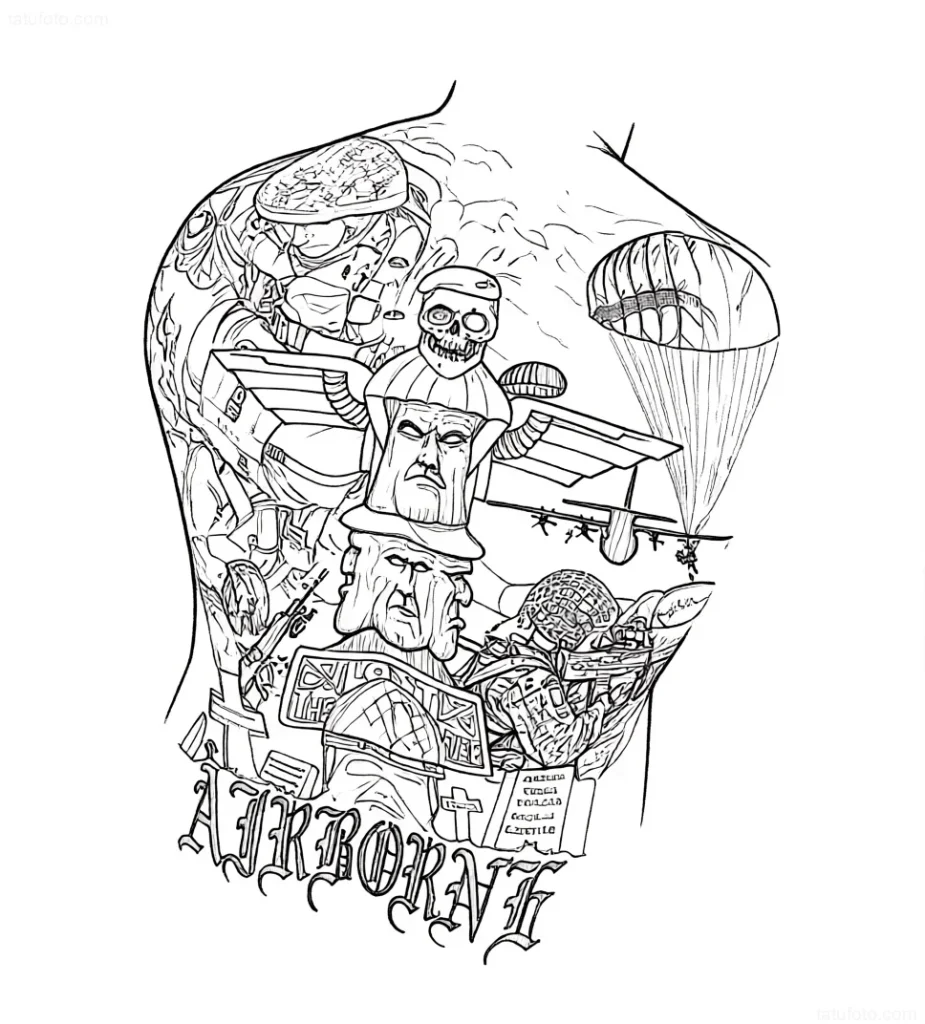
- Watercolor: This style, relatively new in tattoo art, offers a more artistic and emotional approach. It is characterized by soft color transitions and a blurring effect, lacking sharp outlines.
- Emotional Conveyance: Watercolor can be used to create more personal and emotional images, such as a sunset over a training field, or an abstract depiction of the sky and parachute.
- Combination with Symbols: Key VDV symbols (parachute, beret) can be executed in a realistic or graphic style, while the background or additional elements are in watercolor technique, adding depth and artistry.
- Features: Watercolor gives the tattoo lightness and airiness, which is especially relevant for the “winged infantry.” It allows moving away from strictness and adding individuality while maintaining the recognizability of the symbolism.
- Traditional (Old School): Although this style is less common for VDV tattoos, some elements can be adapted.
- Bright Outlines and Solid Colors: Can be used to stylize traditional symbols, such as anchors or roses, but with a paratrooper theme (e.g., an Old School style parachute).
- Features: Suitable for those who appreciate classic tattoo style and want to give their paratrooper tattoo a vintage touch.
Ultimately, the choice of style depends on personal preference and the message you want to convey through your VDV tattoo. The main thing is that the chosen style harmonizes with the deep meaning of the symbolism and reflects your pride in belonging to the paratrooper brotherhood.

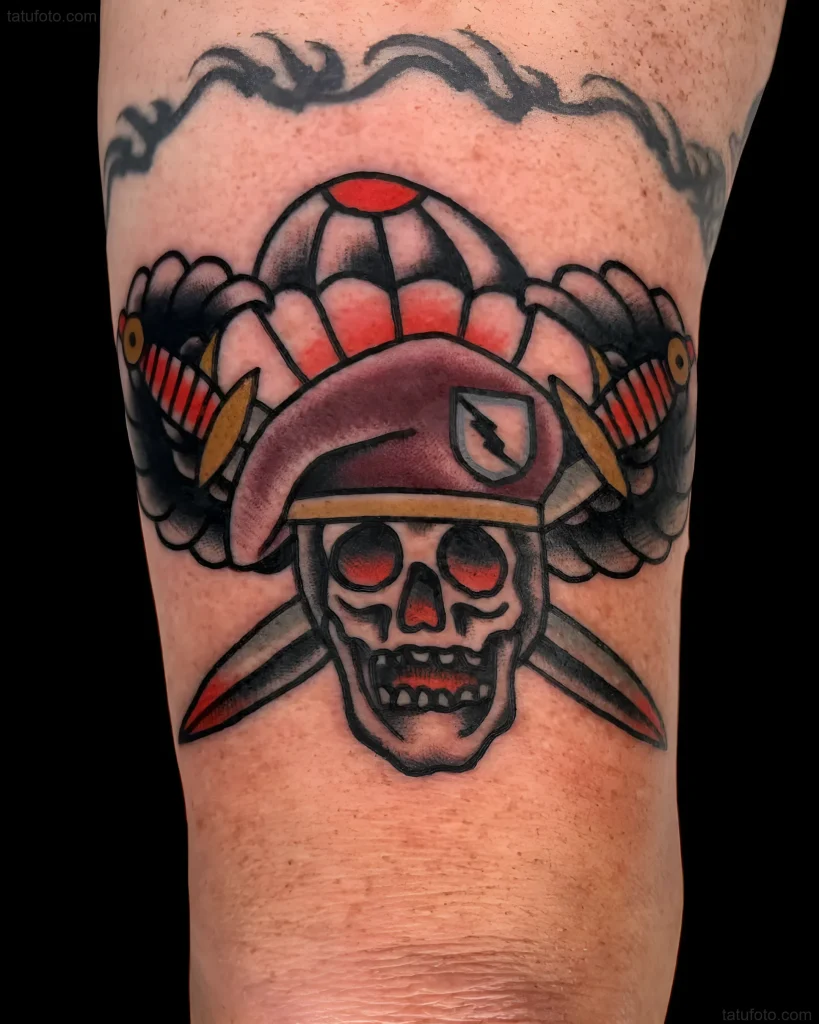
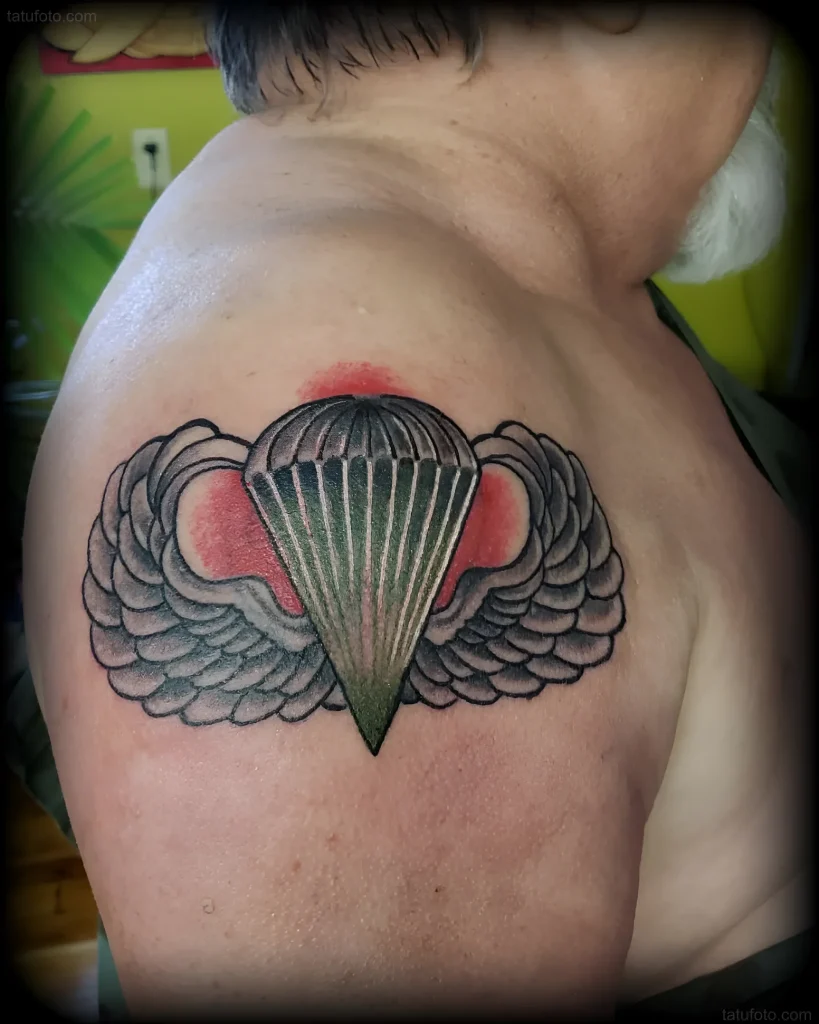
Where is the Best Place to Put a VDV Tattoo on the Body: Ideas and Recommendations
The choice of location for a VDV tattoo on the body is no less important than the choice of sketch and style. The placement can enhance the meaning of the symbol, make it more personal, or, conversely, public. When making a decision, paratroopers often consider not only aesthetics but also the symbolic significance of the location, as well as the possibility of displaying or concealing the tattoo. Let’s look at the most popular and meaningful places for a VDV tattoo.
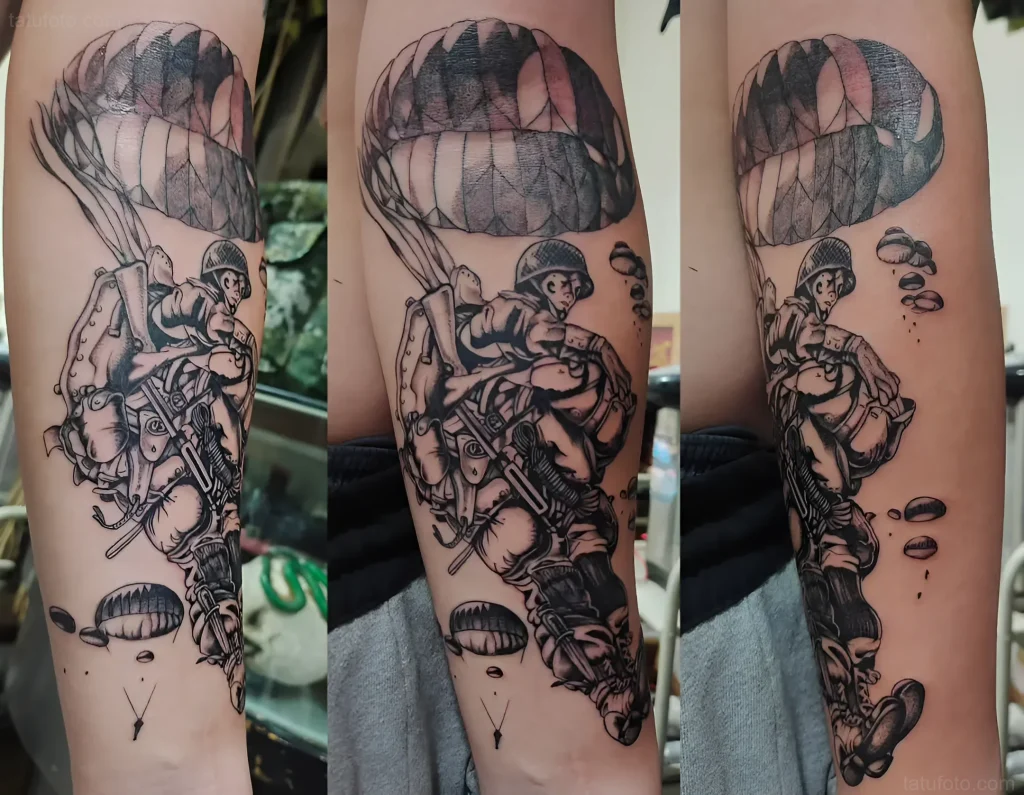
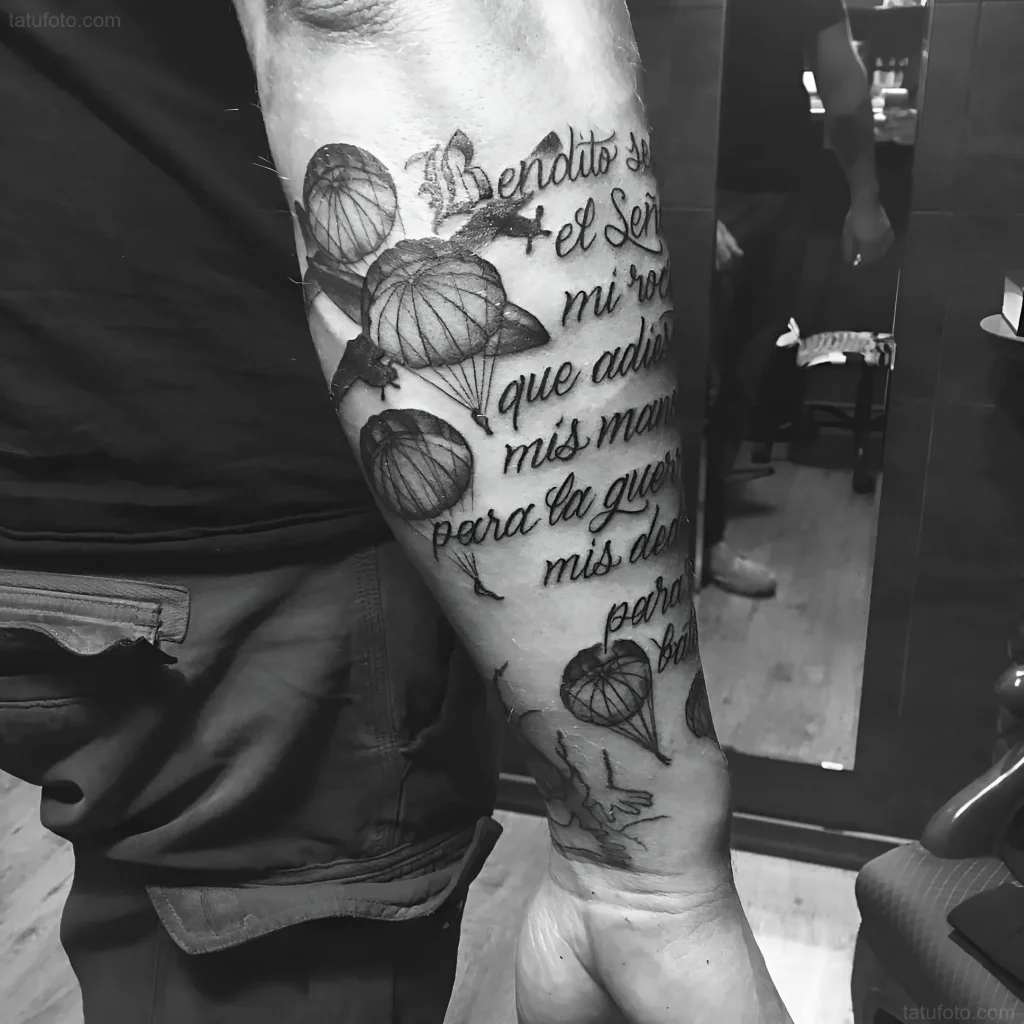
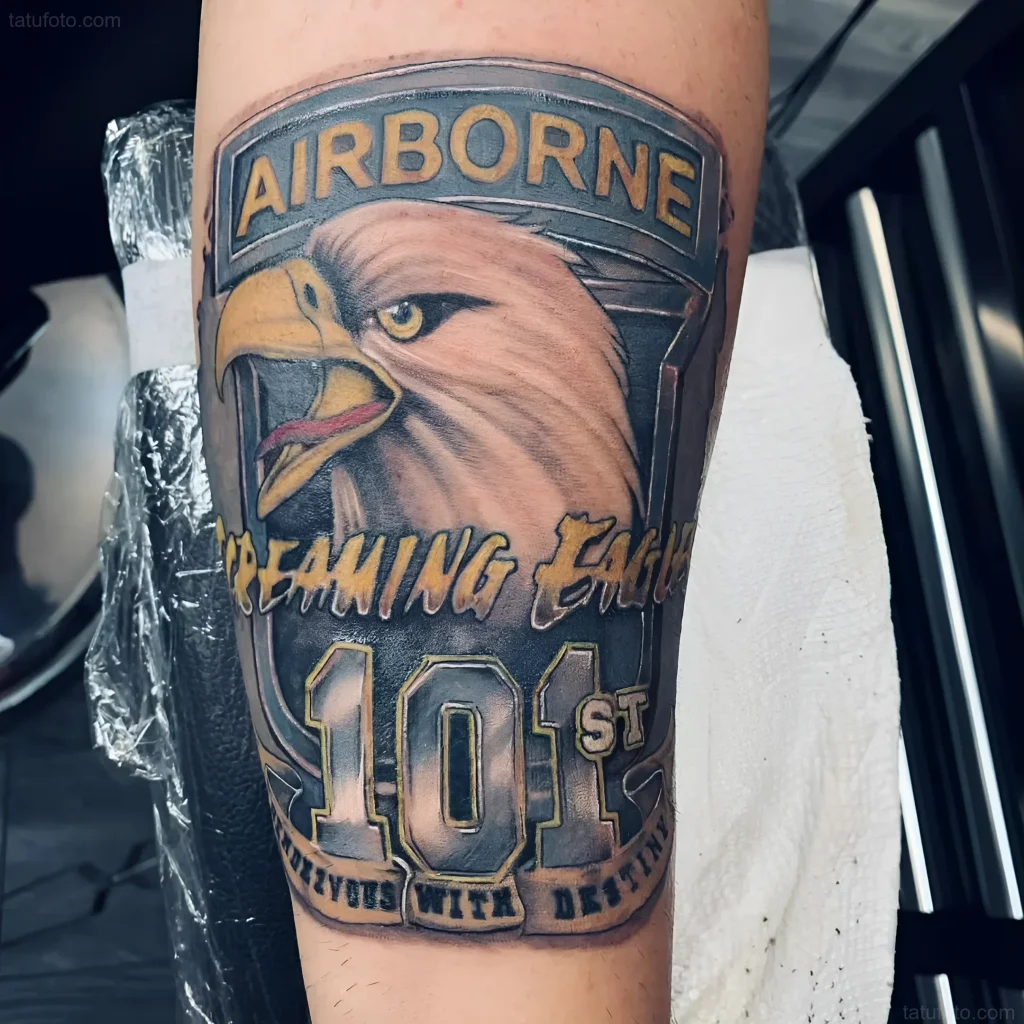
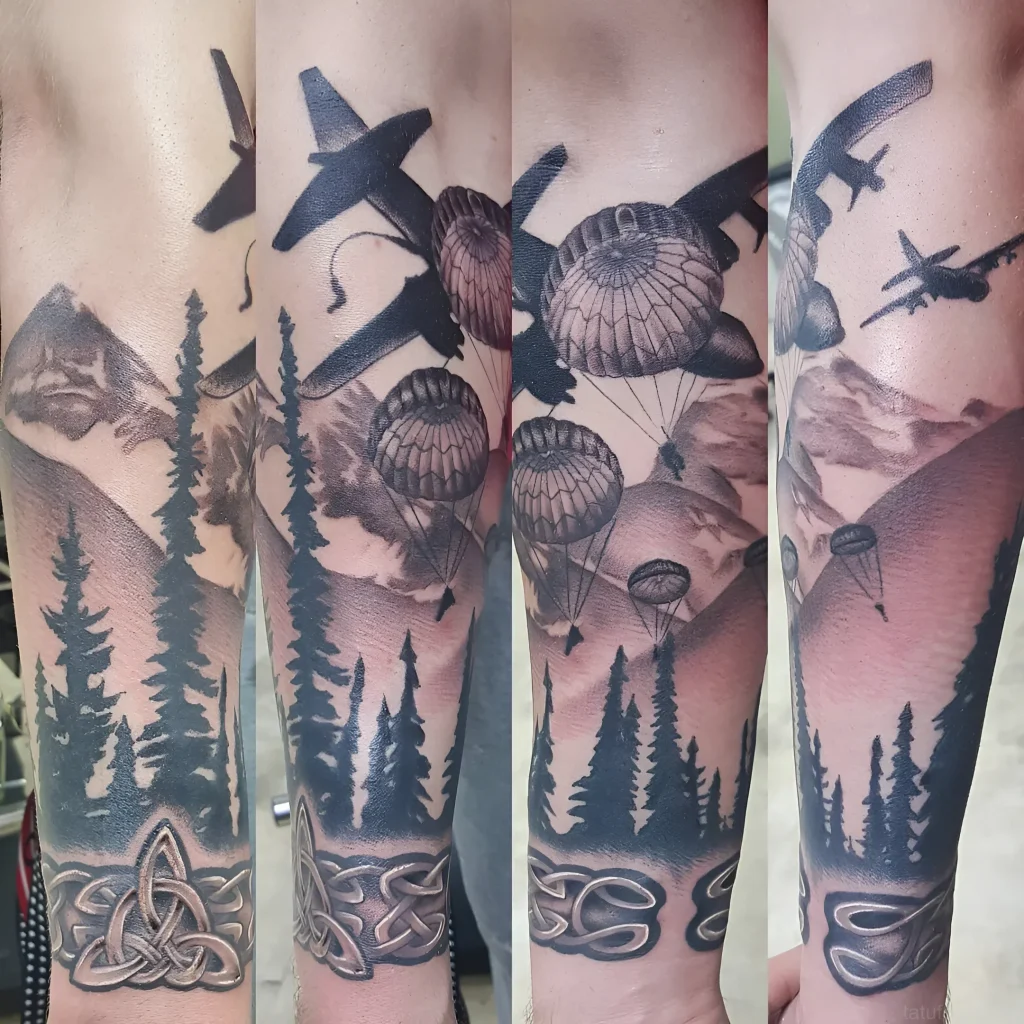
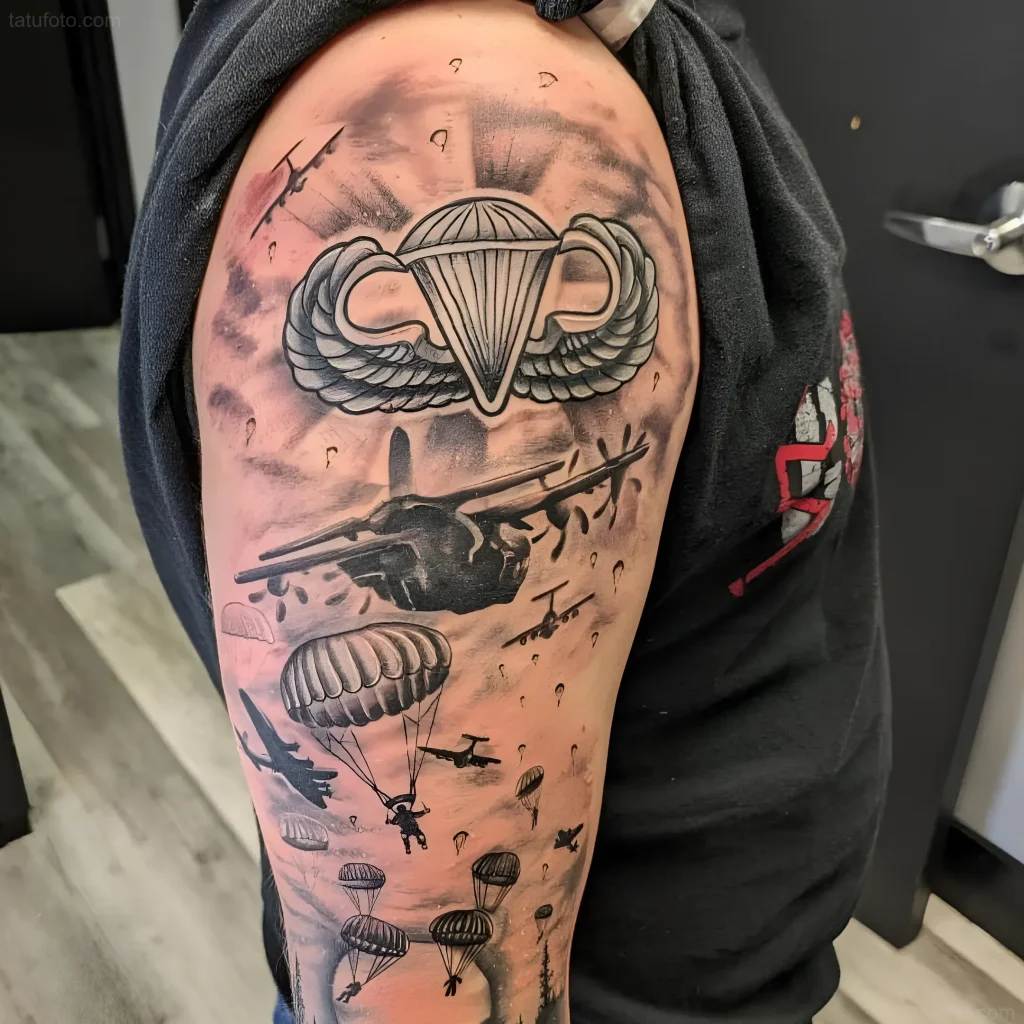
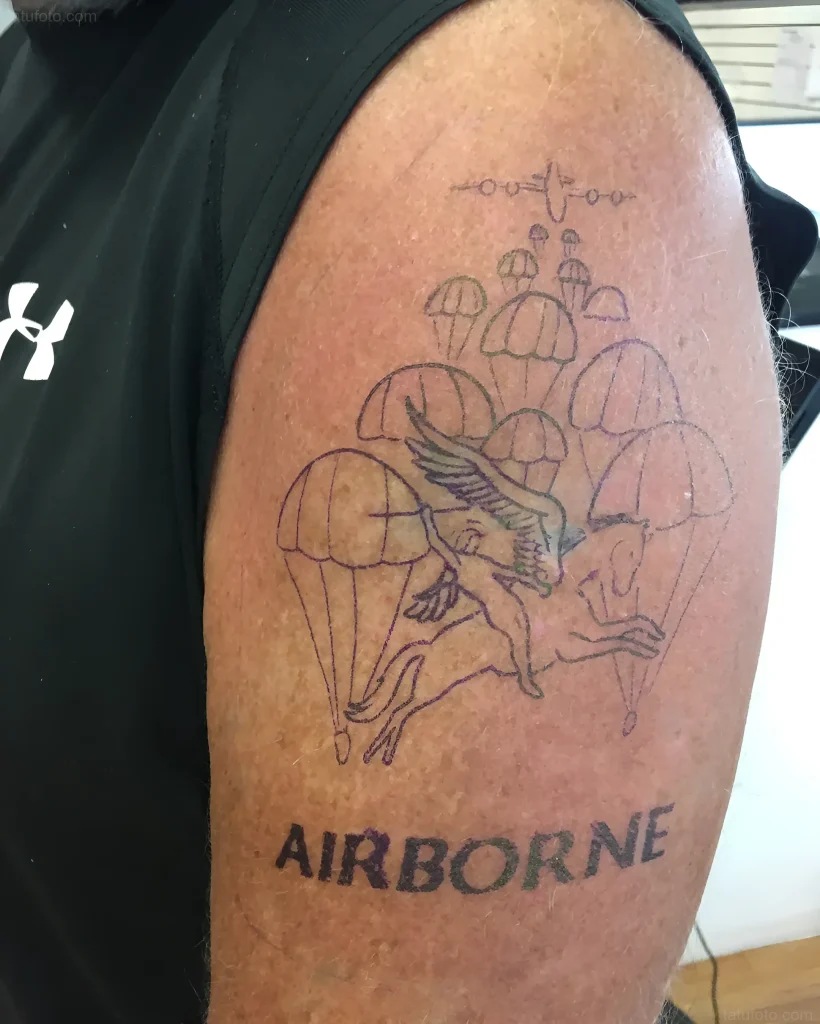
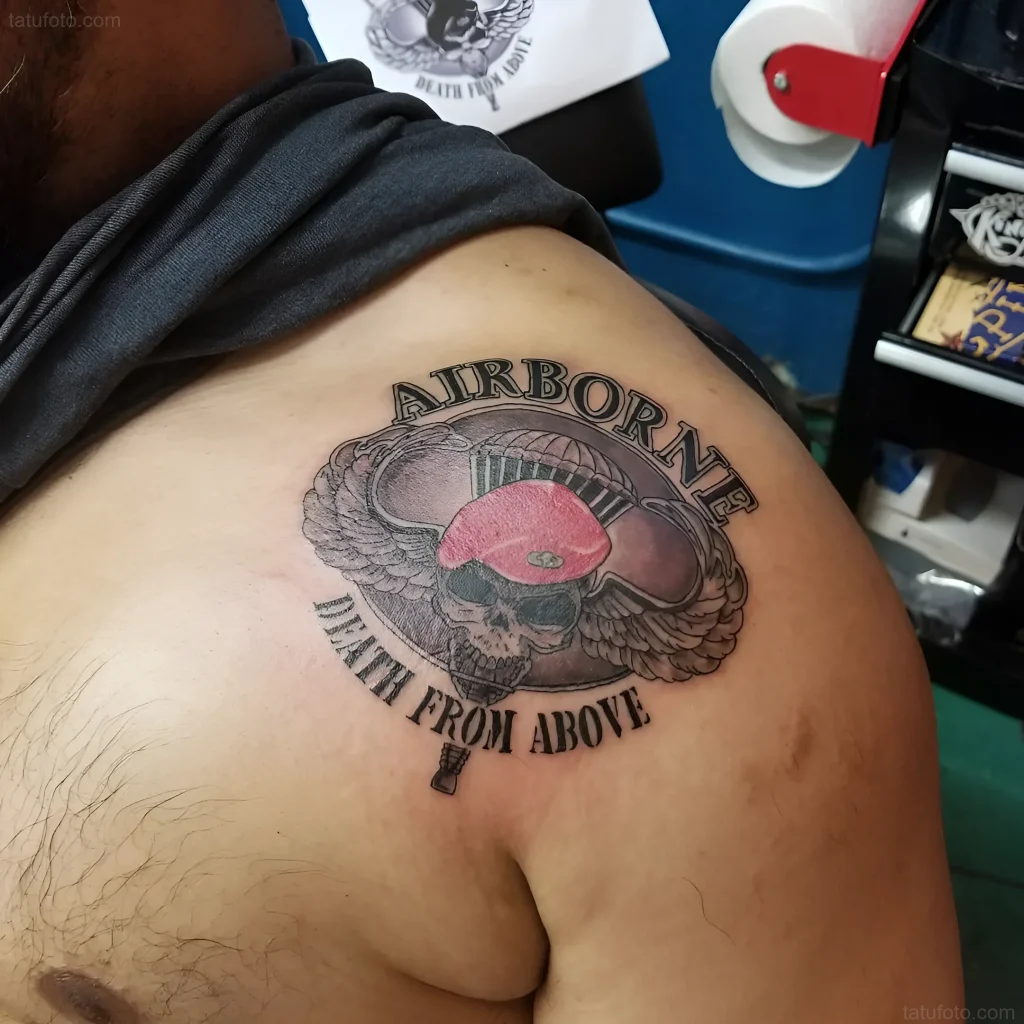
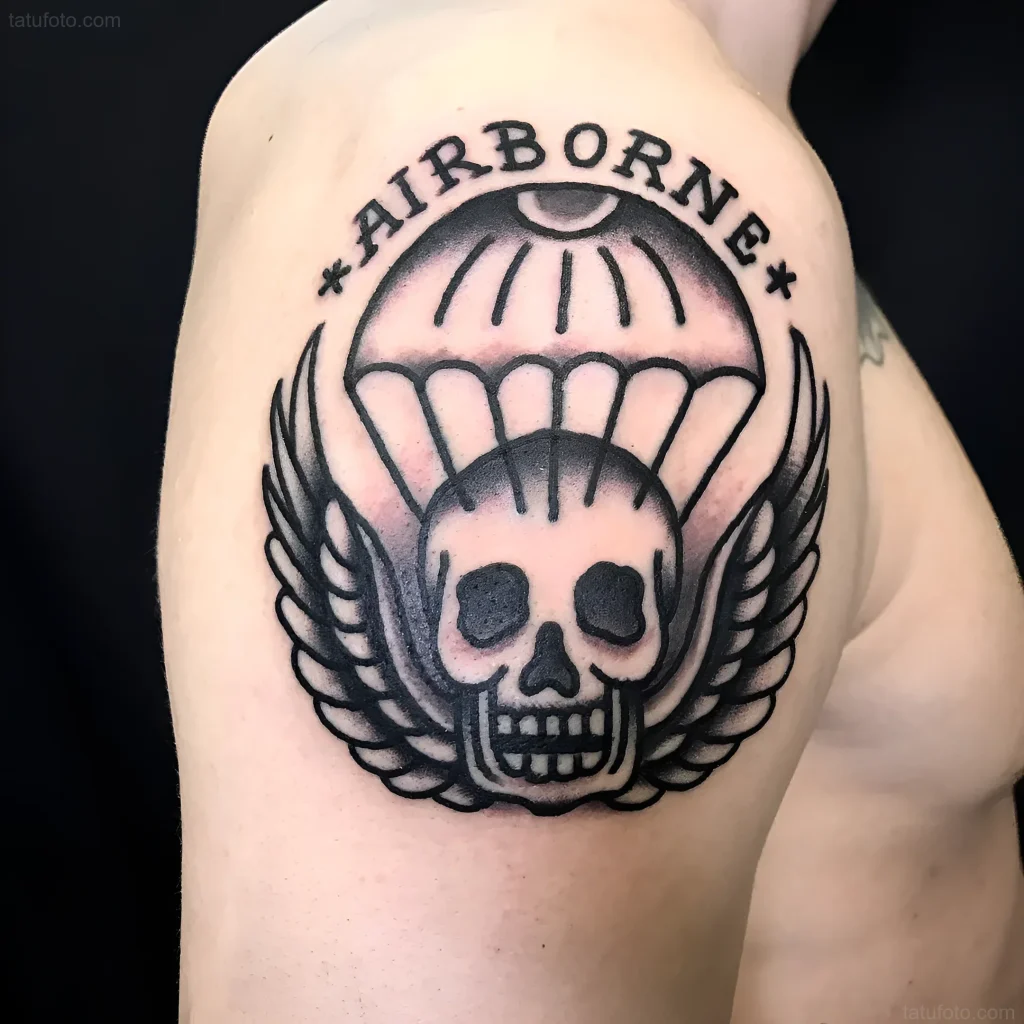
- Shoulder and Forearm: These are some of the most popular places for VDV tattoos.
- Meaning: The shoulder symbolizes strength, power, and protection. A tattoo here is easily visible, allowing the wearer to proudly display their VDV affiliation. The forearm is also an open area, easily accessible for viewing.
- Ideas: Large compositions with the VDV emblem, images of a paratrooper, a bat, or inscriptions with mottos are often placed here. Realistic depictions of combat scenes or portraits are also well suited.
- Practicality: Easy to hide under clothing when necessary, but also easy to show off.
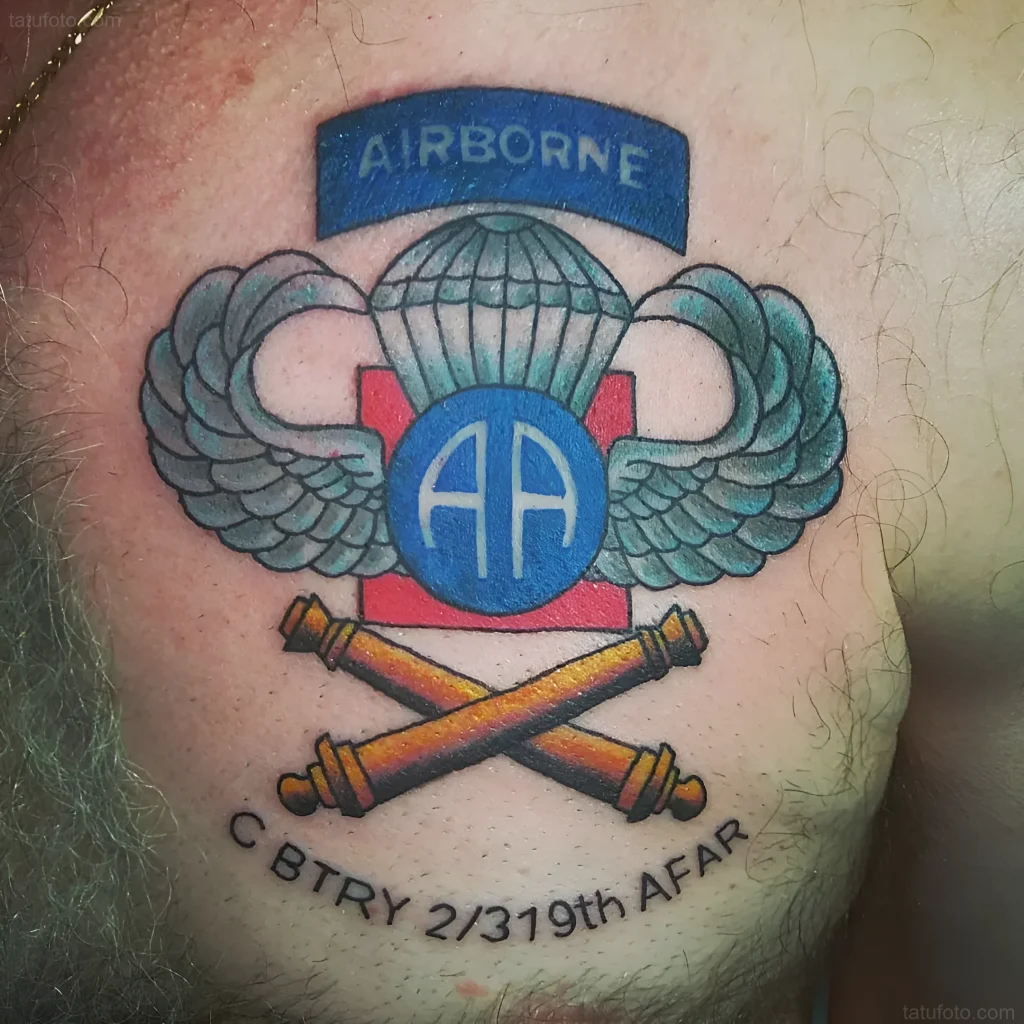
- Chest: A tattoo on the chest has a deep personal meaning as it is located close to the heart.
- Meaning: Symbolizes deep attachment to the ideals of the VDV, preserving the memory of service in the very heart. This is the place for the most personal and significant symbols.
- Ideas: Large, detailed compositions with a central VDV emblem, flag, eagles, or other powerful symbols. Often supplemented with service dates or names of comrades.
- Practicality: A chest tattoo is usually hidden under clothing, making it a more personal symbol for the wearer.
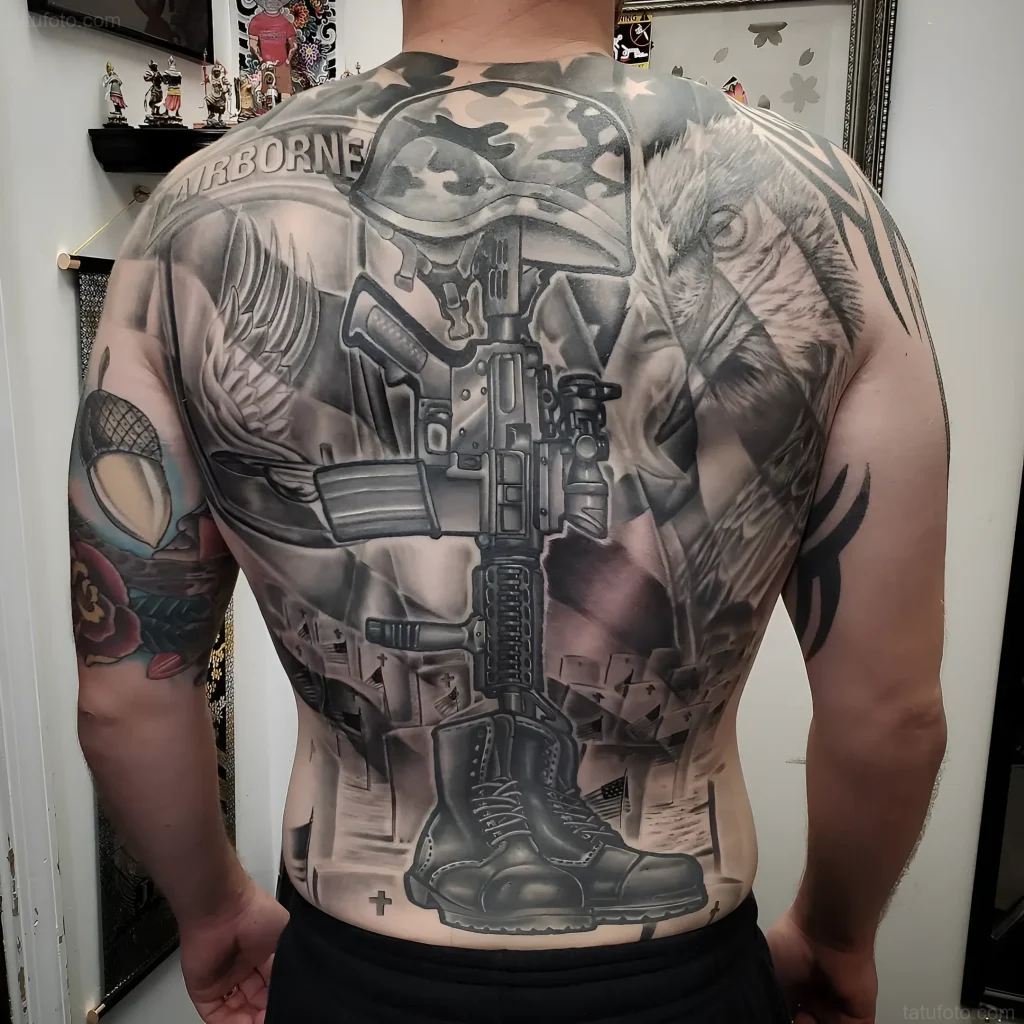
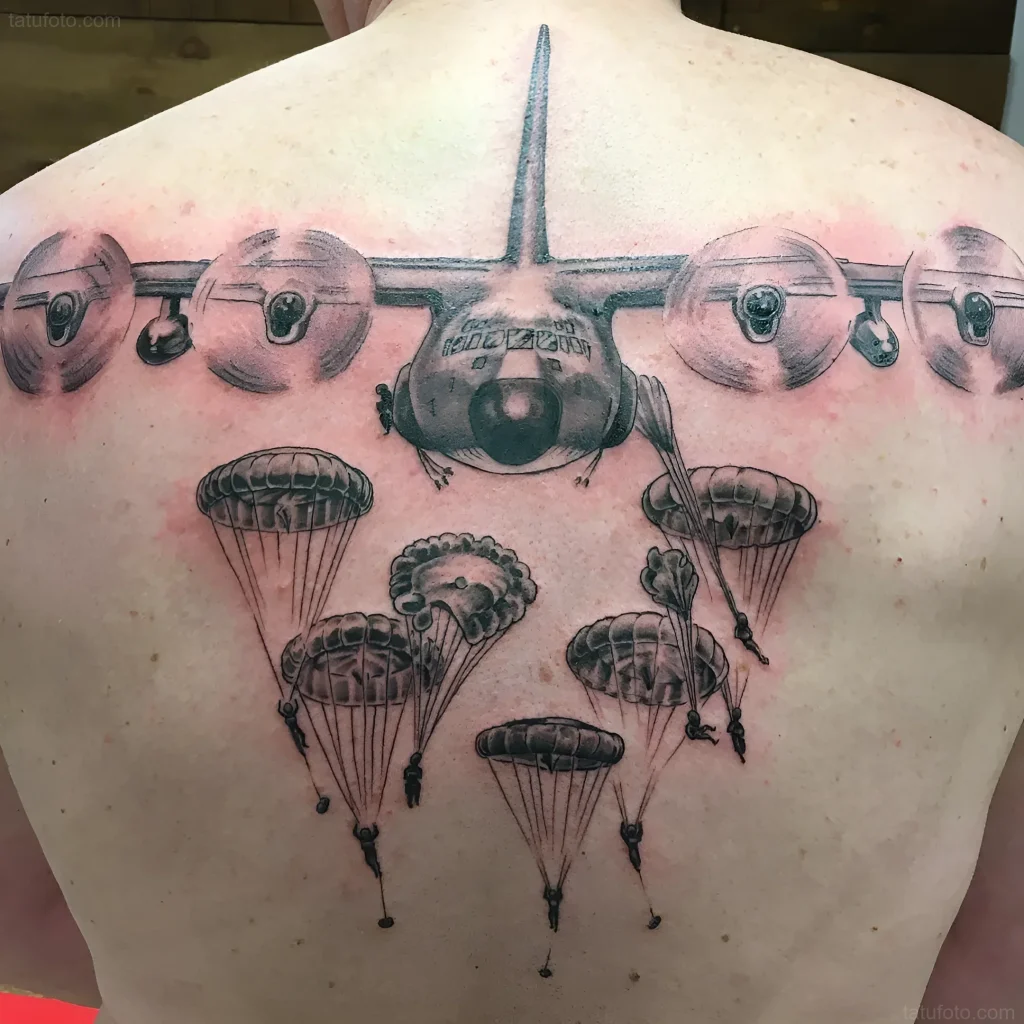
- Back: The large area of the back provides ample space for large-scale and detailed compositions.
- Meaning: The back is associated with protection, support, and strength. A tattoo here can symbolize the “burden” of responsibility that a paratrooper carries for their Motherland and comrades.
- Ideas: Extensive panoramas with air landings, images of military equipment, wings, as well as complex compositions combining many VDV symbols.
- Practicality: This is one of the most “hidden” places, making a back tattoo very personal and often intended for display in a close circle.
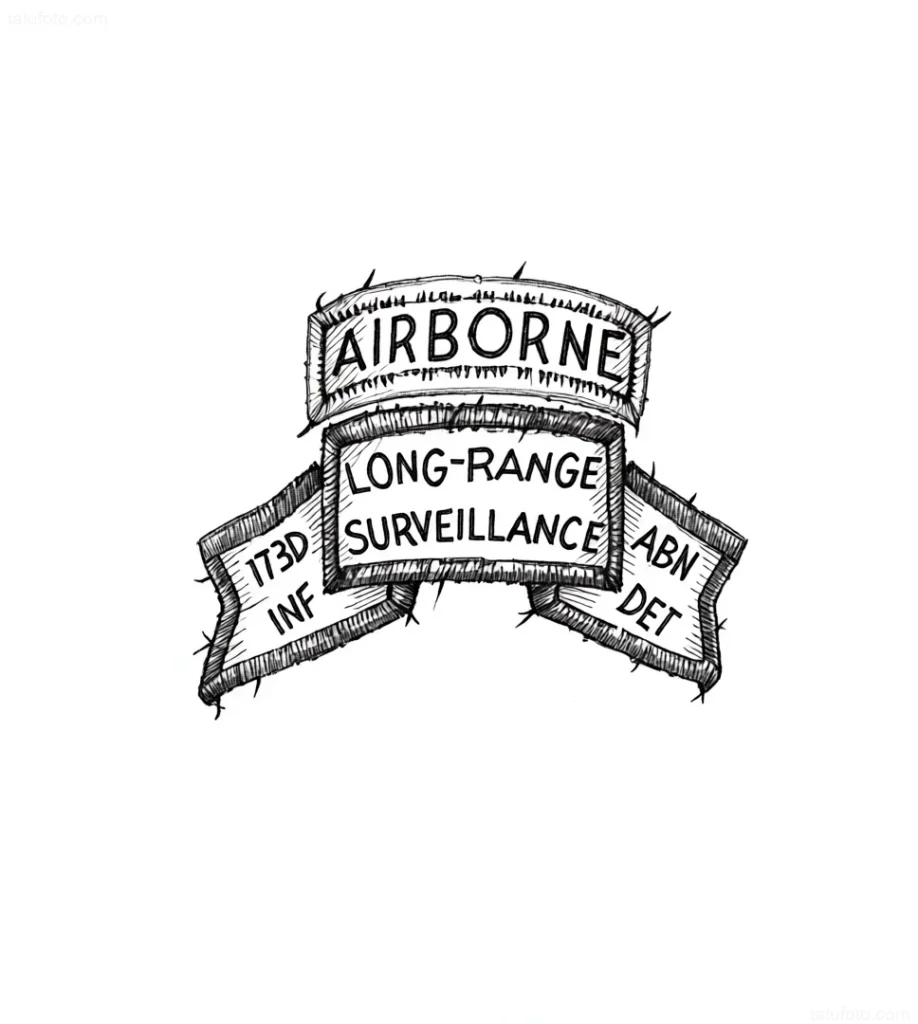


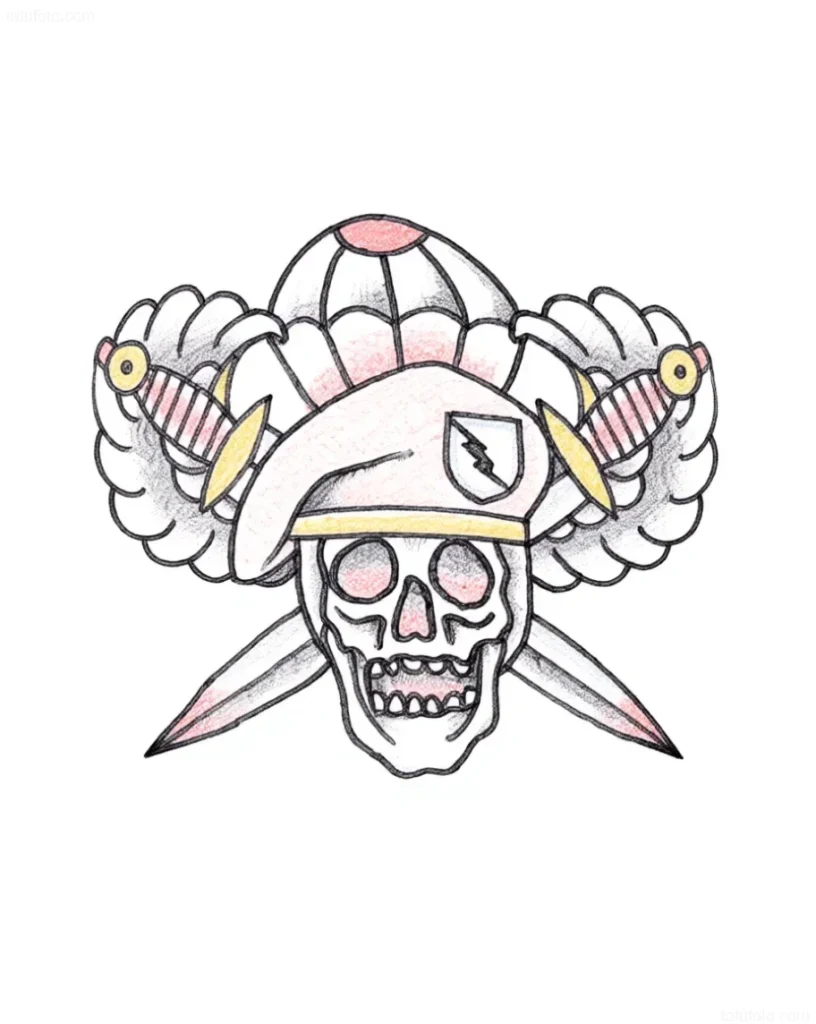
- Calves: Often used to place symbolism related to movement and readiness for action.
- Meaning: Legs symbolize moving forward, resilience, and readiness to overcome obstacles.
- Ideas: Emblems, parachutes, bats, as well as inscriptions. Can be single images or parts of larger compositions, such as leg sleeves.
- Practicality: Easy to hide with trousers, but can be shown in shorts.
- Wrist or Neck: For small but significant symbols.
- Meaning: The wrist is often chosen for symbols that one wants to see constantly as a reminder. The neck is for bolder and more open declarations.
- Ideas: Small emblems, dates, initials, stylized parachutes.
- Practicality: These areas are more exposed, and tattoos here are harder to conceal.
General Recommendations:
- Size and Detail: Consider the size of the chosen sketch. The more details, the more space is needed for their quality execution.
- Pain Threshold: Some body parts (e.g., ribs, spine, inner thigh) are more sensitive to pain.
- Visibility: Think about whether you want your tattoo to be constantly visible to others or if it is a more personal symbol.
- Future: Remember that the tattoo will stay with you for life. Choose a location and sketch that will always be relevant to you.
Ultimately, the ideal place for a VDV tattoo is the one that has the greatest personal meaning for you and allows you to fully express the symbolism of your pride in belonging to the “winged infantry.”


Choosing a Master and Sketch for a VDV Tattoo: Practical Advice
The decision to get a VDV tattoo is a serious step that requires a careful approach to choosing both the sketch itself and the artist. After all, this tattoo will be with you for life, and it must fully reflect your pride, memory, and belonging to the paratrooper brotherhood. Here is some practical advice to help you make the right choice.
Choosing a Sketch:
- Determine the Key Symbols: Think about which specific elements of VDV symbolism are most important to you. This could be:
- VDV Emblem: Parachute, airplanes, star.
- Blue Beret and Telnyashka: Unchanging attributes of a paratrooper.
- Bat: A special symbol of VDV reconnaissance.
- Weapon: For example, the Kalashnikov assault rifle.
- Dates and Mottos: Years of service, “No one but us!”, “Glory to the VDV!”.
- Personal Elements: Names of comrades, memorable places.
- Choose a Style: As we discussed, styles (realism, graphics, watercolor) convey mood and detail differently. Decide which style best suits your idea and personal taste.
- Consider the Placement: The size and shape of the sketch should harmonize with the chosen body area. Large, detailed compositions look best on the back, chest, or shoulder, while more concise symbols are suitable for the wrist or neck.
- Seek Inspiration, but Strive for Uniqueness: Look through many ready-made VDV tattoo sketches to understand what you like. However, strive for your tattoo to be unique. A good artist can develop a custom sketch based on your ideas.
- Don’t Skimp on Details: A VDV tattoo often contains many small but significant elements. Make sure the sketch allows for the quality rendering of every detail.
- Choosing an Artist: This is perhaps the most critical stage. The quality of execution, as well as the safety of the procedure, depends on the artist’s qualifications.
- Review Portfolio: Be sure to look at the artist’s work, paying special attention to tattoos in the style you have chosen. Look for work that is executed clearly, neatly, with good detail and color rendition. If the artist specializes in realism, their portfolio should demonstrate high-quality portraits and complex compositions.
- Experience with Military Themes: Ideally, the artist has experience working with military-themed tattoos, especially VDV. Such a specialist better understands the symbolism, its meaning, and can convey it with due respect.
- Pay Attention to Hygiene: The studio must be sterile, and the artist must use disposable needles, gloves, and other consumables. Do not hesitate to ask questions about equipment sterilization.
- Consultation: Be sure to schedule a preliminary consultation. Discuss your ideas, show examples, listen to the artist’s recommendations. A good specialist will always offer their ideas, help refine the sketch, and explain all the nuances.
- Reviews and Reputation: Read reviews about the artist and studio online, ask for recommendations from acquaintances. Reputation is one of the key indicators of professionalism.
- Price: A quality tattoo cannot be cheap. You should not save money on the artist, as correcting a poorly done job will cost significantly more.
Remember that a VDV tattoo is not just a drawing, but a symbol of your history and pride. Approach its creation with full responsibility, and it will bring you joy for many years.
Frequently Asked Questions About the Meaning of VDV Tattoos
In the process of choosing and getting a VDV tattoo, many people have questions regarding its meaning, symbolism, and specifics. We have compiled the most common ones and prepared expert answers to help you better understand this important aspect of paratrooper culture.
1. Is a tattoo mandatory for a paratrooper?
No, a tattoo is not a mandatory attribute for a paratrooper. It is the personal choice of each individual. However, the tradition of getting tattoos is very common in the VDV and is considered a way to express pride in service, memory of comrades, and belonging to the brotherhood. Many paratroopers get them after completing their service or during leave.
2. What symbols are most often found in VDV tattoos?
The most popular symbols include:
- Open Parachute: The central symbol, denoting readiness for air landing and belonging to the “winged infantry.”
- Airplanes: Often depicted on the sides of the parachute, symbolizing the aerial component.
- Star: A symbol of military valor and protection.
- Blue Beret and Telnyashka: Recognizable uniform items symbolizing elitism and brotherhood.
- Bat: A special symbol of VDV reconnaissance, meaning stealth, secrecy, and night operations.
- Weapon (AK-74): A symbol of combat readiness and professionalism.
- Mottos: “No one but us!”, “Glory to the VDV!”, “For the VDV!”.
- Service Dates: Years of service.
- Blood Type: Sometimes added as both a practical and symbolic element of readiness for any situation.
3. Does the type of parachute design matter?
In most cases, the mere presence of a parachute is the key element. However, some paratroopers may prefer the depiction of a specific type of parachute (e.g., D-6, D-10) on which they made their jumps, which adds personal meaning to the tattoo.


4. What does the bat mean in a VDV tattoo?
The bat is the emblem of special purpose units and VDV reconnaissance. It symbolizes stealth, the ability to operate in darkness, silence, and the ability to strike suddenly. If a paratrooper served in reconnaissance, the image of a bat is particularly significant for them.
5. Can a VDV tattoo be done if one has not served in these forces?
Strictly speaking, tradition dictates that a VDV tattoo is a sign of affiliation for those who have actually served in these forces. Getting such a tattoo without the corresponding service experience can be perceived as disrespect to the traditions and feats of the paratroopers. This is a very sensitive issue in the paratrooper community, and it should be approached with maximum responsibility and respect.
6. Does the placement of the VDV tattoo affect its meaning?
Yes, the placement can enhance or change the perception of the meaning. For example, a tattoo on the chest (close to the heart) can symbolize deep personal attachment and memory, while on the shoulder or fore
- Courage and Valor: This is perhaps the first thing that comes to mind when mentioning the VDV. A tattoo with paratrooper symbolism is a direct statement of fearlessness, readiness to risk life to accomplish a task. It symbolizes:
- Willingness to take risks: Parachute jumps, air landing behind enemy lines – all this requires exceptional courage and the ability to overcome fear.
- Resilience in Battle: Paratroopers are known for their ability to withstand the toughest trials and continue fighting even under the most unfavorable conditions.
- Physical and Moral Strength: The tattoo emphasizes that its wearer possesses not only physical power but also an unbending strength of spirit.
- Brotherhood and Loyalty: The paratrooper brotherhood is a unique phenomenon based on shared trials and unbreakable bonds. The VDV tattoo serves as a powerful symbol of this connection:
- Mutual assistance: The principle of “one for all and all for one” is the cornerstone of the paratrooper brotherhood. The tattoo recalls the support of comrades and the obligation to help them.
- Trust: In combat situations, a paratrooper’s life often depends on the actions of their comrades. The tattoo symbolizes the deep trust that forms between fellow servicemen.
- Memory of Comrades: Many VDV tattoos include the names or initials of comrades, service dates, or memorable events, immortalizing the memory of those who were there.
- Duty and Honor: Service in the VDV is the fulfillment of military duty to the Motherland with honor and dignity. The tattoo reflects these fundamental principles:
- Loyalty to the Oath: It symbolizes unwavering devotion to the military oath and readiness to defend the homeland.
- Fulfillment of Tasks: A paratrooper always strives to carry out the order, despite difficulties. The tattoo emphasizes this aspiration for flawless fulfillment of duty.
- Impeccable Reputation: A paratrooper’s honor is their reputation, their name. The tattoo serves as a reminder to always act with dignity and uphold the high title of a paratrooper.
- Patriotism: Deep love for the Motherland and readiness to defend it are an integral part of a paratrooper’s worldview. The VDV tattoo often includes elements of national symbolism, emphasizing this connection.
- Invincibility and Steadfastness: The motto “No one but us” not only emphasizes elitism but also symbolizes unwavering faith in one’s own strength, in the ability to overcome any obstacle.
Thus, the VDV tattoo is a multilayered symbol that combines the concepts of courage, brotherhood, duty, honor, and boundless devotion. It is a powerful expression of the personality and life principles of its wearer.
Popular VDV Tattoo Styles: Realism, Graphics, Watercolor
The choice of style for a VDV tattoo is not only a matter of aesthetics but also a way to emphasize certain aspects of the symbolism and the personal attitude towards service. Modern tattoo art offers a wide range of styles, each revealing the deep meaning of paratrooper tattoos in its own way. Let’s look at the most popular ones.
- Realism: This style is ideal for those who want to convey the image as accurately and detailedly as possible. In the context of the VDV, realism is often used for:
- Portraits: Depictions of paratroopers in full gear, with recognizable facial features, conveying seriousness and focus.
- Combat Scenes: Scenes of air landing, combat operations, which allow capturing the dynamism and drama of service.
- Detailed Symbolism: Accurate images of the blue beret, telnyashka, VDV emblem, weapons (e.g., AK-74), which look like photographs on the skin.
- Features: Realism requires high skill from the artist to convey textures, shadows, and volume, making the image as vivid and expressive as possible.
- Graphics and Linework: This style is characterized by clear lines, contrast, and often the use of black color. It can be minimalist or very detailed.
- Symbols in Pure Form: Images of a parachute, airplanes, a star, a bat, executed in a graphic style, look strict and laconic, emphasizing the purity of the symbol.
- Silhouettes: Silhouettes of paratroopers jumping with a parachute or marching in formation create a powerful, recognizable image.
- Inscriptions and Mottos: VDV mottos (“No one but us!”, “Glory to the VDV!”) or service dates, executed in a clear font in a graphic style, look very effective and legible.
- Features: Graphics allow for a powerful visual statement that is easily readable even from a distance. It is ideal for those who value clarity and expressiveness.
- Watercolor: This style, relatively new in tattoo art, offers a more artistic and emotional approach. It is characterized by soft color transitions and a blurring effect, lacking sharp outlines.
- Emotional Conveyance: Watercolor can be used to create more personal and emotional images, such as a sunset over a training field, or an abstract depiction of the sky and parachute.
- Combination with Symbols: Key VDV symbols (parachute, beret) can be executed in a realistic or graphic style, while the background or additional elements are in watercolor technique, adding depth and artistry.
- Features: Watercolor gives the tattoo lightness and airiness, which is especially relevant for the “winged infantry.” It allows moving away from strictness and adding individuality while maintaining the recognizability of the symbolism.
- Traditional (Old School): Although this style is less common for VDV tattoos, some elements can be adapted.
- Bright Outlines and Solid Colors: Can be used to stylize traditional symbols, such as anchors or roses, but with a paratrooper theme (e.g., an Old School style parachute).
- Features: Suitable for those who appreciate classic tattoo style and want to give their paratrooper tattoo a vintage touch.
Ultimately, the choice of style depends on personal preference and the message you want to convey through your VDV tattoo. The main thing is that the chosen style harmonizes with the deep meaning of the symbolism and reflects your pride in belonging to the paratrooper brotherhood.
Where is the Best Place to Put a VDV Tattoo on the Body: Ideas and Recommendations
The choice of location for a VDV tattoo on the body is no less important than the choice of sketch and style. The placement can enhance the meaning of the symbol, make it more personal, or, conversely, public. When making a decision, paratroopers often consider not only aesthetics but also the symbolic significance of the location, as well as the possibility of displaying or concealing the tattoo. Let’s look at the most popular and meaningful places for a VDV tattoo.
- Shoulder and Forearm: These are some of the most popular places for VDV tattoos.
- Meaning: The shoulder symbolizes strength, power, and protection. A tattoo here is easily visible, allowing the wearer to proudly display their VDV affiliation. The forearm is also an open area, easily accessible for viewing.
- Ideas: Large compositions with the VDV emblem, images of a paratrooper, a bat, or inscriptions with mottos are often placed here. Realistic depictions of combat scenes or portraits are also well suited.
- Practicality: Easy to hide under clothing when necessary, but also easy to show off.
- Chest: A tattoo on the chest has a deep personal meaning as it is located close to the heart.
- Meaning: Symbolizes deep attachment to the ideals of the VDV, preserving the memory of service in the very heart. This is the place for the most personal and significant symbols.
- Ideas: Large, detailed compositions with a central VDV emblem, flag, eagles, or other powerful symbols. Often supplemented with service dates or names of comrades.
- Practicality: A chest tattoo is usually hidden under clothing, making it a more personal symbol for the wearer.
- Back: The large area of the back provides ample space for large-scale and detailed compositions.
- Meaning: The back is associated with protection, support, and strength. A tattoo here can symbolize the “burden” of responsibility that a paratrooper carries for their Motherland and comrades.
- Ideas: Extensive panoramas with air landings, images of military equipment, wings, as well as complex compositions combining many VDV symbols.
- Practicality: This is one of the most “hidden” places, making a back tattoo very personal and often intended for display in a close circle.
- Calves: Often used to place symbolism related to movement and readiness for action.
- Meaning: Legs symbolize moving forward, resilience, and readiness to overcome obstacles.
- Ideas: Emblems, parachutes, bats, as well as inscriptions. Can be single images or parts of larger compositions, such as leg sleeves.
- Practicality: Easy to hide with trousers, but can be shown in shorts.
- Wrist or Neck: For small but significant symbols.
- Meaning: The wrist is often chosen for symbols that one wants to see constantly as a reminder. The neck is for bolder and more open declarations.
- Ideas: Small emblems, dates, initials, stylized parachutes.
- Practicality: These areas are more exposed, and tattoos here are harder to conceal.
General Recommendations:
- Size and Detail: Consider the size of the chosen sketch. The more details, the more space is needed for their quality execution.
- Pain Threshold: Some body parts (e.g., ribs, spine, inner thigh) are more sensitive to pain.
- Visibility: Think about whether you want your tattoo to be constantly visible to others or if it is a more personal symbol.
- Future: Remember that the tattoo will stay with you for life. Choose a location and sketch that will always be relevant to you.
Ultimately, the ideal place for a VDV tattoo is the one that has the greatest personal meaning for you and allows you to fully express the symbolism of your pride in belonging to the “winged infantry.”
Choosing a Master and Sketch for a VDV Tattoo: Practical Advice
The decision to get a VDV tattoo is a serious step that requires a careful approach to choosing both the sketch itself and the artist. After all, this tattoo will be with you for life, and it must fully reflect your pride, memory, and belonging to the paratrooper brotherhood. Here is some practical advice to help you make the right choice.
Choosing a Sketch:
- Determine the Key Symbols: Think about which specific elements of VDV symbolism are most important to you. This could be:
- VDV Emblem: Parachute, airplanes, star.
- Blue Beret and Telnyashka: Unchanging attributes of a paratrooper.
- Bat: A special symbol of VDV reconnaissance.
- Weapon: For example, the Kalashnikov assault rifle.
- Dates and Mottos: Years of service, “No one but us!”, “Glory to the VDV!”.
- Personal Elements: Names of comrades, memorable places.
- Choose a Style: As we discussed, styles (realism, graphics, watercolor) convey mood and detail differently. Decide which style best suits your idea and personal taste.
- Consider the Placement: The size and shape of the sketch should harmonize with the chosen body area. Large, detailed compositions look best on the back, chest, or shoulder, while more concise symbols are suitable for the wrist or neck.
- Seek Inspiration, but Strive for Uniqueness: Look through many ready-made VDV tattoo sketches to understand what you like. However, strive for your tattoo to be unique. A good artist can develop a custom sketch based on your ideas.
- Don’t Skimp on Details: A VDV tattoo often contains many small but significant elements. Make sure the sketch allows for the quality rendering of every detail.
- Choosing an Artist: This is perhaps the most critical stage. The quality of execution, as well as the safety of the procedure, depends on the artist’s qualifications.
- Review Portfolio: Be sure to look at the artist’s work, paying special attention to tattoos in the style you have chosen. Look for work that is executed clearly, neatly, with good detail and color rendition. If the artist specializes in realism, their portfolio should demonstrate high-quality portraits and complex compositions.
- Experience with Military Themes: Ideally, the artist has experience working with military-themed tattoos, especially VDV. Such a specialist better understands the symbolism, its meaning, and can convey it with due respect.
- Pay Attention to Hygiene: The studio must be sterile, and the artist must use disposable needles, gloves, and other consumables. Do not hesitate to ask questions about equipment sterilization.
- Consultation: Be sure to schedule a preliminary consultation. Discuss your ideas, show examples, listen to the artist’s recommendations. A good specialist will always offer their ideas, help refine the sketch, and explain all the nuances.
- Reviews and Reputation: Read reviews about the artist and studio online, ask for recommendations from acquaintances. Reputation is one of the key indicators of professionalism.
- Price: A quality tattoo cannot be cheap. You should not save money on the artist, as correcting a poorly done job will cost significantly more.
Remember that a VDV tattoo is not just a drawing, but a symbol of your history and pride. Approach its creation with full responsibility, and it will bring you joy for many years.
Frequently Asked Questions About the Meaning of VDV Tattoos
In the process of choosing and getting a VDV tattoo, many people have questions regarding its meaning, symbolism, and specifics. We have compiled the most common ones and prepared expert answers to help you better understand this important aspect of paratrooper culture.
1. Is a tattoo mandatory for a paratrooper?
No, a tattoo is not a mandatory attribute for a paratrooper. It is the personal choice of each individual. However, the tradition of getting tattoos is very common in the VDV and is considered a way to express pride in service, memory of comrades, and belonging to the brotherhood. Many paratroopers get them after completing their service or during leave.
2. What symbols are most often found in VDV tattoos?
The most popular symbols include:
- Open Parachute: The central symbol, denoting readiness for air landing and belonging to the “winged infantry.”
- Airplanes: Often depicted on the sides of the parachute, symbolizing the aerial component.
- Star: A symbol of military valor and protection.
- Blue Beret and Telnyashka: Recognizable uniform items symbolizing elitism and brotherhood.
- Bat: A special symbol of VDV reconnaissance, meaning stealth, secrecy, and night operations.
- Weapon (AK-74): A symbol of combat readiness and professionalism.
- Mottos: “No one but us!”, “Glory to the VDV!”, “For the VDV!”.
- Service Dates: Years of service.
- Blood Type: Sometimes added as both a practical and symbolic element of readiness for any situation.
3. Does the type of parachute design matter?
In most cases, the mere presence of a parachute is the key element. However, some paratroopers may prefer the depiction of a specific type of parachute (e.g., D-6, D-10) on which they made their jumps, which adds personal meaning to the tattoo.
4. What does the bat mean in a VDV tattoo?
The bat is the emblem of special purpose units and VDV reconnaissance. It symbolizes stealth, the ability to operate in darkness, silence, and the ability to strike suddenly. If a paratrooper served in reconnaissance, the image of a bat is particularly significant for them.
5. Can a VDV tattoo be done if one has not served in these forces?
Strictly speaking, tradition dictates that a VDV tattoo is a sign of affiliation for those who have actually served in these forces. Getting such a tattoo without the corresponding service experience can be perceived as disrespect to the traditions and feats of the paratroopers. This is a very sensitive issue in the paratrooper community, and it should be approached with maximum responsibility and respect.
6. Does the placement of the VDV tattoo affect its meaning?
Yes, the placement can enhance or change the perception of the meaning. For example, a tattoo on the chest (close to the heart) can symbolize deep personal attachment and memory, while on the shoulder or fore