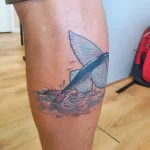
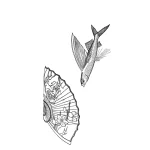
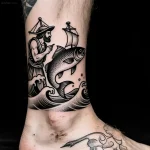
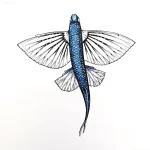
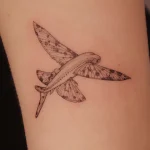
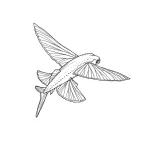
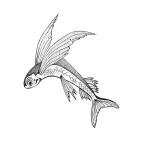
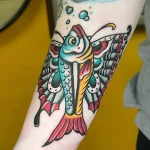
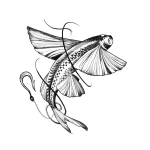
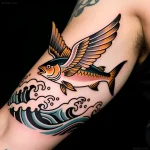
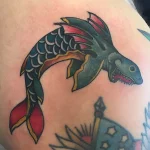
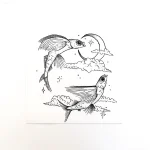
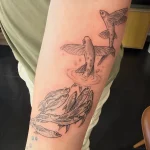
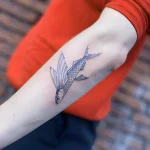
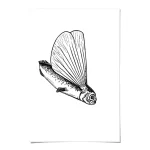
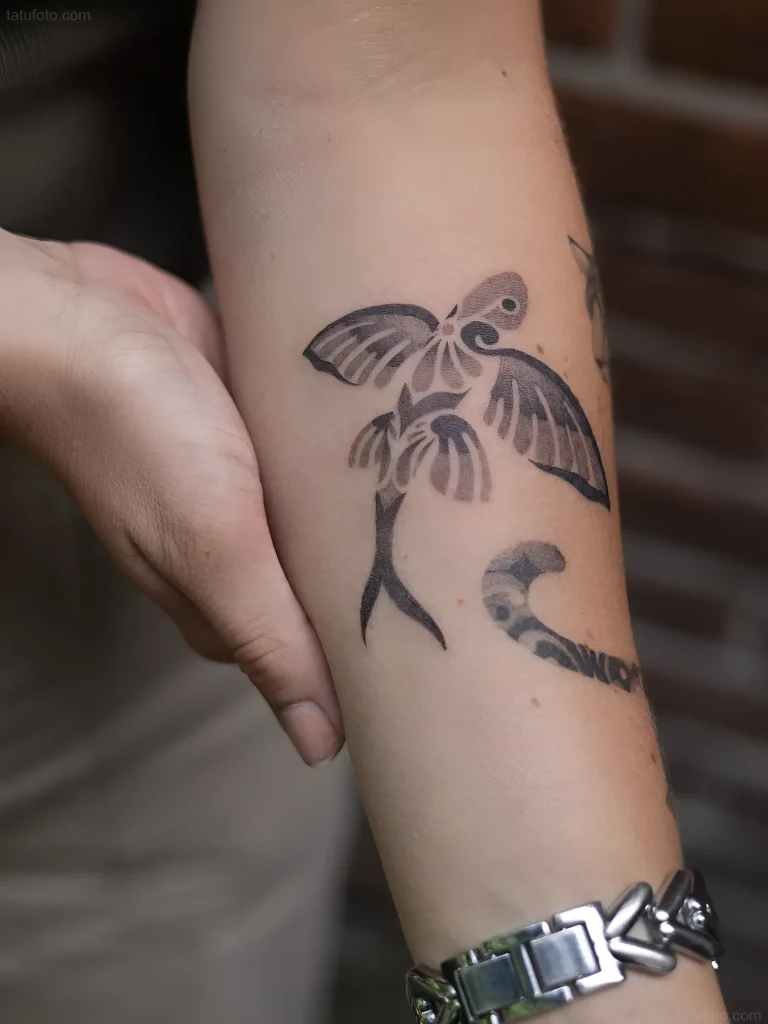
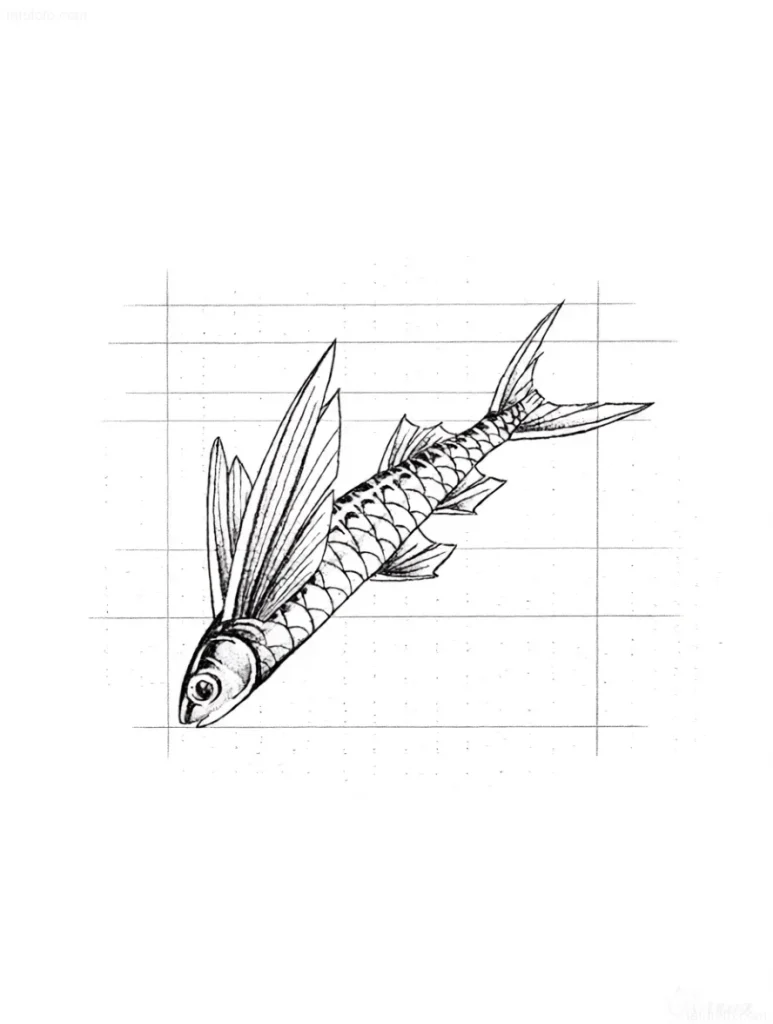
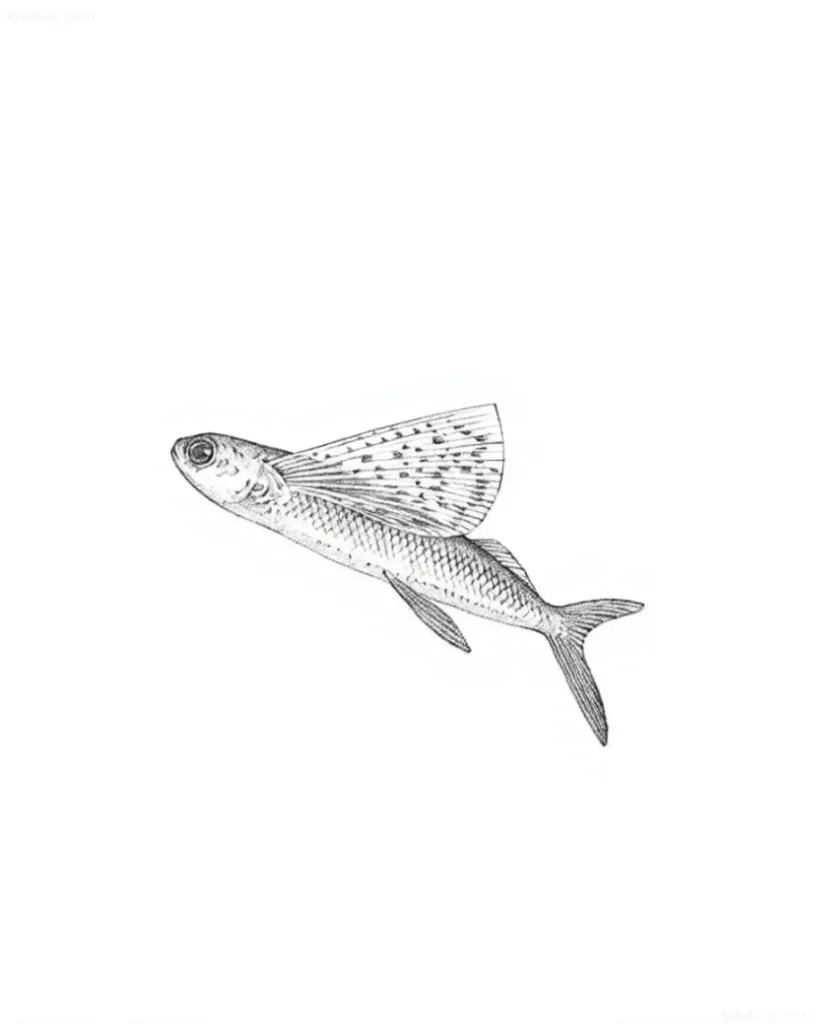
A flying fish (Exocoetidae) tattoo is a choice for extraordinary individuals who deeply value freedom, movement, and the ability to overcome limitations. Unlike more common marine symbols like sharks or dolphins, the flying fish is a rare but exceptionally powerful symbol that connects the element of water with that of air. By choosing this image, you declare your readiness for metamorphosis and your aspiration to rise above the mundane, even if it requires incredible effort.
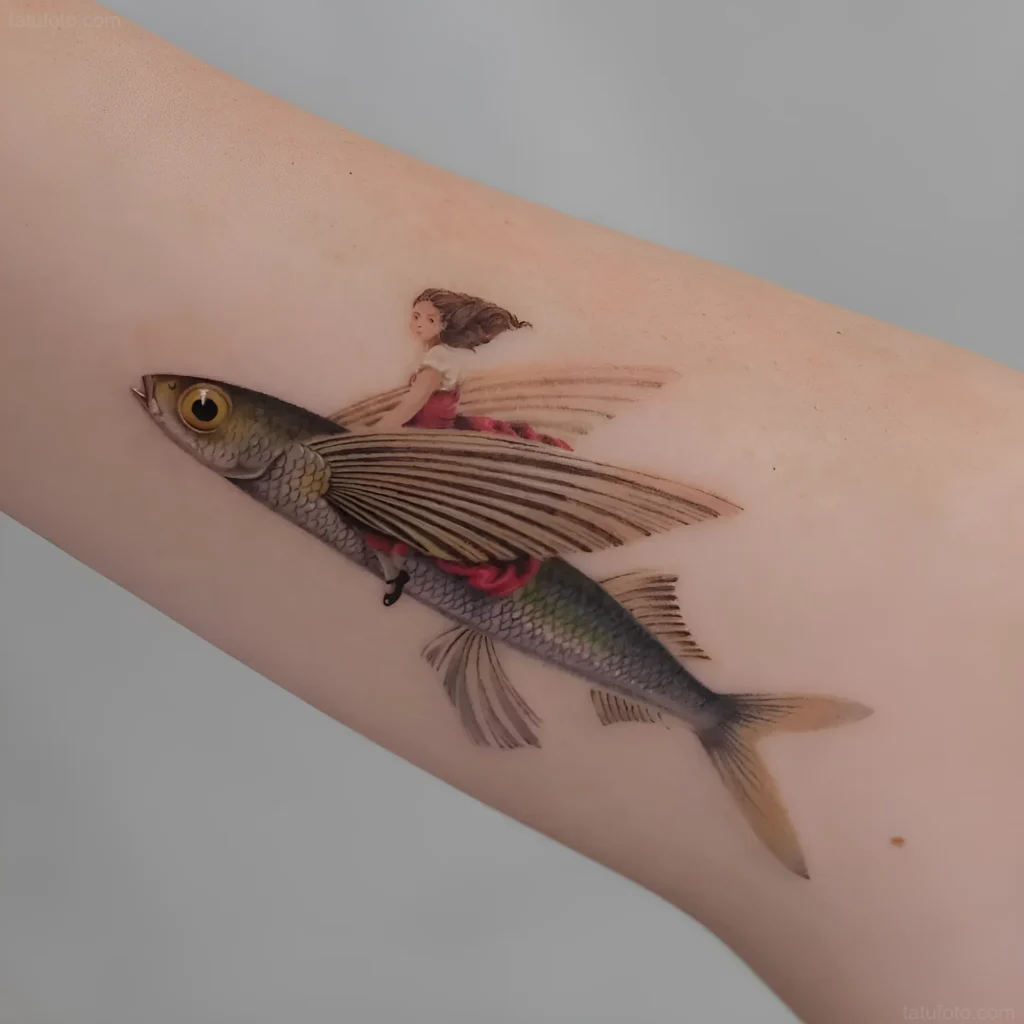
Flying Fish Tattoo: General Description and Symbolism Features
The flying fish is a unique creature capable of rapidly leaving the aquatic environment and gliding over the ocean’s surface. This biological characteristic forms the basis of its entire symbolism, making it an ideal personification of duality and transition.
Key Symbolic Categories:
- Overcoming Boundaries: The flying fish literally breaks the barrier between two worlds – water and air. It is a symbol of one who refuses to be tied to a single reality or a set of rules.
- Aspiration and Ambition: The fish’s flight is a reaction to a threat (predators) or a search for a better path. The tattoo can signify striving for high goals and the ability to use critical situations as a springboard for growth.
- Mobility and Adaptability: The ability to quickly change its habitat makes the flying fish an emblem of high adaptability, cunning, and the skill to find a way out of the most difficult situations.
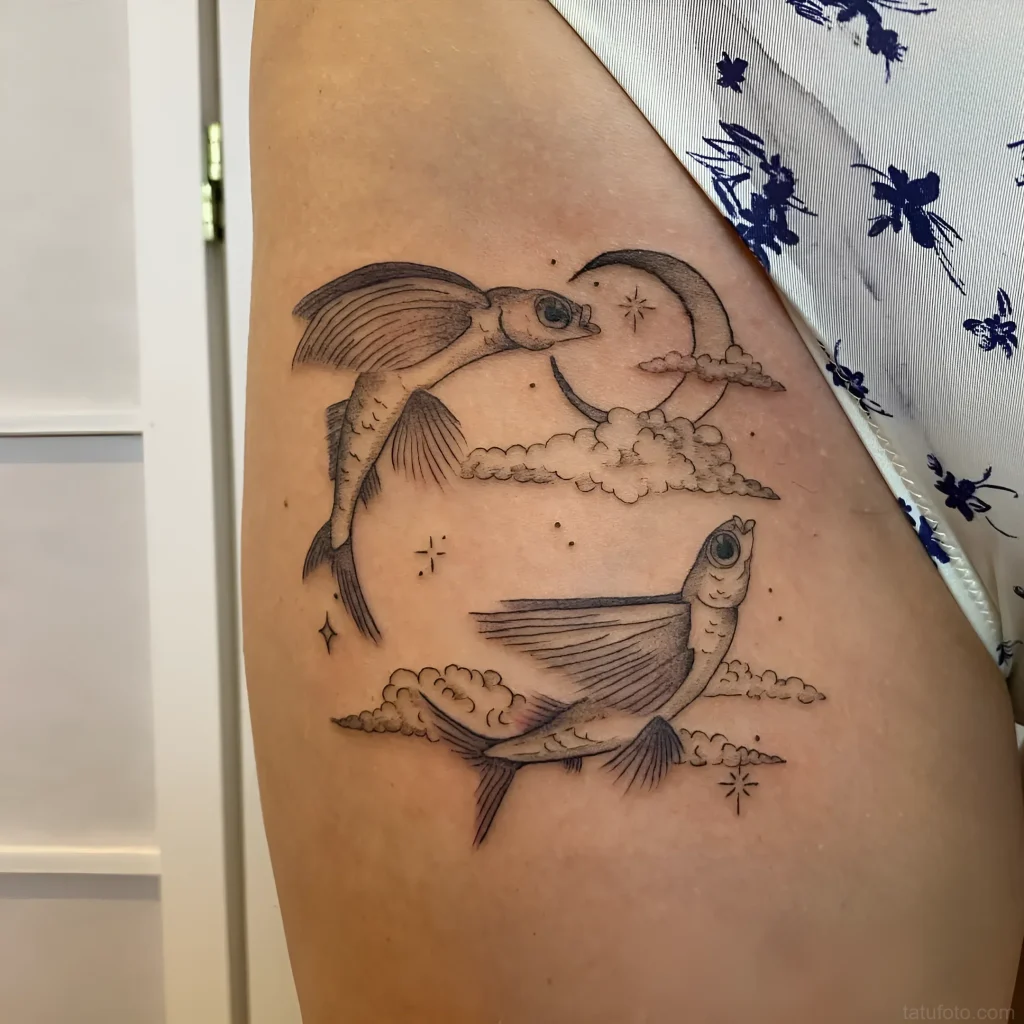
The image of a flying fish often includes dynamic elements: splashes of water creating a sense of speed, or stylized clouds emphasizing the height of its flight. It is always a tattoo filled with movement and energy.
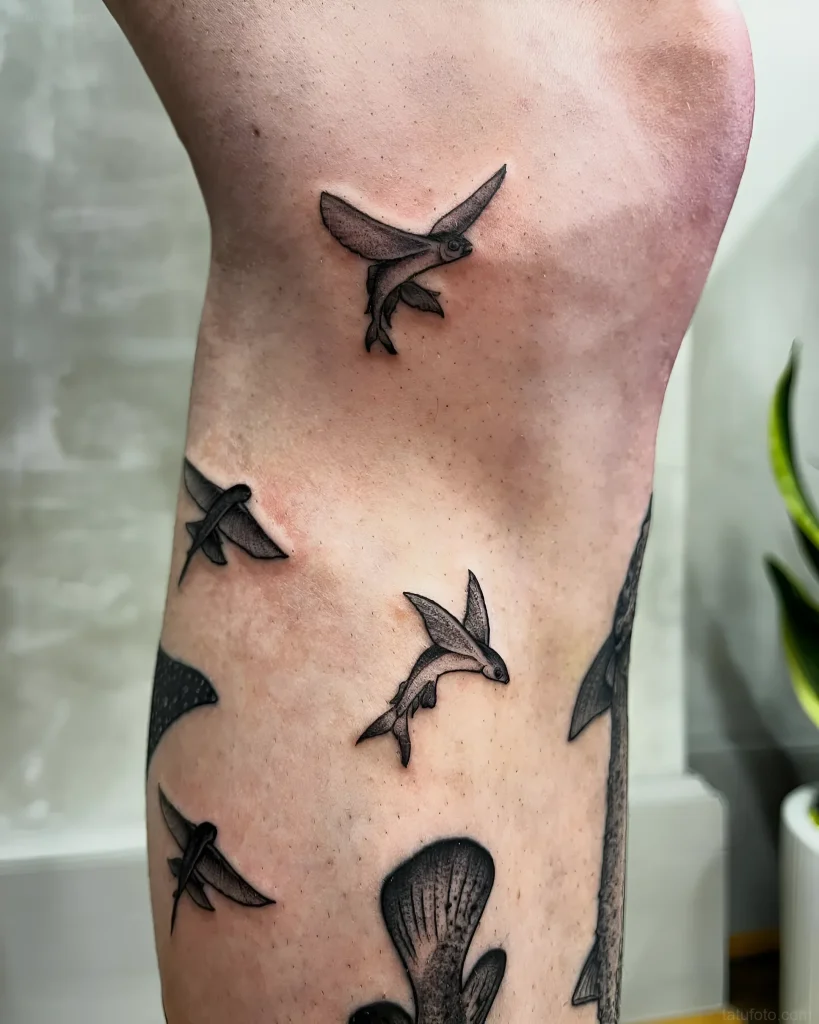
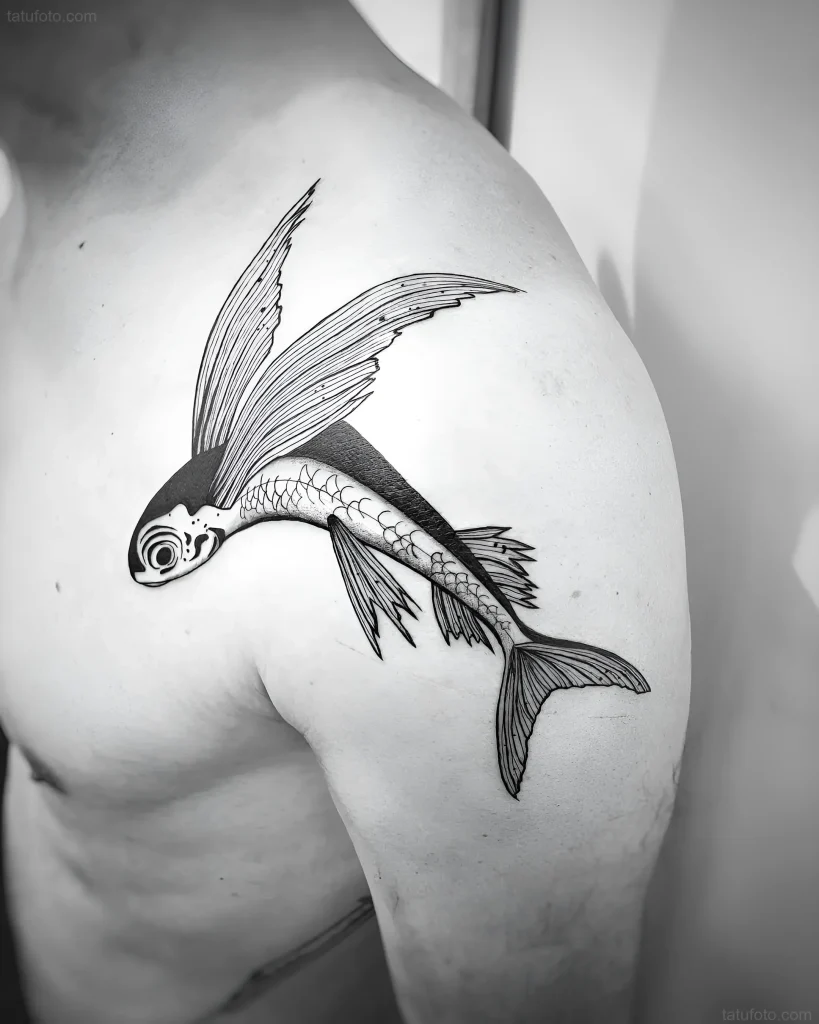
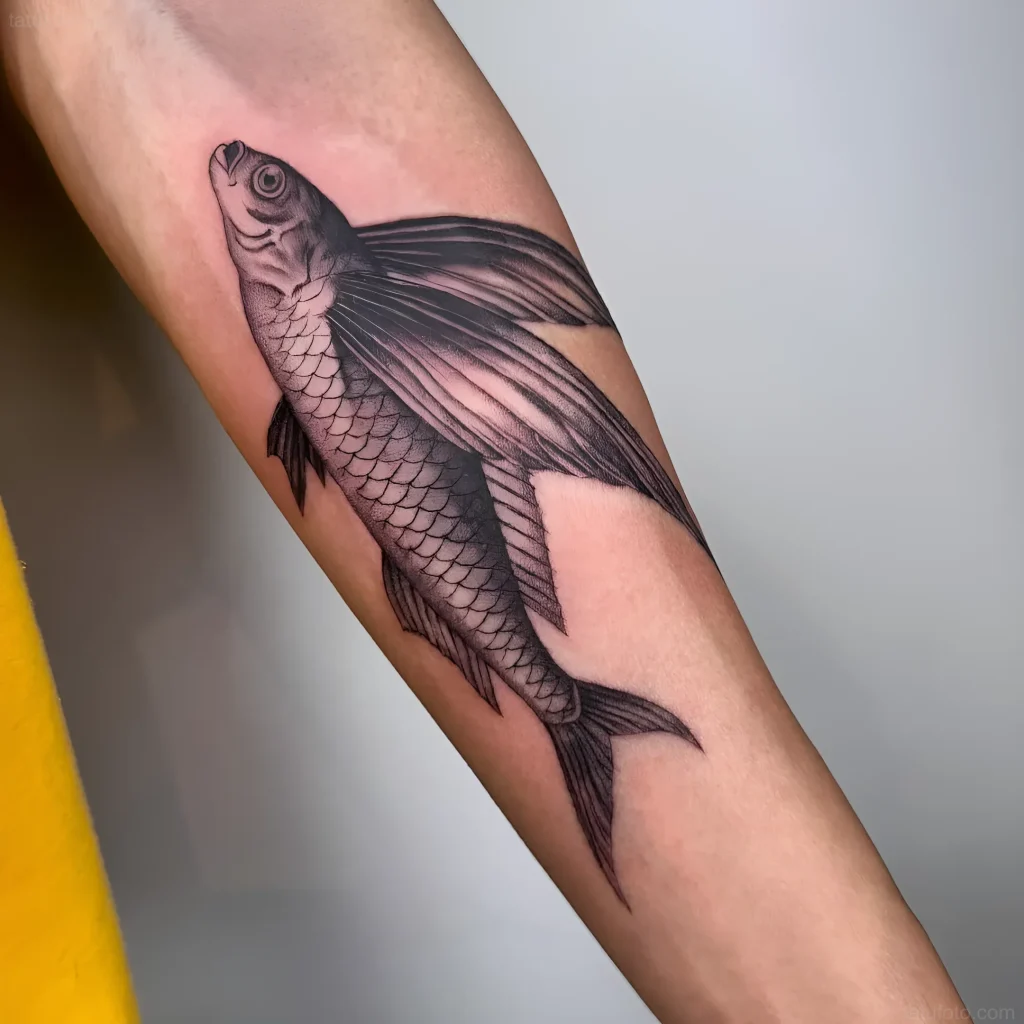
The History of Flying Fish Symbolism in Various Cultures
While the flying fish is not as universal a symbol as the dragon or the lotus, in cultures where it is present, its meaning is deeply rooted in maritime traditions, navigation, and mythology.
Polynesian Culture: Guide and Good Fortune
In Polynesia, especially in Hawaii and Maori culture, marine symbols are paramount. The flying fish, or Māroro, was valued by sailors and fishermen not only as a food source but also as a mystical guide.
- Navigation and Protection: The appearance of flying fish was often interpreted as a sign of land being near or as a favorable omen for a journey. The tattoo symbolized hope for a safe return and protection from maritime dangers.
- Mana (Power): In the context of Polynesian tattoos, the flying fish can be part of a more complex design, signifying a person possessing power (Mana) that allows them to succeed in challenging conditions.


Asian Context: Perseverance and Abundance
In some Asian maritime traditions, particularly in Japan, fish (like koi carp) symbolize perseverance. The flying fish adds an element of sudden success and overcoming to this meaning.
- Striving Upward: Like a carp swimming against the current, a flying fish soaring into the air symbolizes victory over gravity and circumstances. It is a symbol that the greatest rewards go to those who are willing to risk everything.
- Abundance: Since flying fish often travel in large schools, they can also symbolize good fortune in business, abundance, and prosperity.
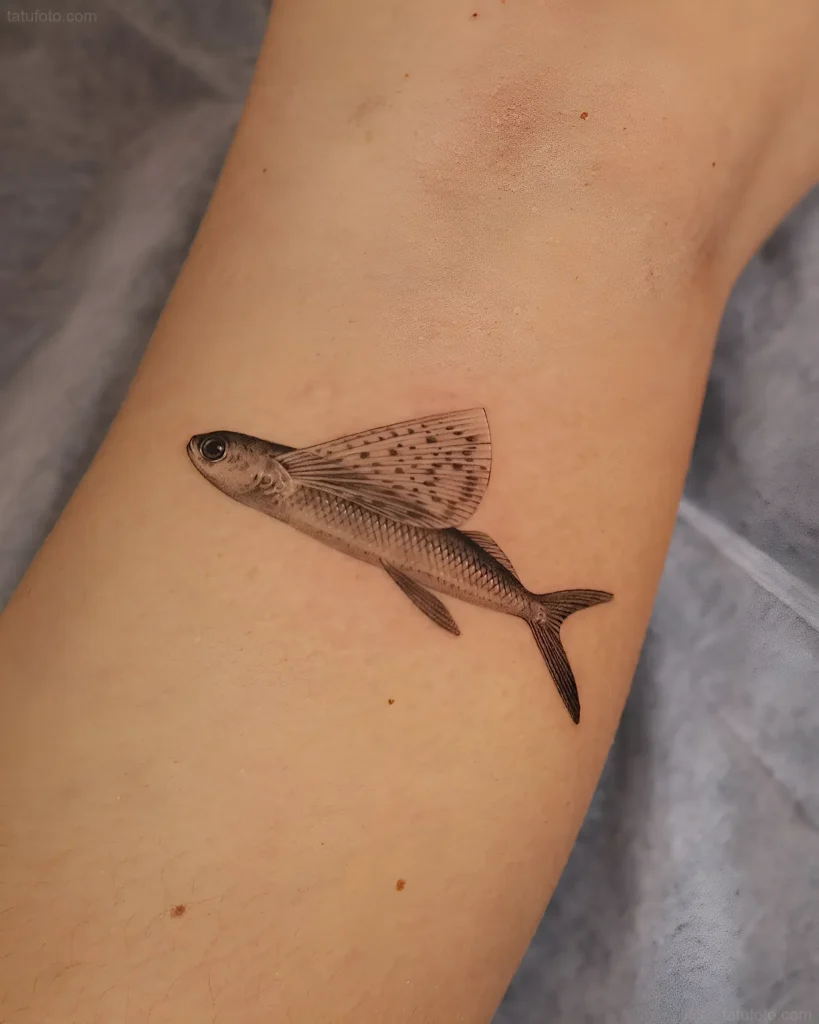
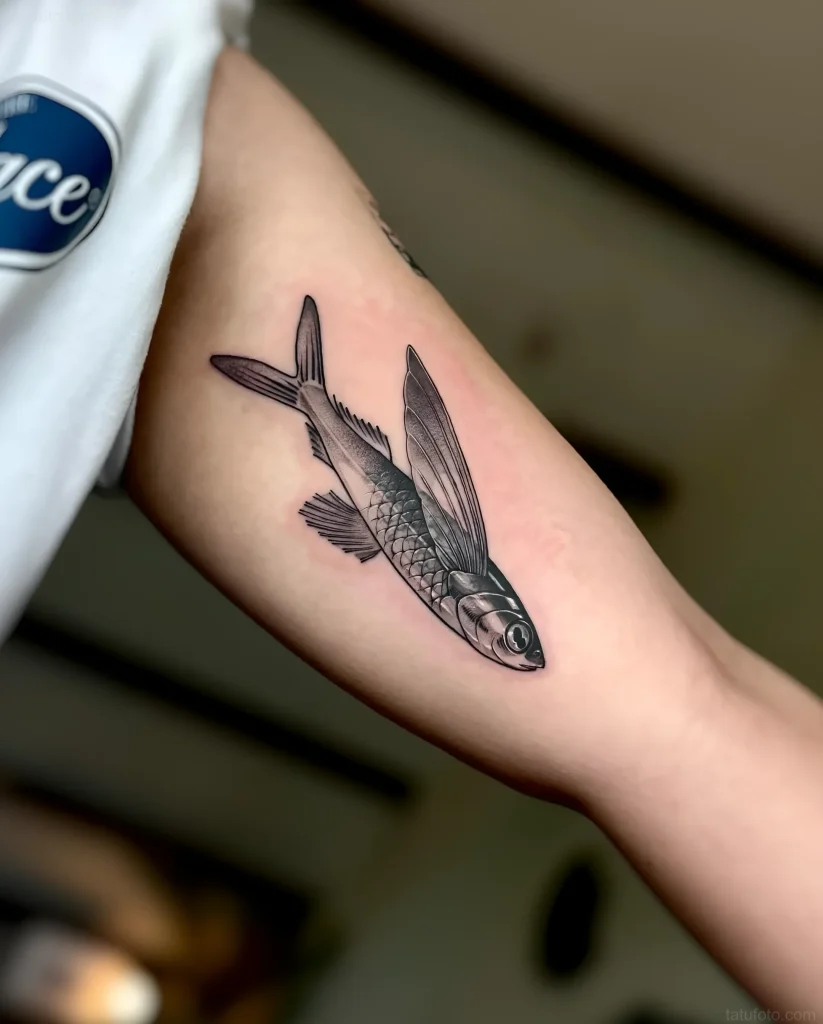
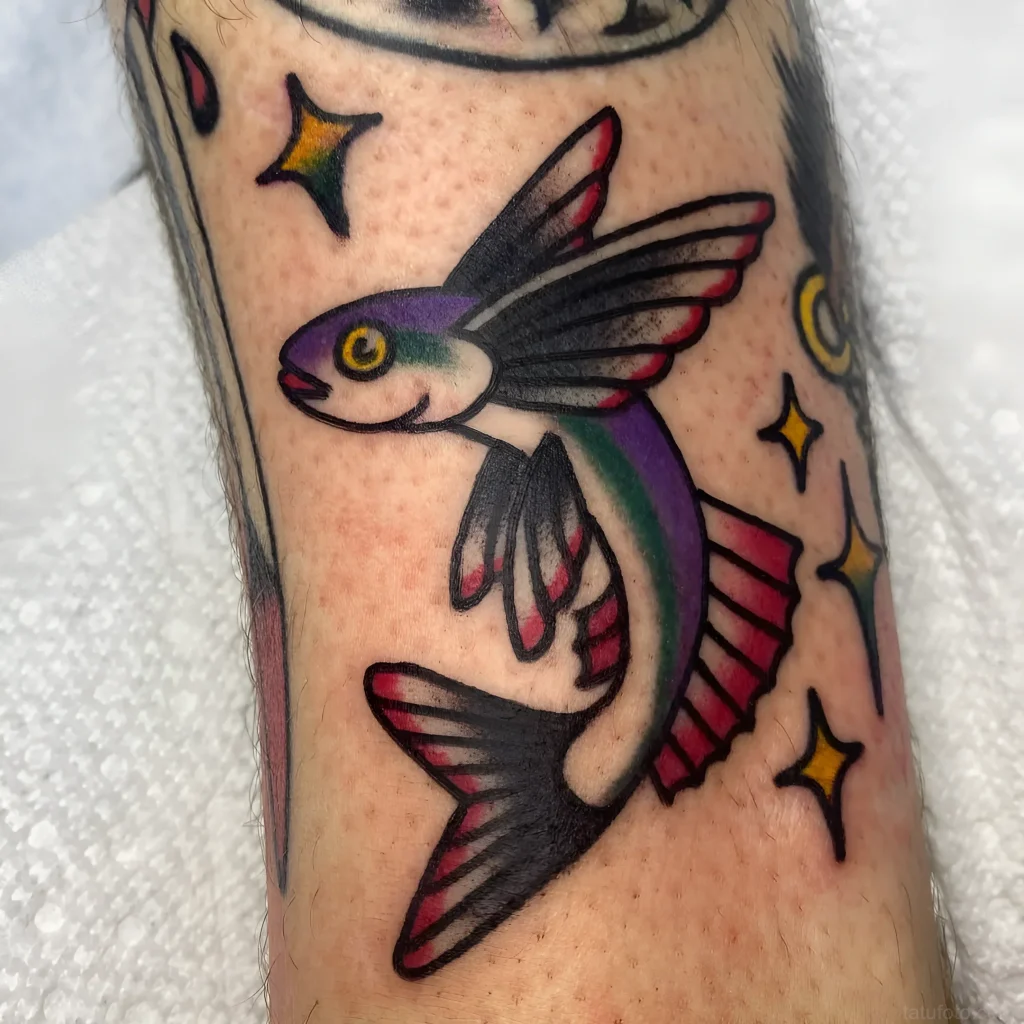
The Meaning of a Flying Fish Tattoo: From Luck to Freedom
Choosing a flying fish as the main motif for a tattoo can be driven by a whole spectrum of personal interpretations. We will highlight the most common and profound meanings you can imbue into your body art.
1. Freedom and Transcendence
This is perhaps the strongest and most obvious meaning. The flying fish is the quintessence of freedom, not limited by water or air. It personifies a person who cannot stand constraints, seeking ways to break free from social, professional, or emotional shackles.
- Example: A tattoo depicting a fish leaping out of a wave can symbolize breaking away from past problems or the beginning of a new, freer chapter in life.
2. Resilience and Protection
The flying fish’s flight is a defense mechanism. This means the tattoo can serve as a reminder of your ability to withstand pressure and avoid dangers by using unconventional solutions. It is a symbol that you do not hide from problems but use your wit and speed to circumvent them.

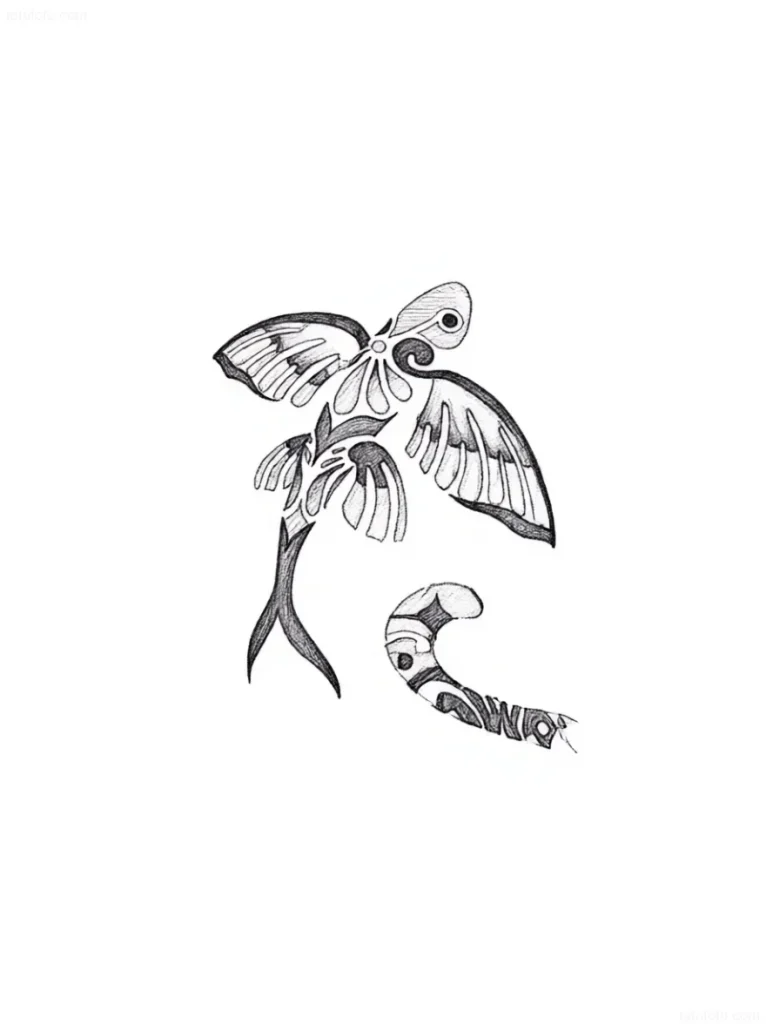
3. Duality and Balance
The flying fish lives in two elements, making it an ideal symbol of duality: intuition (water) and intellect (air), emotions and logic, dreams and reality. The tattoo can reflect a person’s striving for inner balance and harmony between the opposing aspects of their personality.
4. Luck and Unexpected Success
In some maritime superstitions, the flying fish is associated with sudden, unexpected luck, “falling from the sky.” This meaning is particularly relevant for those involved in risky business, creative pursuits, or constantly seeking new opportunities.
Symbolic Combination of Elements:
To enhance a specific meaning, the flying fish is often combined with other elements:
- With Waves (Water): Emphasizes the power of the element from which the person breaks free, reinforcing the meaning of overcoming.
- With Clouds or Stars (Air): Focuses on high goals, dreams, and spiritual freedom.
- With a Hook or Anchor: Reflects the conflict between the desire for freedom and the need to remain true to one’s roots or obligations.
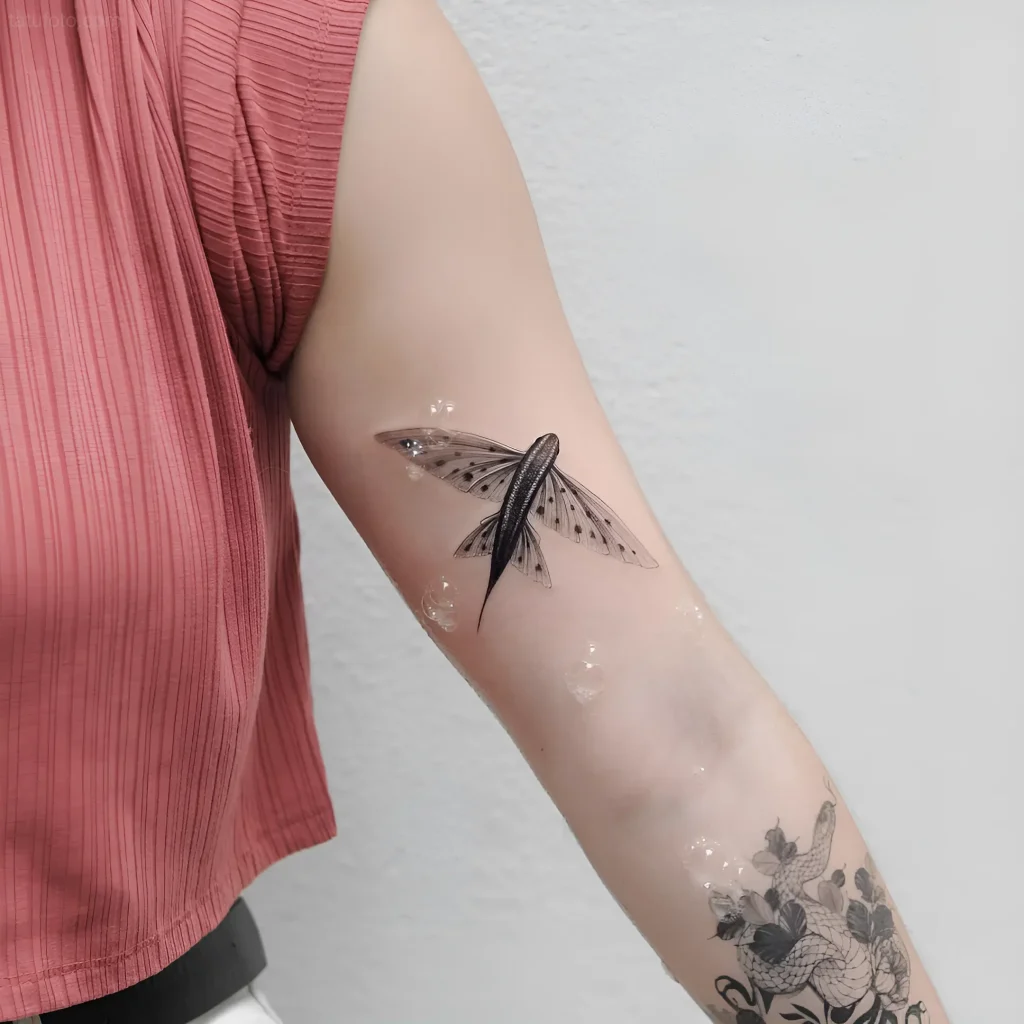
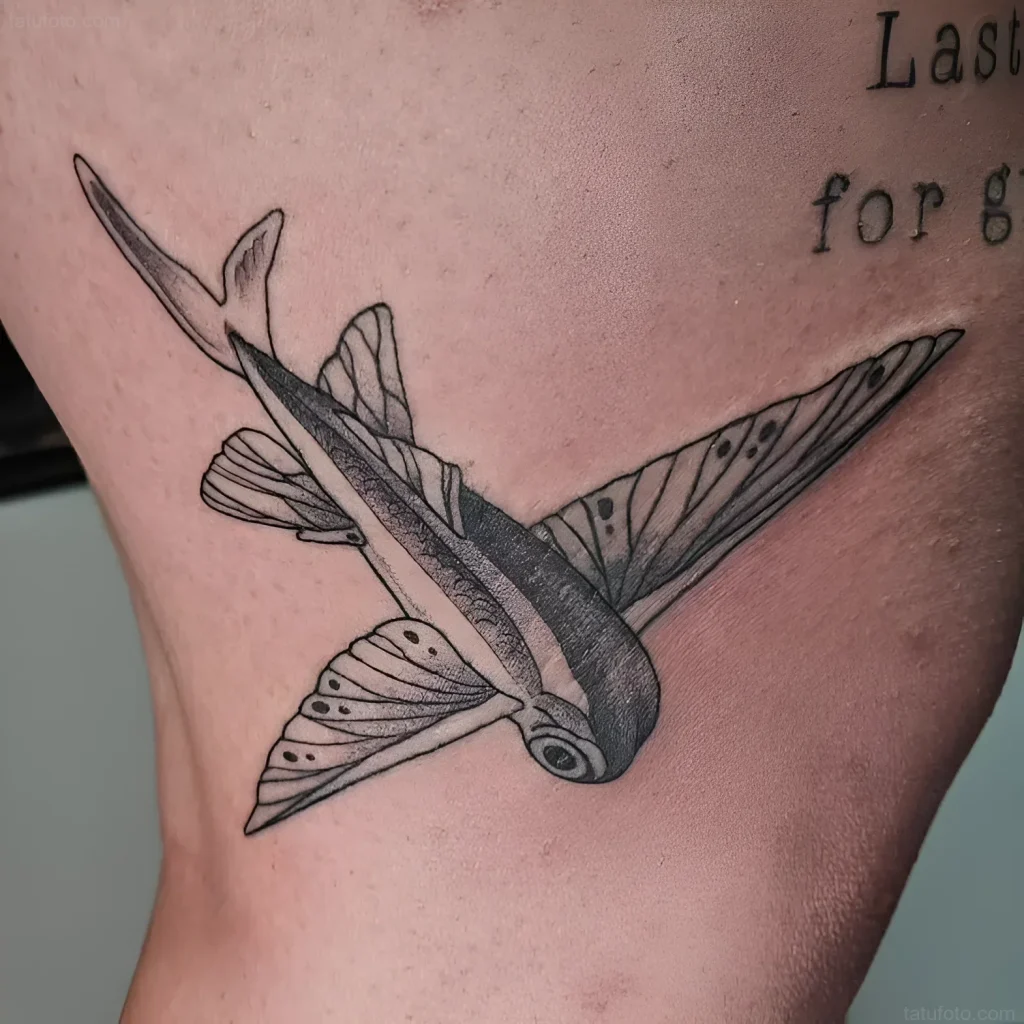
Flying Fish Tattoo Styles: From Traditions to Modernity
The depiction of a flying fish requires a high level of technical skill from the artist, as it’s necessary to convey its dynamism, speed, and the specific texture of its scales and wings. The choice of style is crucial, as it determines the emotional message of the work.
Japanese Style (Irezumi)
In Japanese tattooing, the flying fish (though less common than carp or dragons) can be depicted with powerful, stylized waves (nami) and wind. This style is ideal for conveying an epic scale of struggle and triumph:
- Features: Dense black outlines, bright, saturated colors (red, gold, blue), emphasis on tail strength and the powerful curve of the body during takeoff.
- Meaning in Style: Perseverance, honor, overcoming fate.
Traditional American (Old School)
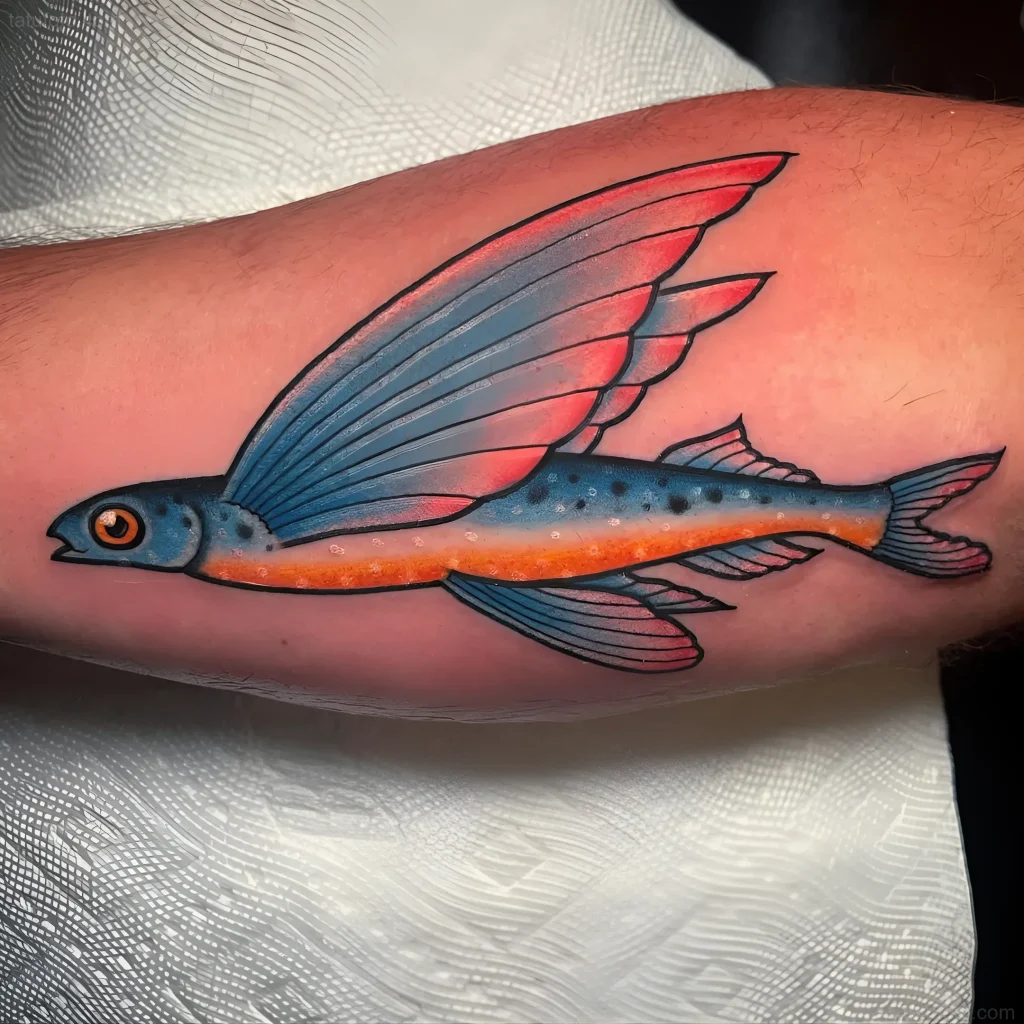
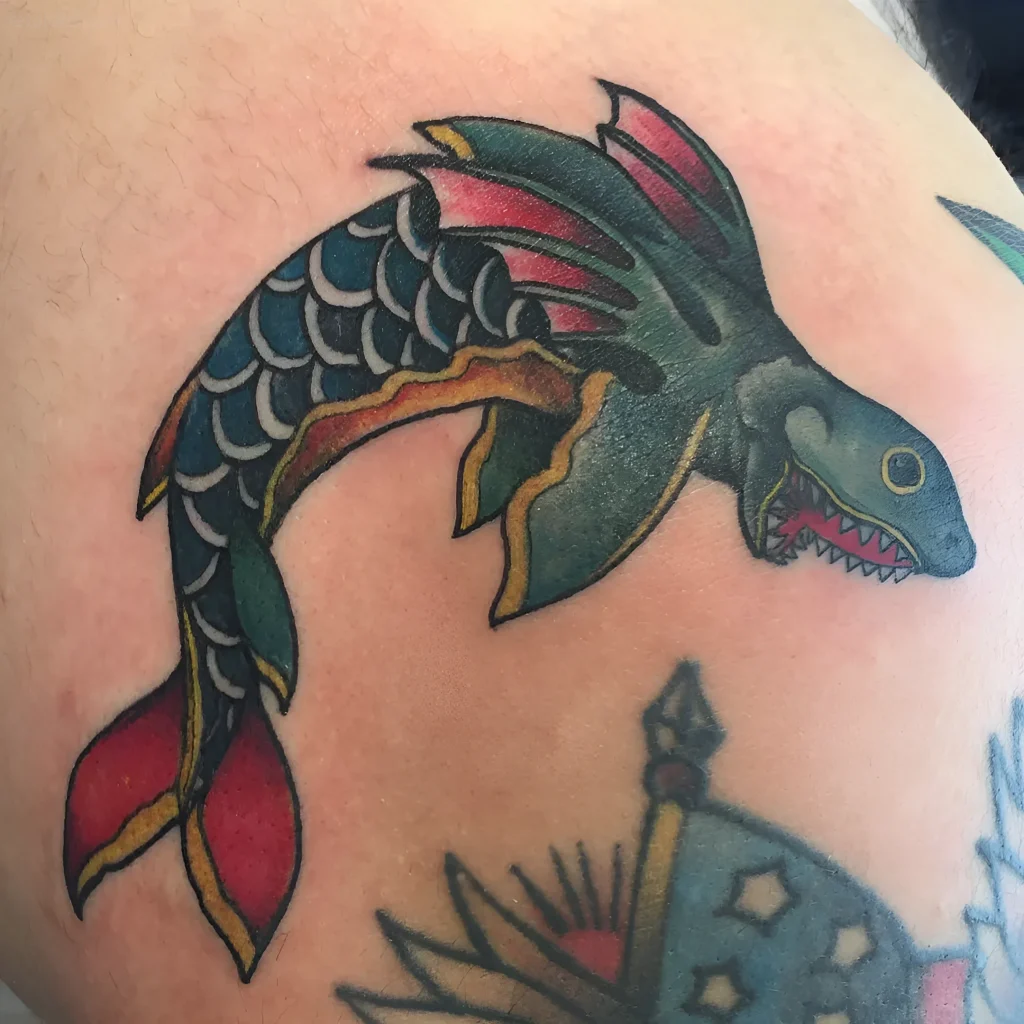
In the traditional style, the flying fish takes on a bright, cartoonish, yet powerful appearance. This is often associated with sailors’ tattoos, where it symbolized good luck at sea or was simply a fun but strong symbol.
- Features: Thick black lines, limited palette (red, yellow, green), minimal detail on scales. Wings may be stylized as feathers or sails.
- Meaning in Style: Good luck, nostalgia for the sea, carefree spirit.


Neo-Traditional
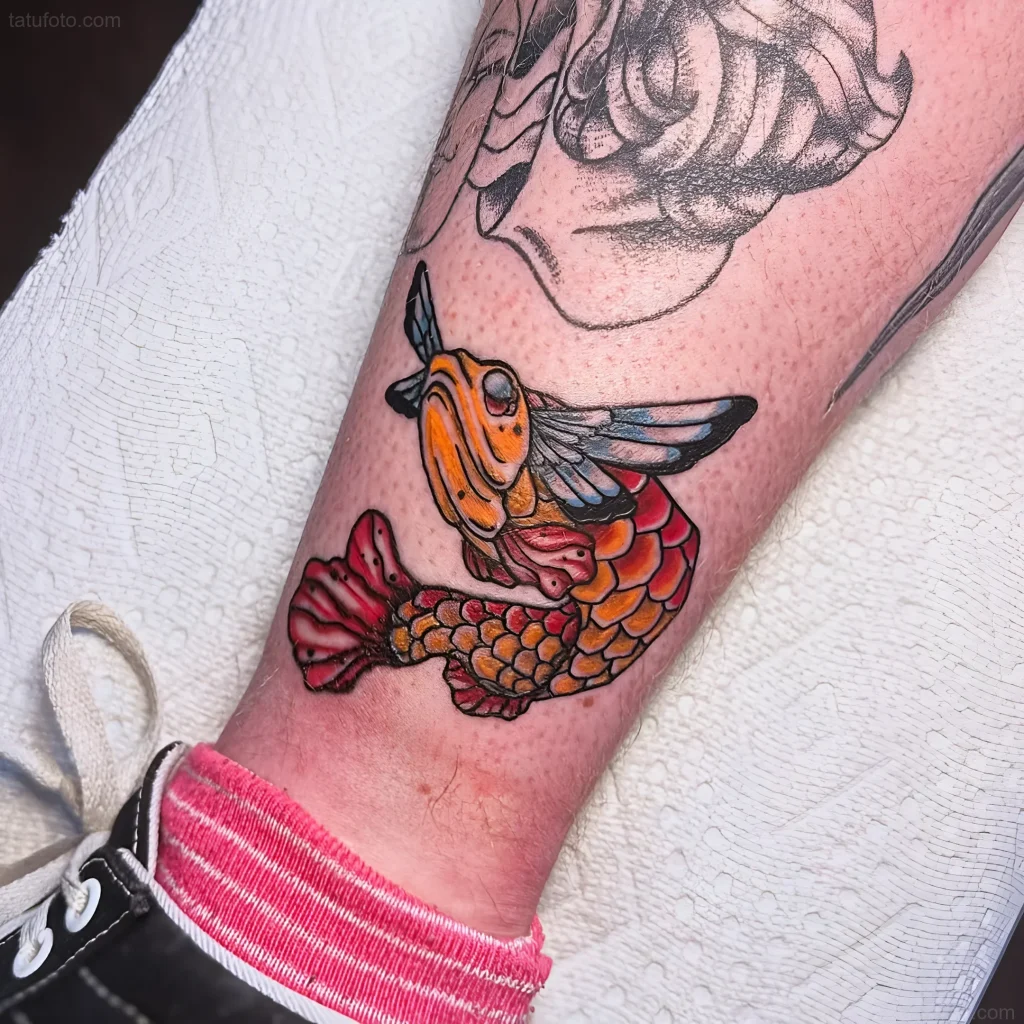
The Neo-Traditional style allows for the full expression of the flying fish’s beauty and dynamism, combining the density of Old School with realistic detail and complex color transitions.
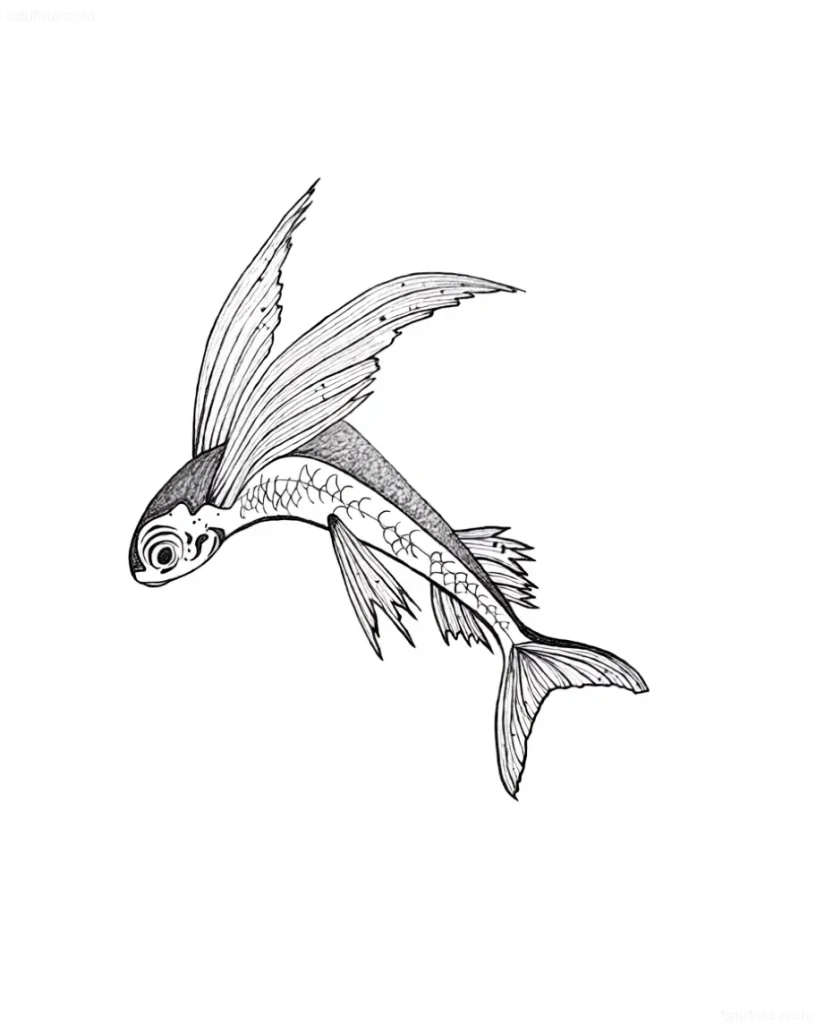
- Features: Maintains a clear outline but adds volume, detail to eyes, scales, and wing membranes. Dramatic shadows and gradients are often used to convey speed.
- Meaning in Style: High ambition, artistic freedom.
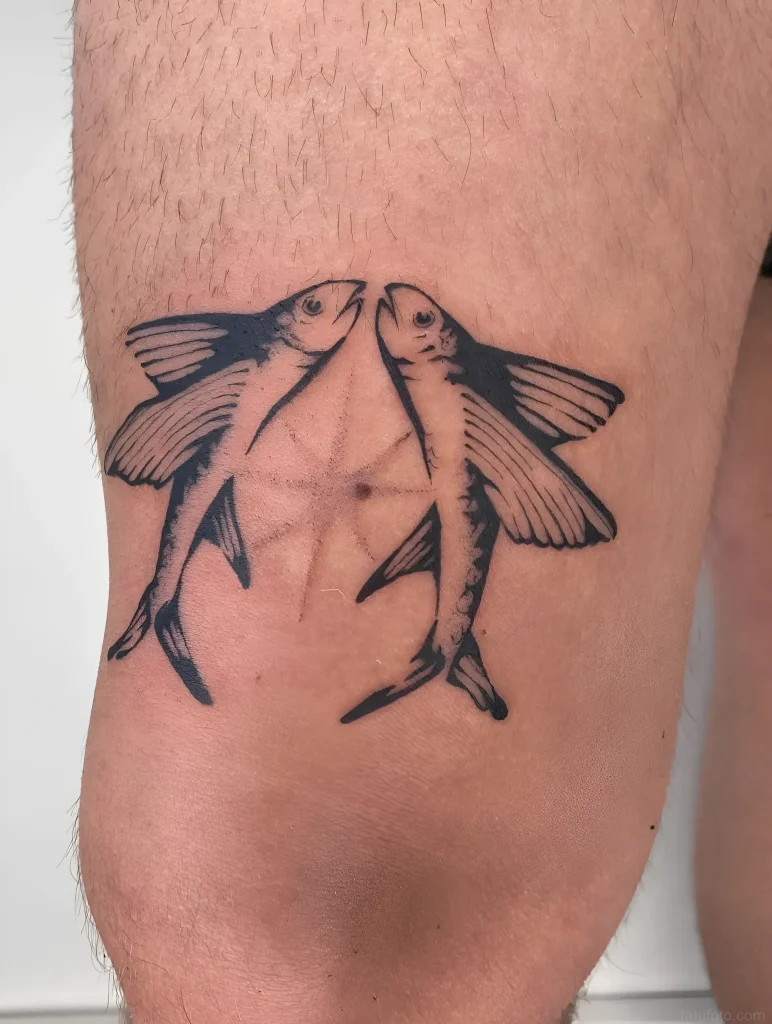
Minimalism and Blackwork
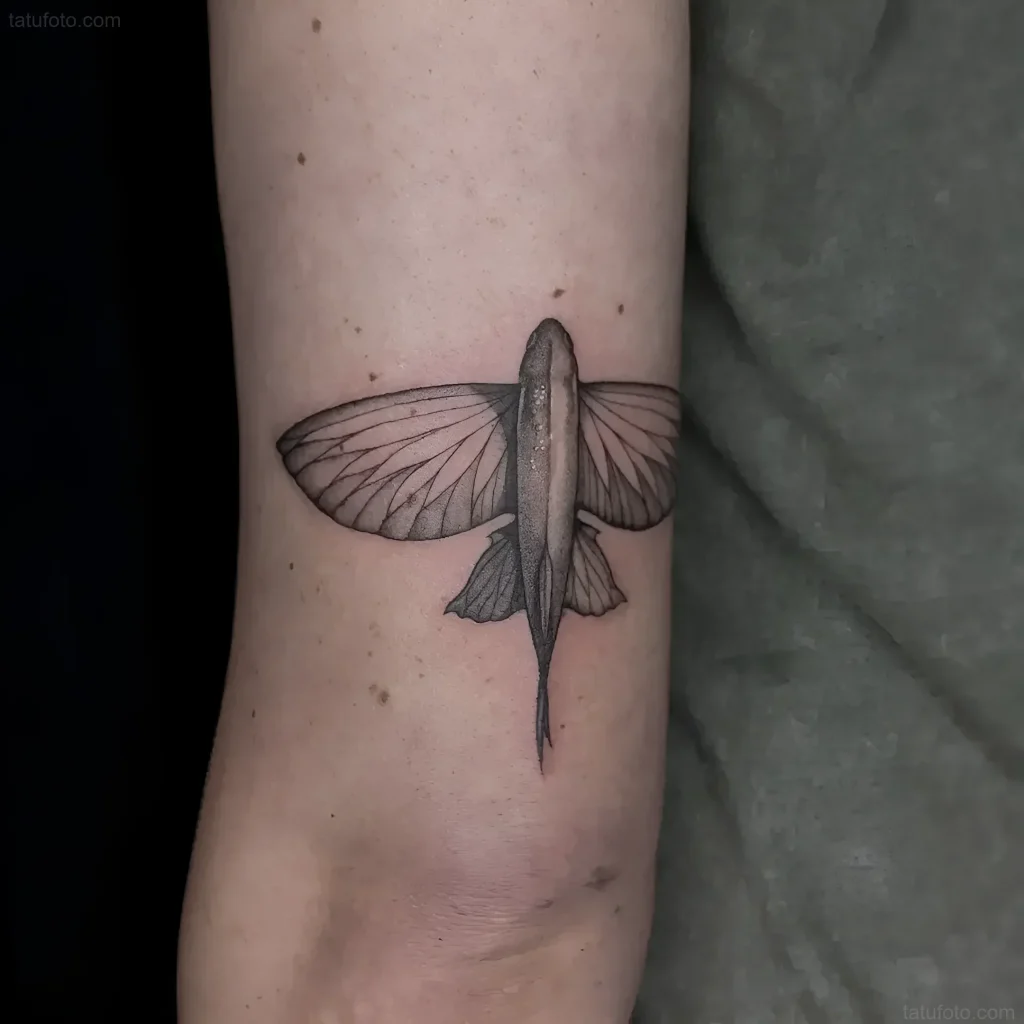
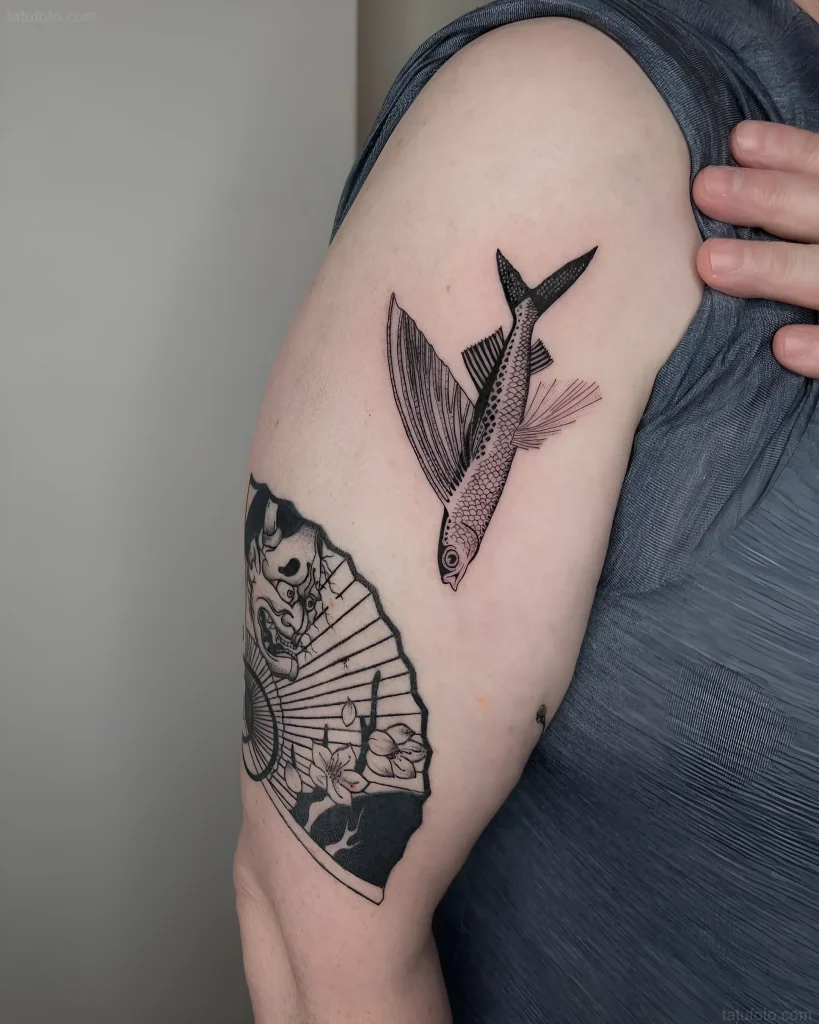
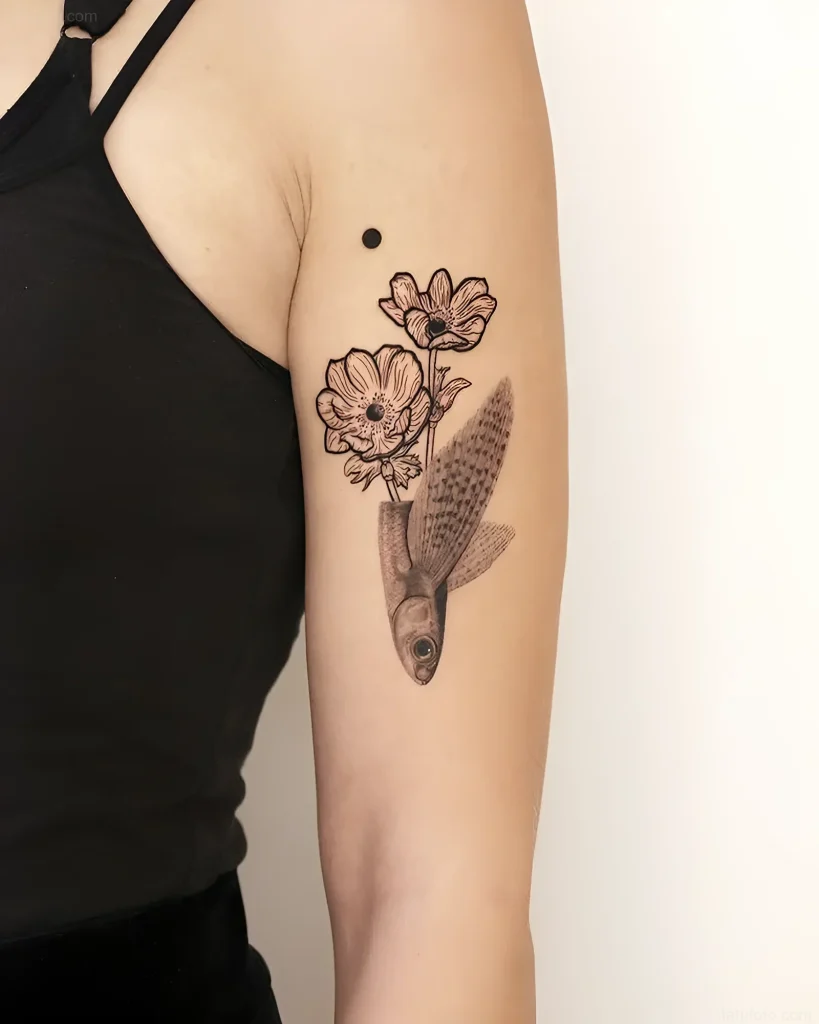
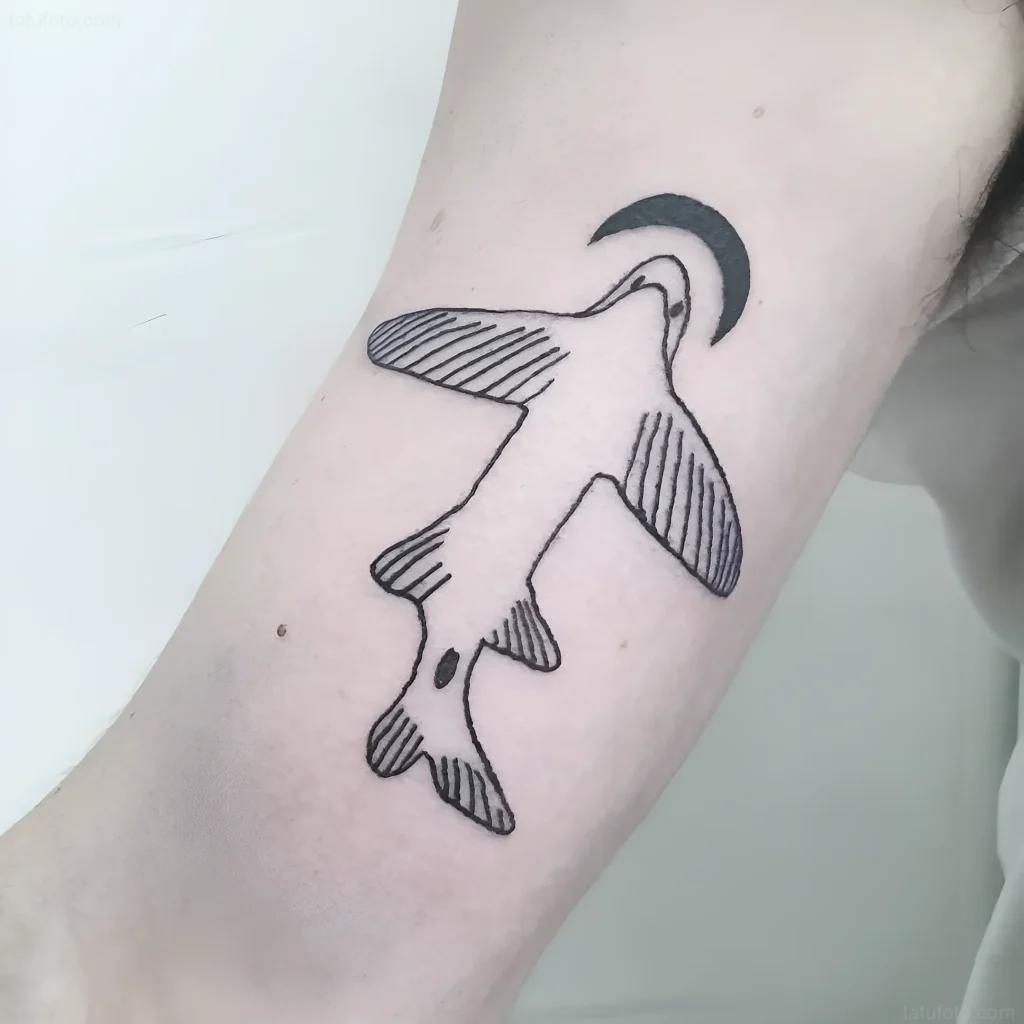
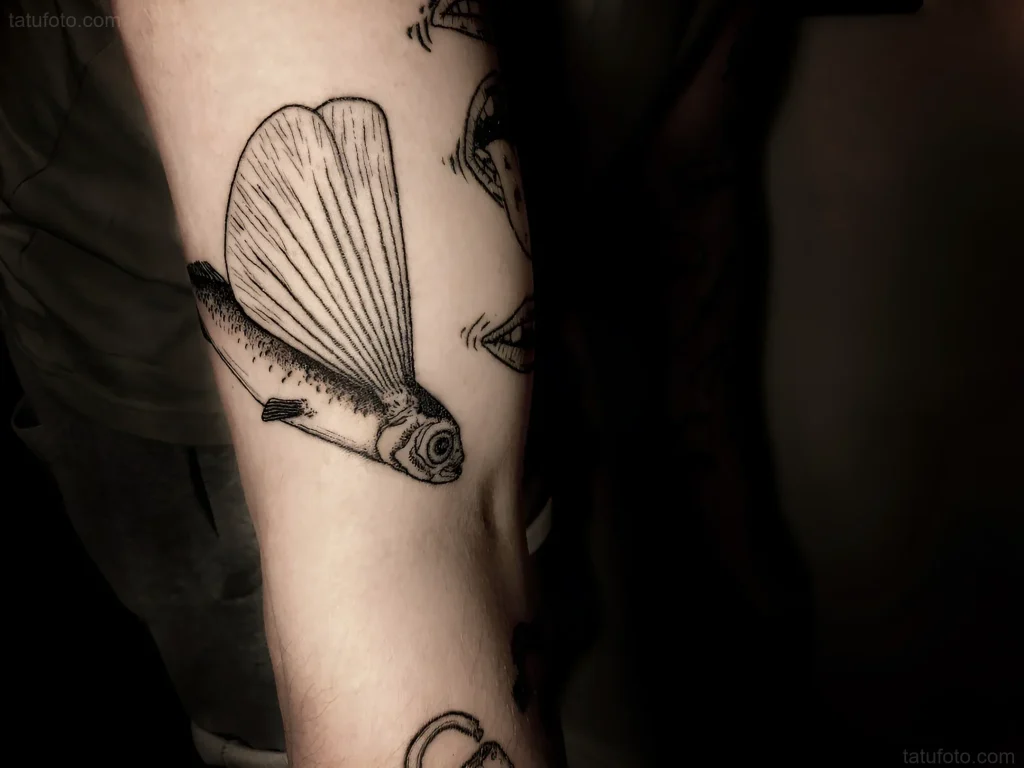
For those who prefer understated yet expressive work, Blackwork or Dotwork styles are suitable. The flying fish can be depicted as a stylized silhouette, emphasizing its shape and flight.
- Features: Uses only black pigment, focusing on clean lines and form. In Dotwork, points can create an effect of motion or “blur” in the wings.
- Meaning in Style: Purity of aspiration, minimalism in overcoming.
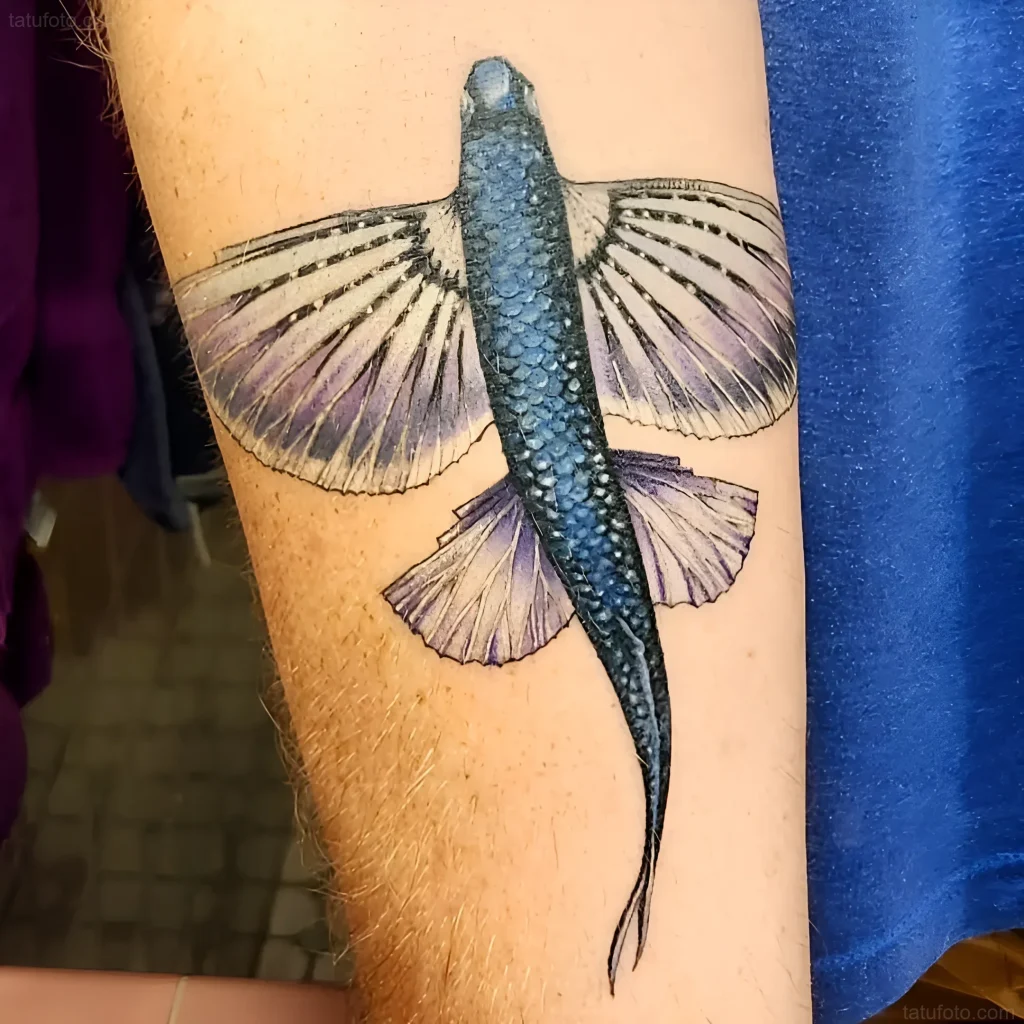
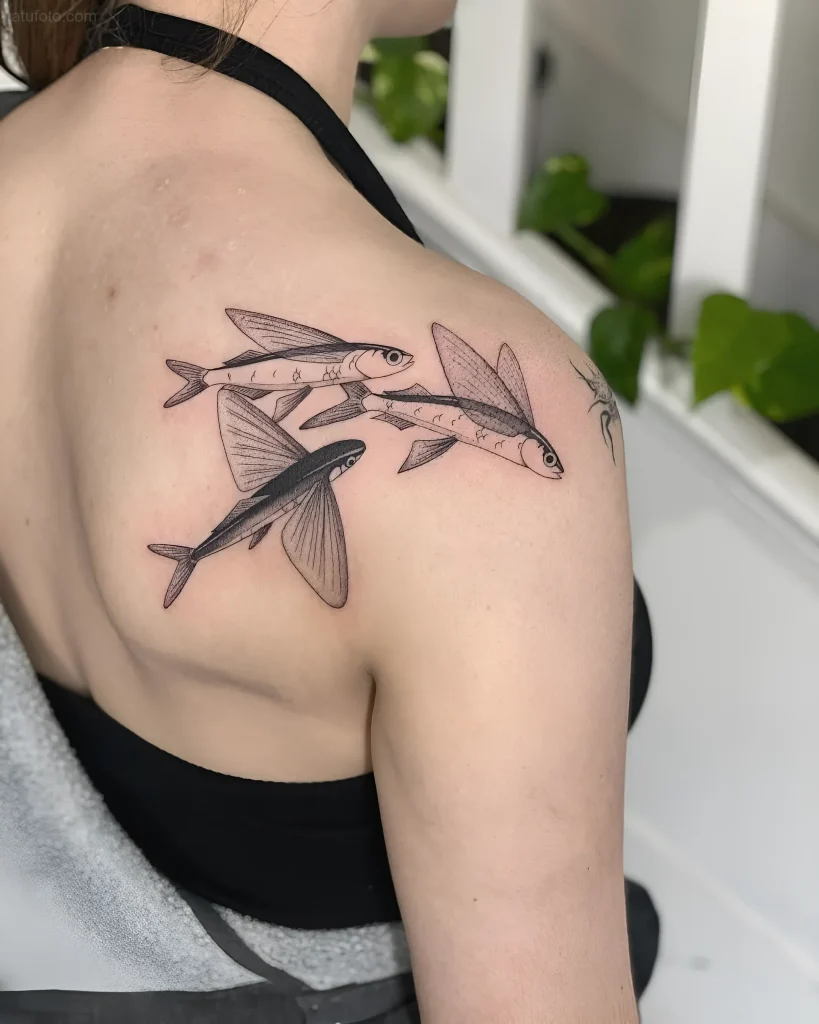

Best Places for a Flying Fish Tattoo on the Body: Options and Recommendations
Given that a flying fish tattoo is inherently very dynamic, the placement should maximally support and emphasize the sense of movement, flight, or breaking free from an element.
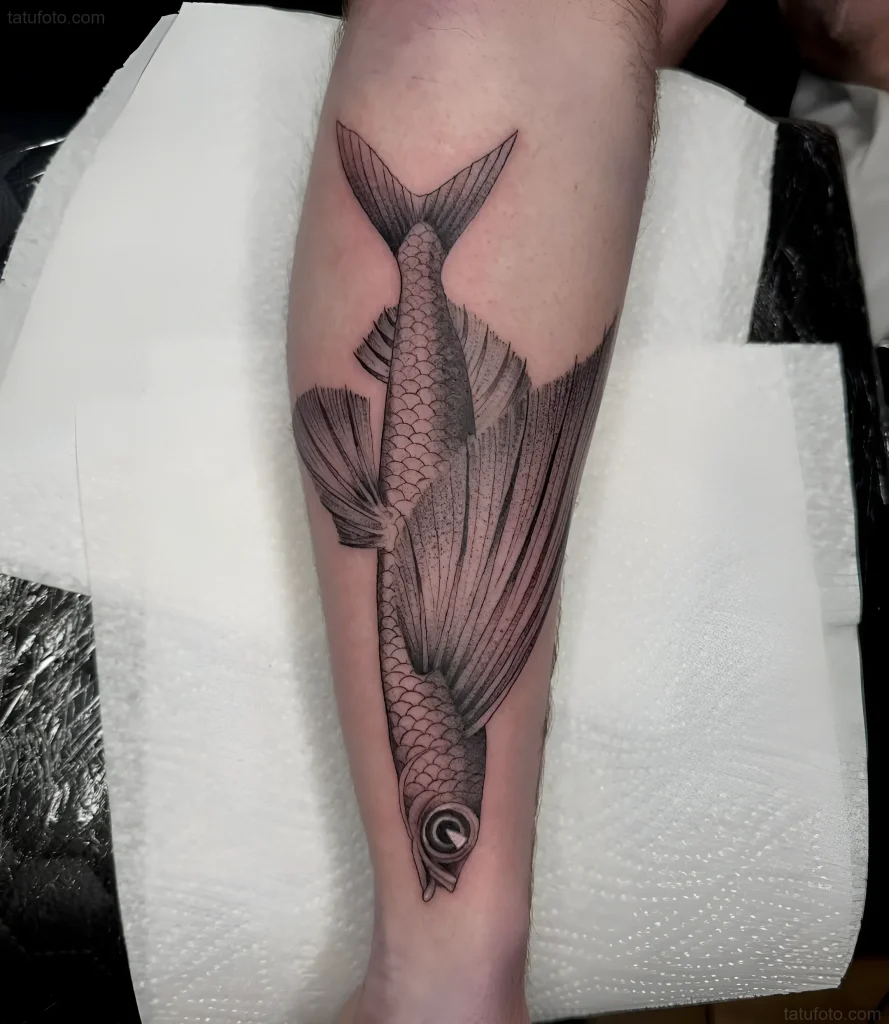
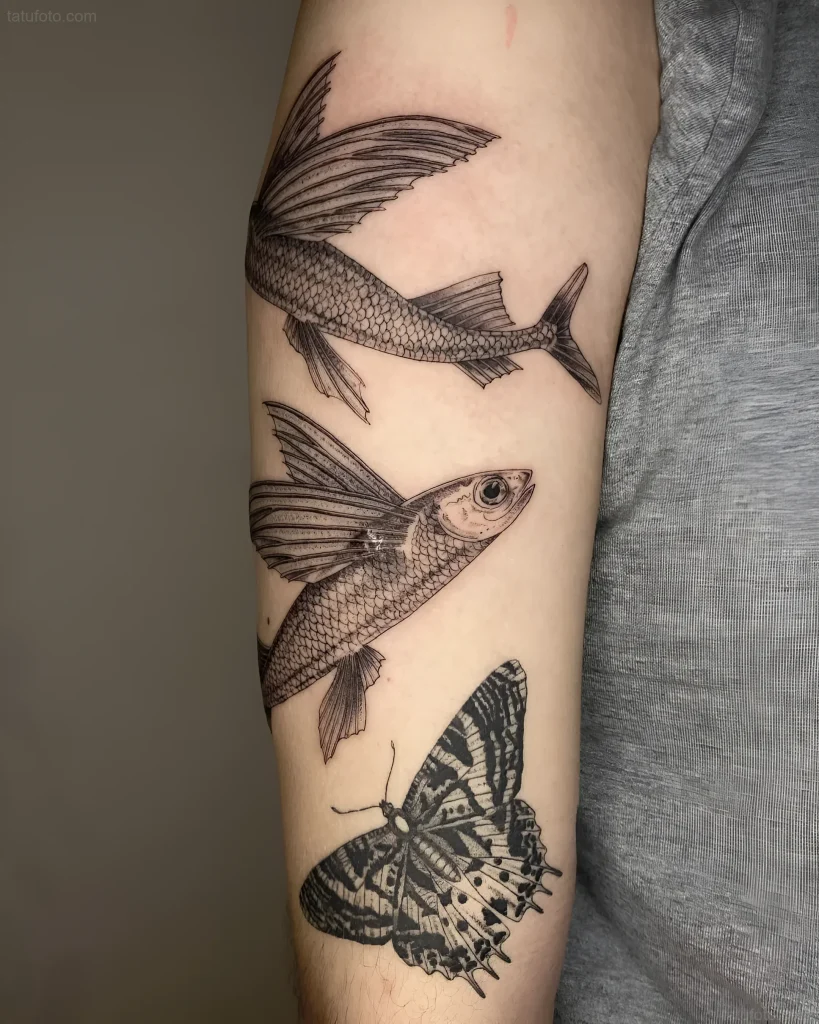
1. Forearm and Biceps
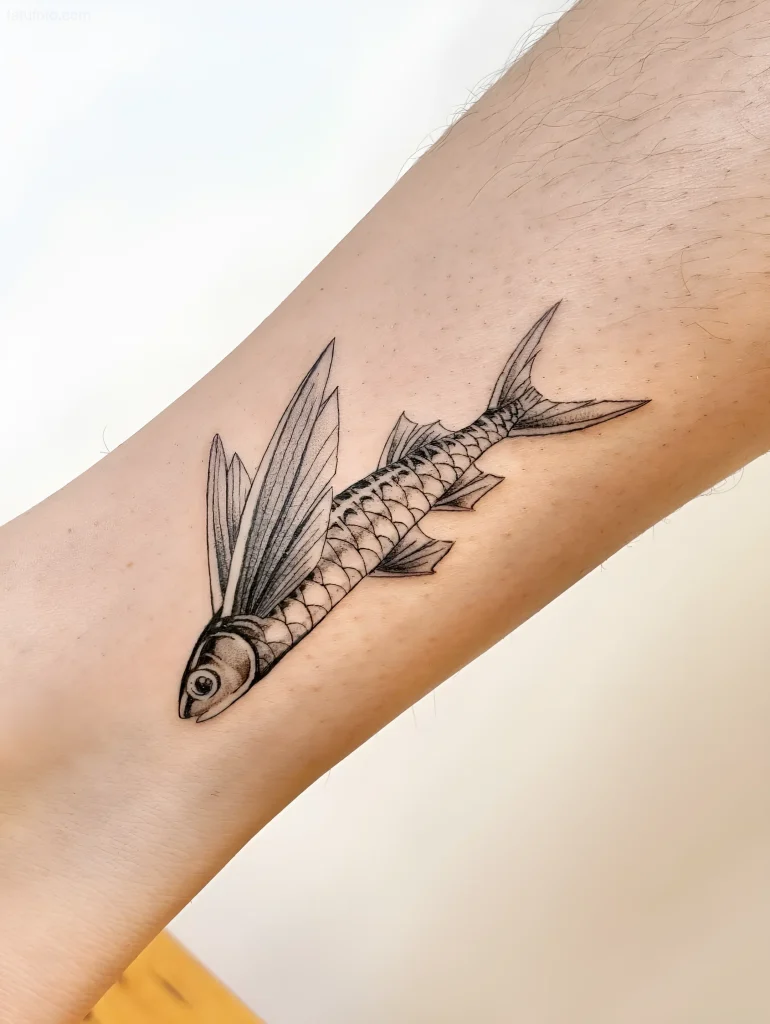
This is one of the most popular locations. On the forearm, a flying fish can be positioned as if it’s leaping out of water, stylized on the wrist or elbow crease. This provides excellent visibility and allows for easy depiction of flight dynamics.
- Recommendation: If the fish is depicted in flight, its head should point towards the wrist and its tail towards the shoulder to enhance the sense of speed.
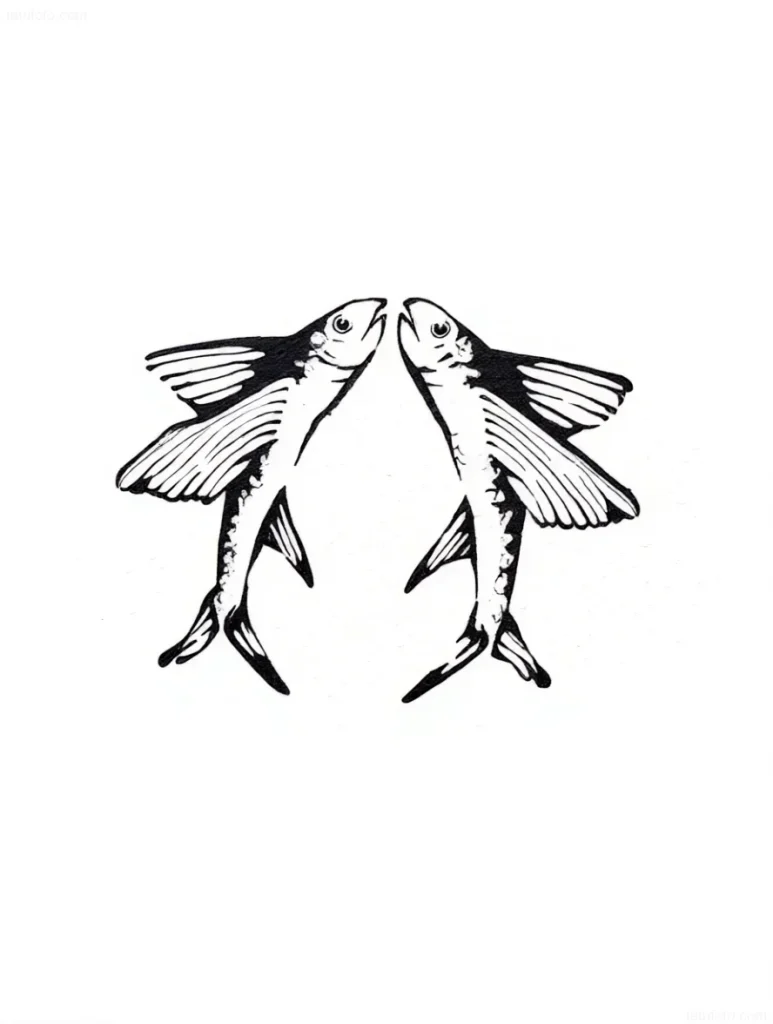
2. Back (Shoulder Blade or Lower Back)
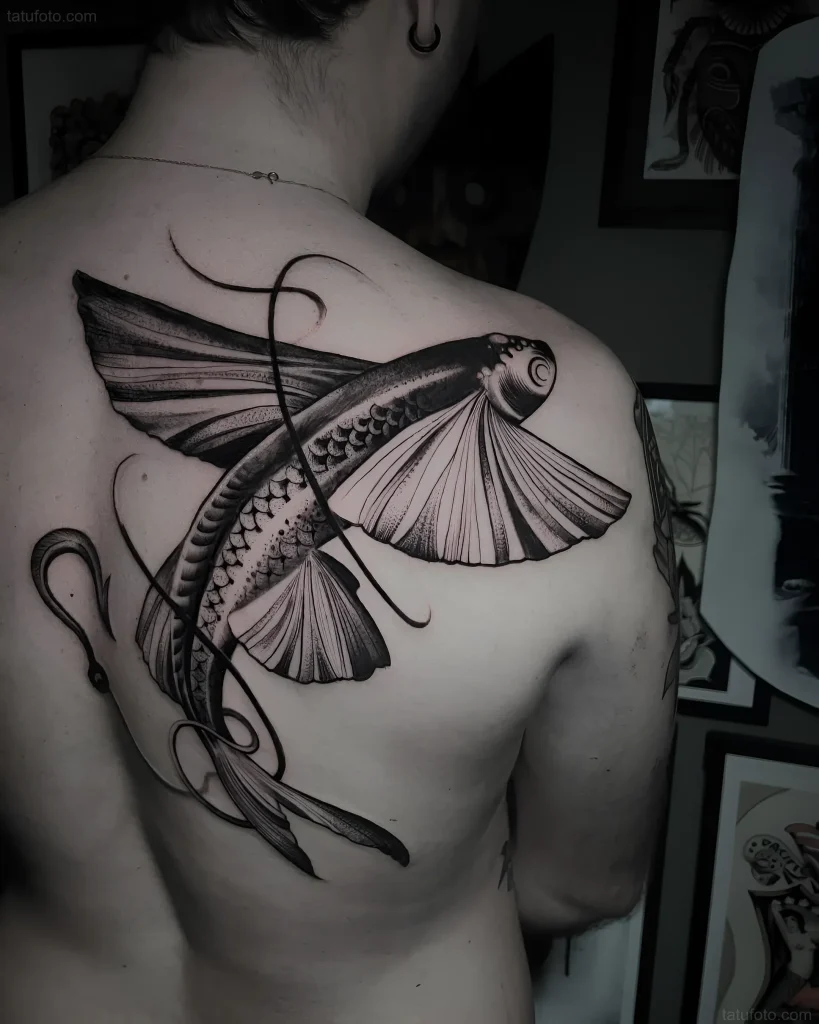
For large-scale works, especially in Japanese or realistic styles, the back offers an ideal canvas. On the shoulder blade, the fish can be depicted as if it has just broken free from the ocean covering the lower back.
- Advantage: Allows the artist to meticulously detail splashes and waves, creating an entire scene of a marine landscape and struggle.


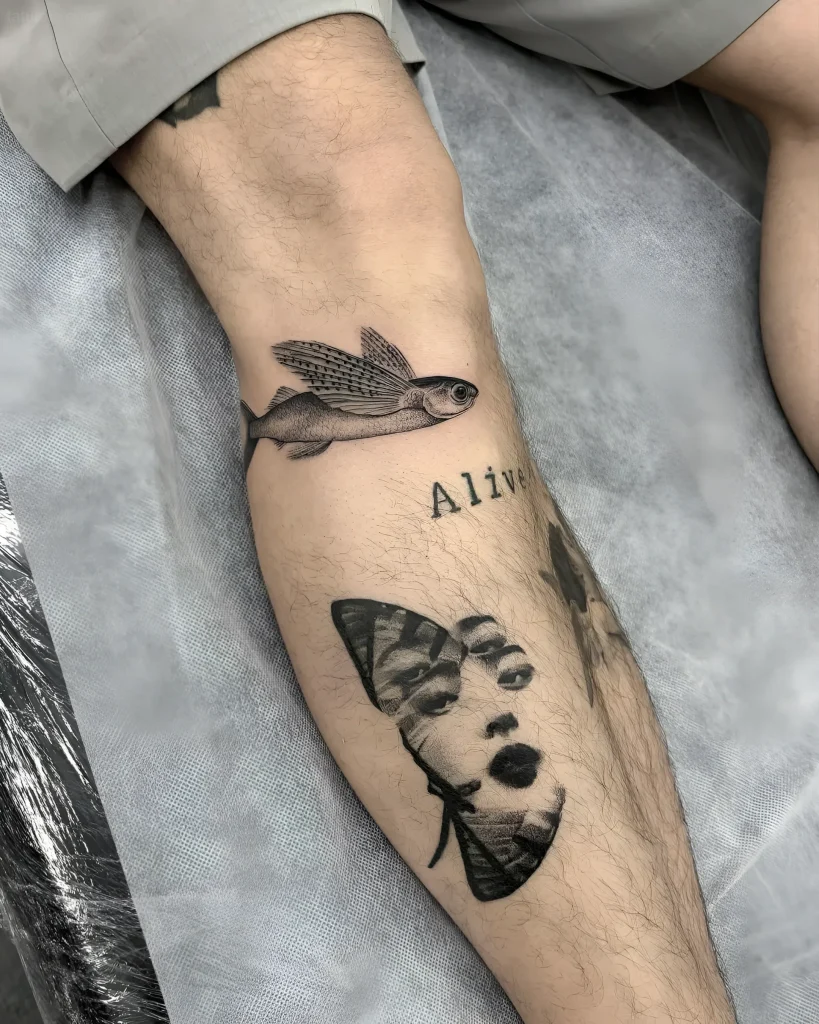
3. Calves and Shins
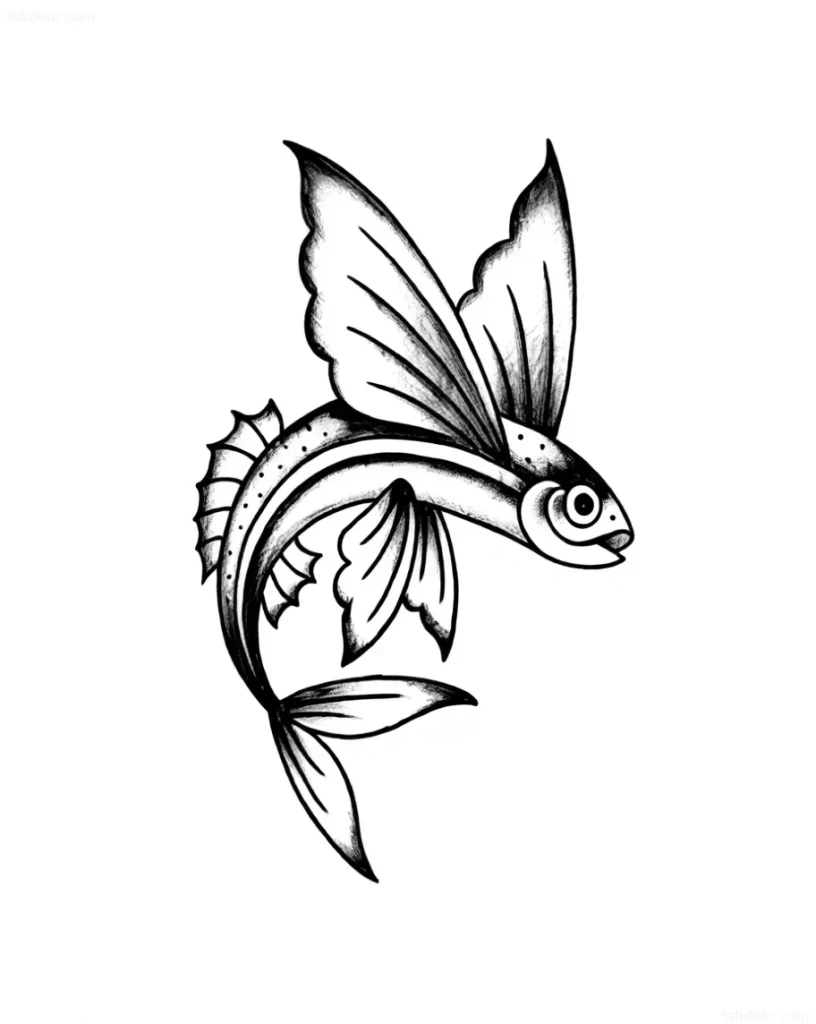
Calves, due to their rounded shape, are ideal for dynamic, vertically oriented images. A flying fish placed on the calf will move with you, emphasizing the meaning of mobility and constant forward movement.
4. Ribs and Sides
This area is often chosen for more personal and hidden tattoos. The long, horizontal shape of a flying fish fits harmoniously along the ribs. Here, the fish can be depicted flying along the body, symbolizing inner freedom and a personal, deep aspiration for overcoming.
Tips for Caring for a Flying Fish Tattoo and Choosing an Artist
The specifics of a flying fish tattoo often lie in conveying subtle details (e.g., the transparency of wings, fine scales) and the effect of motion (motion blur). This requires a special approach both in choosing an artist and in subsequent care.
Choosing an Artist: Look for Dynamism and Detail
When choosing a tattoo artist, pay attention to their portfolio, looking for the following elements:
- Skill in Depicting Water: Ensure the artist can work with waves, splashes, and transparency effects. Water is a key element in this tattoo.
- Work with Fine Lines: The wings of a flying fish should look light and semi-transparent. If the artist only uses thick outlines, the work may lose its grace.
- Experience in Animal Art: How realistically can they depict the fish’s anatomy, scales, and eyes to avoid a flat, unexpressive design.
Care Specifics
Like any tattoo, a flying fish requires standard care (regular moisturizing, sun protection). However, if your tattoo is done in a realistic or watercolor style with light, translucent tones (e.g., for the wings), you should be particularly careful:
- Color Preservation: Light tones fade faster in the sun. Using a sunscreen with a high SPF (at least 50) is mandatory to preserve the brightness of the sky or water.
- Protection of Fine Lines: If the tattoo has many small details and fine lines, avoid excessive rubbing and stretching of the skin in the first few weeks to prevent pigment blurring.
Frequently Asked Questions About Flying Fish Tattoos (FAQ)
1. How common is this symbol?
A flying fish tattoo is relatively rare compared to other marine animals. This makes its choice more unique and personal. Its rarity emphasizes the unconventionality of its wearer and the depth of its symbolic meaning.
2. Can a flying fish tattoo be small?
Yes, but with limitations. Since the key element is the wings and the dynamics of flight, a medium or large size is recommended to maintain recognizability and detail (especially scales). A tattoo that is too small may lose detail and become indistinguishable over time, particularly in the wing area.
3. Is the flying fish a masculine or feminine symbol?
The symbol is absolutely universal. Men often choose more aggressive, dynamic images emphasizing overcoming and strength (in Neo-Traditional or Japanese styles). Women may prefer more graceful, elegant forms, focusing on freedom, dreams, and lightness (in Watercolor or Fine Line styles).
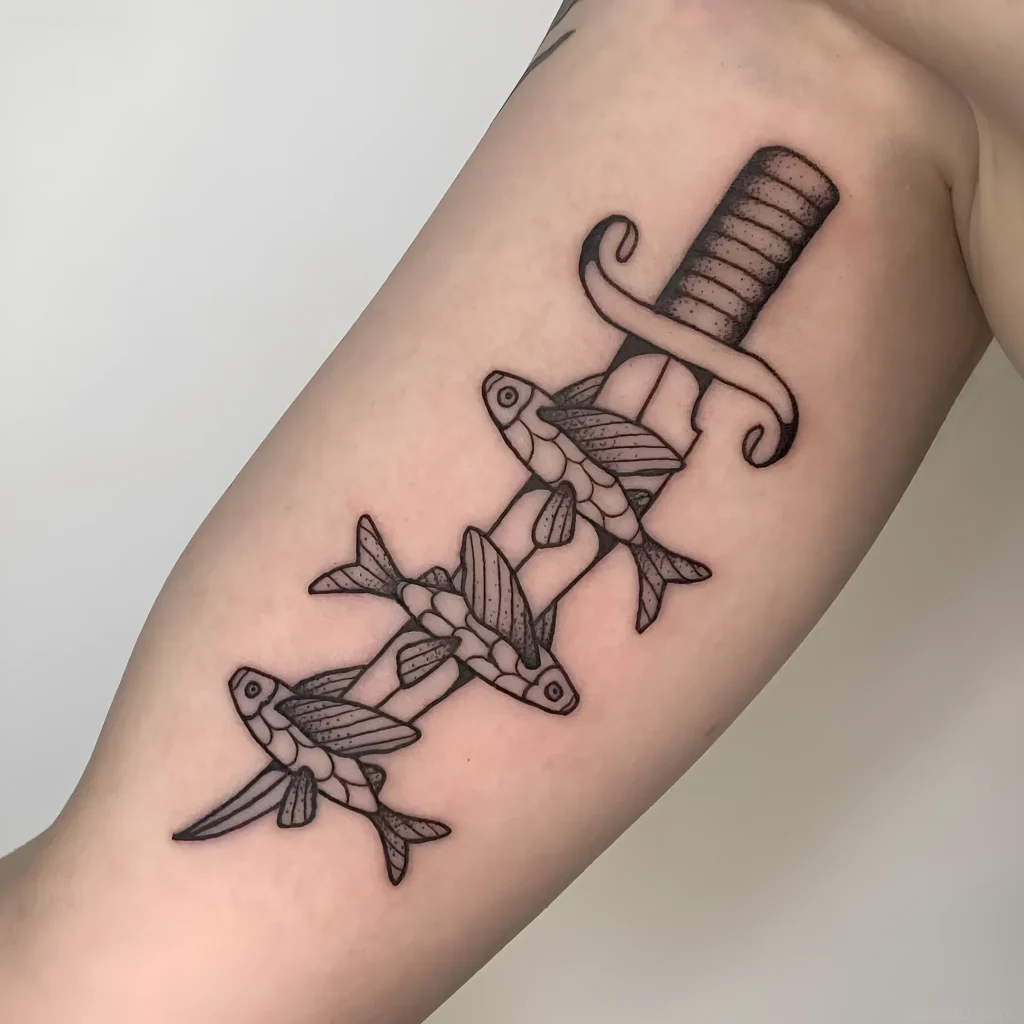
4. What is the meaning of a flying fish tattoo if it is depicted as a school?
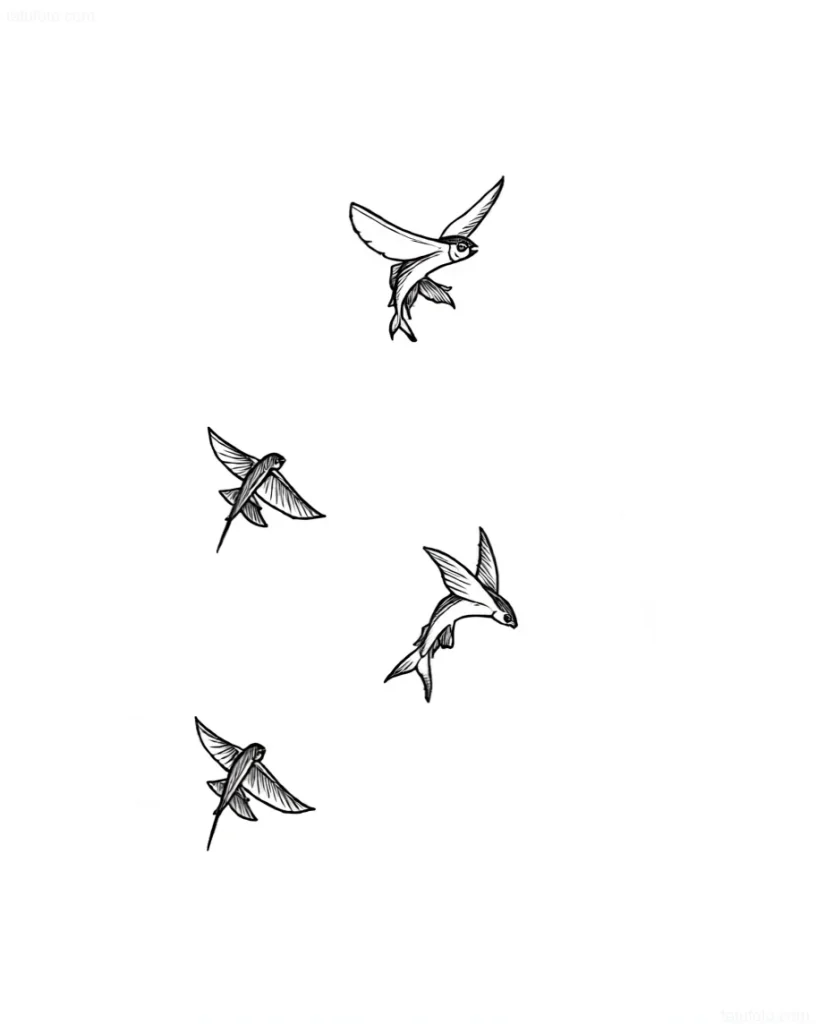
An image of several flying fish flying together enhances the meanings of community, unity, protection, and collective strength. It can also symbolize abundance or luck coming in large quantities.
Interesting Facts About Flying Fish and Their Meaning in Art
The inclusion of the flying fish in global culture and art adds additional layers of meaning to your tattoo, connecting it with themes of travel, risk, and the human spirit.
In Literature: A Symbol of Struggle
The flying fish is mentioned in classic literature, where it often serves as a metaphor for the lonely but persistent struggle for survival. The most famous example is Ernest Hemingway’s “The Old Man and the Sea.” In the novel, flying fish, serving as food, indirectly highlight the harsh beauty and the endless cycle of life and death in the ocean. Their sudden flight is a brief moment of triumph over fate.
In Mythology and Totemism
In some coastal cultures, the flying fish was considered a totem animal that bestows upon a person the ability of “dual vision” – the skill to see a situation from both an ordinary and a higher, spiritual perspective. The owner of such a totem possesses intuition and the ability to foresee dangers.
Art Deco and Stylization
In the first half of the 20th century, during the heyday of the Art Deco style, the flying fish became a popular motif in decorative art, especially in jewelry and sculpture. Its elegant, aerodynamic form perfectly matched the aesthetic of speed, progress, and elegance characteristic of that era. A tattoo in this style (clean, geometric lines, symmetry) can emphasize the pursuit of perfection and progress.
A flying fish tattoo is not just a beautiful marine motif. It is a deep, multi-layered symbol that speaks of your inner strength, your pursuit of freedom, and your unique ability to turn obstacles into opportunities for flight. By choosing this image, you choose a path that leads you over the waves, to new horizons, confirming that limitations exist only to be overcome.