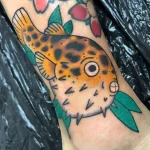
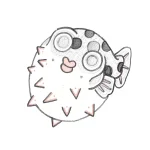
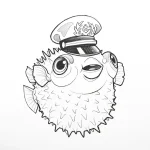
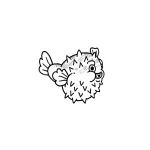
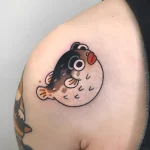
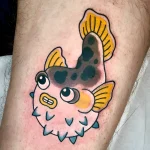
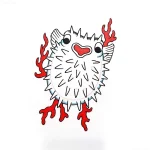
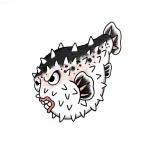
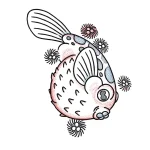
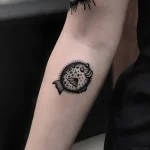
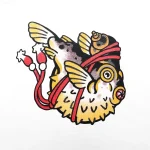
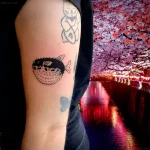
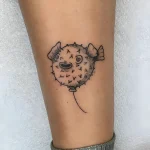
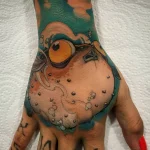
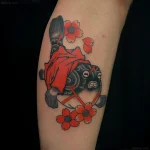
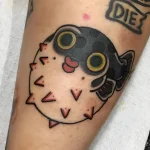
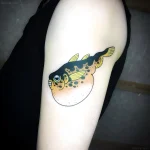
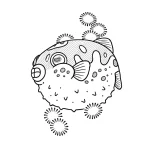
The Pufferfish tattoo is one of the most intriguing and multifaceted symbols in global tattoo art. It carries a unique cultural code based on a paradox: beauty and delicacy bordering on deadly danger. By choosing this image, you declare your readiness to walk the tightrope, embrace life’s challenges, and demonstrate inner resilience. It’s a symbol that requires deep contextual understanding before becoming part of your personal story.
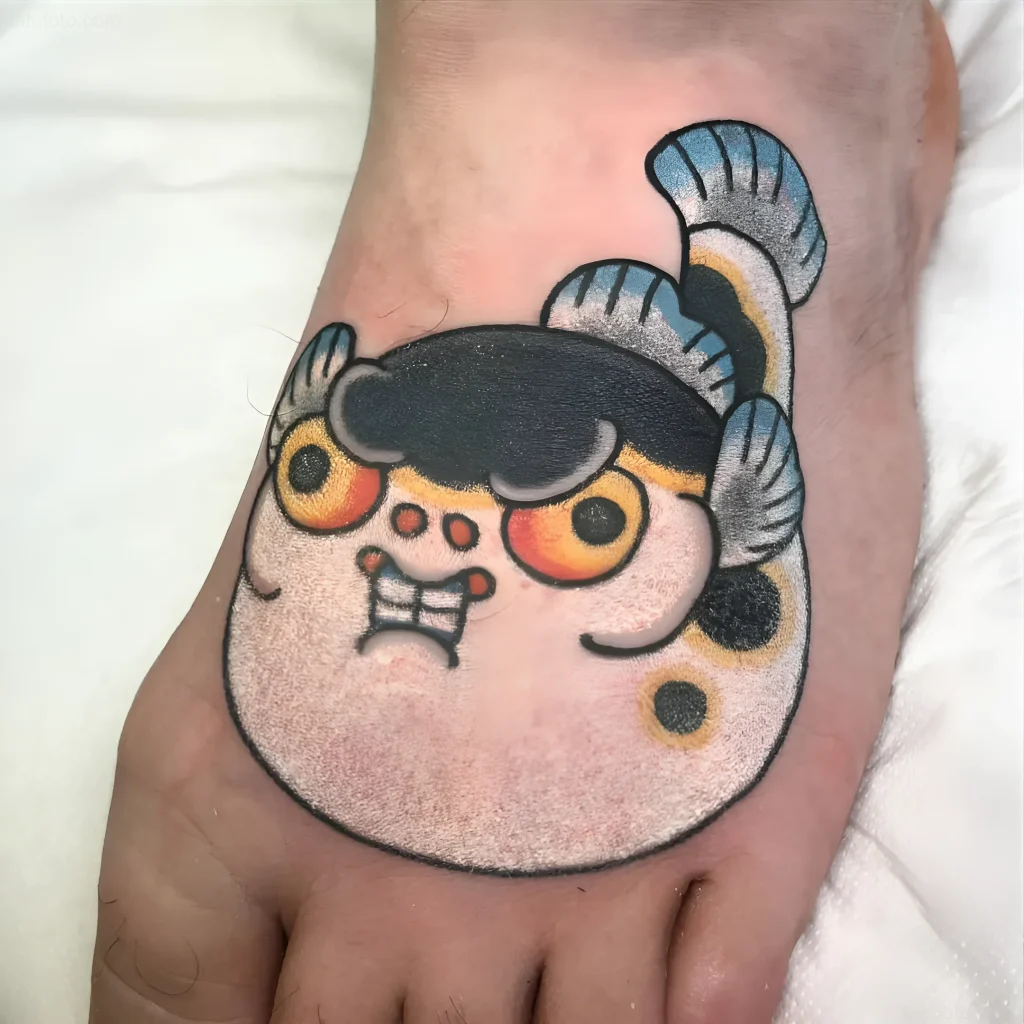
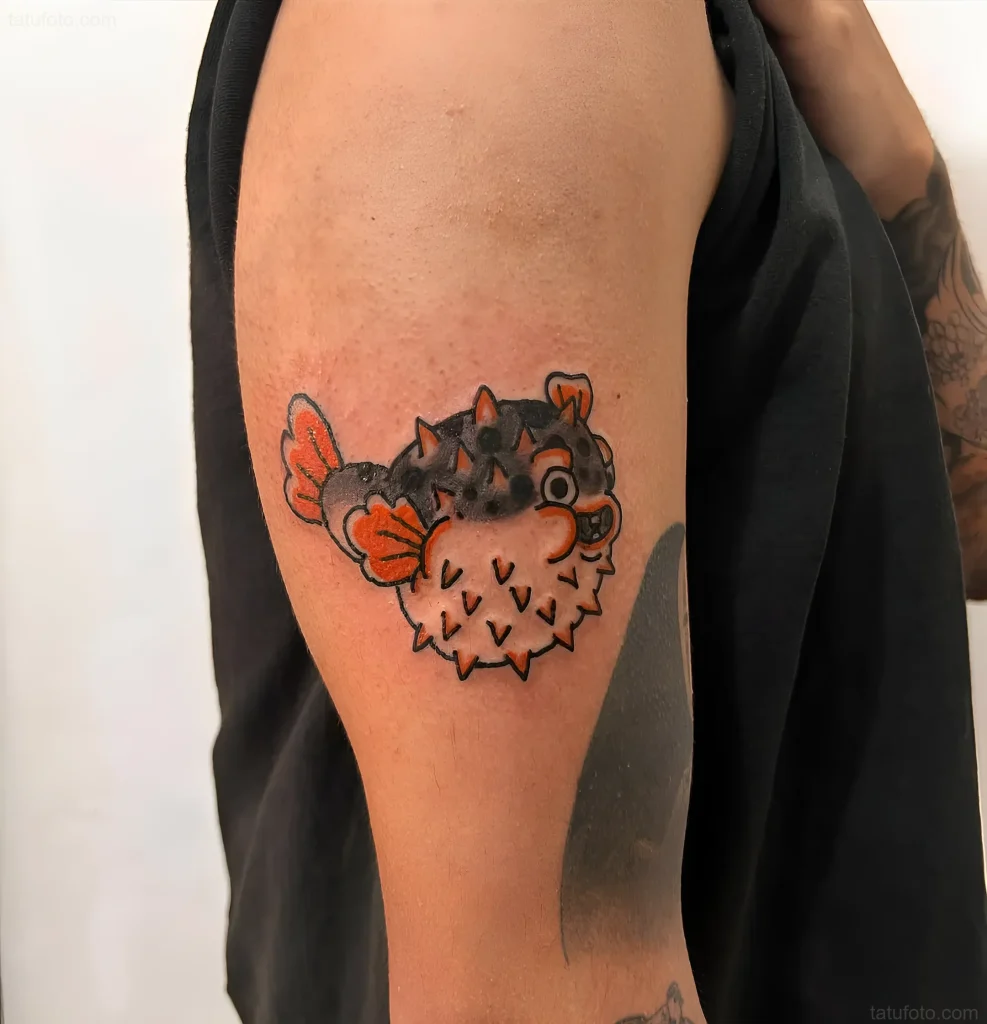
Pufferfish Tattoo: A Mysterious Symbol of Danger and Luck
The Pufferfish, or Fugu, holds a special place in Japanese culture and, consequently, in tattooing. It’s not just a marine creature; it’s a metaphor for life where risk and reward are inextricably linked. Its image embodies a duality that makes the Fugu tattoo incredibly appealing to strong-willed individuals.
Why Fugu is a Symbol of Paradox:
- Deadly Beauty: Fugu contains tetrodotoxin, a poison thousands of times stronger than cyanide. Yet, it is one of the most expensive and prestigious delicacies in Japan.
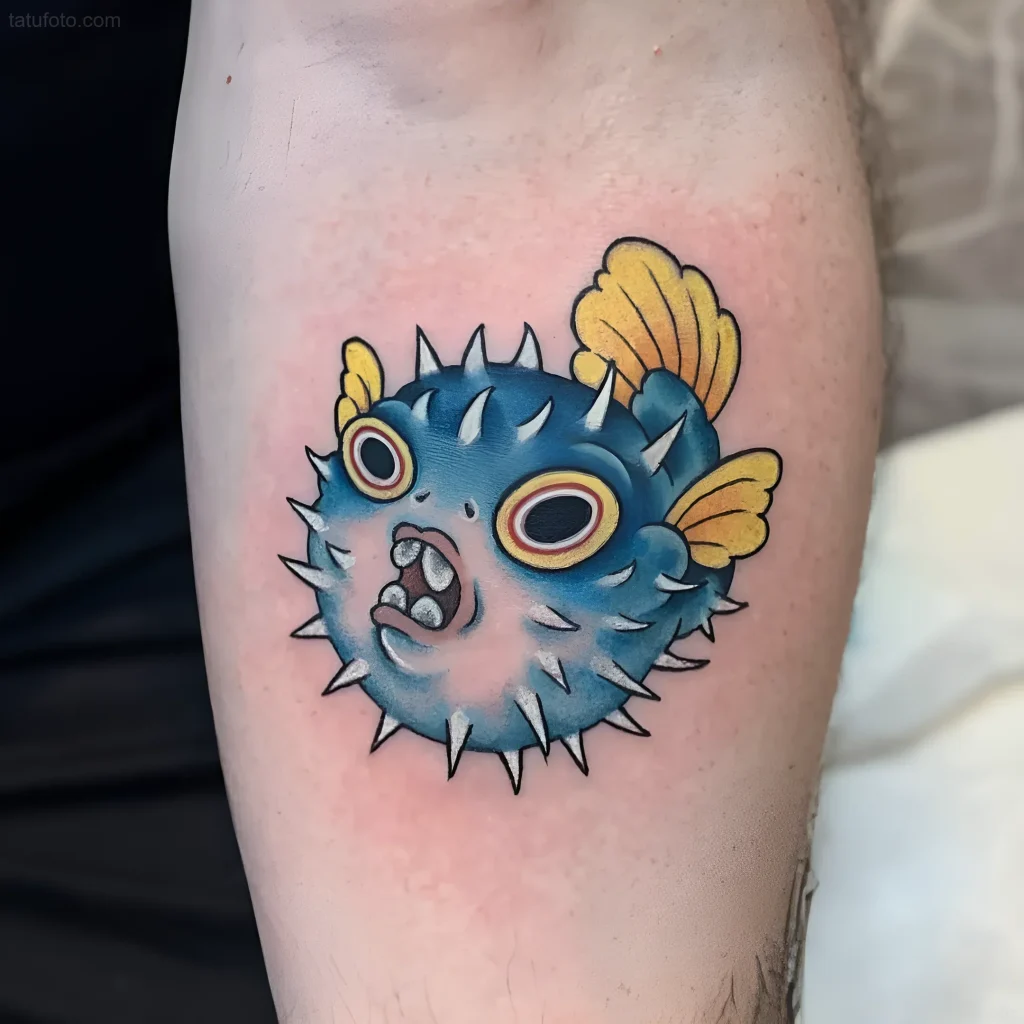
- Vulnerability and Defense: In its normal state, Fugu appears harmless, but when threatened, it instantly inflates, turning into a spiky, impenetrable ball.
- A Gamble with Fate: Consuming Fugu is always a conscious risk. This is its philosophical meaning: accepting inevitability and knowing how to live despite the threat.
For the wearer of a Fugu tattoo, this image becomes a powerful amulet that not only signifies a love for marine themes but also reflects a deep life philosophy: “I am aware of the danger, but I am ready to face it.”
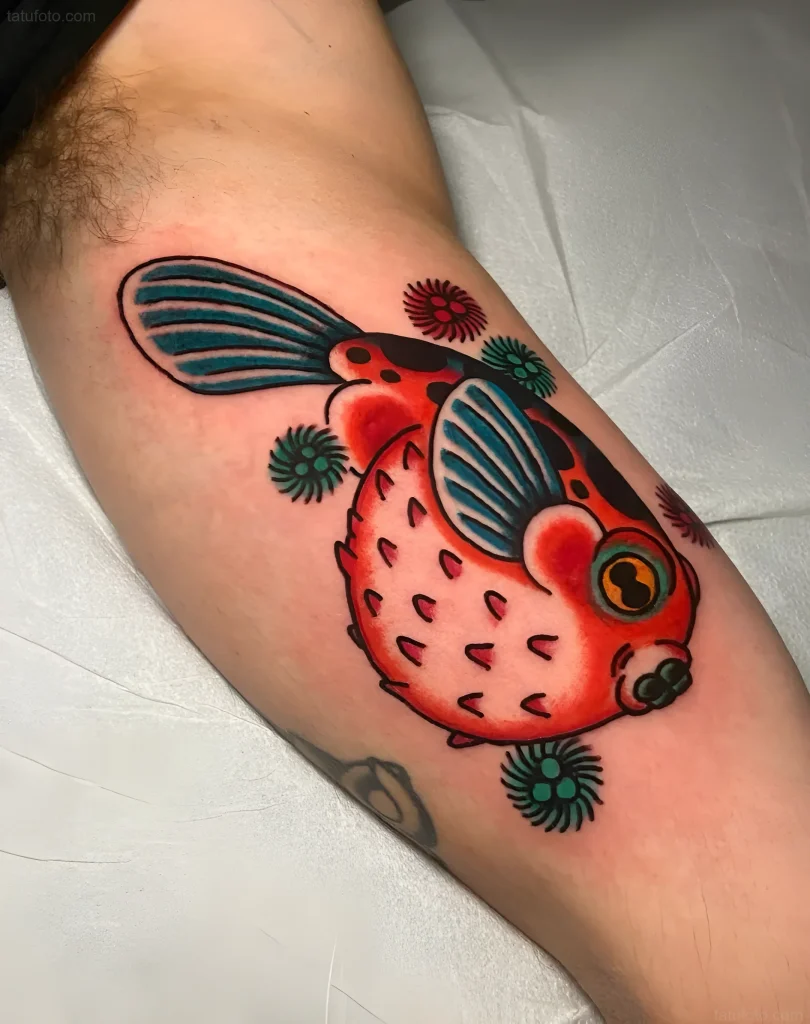
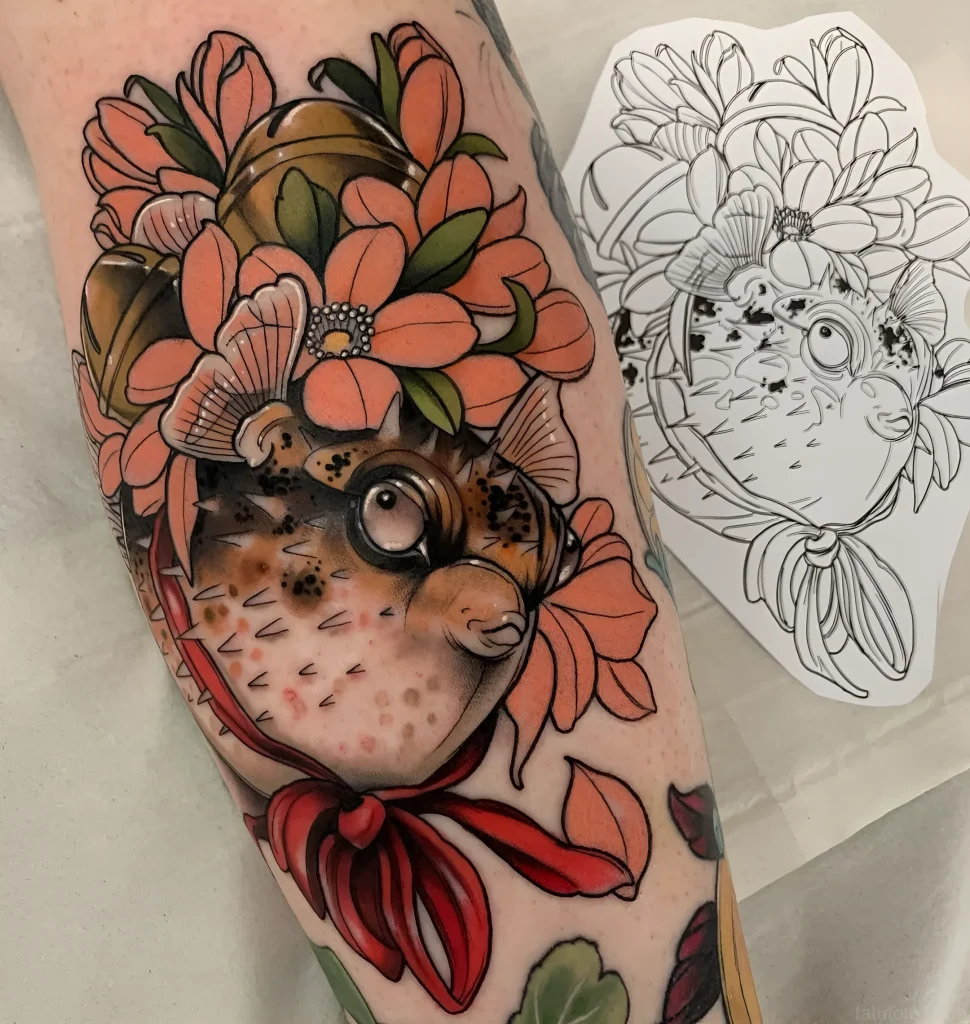
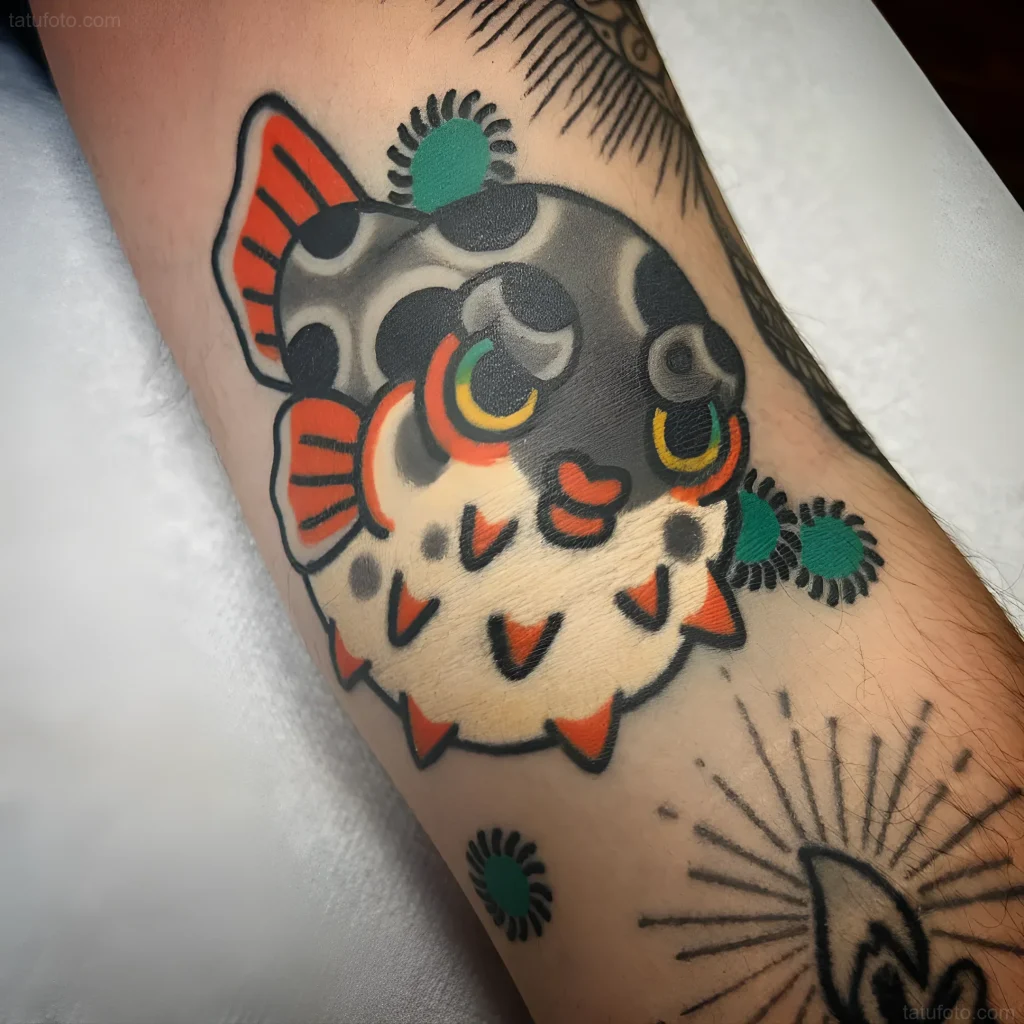
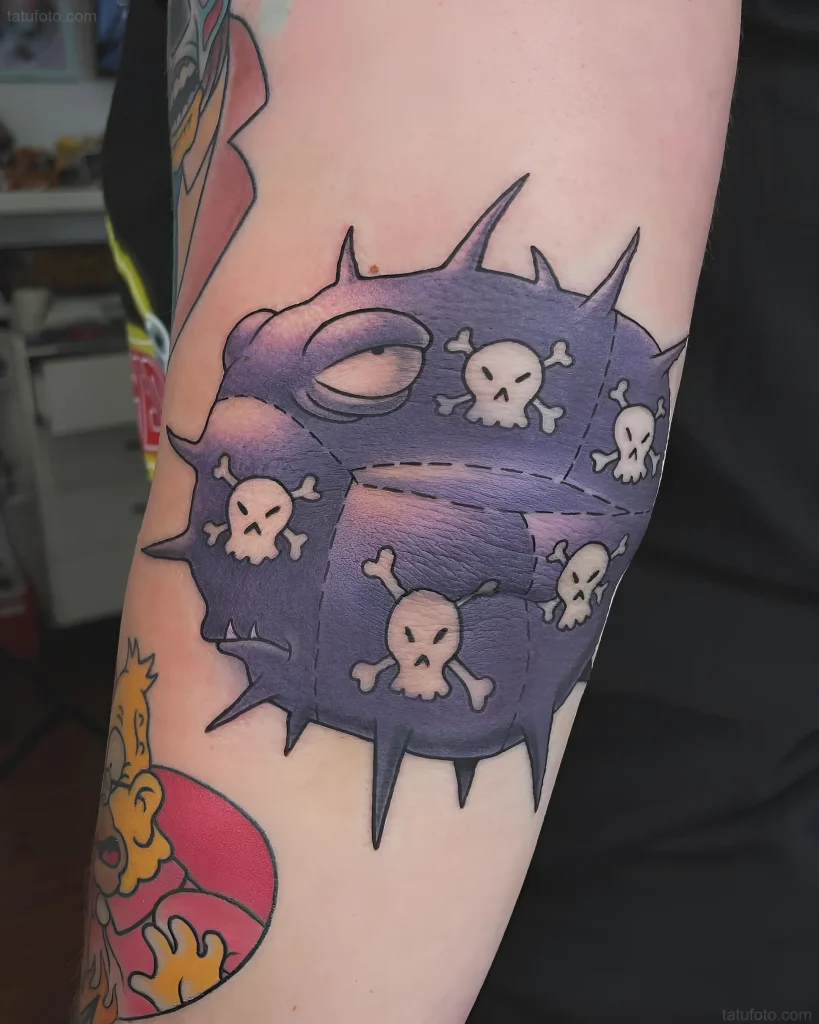
History of the Pufferfish Image in Tattoos: From Japan to Modern Times
The roots of the pufferfish image in tattoo art trace back to the Japanese tradition of Irezumi. Although Fugu is not as common a motif as dragons or koi carp, its symbolism has always been significant, especially among those who appreciated images associated with challenge and inner strength.
Fugu in Traditional Japanese Tattooing (Irezumi):
In Irezumi, Fugu was often depicted surrounded by water, waves, or other marine life. Key aspects of its depiction:
- Connection to Samurai Spirit: While direct comparison is rare, Fugu symbolizes readiness for death and fearlessness, which resonates with the principles of Bushido.
- Ukiyo-e Image: In Japanese prints, Fugu was often depicted as a symbol of the fine line between enjoying life and its transience. This was reflected in tattoos where the fish was presented vibrantly and dynamically.


Transition to Modern Styles:
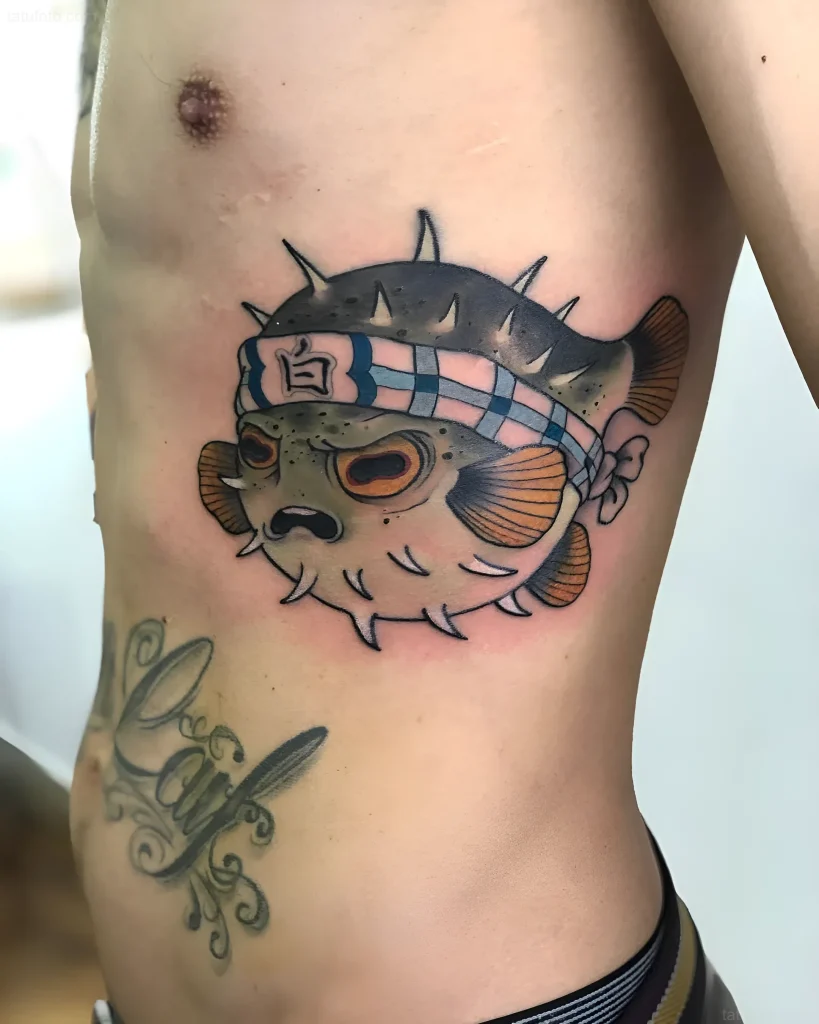
In Western tattoo culture, Fugu gained popularity due to its unique shape and potential for vibrant stylization. Today, a Fugu tattoo doesn’t necessarily have to be in the traditional Japanese style. Modern artists use its form for experimentation:
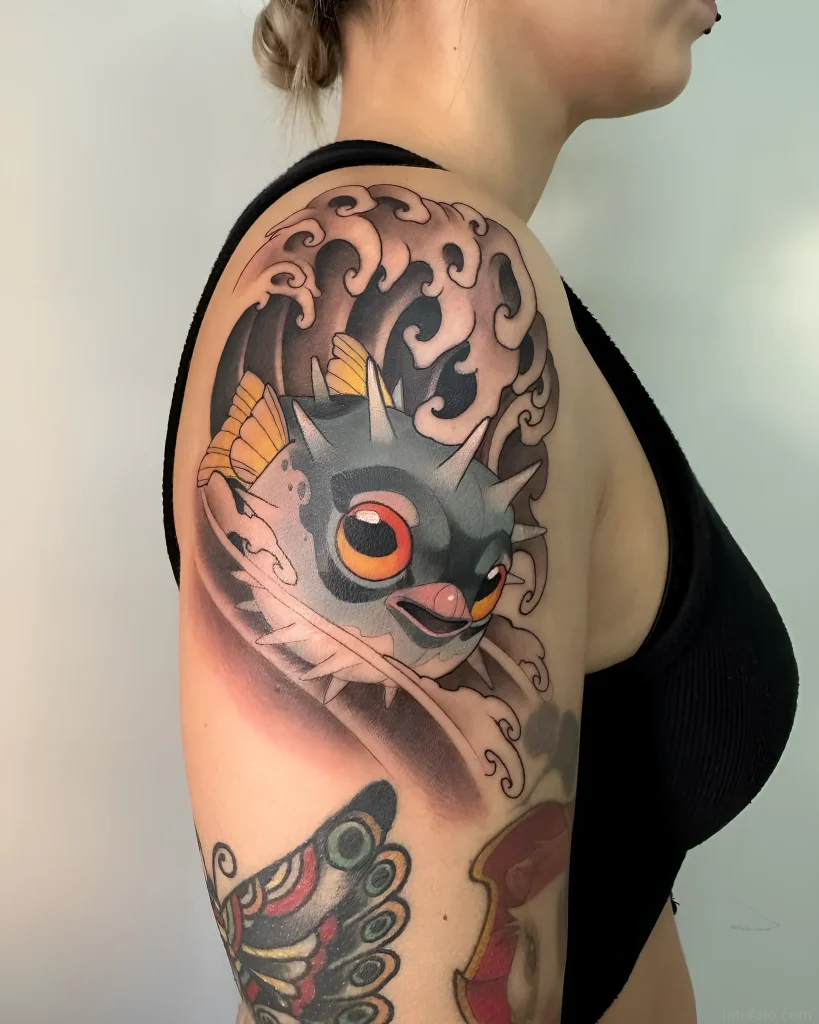
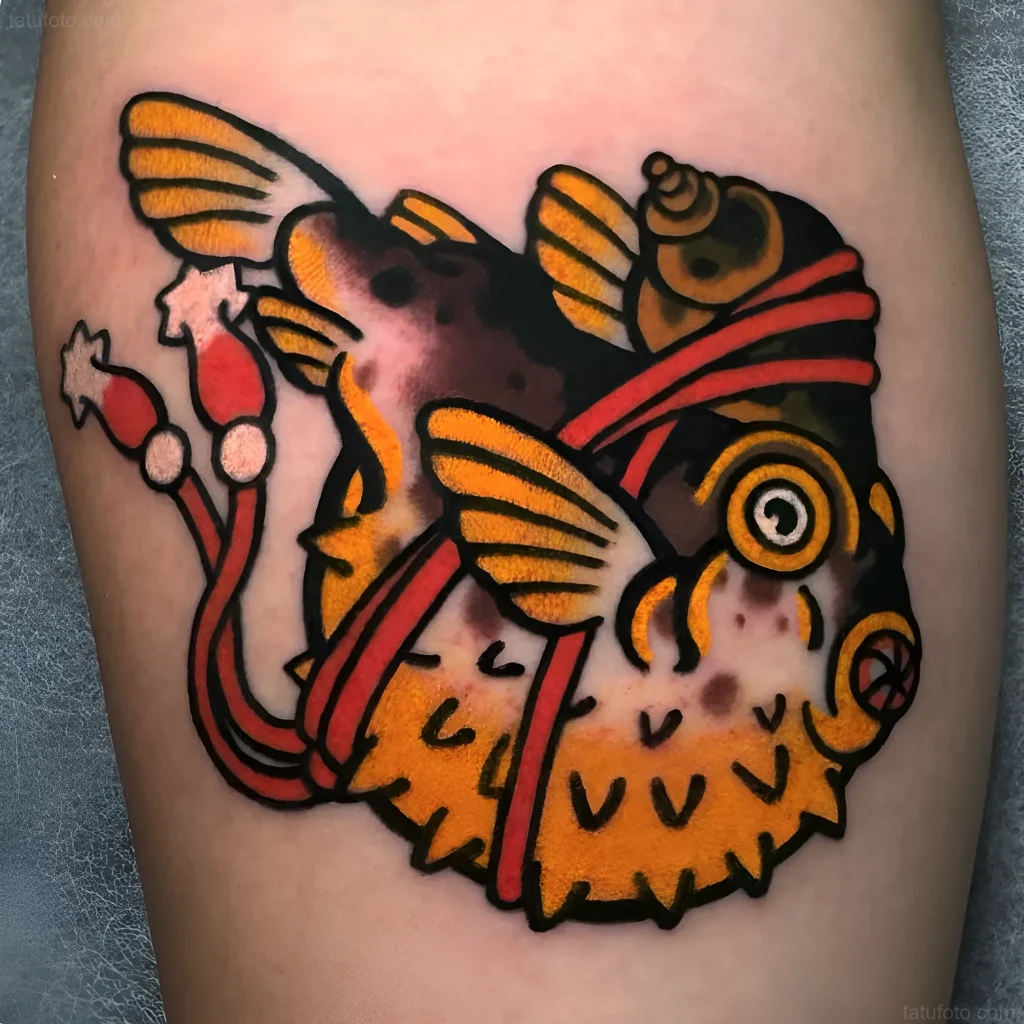
- Neo-Traditional: Enhanced color palette and detailing of spines and fins.
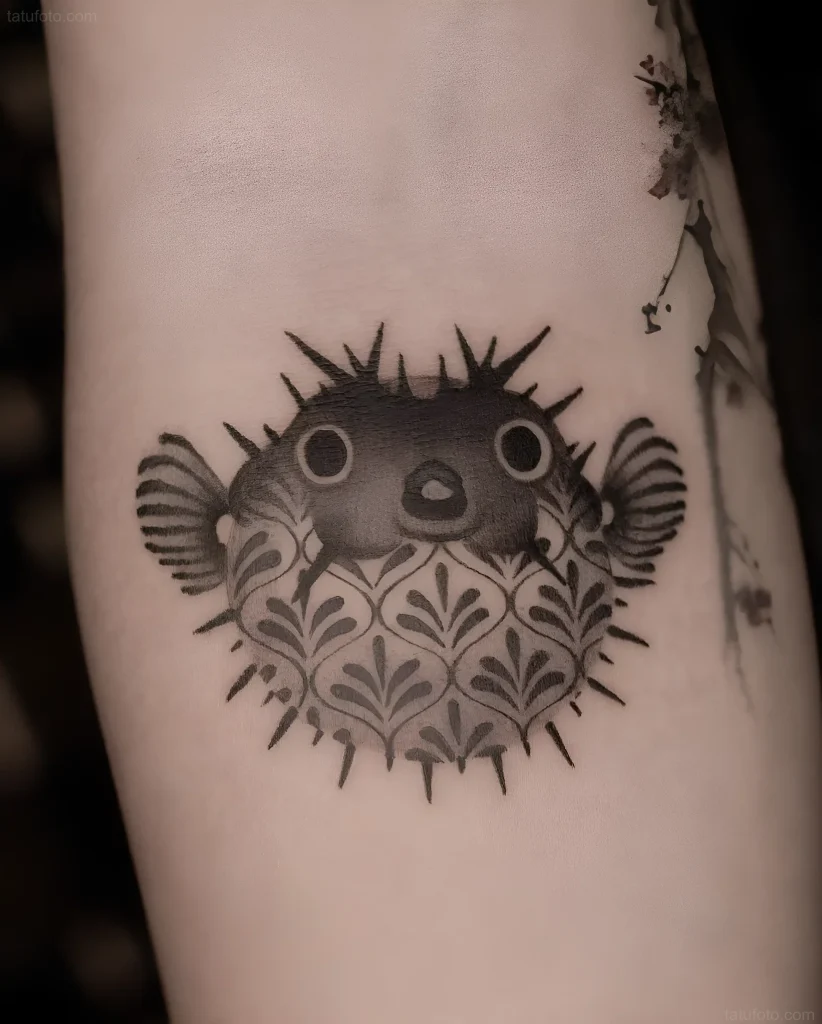
- Blackwork: Use of contrasting black lines to emphasize the menacing geometry of the inflated fish.
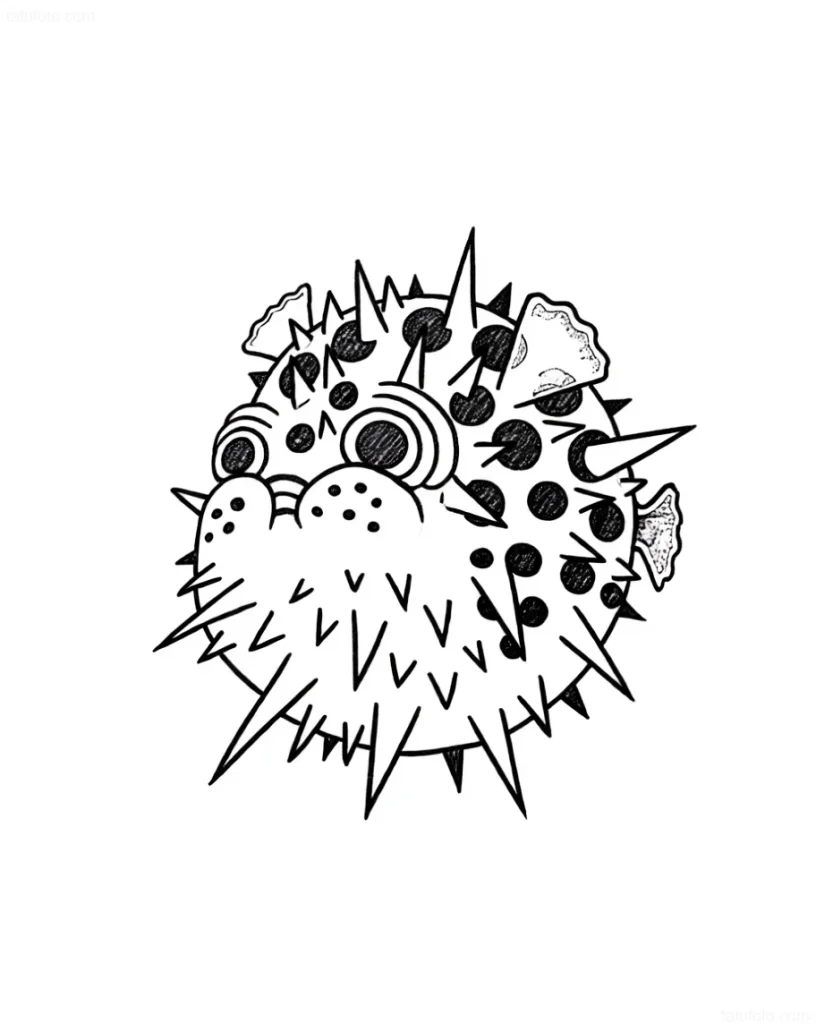
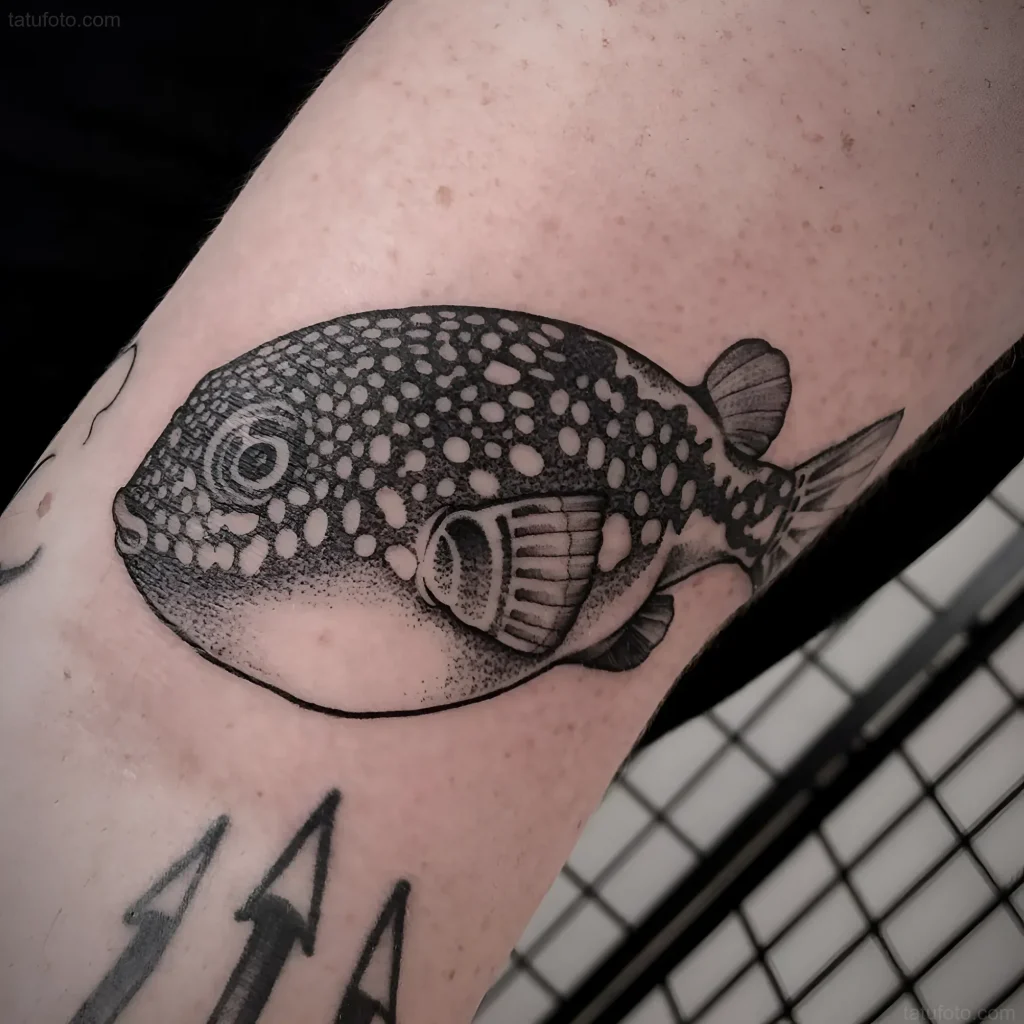
- Graphic and Dotwork: Creating the texture of spines using dots or shading, accentuating the protective function.
Regardless of the style, the meaning of a pufferfish tattoo always remains centered on the ideas of survival, risk, and uniqueness.
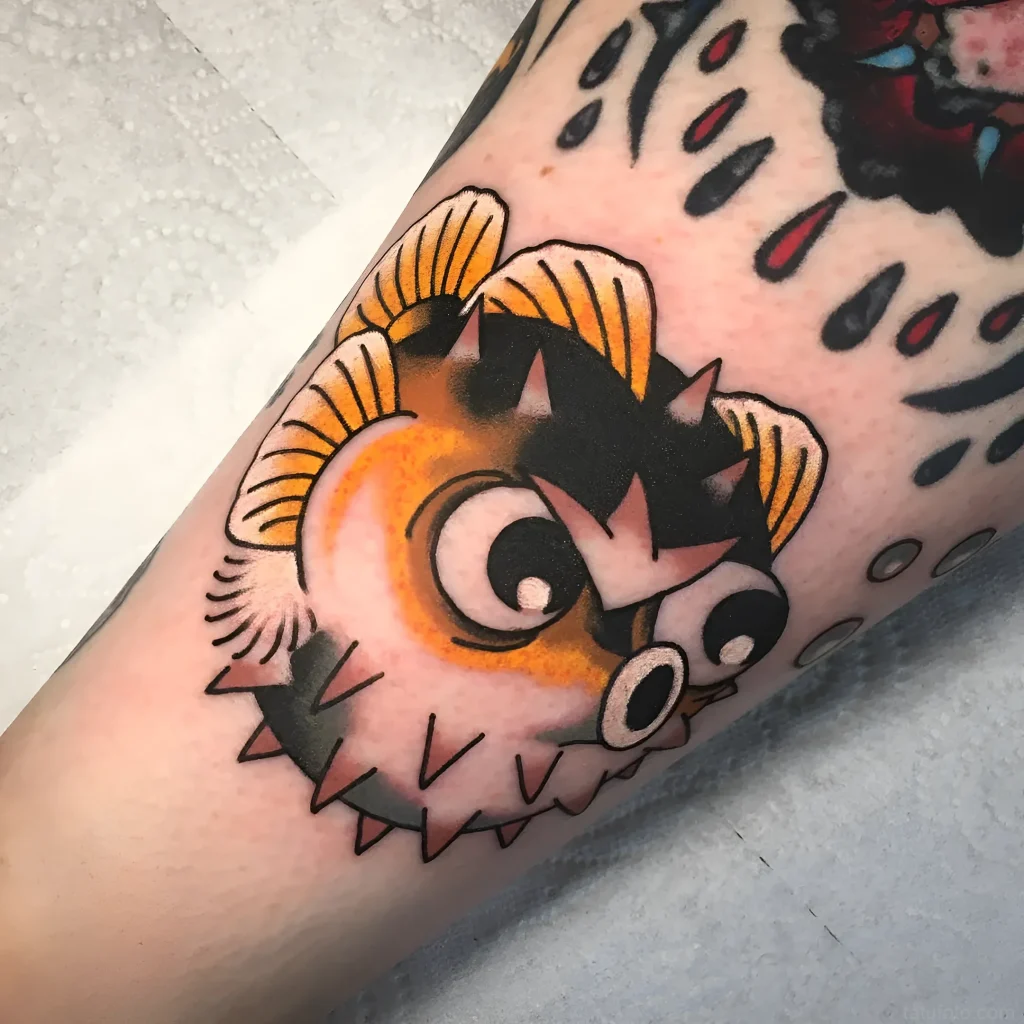
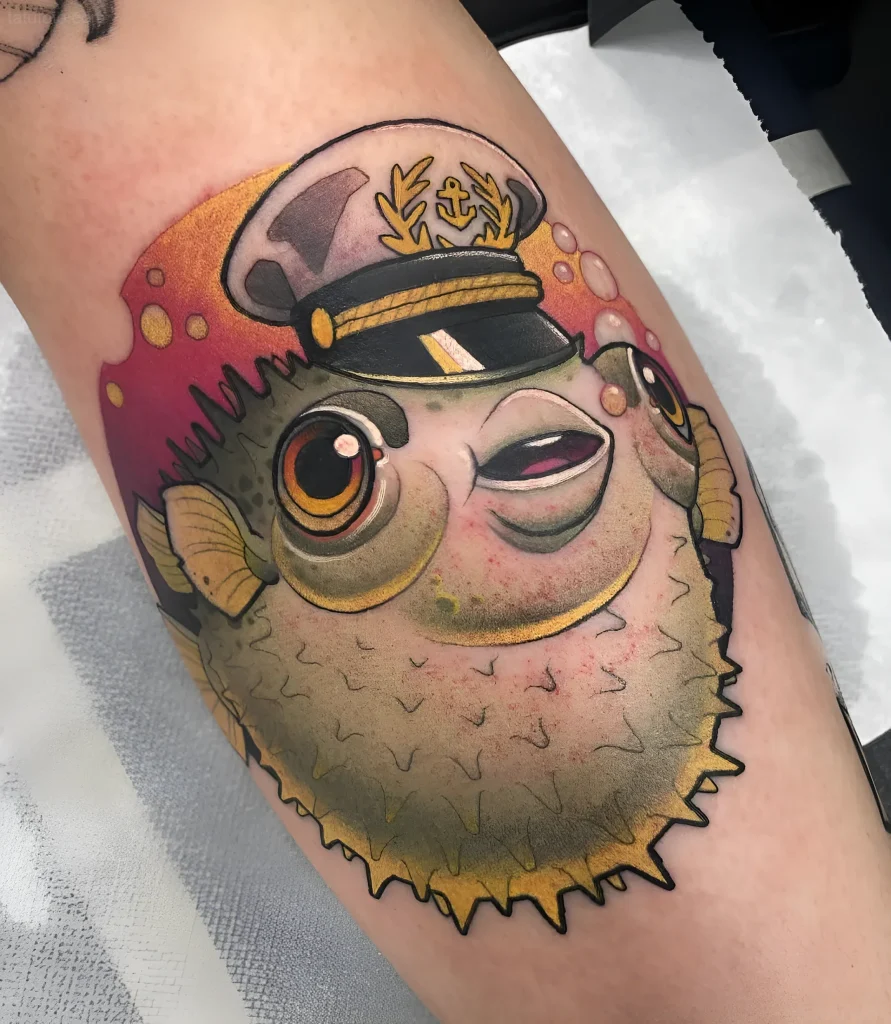
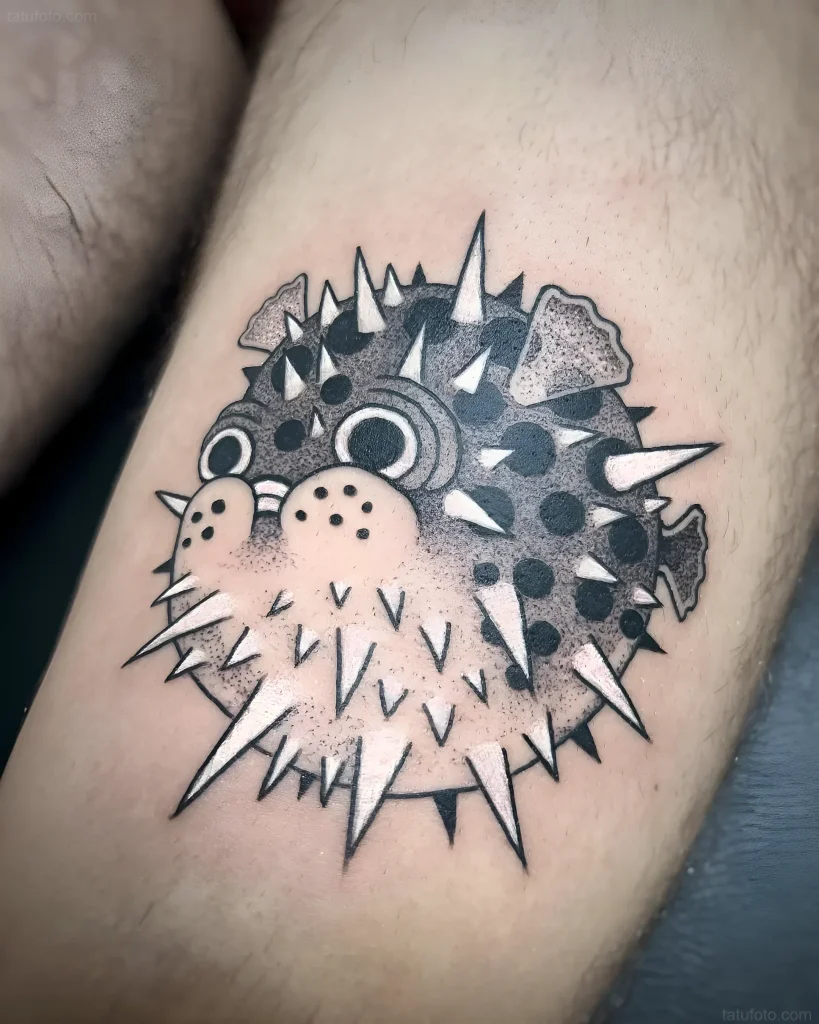
Meaning of the Pufferfish Tattoo: Deep Symbolism and Interpretations
Understanding the true meaning of a pufferfish tattoo requires delving into its biological characteristics and cultural context. This image carries several key, often contradictory, meanings.
1. Symbol of Challenging Fate and Embracing Risk
The most common and powerful meaning. A person choosing Fugu often associates themselves with a chef who knows how to handle deadly poison or a gourmet willing to risk it all for an incredible experience. The tattoo symbolizes:
- Risk-Taking: Readiness to take bold but calculated steps in life.
- Fatalism: Acceptance of the fact that life is full of dangers and the ability to live fully despite them.
- Living on the Edge: The ability to find beauty and pleasure in situations where others see only threat.
2. Resilience, Protection, and Invulnerability
Fugu’s defense mechanism—instantly transforming from a soft fish into a spiky ball—is a powerful metaphor.
- Inaccessibility: The wearer may use this image as a warning: outward harmlessness hides inner strength and readiness for aggressive retaliation.
- Regeneration and Survival: Fugu survives in aggressive environments, making it a symbol of incredible vitality and the ability to recover from life’s blows.
3. Duality and Balance (Yin and Yang)
Fugu embodies the perfect balance between opposites: life and death, beauty and ugliness, pleasure and suffering.
- Life Balance: A reminder of the need to maintain equilibrium between the light and dark sides of one’s personality or life.
- Mindfulness: Understanding that potential threat is hidden in every pleasure, and vice versa.

4. Luck and Wealth
In Japan, Fugu is an expensive delicacy that not everyone can afford. In this context, the tattoo can symbolize:
- Abundance: Attracting financial success and prosperity.
- Exclusivity: Belonging to those who appreciate rare and unique things or experiences.
Variations in Symbolism Depending on the Depiction:
| Fugu Depiction | Primary Symbolic Meaning |
|---|---|
| Inflated, spiky Fugu | Protection, aggressive retaliation, inaccessibility, readiness for struggle. |
| Calm, uninflated Fugu | Hidden strength, wisdom, potential, peaceful coexistence with danger. |
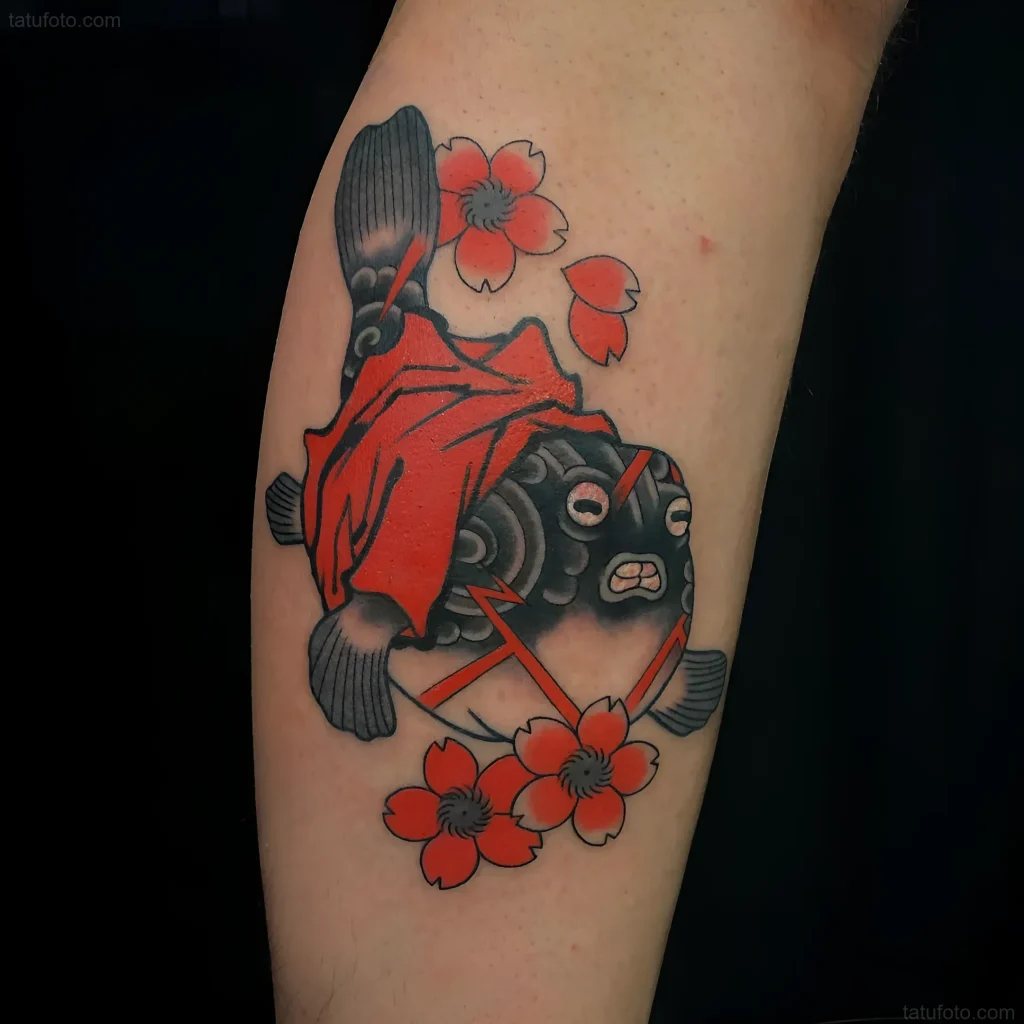
| Fugu with flowers (e.g., sakura) | The ephemerality of life, beauty, transience, enjoying the moment. |
| Fugu combined with waves | The unpredictability of fate, overcoming life’s difficulties. |
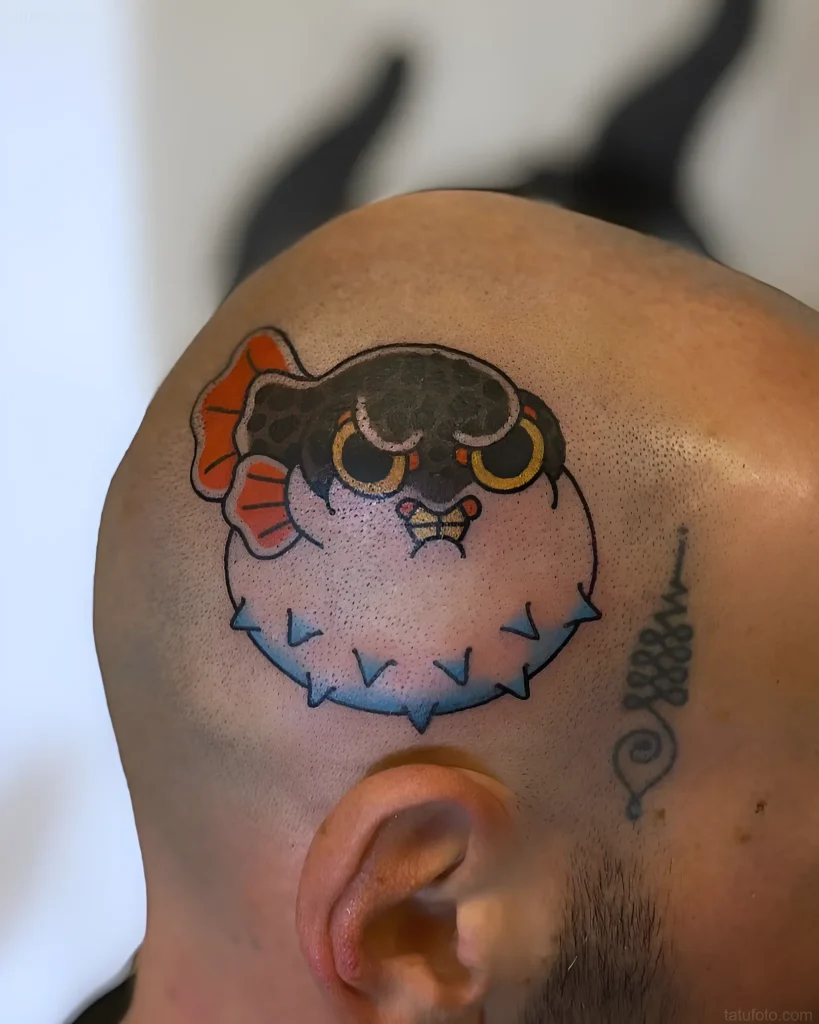
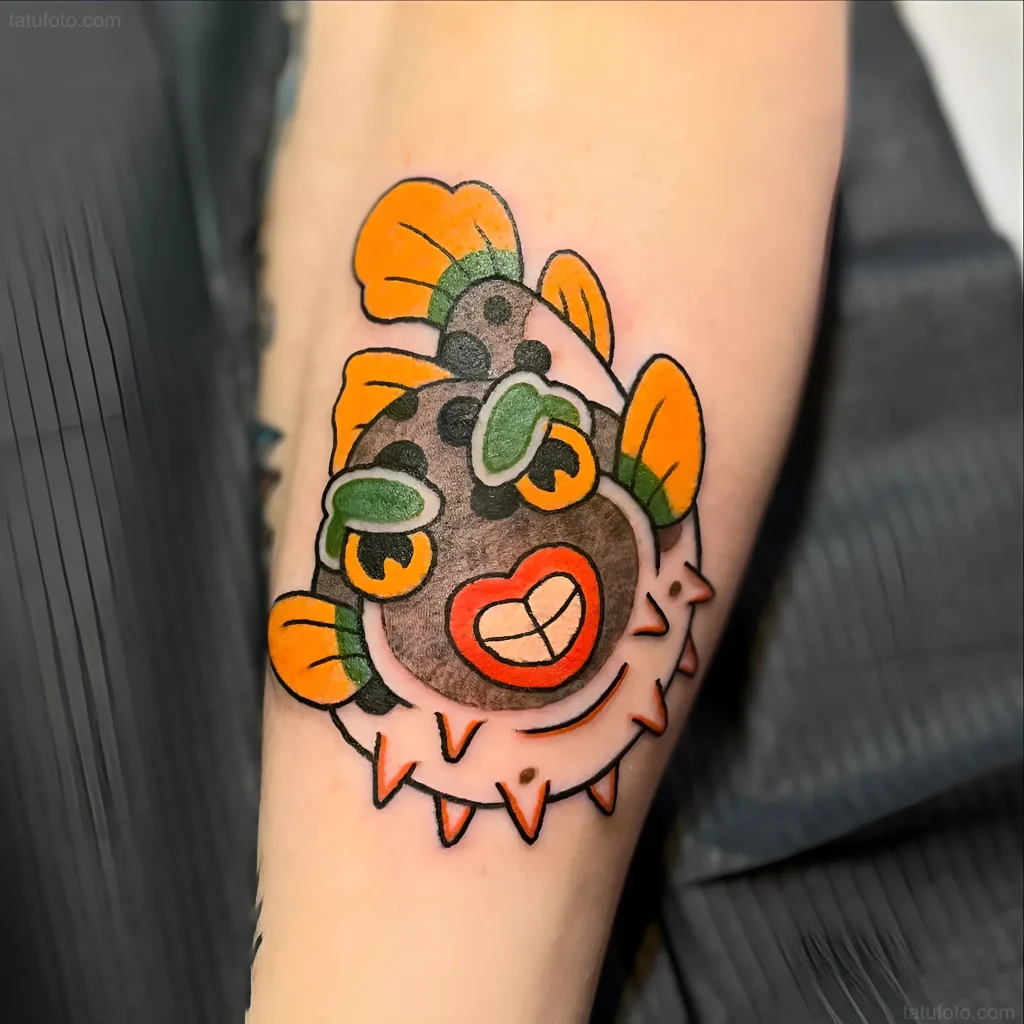
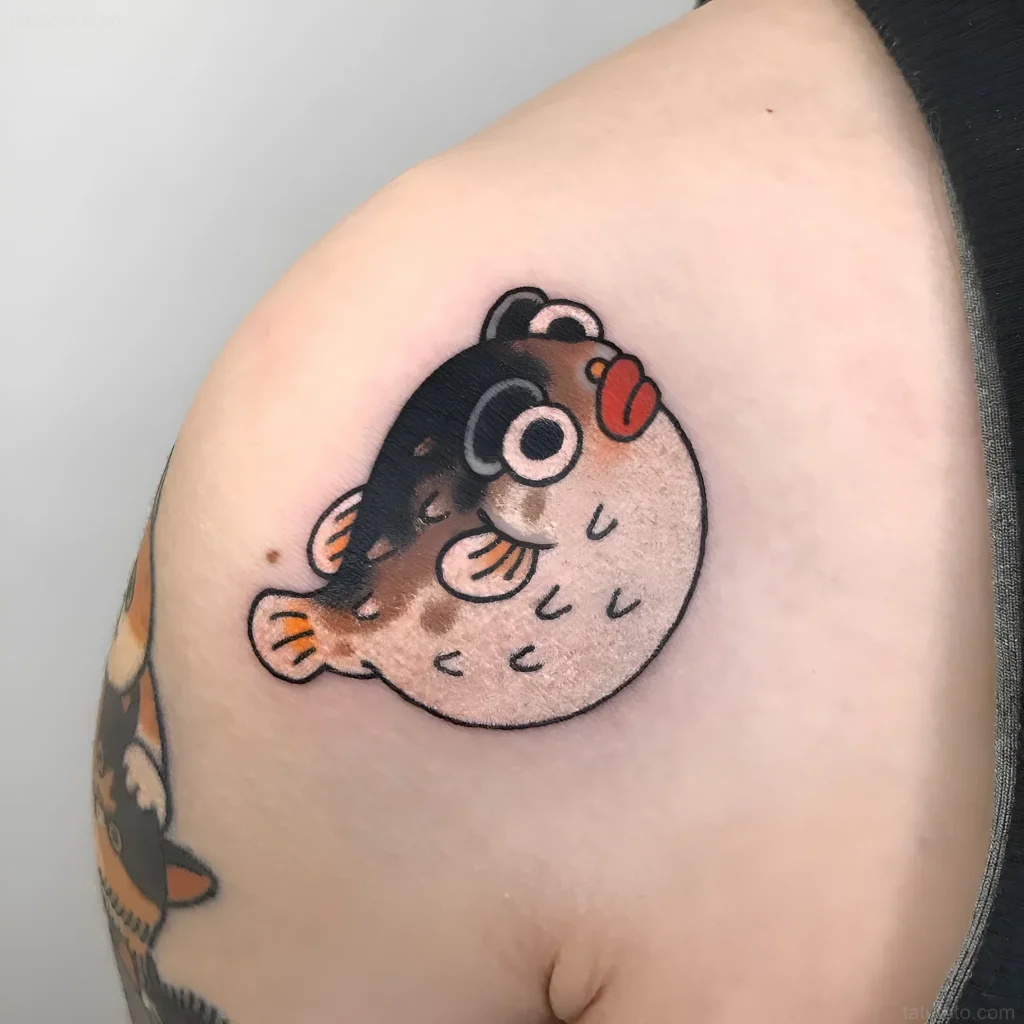
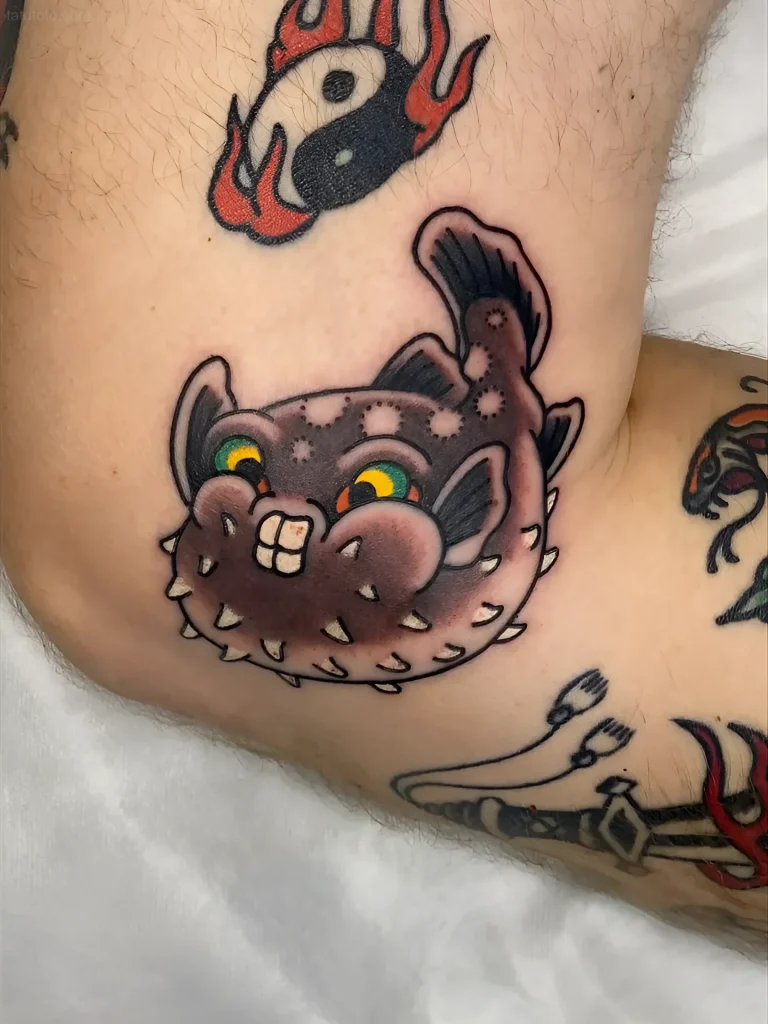
Pufferfish Tattoo Styles: Choosing the Ideal Embodiment
The choice of style is critical, as it determines which aspect of the meaning of a pufferfish tattoo will dominate—danger, humor, or aesthetics. Tattoo artists offer many options for embodying this unique image.
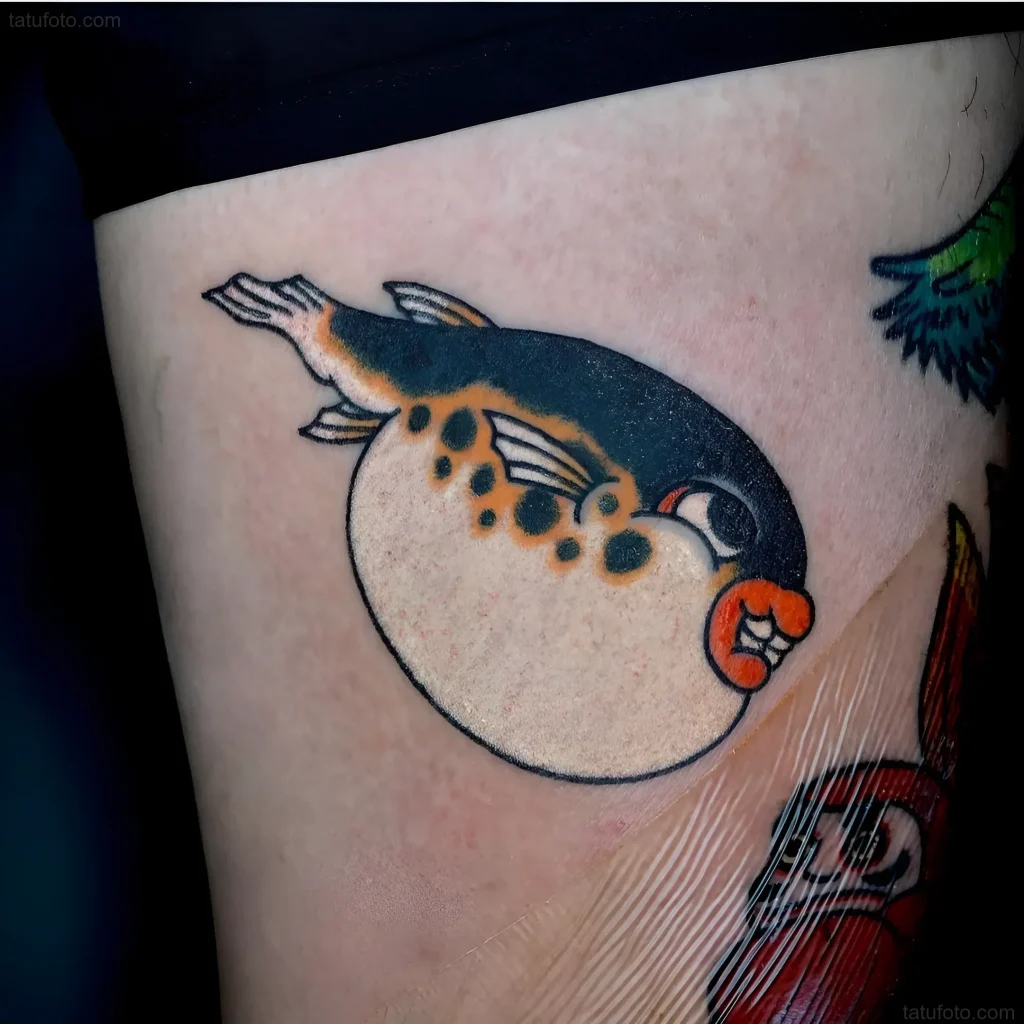
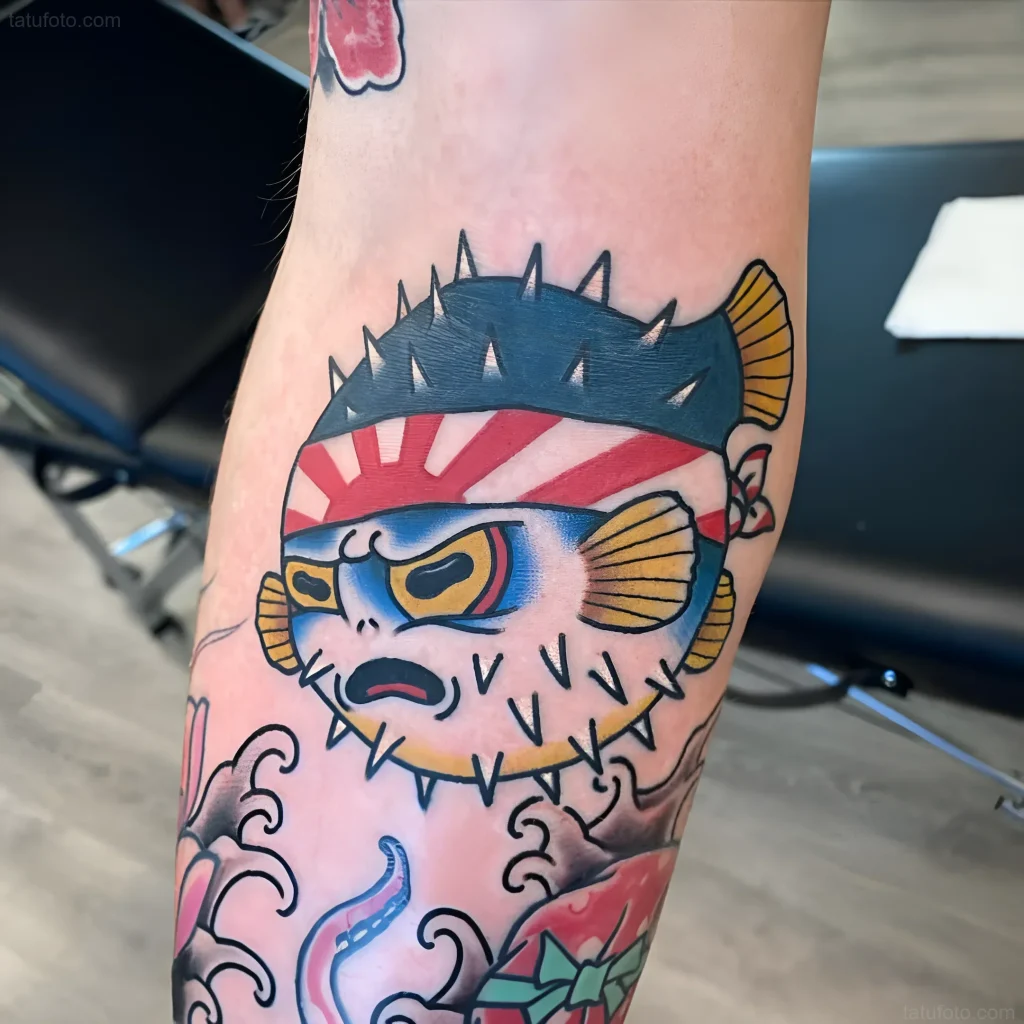
1. Traditional Japanese Style (Irezumi)
If you want to emphasize the historical and philosophical depth of the symbol, Irezumi is your choice. Fugu in this style is often depicted:
- Color: Using classic Japanese pigments—black, red, blue, and gold.
- Composition: The fish is part of a larger narrative, surrounded by stylized waves (nami) or branches (karakusa).
- Effect: Creates a sense of monumentality and seriousness, emphasizing challenge and fatalism.
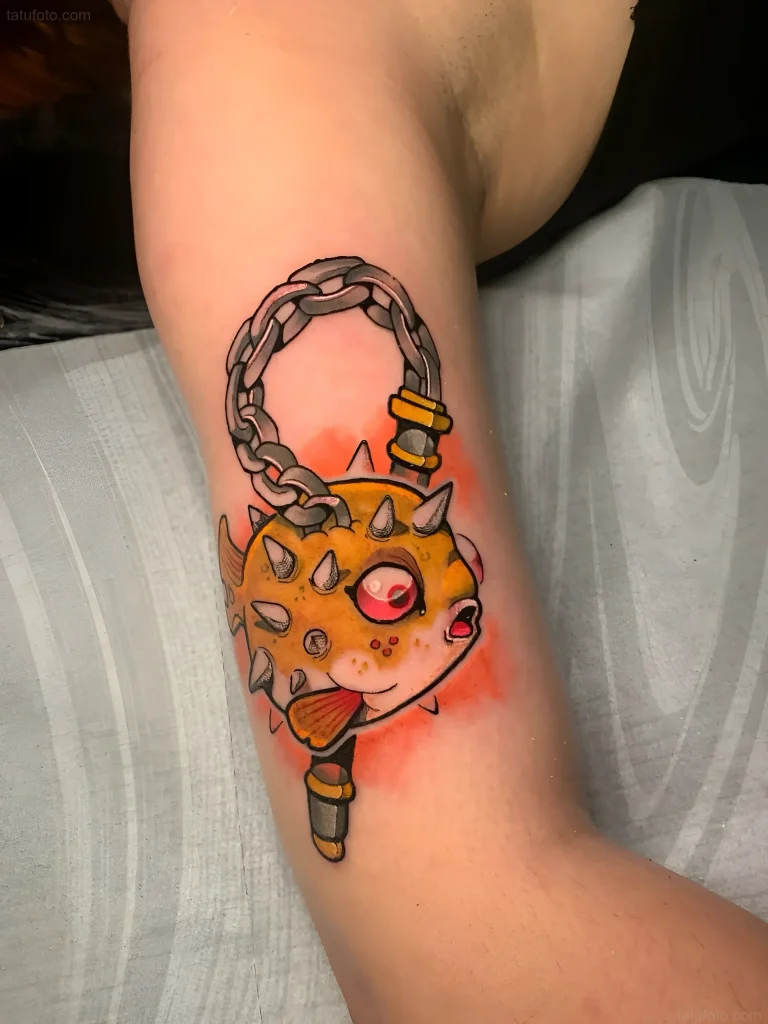
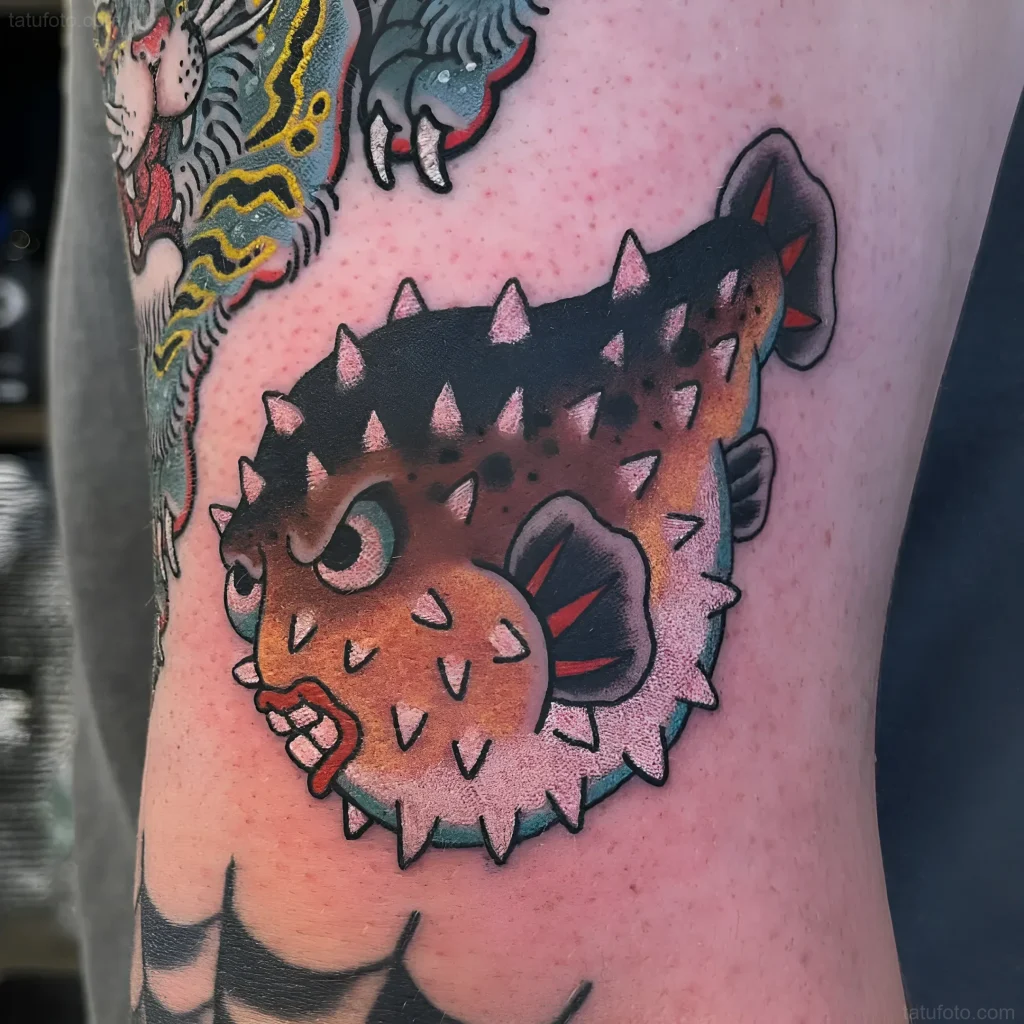
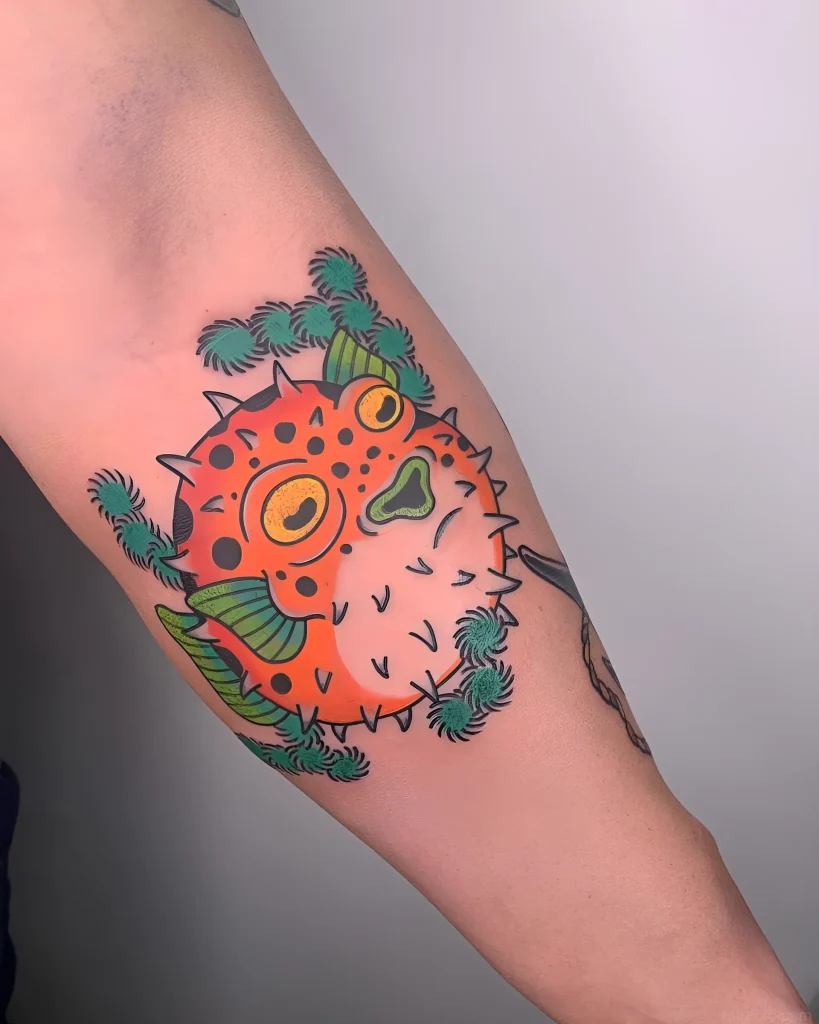
2. Neo-Traditional
This style allows for a brighter, more detailed, and modern Fugu image while retaining classic outlines.
- Detailing: Emphasis is placed on skin texture, spines, large expressive eyes, and fins.
- Color Palette: Use of gradients, bright and saturated, sometimes neon colors, to highlight the fish’s exoticism and danger.
- Meaning: Ideal for those who want to emphasize the duality and visual appeal of the image.
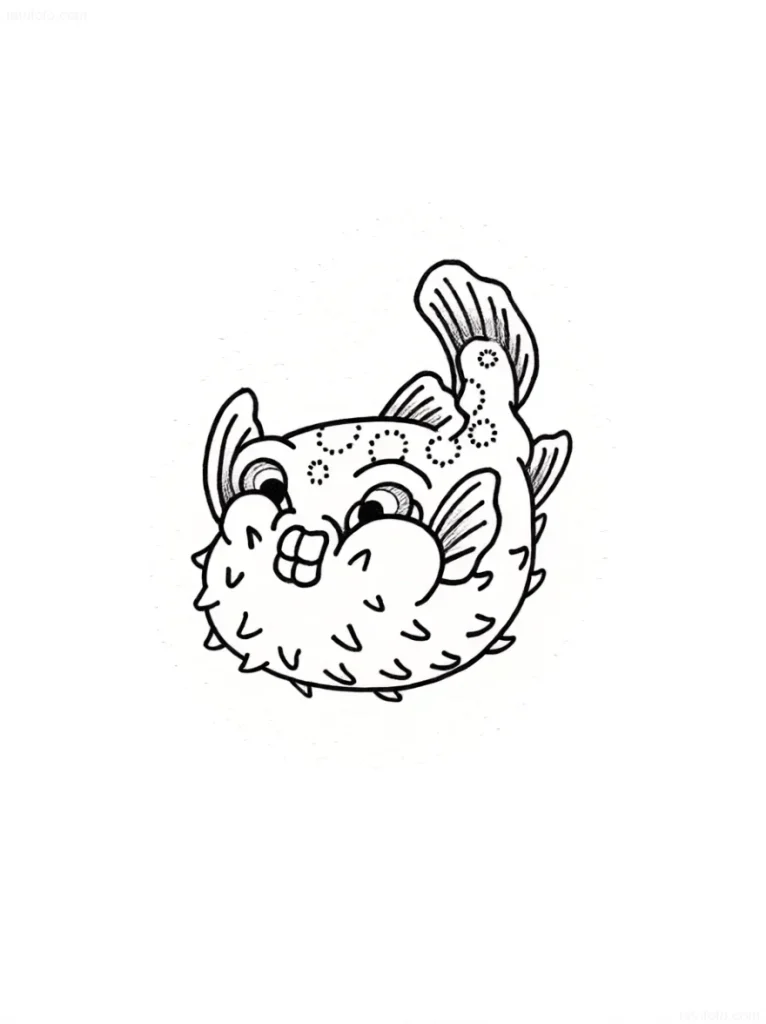


3. Realism
A realistic depiction of Fugu is a complex task requiring high skill. This style often portrays the inflated fish caught in a moment of threat.
- Focus: Maximum accuracy in conveying anatomy and texture.
- Emotion: Emphasizing the threatening or, conversely, comical expression of the fish’s “face.”
- Symbolism: A direct and uncompromising reflection of defense and aggressive resilience.
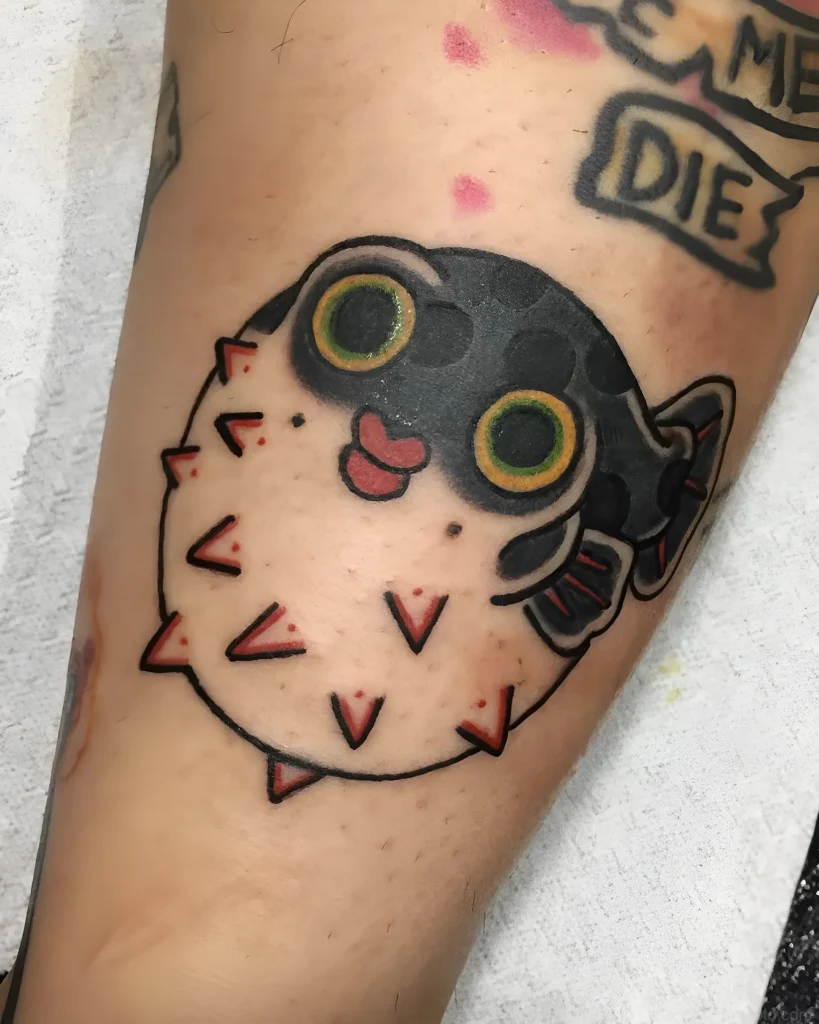
4. Graphic and Blackwork
For a minimalist yet powerful expression of Fugu’s symbolism, a graphic style is suitable.
- Execution: Clean lines, use of dotwork to create volume and spine texture.
- Aesthetics: Often used for small but significant tattoos.
- Meaning: Emphasis on contrast, strength, and conciseness.
Where to Get a Pufferfish Tattoo: Popular Locations and Their Meanings
The placement of a tattoo always enhances its symbolic meaning of a pufferfish tattoo. The choice of location should correspond to the aspect of the symbol you wish to emphasize.
1. Forearm and Biceps
These areas are ideal for showcasing strength and readiness for action. If you want Fugu to symbolize your active defense and willingness to take risks, the arm is the best choice.
- Forearm: Suitable for medium and realistic depictions. Easily displayed, symbolizing openness to dangers.
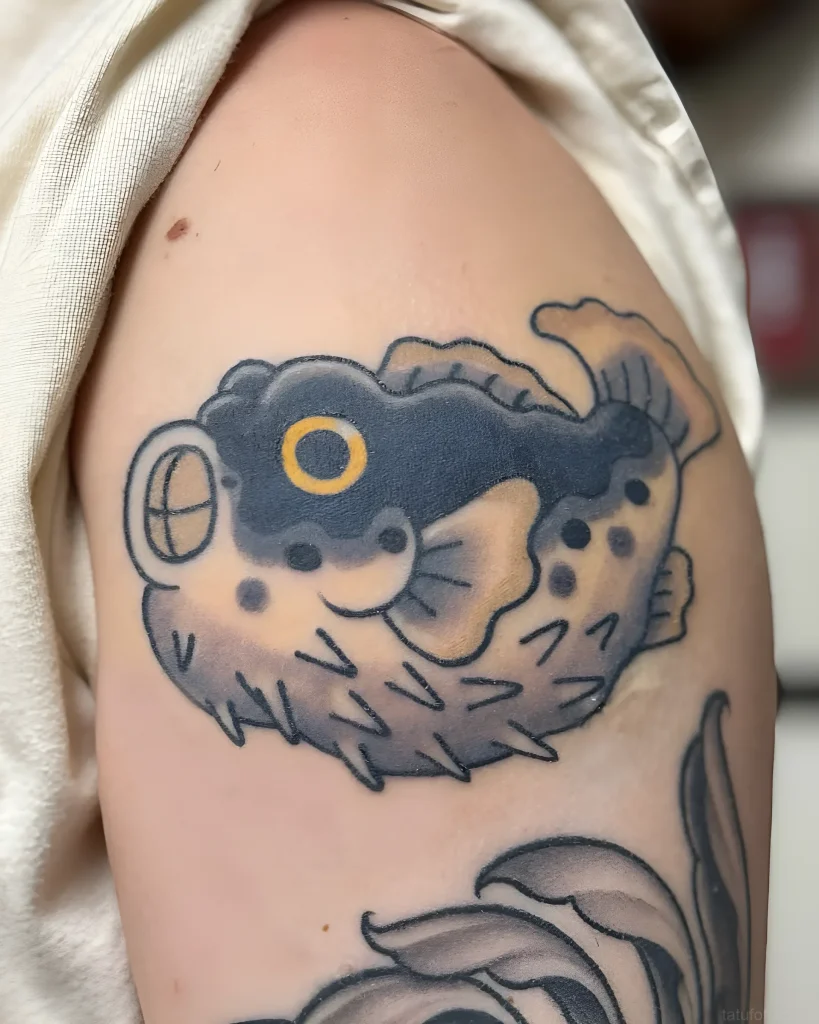
- Biceps/Shoulder: Often used for larger, traditional Japanese compositions.
2. Chest and Solar Plexus
Tattoos on the chest are traditionally associated with the heart, courage, and deep-seated beliefs. Fugu in this area symbolizes:
- Inner Courage: Embracing risk stemming from the very heart.
- Protection of Core Principles: Fugu acts as a shield, protecting the wearer’s most important beliefs.
3. Back (Lower Back or Shoulder Blade)
The back is an area associated with support, foundation, and hidden strength. A Fugu tattoo on the back can signify:
- Hidden Power: Strength that is not displayed until the moment of threat arises.
- Invulnerability: Fugu as a reliable, impenetrable protector, always at one’s back.
4. Thigh and Calf
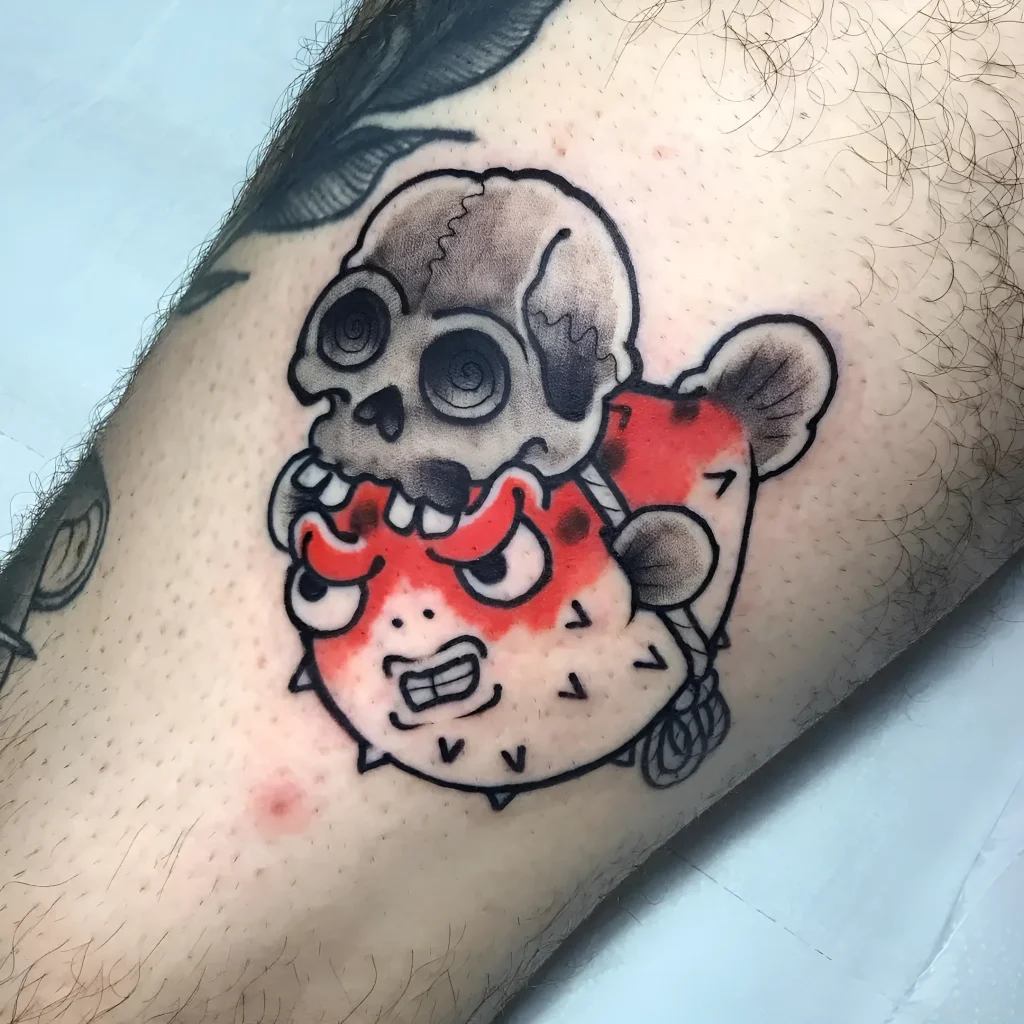
These areas are suitable for longer, vertical, or flowing compositions. A tattoo on the leg often symbolizes moving forward, overcoming obstacles, and endurance.
- Movement and Risk: A symbol of readiness to move forward, despite the dangers on the path.
- Scale: The thigh allows for a detailed Fugu in the Irezumi style with surrounding elements (waves, corals).
Pufferfish Tattoo Care: Maintaining Brightness and Beauty of the Design
A pufferfish tattoo, especially one done in vibrant styles (Neo-Traditional or realism), requires careful aftercare to preserve the contrast of lines and richness of color. Proper care is crucial, given the complexity of details such as spines and gradients.
1. Initial Aftercare (First 2 Weeks)
- Protection: In the first few days, use a healing film or regularly wash the tattoo with antibacterial soap and apply a cream recommended by your artist (e.g., with panthenol).
- Avoid Water: For the first two weeks, prolonged water exposure is strictly prohibited: baths, swimming pools, saunas. Short showers are allowed.
- Sun Protection: Direct sunlight is the main enemy of a fresh tattoo. UV radiation damages pigment, especially bright colors often used for Fugu depictions.
2. Long-Term Care and Color Preservation
To keep your Fugu vibrant and striking for years to come, follow these rules:
- Moisturizing: Regularly moisturize your skin with quality lotions. Healthy, hydrated skin retains pigment better.
- Sunscreen: If the tattoo is on an exposed area, use sunscreen with an SPF of at least 30. This is especially important for preserving blue, yellow, and red tones, which can fade quickly.
- Touch-ups: After a few years, especially if the Fugu is done in realism with fine details, a small touch-up may be needed to restore the clarity of the lines and the vibrancy of the color.
FAQ: Frequently Asked Questions About Pufferfish Tattoos
As professional tattoo encyclopedists, we often encounter questions about the specific symbolism of Fugu. Here are the answers to the most popular ones, which will help you make a final decision.
Question: Is it true that a pufferfish tattoo has a negative meaning associated with death?
Answer: Not exactly. Although Fugu is inextricably linked to the concept of deadly poison, its meaning in tattooing is almost always positive. It symbolizes overcoming danger, courage, and life despite risk. It is not a symbol of death, but a symbol of bravery in the face of death. You choose this image to show that you know how to “defuse” your problems.
Question: Is it mandatory to get a Fugu tattoo in Japanese style?
Answer: No. While the Japanese style (Irezumi) is historically grounded and the most profound in terms of cultural context, modern tattoo art allows for Fugu to be embodied in any style. Neo-traditional and realism are excellent choices if you want to emphasize the visual threat or duality of the symbol.
Question: Can Fugu be combined with other marine tattoos?
Answer: Yes, and it often enhances the meaning of a pufferfish tattoo. It is often combined with waves (symbol of fate), lotus or sakura flowers (symbol of beauty and the transience of life), or even other fish like the koi carp (if Fugu acts as a symbol of protection in a difficult life situation).
Question: Is a Fugu tattoo suitable for women?
Answer: Absolutely. In modern tattoo art, there is no strict division of symbols by gender. For women, Fugu can symbolize resilience, independence, self-protection, and the ability to be strong, despite outward fragility. Female tattoos often use softer color palettes or combine Fugu with floral elements.
Interesting Facts About the Pufferfish and Its Cultural Significance
To fully grasp the symbolic value of your future tattoo, it’s important to know some unique cultural and biological facts about the pufferfish.
1. Tetrodotoxin: Poison That Cannot Be Neutralized
Fugu’s poison, tetrodotoxin, has no antidote. It affects the nervous system, causing paralysis. A chef preparing Fugu must undergo years of certification. This directly reflects in the tattoo: a person with a Fugu tattoo is someone who lives with the awareness of the irreversibility of their actions and decisions.
2. The Philosophy of “Iki” and Fugu
In Japanese aesthetics, there is the concept of “Iki”—an ideal of refinement, sophistication, and restrained passion, often associated with elements of risk or danger. Consuming Fugu or wearing its image is closely linked to “Iki,” as it requires an elegant balance on the edge. A Fugu tattoo is a statement of your sophisticated bravery.
3. Fugu as a “Talisman Fish”
In some regions of Japan, Fugu is considered a lucky charm, despite its toxicity. This is due to its ability to survive and its high cost. The image of Fugu, especially when it’s inflating, can serve as a powerful amulet against evil and misfortune, as it is ready to “explode” to protect its wearer.
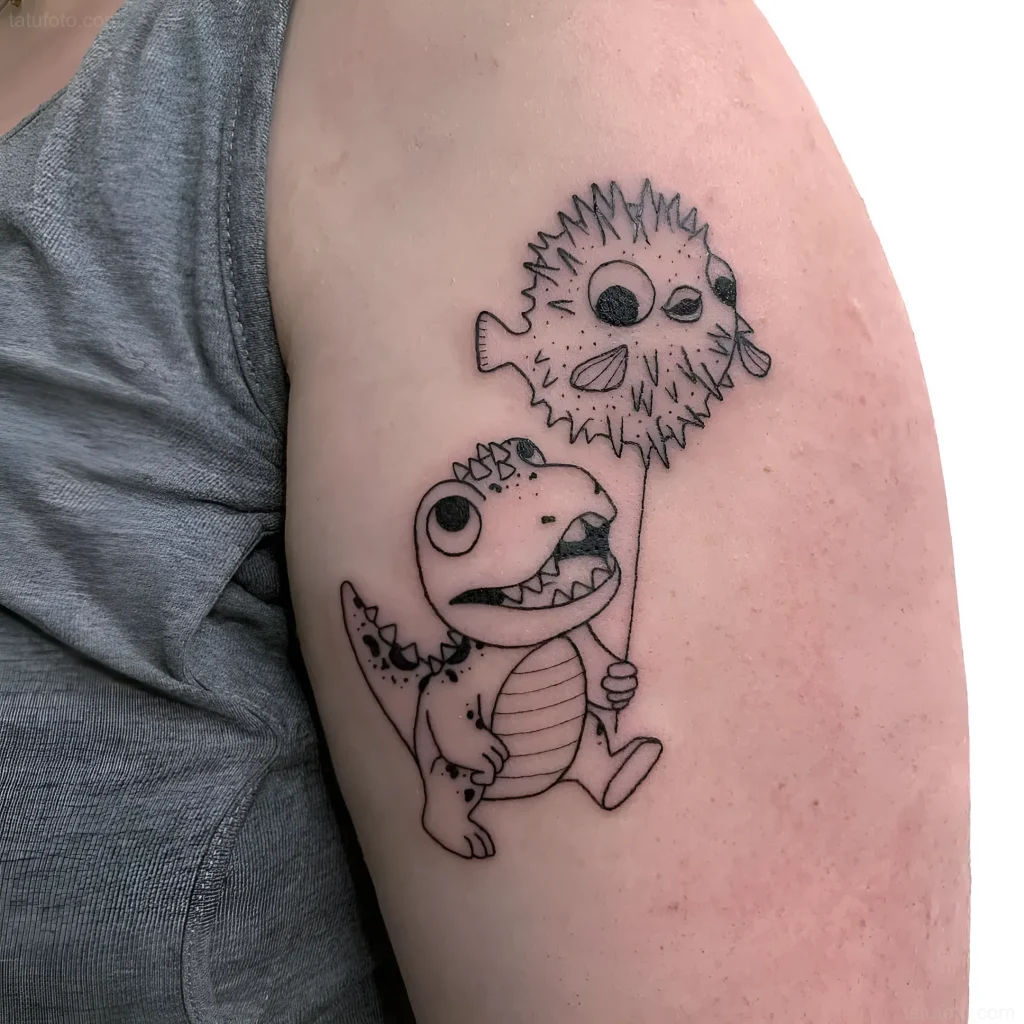
4. The Comedic Aspect
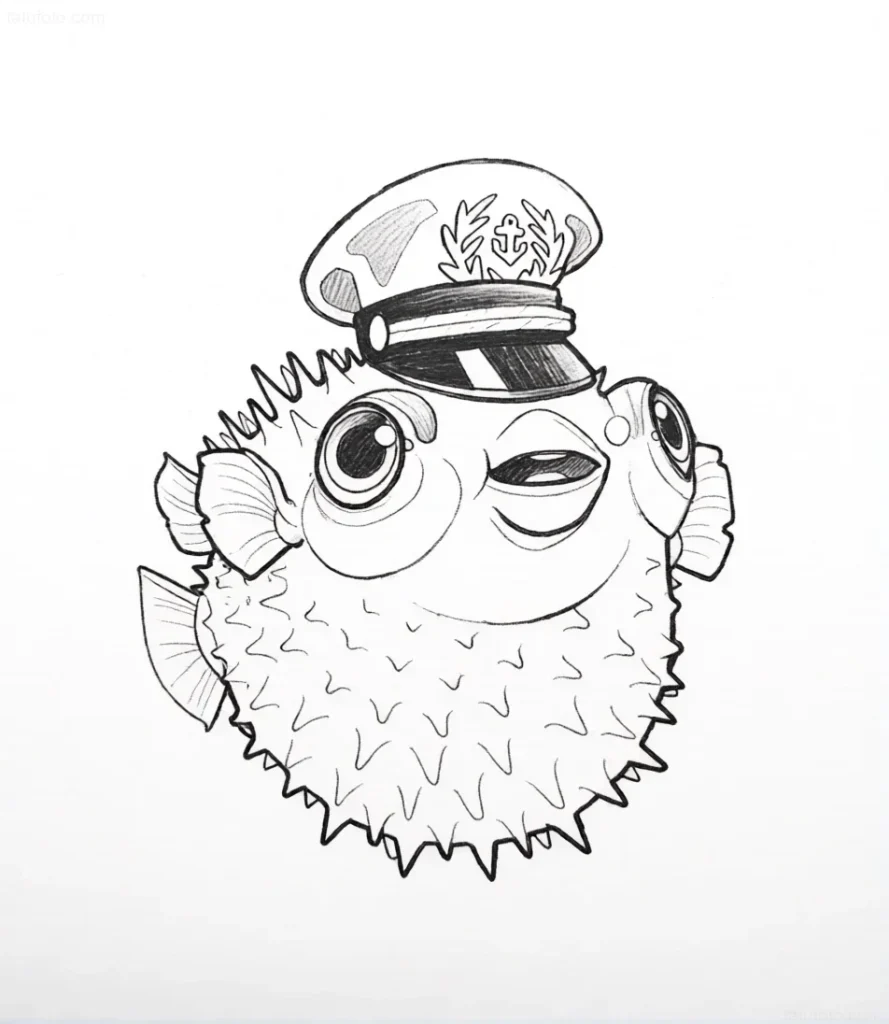
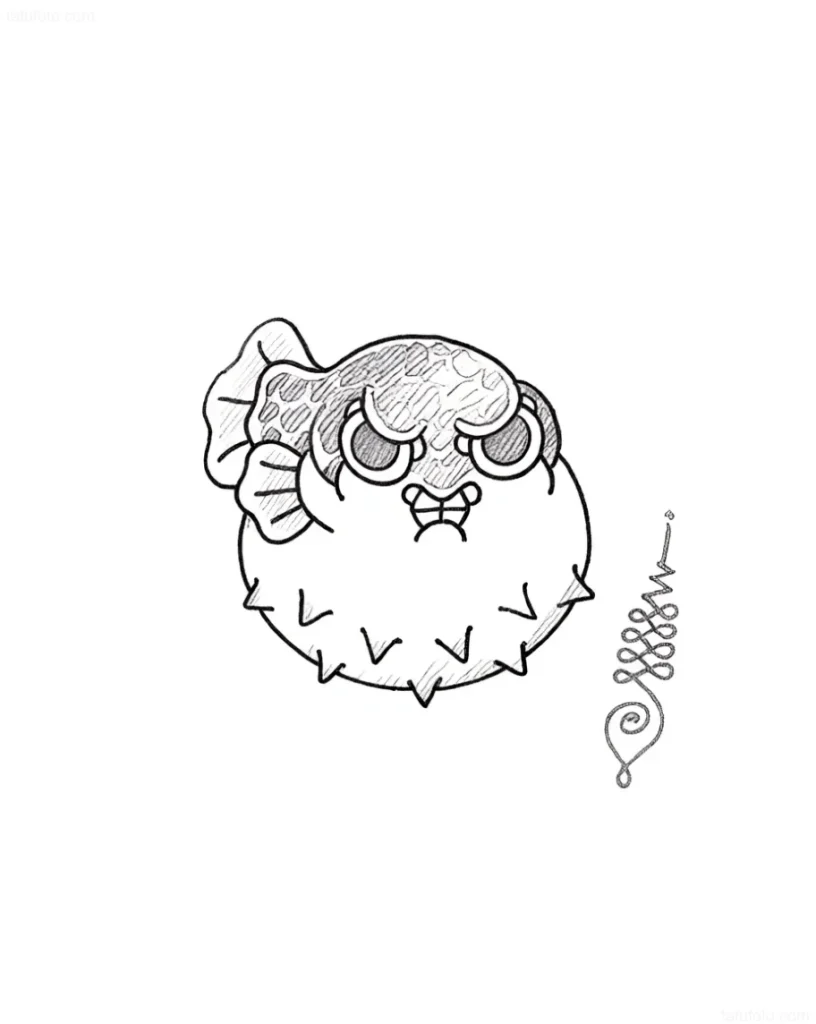
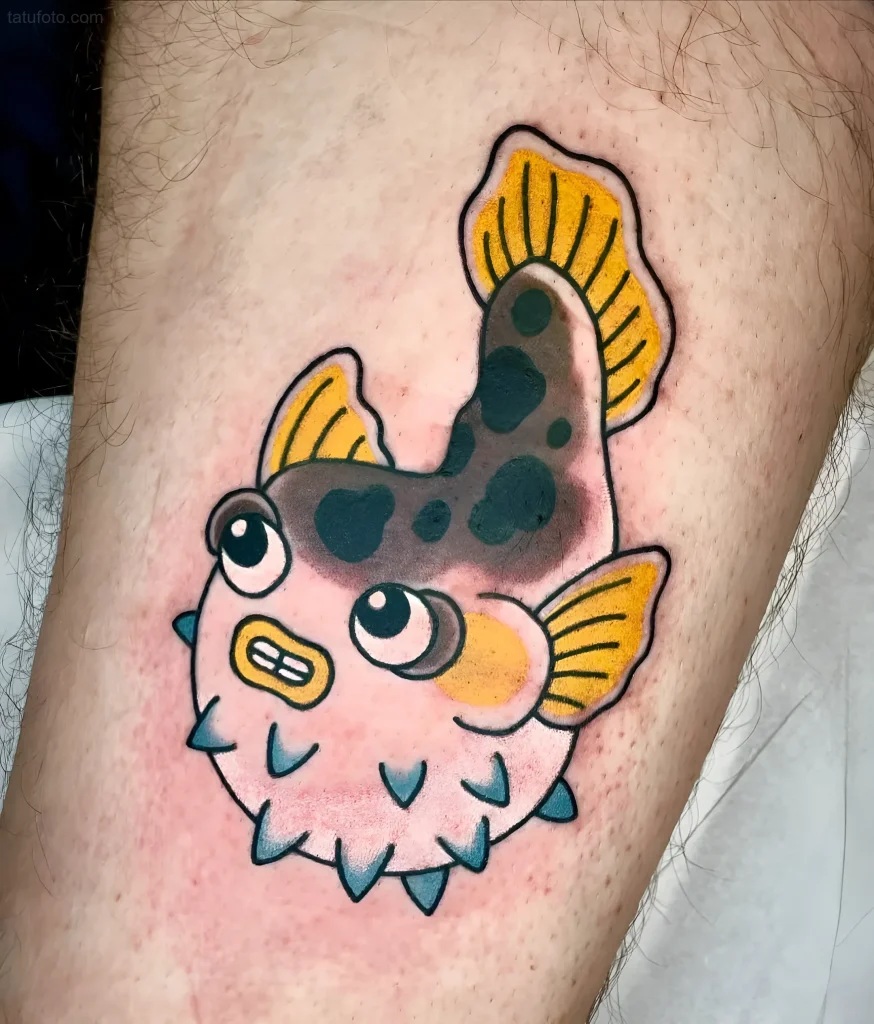
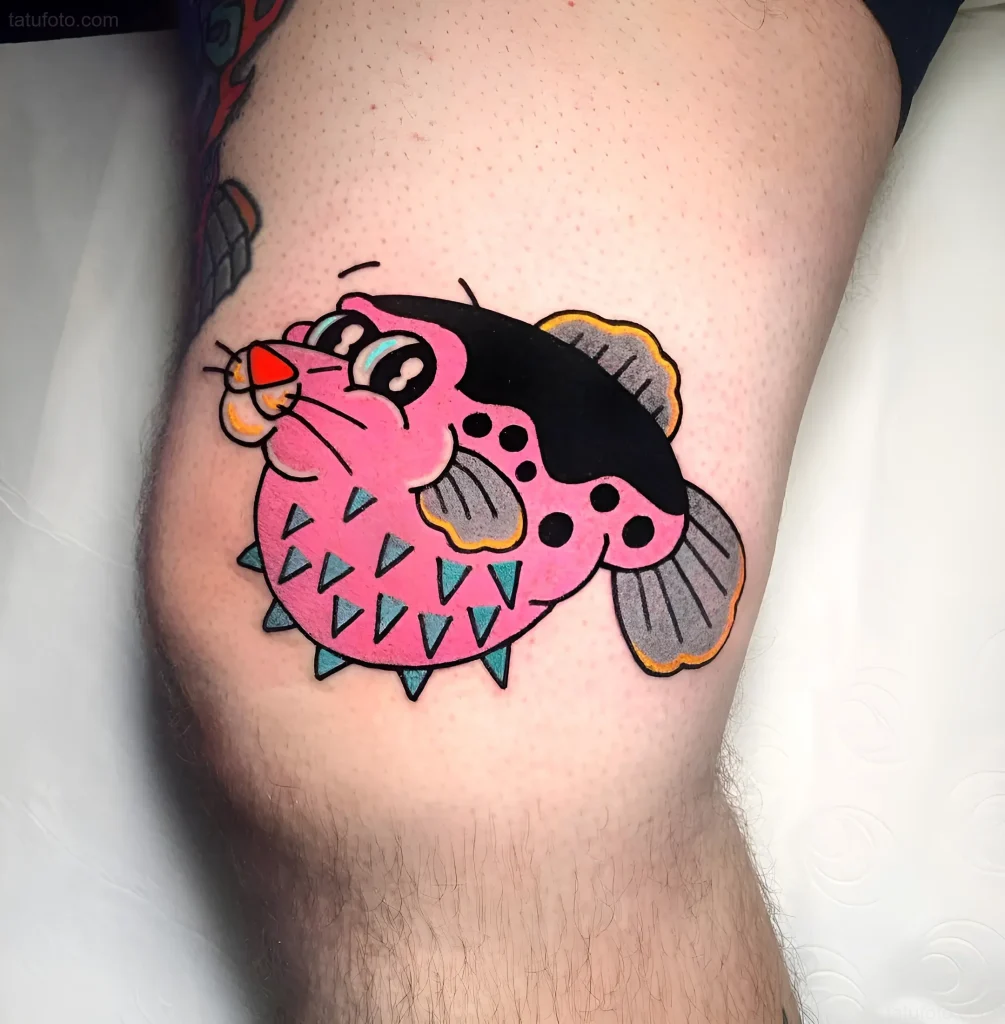
Although the primary meaning of a pufferfish tattoo is serious, in modern art, it is often depicted humorously, especially in chibi or cartoon styles. This highlights the wearer’s ability to laugh at dangers and not take life too seriously, even when under threat.
In conclusion, a pufferfish tattoo is a choice for an extraordinary individual who appreciates life in all its manifestations, including risk. It is a symbol that speaks of your inner strength, readiness for challenges, and ability to turn potential danger into a unique experience and beauty. By choosing Fugu, you choose a story of survival and balance, worthy of respect.