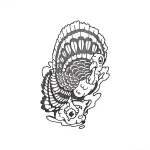
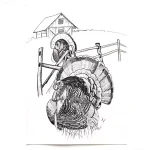
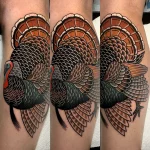
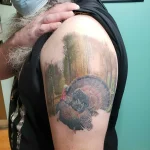
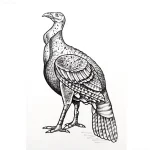
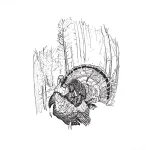
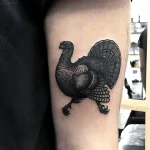
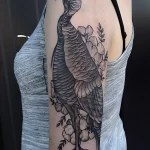
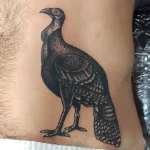
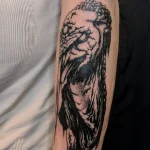
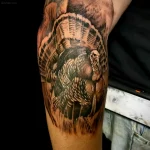
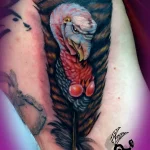
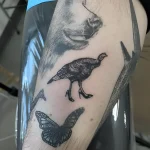
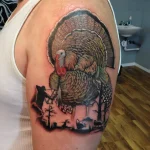
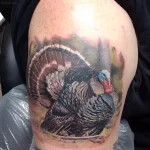
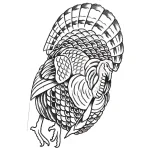
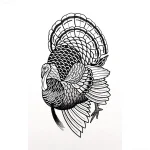
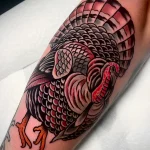
A turkey tattoo is one of the most underestimated yet deeply symbolic subjects in modern tattoo art. While for a European audience, the turkey often remains just a farm bird or, in the worst case, an object of irony, in the context of American and indigenous cultures, it carries a rich layer of meanings associated with abundance, gratitude, and pride, and even spiritual leadership. Choosing this image speaks of a deep understanding of cultural traditions and a desire to embody qualities rarely associated with this majestic bird.
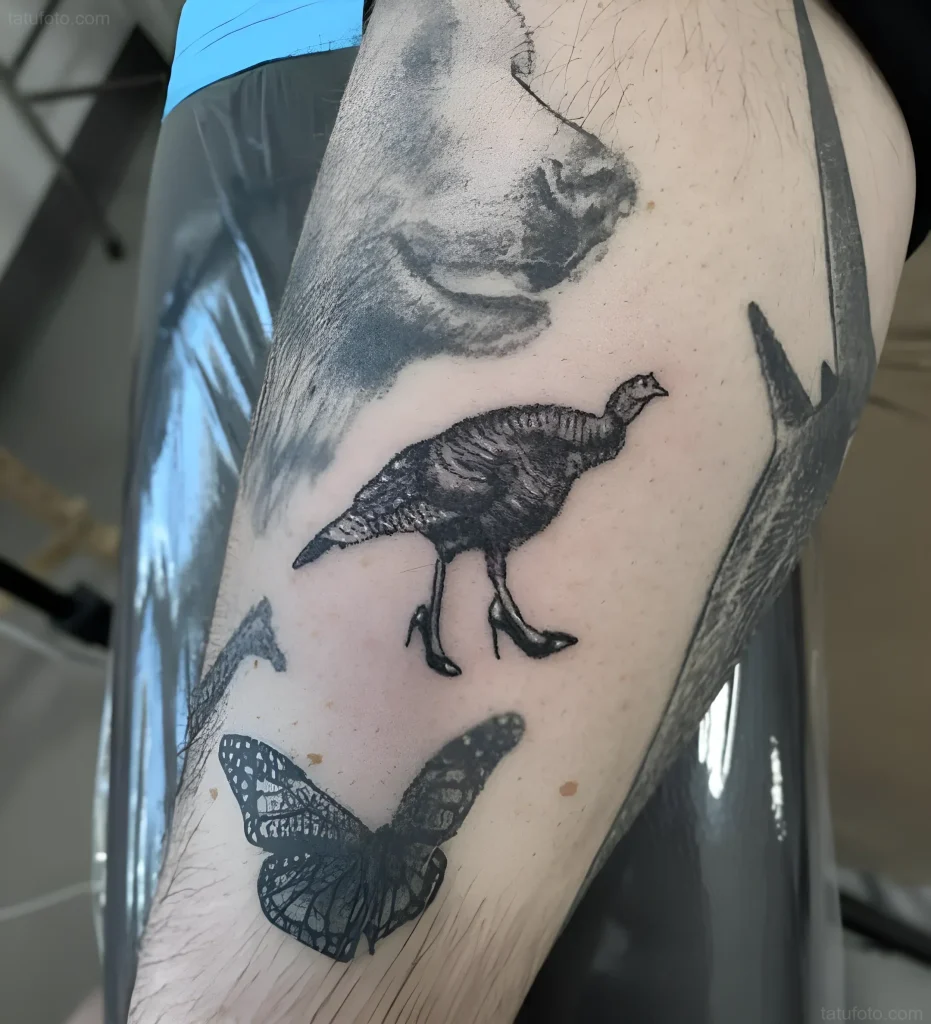
Turkey Tattoo: General Description and Popularity
The image of a turkey, especially in its full display or ritual plumage, is visually powerful and dynamic. Thanks to its lush tail and vibrant color palette, it is ideal for styles that require detail and color saturation, such as Neo-Traditional or Realism. Although the turkey is not among the top ten most popular tattoo subjects, its demand is growing, especially among connoisseurs of American traditional symbolism and those seeking unique yet meaningful imagery.
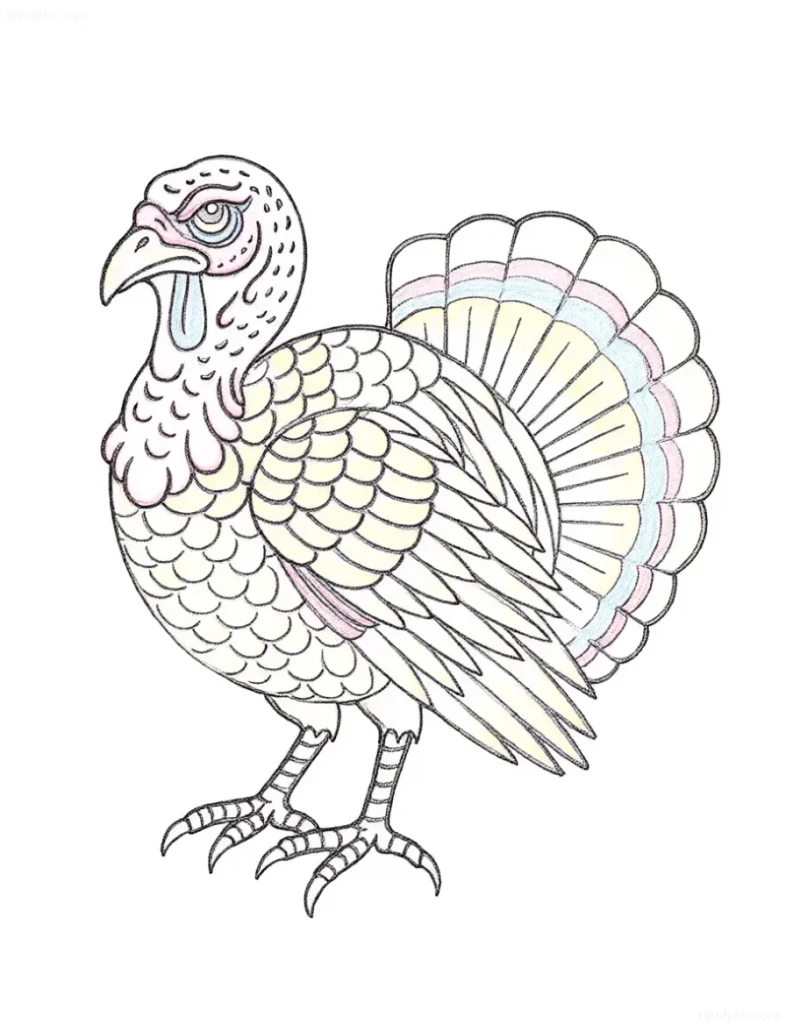
Why choose a turkey tattoo:
- Uniqueness: This is a rare subject that allows you to stand out among standard animal tattoos.
- Rich Heritage: The bird has deep historical and cultural significance, especially in North America.
- Visual Appeal: The bright, contrasting feathers and the turkey’s characteristic pose create an impressive design.
- Positive Symbolism: The main meanings (abundance, gratitude, pride) are positive and motivating.
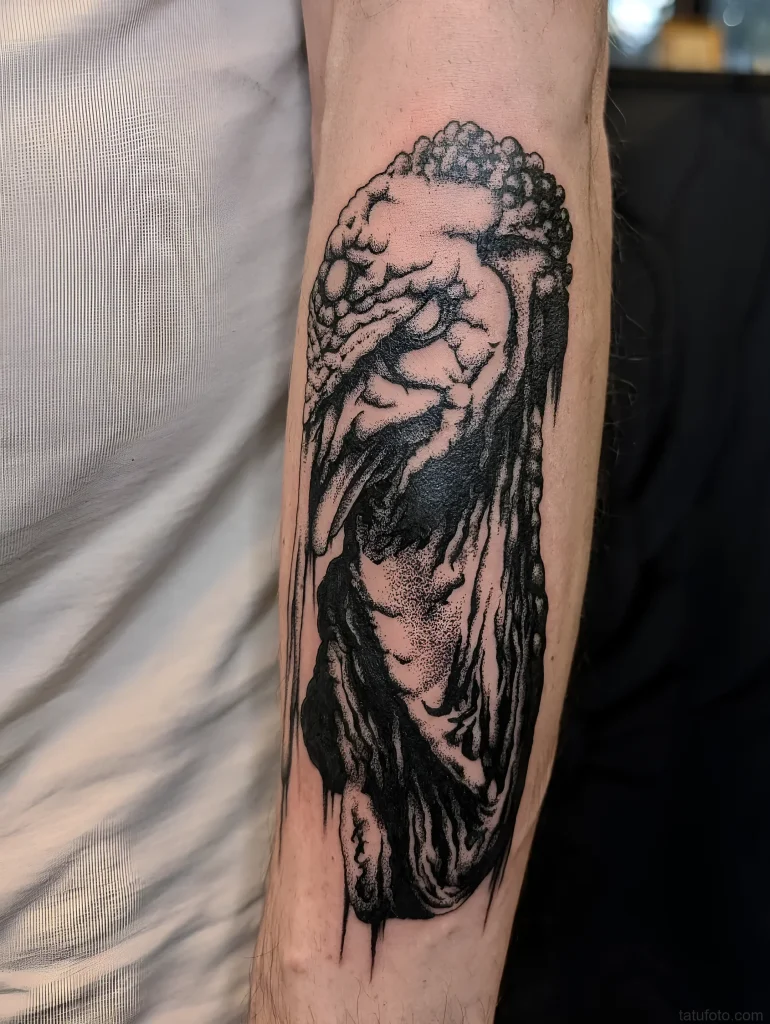
The History of the Turkey Image in Tattoos: From Ancient Civilizations to Modern Times
The history of the turkey tattoo is closely linked to the development of New World culture. Unlike the eagle or tiger, the turkey was not widespread in European or Asian mythology, making its history in tattoo art specific.
1. Cultural Heritage of Native American Peoples:
For many Native American tribes, the turkey was a sacred bird, symbolizing abundance, fertility, and sustenance. Its feathers were often used in ceremonial costumes and headdresses. In shamanism, the turkey could act as a totem animal, embodying generosity and the ability to share. The first images of turkeys that can be considered precursors to tattoo art are found in rock paintings and carvings, where the bird was depicted as a source of life.
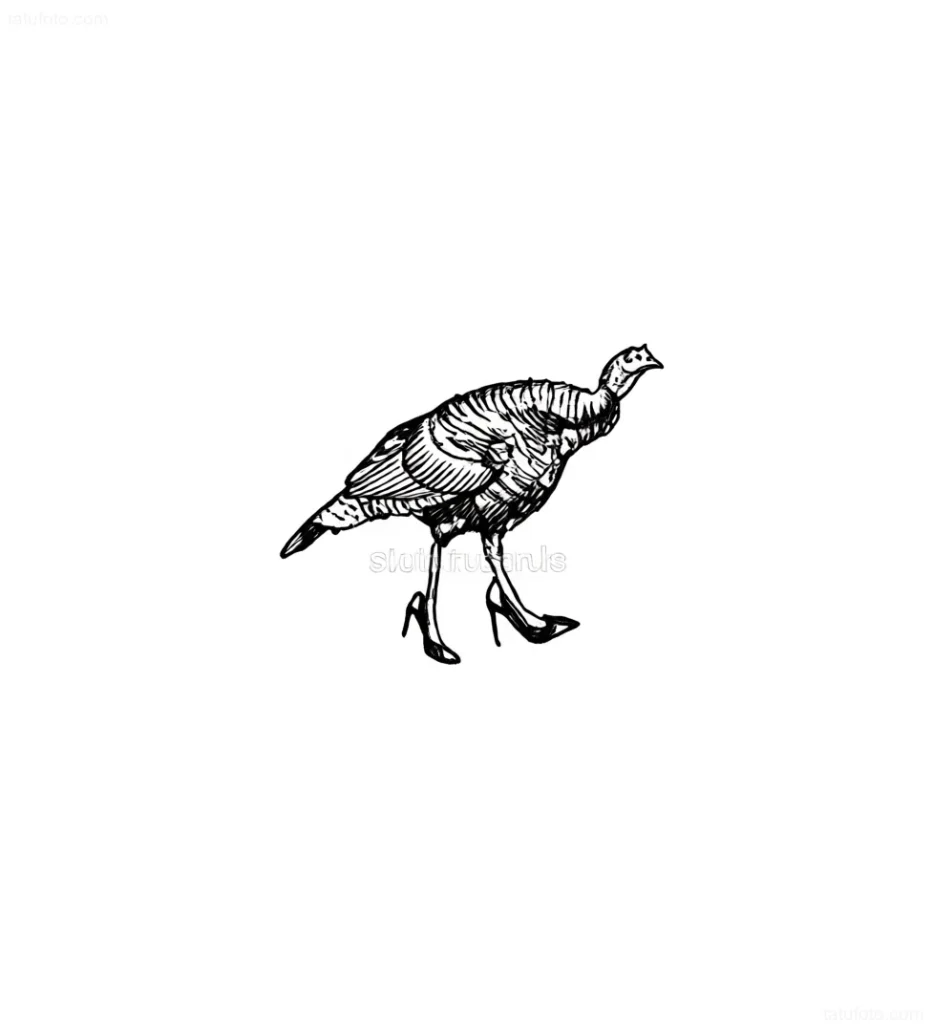
2. The Era of American Traditional Tattoo (Old School):
In the early 20th century, as American traditional tattooing was actively forming, the turkey sometimes appeared as a symbol of Thanksgiving or as a sign of American identity. During this period, turkey tattoos were often done in a simplified, bright style with thick outlines. It could symbolize:
- Gratitude: A symbol of harvest, completion of a cycle, and appreciation for received blessings.
- Home and Hearth: Connection to home, family, and traditions.
3. Modern Context (Neo-Traditional and Realism):
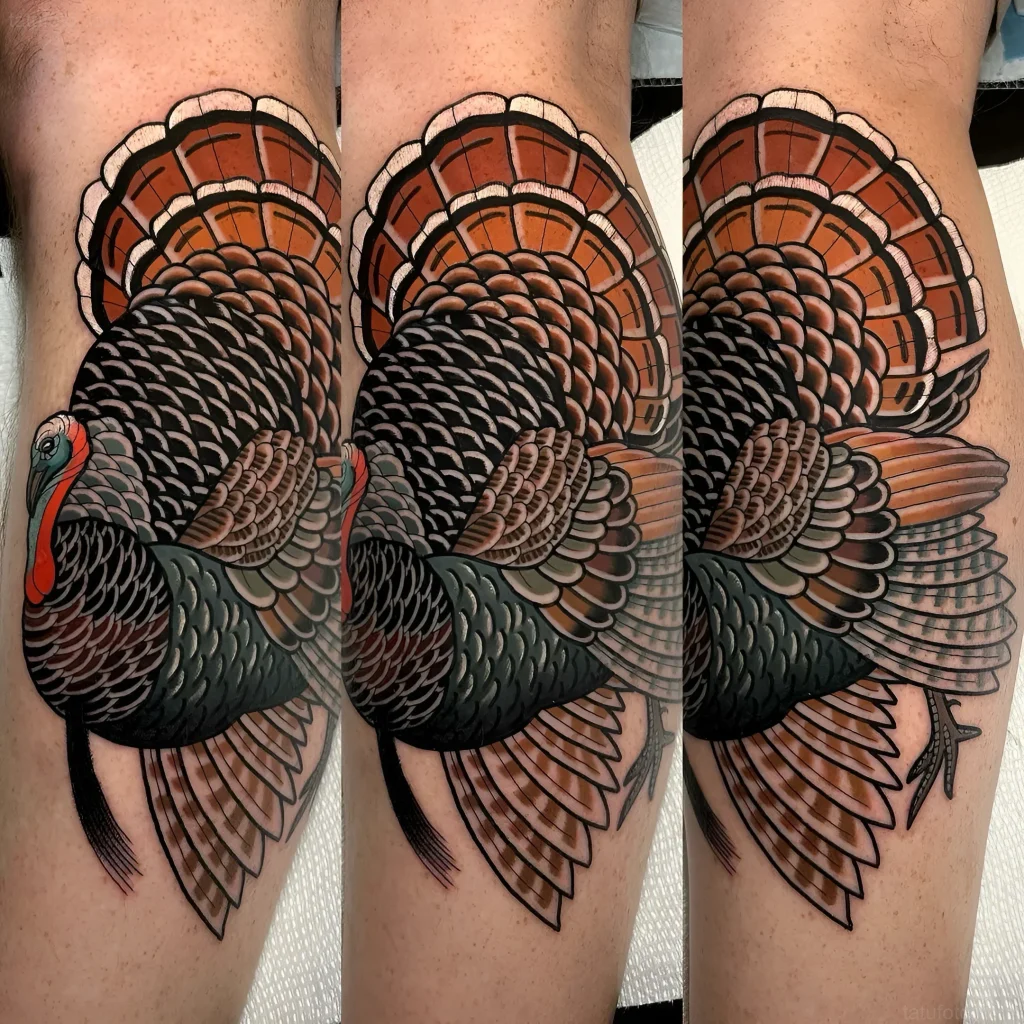
Today, the turkey is experiencing a kind of revival. Modern artists (especially those working in the Neo-Traditional style) use the rich palette of turkey plumage to create complex, picturesque works. In this context, the emphasis shifts from a simple symbol to the aesthetics and detailed depiction of the bird’s proud posture, highlighting its natural beauty and majesty.
Meaning of a Turkey Tattoo: Symbolism and Interpretations
The symbolism of a turkey tattoo is multifaceted. By choosing this subject, you are choosing not just a bird, but a whole set of positive qualities. Let’s consider the key interpretations you can imbue into your body art.
Abundance, Fertility, and Prosperity
This is perhaps the most common and ancient meaning of the turkey. In cultures where the turkey was a source of food and feathers, it was automatically associated with agricultural success and wealth. If you are striving for financial well-being or want to emphasize your gratitude for what you have, the turkey will be an ideal totem.
- Harvest: A symbol of completion and the fruits of labor.
- Generosity: Willingness to share one’s blessings with others.
- Life Force: The ability to sustain and nourish oneself and one’s family.
Pride, Dignity, and Self-Expression
When a turkey fans its tail, it displays magnificence and confidence. This aspect of turkey symbolism is associated with dignity, self-confidence, and the ability to present oneself effectively to the world. It’s important to distinguish this pride from arrogance: it’s more about pride in achievements and one’s uniqueness.
How this is reflected in a tattoo:
Often, the turkey is depicted in a display pose, with its tail fully spread, emphasizing the tattoo owner’s desire to be noticed and recognized. This is a choice for people who are not afraid of attention and possess strong charisma.
Spiritual Significance and Gratitude
In American culture, the turkey is inextricably linked to Thanksgiving – a holiday of gratitude for survival and harvest. A turkey tattoo can serve as a constant reminder to appreciate what has been given and to maintain a positive outlook on life, despite difficulties.
The Turkey as a Totem:
In Native American mythology, the turkey sometimes acted as a symbol of self-sacrifice for the good of others (as it provided food). In this context, the tattoo can signify a willingness to serve or a deep connection to spiritual values.
Connection to Home and Homeland
For many Americans, the turkey is an iconic symbol of their homeland. A tattoo can be chosen as a tribute to American roots, traditions, or as a reminder of family and the place you call home.
Turkey Tattoo Styles: Variety of Techniques and Visual Solutions
The visual complexity of the turkey allows it to be rendered in a wide variety of styles. The choice of style is critically important, as it determines which aspect of the symbolism will dominate – traditional pride, mythological significance, or realistic beauty.
1. American Traditional (Old School)
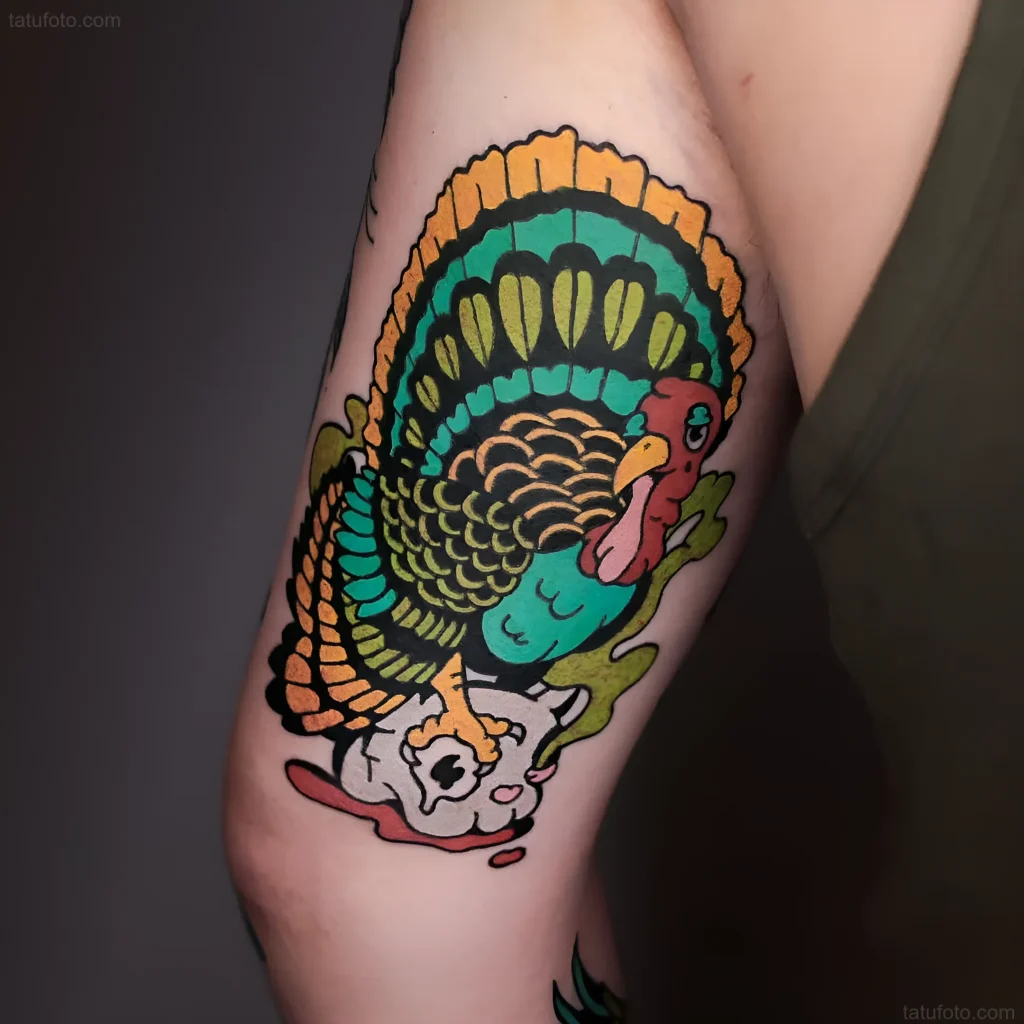
In this style, the turkey is depicted in a simplified manner, with thick black outlines and a limited palette (red, yellow, blue, green). The image will be flat but maximally symbolic and recognizable. It is ideal if you want to emphasize a connection to classic American tattoo culture and the meaning of gratitude.
2. Neo-Traditional
This style is perhaps the most suitable for the turkey. Neo-Traditional allows for classic outlines while using rich volume, detailed feather rendering, and a wide, saturated color palette. Artists can convey the metallic sheen of the plumage and the texture of the skin on the bird’s head, emphasizing its magnificence and pride.

3. Realism
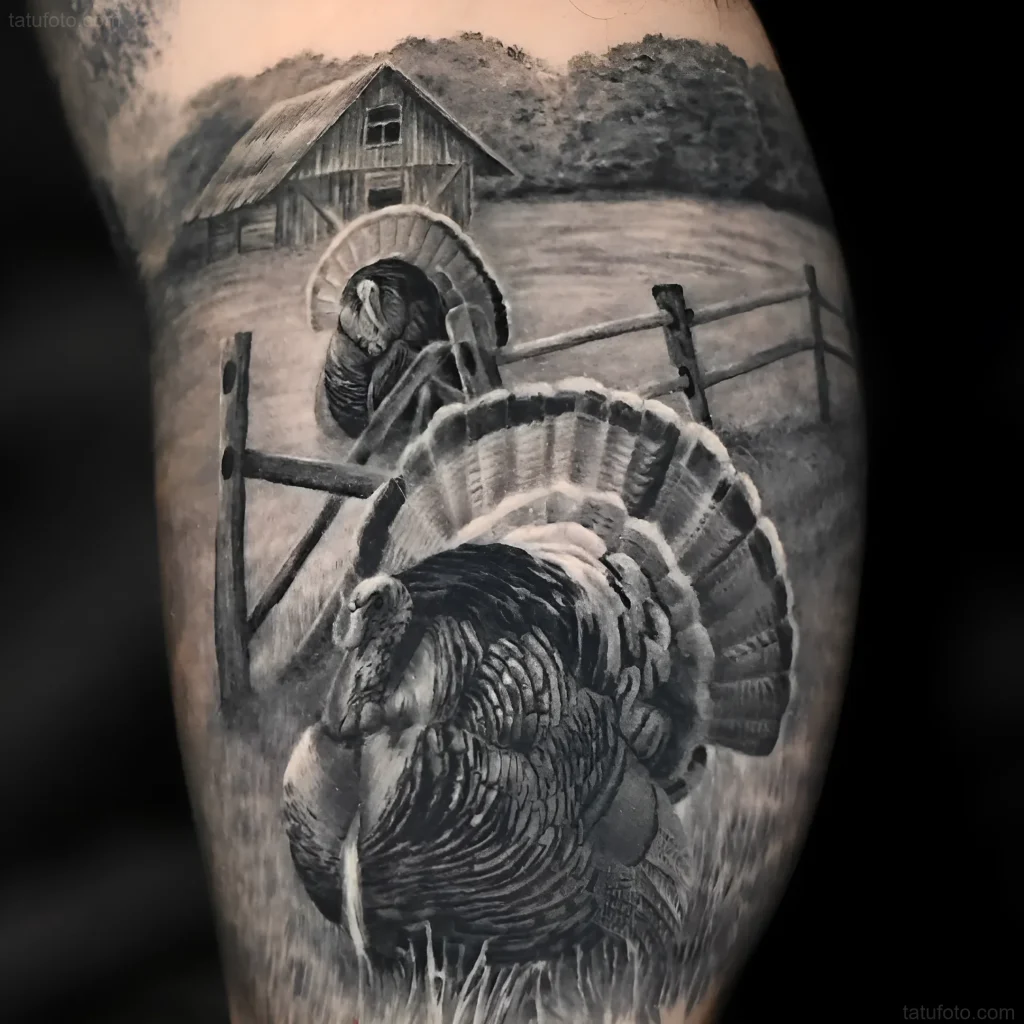
A realistic turkey requires high skill. In this case, the goal is to reproduce the bird as accurately as possible, focusing on the play of light and shadow, as well as the details of each feather. Realism is often chosen when one wants to emphasize the natural beauty, majesty, and dignity of the bird, as well as its connection to wildlife.
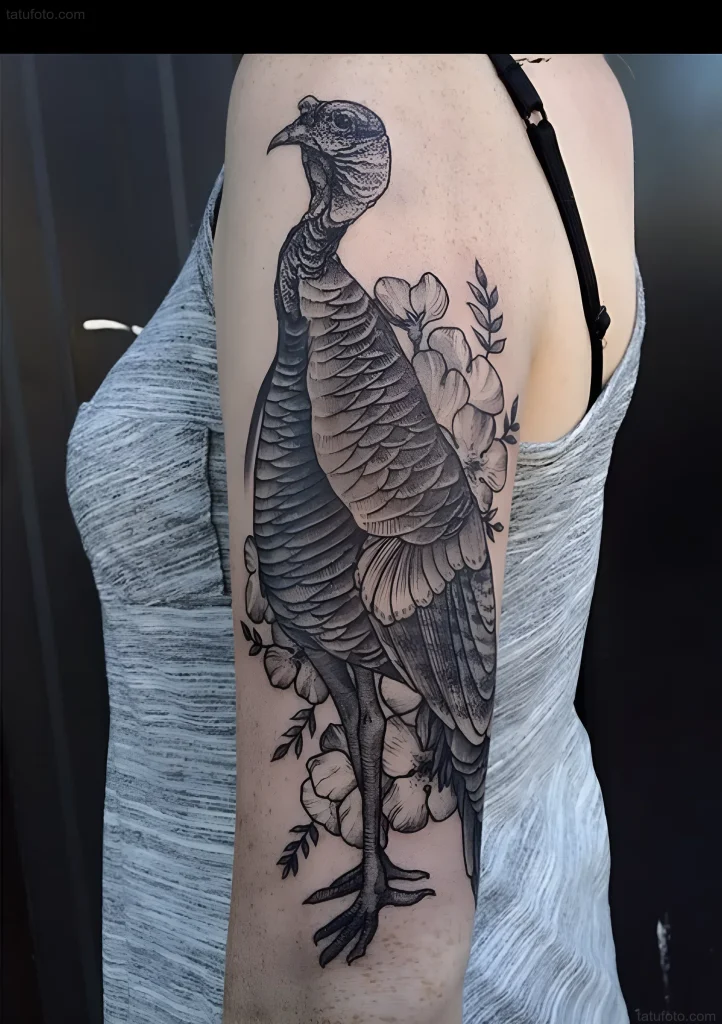
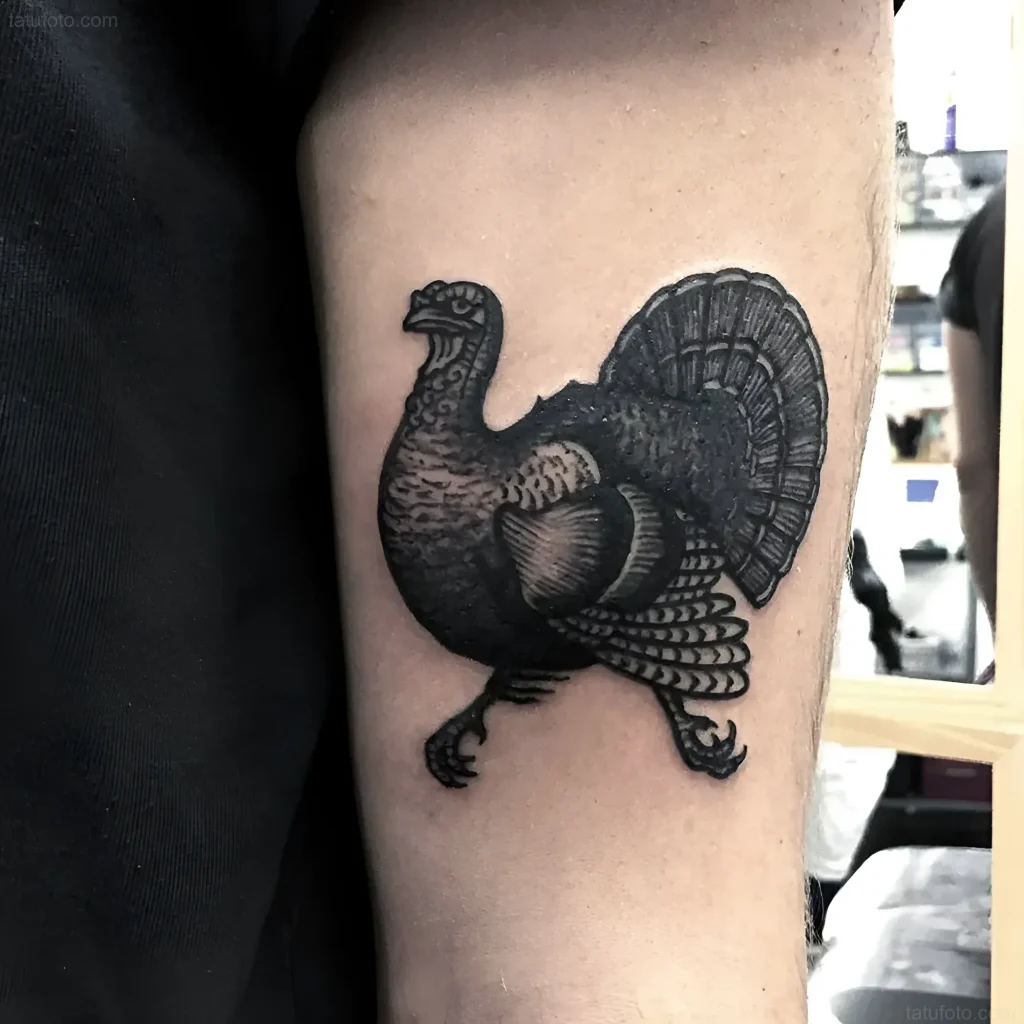
4. Black and Grey Graphics
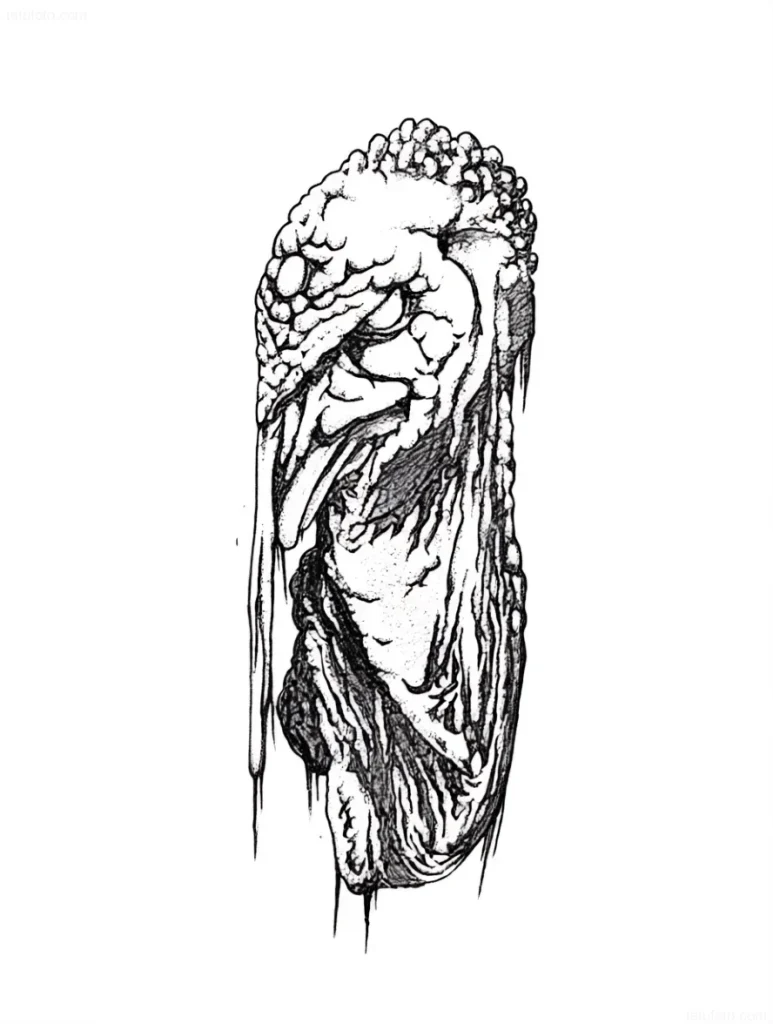
Although the turkey is a brightly colored bird, the black and grey technique can give the drawing more seriousness and drama. Here, the emphasis is on contrast, texture, and depth. In Black and Grey, the turkey often appears more monumental and mystical, emphasizing not so much abundance as its totemistic, spiritual significance.
Where to Get a Turkey Tattoo: Placement Options and Their Features
The size and complexity of a turkey, especially when displayed, require a sufficiently large canvas. The choice of placement can also enhance or alter the symbolic meaning of the tattoo.
Back and Shoulder Blade
The back is an ideal location for a large, detailed turkey in the Neo-Traditional or Realism style. The fanned tail can occupy a significant portion of the area, creating an impressive composition. Placement on the back is often associated with protection, confidence, and showcasing one’s “true essence” to the world.

Shoulder and Forearm
These areas are suitable for medium to large works. On the shoulder or forearm, the turkey will be clearly visible, emphasizing the meaning of pride and self-expression. If the turkey is depicted in motion or in profile, the forearm provides an ideal shape for an elongated composition.
Thigh
The thigh offers ample space for a large-scale turkey image, often combined with elements of harvest (pumpkins, corn) or landscape. This location is often chosen for personal, more intimate symbols related to fertility and abundance.
Calf
The calf is also well-suited for vertically oriented images. A turkey tattoo on the calf can symbolize moving forward, connection to the earth, and stability.
Tips for Turkey Tattoo Care: How to Maintain Brightness and Clarity of the Design
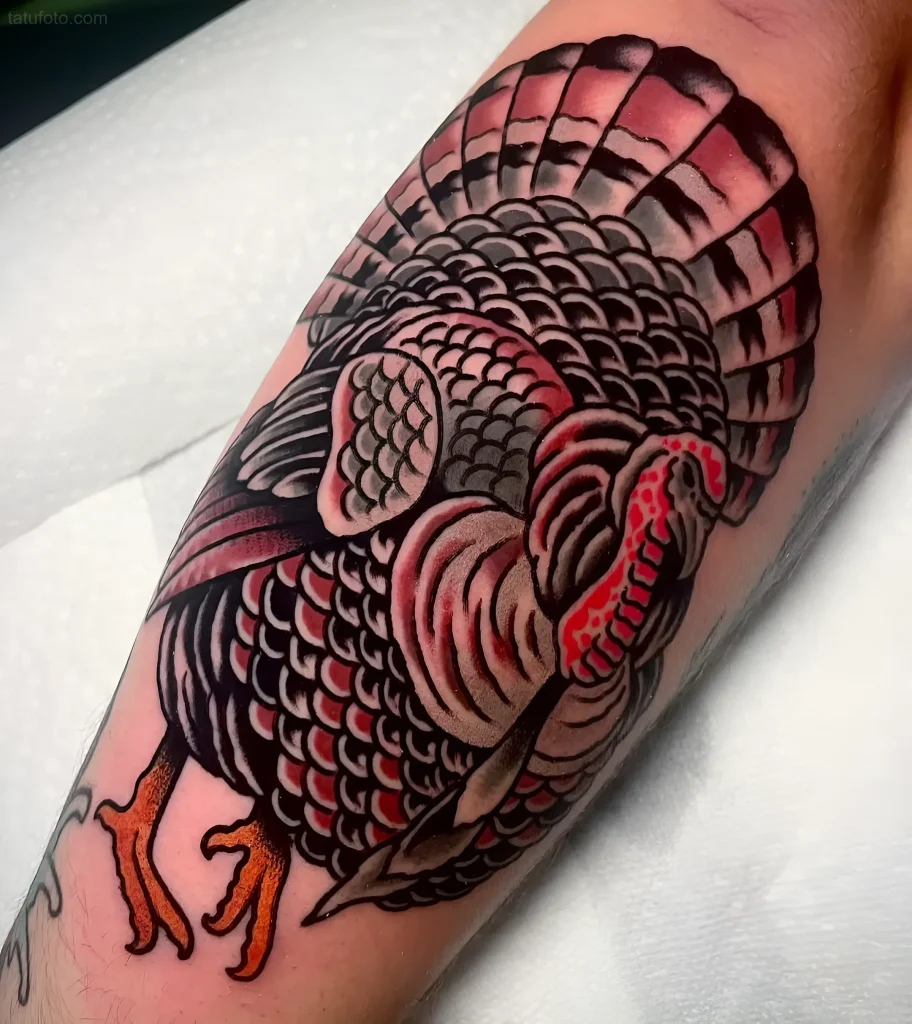
A turkey tattoo, especially one done in color (Neo-Traditional), contains many bright pigments (red, blue, yellow). Maintaining their saturation is critical for the longevity of the work. Proper care begins immediately after the session and continues throughout the tattoo’s life.
The first two weeks – the healing phase:
- Cleanliness: Regularly wash the tattoo with warm water and unscented antibacterial soap.
- Moisturizing: Use a healing cream recommended by your artist (e.g., based on dexpanthenol) in a thin layer, avoiding suffocating the skin.
- Avoid: Refrain from visiting swimming pools, saunas, prolonged immersion in water, and direct sun exposure.
Long-term color care:
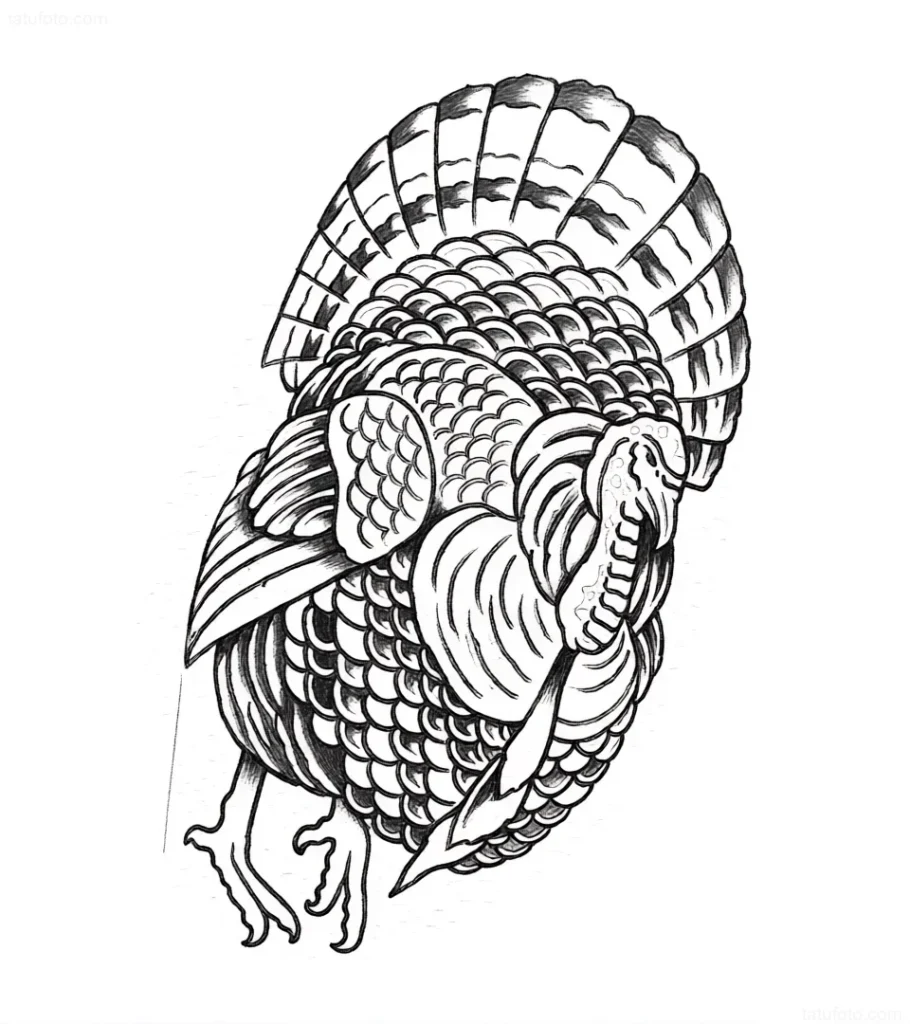
The biggest enemy of a color tattoo is ultraviolet radiation. To preserve the brightness of the red and yellow turkey feathers, the following rules must be followed:
- Sunscreen: Always use sunscreen with an SPF of at least 30 when the tattoo is exposed to the sun. This will prevent pigment fading.
- Pigment Quality: Ensure your artist uses high-quality, certified color pigments that are more resistant to degradation.
- Skin Hydration: Regular moisturizing of the skin with quality lotions helps maintain its elasticity and visually enhances the tattoo’s color saturation.
Frequently Asked Questions About Turkey Tattoos (FAQ)
1. Does a turkey tattoo always have a positive meaning?
In the vast majority of cases, yes. However, like any symbol, the turkey can have an ironic or negative connotation in niche circles (e.g., in some subcultures, the turkey may be associated with posturing or excessive pomposity). Nevertheless, 99% of tattoo artists and enthusiasts perceive the turkey through the lens of abundance, pride, and gratitude. Your personal imbued meaning will always dominate.

2. Can a turkey be combined with other symbols?
Absolutely. The turkey pairs beautifully with symbols related to harvest and nature:
- Floral elements: Corn, pumpkins, wheat (enhancing the meaning of abundance and harvest).
- Geometric patterns: In Blackwork or Dotwork style to give a totemistic or mystical appearance.
- Flags or coats of arms: If you want to emphasize a patriotic or cultural context.
3. Is a turkey tattoo suitable for women?
Yes. Although the turkey is generally depicted as a male (a tom turkey with its tail fanned), the symbolism of abundance, pride, and fertility is universal and equally suitable for both men and women. Often, female versions can be more stylized, with an emphasis on the elegance of the feathers and the bright colors characteristic of Neo-Traditional.
Interesting Facts About Turkey Tattoos
1. Benjamin Franklin and the National Symbol
There is a historical fact that one of the Founding Fathers of the USA, Benjamin Franklin, advocated for the turkey to become the national symbol of America instead of the bald eagle. He considered the eagle a “bird with a bad character,” whereas the turkey, in his opinion, was a much nobler and truly American bird. This historical parallel gives the turkey tattoo an additional layer of patriotic and intellectual meaning.
2. The Turkey as a Symbol of Mastery
Due to the complexity of its plumage and the need to convey the volume of its fanned tail, the turkey is often used by experienced tattoo artists as a kind of “calling card,” demonstrating their ability to work with detail, texture, and complex color palettes. If you see a perfectly executed turkey, you are likely looking at a high-class work.
3. The “Wild Turkey” and its Totemic Power
Unlike the domestic turkey, the wild turkey (Meleagris gallopavo) is a strong and cautious bird. Tattoos often depict the wild turkey specifically to emphasize its connection to nature, survival, and sharp intellect. This choice enhances the totemic meaning of the tattoo, related to instincts and adaptability.
In conclusion, a turkey tattoo is a choice for a person who values deep cultural heritage, strives for abundance, and is not afraid to show the world their confidence and dignity. It is not just a drawing, but a powerful symbol of gratitude and pride that demands respect and professional execution.