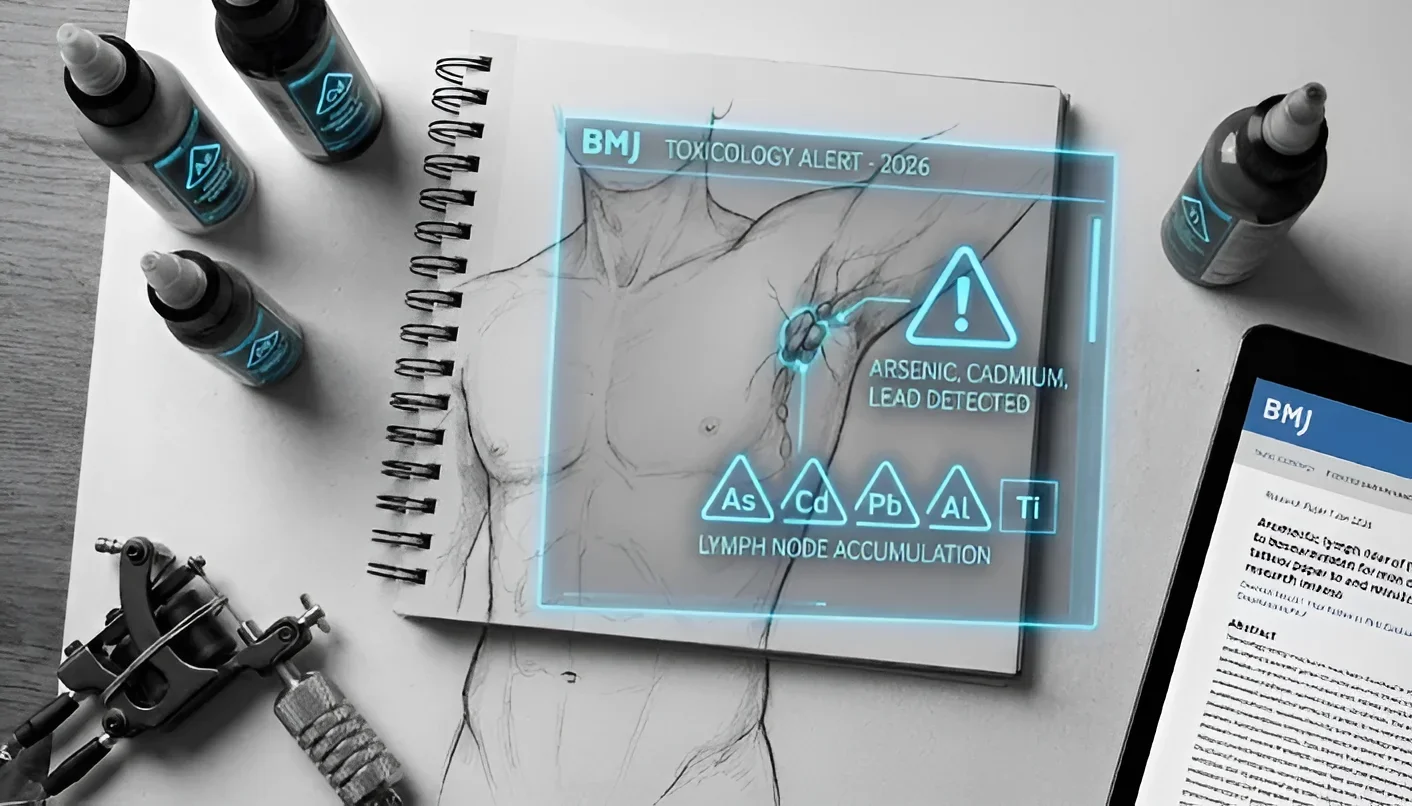
The art tattoo industry at the beginning of 2026 faced a dual reality: while the technical equipment of studios reached incredible heights, issues of chemical safety of pigments sparked a new wave of heated discussions. The main catalyst for discussions was fresh data on the composition of popular inks, which forces artists and clients to look differently at the healing process and long-term consequences for the body. Simultaneously, the equipment market offers solutions that make a tattoo artist’s work faster and more economical than ever before.
Safety Crisis: Results of a Large-Scale BMJ Study
On February 2, 2026, the authoritative publication British Medical Journal (BMJ) published the results of an independent audit that shocked the professional community. A group of researchers from the University of New South Wales in Sydney conducted a detailed analysis of 15 brands of the most in-demand tattoo inks available on the Australian market. Using liquid chromatography-mass spectrometry, scientists studied the chemical profile of each sample, and the results were disappointing.
According to the report, none of the tested samples met the strict safety standards adopted in the European Union. Dangerous concentrations of heavy metals and carcinogens, which are often not indicated on the labels, were found in the compositions. Experts recorded the presence of arsenic, cadmium, lead, chromium, copper, and tin. The following facts caused particular concern:
- In one of the samples, the antimony content exceeded the EU’s permissible limit (9 ppm) by more than four times.
- Another pigment showed a fourfold excess in arsenic levels.
- Aluminum levels reached 4500 ppm, and titanium – a colossal 150,000 ppm.
Although titanium and aluminum are not always strictly regulated by law, their extremely high concentration when introduced into the dermis raises serious toxicological concerns. The study confirmed the theory of a “regulatory blind spot”: the industry is developing faster than quality control systems can implement standards.
Biological Footprint: A Tattoo Stays With You Not Just on Your Skin
The most important aspect of the scientists’ work was studying the migration of pigment particles in the body. Expert analysis shows that a tattoo is not a static image. During the healing process and subsequent “wear,” a significant portion of the ink is attacked by macrophages – immune system cells. Instead of simply neutralizing the foreign body, macrophages transport microparticles of pigment along with toxic metals to the lymph nodes. There, these substances settle permanently, which can lead to chronic inflammatory processes and complicate medical diagnostics in the future. This fact emphasizes the importance of using only certified compositions that have undergone multi-stage purification.
Technological Breakthrough: Leaders in Transfer Printers for 2026
Against the backdrop of alarming news about ink composition, the technical sector demonstrates impressive productivity. In 2026, two favorites emerged in the professional equipment market, meeting the needs of both individual artists and large studios. These are the specialized Ozer Quick printer and adapted solutions from Epson.
Ozer Quick Stencil Printer: The Choice for Large-Scale Project Artists
The Ozer Quick Stencil printer has firmly established itself as the fastest device in the mid-price segment. Its main feature is its specialization in working with skin and high printing speed “in one click.” For artists working in the “sleeve” style or creating large-scale compositions on the entire back, this device has become an indispensable tool. The ability to use long rolls of paper allows for printing continuous transfers of any length, eliminating the need for fragment splicing and errors in anatomical design placement.
Epson EcoTank: Industrial Standard and Economic Miracle
For large tattoo hubs with a huge flow of clients, the favorite of 2026 is the conversion of the Epson EcoTank printer using InkJet Stencils inks. Originally a consumer device, when standard inks are replaced with hectographic inks, it transforms into a powerful transfer creation station. The main advantages of this solution:
| Characteristic | Indicator |
|---|---|
| Print Resolution | Up to 5000 dpi |
| Cost per Transfer | Approximately 10 cents |
| Target Audience | Studios with high order volume |
| Detail Quality | Ideal for microrealism |
Such cost optimization makes the Epson EcoTank the most economically viable solution on the market. High detail (5000 dpi) allows for transferring complex designs with subtle gradients onto the skin, which is critical for modern tattoo styles.
Summary and Outlook
Tattoo culture in 2026 demonstrates maturity: artists strive for maximum visualization quality, using advanced printers, but at the same time, they are becoming more demanding about the safety of consumables. It is evident that in the coming years, we will see stricter control over ink production worldwide. Clients are advised to pay attention not only to the artist’s portfolio but also to the brands of pigments used, preferring those that have undergone verification for compliance with modern environmental and medical protocols.