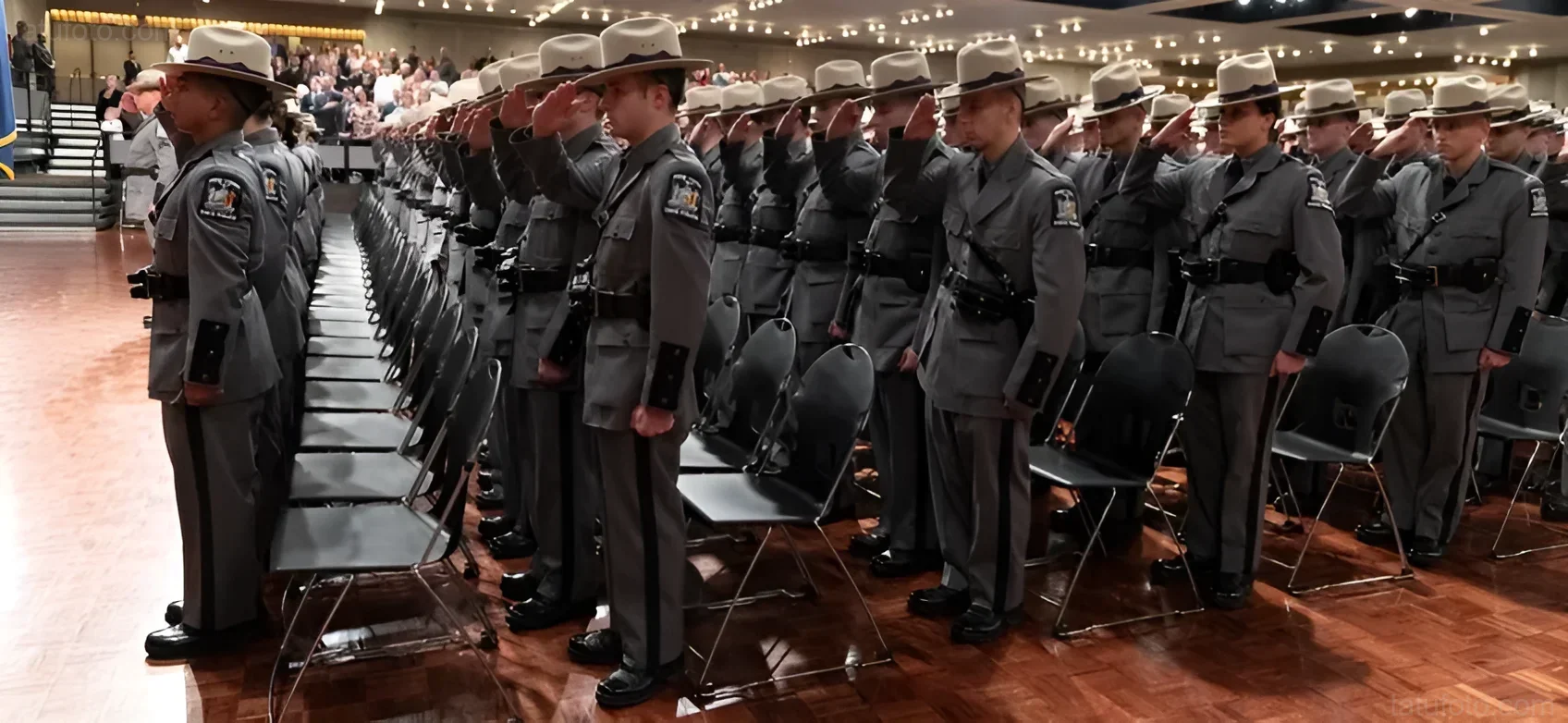
Modern tattoo culture continues its triumphant march, penetrating even the most conservative state structures. A significant legal precedent is brewing in New York State: lawmakers are seeking to turn the state police’s internal instructions into a full-fledged law that will legalize the presence of tattoos among law enforcement officers once and for all. This move marks a definitive rejection of outdated stereotypes that considered “clean” skin a mandatory attribute of an officer’s professionalism and reliability.
Disagreements between the leadership of the New York State Police and the union representing the officers’ interests have intensified amid discussions of a new bill. The essence of the document is to make the recently updated tattoo policy permanent and protected from the whims of future leadership. As early as 2022, the department’s internal rules were relaxed: candidates for officer positions were allowed to have tattoos if they could be hidden under a long-sleeved uniform shirt or a business suit. However, proponents of the bill are confident that internal instructions alone are not enough, as they can be revoked at any moment with a simple stroke of a pen by a new commissioner.
Legislative Basis and the Fight for Stability
Last week, the State Assembly overwhelmingly supported a bill that would require all law enforcement agencies in the state to adopt a unified policy on tattoos. The initiator of the document, Assembly member David Veprin, emphasizes that codifying these rules is necessary to ensure transparency and stability. In his opinion, officers who risk their lives daily deserve respect for their individuality and right to self-expression. Moreover, Veprin fears that if the policy is suddenly revised, it will negatively affect those who have already entered service with tattoos or got them during the period of liberal rules.
Current Restrictions: Where the Line of Acceptability Lies
Despite the general liberalization, certain taboos remain in the police environment. According to current rules and the proposed law, drawings on the following body parts remain prohibited:
- Face;
- Neck;
- Hands (except for one ring tattoo on each hand).
A ring tattoo is an interesting compromise between tradition and modernity. In tattoo culture, such images often carry deep personal meaning, replacing wedding rings, which is particularly practical for law enforcement officers for whom wearing metal jewelry can interfere with operational tasks.
Conflict of Interest: Management’s Position vs. Union’s Opinion
Interestingly, State Police Superintendent Steven James does not share the lawmakers’ enthusiasm. In his speech after budget hearings in Albany, he noted that the current 2022 policy has already borne fruit, significantly simplifying the hiring process for new employees, especially among military veterans, for whom tattoos are part of the corporate culture. James believes that at the moment there is no urgent need to enshrine these rules in law, as the system is already working effectively. However, Charles Murphy, president of the New York State Police Benevolent Association (PBA), is more resolute. He calls past tattoo bans “discriminatory” and insists that future department leaders should not have the opportunity to return the police to the “dark ages” of total bans.
Expert Analysis: Tattoos as a Recruitment Tool
From the perspective of tattoo culture and sociology, this bill is not just a legal formality but an acknowledgment that tattoos have become mainstream. In the context of a global staffing shortage in US law enforcement, refusing to hire qualified specialists solely because of drawings on the skin seems like an unaffordable luxury. Statistics show that a significant percentage of young people aged 18 to 35 have at least one tattoo. To ignore this segment of the population means voluntarily limiting the influx of talented personnel. Senator Michelle Hinche is expected to continue promoting the bill in the state’s upper house. If the law is signed, New York will become one of the leaders in protecting the rights of tattooed employees, creating a model that other states will likely follow. This is an important signal to the entire community: a person’s professional qualities are determined by their skills and dedication to the job, not by the presence of ink under their skin.