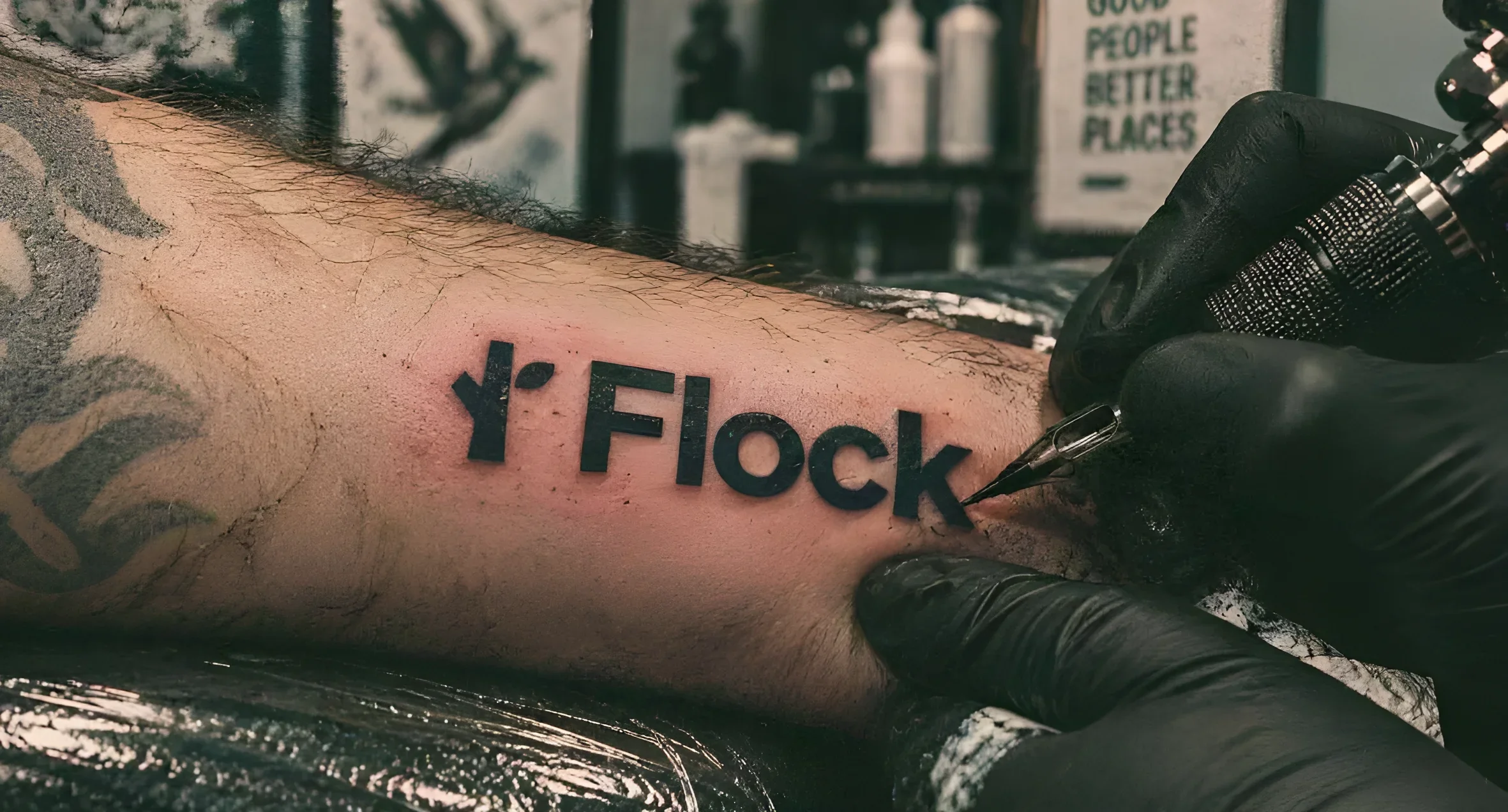
A joke by a Michigan tattoo artist, which he posted on social media, turned into a viral case with two million views. Steven Jean, owner of the modification studio The Alien Bodyshop, joked that he would give a free tattoo to anyone who took down a Flock camera. The audience’s reaction was so serious that the story led to arrests.
How the Joke Got Out of Control
It all started as a satirical post: the artist promised a tattoo in exchange for “proof” of camera destruction. The publication garnered about two million views, over half a million likes, and nearly 2500 comments. Jean did not expect people to take the offer literally. Some users sent him photos and videos of damaged cameras, and one client reported that he had already been arrested for it. The artist himself said he wouldn’t mind a Flock-style tattoo – the joke simply went too far.
Jean himself emphasizes that the advertisement never called for vandalism: destroying private property carries serious legal consequences, and the artist did not want to push anyone to such actions.
Why Flock is Hated
Behind this story lies a much broader conflict. Flock Safety is a private commercial company that deploys license plate readers and other video surveillance systems across the country. Public dissatisfaction has led to a wave of vandalism: cameras are being taken down, set on fire, and blocked. Police even deployed a 3D-printed decoy camera and arrested a man charged with three felonies. Some protesters are acting peacefully: one Florida resident covered cameras with signs, another used a 3D printer to “blind” the lenses without physical damage. But even this did not calm the audience – a mass “cleanup” of Flock cameras was announced online for Halloween night.
Tattoos as a Marker of Protest: An Industry Perspective
For the tattoo culture, this case is telling. Tattoos have long ceased to be mere decoration: today, they are a way to record personal experience, an act of belonging to a group, or even a performance. When an artist promises to “ink” a tattoo for a specific action, they are essentially turning skin into proof – a visual trace that a person has “done the deed.” In the protest subculture, such a gesture is read particularly acutely: the body becomes a field on which a position is recorded.
Furthermore, Jean’s case demonstrates how provocation works in the modification industry. A joking post with a provocative offer is a common tool for attracting an audience, but here the joke made more noise than any advertising banner. The artist himself became part of the protest narrative, without even planning it. This is a typical social media trap: content created as irony takes on a life of its own and begins to dictate the agenda.
Ultimately, the story of tattoos for taking down Flock cameras is not so much about tattoos as about how quickly, in the era of viral content, the line between a joke, protest, and real action blurs. For both the tattoo artist and the audience, it’s a lesson: in an industry where every word on the skin is a statement, even irony can leave a mark.