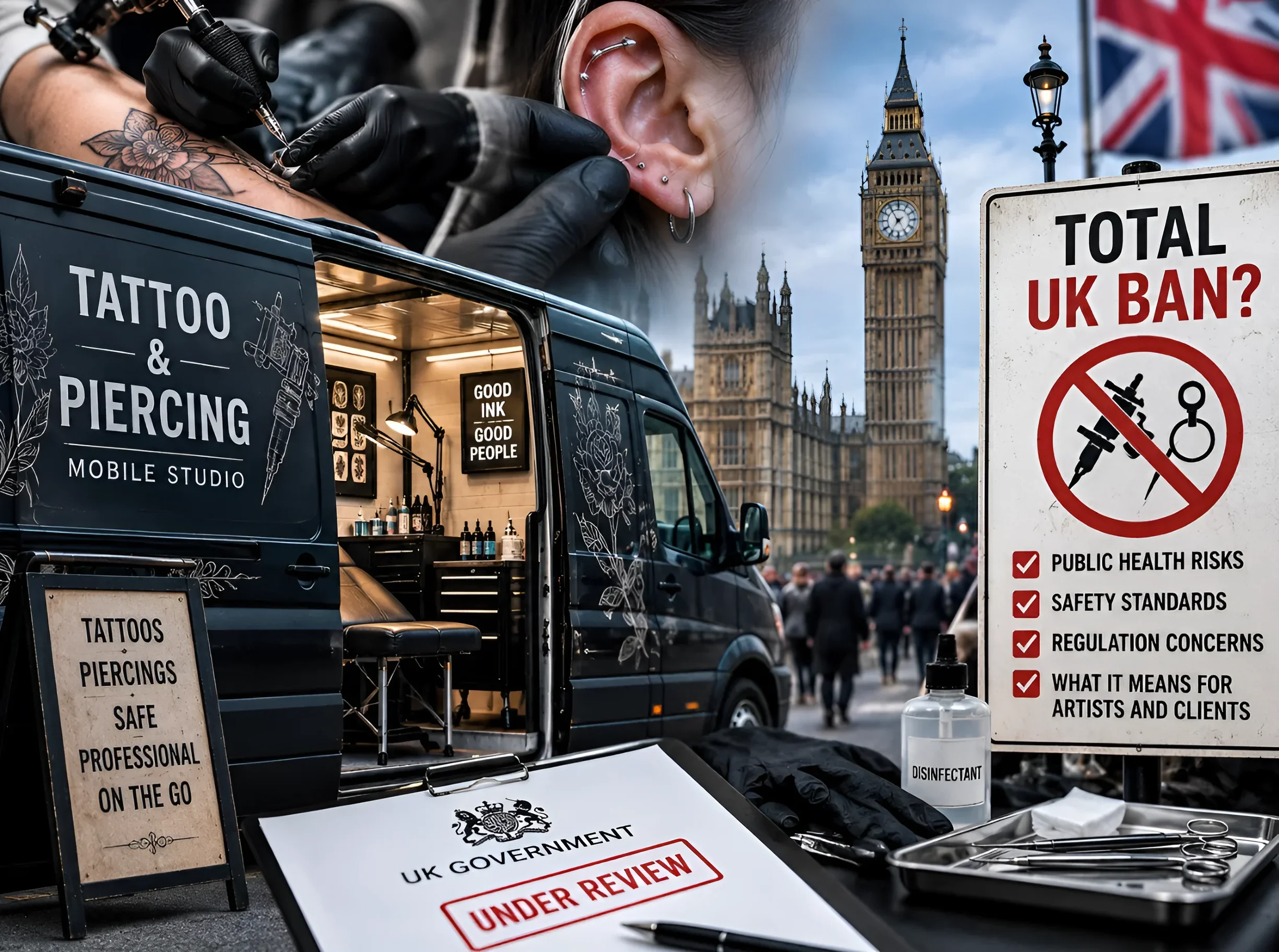
The UK is gradually tightening the screws in the body art industry. Local authorities in various regions of the country are introducing strict restrictions on mobile tattoo and piercing artists, citing threats to public health. We explore what lies behind this decision, who it primarily threatens, and why the issue has suddenly become so acute.
Why Authorities Are Against Mobile Operations
The reason is simple and, from the officials’ perspective, uncompromising: invasive procedures like tattooing and body piercing require strict sterility control, which is extremely difficult to ensure at temporary locations – an apartment, a van, or at an event. Local licensing committees and environmental health departments have concluded that working outside a permanently registered studio creates uncontrollable risks for the client.
Regulatory documents directly point to the typical shortcomings of the mobile format:
- lack of a comprehensive biological waste disposal system;
- shortage of clinical autoclaves for instrument sterilization;
- inability to organize a controlled sterile field;
- increased risk of transmitting blood-borne pathogens and severe skin infections.
A senior environmental protection officer, whose words are quoted in municipal reports, directly articulates the authorities’ position: the standards necessary to protect health during body modifications require a fully controlled clinical environment, which cannot be guaranteed in mobile conditions. Added to this is a practical problem – without a fixed address, it is almost impossible to track adverse reactions or conduct unscheduled hygiene inspections.
What This Means for Artists
This is where it gets most painful for the professional community. Independent associations of tattoo artists and piercers are already expressing concern about the economic consequences. Their main argument: a total ban harms conscientious professionals who already adhere to clinical protocols. Many mobile practices, according to associations, invest heavily in portable sterilization equipment and disposable consumables. Instead of a complete ban, they propose individual licensing and mandatory hygiene audits – a solution that, in their view, would be balanced.
From the perspective of tattoo culture, this conflict appears as a clash of two logics. On one hand, there is the street, mobile, “living” tradition of body art, where the artist comes to the client, not the other way around. On the other hand, there is the logic of sanitary control, for which predictability and verifiability are important. The mobile format historically grew precisely from freedom and proximity to the client, and its complete state control could kill the very essence of this segment.
Key Risk Factors According to Authorities
| Factor | Why it’s a problem in the mobile format |
|---|---|
| Instrument Sterilization | No stationary autoclave and controlled cycle |
| Waste Disposal | No system for collection and disposal of biological materials |
| Verifiability | No fixed address for unscheduled inspections |
| Reaction Tracking | Difficult to link complications to a specific work location |
The regulatory environment in the UK is likely to continue to tighten: local authorities are already updating their statutory rules, and the trend is against mobile body art services. For artists, this is a signal to build a legal work model in advance – through fixed studios, licensing, and documentation of sanitary procedures. For clients, it’s a reason to pay closer attention to the conditions under which they get tattoos or piercings, regardless of where it happens. Ultimately, the question is not about banning body art, but about how to preserve the freedom of the format without sacrificing safety. And as long as the answer is sought through prohibitions rather than dialogue, it is becoming increasingly difficult for mobile artists in the UK.