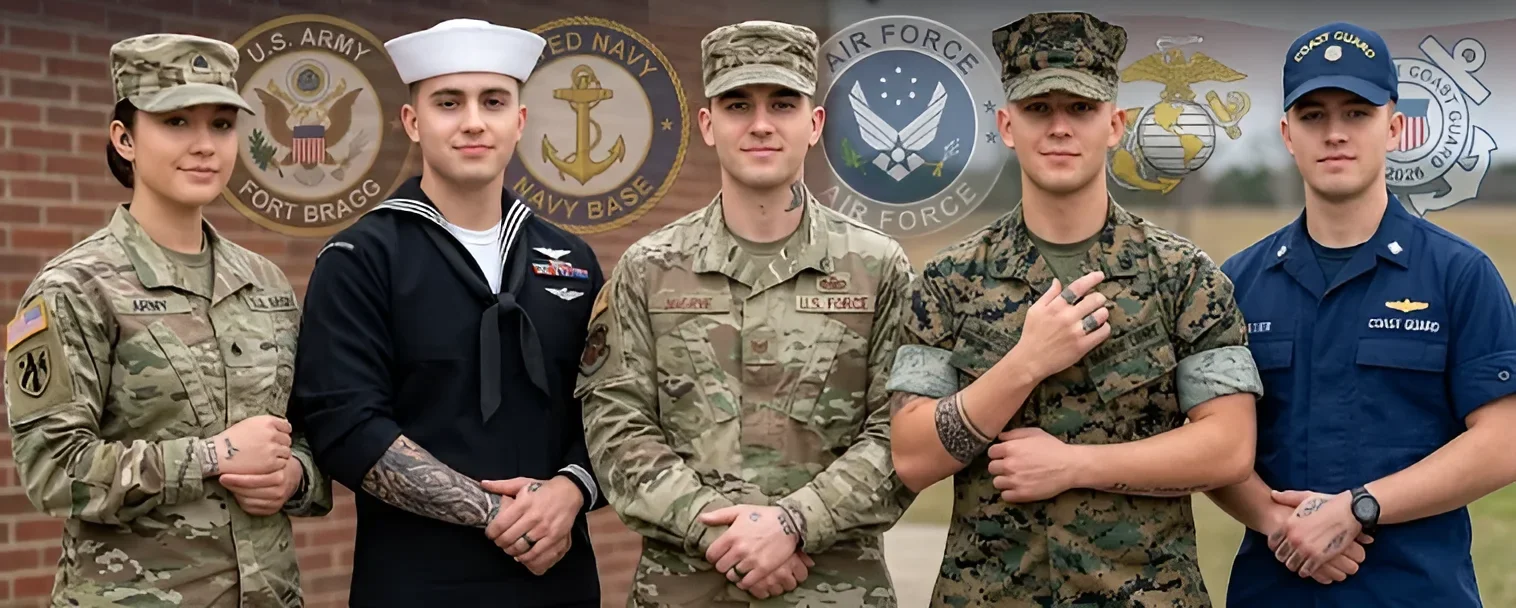
Many young people planning to serve in the US armed forces are still convinced that any tattoo on the body means automatic rejection from enlistment. In practice, things are different: tattoo culture has long been part of the military environment, and in recent years, all branches of the armed forces have significantly relaxed their requirements for body “ink.” The material, prepared by journalist Jim Stewart and published on September 14, 2026, examines the current 2026 rules: where tattoos are allowed, which images are completely prohibited, and how the waiver mechanism works.
What is Prohibited Everywhere and Without Exception
Tattoo industry experts note that military appearance standards are not a whim but a tool for maintaining a professional image before society, on whose trust the entire military machine relies. Therefore, restrictions are divided into two blocks: by location and by content. Content is strictly checked, regardless of where the image is located. Tattoos that demean people based on race, ethnicity, gender, or orientation; explicitly sexual images; symbols of violence, criminal, and drug culture; as well as attributes of extremist, neo-Nazi, terrorist, and bandit groups are prohibited. Important: you cannot disguise a prohibited image with a bandage or cosmetics – such tricks are not accepted.
Allowed Zones by Branch
Each service has its nuances, but the general logic is the same: full sleeves on arms and legs are now permissible almost everywhere, but the face, scalp, and the area above the collar line remain under control. Let’s break down the specific limits.
- US Army: unlimited sleeves on arms and legs (up to the wrist bone), one tattoo on the back of the head up to 2 inches, one behind the ear up to 1 inch. On the hand – one image up to 1 inch plus one ring tattoo on a finger. Prohibited are the head, face, scalp, inner mouth, and eyelids.
- Navy: full sleeves on arms and legs, one tattoo on the neck up to 1 inch. Prohibited are the head, face, scalp. Tattoos on the ears and the front of the neck are not allowed by default, but the recruiting command may issue a waiver on an individual basis.
- Air Force and Space Force: unlimited on the chest (below the open collar), back, arms, and legs; one tattoo behind the ear up to 1 inch. On the finger – one ring up to 3/8 inch wide, on the hand – one image up to 1 inch. Prohibited are the head, face, scalp, tongue, and lips.
- Marine Corps: unlimited on arms, legs, chest, and back, provided that the image on the chest and back is hidden under a standard crew-neck t-shirt. Prohibited are the head and neck, including the area around the mouth. Tattoos are not allowed on the hand and fingers, except for one ring up to 3/8 inch wide on one finger.
- Coast Guard: one tattoo behind each ear up to 1 inch, tattoos on the hand up to 2.5 inches between the wrist and knuckles. Prohibited are the palms, nail beds, and any head/neck area above the collar line. On the finger – one image, only a ring can completely encircle the finger.
How to Get a Waiver and What to Expect
If an image exceeds standard dimensions or falls into a prohibited zone, an official Exception to Policy is required. The process goes up the chain: first, the recruiter records and photographs all tattoos, then the local commander reviews minor deviations within one to two weeks, and more serious cases go to the Recruiting Command for two to six weeks. In some cases, the matter is escalated to higher command, where the decision largely depends on the current needs of the service and the demand for the chosen specialty. Tattoos with prohibited content almost never receive a waiver.
Advice from Tattoo Artists and Recruiters
A fresh tattoo is an open wound, and during basic training, it risks infection, which can delay the entire training schedule. Furthermore, a new image made after the medical examination at MEPS can lead to a contract review and even deprive you of your assigned specialty or bonuses. Therefore, the practical rule is simple: postpone new “ink” until after initial and subsequent training, and then choose a design that strictly adheres to your branch’s policy. This approach eliminates both medical and bureaucratic risks, allowing you to preserve both personal self-expression and a career in the military.