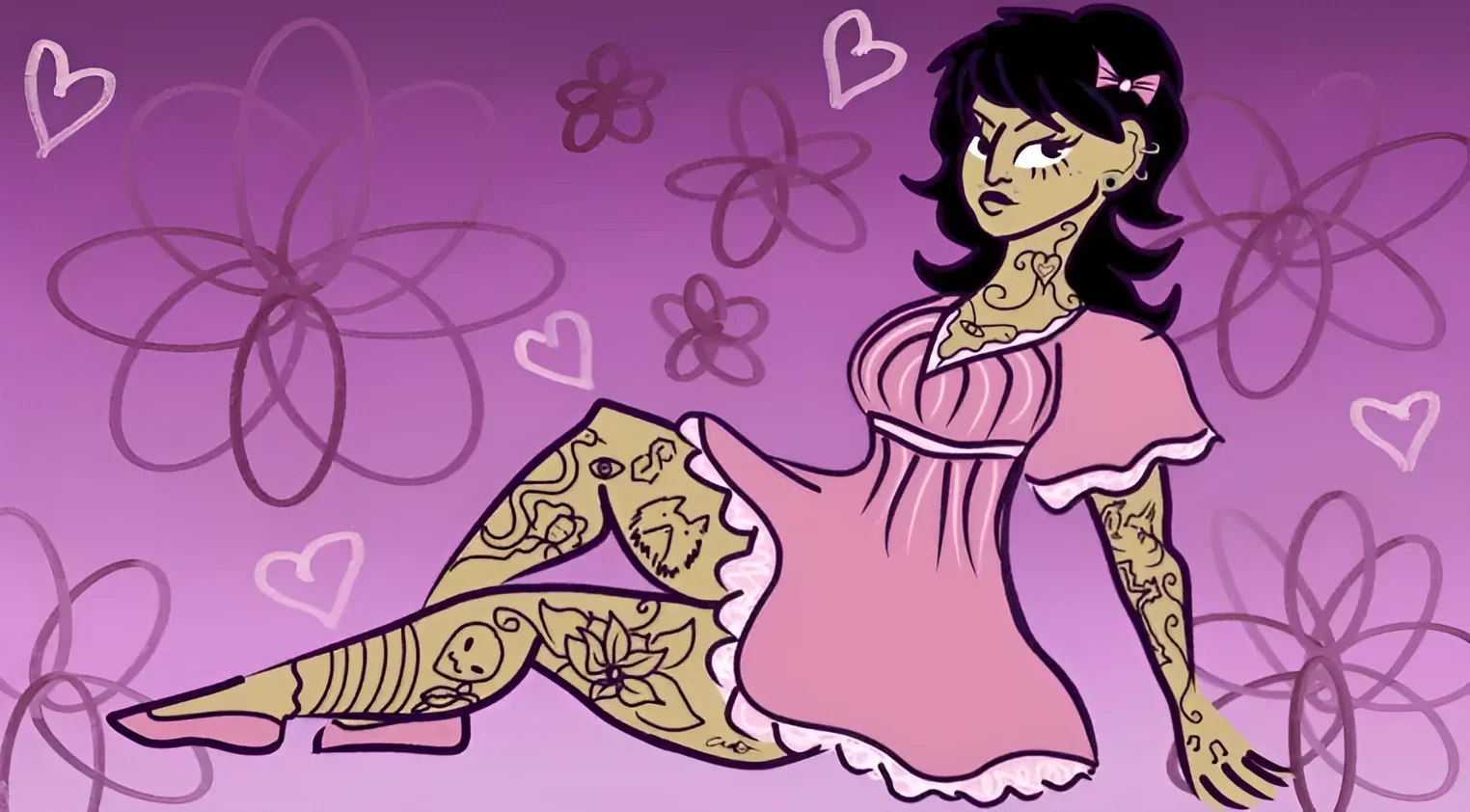
Social media is increasingly featuring posts where women publicly express regret about their tattoos and warn others against getting them. This isn’t just about changing tastes; it reflects a deeper shift in how the beauty industry defines “normative” femininity. Currently, beauty brands are actively promoting the image of the “natural” and “classic” girl: clear skin without a single scar, makeup in the “I just woke up” style, dissolving fillers instead of pronounced features. Against this backdrop, tattoos have suddenly found themselves outside the approved framework.
Numbers That Don’t Align with the Narrative
The paradox is that statistics suggest the opposite. According to Pew Research Center, tattoos are now more common among women than men. Furthermore, Removery reports that millennials and Gen Z are the most frequent candidates for tattoo removal, while the New York Cosmetic, Skin & Laser Surgery Center notes that women undergo removal procedures significantly more often than men.
| Metric | Men | Women |
|---|---|---|
| Percentage with tattoos (Pew Research Center) | 27% | 38% |
| More frequently undergo removal | less often | more often |
This paints an interesting picture: more people are getting tattoos, but more are also actively removing them. If it were purely about aesthetics, we wouldn’t see such a sharp surge right now.
Historical Baggage: Tattoos as a Marker of Rebellion
In American tradition, tattoos were associated with rebellion, counterculture, and “masculine” toughness for decades. According to PBS, the first and most widespread clients of tattoo artists when the art arrived in the US were sailors and soldiers. This association still lingers in the subconscious: a tattoo on a man is perceived as “manly,” while on a woman, it’s seen as “unattractive” and “unladylike.” It’s this double standard that creates pressure, causing some women to doubt their own decisions.
However, reality has long since shattered this stereotype. Angelina Jolie and Megan Fox, names strongly associated with beauty in pop culture, openly display their tattoos. Over the past two decades, the tattoo market has experienced a boom, with women forming its core.
Expert Insight: Why “Naturalness” is Also a Construct
It’s important here to distinguish between two different processes. Firstly, a person can genuinely outgrow a specific design – this is a normal part of growing up, and no one disputes the right to remove an outdated sketch. Secondly, there’s a completely different motivation: to remove a tattoo because it “makes one less feminine.” And this is where the problem begins, because the very idea of “natural femininity” is not a given, but a marketing construct that changes with trends.
Tattoo culture specialists emphasize that body art is a form of self-expression that tells a story about who a person was, who they are, and who they aspire to be. For many, it’s a way of “speaking” to the world before they even open their mouths. When the beauty industry begins to label such self-expression as “unfeminine,” it effectively strips individuals of their right to their own bodies.
Another nuance: in 2026, “proper” femininity has become quiet. No bright makeup, no “understated” clothing, no body modifications – even if they make a person happier. This is no longer about aesthetics but about self-control, which women are beginning to practice themselves by posting about their regrets online. The industry doesn’t even need to impose a standard – it’s enough for it to become the general background.
Fashion is Cyclical, the Body Remains
The main argument against panic is simple: beauty standards swing like a pendulum. What is declared “unfeminine” today might become a sign of individuality in ten years. Tattoos, piercings, or dyed hair don’t make a person less of a woman in a dress; they make them themselves. And spending thousands of dollars on tattoo removal just to “appear to be a woman” means conforming to a standard that will be replaced by its opposite tomorrow. The body is not a display case, but a space where everyone has the right to decide what remains on it.