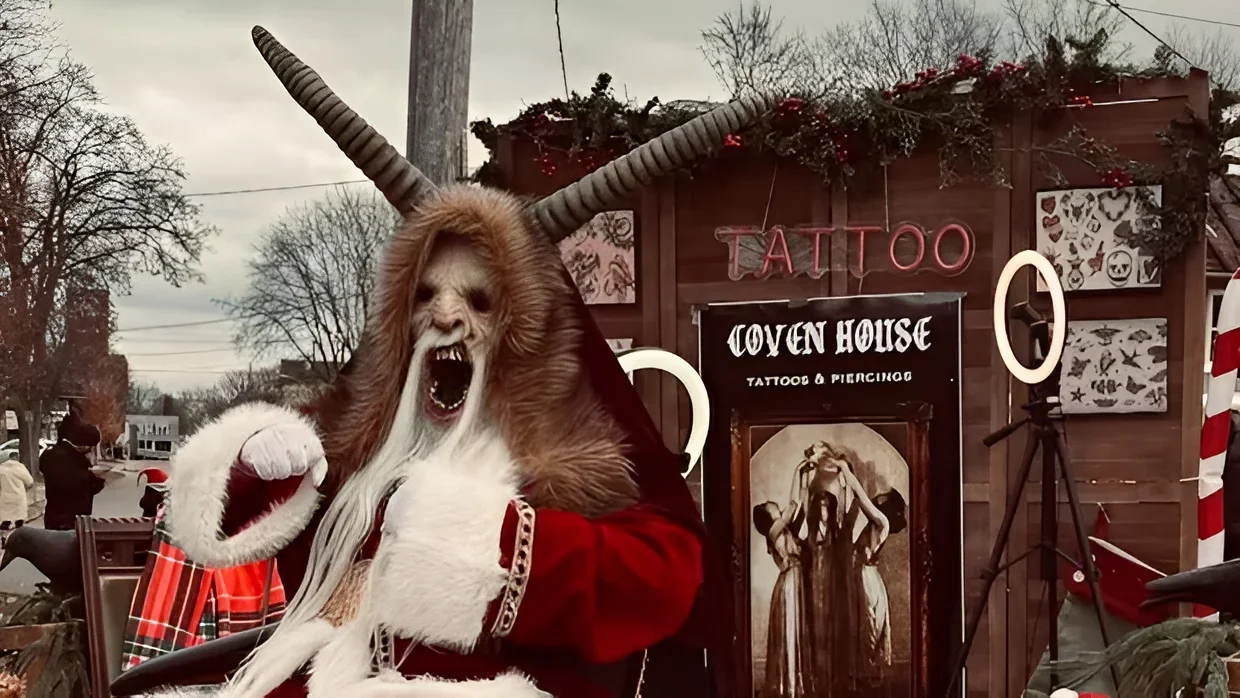
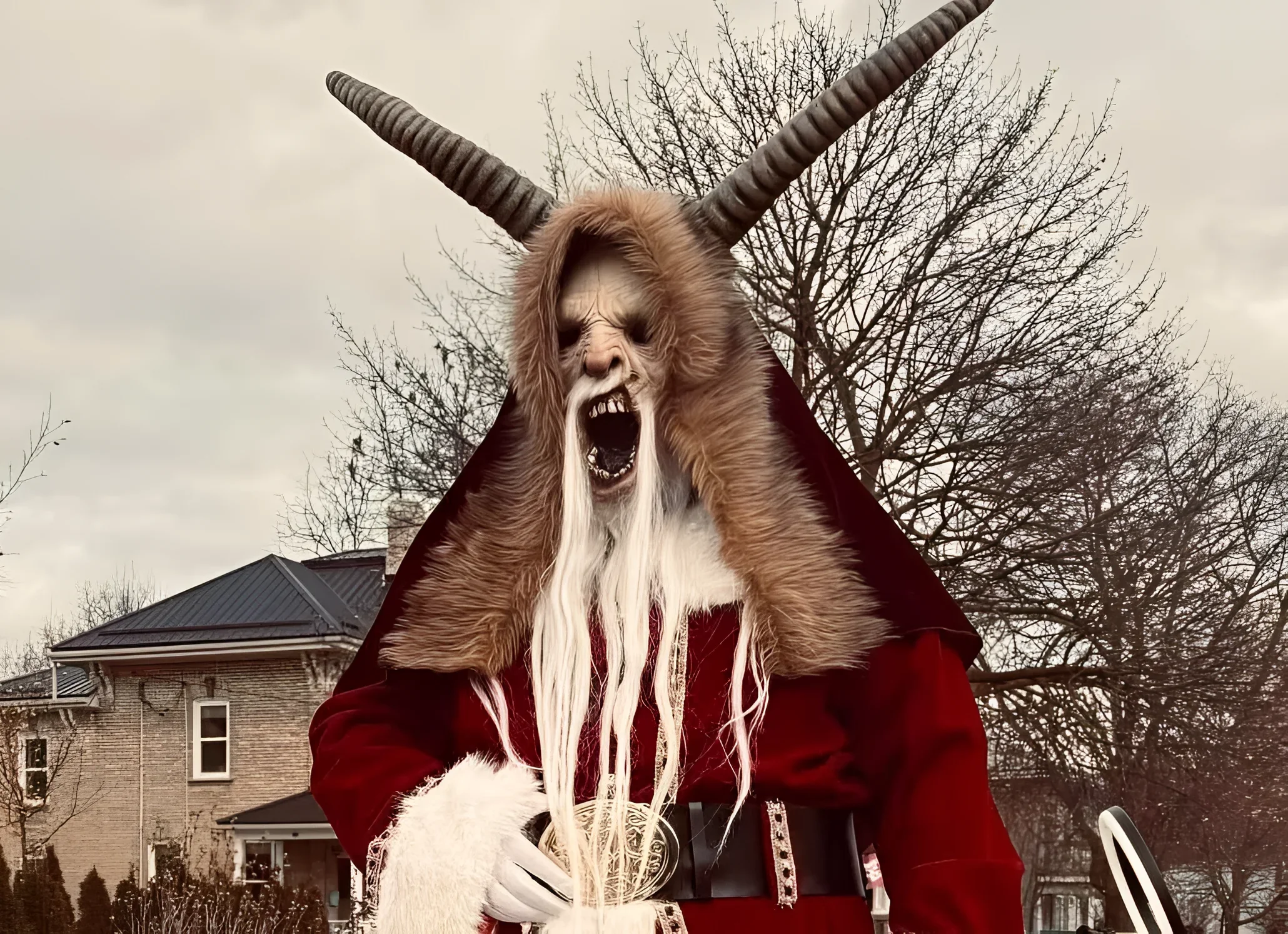
In the small Canadian town of Strathroy (Ontario), a dispute has erupted that has gone far beyond the scope of a typical Christmas celebration. A local tattoo parlor, Coven House, which specializes in tattoos and piercings, received notice that their parade float featuring a Krampus costume would not be allowed in the annual Santa Claus parade. The character, which took second place in the costume contest last year and drew a crowd of spectators, has now been banned following complaints about “not being suitable for a family audience.”
Who is Krampus and why has he become a problem?
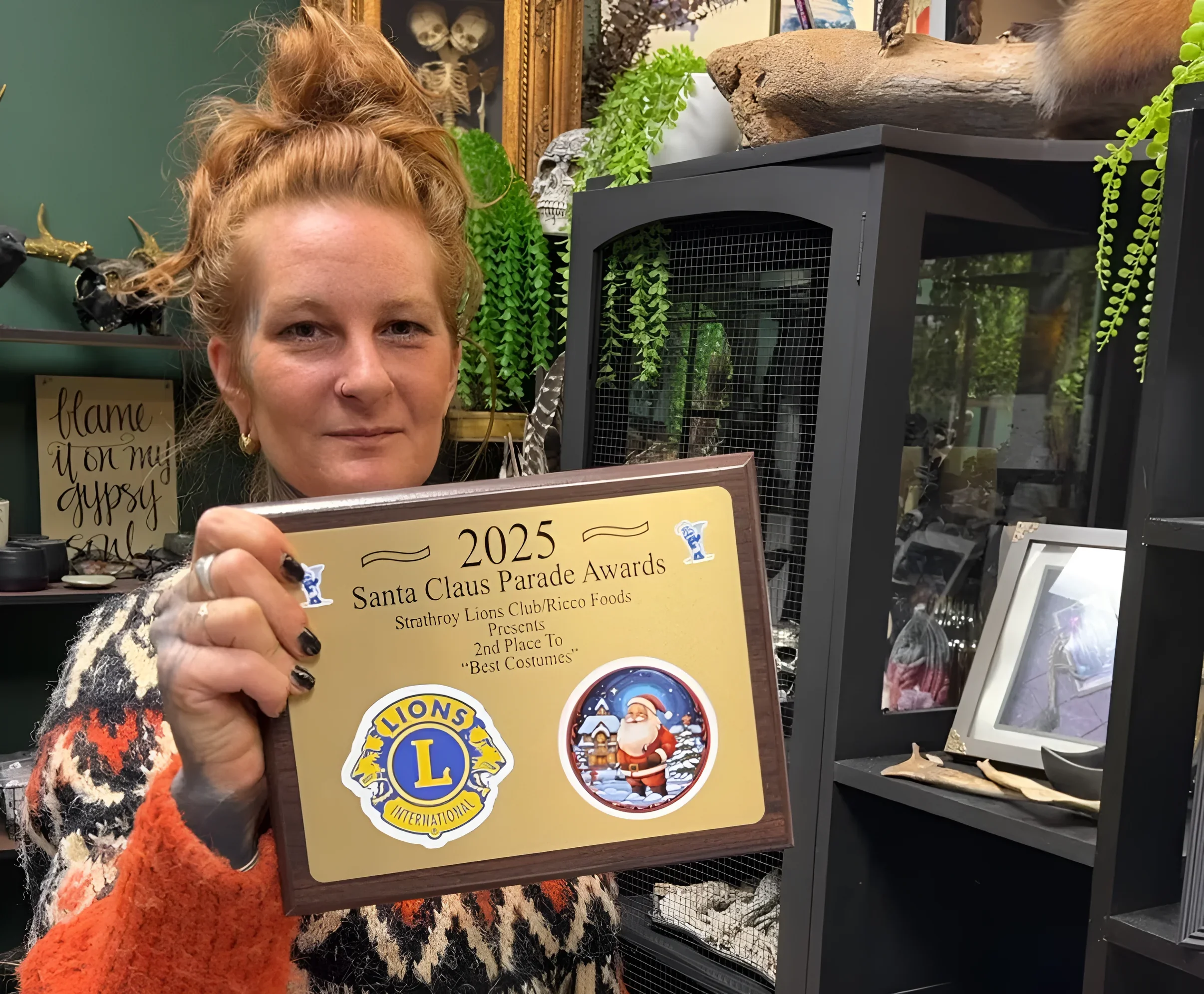
Krampus is a figure from European folklore, a kind of dark counterpart to Saint Nicholas. In the traditions of Austria, Germany, and other countries, he is depicted as a goat-like demon with horns who punishes naughty children and keeps a so-called “naughty list.” For tattoo culture, this image has long been one of the most recognizable: demonic motifs, horns, fangs, and a long beard are classics of the genre that can be seen on the walls of any self-respecting tattoo show. That is precisely why Coven House owner Tani Griffin decided to bring Krampus to the parade—not to scare, but to introduce residents to an alternative Christmas tradition.
This year, the plan was ambitious: children dressed as forest creatures were supposed to march alongside Krampus, handing out candy and temporary tattoos to spectators. But last week, the Strathroy Lions Club, the parade organizer, announced that the character was excluded from the route.
Church letter and community reaction
The reason for the ban stems from a letter from the local Pentecostal Calvary Church, dated December 10, 2025. In it, the authors express “deep dissatisfaction” that the parade, in their opinion, promoted “satanic and demonic influences,” and that the judging panel, which awarded the float second place for costume and music, “added insult to injury.” The church did not respond to requests for comment, advising people to “Google what Krampus represents.”
Brad Morrison, a priest at Strathroy United Church, sided with the tattoo parlor. He personally visited Coven House to express his support and stated that religion should not dictate which images are acceptable at city parades. “There are vulnerable groups in the city, and if they start being pushed out, where will this process stop?” he noted.
Expert perspective: tattoo culture as a space for freedom

The situation in Strathroy is not an isolated incident, but part of a broader trend. The tattoo community has historically been formed as a space where aesthetics take precedence over conservative norms. Demonic and folkloric images—from Krampus to Slavic spirits—have long ceased to be a “forbidden topic” and have become part of the visual language of tattooing. For artists and clients, it is a way to talk about traditions, mythology, and even the dark side of the holiday without fear of being judged.
When such an image is brought to a public parade, it encounters two forces: the curiosity of the audience and the pressure of conservative groups for whom any departure from a “Christian” Christmas looks like a threat. It is in this nexus that the conflict is born—not between “good and evil,” but between the right to cultural diversity and the right to protect one’s own values.
It is worth noting that in Europe itself, Krampus has long been integrated into holiday life: in Austria and Germany, his images appear at Christmas markets, and some Lions Club chapters even hold separate Krampus events. The fact that the character is perceived as part of tradition in one context and as a “demonic influence” in another shows how much interpretation depends on the local environment.
What happens next
The Santa Claus parade will take place on Saturday, and the Coven House float will not appear in it. But Tani Griffin has already stated that Krampus will be waiting for spectators right by the window of the tattoo parlor on Frank Street—the very place the route passes through. Thus, the ban has turned into another reason for attention: instead of disappearing, the image of Krampus has gained a new stage, even if it is not a parade one.
For tattoo culture, this episode is a reminder that the visual language of tattoos does not exist in a vacuum. Every demonic motif, every folkloric figure on the skin is not just a drawing, but a cultural code that can both unite and divide. And how the community reacts to such bans will largely determine whether tattoo culture remains an open space for dialogue or turns into another zone where aesthetics give way to censorship.