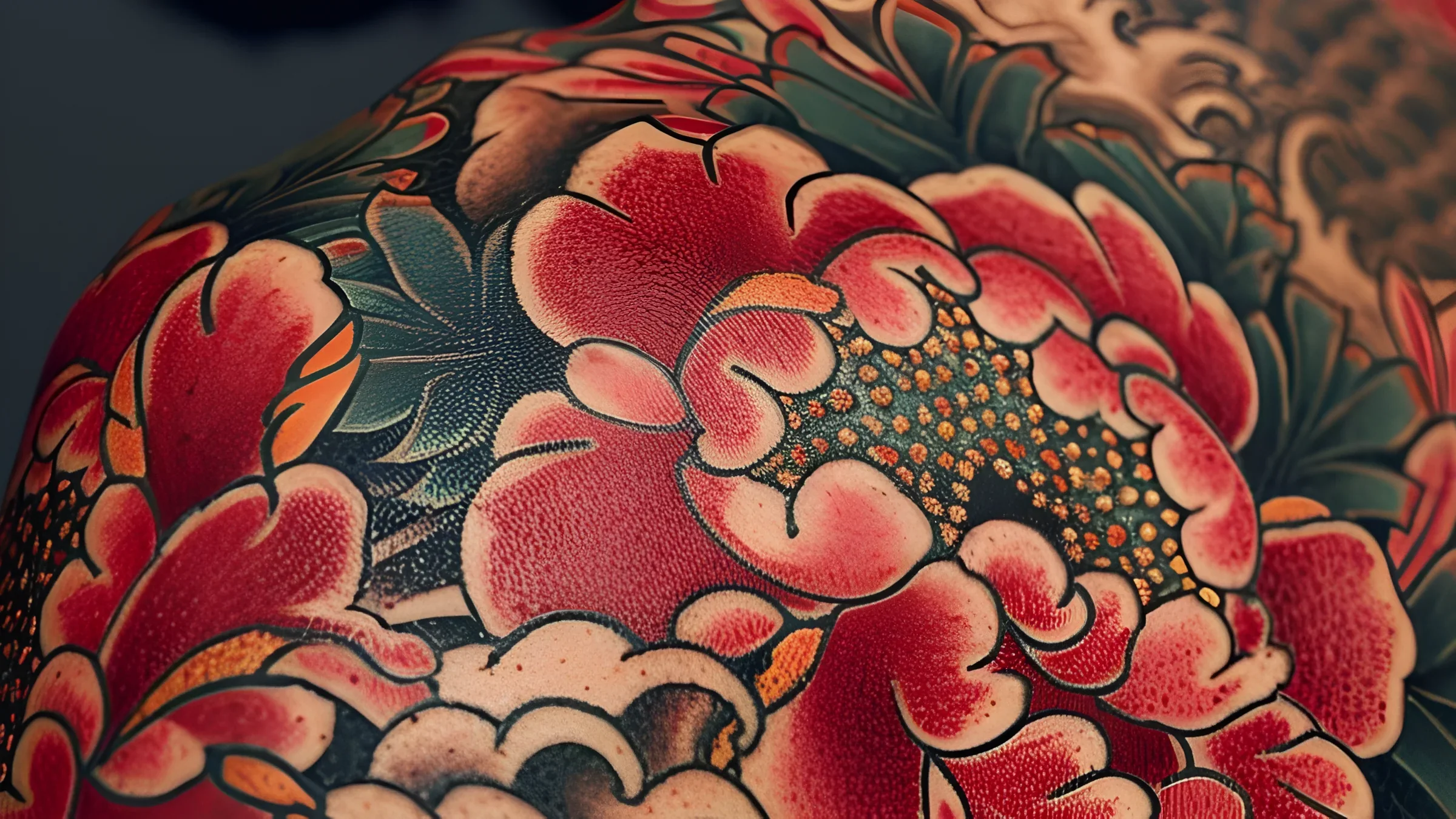
Humanity has been marking its own body with permanent ink for thousands of years — for rituals, status, memory, or simply for aesthetics. Ironic “stick’n’pokes,” tramp stamps with butterflies, total blackouts — all these are just the tip of a long history. But while we have studied the cultural context of tattoos well, the impact of the practice on the body remains a field of open questions. Recently, this field has been actively filled with data that everyone planning a new piece should know.
The most vivid example of recent months is the story of rapper MGK. The artist rushed to get a large-scale blackwork piece that covered most of his torso, including the areas under his armpits and shoulder lymph nodes. According to him, the skin around it turned yellow, and the process itself made him feel “very sick.” This is not an isolated case: studies show that tattoo ink particles can migrate through the lymphatic system and settle in lymph nodes — the key “filters” of the immune system, where lymph is cleared of debris, bacteria, viruses, and foreign substances. What we perceive as a static drawing is actually slowly moving through the body.
What’s inside the syringe: industrial chemistry under the skin
The permanence of a tattoo is explained simply: the pigment enters the dermis, the immune system recognizes it as foreign, but the particles are too large for the defender cells to remove them. The body begins an eternal “war” with what it cannot remove. And it is a complex chemical cocktail that makes the ink so persistent. Medical microbiologist Manal Mohammad, in a December 2025 article for The Conversation, analyzed the composition in detail: color pigments, liquid carriers for distribution, preservatives against microbes, and impurities. The key point is that many pigments were not originally created for human skin, but for automotive paint, plastics, and printer toner.
For clarity, let’s collect the main components and their risks in one table:
| Ink component | Purpose | Potential risk |
|---|---|---|
| Color pigments | Shade and saturation | Allergy, chronic inflammation, granulomas |
| Liquid carriers | Distribution on the skin | Irritation, reaction to preservatives |
| Heavy metals | Impurity (nickel, cobalt, chromium, rarely lead) | Toxicity, organ damage, neurotoxicity |
| Azo pigments | Bright colors | Breakdown into aromatic amines upon irradiation |
| PAHs | Impurity in black ink | Carcinogenic potential in laboratory data |
Red is the most “explosive” color
Colored inks, especially red, yellow, and orange, are most often associated with allergies and chronic inflammation. Red pigment, in particular, provokes persistent itching, swelling, and granulomas — small nodules that the immune system forms while trying to isolate what it cannot remove. Allergies are exacerbated by metal salts and azo pigments. The latter are organic compounds that provide brightness in textiles and plastics, but when exposed to radiation (direct sunlight or laser tattoo removal), they break down into aromatic amines. Laboratory studies link these amines to cancer and genetic damage. Black ink, in turn, may contain polycyclic aromatic hydrocarbons — the same substances found in soot, exhaust, and burnt food, many of which are classified as carcinogens.
The most dramatic documented case is the story of a Polish man whose immune system reacted to red ink with the loss of the ability to sweat, the loss of all body hair, and the development of vitiligo, a disease involving skin depigmentation. This is an extreme point, but it shows how unpredictable an individual reaction can be.
The link to melanoma and the question of regulation
There is no direct proof of a link between tattoos and cancer in humans yet, but laboratory and animal data hint at risks. An observational study published late last year recorded a 29% higher risk of melanoma in tattooed individuals, although other recent works have not confirmed such a link. The picture is contradictory, and that is why Manal Mohammad emphasizes: chronic inflammation is associated with tissue damage and increased disease incidence, and for people with autoimmune pathologies or weakened immune systems, tattoos may carry an additional burden.
Infections are a separate topic. The needle breaks the skin barrier, and this opens the way for staphylococcus, hepatitis B and C, and in rare cases, atypical mycobacteria. The industry is poorly regulated in most countries, so the responsibility falls on the client. Before a session, it is worth asking the artist directly about the ink composition and sanitary protocols, and if you have any immune system issues, consult a doctor first.
A tattoo remains a powerful form of self-expression, but it is also a lifelong contact with chemicals. As the practice grows around the world, the argument for better regulation, transparency of composition, and systematic scientific research is becoming harder to ignore. Knowing exactly what you are injecting into your skin is now part of the culture, not just a matter of taste.