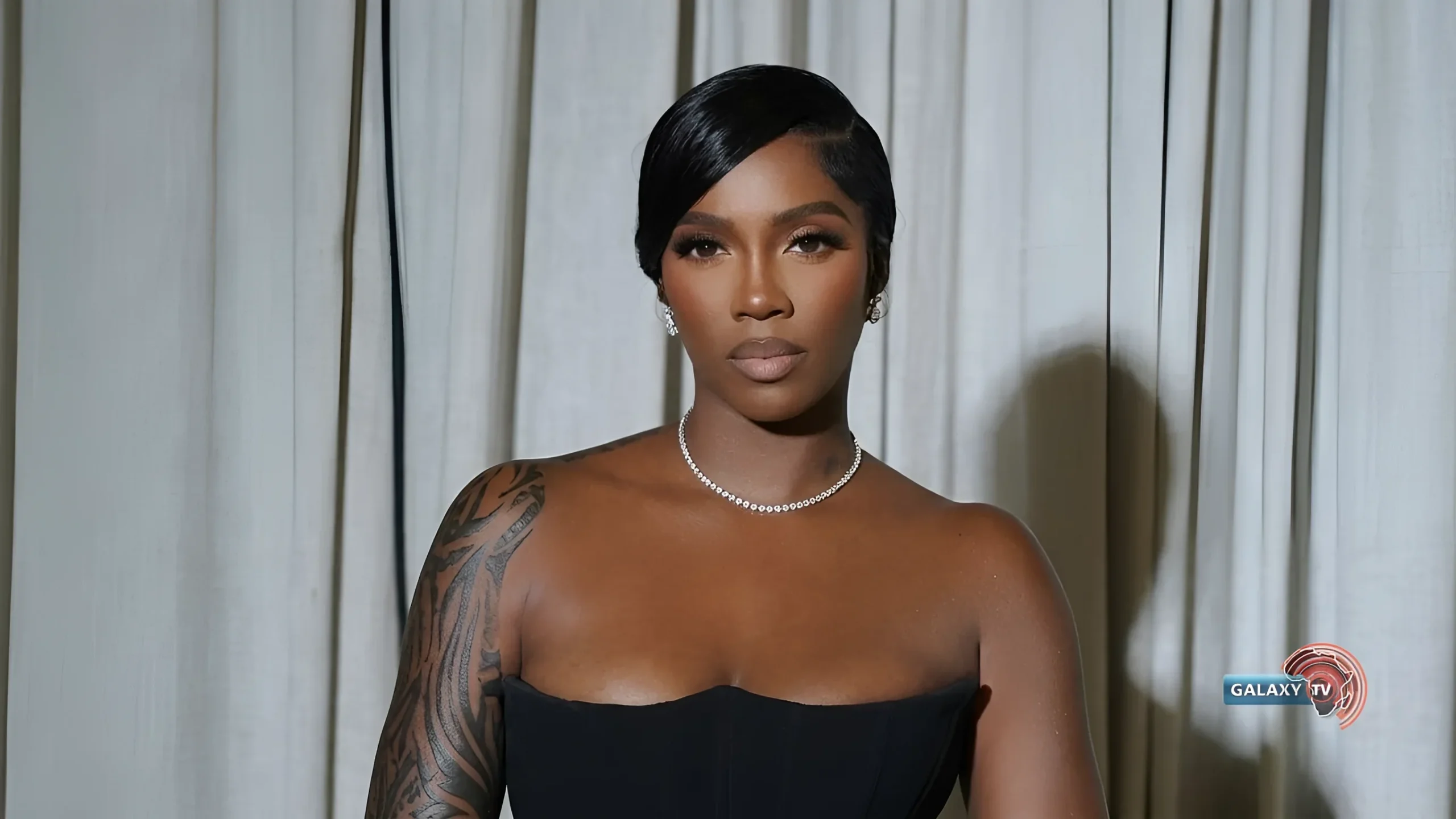
Nigerian singer Tiwa Savage has once again brought back into the public eye the issue of double standards that have defined her career for years. The artist shared that after returning from Los Angeles, where she continued working on her music, her image—short shorts, tank tops, and prominent tattoos—became grounds for restrictions on radio, television, and live venues. According to her, it was then that she was turned into a “scapegoat,” and a style that is considered commonplace today was then perceived as a direct challenge.
Savage directly linked her story to the music videos for Love Me and Wanted, which became the center of a scandal. The National Broadcasting Commission officially banned the first one, while the second sparked a wave of complaints from broadcasters and viewers due to its “provocative” presentation. The singer emphasized that her first two videos were banned even though in one of the frames she was wearing a jumpsuit rather than a bikini, as is often claimed in discussions.
A separate layer of criticism, the artist admitted, concerned her tattoos. A full sleeve on her body did not fit into traditional notions of how a woman “should look” in the Nigerian music industry. Concert organizers denied her performances, citing the “unacceptability” of her appearance, and television channels pulled her music videos from rotation.
Why tattoos became a trigger: A perspective from tattoo culture
Savage’s situation is not an isolated case, but part of a broader picture. Tattoo culture has a steady phenomenon: what one era considers “dirty” or “indecent,” the next turns into the norm. Back in the early 2000s, a tattoo on a woman’s body in conservative societies was perceived as a marginal sign, and a full sleeve as an almost “forbidden” attribute. Today, that same artwork on a singer’s or actress’s forearm raises no questions because the audience has grown alongside the industry.
Tattoo scene experts note that it is the “pioneers” who pay the primary price for shifting the norm. Until a style becomes mainstream, its bearer becomes a target for criticism, and their choice becomes a subject of moralizing. When others follow, the focus shifts: it is no longer “how dare she,” but “why was she the first to suffer.”
Savage also stated that different generations of female musicians can coexist without competition, citing Tems, Ayra Starr, and Bloody Civilian as examples. She also criticized age pressure, pointing to Beyoncé as an example: women over forty, in her logic, have every right to wear bikinis and not justify their age.
If we compile the key shifts that Savage described based on her own experience, a clear picture emerges:
- Short shorts and tank tops — from a reason to ban music videos to everyday stage norms.
- Tattoos, including full sleeves — from “indecency” to a sign of individuality.
- Music videos with a “provocative” presentation — from broadcaster complaints to standard streaming content.
- Age and corporeality — from moralizing to discussion as part of artistic expression.
Tiwa Savage’s story is not just a complaint about the past, but a document of how tattoo culture and female self-expression travel the path from stigma to mainstream. For the tattoo community, this is confirmation: every prominent tattoo on a public figure is not only a personal choice, but a small act once performed first by someone who had to pay the price.