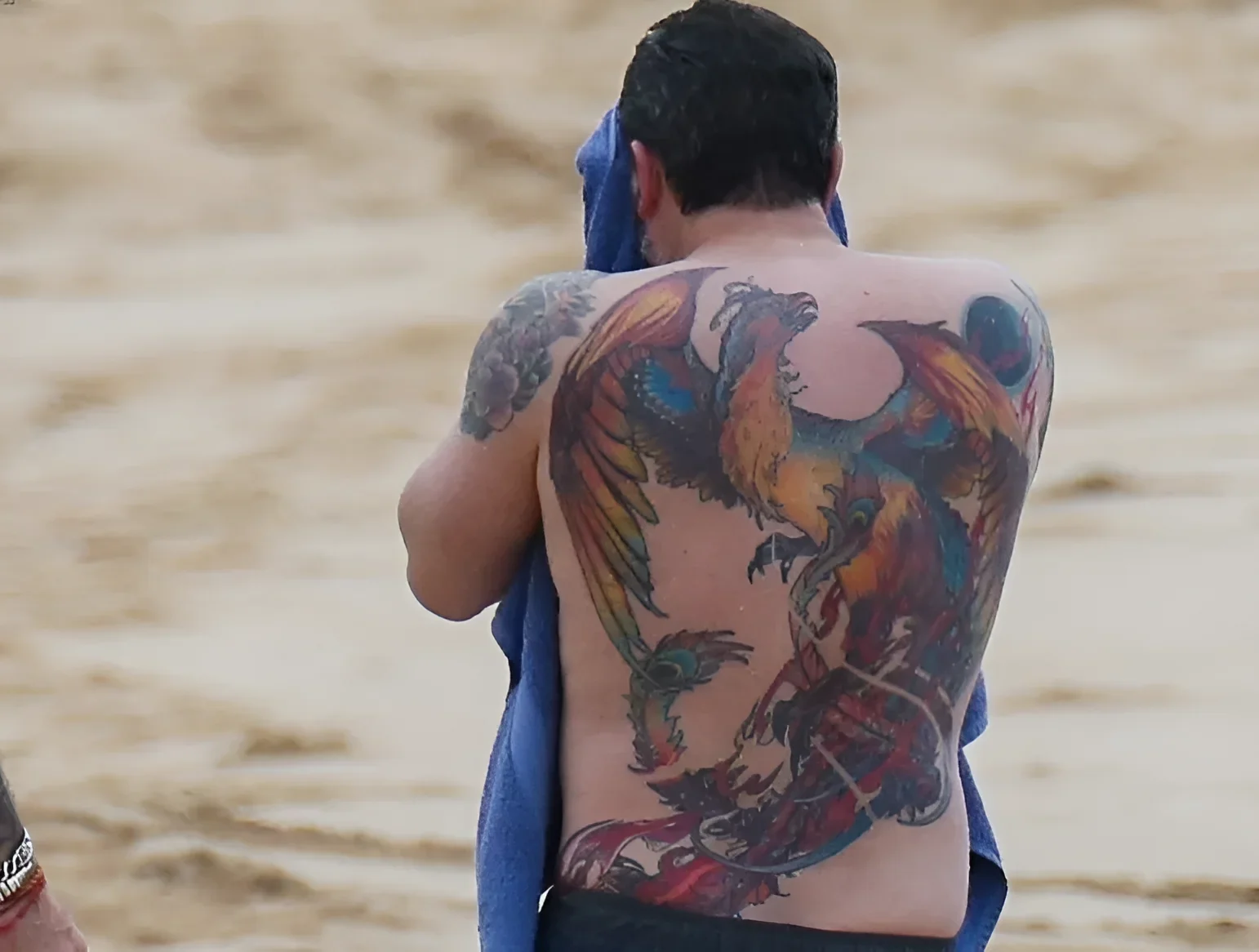
The premiere of the Netflix thriller “Animals,” in which Ben Affleck appears as a mayoral candidate, has once again brought his appearance to the forefront — and not just the wrinkles he so masterfully hid under his beard. Paparazzi, who caught the actor on set, noticed that the familiar colorful phoenix on his lower back now looks noticeably darker: the bright feathers seem to have been covered with black pigment. For those who follow Hollywood tattoo culture, this is not a sensation, but a logical stage: Affleck’s body art has long turned into a living document that grows, ages, and is redrawn along with his life.
 admin
South Orange Introduces Mandatory Licensing for Tattoo Parlors
In the small town of South Orange, New Jersey, the local South Orange Village Council has introduced a draft ordinance that changes the rules of the game for the entire body art industry in the district. The essence of the innovation is simple and important: tattoo studios will be granted the status of licensed establishments, and the local Health Department will, for the first time, have real leverage—the right to suspend a salon’s operations or close it entirely if sanitary standards are violated. The final vote is scheduled for November 9, 2026.
Children’s home in Salford: teenagers were tattooing each other unsupervised

In a municipal children’s home in Salford, Greater Manchester, teenagers spent years tattooing permanent designs on each other — and none of the adults intervened. The British Ofsted inspectorate, which checks standards of education and care, recorded a picture in its report that looks like chronic indifference: children obtained tattoo equipment themselves, held “sessions” in bedrooms and on the street, and instead of helping, caregivers confiscated their bus passes, depriving them of meetings with family. The result of the inspection is the worst possible rating, “Inadequate,” and three official notices to the Salford Council to rectify gross violations.
Tattoos in exchange for food: a charity campaign in Lisbon

In the tattoo industry, the idea that a needle can be not just a tool for self-expression, but also a channel for help, has long taken root. In November 2026, in Lisbon, this concept was turned into a concrete mechanism: artist Vera Servo Pereira launched a charity session where clients receive miniature fine-line tattoos in exchange for bringing a supply of wet dog food and paying a fixed fee. All collected supplies go to União Zoófila, the capital’s oldest animal protection association, which has been operating since 1951.
Thermo-Sensitive Tattoo Sticker Market to Grow to $3.27 Billion by 2030
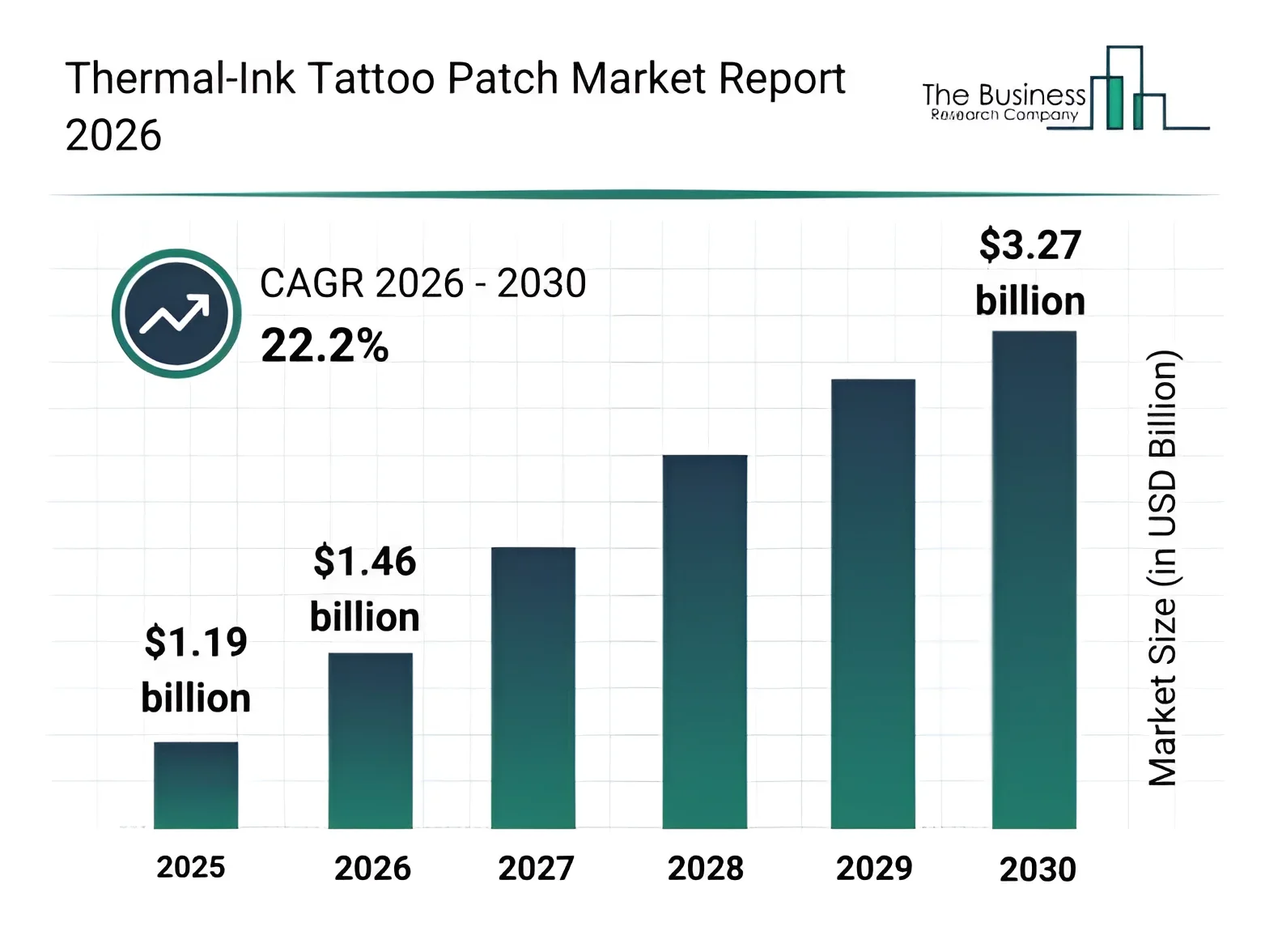
The line between tattoo culture and wearable electronics is blurring before our eyes. What was once perceived as a fun festival accessory is today transforming into a full-fledged medical monitoring tool. We’re talking about thermo-sensitive tattoo stickers – thin films with a thermochromic ink layer that change color in response to skin temperature changes. According to a recent industry report, this segment is experiencing explosive growth: while its valuation was $1.19 billion in 2025, it will rise to $1.46 billion in 2026, and by 2030, it is projected to reach $3.27 billion. The compound annual growth rate for the period 2026–2030 is estimated at 22.2%, and the transition from 2025 to 2026 is characterized by even higher dynamics – 22.5%.