
Piercing is not just body jewelry, but a small ritual that changes your mood and emphasizes individuality. But for the result to please you for years to come and not turn into a source of discomfort, it’s important to understand one simple rule: the more competently you care for a fresh piercing, the faster and cleaner it will heal. In this article, we have gathered time-tested methods used by piercers and dermatologists so that you can calmly and confidently go through the process from the first piercing to perfect healing without scars, irritation, or unpleasant surprises.
Piercing vs. Stretching: Differences in Procedures and How to Choose

Many newcomers to modification salons confuse two concepts: piercing and stretching. At first glance, they are similar procedures – both involve puncturing and wearing jewelry. However, in reality, the mechanisms of tissue impact, healing times, jewelry choices, and even the philosophy of modification are completely different. In this article, we will thoroughly examine the exact differences between piercing and stretching, how each procedure works at the skin and cartilage level, which styles and areas are suitable for a specific type of modification, and provide practical advice on preparation, choosing a master, and aftercare. The text is written so that you can calmly make a decision and not make a mistake about what exactly you want to achieve in the end.
Titanium and Steel Allergies in Piercings: What to Do

If after a piercing your ear, navel, or tongue starts to itch, redden, or develop small blisters, you’ve likely wondered: is this just healing, or is your body starting to “rebel” against the metal? In reality, reactions to metal in piercings are more common than you might think, and in the vast majority of cases, they pose no threat to your health – it’s enough to recognize the problem in time and replace the jewelry with a biocompatible alternative. In this article, we’ll explore what exactly happens to tissues when they come into contact with nickel, chromium, and other alloy components, why even “hypoallergenic” titanium sometimes causes discomfort, and how to choose jewelry that won’t make itself known even to the most sensitive skin.
How to Choose Piercing Jewelry for Your Face Shape: A Complete Guide

Piercing is not just about making a hole and inserting a ring. It’s a way to emphasize your individuality, correct facial proportions, and add that special touch that sets you apart from the crowd. Many people, deciding on their first piercing, only think about where exactly to get it done, forgetting the most important thing: how the shape and size of the jewelry will look on their specific face. An oval face forgives almost any experiment, while a round or square one requires a more thoughtful approach. In this article, we will break down how to choose jewelry for your face shape for each type of piercing, which metals and styles work best, and how to combine piercings with makeup and hairstyles so that the result pleases you every day.
Industrial: The Most Difficult Ear Piercing – Types, Meanings, Aftercare
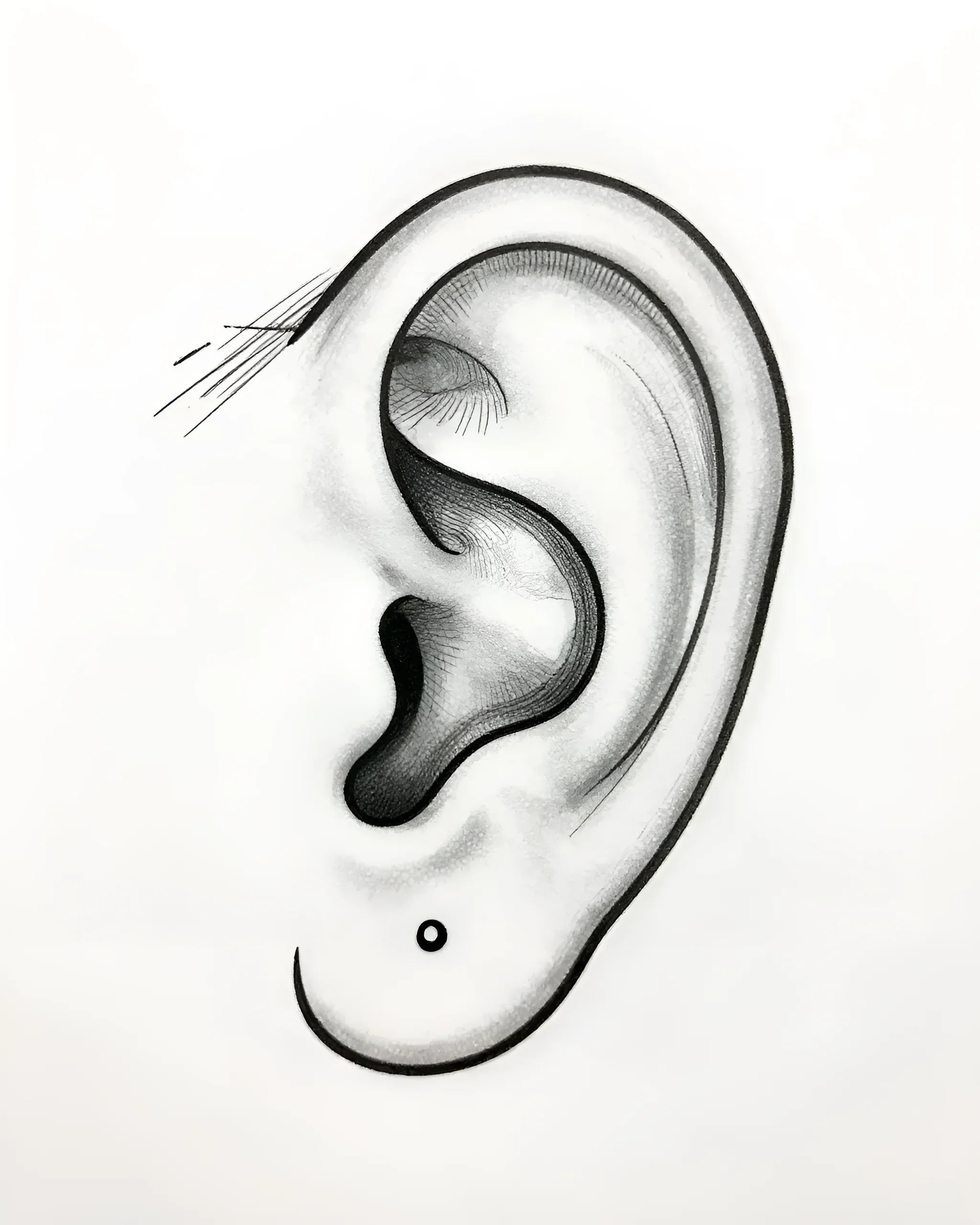
If you’ve ever browsed through piercing artists’ portfolios and your gaze lingered on an ear with several crossed barbells, you’ve most likely seen an industrial piercing. It’s not just ‘another piercing’ – it’s an entire engineering construction where two or more holes in the cartilage are connected by one long bar, creating the effect of a metal frame. At tatufoto.com, we’re accustomed to dissecting the symbolism and meanings of tattoos, but the industrial deserves special attention: it stands at the intersection of body art, industrial aesthetics, and pure technical mastery. In this article, we’ll cover all facets of this piercing – from why it’s called the most difficult to specific aftercare tips that will save you weeks of pain and nerves.