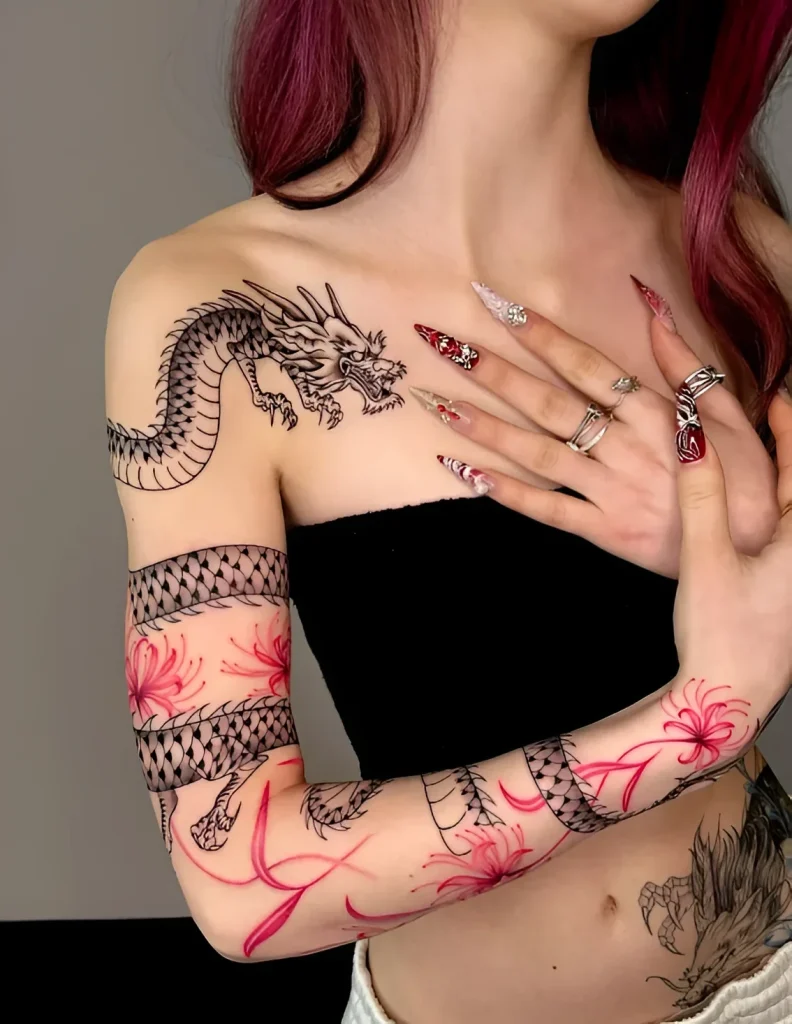
A tattoo on the collarbone is one of the most popular, yet simultaneously most challenging, areas of the body to tattoo. Combining aesthetic appeal and deep symbolism, this area requires the artist to have not only artistic flair but also a thorough knowledge of anatomy. If you are a beginner tattoo artist looking to master working with this delicate zone, this guide will be your indispensable expert resource. We will delve into all the nuances: from choosing the right needle to correctly positioning the client, ensuring your collarbone tattoos are always clean, sharp, and safe.
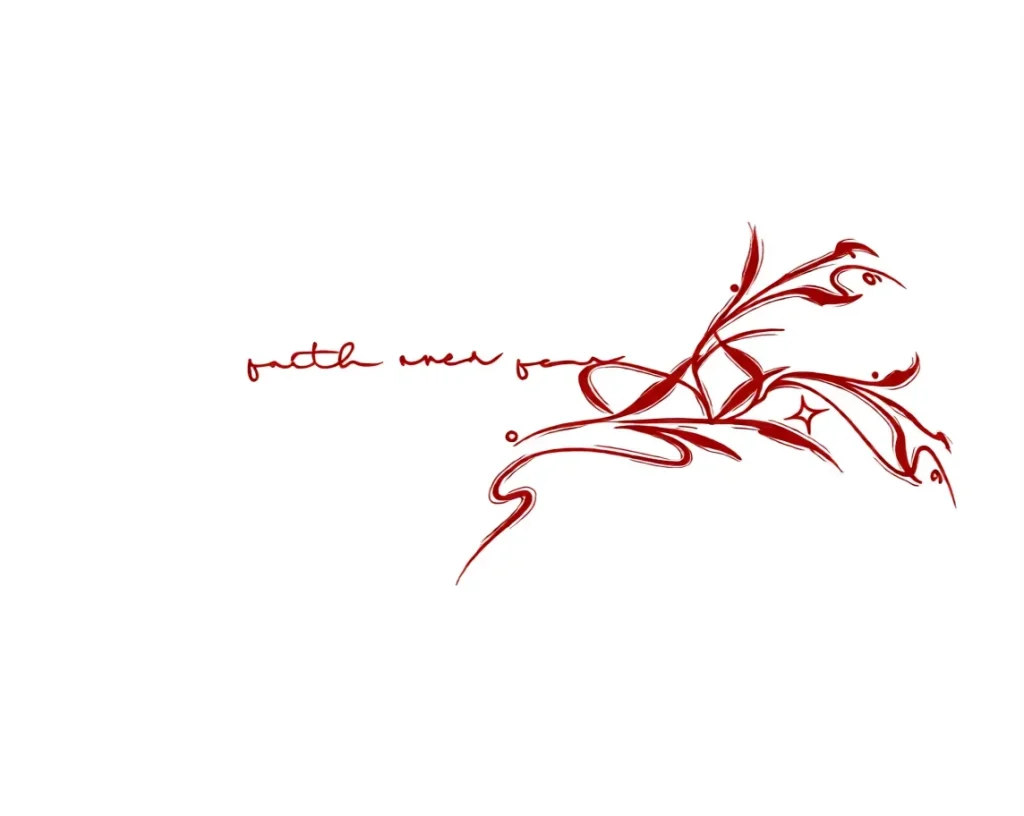
Collarbone Anatomy and Tattooing Specifics: What You Need to Know
The collarbone (clavicula) is an S-shaped paired bone connecting the scapula to the sternum. For a tattoo artist, this area presents a unique challenge as it combines extremely thin skin, close proximity to the bone, and high sensitivity. Understanding the anatomical features is critically important for preventing injuries and ensuring a quality result.
Bone Proximity and the Risk of Blowout
The main challenge when working with the collarbone is the minimal layer of fatty and muscular tissue separating the skin from the bone. When the needle hits the bone, the vibration intensifies sharply, and the depth of penetration, which might be safe on softer areas, becomes excessive here. Excessive pressure or too deep penetration can lead to a “blowout” (ink spreading under the skin) as the ink easily penetrates the dermis and hypodermis, where it cannot be fixed by dense collagen fibers.
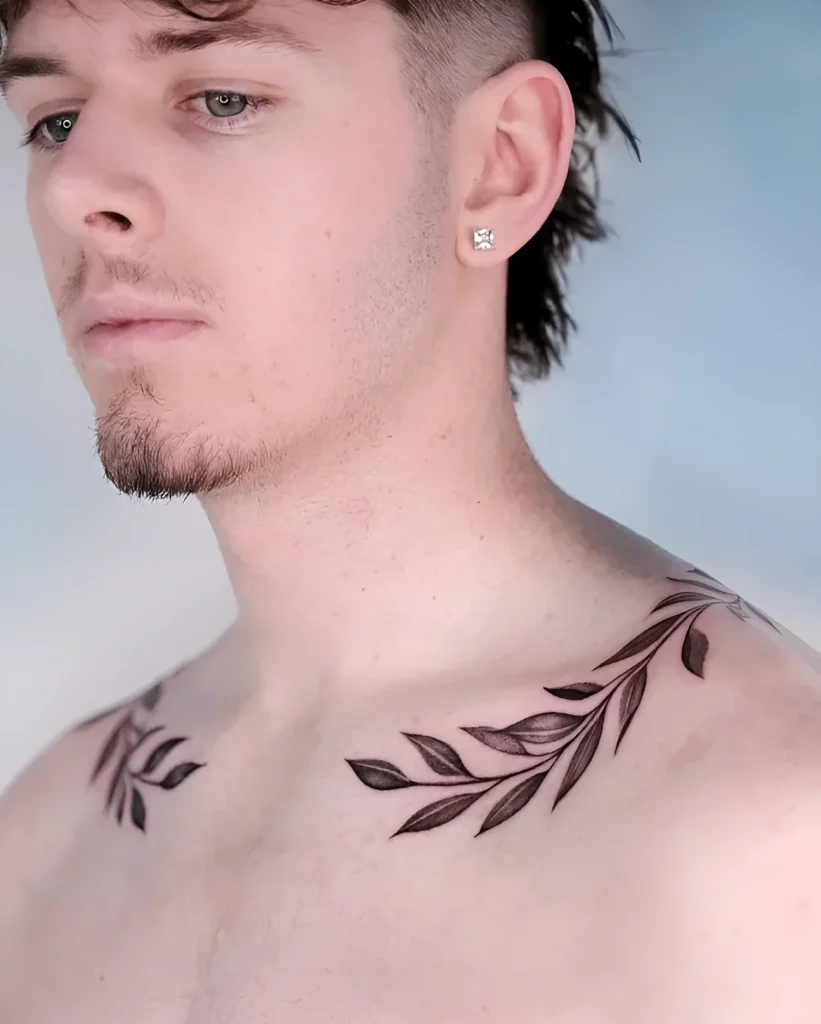
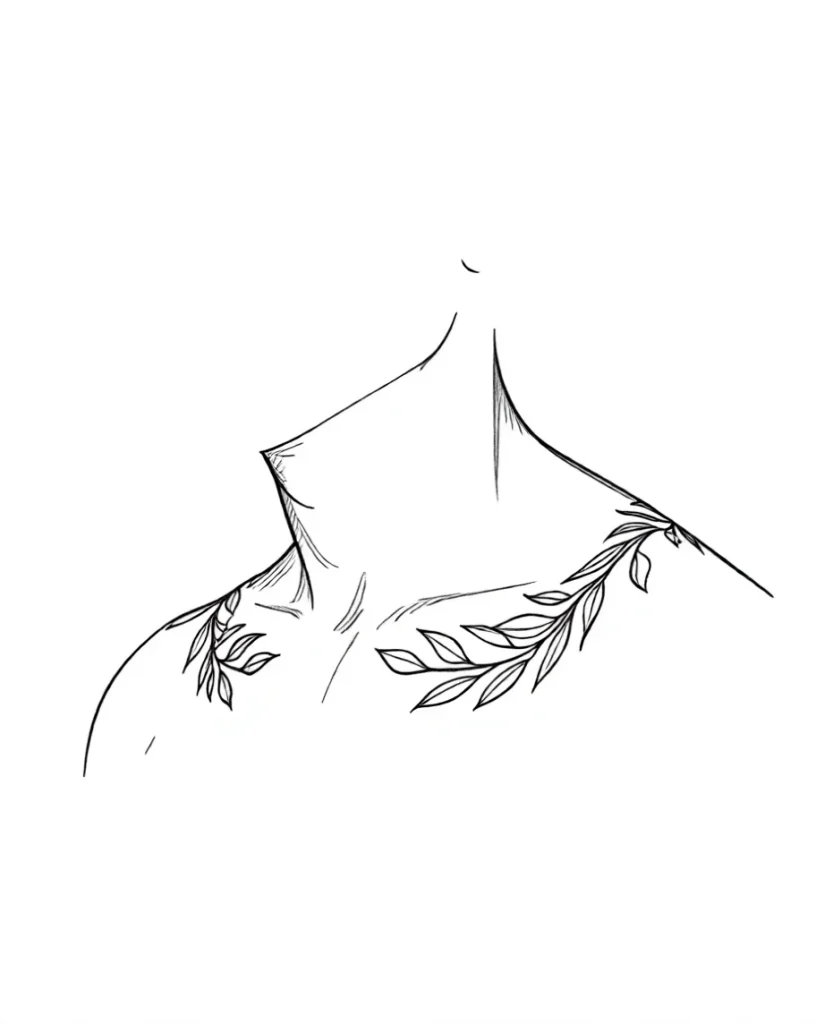
Sensitivity and Nerve Endings
The collarbone area is primarily innervated by the supraclavicular nerves (branches of the cervical plexus). This makes the tattooing process here one of the most painful, especially in areas directly touching the bone. The artist must work quickly but carefully to minimize client discomfort and prevent excessive muscle tension, which can distort the design.
Thinness and Mobility of the Skin
The skin over the collarbone is very thin and elastic. This requires particularly careful stretching (stretching). Insufficient stretching will lead to uneven ink saturation and “falling out” of lines, while excessive stretching can cause excessive trauma. Both hands must be used for stretching, creating the flattest and most stable surface possible, especially when working with fine lines.
Summary for the Artist:
- Depth: Work at a minimal but sufficient depth. The collarbone often requires less depth than the forearm.
- Pressure: Use light, even pressure.
- Stretching: Double-sided skin stretching is essential to stabilize the surface.
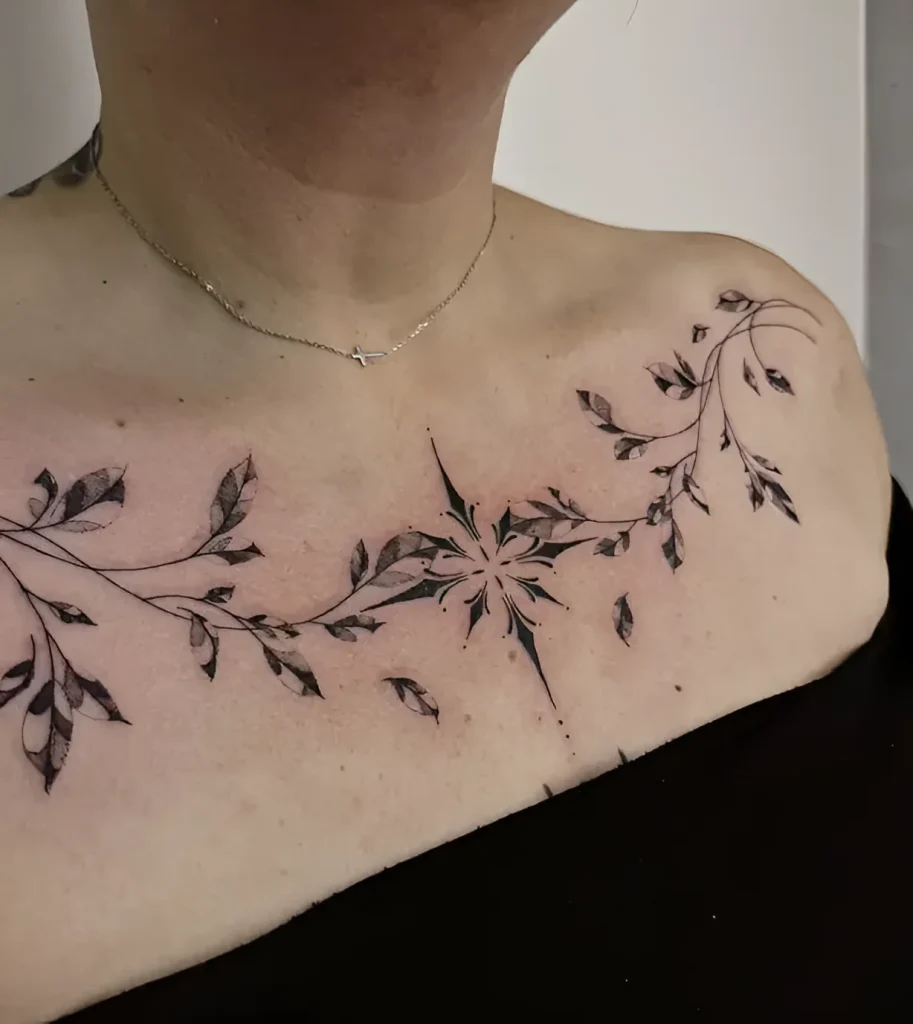
History of Collarbone Tattoos: From Ancient Traditions to Modern Popularity
While collarbone tattoos do not have as ancient and universal a history as, for example, Polynesian patterns on limbs, their symbolism has always been linked to visibility and vulnerability. In the modern context, the collarbone has become a popular location for delicate, personal, yet easily displayed designs.
The Collarbone as a Display Zone
Historically, exposed body parts like the neck and collarbones were often used to denote status or group affiliation. Unlike tattoos on the arms, which could be covered by clothing, collarbone tattoos, especially for women, became popular in the 20th century as a way to make a subtle personal statement.
- European Tradition: In the early 20th century, small, often floral or text-based tattoos in this area were associated with romance and fragility, emphasizing the elegance of the neck and shoulders.
- Modern Culture: Today, the collarbone is an ideal canvas for minimalism, fine lettering, or symmetrical designs. It is constantly visible to both the wearer and others, giving the tattoo additional significance.
Collarbone Tattoo Meanings: Symbolism and Sketch Interpretations
Choosing the collarbone as a tattoo location inherently carries a certain message. This area is often associated with fragility, elegance, and a point of transition between the head (mind) and the body (feelings). The symbolism of a collarbone tattoo is often amplified by its placement.
Symbolism Related to Placement
Tattoos located close to the neck and face are perceived as more personal and significant. They can symbolize:
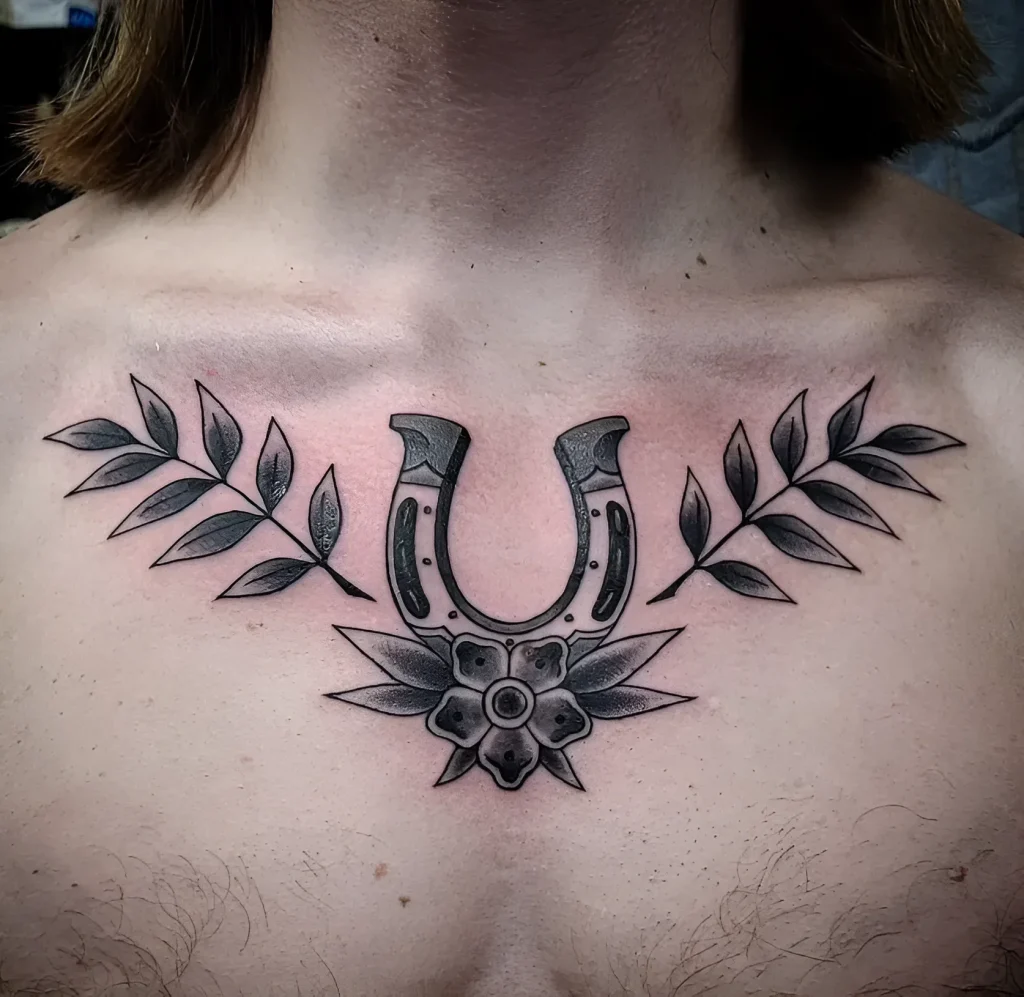
- Protection and Amulet: As the collarbone is located at the “entrance” to the body, many choose symbols of protection here, such as mandalas, hamsas, or protective runes.
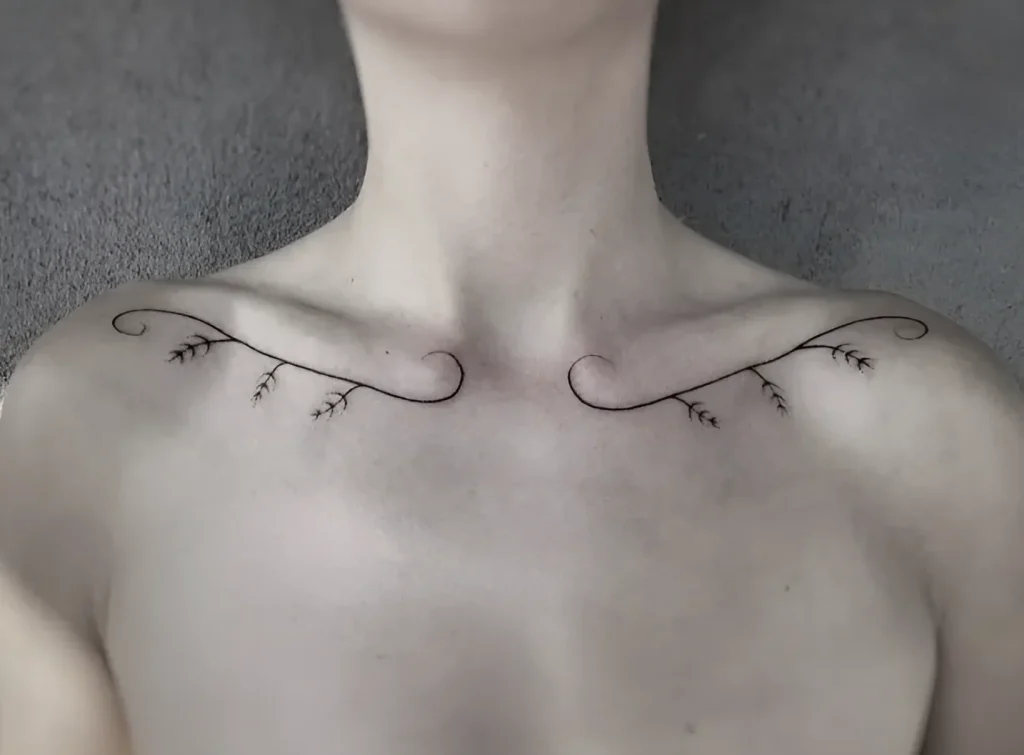
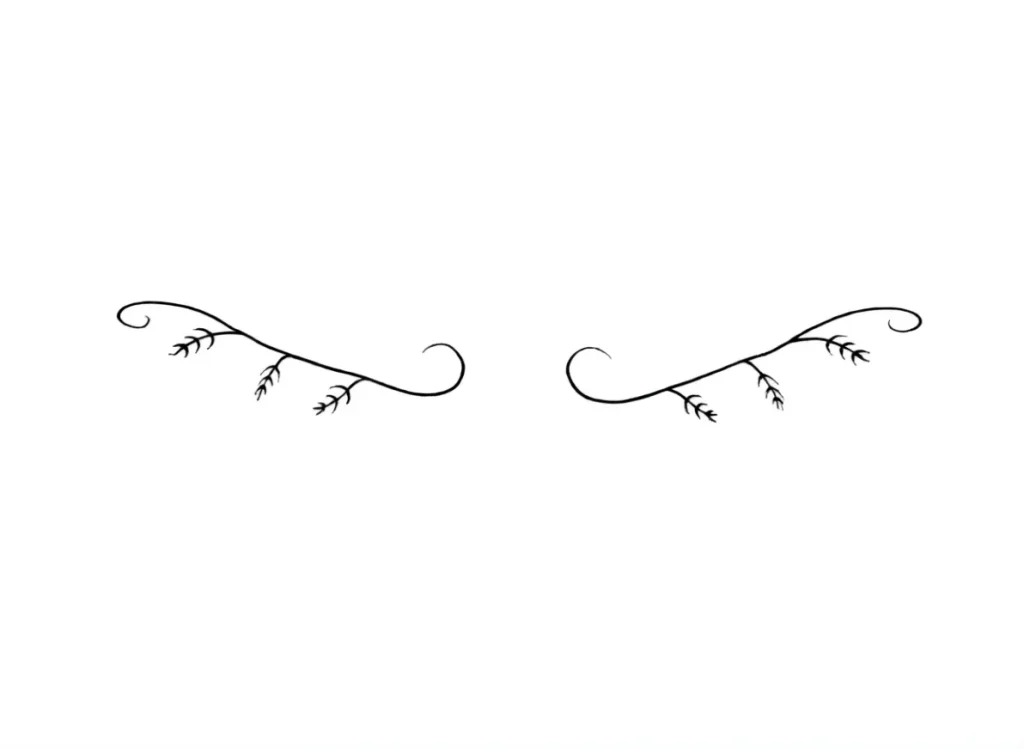
- Freedom and Flight: The curved shape of the collarbone is ideal for depicting wings, birds, or flying elements. This symbolizes the pursuit of freedom, lightness, and independence.
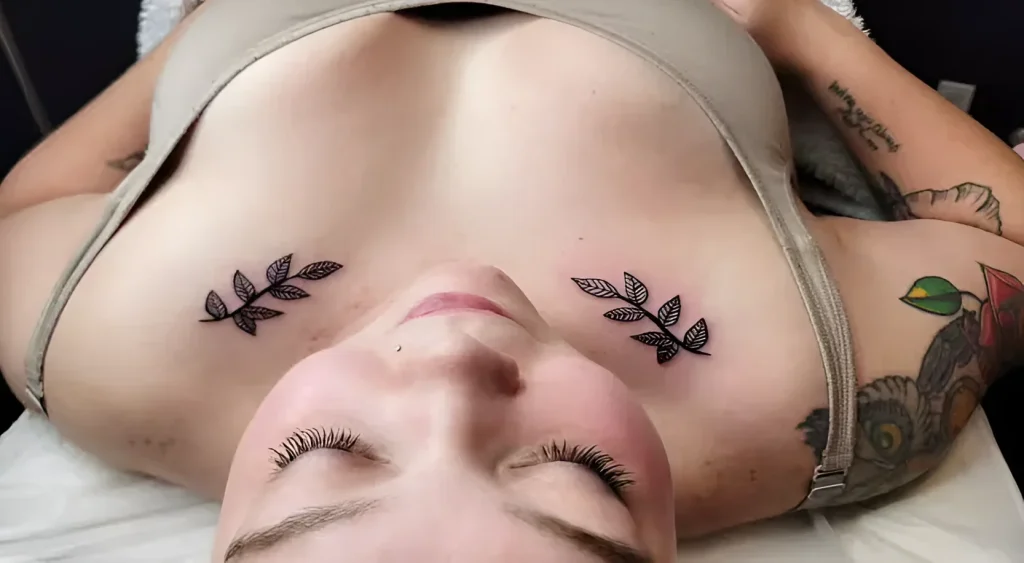
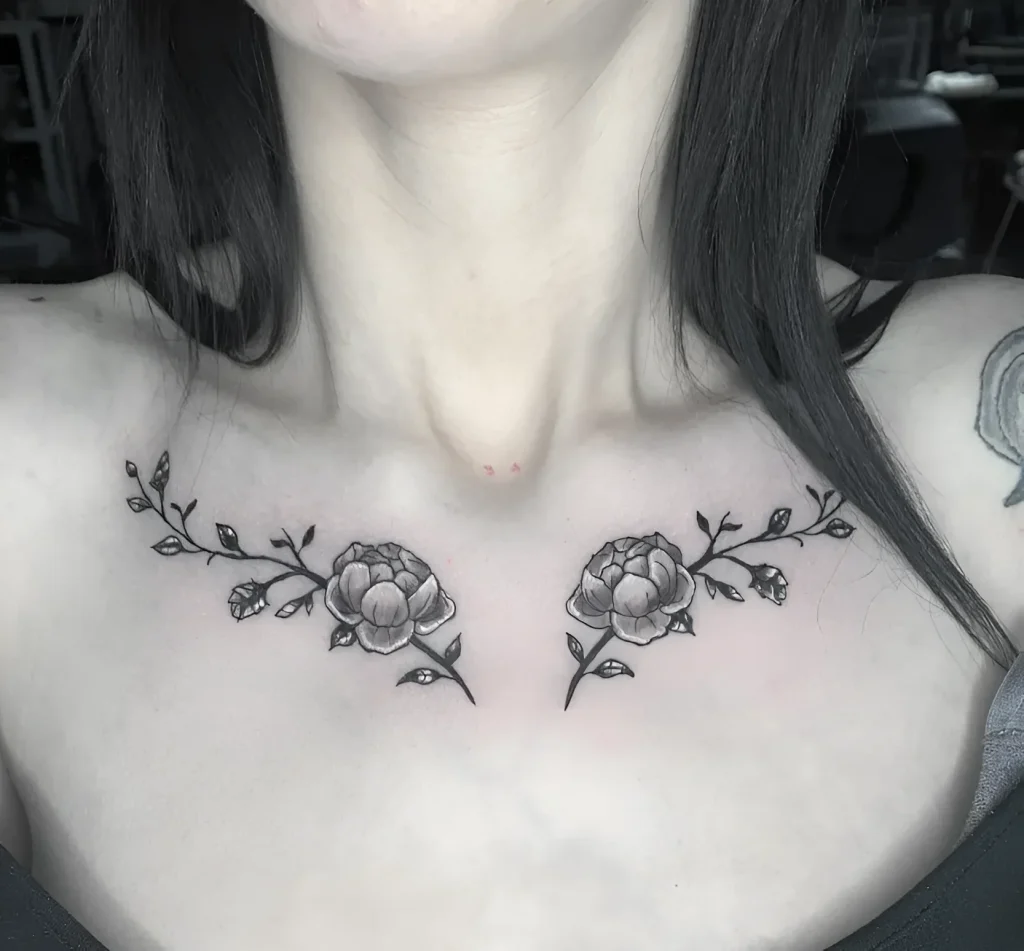
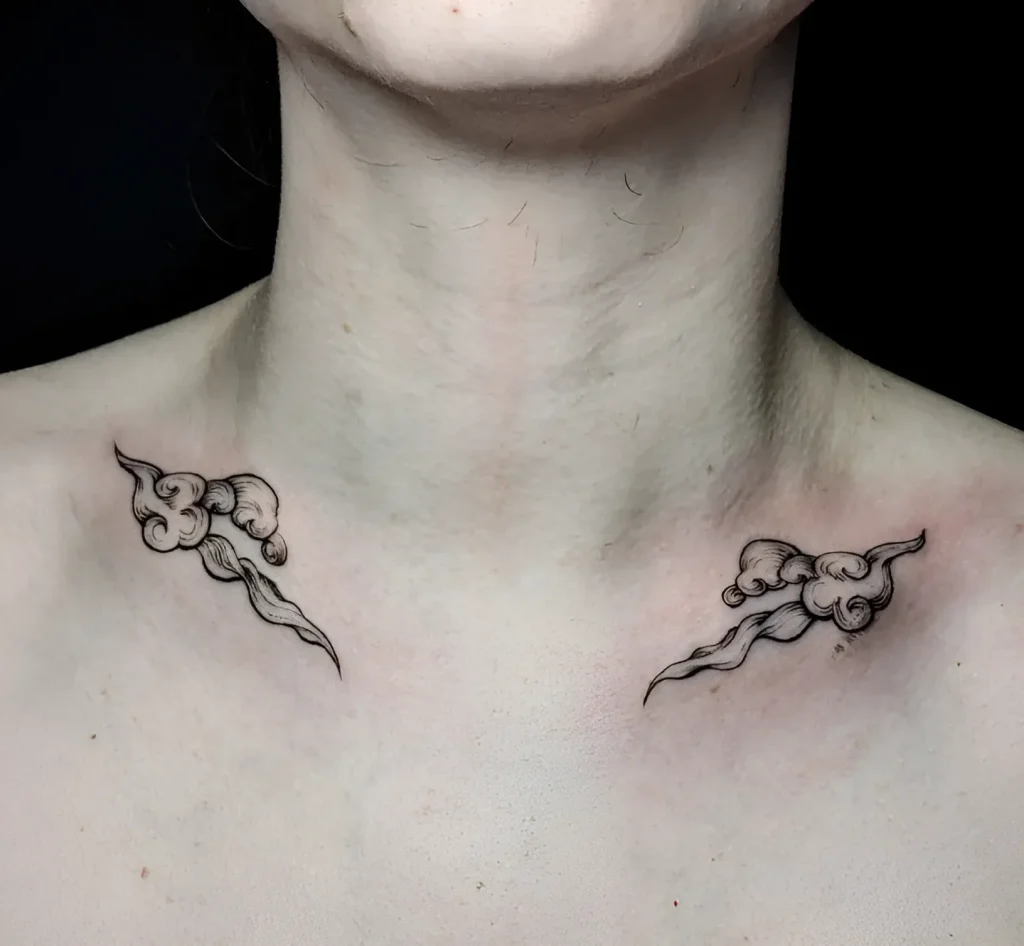
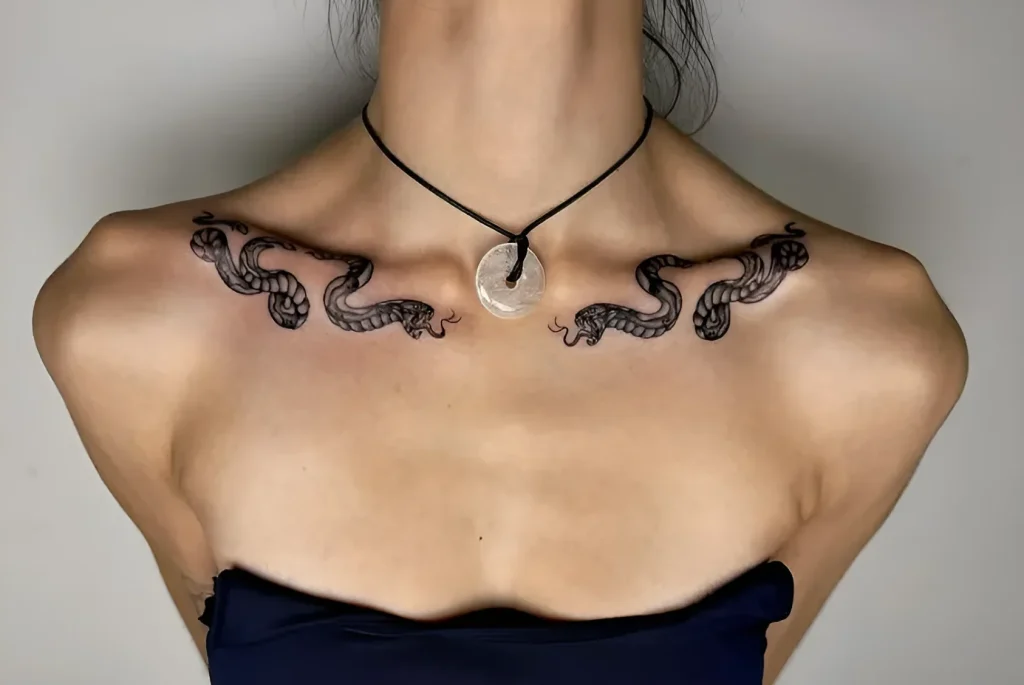
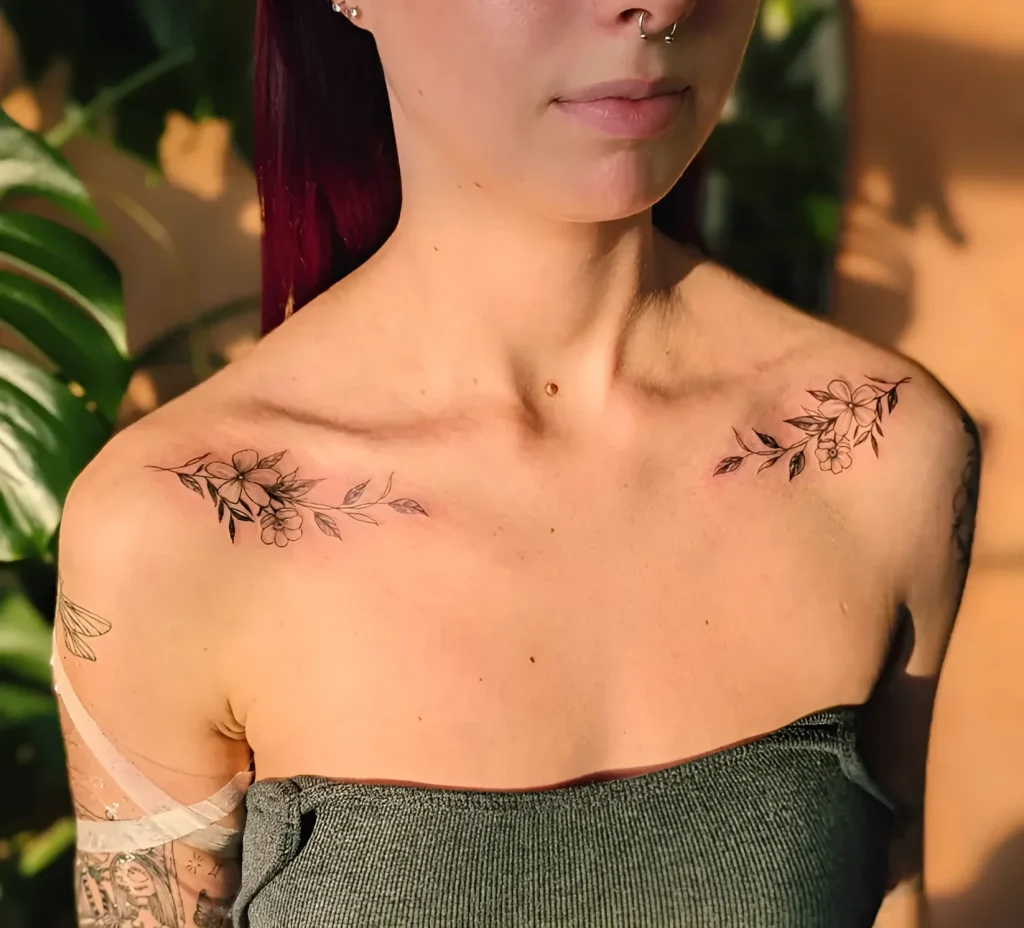
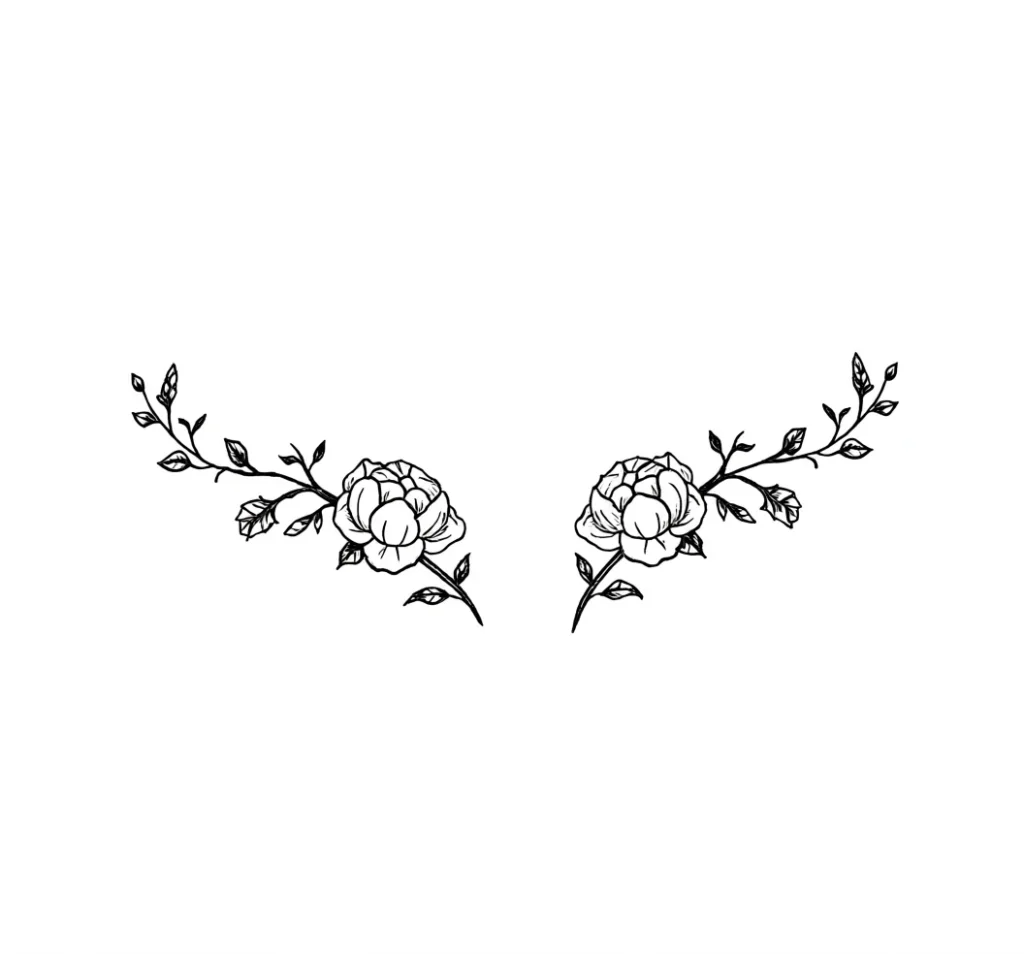
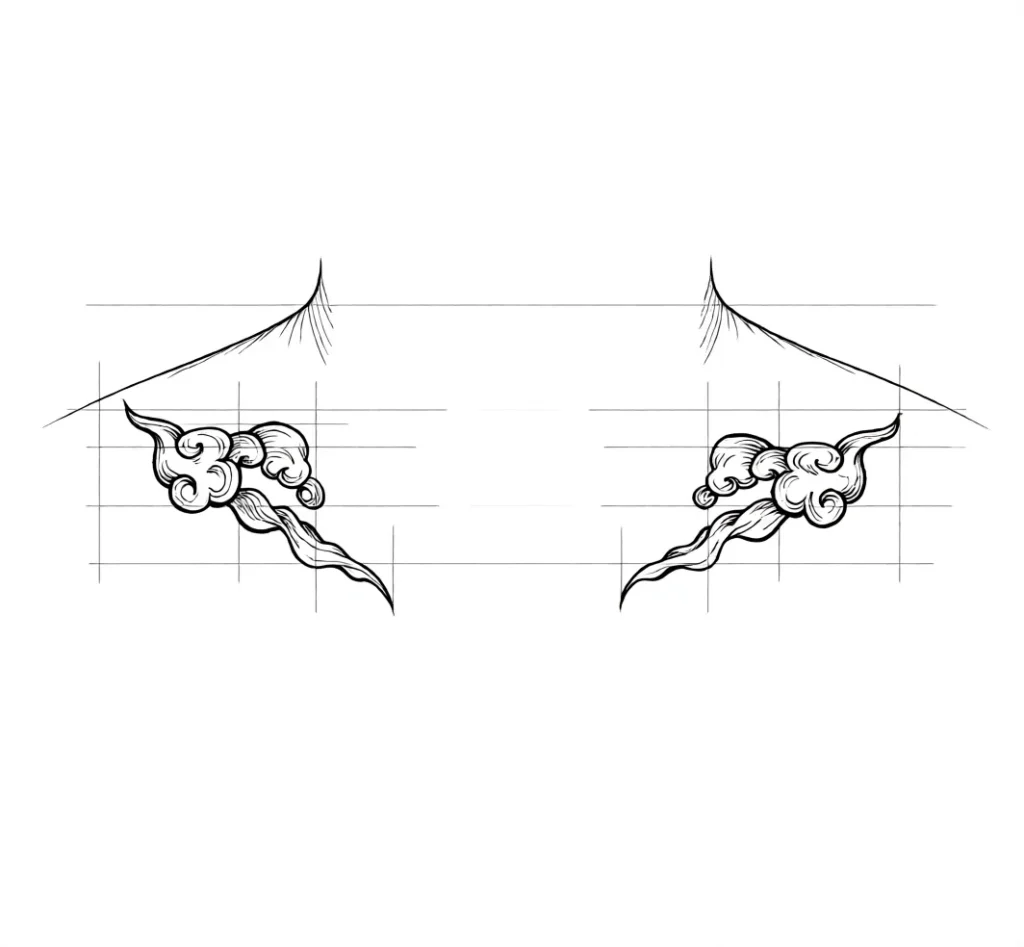
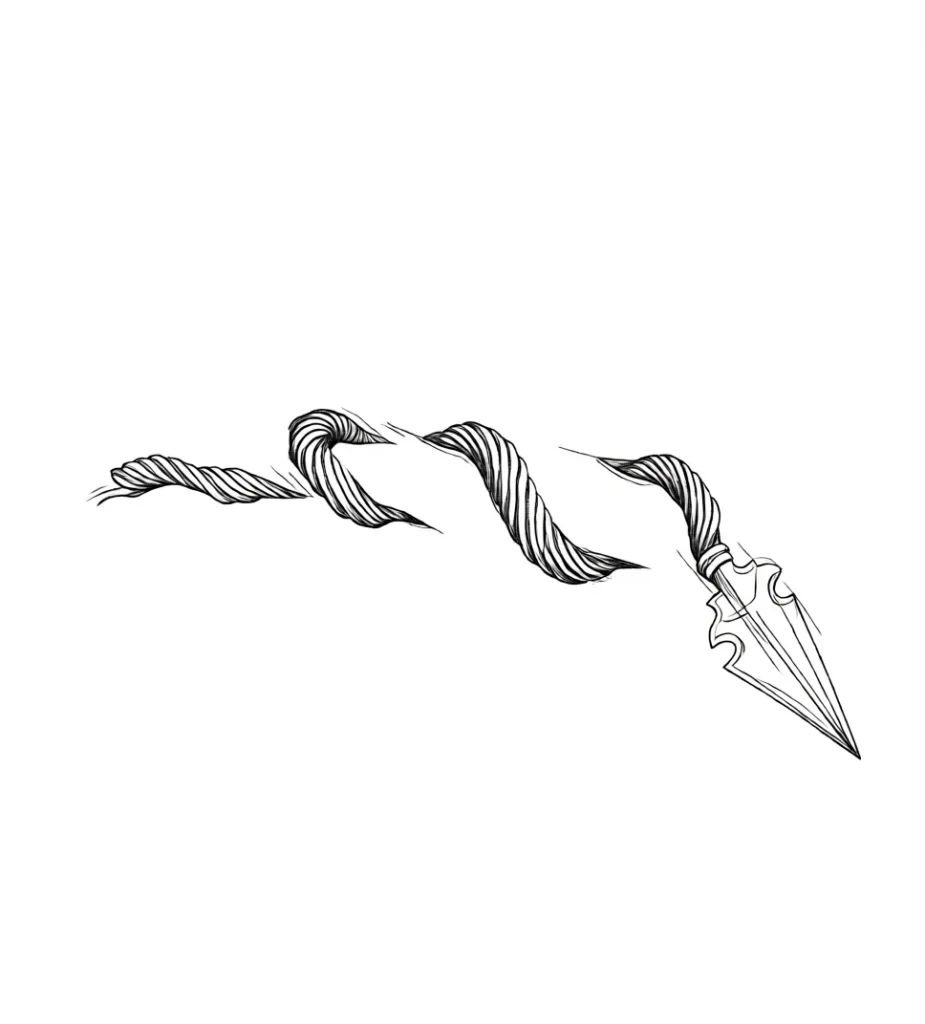
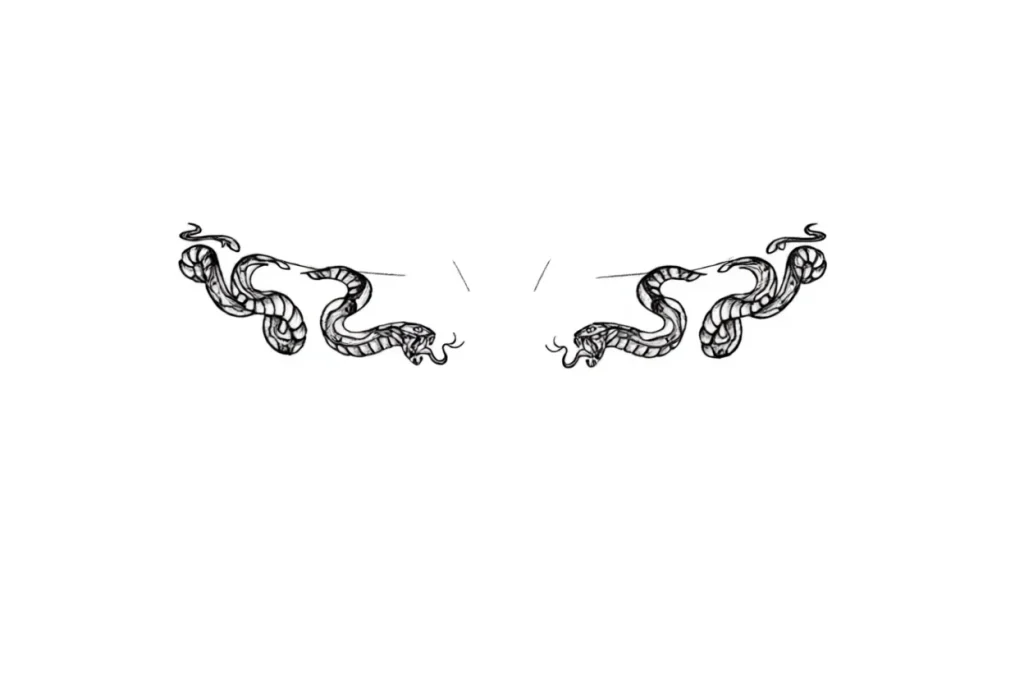
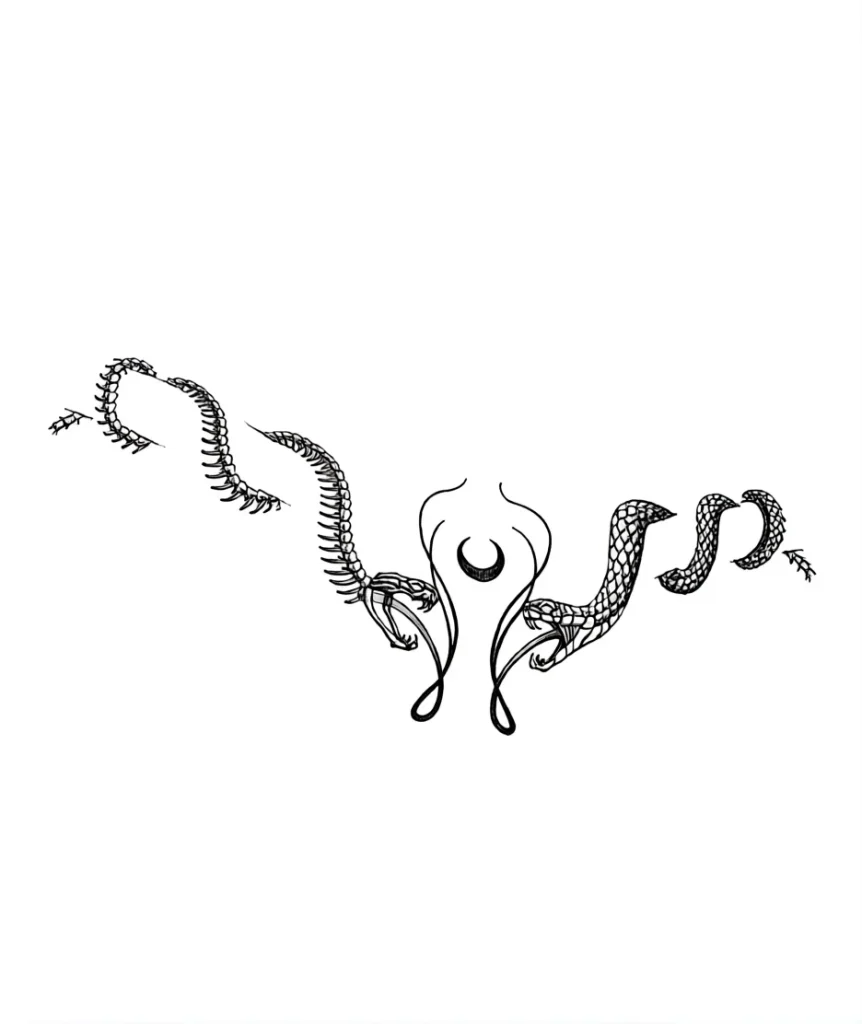
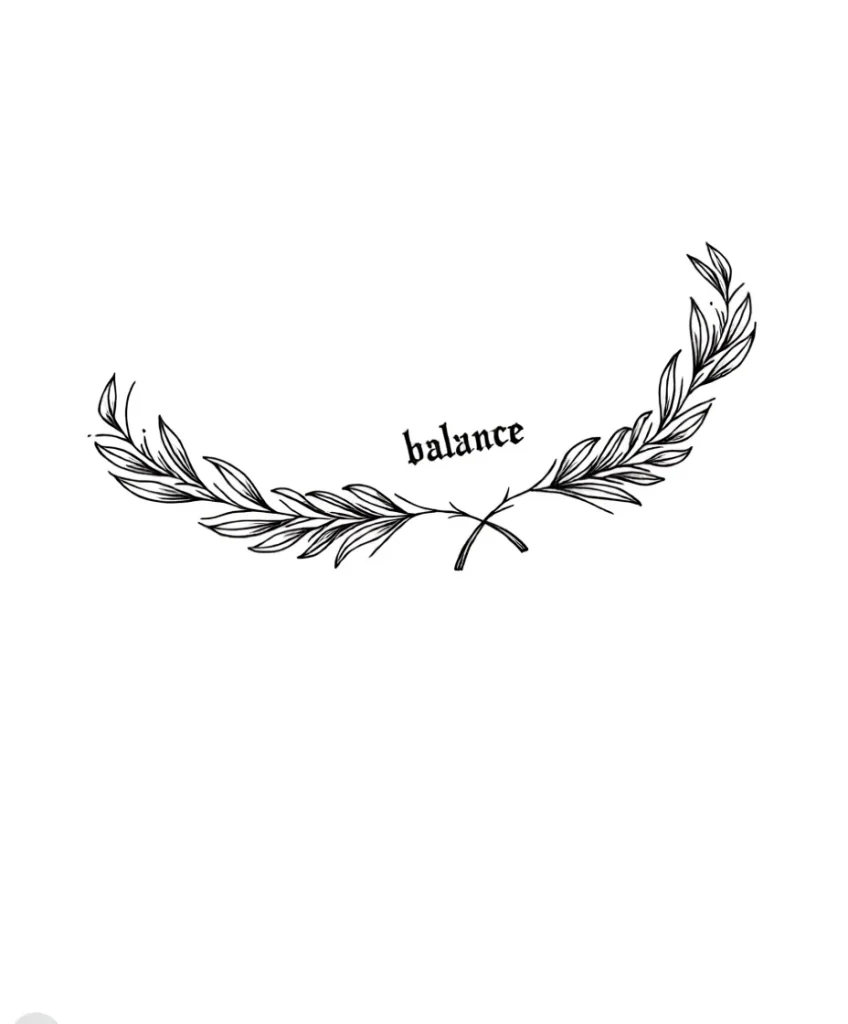
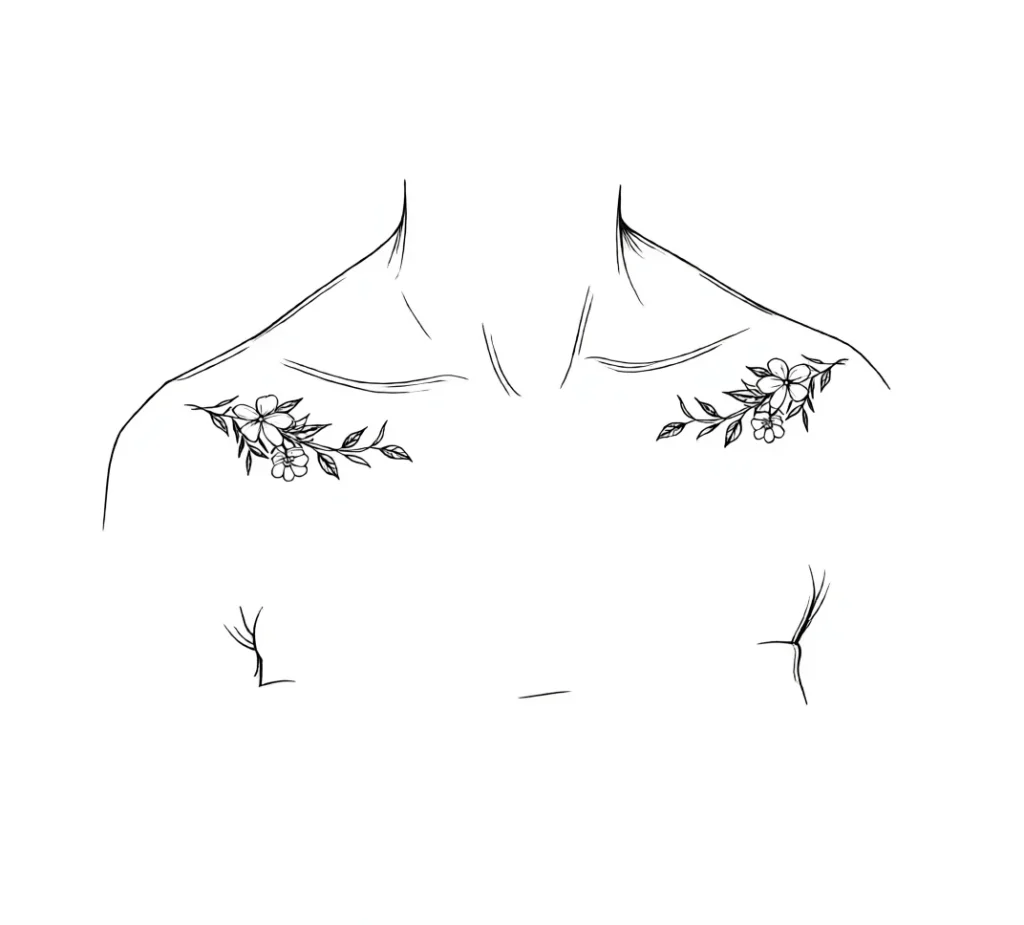
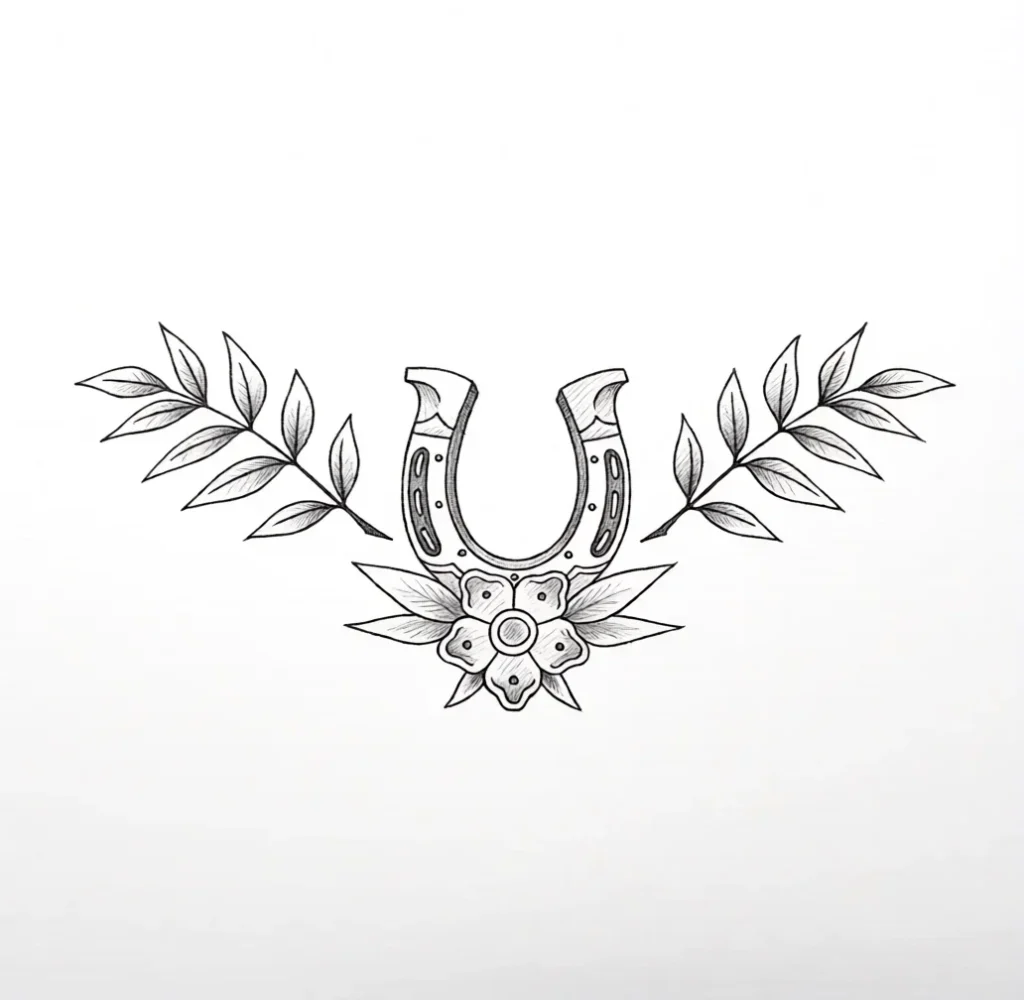
- Balance and Symmetry: The paired nature of the collarbones is often used to create symmetrical compositions (mirror flowers, branches, inscriptions), symbolizing harmony, equilibrium, or the relationship between two people.
- Fragility and Grace: Thin, minimalist designs (e.g., strings of pearls, fine lines) emphasize the anatomical contour of the bone, highlighting the wearer’s grace and vulnerability.
Specific Examples and Their Interpretations
It is useful for beginner artists to know which designs are most in demand for the collarbone and why:
- Swallows or Birds in Flight: A classic symbol of returning home, hope, and freedom. Often placed symmetrically, flying away from the center of the chest.
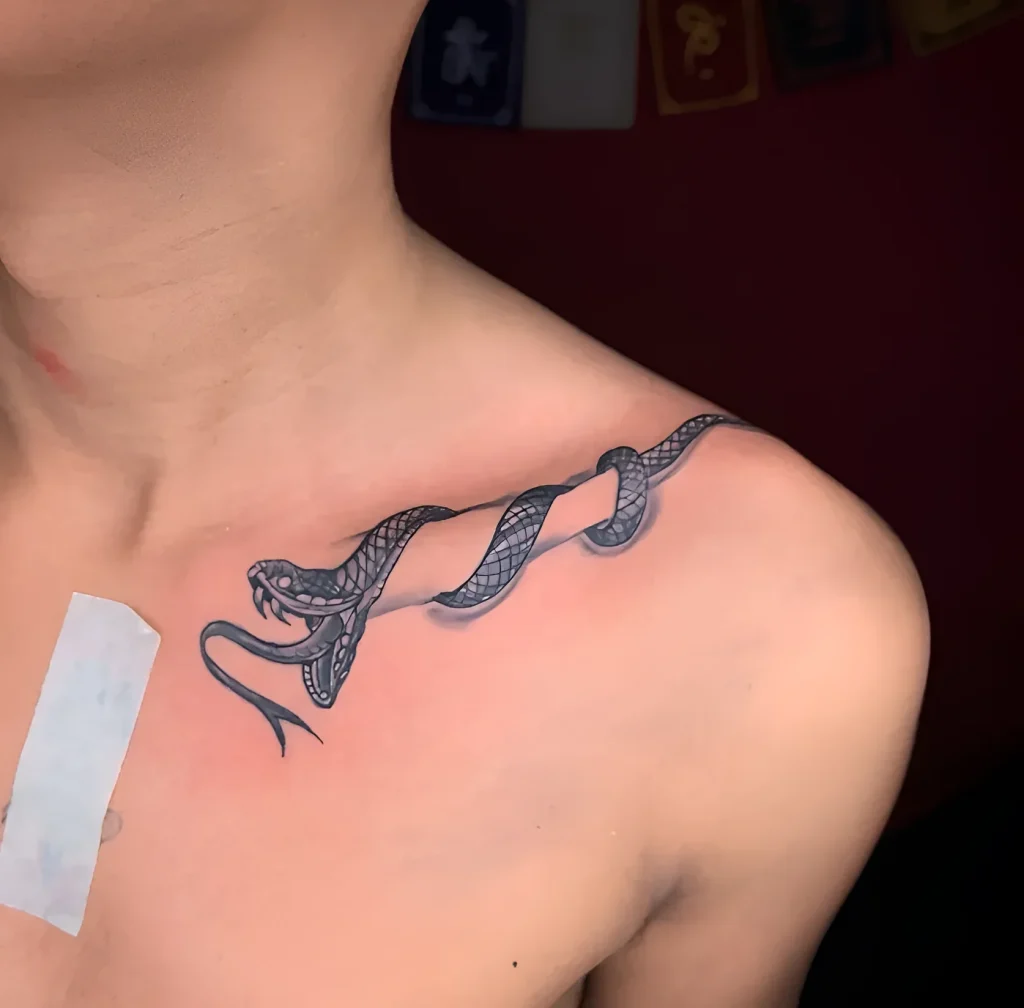
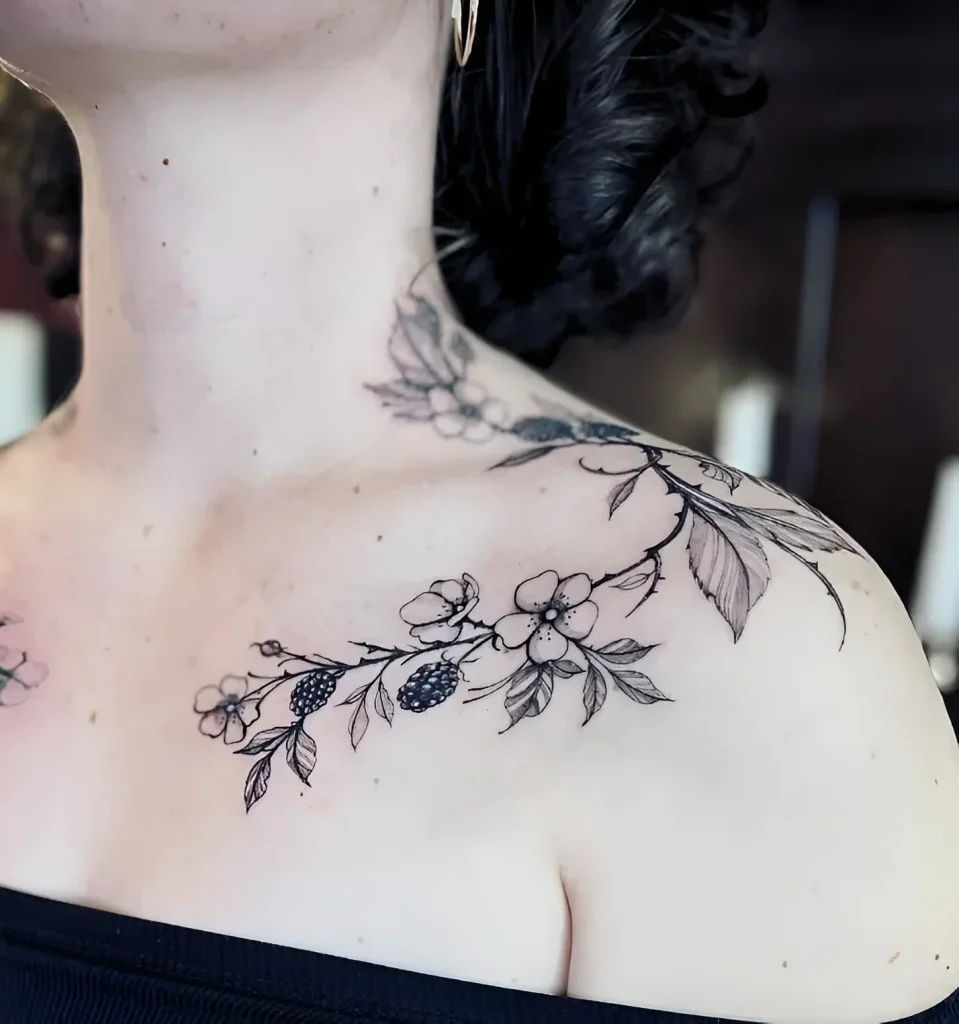
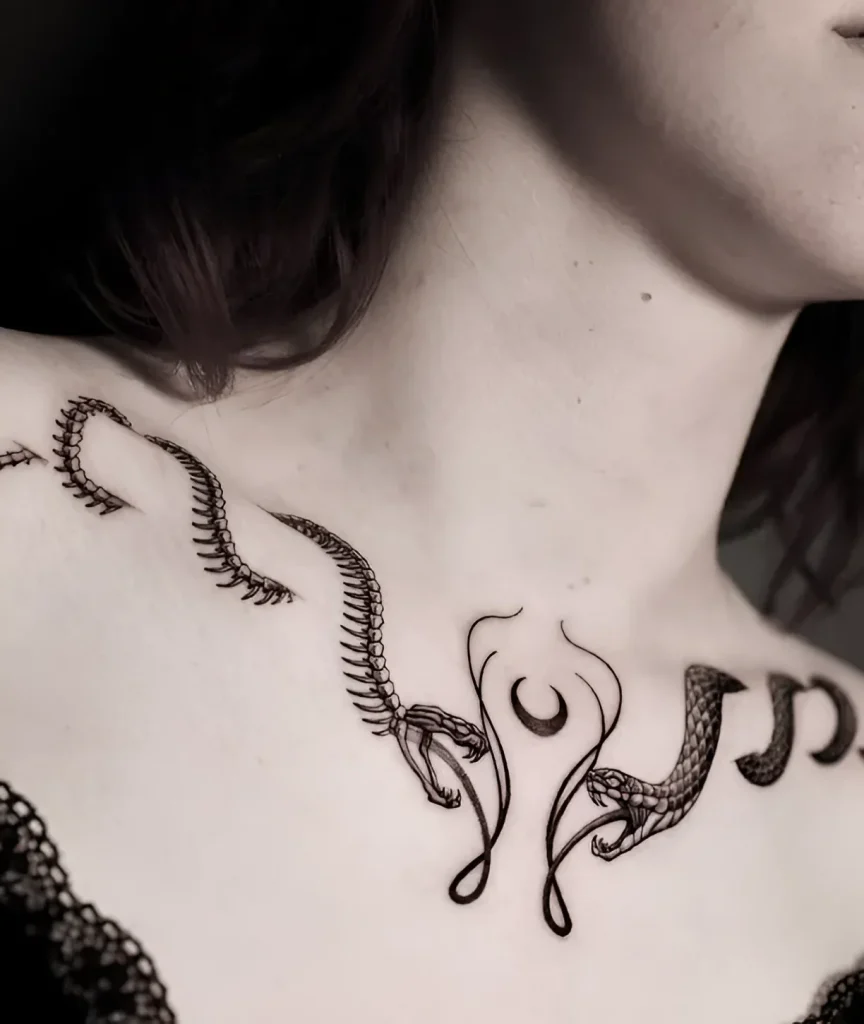
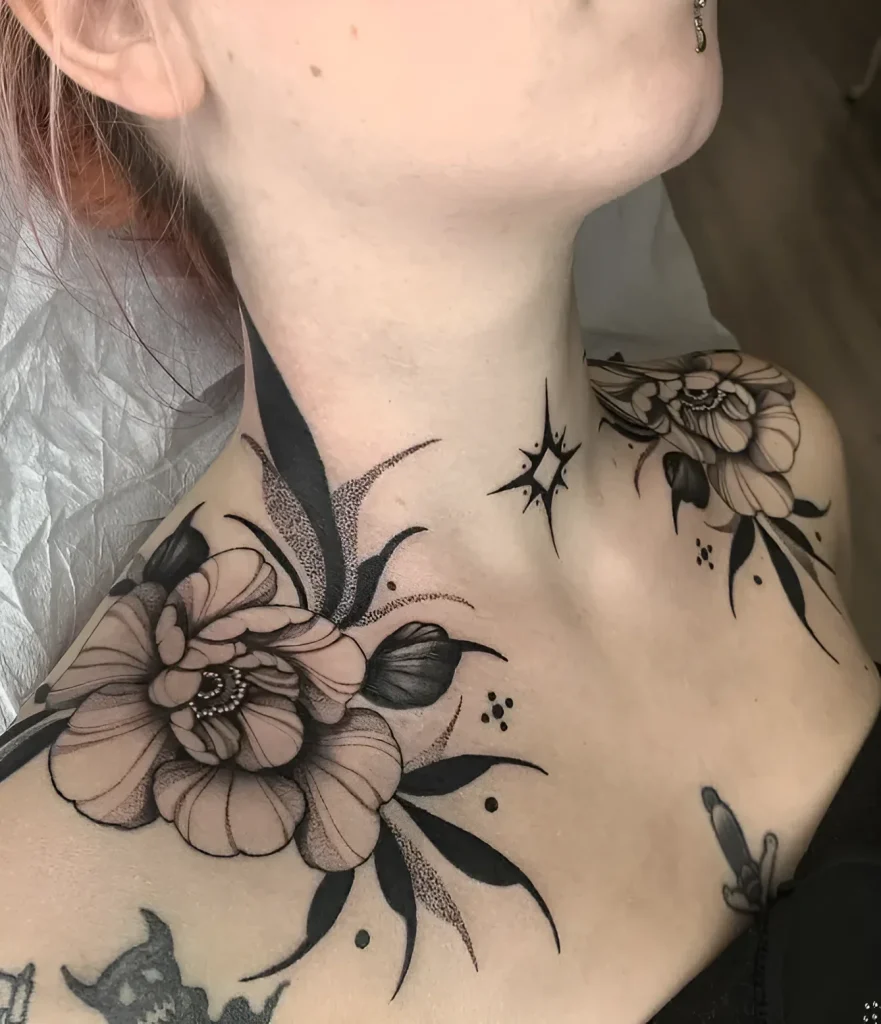
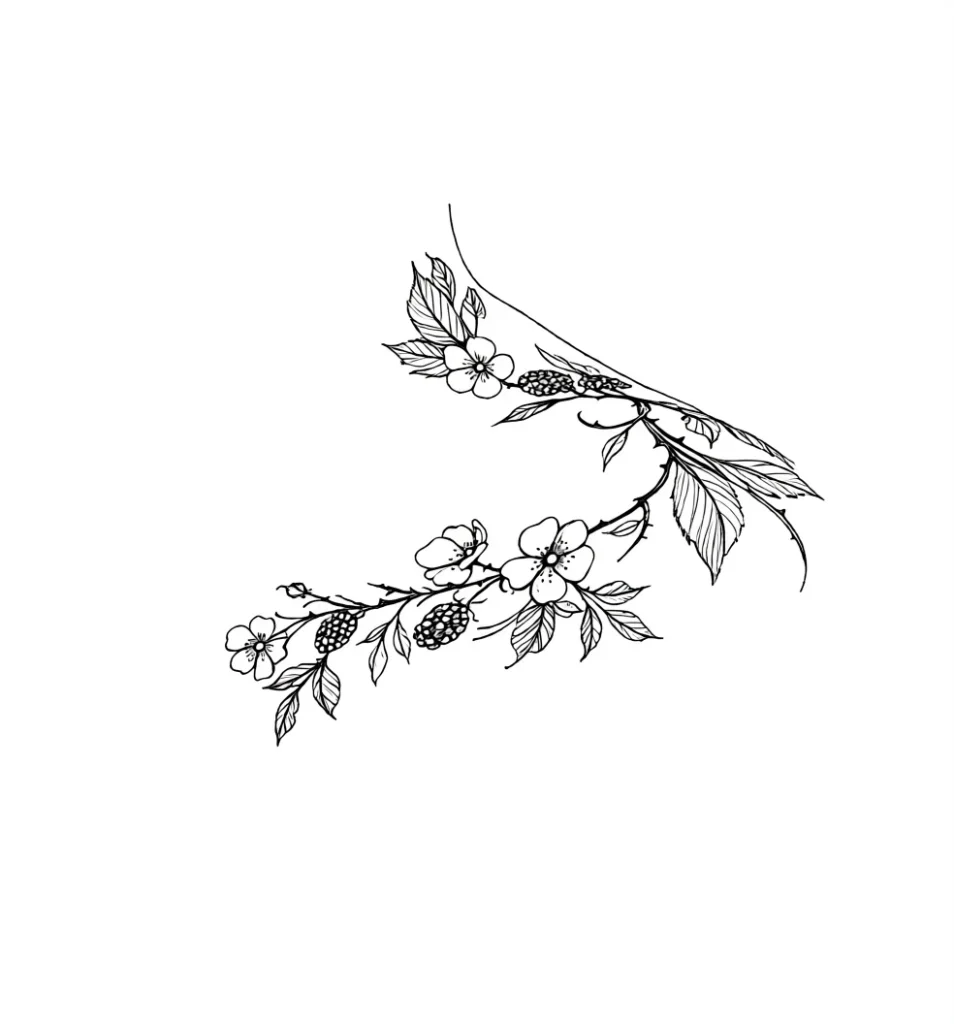
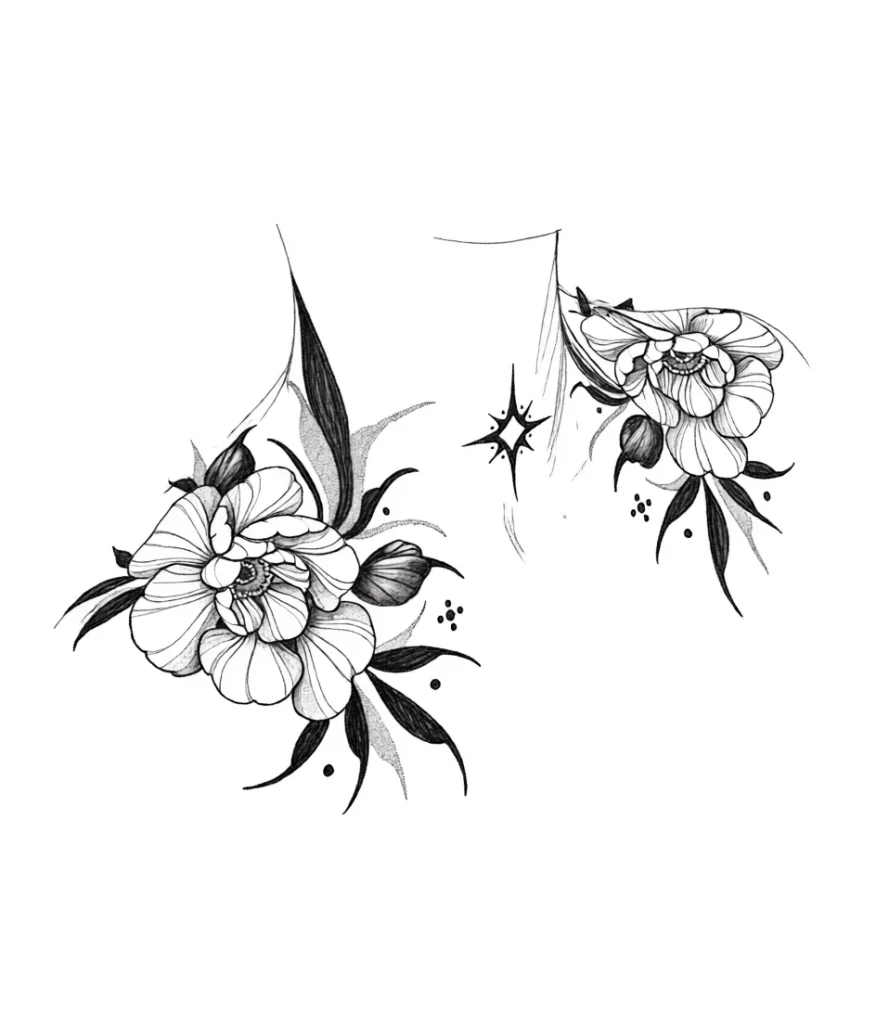
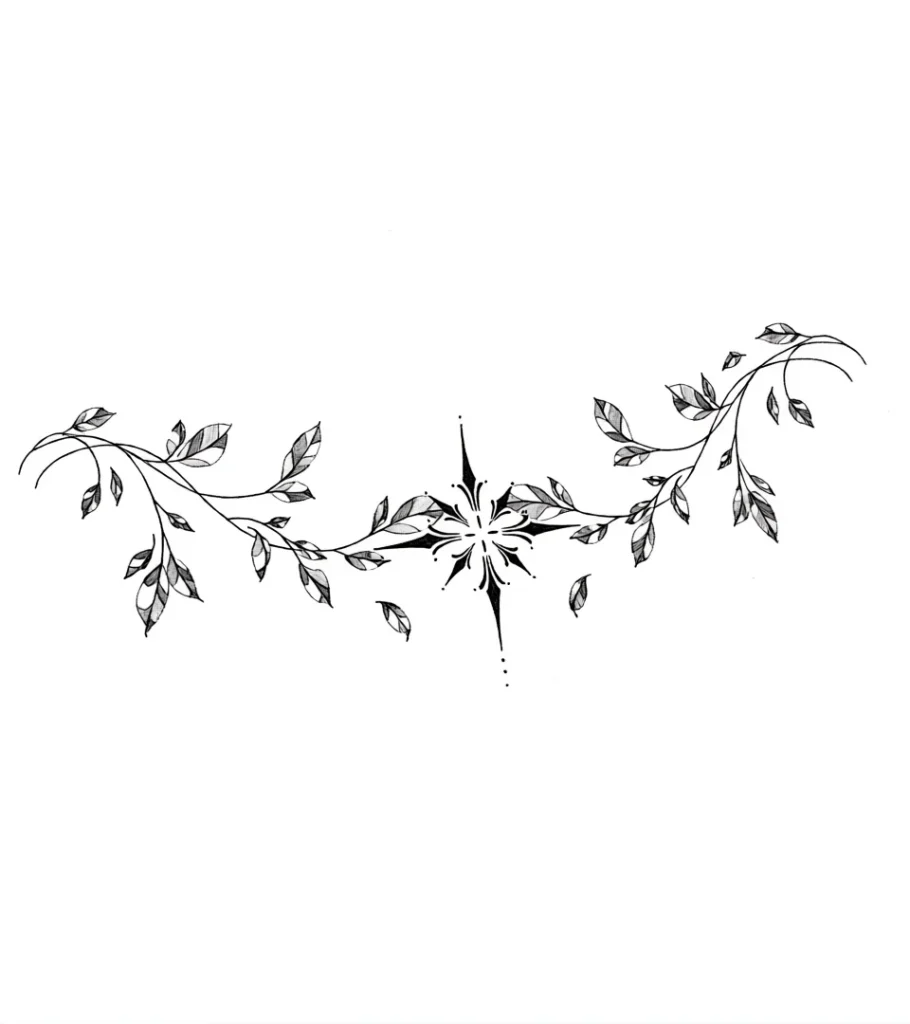
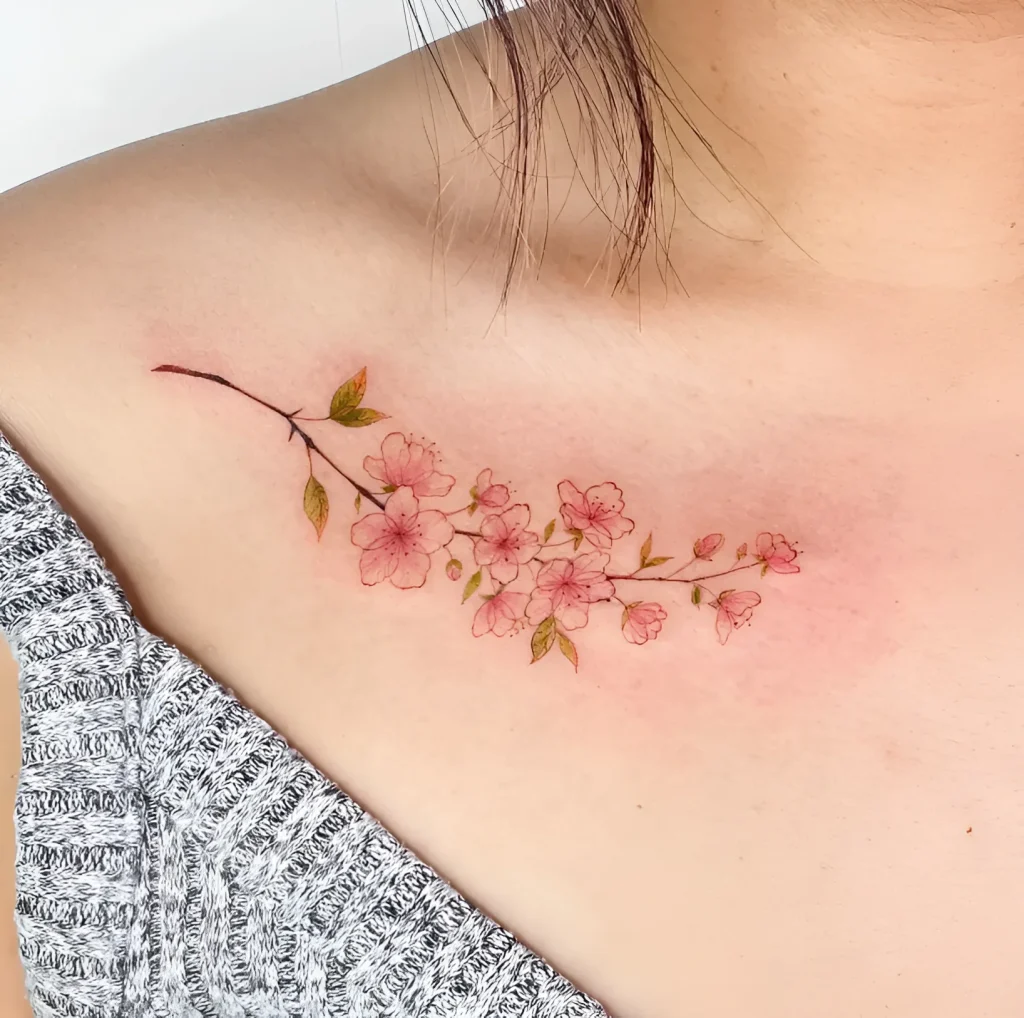
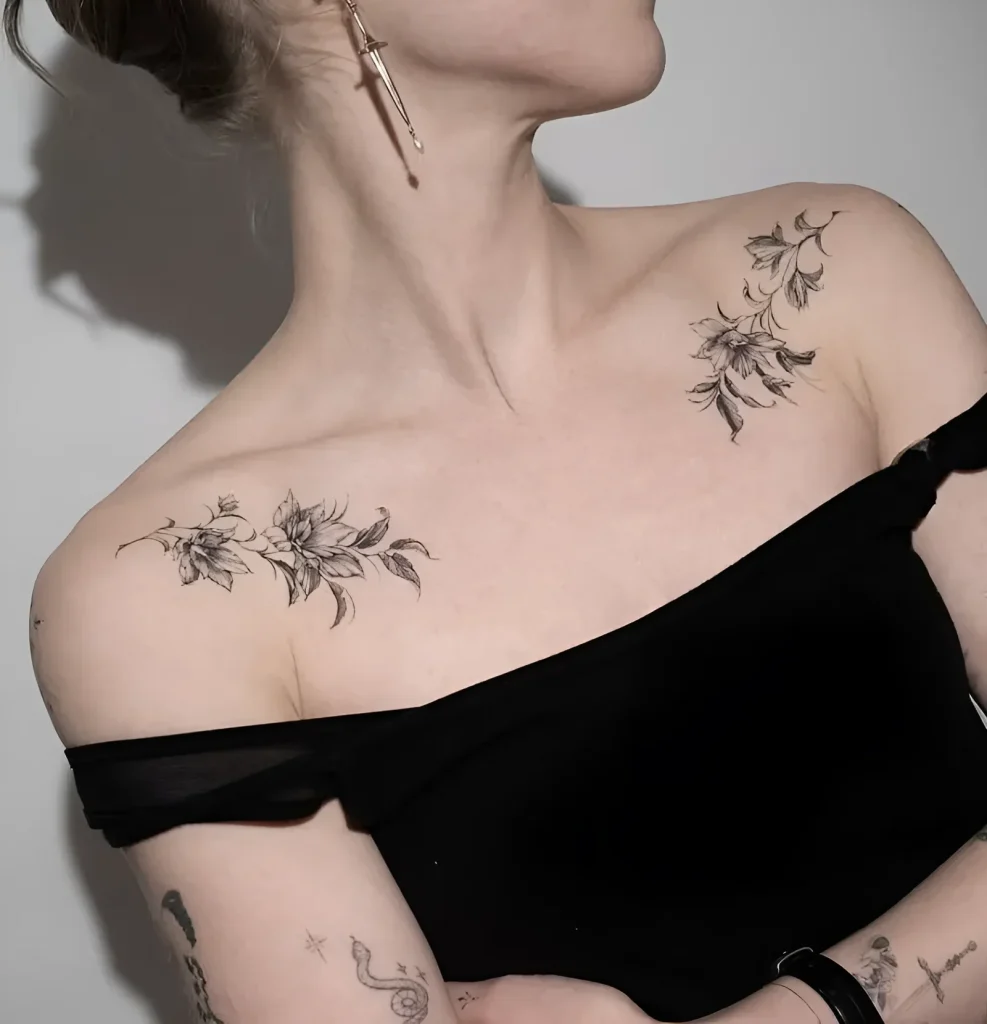
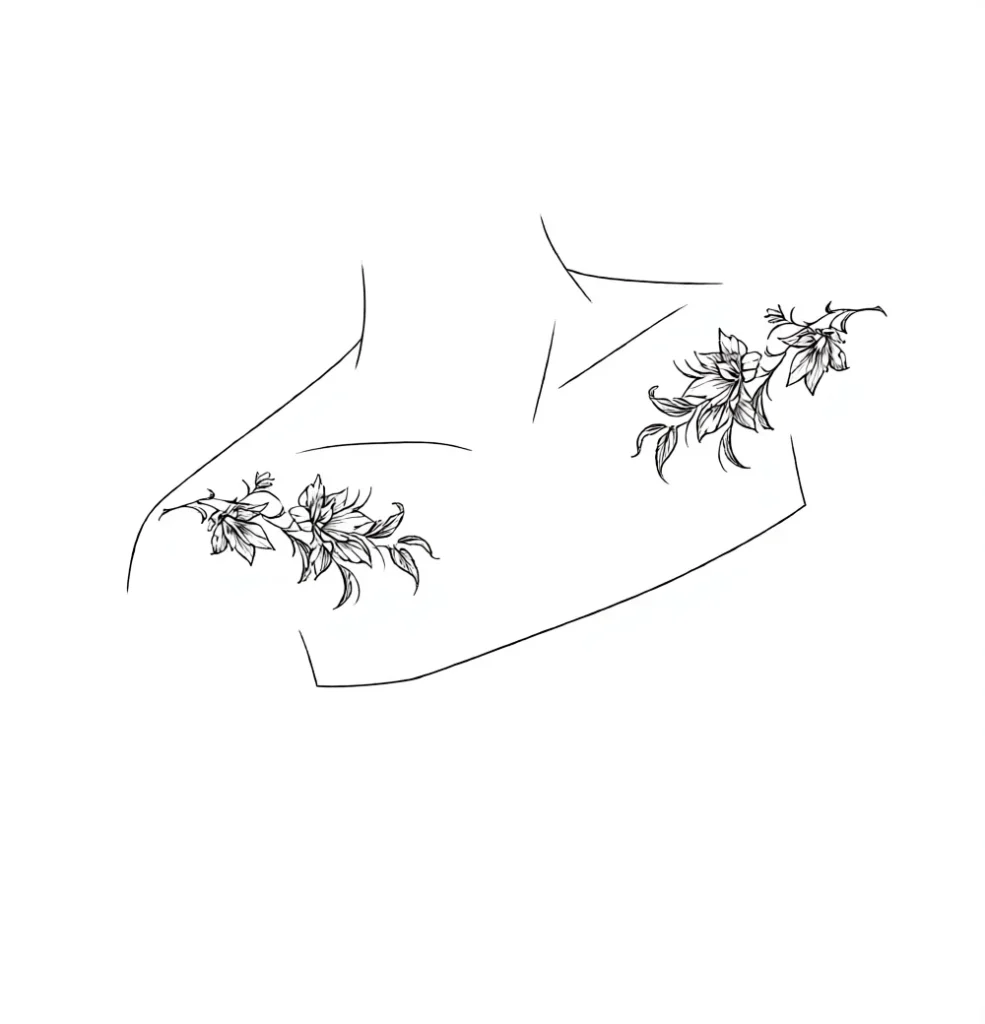
- Floral Vines (especially lavender, rose, lily): Emphasize the curved shape of the collarbone. They symbolize beauty, growth, and femininity. Vines and branches perfectly follow the bone’s curve.
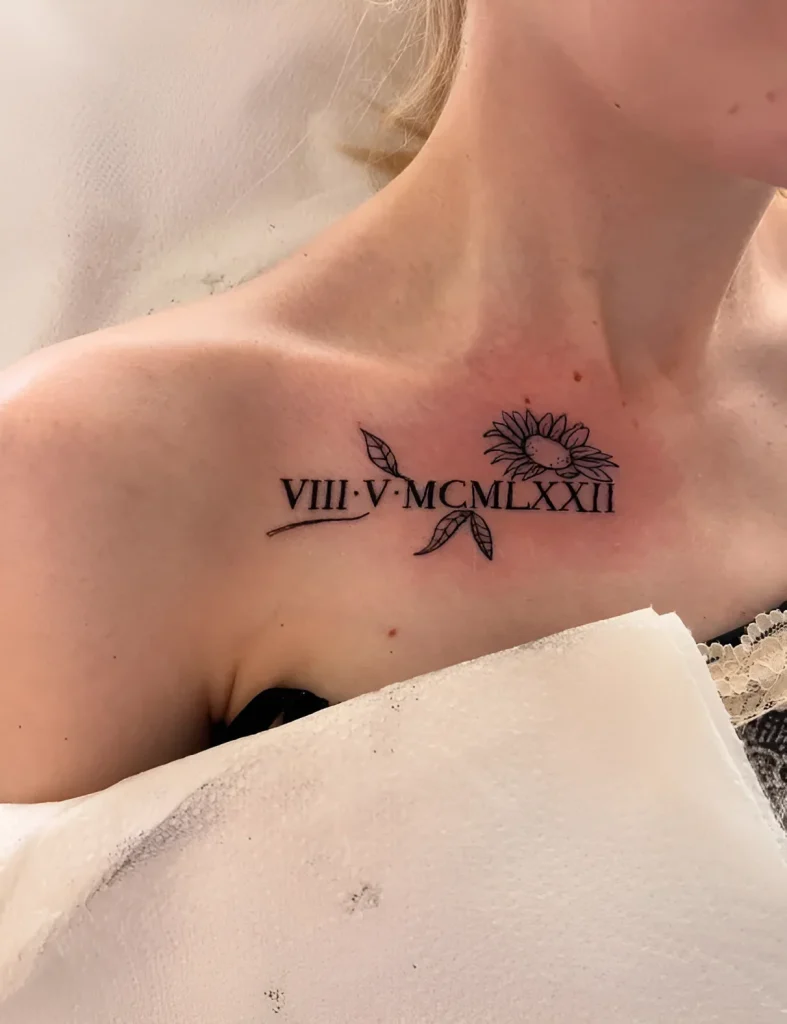
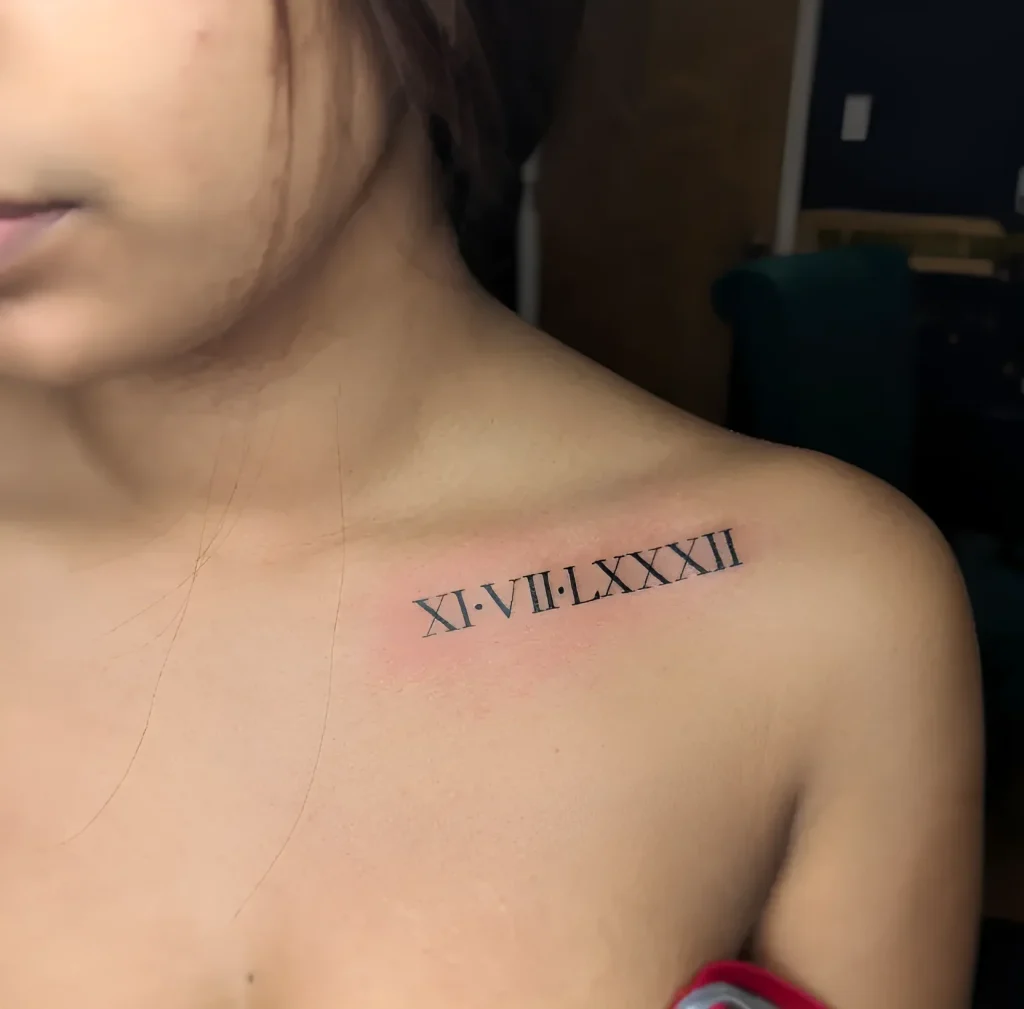
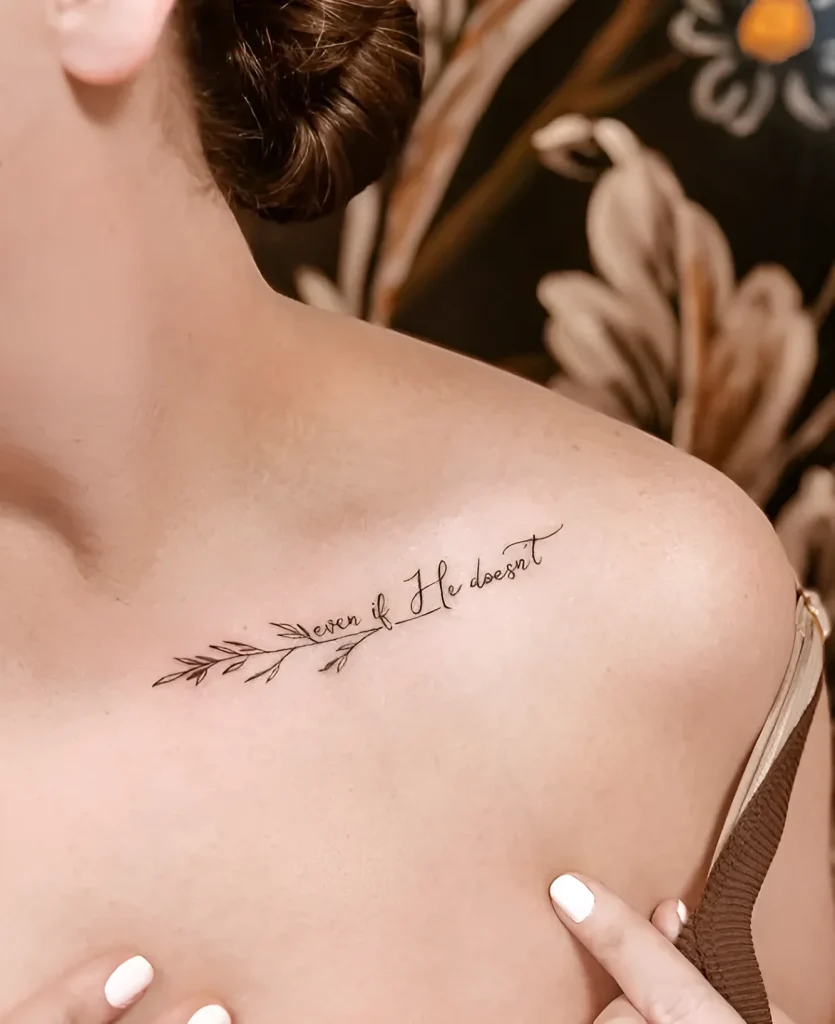
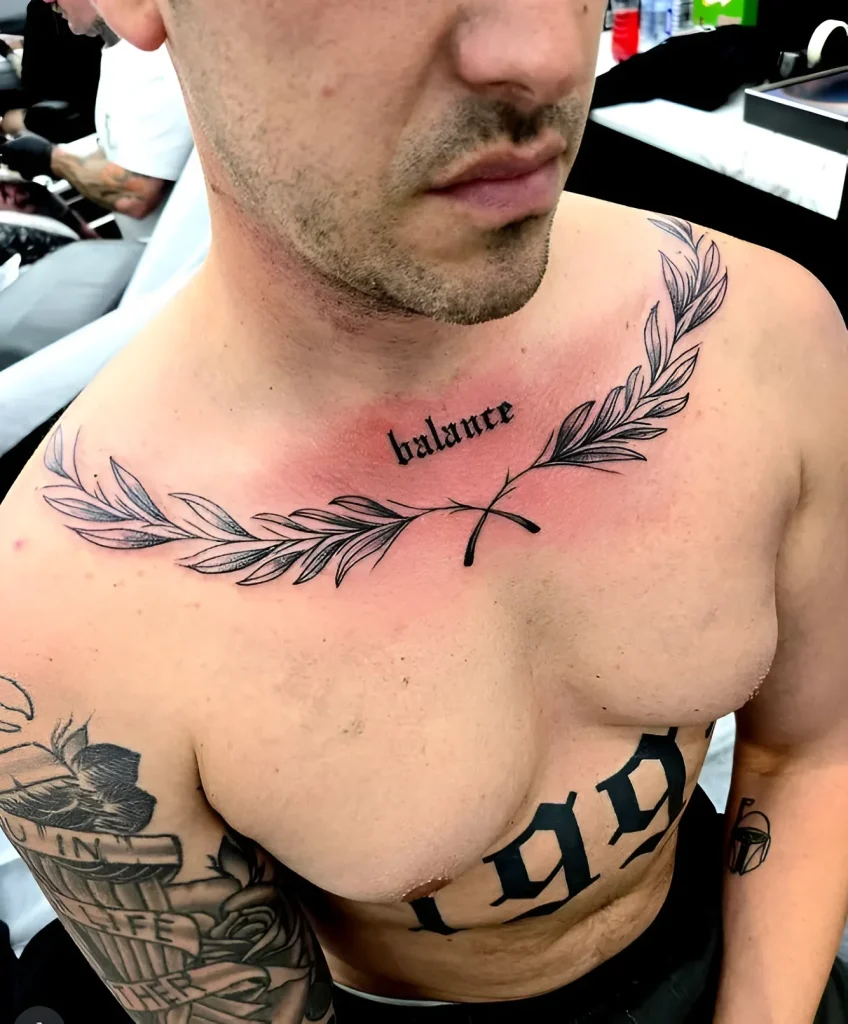
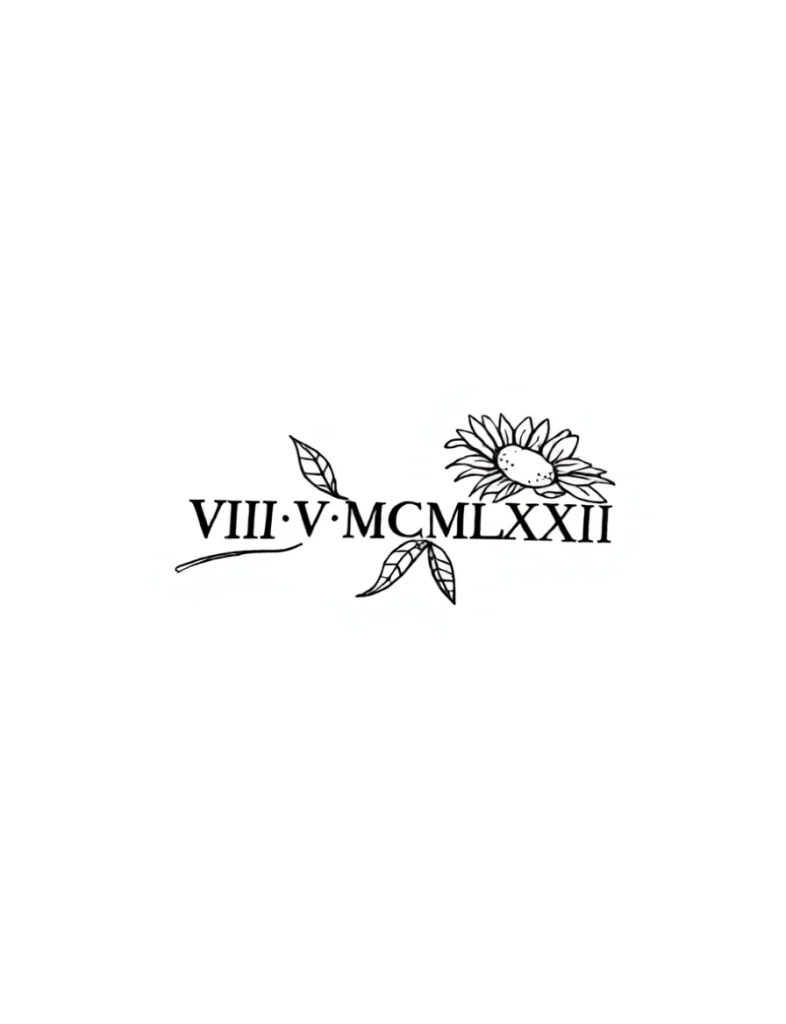
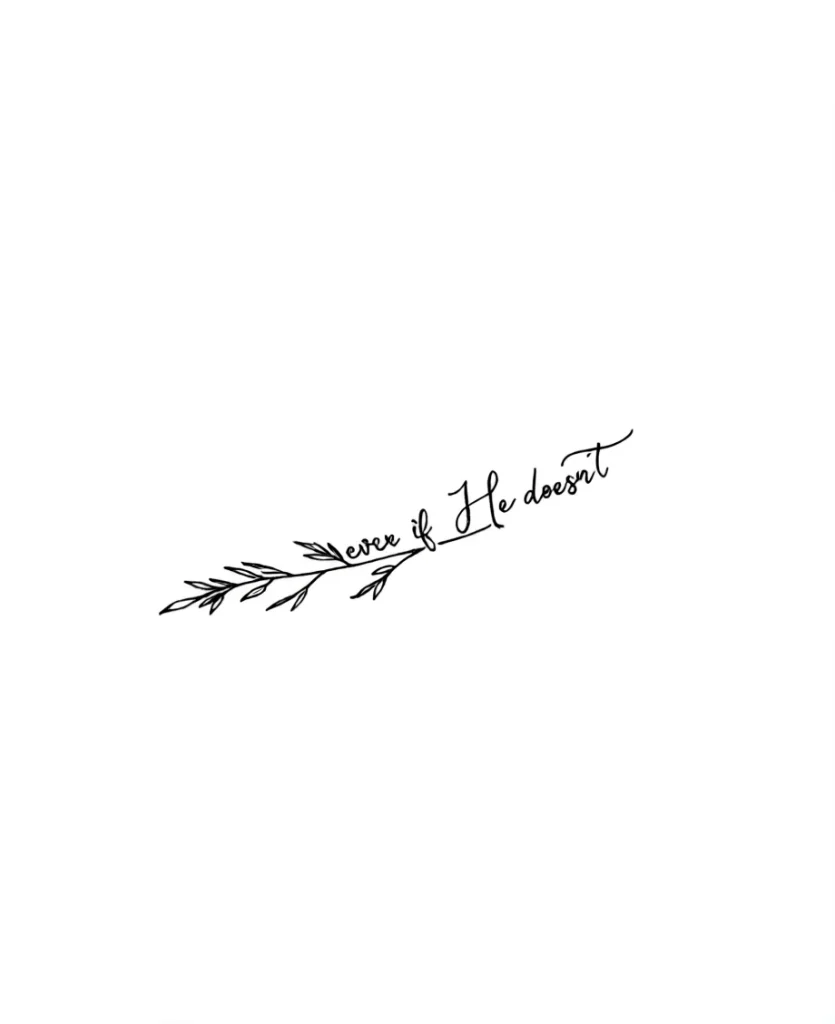
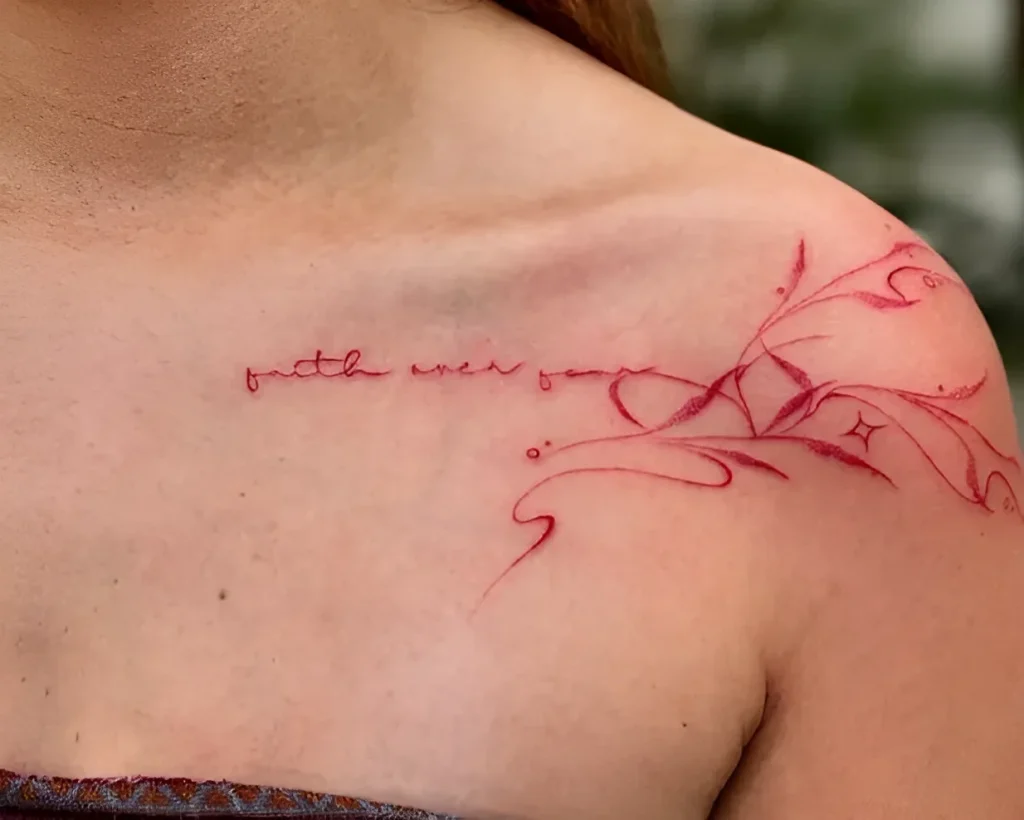
- Fine Lettering or Quotes: Due to the narrow format of the collarbone, short but deeply personal phrases are often placed here, serving as a constant reminder or motto.
- Compass or Map: Symbolize finding one’s way, life direction. Often placed closer to the shoulder to allow enough space for detail.

Collarbone Tattoo Styles: From Minimalism to Realism – Choosing the Ideal
The choice of style for a collarbone tattoo should be dictated not only by the client’s taste but also by the anatomical features of this area. Some styles work excellently, while others present significant technical difficulties due to limited space and thin skin.
Minimalism and Fine Line
This style is an undisputed favorite for the collarbone. Thin, delicate lines perfectly accentuate the anatomical contour without visually overloading the delicate area. This is the safest choice for a beginner artist, as it requires precision but minimizes risks associated with dense shading over the bone.
- Pros: Aesthetic appeal, quick healing, minimal risk of blowout with proper technique.
- Technique: Use of fine needles (3RL, 5RL), working at high speed but with minimal depth.
Graphic and Dotwork
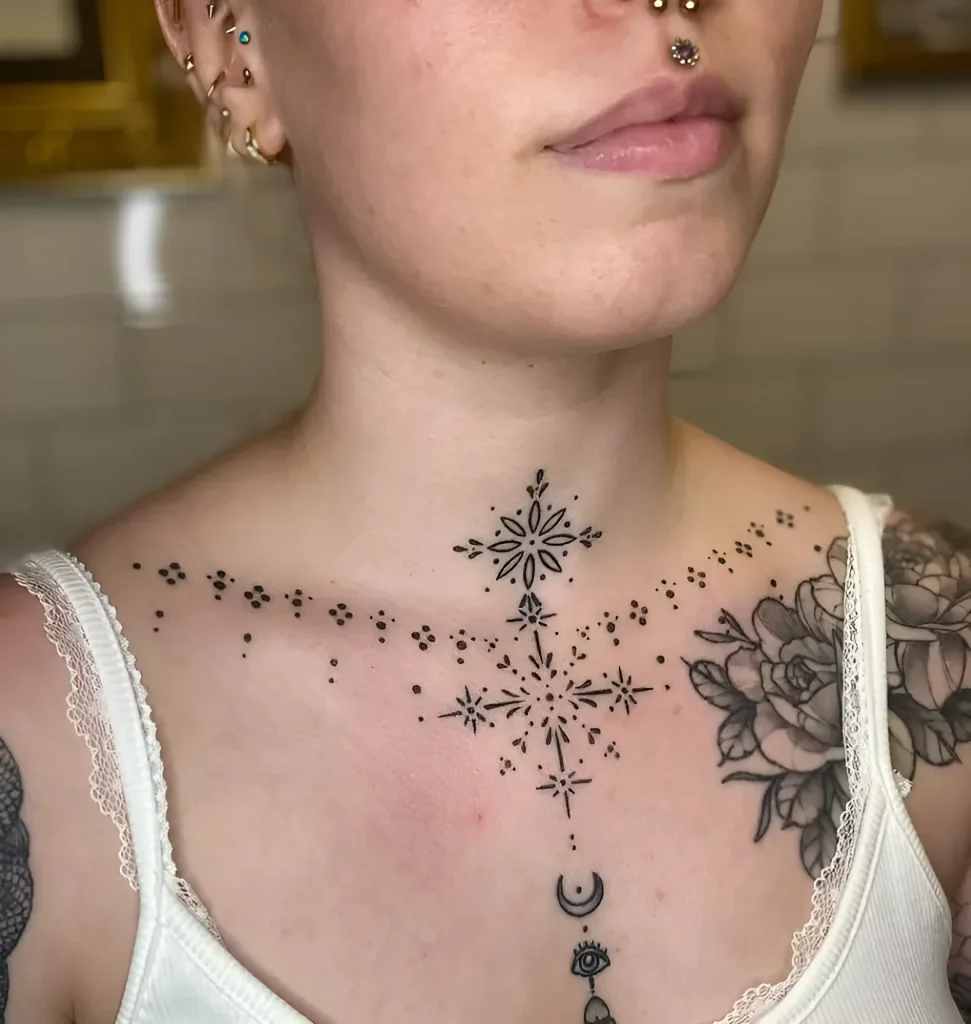
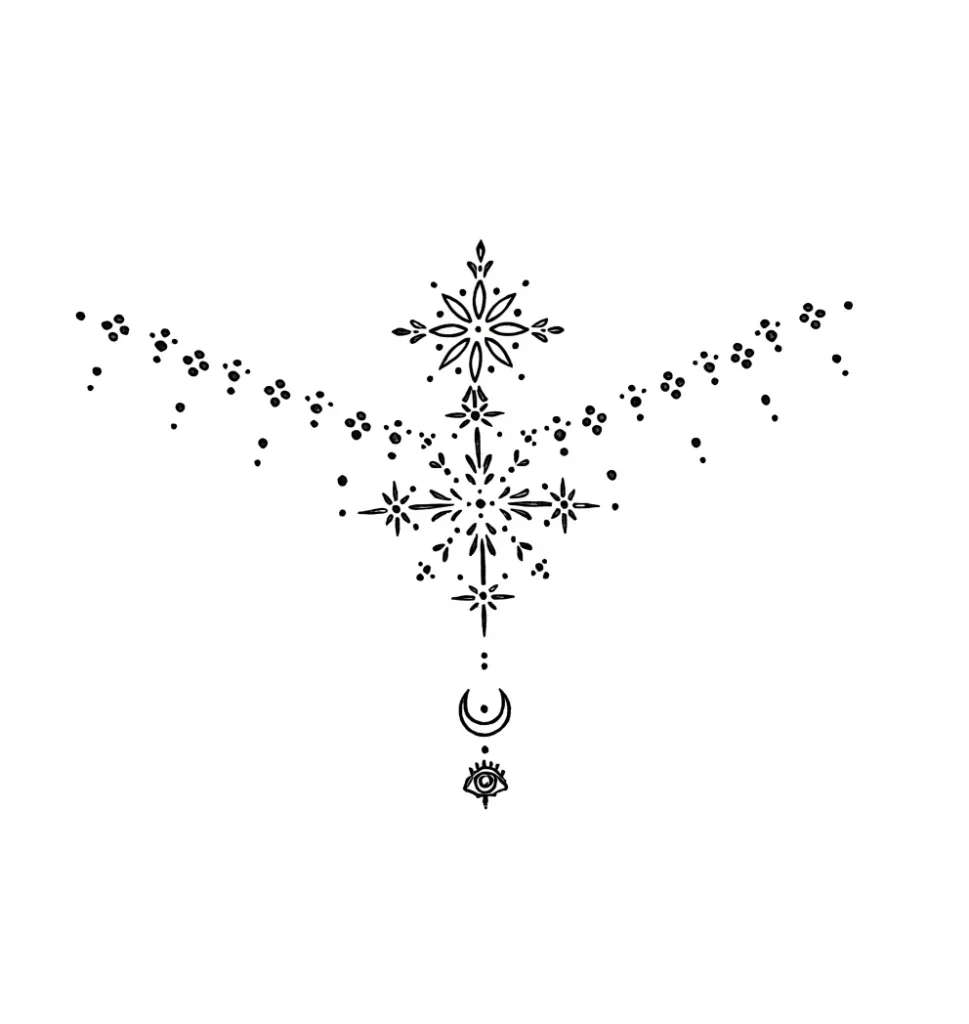
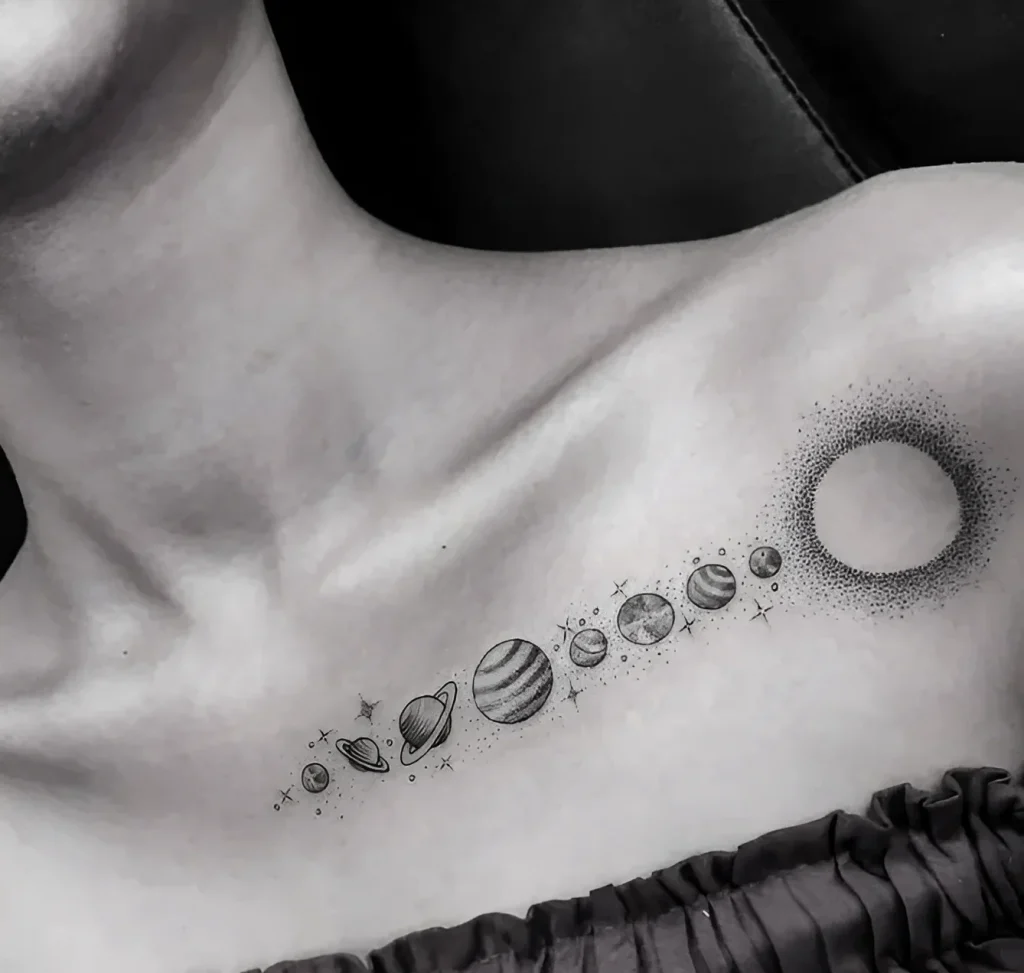
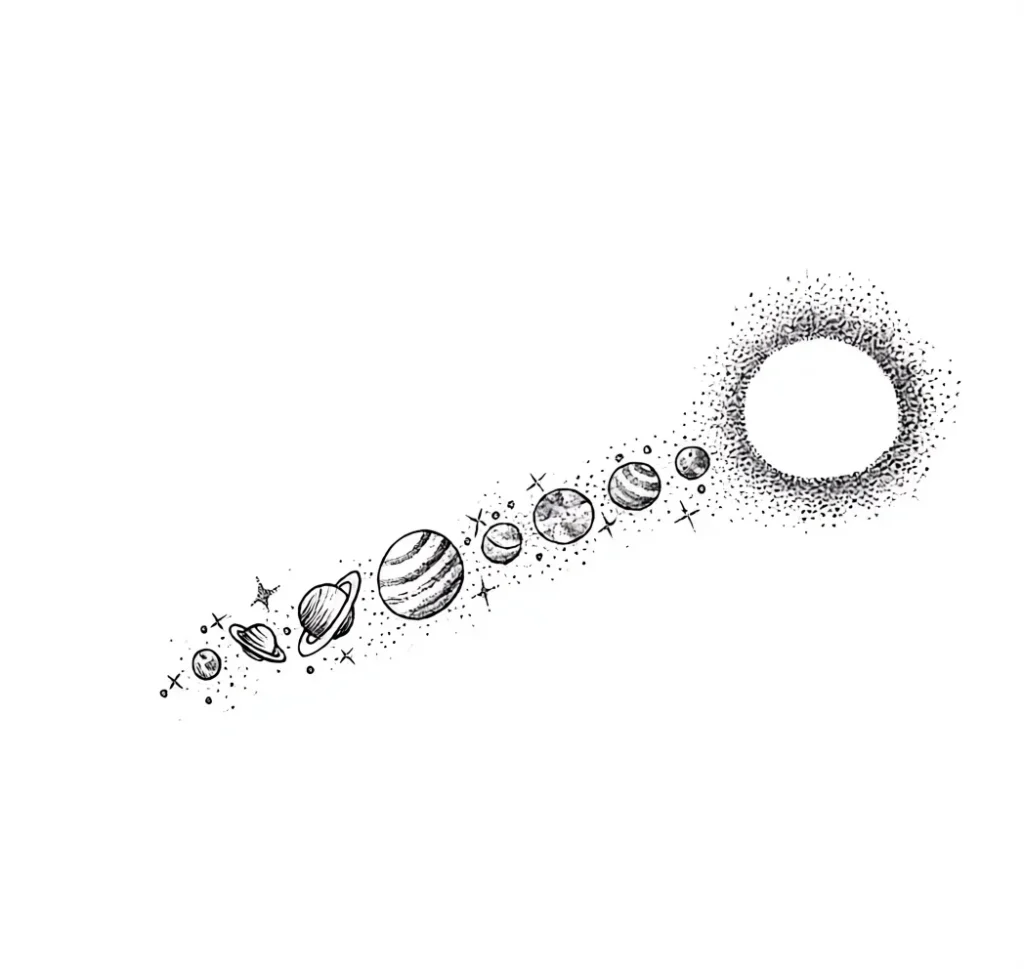
Graphic designs, especially those using dotwork or hatching, look great on the collarbone. The dotwork method avoids solid skin trauma, which is particularly important when the skin is thin. Dotwork allows for creating volume and shadow without the need for dense fill.
Realism and Ornamental
Complex realism, requiring dense shading and many details, is technically possible but demands a high level of skill. Beginners should be cautious with dense black or color fills directly over the bone, as this increases trauma and the risk of blowout.
- Recommendation: If a client insists on realism, try to place the densest shadows and richest colors in the softer areas below the collarbone (in the hollow) or closer to the shoulder, avoiding direct contact with the bone.
Watercolor
Watercolor tattoos can look very airy and organic on the collarbone, mimicking lightness. However, since watercolor often lacks a clear outline, it may require more frequent touch-ups (corrections) over time, especially if the skin in this area stretches significantly or is subjected to friction from clothing.
Collarbone Tattoo Placement: On or Under the Bone – Pros and Cons, Recommendations
The most important technical aspect of working on the collarbone is accurately determining the pigment placement. There are three main zones, each with its own characteristics in terms of pain, healing, and technique.
1. Tattoo Directly on the Bone (Supraclavicular Area)
This is the area where the skin is stretched maximally thin directly over the bone. It provides an ideal curved line for the design but is the most painful and difficult to saturate.
- Pros: Ideal for fine lines, emphasizes anatomical form.
- Cons: Extreme pain, high risk of blowout, difficulty in even saturation due to vibration.
- Recommendation for the Artist: Use only fine liner needles (RL). Work at a lower voltage to control depth, and ensure the skin is maximally stretched. Avoid dense shading in this area.
2. Tattoo Under the Collarbone (Infraclavicular Hollow)
This is the indentation directly below the bone, where there is already a small layer of muscle tissue and fat. This area is softer, less painful, and accepts pigment better.
- Pros: Low risk of blowout, ability to use larger designs and dense fills, less painful.
- Cons: Harder to stretch the skin, may be less prominent than a tattoo directly on the bone.
- Recommendation for the Artist: Ideal for realism, dense color work, and broad shading. Here, you can use magnums (M) for faster and more even shading.
3. Tattoo Crossing the Collarbone (Central Composition)
This is a composition that starts on the sternum or shoulder and passes over the bone itself. Such works require transitioning from soft, resilient skin to the thin skin over the bone.
- Pros: Allows for dynamic, large-scale designs.
- Cons: Requires constant adjustment of depth and pressure when crossing the bone.
- Recommendation for the Artist: Plan in advance where the outlines will be and where the dense shadows will go. Reduce depth and pressure precisely when the needle begins to work over the bony structure.
Tips for Beginner Tattoo Artists Working on the Collarbone: Technique, Designs, Aftercare
Working on the collarbone is an exam in precision and patience. The following practical tips will help you avoid common mistakes and ensure maximum comfort and quality for your client.
Proper Client Positioning
The client’s position is critical for stabilizing the collarbone area. You cannot work when the skin is moving or tense.
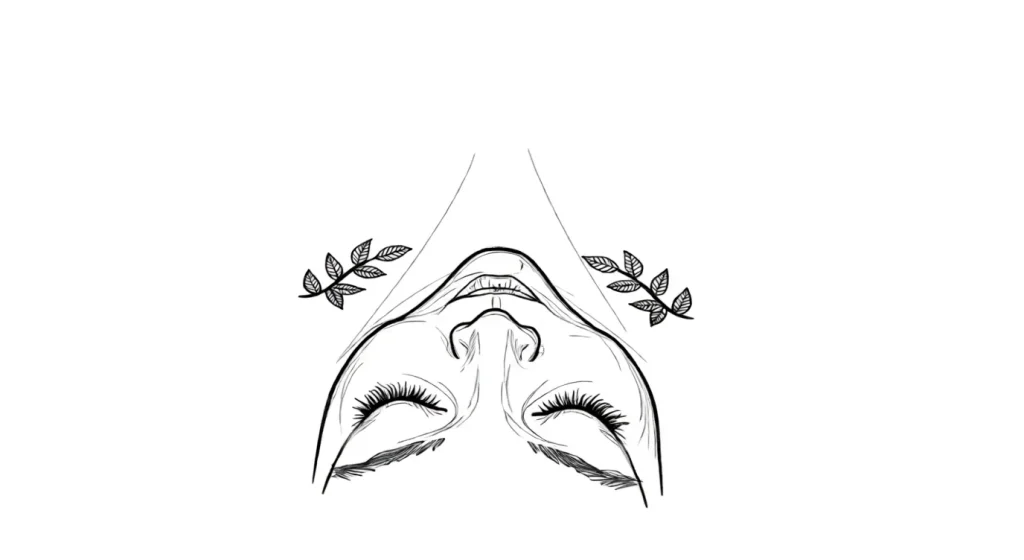
- For tattoos on the bone: The client should lie on their back, with their head turned away from the work side. Ask the client to place their hand on the tattoo side under their head or extend it along their body. This helps to maximally relax the shoulder and chest muscles, stretching the skin over the collarbone.
- For tattoos under the bone: Lie down or semi-reclined position with a slight backward lean. The arm on the working side should be extended slightly back or down to gently stretch the skin in the infraclavicular hollow.
Stretching Technique
On the collarbone, stretching must be particularly firm and stable. Use the “three-point” technique:
- Stretch the skin in one direction (e.g., towards the neck) with your index finger.
- Stretch the skin in the opposite direction (towards the shoulder) with your thumb.
- Use your middle finger to support or provide additional stretch directly in front of the needle.
Equipment and Settings Selection
Beginner artists are recommended to use rotary machines, as they provide a softer and more controlled hit than induction machines, reducing the risk of injury over the bone.
- Needles: For lining, 3RL or 5RL. For shading, 7RS (Round Shader) or small magnums (5M1, 7M1).
- Voltage: Work at 10–15% below your standard working voltage. This will slow down the needle’s speed and allow for better depth control, preventing blowouts.
- Ink: Use high-quality, concentrated inks. Due to the thinness of the skin and the likelihood of rapid fading, weak ink can appear pale.
Collarbone Design Specifics
The design should be developed considering the curvature and limited space. Avoid overly small details that will blur during healing and compositions that require a perfectly flat surface.
- Focus on Horizontal Lines: Designs should follow the natural horizontal or slightly curved line of the collarbone.
- Symmetry: If the design is paired (on both collarbones), use mirror images for maximum harmony.
- Movement Test: Before starting, ask the client to move their shoulder to ensure the tattoo doesn’t distort with natural movement.
Aftercare Recommendations
Due to constant friction from clothing (collars, bag straps), the collarbone requires special attention during healing.
- Film/Protection: Advise clients to use healing film (second skin) for the first few days to minimize friction.
- Clothing: Avoid wearing tight clothing with high collars or straps that press on the fresh tattoo.


FAQ: Most Common Questions About Collarbone Tattoos
It is important for beginner artists to be able to answer key client questions related to this specific area.
1. How Painful is a Collarbone Tattoo?
Artist’s Answer: The collarbone is considered one of the most painful areas, especially directly on the bone. This is because the bone is very close to the surface, and there is no cushioning. The pain here is sharp and stabbing, but the procedure is usually short-lived, as collarbone tattoos are rarely large.
2. How Long Does a Collarbone Tattoo Take to Heal?
Artist’s Answer: Healing generally takes the standard 10–14 days for initial closure, but it can be slightly longer due to constant friction. If the work is done in Fine Line or minimalist style, healing will be faster. We recommend strictly following aftercare instructions and using protective film.
3. Is There a Risk of the Tattoo Blurring (Blowout)?
Artist’s Answer: The risk of blowout on the collarbone is higher than on muscular areas (e.g., biceps) due to the thinness of the skin and the proximity of the bone. A professional artist minimizes this risk by working at a shallower depth and carefully controlling pressure. If you notice the ink starting to spread, adjust the depth immediately.
4. What Kind of Tattoo is Best to Choose So It Doesn’t Distort Much?
Artist’s Answer: For the collarbone, designs that follow its natural curve are best: horizontal lettering, floral vines, chains, birds in flight. Avoid square or overly geometric shapes that can look unnatural with shoulder movement.
Interesting Facts About Collarbone Tattoos: Inspiration and Unusual Examples
A collarbone tattoo is not only a technical challenge but also an opportunity to create unique, inspiring works. We have gathered some interesting facts that may inspire you and your clients.
The Collarbone as a “Visual Frame”
Many modern artists use the collarbone as a natural frame for other, larger works on the chest or shoulders. For example, a design might start on the collarbone (a thin branch) and smoothly transition into a lush floral bouquet on the chest.
The “Jewelry” Effect
Collarbone tattoos often mimic jewelry. These can be fine lines resembling chains, pendants hanging into the hollow between the collarbones, or even imitations of pearl necklaces. Such works require exceptional precision in the Fine Line technique.
The Hidden Side of the Tattoo
An unusual but technically complex option is a tattoo on the *underside* of the collarbone. This work is only visible when the arm is raised or the head is tilted a certain way, giving it an intimate and hidden meaning. For the artist, this requires maximum skin stretching and working in a very awkward position.
The “Crossroads” Symbolism
In esoteric symbolism, the collarbone is located at the crossroads of energy flows, connecting the mind, heart, and movement. Therefore, tattoos here often carry a deep meaning related to life decisions, karma, or spiritual path. Understanding this context will help you interact better with the client when developing a custom design.
Mastering work on the collarbone opens up vast opportunities for beginner artists to create elegant and meaningful pieces. Remember: the key to success in this area is a deep respect for anatomy, meticulous stretching, and a confident yet light hand.
Additional Images
Gallery of remaining images (click to view):