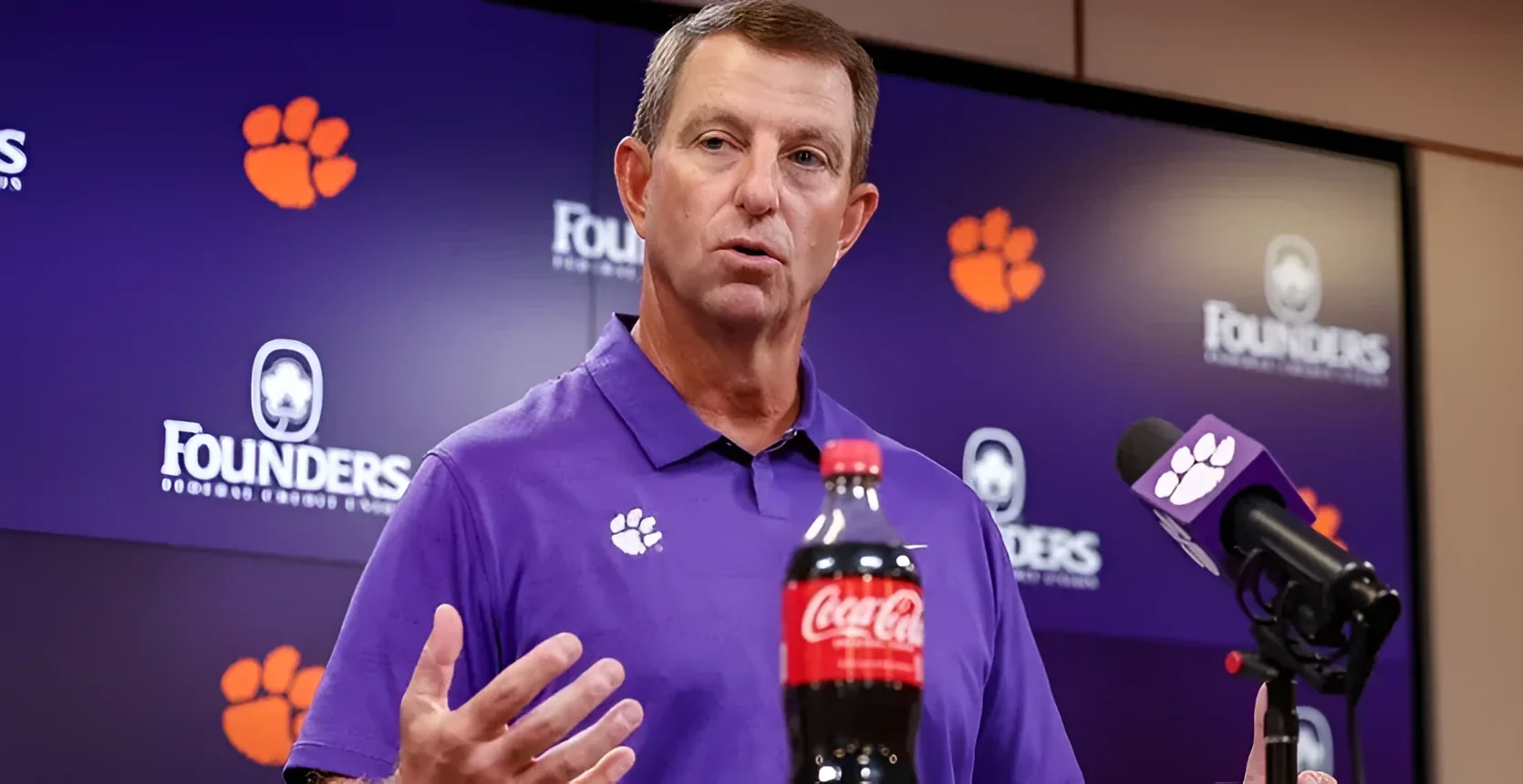
An episode has occurred in the American sports media space that quickly went beyond a regular coaching press conference and turned into a topic of discussion about tattoo culture. ESPN journalist David Hale publicly promised that if the Clemson team finishes the regular season with an 11-1 record, he will get “Dabo was right” tattooed on his buttocks. It sounds like a joke, but behind it lies a whole layer of traditions where a tattoo becomes a form of public bet and a personal contract with the audience.
How the Conflict Began
It all happened against the backdrop of a disastrous start to the season. Four days before the press conference, Clemson lost to LSU 51-10 in the opening game. On Tuesday, coach Dabo Swinney was answering press questions, and that’s when The State correspondent Chapel Fowler asked if Swinney regretted how the club assembled its roster in the offseason. Swinney sharply replied, calling the journalist a “gotcha guy” – someone who sets traps – and refused to evaluate the roster after a single played game. According to him, the season consists of twelve games, and conclusions are appropriate only at the end of the year, not after one meeting, especially against perhaps the best team in the country.
The Bet That Became a Tattoo
On Friday, David Hale appeared on the program Inside Access on ACC Network and sided with Fowler. But he said something more important. Hale admitted that he was at that game, saw Clemson’s play with his own eyes, and that’s why he lacked faith in an 11-1 result. That’s why he proposed a punishment for himself: if the Tigers still reach eleven wins with one loss, the inscription “Dabo was right” will appear on his buttocks. The phrase that the chances of this are zero became, in essence, the signature under the bet.
What Tattoo Culture Says About Such a Gesture
For someone not immersed in body art, a promise to get a tattoo might seem like an empty threat. But in American sports and media culture, a tattoo has long ceased to be just a skin decoration. It functions as a public act, a “contract” that cannot be revoked. Here are a few reasons why Hale’s gesture is read this way:
- A Tattoo as Irreversibility. Unlike words, a tattooed inscription remains on the body forever. This turns a bet into a wager with real consequences – a person literally inscribes the outcome of an event onto their body.
- Self-irony as a Style. Tattoo culture in recent years has been built on irony and personal narrative. An inscription on the buttocks – a place that is usually hidden – adds both humor and boldness to the gesture simultaneously.
- Tradition of Sports Tattoo Bets. In the US, there has long been a practice of players, coaches, and journalists getting tattoos after significant events or as a bet. This is a way to capture a moment and make it part of a personal story.
- Publicity and Audience. The promise was made on air, meaning the tattoo will become not a private matter, but a media event. The body here is a carrier of a message for thousands of viewers.
What’s Next
Clemson’s first chance to respond on the field will be Saturday night when the Tigers host Georgia Southern at Memorial Stadium. This match will be the first test after the scandal. And the fate of David Hale’s tattoo, paradoxically, now depends not on him, but on the performance of the team, which, by his own admission, he considers incapable of an 11-1 result. For tattoo culture, this is a perfect example of how the body becomes an arena for others’ sports bets – and how a single word spoken on air can turn into a drawing that will last a lifetime.