
Tattooing on the buttocks is one of the most complex and specific areas to work on, requiring the artist not only a high artistic level but also a deep understanding of anatomical and technical nuances. This area, despite its extensiveness, has unique characteristics related to the density of adipose tissue, skin elasticity, and inevitable friction during the healing process. We have prepared a maximally detailed and expert guide that will help beginner tattoo artists confidently master working with this part of the body, minimizing risks and ensuring an ideal result for the client.
Tattoos on the Buttocks: A Complete Guide for Beginner Tattoo Artists – Where to Start
The first step towards successfully tattooing the buttocks is thorough preparation, encompassing both psychological and technical aspects. As this is an intimate area, client trust and artist professionalism are paramount.
1. Consultation and Confidentiality
- Building Trust: First and foremost, you must ensure maximum comfort and confidentiality. Discuss the design, size, and placement in a private setting. Make sure the client understands that specific body positioning will be required.
- Positioning: Explain to the client how they will be positioned during the session. Most commonly, lying on the stomach or side with the upper leg raised is used. For tattoos covering the side or the area under the gluteal fold, multiple position changes may be necessary.
- Skin Assessment: During the initial consultation, it’s important to assess the skin condition. The skin on the buttocks is often thicker and softer than on other areas, but it may have stretch marks or cellulite that need to be considered when developing the sketch.

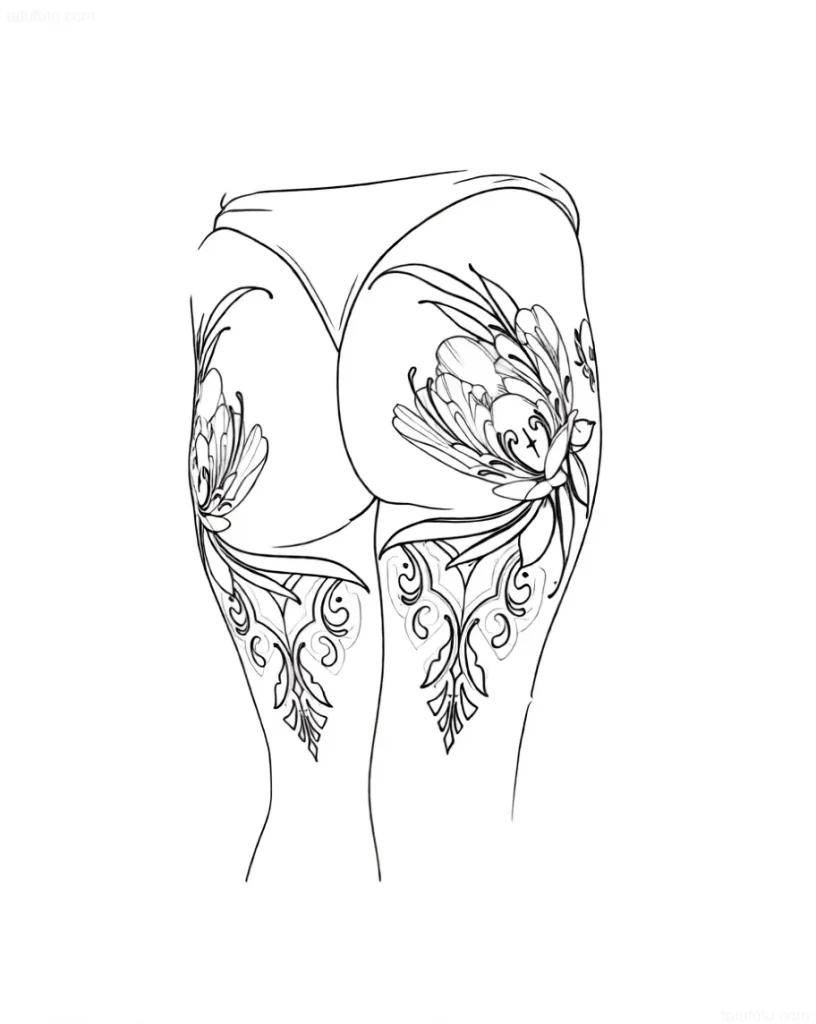
2. Sketch Selection and Adaptation
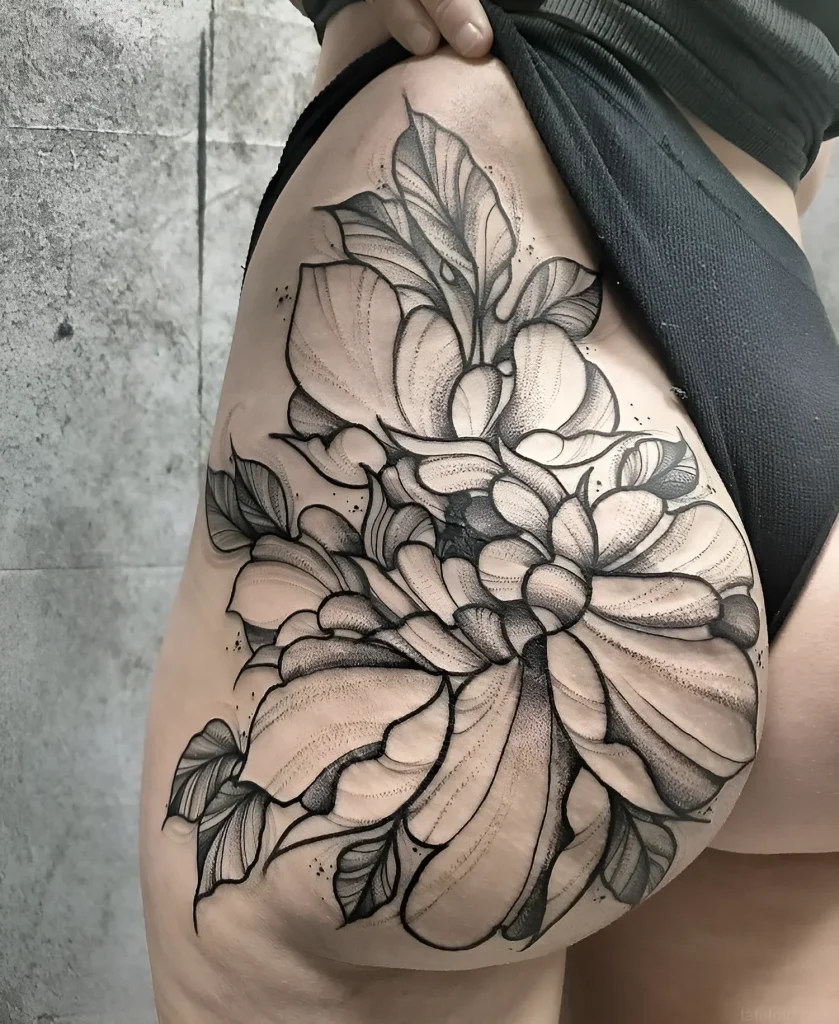
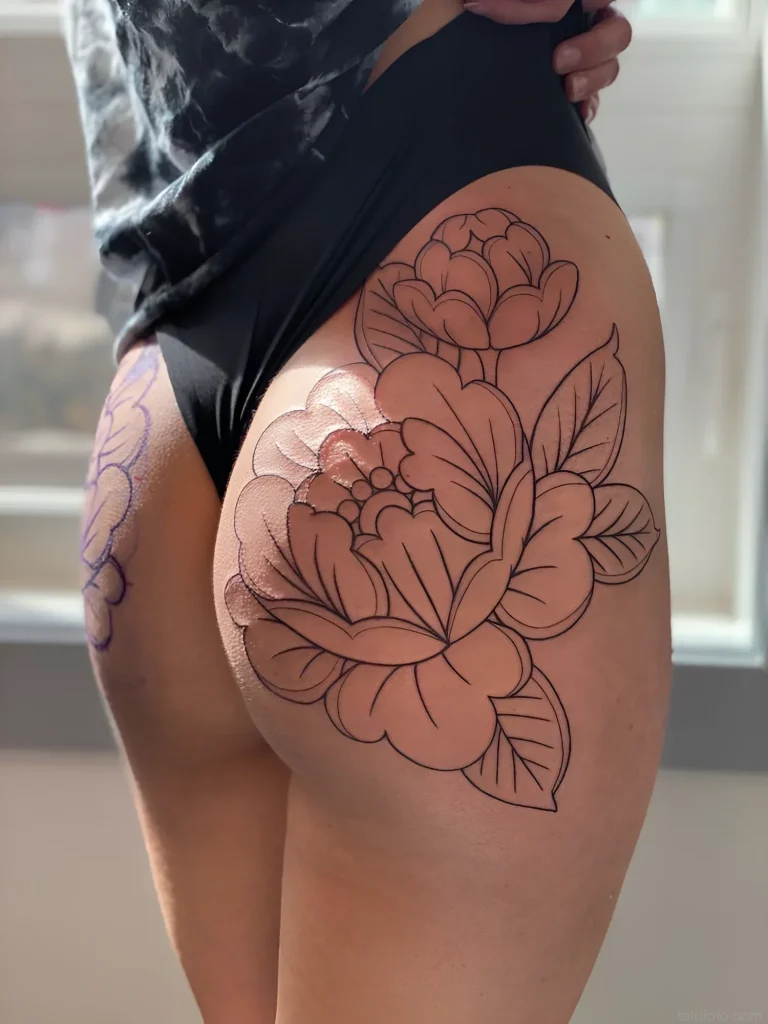
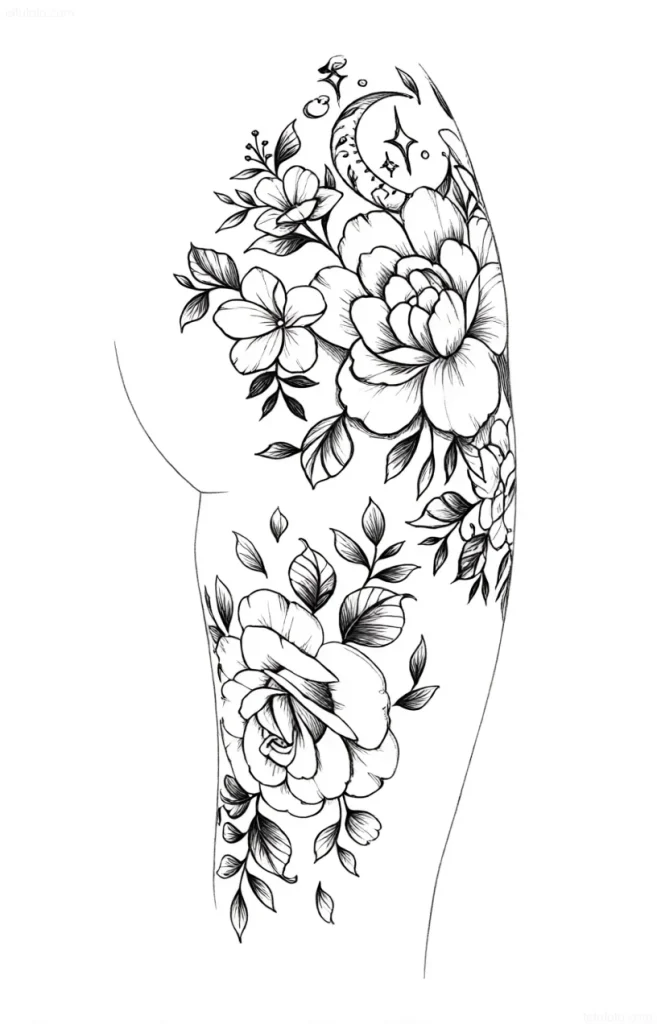
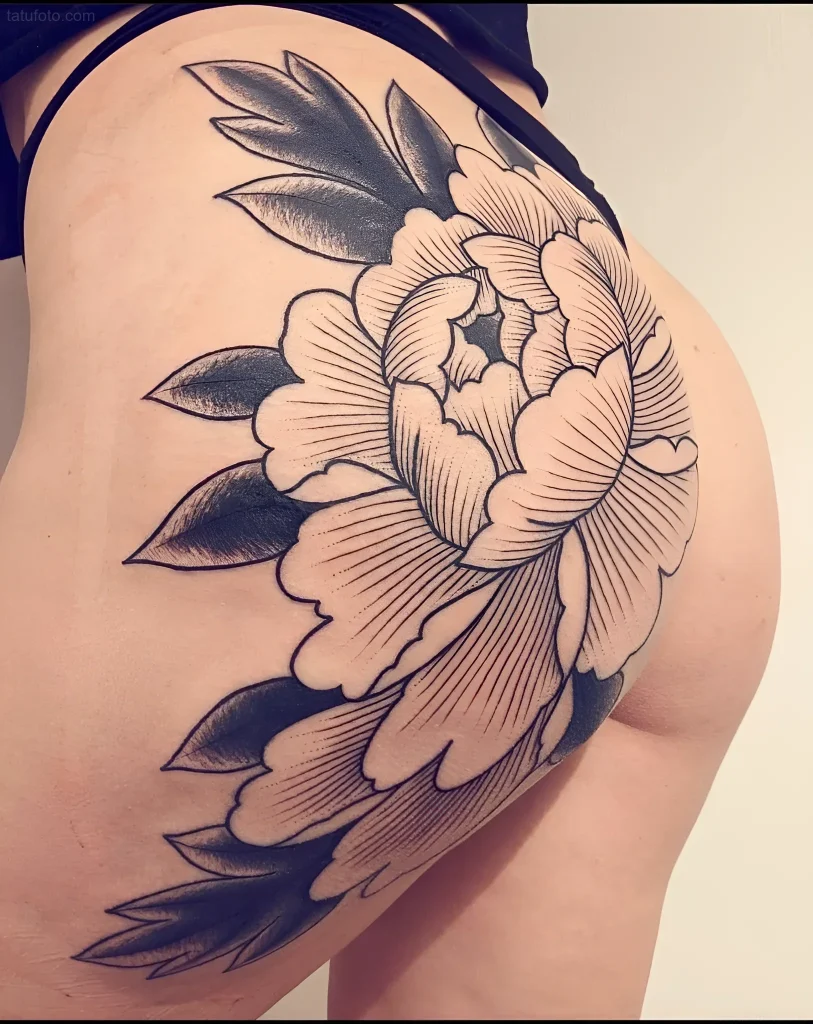
A sketch for the buttocks should consider the rounded shapes and movement. Avoid designs that might distort when changing positions (standing/sitting). Choose designs that fit harmoniously on the volume. Large, flowing shapes (florals, ornaments) usually look better than small, detailed compositions.
3. Workspace Preparation
The workspace should be organized to provide maximum access to the tattooing area while maintaining sterility and privacy. Ensure you have enough disposable sheets, barriers, and good, adjustable lighting that allows you to see the needle depth through the thick layer of skin.

Buttock Anatomy and Skin Peculiarities for Tattooing: Important Nuances
For a beginner artist, understanding the anatomy of this area is critical, as it directly affects the working technique, client sensations, and healing quality. The gluteal region consists of three main muscles (gluteus maximus, medius, and minimus), covered by a significant layer of subcutaneous adipose tissue.
1. Skin Thickness and Adipose Layer
- Needle Depth: The skin on the buttocks, especially in the central part, is significantly thicker than, for example, on the forearm or ankle. This requires a more confident and possibly slightly deeper needle work. Beginner artists often lack confidence, leading to incomplete pigment insertion (fading).
- “Cushion” Effect: The adipose layer acts as a shock absorber. This can complicate the process of skin stretching and stabilization. With excessive pressure, the machine can “sink in,” causing trauma.
- Area Under the Gluteal Fold: The skin here is thinner and prone to creasing, requiring extremely careful stretching and more delicate work, similar to working on the inner thigh.

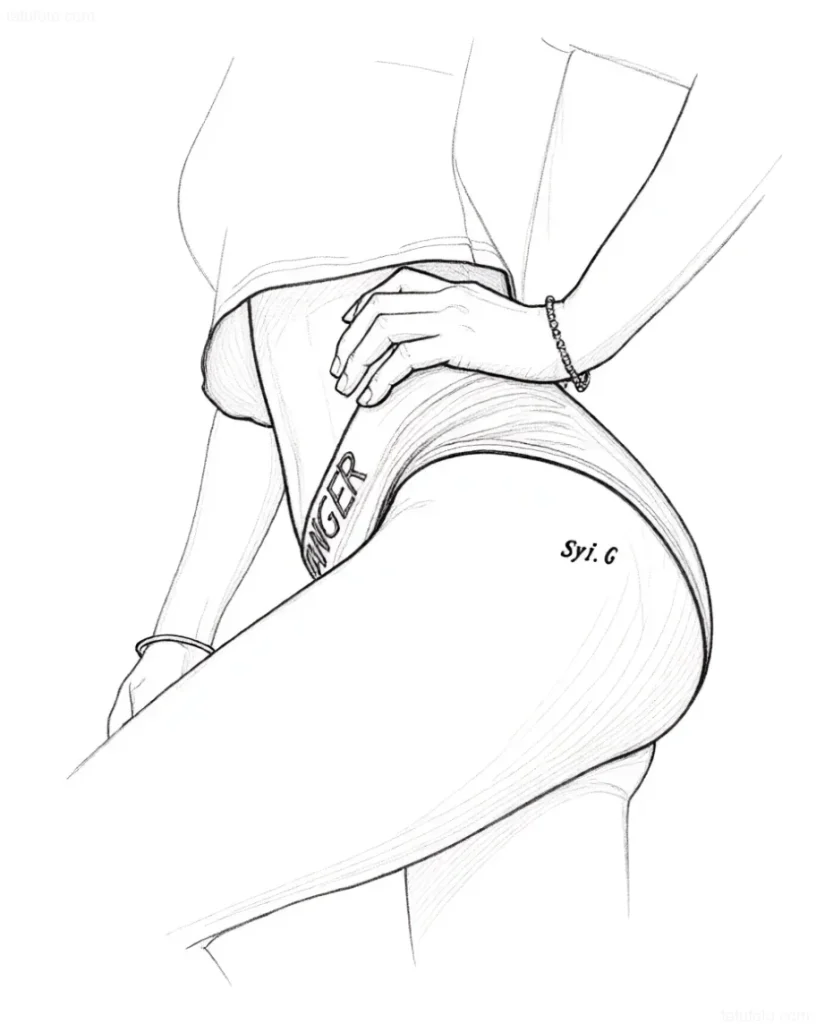
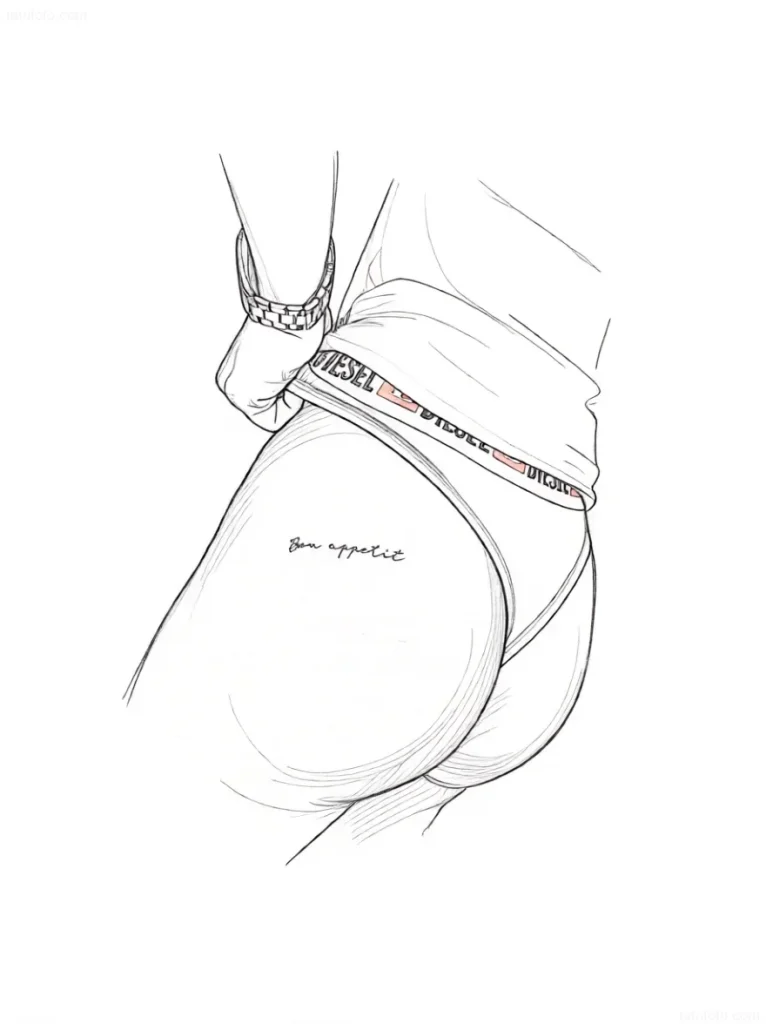
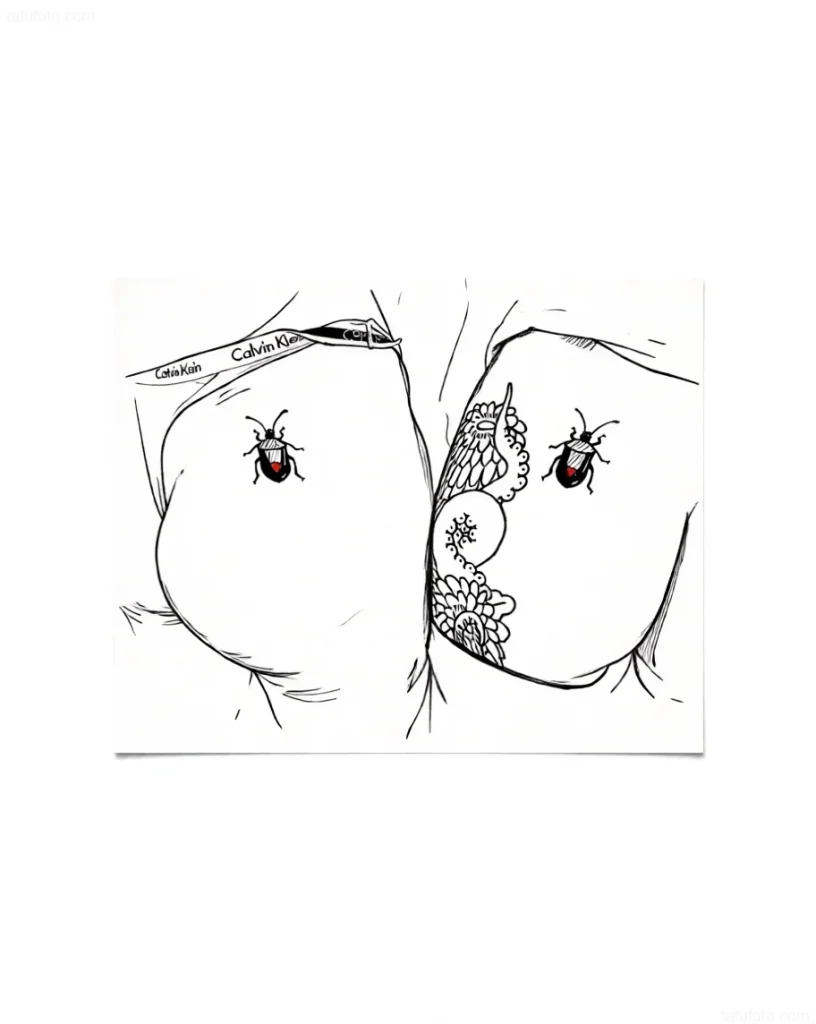
2. Elasticity and Movement
The skin of the buttocks is very elastic. When the body’s position changes (standing, sitting, leaning), its shape and tension change drastically. This requires the artist to pay special attention to how the tattoo will look in static and dynamic states. The placement of the sketch should consider the tension lines to avoid visual distortion.
3. Sensitivity and Pain Threshold
Overall, the buttocks are considered a zone with a moderate pain threshold, as there are fewer nerve endings here than on bony prominences or joints. However, sensitivity can sharply increase at the edges (closer to the tailbone, lower back, or inner thigh). Warn the client about possible discomfort when working on these peripheral areas.
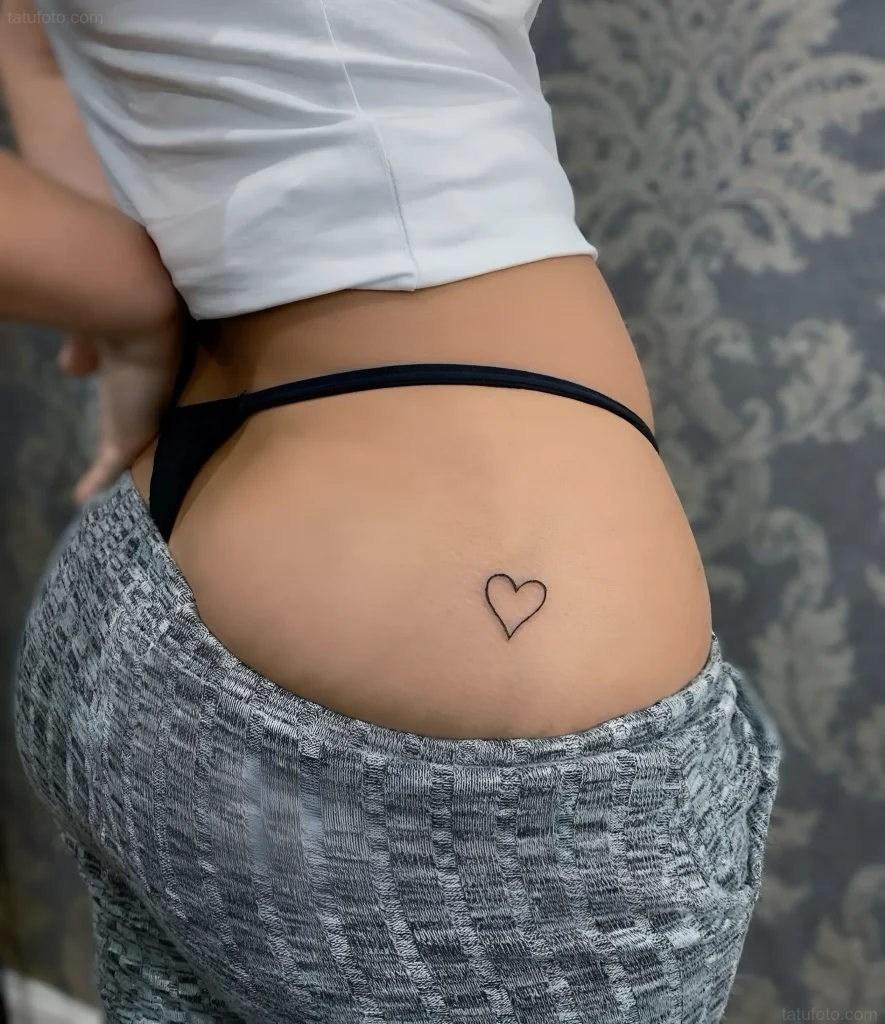
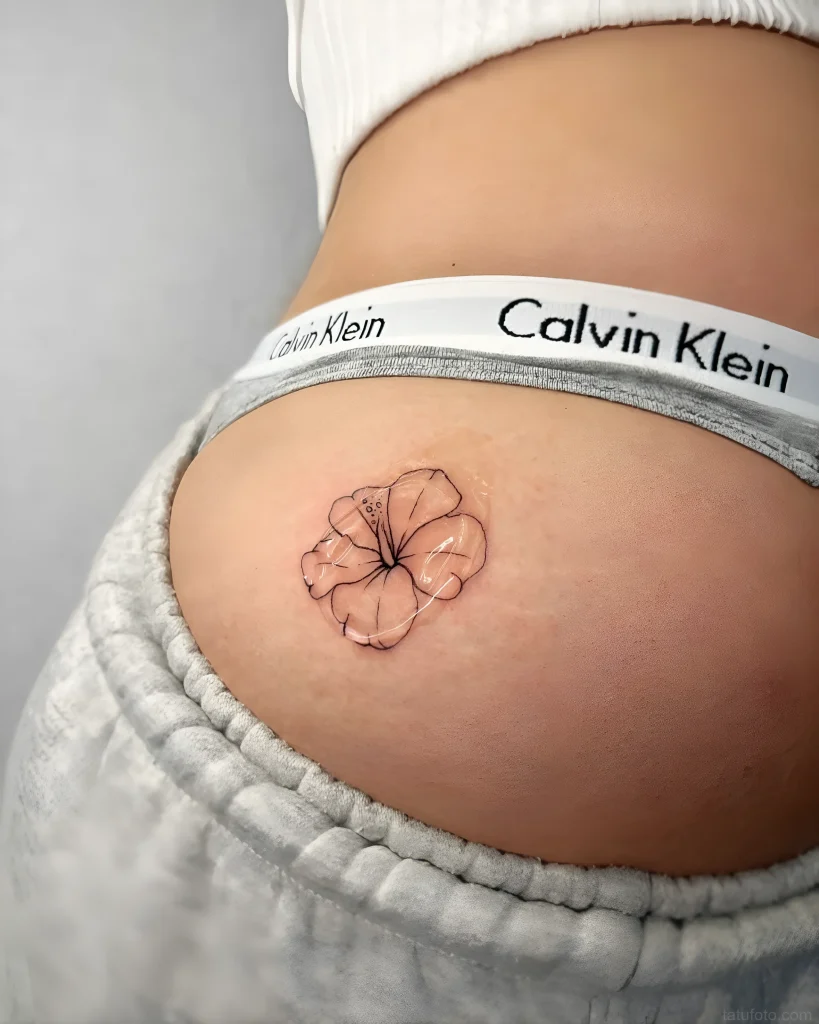
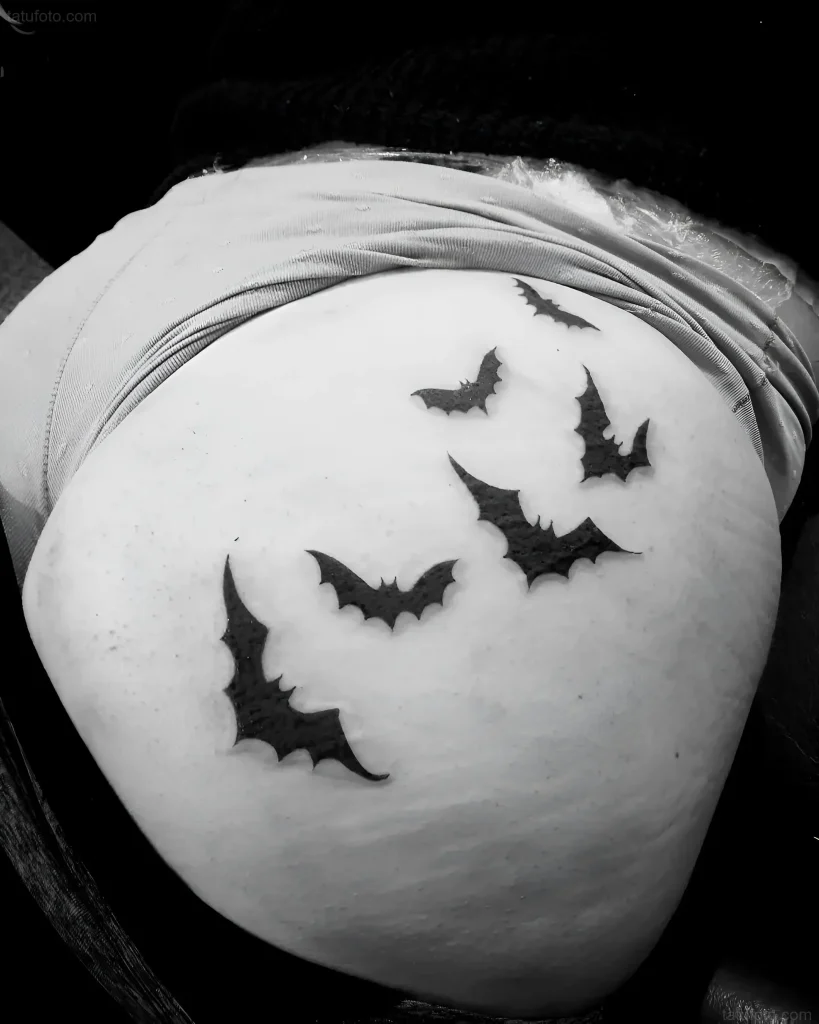
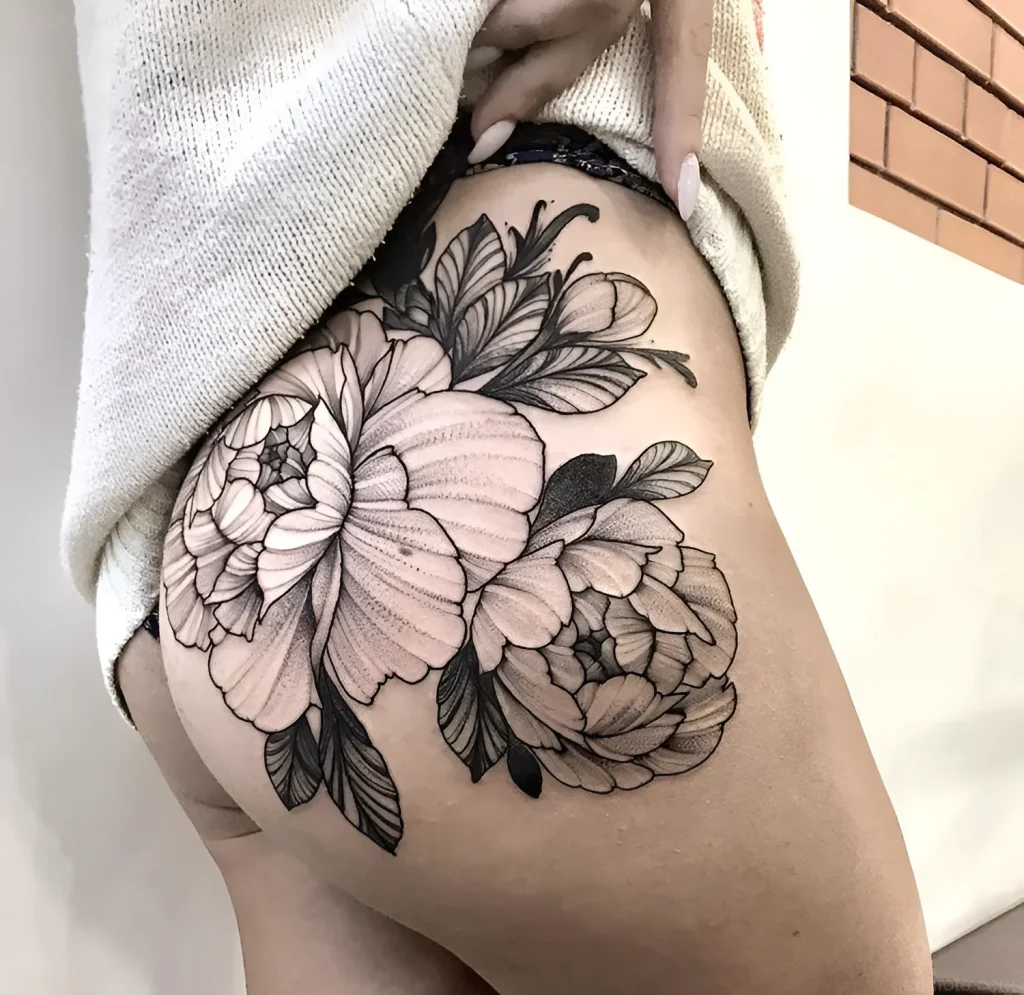
Popular Buttock Tattoo Designs: Ideas and Inspiration for Artists
The choice of a design for the buttocks is often dictated by the need to adapt the design to a large, rounded, and mobile surface. Artists should focus on styles that best accentuate the body’s shape.
1. Ornaments and Mandalas
Ornaments and mandalas are among the most popular choices, as they perfectly fit the rounded shape. The central elements of a mandala are often placed on the most convex part of the buttock, and radial patterns diverge, following the contour. This requires high precision in symmetry and the use of quality stencils.
- Key Styles: Dotwork, blackwork, lace ornaments.
- Advantage: Allows for an